Dear Mayor Sean VanGordon;
In preparing to compose this message to you, I discovered PeaceHealth is going to sell land around Riverbend Hospital that I intended to use for the world gathering of my New Franciscan Order. A month ago I discovered that Sister Francis Clare planted a religious seed, or tree, that became PeaceHealth, and Bushnell Bible College that bought PeaceHealth in Eugene.
What I want you to do is arrange for a Biblical Showdown, where I submit four Biblical Mysteries to all Bushnell faculty and students to solve. A world panel of seventy theologians will judge whose version of the truth – is more truthful! If I win, then I will own Bushnell.
As a compromise to having a tented Saint Francis Festival on the land PeaceHealth – claims they own – I will settle for the two islands you see from Riverbend. Who owns this property, separated by a body of water I will name – the New Jordon. I will baptize new members of the order, called Face To Face. My goal is to have those I baptize come face to face with……The Holy Spirit!
John Presco….The Nazarite of the New River Way
PeaceHealth to list 50 acres of residential-zoned property near RiverBend for sale
September 19, 2025
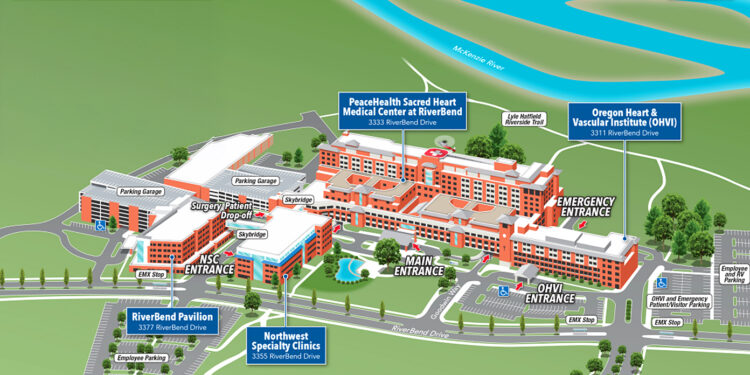
PeaceHealth will soon list for sale a piece of residential and undeveloped property behind Sacred Heart Medical Center at RiverBend. The property, which is roughly 50 acres and sits behind the hospital along the McKenzie River, is zoned for medium-density residential.

“PeaceHealth has owned this parcel of land since the initial purchase of RiverBend with the plan of one day listing it for sale and residential development. With the state’s housing expansion goals in mind, that time has come.”
– Dr. Jim McGovern, Chief Hospital Executive, PeaceHealth Oregon Network
Hundreds of new high-paying jobs will soon be coming to the area, as the PeaceHealth Springfield Rehabilitation Hospital is currently under construction off Game Farm Road and Timber Springs Behavioral Health Hospital is proposed to break ground off International Way in the near future.

The sale of the residential property, accessible at the corner of Baldy View and Deadmond Ferry roads, will not impact PeaceHealth’s ability to grow RiverBend as needed in the future. PeaceHealth will maintain more than 40 acres of land for any future projects that require close proximity to the hospital.
Cushman & Wakefield will manage the sale of the property.
About PeaceHealth
PeaceHealth, based in Vancouver, Wash., is a non-profit Catholic health system offering care to communities in Washington, Oregon and Alaska. PeaceHealth has approximately 16,000 caregivers, nearly 3,200 physicians and clinicians, more than 160 clinics and 9 medical centers serving both urban and rural communities throughout the Northwest. In 1890, the Sisters of St. Joseph of Peace founded what has become PeaceHealth. The Sisters shared expertise and transferred wisdom from one medical center to another, always finding the best way to serve the unmet need for healthcare in their communities. Today, PeaceHealth is the legacy of the founding Sisters and continues with a spirit of respect, stewardship, collaboration and social justice in fulfilling its Mission. Visit us online at peacehealth.org.
Sean VanGordon serves as the Mayor of Springfield, Oregon, where he has been a driving force behind the city’s growth and transformation for over a decade. A champion for housing, economic development, and transportation policy, Sean’s leadership is rooted in a commitment to creating a community of opportunity where families and businesses thrive.

On this day, September 22, 2025 at 8:10 AM, I john

Three hours after my last post, I called up Pacific Source and talked to a woman about the horrible news a hundred thousand Oregonian sare about to lose their Medicaid. We talked for almost an hour. I asked about the history of Pacific Source and was told it has its roots in the
PACIFIC CHURCH HOSPITAL
I took a nap then got on Google and found Margaret Anna Cusack. She is responsible for the life-size cross on Riverbend Hospital. Consider the life-size statue of Jesus on the Stuttmeister crypt. Consider Mother Dominica Wienke, the Franciscan founder of Briarcliff College. It has all come together. My posts for the las two weeks have led to these revelations. Consider the Face to Face logo an the Tau Cross. Turn the F on the right to face the F on the left. There are Franciscan orders that are not religious. In this symbol is a new political party made up of members who know they have to act in order to help God, and Man, keep helping Humankind. This is face to face help.
I went in search of a house and found land for sale across from where Herbert had his radio station. Low-cost housing can be built for student nurses and orderlies. The building that house the Department of Transportation would make a great college for nurses, and the new home for Cahoots. What is there can find a new home.
I need people to form a committee and make a presentation to the Mayor and City Cancel. We will politely ask Governor Kotek to keep all the people of Oregon informed about their Medicaid. We will write the new Pope.
There is so much here. So much has been – ordained! An invisible Kingdom of God has swelt in Lane County, and only a handful knew.
Let there be light!
John Presco
Founder of The Face To Face Party
Posted 11:45 AM 9/24/25
in 1858 she converted to Catholicism and joined the Poor Clares in Newry, County Down, a community of Franciscan nuns that taught poor girls. She took the name of Sister Francis Clare.
Margaret Anna Cusack was born into a wealthy protestant family in 1829. She became known as the “Nun of Kenmare” during her years as a Poor Clare sister in the enclosed convent at Kenmare. She founded Kenmare Publications and used the money from her publications in the running of the convent, charitable works and other church related projects.
The Franciscan Family of Mary Magdalene Rosamond



Here

The Poor Clares, officially the Order of Saint Clare (Latin: Ordo Sanctae Clarae), originally referred to as the Order of Poor Ladies, and also known as the Clarisses or Clarissines, the Minoresses, the Franciscan Clarist Order, and the Second Order of Saint Francis, are members of an enclosed order of nuns in the Roman Catholic Church. The Poor Clares were the second Franciscan branch of the order to be established. The first order of the Franciscans, which was known as the Order of Friars Minor, was founded by Saint Francis of Assisi in 1209. Three years after founding the Order of Friars Minor, Francis of Assisi and Clare of Assisi founded the Order of Saint Clare, or Order of Poor Ladies, on Palm Sunday in the year 1212.[1] They were organized after the manner of the Order of Friars Minor and before the Third Order of Saint Francis was founded. As of 2011, there were over 20,000 Poor Clare nuns in over 75 countries throughout the world. They follow several different observances and are organized into federations.
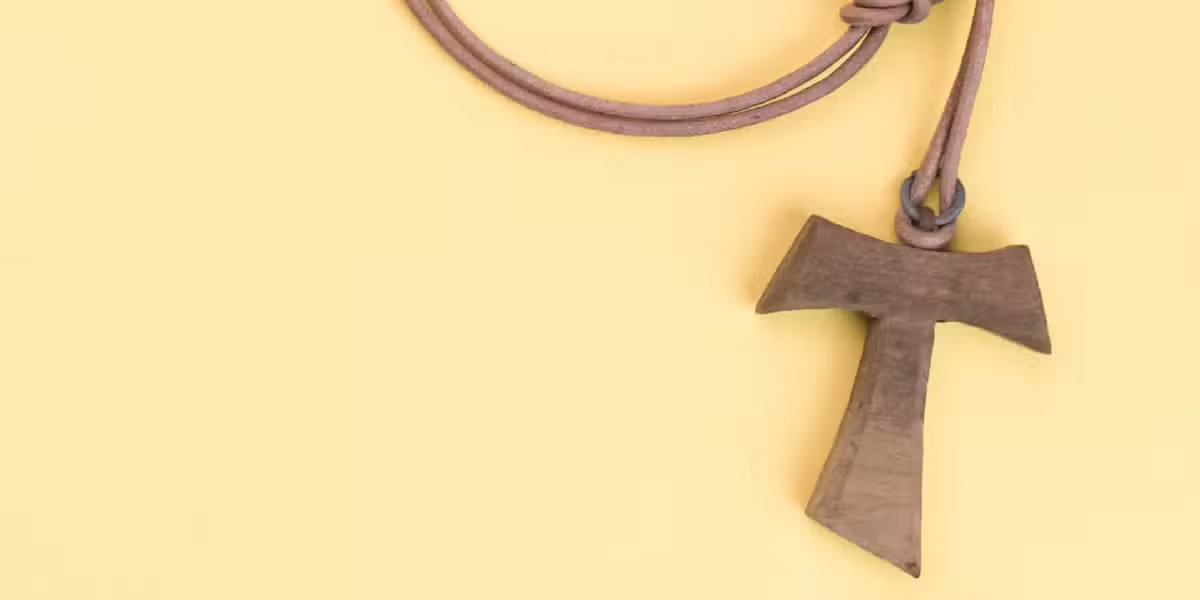
Is there still a Secular Franciscan Order? Are they the same group that used to be called the Third Order of St. Francis? My husband and I are interested in this type of order, would like more information and may join it.
In 1884, during an audience with Pope Leo XIII to seek his support, Cusack obtained permission for a dispensation to leave the order of the Poor Clares and found a new congregation, the Sisters of St. Joseph of Peace, intended for the establishment and care of homes for friendless girls, where domestic service would be taught and moral habits inculcated.[13]
She opened the first house of the new order in Nottingham, England and in 1885, a similar house in Jersey City, New Jersey, the first foundation of the Sisters of St Joseph of Peace in the United States. She opened a hostel for Irish immigrant girls in Englewood Cliffs, New Jersey.[13] The earnings of her most notable writings – Lives of Irish Saints and Illustrated History of Ireland supported her convent. As of 2014 the congregation she founded had communities in Great Britain, Canada, Haiti, Ireland and the USA.
Pacific Christian Hospital was a hospital in Eugene, Oregon, United States. It was opened by Eugene Bible University (EBU) and International Bible Mission (IBM) at East 12th and Hilyard streets on March 17, 1924. The person behind this enterprise was Eugene Claremont Sanderson, who founded Eugene Divinity School (EDS) in 1895 across Alder Street from the hospital.[1]
EDS and EBU are now known as Bushnell University. The original hospital building was later remodeled and subsequently demolished. The facility is now known as PeaceHealth Sacred Heart Medical Center University District and is in the same location.
Need and construction
There was a dire need for a good medical facility in Eugene in the early 1920s. Local citizens, because of Sanderson’s reputation, looked to him to develop such a facility. In 1922, the EBU Board of Trustees authorized him to erect the hospital and conduct a fundraising campaign. Construction of the six-story building began in February 1923 and it was dedicated on March 16, 1924. The facility cost about $225,000 to build.[2]
Organization
In March 1928, Pacific Christian Hospital was incorporated as a separate entity, but it was still financially tied to EBU and IBM. It was composed of three institutions: the hospital itself; the former Catholic-run Mercy Christian Hospital on College Hill in Eugene, which was purchased in 1927 and rededicated to sanitarium work; and a hospital in Dodge City, Kansas which had exhausted its funds and was turned over to IBM in 1928. The other two facilities are long since closed.
Nursing program
A nursing school at EBU was an integral part of the operation of the facility. A three-year program resulted in a degree as a registered nurse from EBU. The first class was admitted in 1925 and graduated in 1927. The last class graduated in 1929 with the remaining students transferring to hospitals in Portland, Oregon. The average class size was about 10.[3]
Creditors and sale
During the Great Depression, EBU and IBM found themselves overextended and needed to scale back operations to just the Eugene campus. Creditors had foreclosed on the hospital and a group of local doctors agreed to temporarily manage it until a buyer could be found. Thus, the hospital was sold to the Catholic order of the Sisters of St. Joseph of Newark for $50,000. It reopened on July 1, 1936 as Sacred Heart General Hospital with 75 beds and a staff of 35.[4] The expanded and remodeled facility was the main hospital in Eugene until Sacred Heart Medical Center at Riverbend was opened in neighboring Springfield in 2008.
Eugene C. Sanderson (March 24, 1859 – February 16, 1940) was an American Christian Church (Disciples of Christ) minister and educator who founded Eugene Divinity School (EDS) in Eugene, Oregon in 1895. Today this school is known as Bushnell University.[1] He served as its first president from 1895 to 1930. He also founded four other Christian colleges and one hospital.
Early life
Sanderson was born on March 24, 1859, in Fayette County, Ohio.[2] Sanderson moved to Washington state in 1886 and pastored Christian Churches in Palouse, Colfax, Ellensburg, Sumner, Vancouver, and Olympia. In 1894 he was pastor at First Christian Church in Portland, Oregon.[3]
Eugene Divinity School
Dr. Sanderson saw a need to train ministers for the Christian Church in the Pacific Northwest. To do so, he returned to Chicago and completed his doctorate. In early 1895, he took part in a meeting in Eugene, Oregon to discuss establishing a school to train ministers. He strongly believed that locating ministerial schools near state institutions of higher education provided the best of both worlds. Thus, he deliberately located EDS next to the University of Oregon (UO) near East 11th Avenue and Alder Street to take advantage of the UO liberal arts program while EDS focused primarily on the ministerial courses including Bible, theology, music, and oratory.[4] Eugene Divinity School became Eugene Bible University (EBU) in 1908.[5] In 1908 the Administration Building was constructed. It is three stories tall and was constructed of volcanic stone from southern Oregon. Other buildings were constructed during his tenure, including the Music Building.
Other institutions
During the 1920s Eugene Bible University, under Sanderson’s leadership, expanded to include a number of other enterprises by incorporating the International Bible Mission (IBM). These two institutions were closely linked, especially financially. During the Great Depression, both EBU and IBM found themselves overextended and financially in default. Operations were scaled back to just the Eugene campus of EBU.
He founded Pacific Christian Hospital, which is now PeaceHealth Sacred Heart Medical Center University District, across Alder Street from EBU. There was a need for a good medical facility in Eugene at this time. Local citizens looked to Sanderson, because of his reputation, to develop such a facility. Construction began in February 1923. It opened on March 17, 1924. The six-story building cost about $225,000. It included a School for Nurses where a three-year program led to a degree as a Registered Nurse. In 1936 it was sold to the Sisters of St. Joseph of Newark for $50,000 and renamed Sacred Heart General Hospital.
He served as the second president of Minneapolis Bible College (now Crossroads College) in Rochester, Minnesota from 1924 to 1932. It had been founded by David E. Olsen, a 1908 graduate of EDS, in 1913.
He founded several schools across the United States that still exist including Christian Workers University (now Manhattan Christian College) in 1927 in Manhattan, Kansas; and Evangel Bible University (now William Jessup University in Rocklin, California) in 1934 in San Jose, California. This latter institution did not do well and his health was failing, so Sanderson asked one of his former students, William Jessup, a 1930 graduate of EBU, to take over. It was renamed San Jose Bible College in 1939.
He founded several schools that no longer exist. The first was Seattle Bible College in 1919, later renamed Eugene Bible University Extension Hall. The next was Colorado Bible College in 1927 in Fort Collins, Colorado. And finally Missouri Christian College in 1928 in Camden Point, Missouri.
He started a Home and School for Boys in Eugene in 1926 and another in 1927 in El Monte, California. In addition, he also started a Girl’s Junior College which operated from 1911 to 1929 in Eugene. Finally, he started a Home for the Aged in Eugene in 1927. All of these are no longer in existence.
A number of his former students, many graduates of EDS and EBU, were involved with him in establishing these enterprises. In addition, many faculty from EBU helped with these various institutions.
Academic background
Sanderson earned Bachelor of Arts and Master of Arts degrees from Oskaloosa College in 1883. He then spent a year at Yale Divinity School. Later he earned Bachelor of Divinity and Doctorate of Laws degrees from Drake University in 1893, followed by a Bachelor of Sacred Theology degree from the University of Chicago in 1894.
Publications
In 1912 Sanderson published a book titled Our English Bible. In order to publicize the evangelical and educational work of EBU and IBM he published the Church and School paper, starting in 1909. It became the Christian Journal in 1915 and the World Evangel in 1925. It ceased publication in 1934.
Death
Sanderson died on February 16, 1940, in Los Angeles, California. Both he and his wife Prudence are buried in Eugene Masonic Cemetery.
PeaceHealth Sacred Heart Medical Center University District is a former hospital in Eugene, Oregon, United States. Originally called Sacred Heart Medical Center, the newer name reflected its location near the University of Oregon and Northwest Christian University. It was one of two Sacred Heart facilities in the Eugene-Springfield area owned by PeaceHealth. The other facility, Sacred Heart Medical Center at RiverBend, is in Springfield and is still open.
Sacred Heart in Eugene was once the largest hospital in the area until a newer facility at RiverBend opened in August 2008. Most general services moved to this larger hospital. The University District facility became a specialty services hospital with an emergency department. Said emergency department and general patient rooms closed in 2023, with remaining services concluded as of February 2024.
History
Sacred Heart Medical Center in Eugene began as Pacific Christian Hospital, which was founded by Eugene Bible University, now Bushnell University and dedicated on March 16, 1924. The building was six stories tall and cost about $225,000. A School for Nurses was a part of the University and associated with the hospital.[1] By the 1930s, it was in bad shape structurally and financially. At the same time, the Sisters of St. Joseph of Newark, which later became Sisters of St. Joseph of Peace, had a good reputation in the Pacific Northwest in hospital administration. Due to this reputation, local physicians went to them for help in saving the hospital. In 1936, the Sisters of St. Joseph bought it for $50,000 and changed its name to Sacred Heart General Hospital.[2]
Expansions
The original building was expanded in 1941 with the addition of 100 beds. Another 100 bed expansion took place in 1951 bringing capacity to 262 beds. In 1965, the facility was expanded again to 366 beds total. This last expansion included a new emergency room, a new maternity department, and a new intensive care department. The old Pacific Christian Hospital building was now gone.[3] A 30-bed psychiatric unit was completed in 1969. In 1972, further additions were completed including a new ancillary building with new surgical units. In 1982, the hospital was again expanded along with adjacent physicians buildings.[citation needed]
In the early 2000s, the hospital needed to expand again but could not because of the surrounding buildings. Thus, PeaceHealth decided to build a new facility. After much searching and discussions around the community, the new hospital was located in neighboring Springfield, Oregon in what is now known as the Riverbend area. In 2014, PeaceHealth completed a renovation of the University District facility and greatly expanded the Johnson Behavioral Health inpatient unit.[citation needed]
School of Nursing
The only nursing school outside of Portland, Oregon was started in 1942 by the hospital to meet wartime needs. In 1965, the three-year diploma program had 150 students. It was phased out in 1970 and transferred to the Lane Community College.
Margaret Anna Cusack (in religion Mary Francis Clare Cusack; 6 May 1829 – 5 June 1899), also known as Mother Margaret and the Nun of Kenmare, was a former Irish Catholic nun who founded the Sisters of St. Joseph of Peace before returning to Anglicanism (the faith of her youth). She lived in Ireland, England, and the United States.
| Margaret Anna Cusack | |
|---|---|
| Memorial to Margret Anna Cusack in Dublin | |
| Born | 6 May 1829 Mercer Street/York Street, Dublin, Ireland |
| Died | 5 June 1899 (aged 70) Leamington Spa, England, UK |
| Other names | Sister Mary Francis Cusack Mother Margaret |
| Occupation | Foundress of Sisters of St. Joseph of Peace religious congregation |
By 1870 more than 200,000 copies of her works which ranged from biographies of saints to pamphlets on social issues had circulated throughout the world, the proceeds from which went towards victims of the Famine of 1879 and helping to feed the poor. An independent and controversial figure, Cusack was a passionate Irish nationalist, often at odds with the ecclesiastical hierarchy.
Contents
Early life
_(14596440989).jpg)

Margaret Anna Cusack was born in Coolock, County Dublin into a family of Church of Ireland gentry.[2] Her parents were Samuel and Sara Stoney Cusack. Her father was a physician. When she was a teenager, her parents separated, and she, her mother, and brother Samuel went to live with her grand-aunt in Exeter, Devon, where Margaret attended boarding school.
“Nun of Kenmare”
Influenced by the Oxford Movement, and motivated by the sudden death of her fiancé, Charles Holmes, in 1852 she joined a convent of Puseyite Anglican nuns. However, disappointed at not being sent to the Crimean War, in 1858 she converted to Catholicism and joined the Poor Clares in Newry, County Down, a community of Franciscan nuns that taught poor girls. She took the name of Sister Francis Clare. In 1861 she was sent with a small group of nuns, led by Mary O’Hagan to Kenmare, County Kerry, then one of the most destitute parts of Ireland, to establish a convent of Poor Clares.[3]
She wrote 35 books, including many popular pious and sentimental texts on private devotions (A Nun’s Advice to her Girls), poems, Irish history and biography, founding Kenmare Publications,[4] through which 200,000 volumes of her works were issued in less than ten years. She kept two full-time secretaries for correspondence and wrote letters on Irish causes in the Irish, United States, and Canadian press.
In the famine year of 1871, she raised and distributed £15,000 in a famine relief fund. She publicly railed against landlords of the region, particularly Lord Lansdowne, who owned the lands around Kenmare, and his local agent. She was an outspoken Irish nationalist, publishing The Patriot’s History of Ireland, in 1869, though she later denied being associated with the Ladies’ Land League. In 1872 she issued an account of the life of Daniel O’Connell, The Liberator: His Life and Times, Political, Social, and Religious. After receiving death threats upon publication of her book on the abuse of tenants on the Landsdowne and Kenmare estates in Kerry,[5] she “effectively absconded from her [Kenmare] convent on a supposed visit to Knock on 16 Nov. 1881.”[6]
Knock
Her transfer orders were for her to return to Newry, but she moved to Mayo where she was determined to erect a convent at Knock. Cusack has been described as “a temperamental extremist”, “eccentric and rebellious”, “passionate and difficult, constantly at odds with her ecclesiastical superiors”, who was “an early and fervent believer in the apparition of the Virgin Mary at Knock”.[7] Younger contemporaries of hers in the convent remembered her as “furious when disturbed and capable of making physical attacks”, such as tugging off their veils.[8]
In 1880 she published the pamphlet The Apparition at Knock; with the depositions of the witness[es] examined by the Ecclesiastical Commission appointed by His Grace the Archbishop of Tuam and the conversion of a young Protestant lady by a vision of the Blessed Virgin.
In 1936 Archbishop Thomas Gilmartin of Tuam established a second Commission of Enquiry. As most of the documents from the early years at Knock were assumed to have been lost, the commission was forced to rely upon press reports and devotional works printed in the 1880s, which portrayed the developing cult in a positive light, and interviews with Patrick Byrne and Mary Byrne O’Connell, the last surviving witnesses. A special tribunal was set by the Cardinal Hayes, Archbishop of New York, to examine John Curry who was residing there.[9]
In 1995, while doing research in Washington, among the papers of Cusack, John J. White, came upon a large box marked ‘pre-foundation papers’. “The box contained the original, unedited depositions of several of the 21 August 1879 witnesses, the original manuscript of the parish priest’s account of cures, depositions and statements taken from witnesses in 1880, and hundreds of other documents and letters from people seeking or claiming cures through the intercession of Our Lady of Knock.”.[5]
While there are many local shrines throughout Ireland, Cusack joined Canon Ulick Bourke and Timothy Daniel Sullivan in promoting Knock as a national Marian pilgrimage site. According to John J. White, professor of history at Dayton University, the Knock pilgrimages and the Land League developed simultaneously along parallel lines. Both involved many of the same individuals and used similar methods of popularization and promotion. “The Cusack papers show how many figures from moderate nationalists to Land Leaguers and Fenians were actively involved with Knock.”[5] Although Cusack was widely seen as associated with the Land League, she herself claimed that she was not, and did not entirely approve of the movement.[6]
Sisters of St. Joseph of Peace
After she claimed the Virgin had spoken to her, and she seemed to become difficult to deal with, problems arose with the local priest and archbishop.[4] Cusack planned to establish a training school for young women intending to emigrate so that they would have some job skills when they reached America. The Archbishop of Tuam’s feelings on the matter were somewhat ambiguous. While he supported a training school for young women, he did not wish to encourage emigration, “There is plenty of room to spare for all our people at home, if things were well managed…”[10] Nonetheless, as she pointed out that people would emigrate anyway, he agreed to support the plan.
Archbishop McEvilly granted permission for her to establish a convent at Knock. However, the archbishop wanted her to establish a community of Poor Clares whilst she intended to found an entirely new community called the Sisters of St. Joseph of Peace. Cusack believed that the Poor Clare’s had been brought to Kenmare instead of the Presentation Sisters for political reasons,[11] a claim biographer Philomena McCarthy disproved and attributed to a disturbed mind.[12] Cusack grew impatient with the Archbishop’s failure to heed her advice and considered him an obstructionist. She left Knock in 1883 taking most of the records regarding the apparitions, as well as the funds pledged for the building of a new convent, the latter causing something of an international scandal.[5] She left the Kenmare Poor Clares and went to England.
In 1884, during an audience with Pope Leo XIII to seek his support, Cusack obtained permission for a dispensation to leave the order of the Poor Clares and found a new congregation, the Sisters of St. Joseph of Peace, intended for the establishment and care of homes for friendless girls, where domestic service would be taught and moral habits inculcated.[13]
She opened the first house of the new order in Nottingham, England and in 1885, a similar house in Jersey City, New Jersey, the first foundation of the Sisters of St Joseph of Peace in the United States. She opened a hostel for Irish immigrant girls in Englewood Cliffs, New Jersey.[13] The earnings of her most notable writings – Lives of Irish Saints and Illustrated History of Ireland supported her convent. As of 2014 the congregation she founded had communities in Great Britain, Canada, Haiti, Ireland and the USA.
Departure from the Catholic Church
In Newark, she once again came into controversy with the local Catholic hierarchy, this time regarding among other things, funding, and her public support of a suspended priest.[4] She wrote a 176-page pamphlet entitled, The Question of Today: Anti-Poverty and Progress, Labor and Capital. In it, she defended Fr Edward McGlynn, a vocal supporter of the political and economic views of Henry George, which some considered to border on socialism.
Archbishop Michael Corrigan of New York viewed Cusack’s pamphlet as an attack on the authority of the Church and demanded an apology. She attempted to halt its publication, but was unsuccessful.[14] Her involvement in a New York City political campaign also generated a good deal of controversy.[15] Cusack resigned as head of her order in 1888 and placed a loyal friend Honoria Gaffney as the new leader, confirmed by a later election.[16]
Cusack returned to the Anglican Communion and issued The Nun of Kenmare: An Autobiography, also in 1888.[17] Afterwards she lectured and wrote a number of anti-Catholic books: The Black Pope: History of the Jesuits,[18] What Rome Teaches (1892) and Revolution and War, the secret conspiracy of the Jesuits in Great Britain (published posthumously, 1910).
Death and legacy
Cusack died on 5 June 1899, aged 70, and was buried in a Church of England-reserved burial site at Leamington Spa, Warwickshire, England.
Cusack passed into obscurity for a long time, until as a result of Vatican II, religious orders were encouraged to review their roots and the intent of their founders. Since then there have been a number of studies on Cusack, such as Sister Philomena McCarthy’s The Nun of Kenmare: The True Facts.[6] With the rediscovery of the life and times of Cusack, she has been hailed as a feminist or not,[4][19] and a social reformer ahead of her times.
Writings
In 1868, Cusack’s An Illustrated History of Ireland was published with illustrations by Henry Doyle, where, in a lengthy preface, she writes:
I believe there are honest and honorable men in England, who would stand aghast with horror if they thoroughly understood the injustices to which Ireland has been and still is subject. …I believe the majority of Englishmen have not the faintest idea of the way in which the Irish tenant is oppressed, not by individuals, for there are many landlords in Ireland devoted to their tenantry, but by a system.[20]
Her novels include Ned Rusheen, or, Who Fired the First Shot? (1871); and Tim O’Halloran’s Choice (1877). In 1872 she wrote Honehurst Rectory, ridiculing Dr. Pusey and the other founders of the Puseyite order. That year the entire edition of her Life of St. Patrick burned in a fire at her publishing office.
She issued Advice to Irish Girls in America (1872), which deals mainly with tips and suggestions relating to the profession of domestic service. Cusack shared the prevailing views at that time regarding women’s capabilities both physically and intellectually.[4] In 1874 she wrote Women’s Work in Modern Society,[14] in which she exhorted women that their main influence was exercised as good Christian mothers. She both recognized and supported the class distinctions of her day.[21]
Norman Vance sees Cusack as bridging the gap “…between eighteenth-century Catholic antiquarianism and the cultural nationalism of the Literary Revival.” He describes her 1877 A History of the Irish Nation as “…strange but impressively learned and detailed”.[7] In 1878 The Trias Thaumaturga; or, Three Wonder-Working Saints of Ireland appeared, telling the lives of saints Patrick, Columba and Brigit.
She issued Cloister Songs and Hymns for Children in 1881, and wrote verse. She published more than fifty works, chief among which are A Student’s History of Ireland; Lives of Daniel O’Connell, St. Patrick, St. Columba, and St. Bridget; The Pilgrim’s Way to Heaven; Jesus and Jerusalem; and The Book of the Blessed Ones. Her two autobiographies are The Nun of Kenmare (1888)[17] and The Story of My Life (1893).
Face To Face Party

On this day, September 22, 2025 at 8:10 AM, I john Presco found the
FACE TO FACE PARTY
Moses had face to face conversations with God. I call upon God to continue these conversations with humanity – face to face!
John The Nazarite
Question: Did Moses speak to God
Answer: Yes, according to the Torah and biblical accounts, Moses spoke directly with God, who revealed himself in a burning bush and later in person, speaking to Moses “face to face” as a friend does with another. This direct, personal communication set Moses apart from other prophets and served as the basis for the relationship between God and the Israelites.
The Radio Church of God and Radio London – Remembered


I talked to the people inside the building that replaced KORE about doing a mural on this wall. I collected some earth in remembrance of Ben Toney. I have to put the video on youtube. I put five scoops of dirt in bag that had these words printed on it:
“The perfect blend”
With each scoop I said;
On the land
On the sea
In the air
On the air
Ben Toney
John



Share this:
Royal Rosamond Press
On this day September 22, 2025
Genesis of the New Radio Church
Posted on June 16, 2015 by Royal Rosamond Press






When Herbert Armstrong founded ‘The Radio Church of God’ in 1933, there was no television. The first televised event on Laura Street in Springfield may have been when Tom Adams of KVAL came to cover the memorial we had planned for Hollis Williams in a vacant building on Laura that was slated to be torn down. However, when the landlord got wind of it, he evicted us, and the first altar I made. When I told him Hollis was a homeless Veteran well-loved by all the folks at Safeway, which was just around the corner, he said;
“Then take your memorial over there!”
Calling All Nazarite Angels
Posted on October 8, 2019 by Royal Rosamond Press
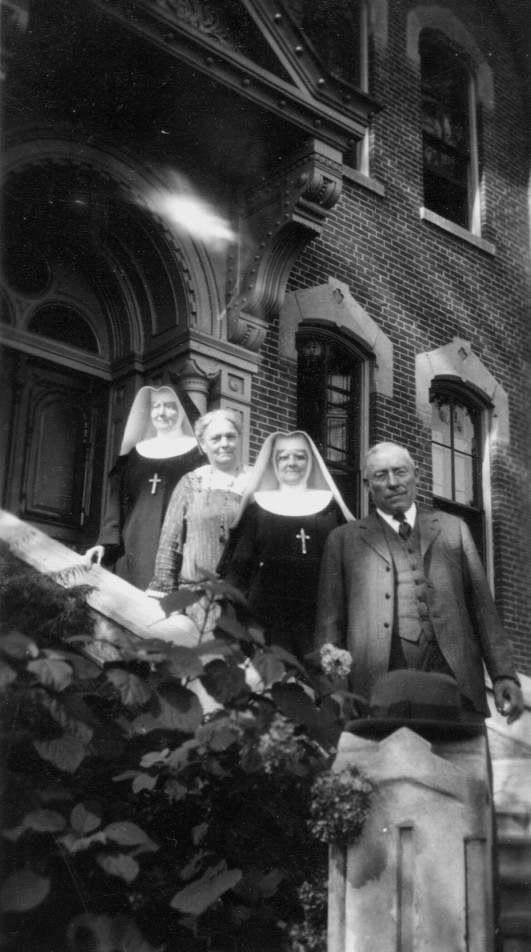

Five days ago, I sent my daughter and her unborn child a photograph of what I believe is an angel hovering over the head of Mary Dominica who is Mary Magdalene Rosamond’ cousin. None of the women on Heather’s empowerment group, responded, this is because they are witch-base. I am fighting off witches that hover over my unborn grandchild. Kim Haffner is one of them. I suspect she has been sending pregnant Heather – poison!
I was born this day to Rosemary Rita Rosamond. None of the witches honor my mother and Heather’s grandmother. They are frauds. Many women’s empowerment groups honor the grandmother.
John
Stuttmeister Married at Famous Lutheran Church
Posted on July 10, 2021 by Royal Rosamond Press
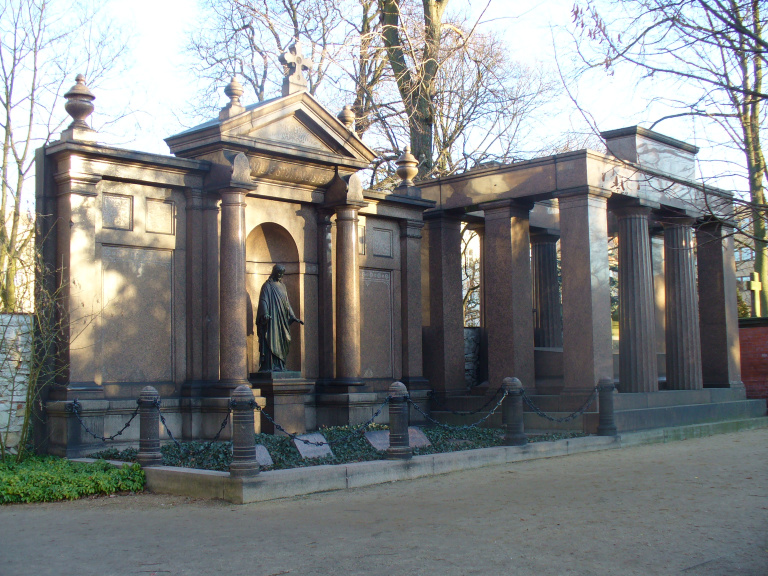
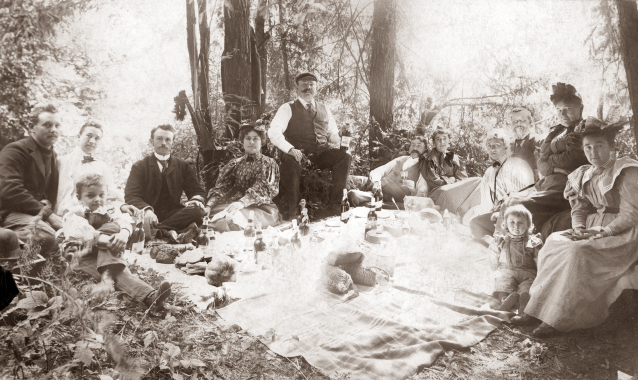
Mary Magdalene of Briar Cliff
Posted on September 24, 2015 by Royal Rosamond Press
The hungry consume his harvest,
taking it even from among thorns,
Job 5

Blue Angel
Posted on April 25, 2019 by Royal Rosamond Press
Before I died, I told my friend Keith; “There an angel hovering over us!” I was lying in the sand, writing in pain. All of a sudden, the pain was gone.


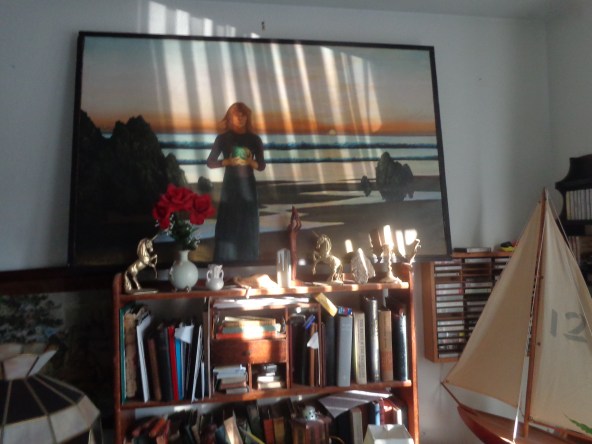

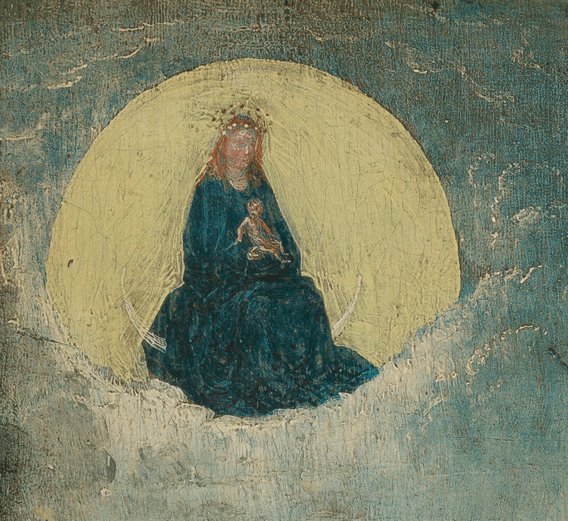


I awoke from my nap a 3:00 P.M. Turned over, and beheld the Beautiful Shekinah I captured in my painting I did in 1976.
The name of my movie is ‘Blue Angel’. Sometimes events are so catastrophic, that our human ability to grasp the terror, is overwhelming, We own empathy for the victims of the Paradise fire. We seek solutions for how it could have been prevented. I go to other end of the spectrum, and find a cool blue light going from place to place in the inferno offering sanctuary, and a way out.
Two dear friends lived in Paradise. The mother died ten years ago, and her daughter moved away. I own visions of a divine fire, and angel who gave me new life.
To all those seniors who looked forward to a better end….come into the light.
John Presco
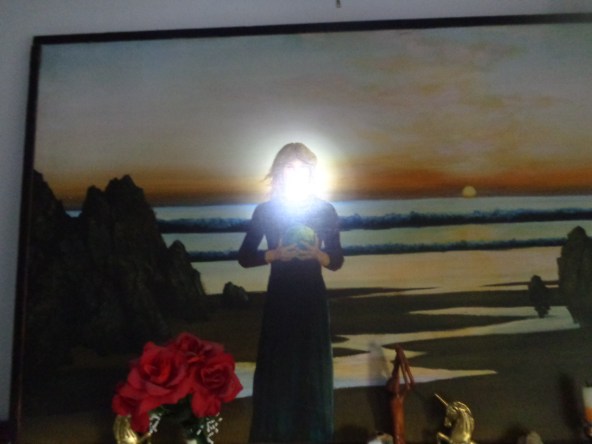


Bonds With The Blue Angel
Posted on April 25, 2019 by Royal Rosamond Press


In 1988 I had a Rose Reading. The woman reader saw me sitting on a hill looking down on these children on a playground.
“You were trying to heal them all.”
When I met my neighbor, Sandra, and when she told me she lived in the orphanage I would go by when I took a walk in the Oakland Hills, I saw what the Seer saw. I used to take a rest at the orphanage, and meditate on their, and my fate. There was always talk about the four Presco children being put in a orphanage.
I almost died of Whooping cough when I was eleven. I was sent to LA to visit my relative and came down with this rare illness. My aunt Lillian told me about the time I came outside looking for her and Uncle Dick. I was blue, and my finger contorted. Dick put me upside down on his knee and pounded on my back to get the flem out. This is when I began to see white auras around my kindred.
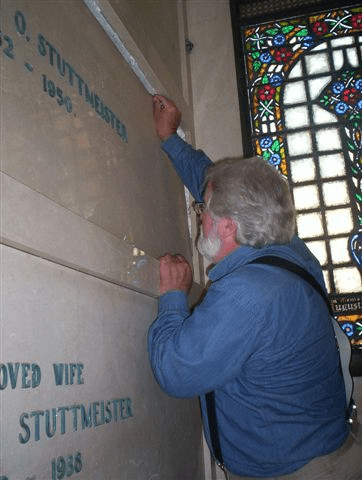
Above I am placing an angel coin in the tomb of my ancestor. It was given to me by a sister in recovery to honor my sister Christine. I wanted her sobriety to be out of reach of the parasites who were sold our Family Recovery.
John ‘The Seer’
Bonding With A Blue Angel
Posted on May 9, 2016by Royal Rosamond Press

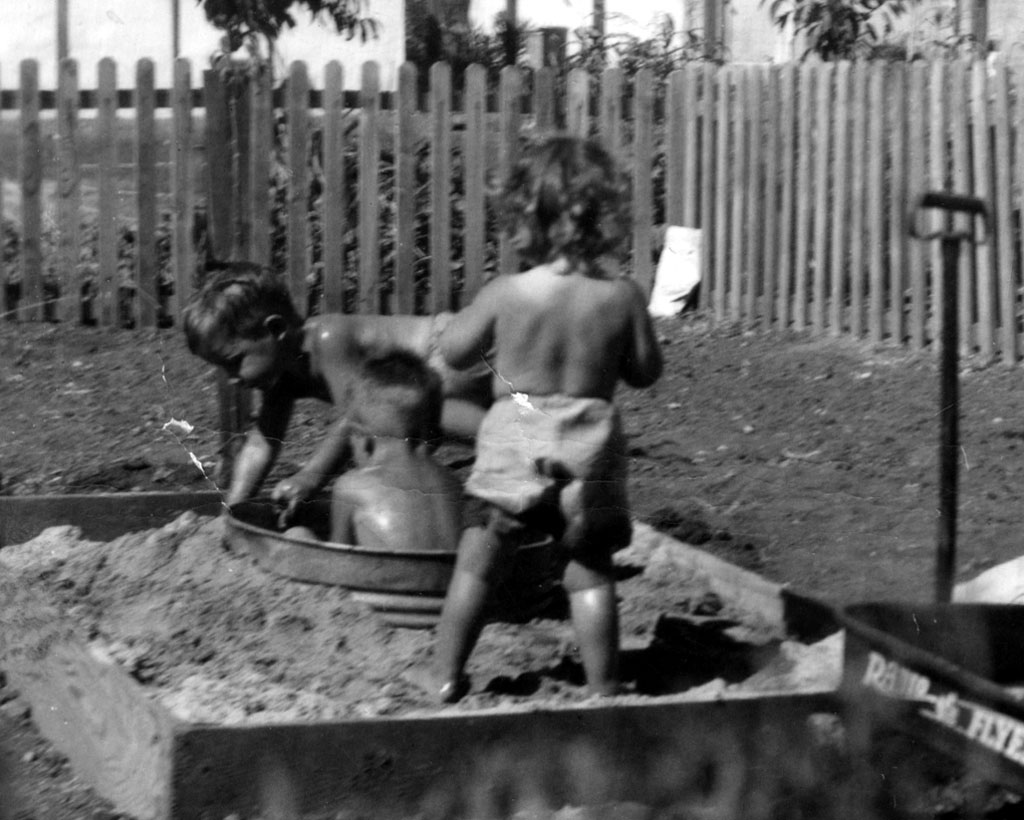
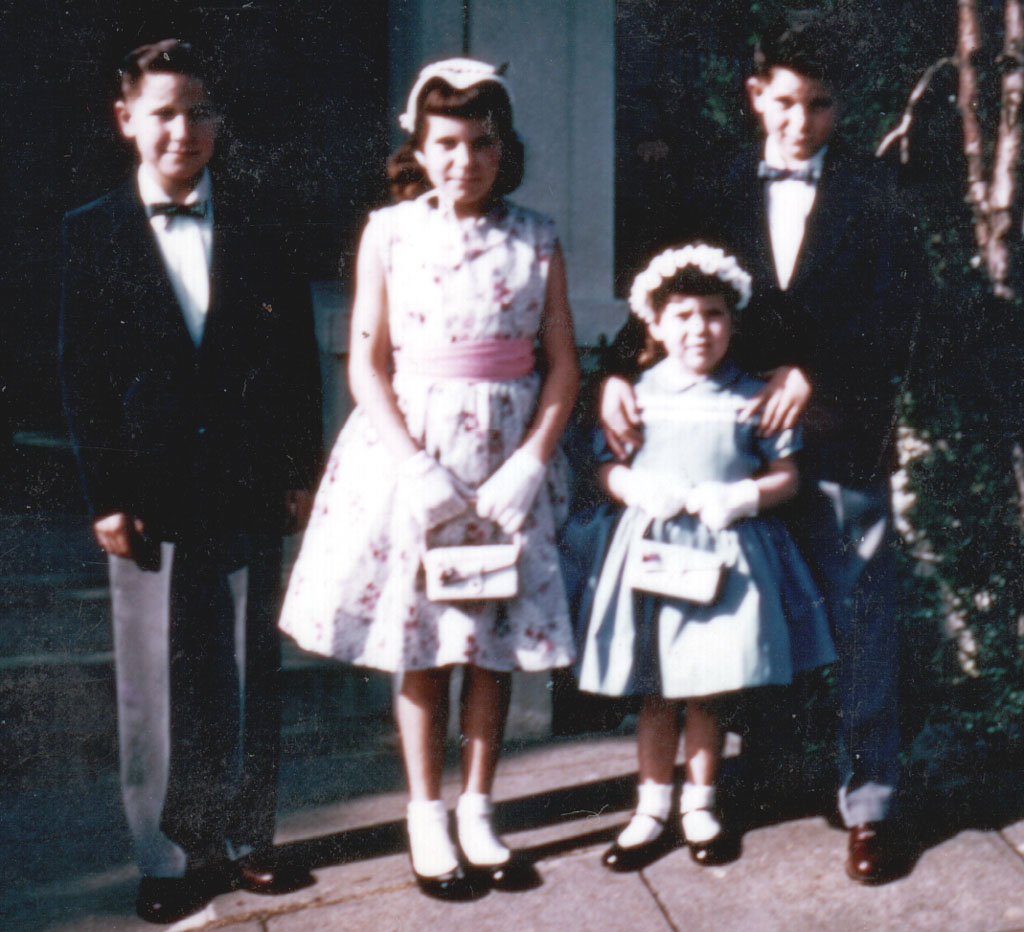
Bonding With A Blue Angel
by
Jon Gregory Presco
Copyright 1993
I and my three siblings have been cursed, and blessed. Within a hundred yards of our front door on San Sebastian Avenue, lived three Hags, old Crones of renown – and ill repute! Up the street, on Hollywood, lived Ms. Smith and Kay Coakley. To get to Mrs. Smith’s front door, one traversed a veritable Fairyland. Her yard was over-grown. At one time it was a showcase. But now the rose bushes meandered into the fruit trees. Everywhere was a bouquet of runaway flowers, that were once maintained and well-behaved. Now, they go and grow wherever they want to, they seemingly suspended in midair, clinging to vines to get the best sunlight. In the center of this maze was a bronze sundial on a marble pillar. We stopped here before we knocked on the big oaken door.
Subscribe
The Franciscan Family of Mary Magdalene Rosamond
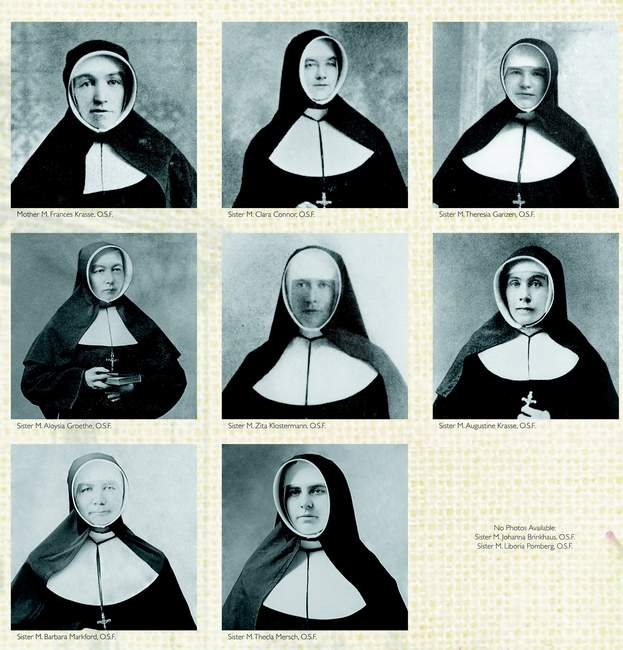
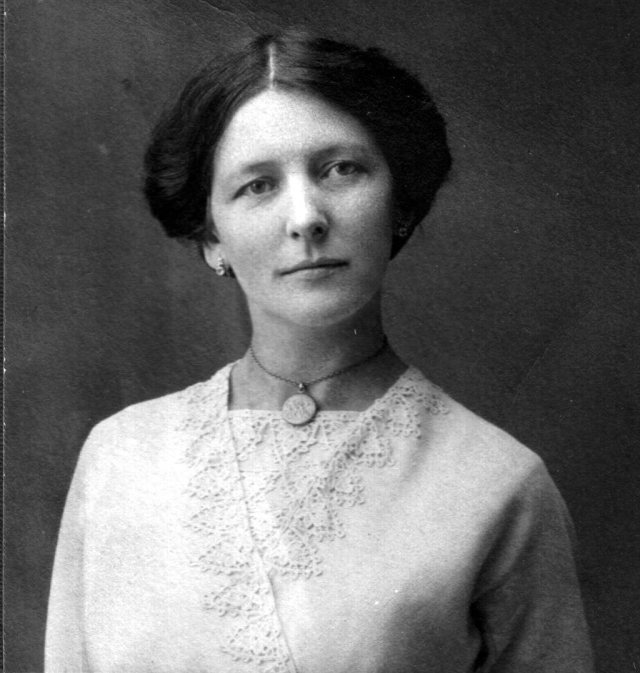
My grandmother’s cousin was the founder of Briarcliff College and Mother Superior of the Order of Saint Francis that was forced to leave Germany. My friend, Joy, showed me family photographs of her grandfathers with the Black Robes. John Grass and Gall, were chiefs of the Hunkpapa Sioux, who are standing in the way of the Keystone Pipeline owned by a Canadian company, and thus, they are not “people too” like Hobby Lobby. The Ghost Dance incorporated the Franciscan religion. Mary Magdalene’s was part Native American.
On September 26-27, 1877 Chief Sinte Gleska (Spotted Tail), leader of the Sicangu Lakota and Chief Red Cloud, leader of the Ogalala, met with President Rutherford B. Hayes and formally requested that the Black Robes come to their lands to educate their people. Sinte Gleska told the President, “I would like to say something about a teacher. My children, all of them, would like to learn how to talk English. They would like to learn how to read and write. We have teachers there, but all they teach us is to talk Sioux, and to write Sioux, and that is not necessary. I would like to get Catholic priests. Those who wear black dresses. These men will teach us how to read and write English.”
The Franciscans are still amongst the Sioux, and I believe they are protected by the agreements made with President Hayes. I need an attorney to help me bring a lawsuit against the Trumpite Ideologues, and TransCanada for violation of my family religions that came together by the Providence of God. The Wieneke and Rosamond immigrant family make a case, that no religious sect, or order, should be oppressed, or banned, for only God-Allah knows what is in store, when alas…..His will, be done!
Jon Presco
“The History of Mount St. Francis The Sisters of St. Francis of the
Holy Family were founded in Herford, Germany in 1864. Forced to
emigrate by the Kulturkampf, the small community arrived in Iowa
City on Sept. 8, 1875. Here they established the first orphanage
under Catholic auspices in the state of Iowa. In 1878, Bishop
Hennessy invited them to move to Dubuque to establish a diocesan
orphanage. Today, 125 years later, Mount St. Francis Center in
Dubuque is the home for approximately 375 sisters. It is also home
for those who are retired and those who need full-time nursing care.
It houses the central administrative offices of the congregation as
well as the novitiate community, where young women live and study as
they prepare to become members.”
In 1825, in the village of Fenagh in county Leitrim in Ireland, a gang of Catholic youths attacked the Rosamond home. The Rosamonds were staunch Protestants. James, aged 20 (born 1805) and his brother Edward, aged 15, attempted to protect their mother. A shot was fired by Edward and a youth was dead. The boys fled to Canada. James went to Merrickville where he worked for James Merrick as a weaver. Edward, still fearing arrest, worked his way eventually to Memphis, Tennessee.
From 1871 to 1876, the Prussian state parliament and the federal legislature (Reichstag), both with liberal majorities, enacted 22 laws in the context of the Kulturkampf. They were mainly directed against clerics: bishops, priests and religious orders (anti-clerical) and enforced the supremacy of the state over the church.[62][63] While several laws were specific to the Catholic Church (Jesuits, congregations etc.) the general laws affected both Catholic and Protestant churches. In an attempt to overcome increasing resistance by the Catholic Church and its defiance of the laws, new regulations increasingly went beyond state matters referring to purely internal affairs of the church. Even many liberals saw them as encroachment on civil liberties, compromising their own credo.[64]
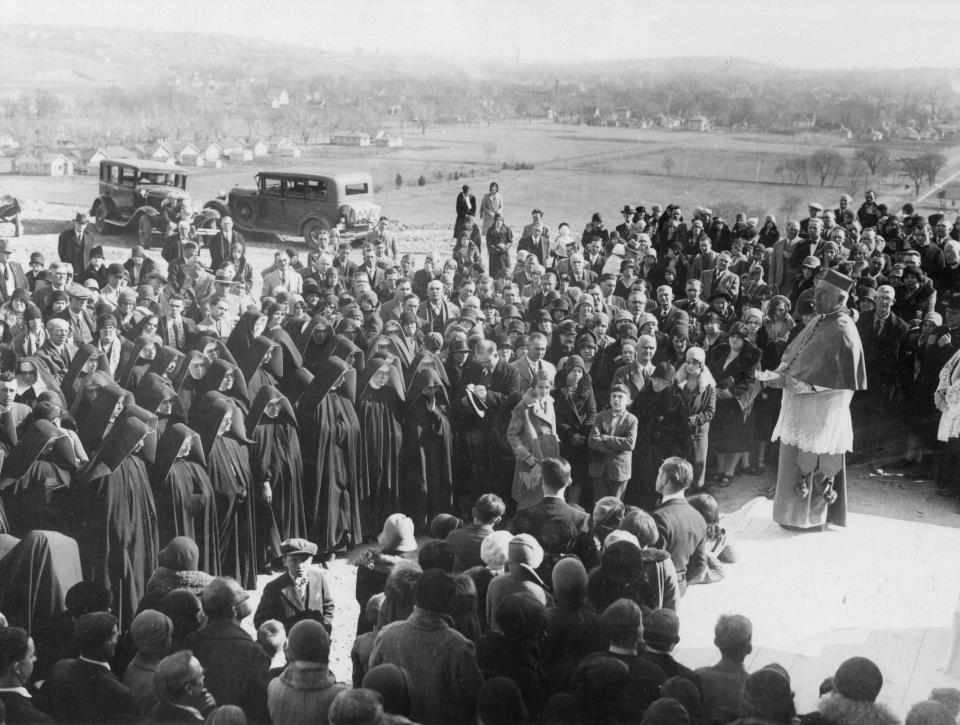
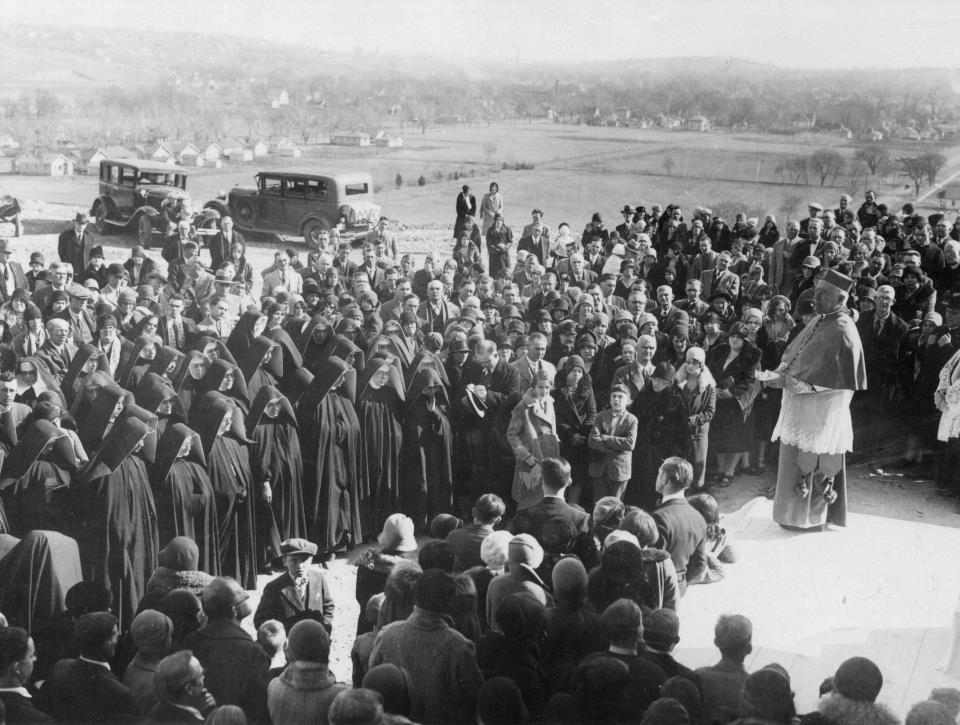
Here is a video that contains a photo of Mother Mary Dominica Wieneke, Major Superior of the Sisters of Saint Francis of Dubuque. Her cousin, Mary Magdalene Wieneke-Rosamond, was my grandmother, the mother of Rosemary Rosamond.
Above is an amazing photo of the groundbreaking ceremony for Briar Cliff College that is located on the Missouri River overlooking the states of South Dakota and Nebraska. I might do a painting of this scene because more than likely there are more than twenty of my kindred in it. My grandmother Mary is above in white.
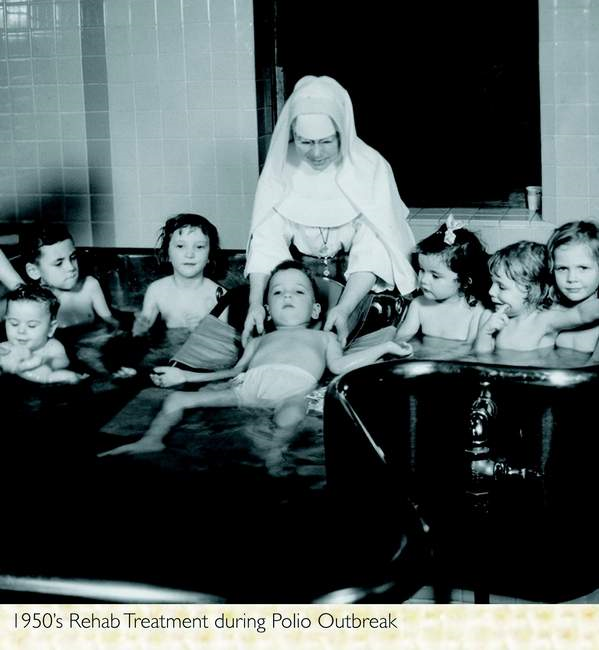
Look at those beautiful children who want their shot at life even though they know they are crippled. They are filled with hope. How can anyone who claims they are a Christian, talk about taking away hope from any child who suffers?
Jon Presco
In March 1929, Mother Mary Dominica Wieneke, Major Superior of the Sisters of Saint Francis of Dubuque, along with the Most Rev. Edmond Heelan, Bishop of the Sioux City Diocese, co-founded Briar Cliff College after meeting with members of the Sioux City community, who committed to raising $25,000 to support the establishment of a Catholic women’s college in Sioux City. The twelve foundresses of the College were carefully chosen by Mother Dominica. They were led by Sister Mary Servatius Greenen, who was named the first president.[2]
http://www.osfdbq.org/history.php
http://triumphofhope.org/lakota-culture-language-history/
On August 24, 2011, I posted the idea that my mother’s parents came together to repair a split in the church. Royal’s kindred were Orangemen, and Mary’s kindred were Catholics, priests and nuns of the Order of Saint Francis that had to flee Germany. I have long wondered if this caused their split. To discover that Jeannette and Ann Hart, our ancestors, were ex-communicated by their family of Patriots because they converted to Catholicism, is profound.
I went back to the Catholic church to complete my first communion two years ago after looking at these matters with the sight an angel gave unto me, and after I realized I was a candidate for the Roza Mira.
The Wieneke cote of arms contains a bunch of grapes. The Wieneke family were Catholic Germans who were forced to flee Germany due to the Kulturkumpf (cultural warfare) waged by Bismark against the Catholic Church. Bismark’s ancestors had come to favor the religions of the Stuttmeisters, and the Rosamond family who were Protestants. Mary Magdalene Rosamond’s cousin, Mother Dominica Wieneke, was the founder of Briar Cliff college in Iowa. She was a Sister of Saint Francis.
Bill Cornwell is a subscriber of Culture Warfare that he and millions of his ilk have been waging against the Liberal Hip Left employing any weird thing they can get their hands on – but they are not insane – because their enemy is extremely nuts! Of course they are, all opening slavos in Kultruekumpf title the opposition ‘Mad Deluded Dogs’. A cartoon of the newly founded Republican party depicts its members as a collection of Weirdos! You can say – nothing has changed!
The Republican party founded by my kindred, John Fremont and Jessie Benton, has gone insane going after me – the Hip King of the Bohemian Anti-Christ! Why isn’t Bill going after Drew Benton, she kin to Jessie Benton the daughter of the famous artist, Thomas Hart Benton, who married Mel Lyman who claimed he was God, and had hundreds of followers. I have no followers. They say Charlie Manson and Mel admired each other. Ooh! I bet that makes Bill’s father in Texas salvitate, his life alas having purpous.
Above is a photo of Jessie Benton Lyman before a painting her father did, and a photo of her daughter, sculpting. Consider the creative Zorthian family. Surely after I have been identified as an enemy of the Tea Paulty Culture Fighters, I am allowed to employ any and all weird stuff I want in order to win – without being titled “nuts”
After all;
“All’s fair in love and war!”
Jon Presco
The Big Winner of Amerikan Kulturekumpf
n 1929, only briar patches covered a 175-foot hill on the western outskirts of Sioux City, Iowa. But two people — Mother Mary Dominica Wieneke, Major Superior of the Sisters of Saint Francis, and the Most Rev. Edmond Heelan, Bishop of the Sioux City Diocese — had a vision. They saw that hill crowned with a Catholic college for women.
Mother Dominica and Bishop Heelan met on March 9, 1929 with members of the Sioux City community. Businessmen attending that meeting committed themselves to raising $25,000 to support the establishment of the college in Sioux City.
After this showing of community support, significant events followed in rapid succession. On Sept. 18, 1930, the college, named Briar Cliff after the hill on which it is located, was dedicated. Four days later, 25 women started classes in Heelan Hall, the only building on campus.
In 1937, the University’s two-year program was extended to four years. Fifty-five men were admitted to Briar Cliff in 1965 and co-education was formalized in 1966 with the admission of 150 full-time male students. The innovative Weekend College program started in the fall of 1979. The spring of 1980 saw the addition of a Bachelor of Science in Nursing. A Master of Arts in Education was implemented in the summer of 2001. The college officially became a University on June 1, 2001.
“The History of Mount St. Francis The Sisters of St. Francis of the
Holy Family were founded in Herford, Germany in 1864. Forced to
emigrate by the Kulturkampf, the small community arrived in Iowa
City on Sept. 8, 1875. Here they established the first orphanage
under Catholic auspices in the state of Iowa. In 1878, Bishop
Hennessy invited them to move to Dubuque to establish a diocesan
orphanage. Today, 125 years later, Mount St. Francis Center in
Dubuque is the home for approximately 375 sisters. It is also home
for those who are retired and those who need full-time nursing care.
It houses the central administrative offices of the congregation as
well as the novitiate community, where young women live and study as
they prepare to become members.”
International Headquarters
On July 2, 1844, a Franciscan priest, Father Christopher Bernsmeyer, witnessed the religious commitment of five women in the pilgrim shrine of the Sorrowful Mother at Telgte, Germany, a village outside the city of Muenster, Westphalia. This marked the foundation of the Hospital Sisters of the Third Order of St. Francis as a religious community of Catholic women dedicated to the service of the sick and those in need. Bismarek’s Kulturkampf threatened the survival of the newly formed religious community.
What is in a name? I believe Royal and Mary Magdalene Rosamond came together to repair a great split in the Christian Church, awaken a Sleeping Kingdom. Grimms named Sleeping Beauty, Rosamond. The artistic legacy left by Christine Rosamond, is no longer in the hands of Stacey Pierrot. My two nieces, Shannon and Drew, need to come together and refresh this Family Legacy. I will gift them my publishing company, Royal Rosamond Press, to this end. I suggest they hire an agent and manager to put together a company that will serve members of our family for generations to come.
Jon Presco
Copyright 2011
Mission History
In the 1840′s Father Pierre-Jean DeSmet, SJ, at the invitation of the Flathead Indians in Idaho, traveled extensively in the northern plains. On his journeys he brought the Gospel to Lakota people but he did not settle among them. He had a reputation among plains Indians as a holy man and a man who could be trusted.
During President Grant’s administration the government decided to assign different religions to specific reservations in an effort to civilize the native people. Since many of the individuals in Grant’s administration were Masons, Catholics were generally excluded from participating in reservation life. Several of the Lakota chiefs who had had contact with Fr. DeSmet – or at least knew of his and the Jesuit’s reputation for running schools – went to Washington to see if the Jesuits (known by the Lakota as “Black Robes”) could be allowed to enter the reservation to teach their children.
On September 26-27, 1877 Chief Sinte Gleska (Spotted Tail), leader of the Sicangu Lakota and Chief Red Cloud, leader of the Ogalala, met with President Rutherford B. Hayes and formally requested that the Black Robes come to their lands to educate their people. Sinte Gleska told the President, “I would like to say something about a teacher. My children, all of them, would like to learn how to talk English. They would like to learn how to read and write. We have teachers there, but all they teach us is to talk Sioux, and to write Sioux, and that is not necessary. I would like to get Catholic priests. Those who wear black dresses. These men will teach us how to read and write English.”
With the death of Sinte Gleska in 1881, Chief Two Strike invited the Jesuits to enter the Rosebud Reservation and begin a school. The site was located near camps of Two Strike’s band called Hinhansunwapa (Owl Feather Bonnet). Father Jutz and Brother Nunlist finished a large frame building financed by American born St. Katharine Drexel (whose feast day is March 3rd) and dedicated it in 1886. Father Florentine Digmann arrived in 1888 bringing with him Franciscan Sisters Kostka, Rosalia, and Alcantara. Together they established the Mission School that was named after St. Francis Assisi, who founded the Franciscan order, but was commonly referred to as Sapa Un Ti (“where the Black Robes live”) by the Sicangu. Father Digmann also established 37 Mission stations throughout the Rosebud Reservation and is considered the founder of St. Francis Mission.
The Sapa Un school offered the people in the area a place where they felt safe. The school taught them the Catholic faith and how to function in white society. The Mission School was turned over to the tribe in 1974 and is now independent of the Mission.
St. Francis Mission continues its educational mission by offering release time religious education programs and an after school program that offers religious education, Lakota language enhancement, and recreation. Moreover, the Mission offers adult education programs, a GED program, and educational programs on its Radio Station KINI.
Gradually people moved from the country to town clusters. Many of the original chapels were closed and the Mission now serves the Catholic community with six parishes.
The Knight Hospitaller of Saint Francis
Classy touches Satin Francis with one paw, and then with the other paw.


The Republican Church of Putin Trump is destroying everything traditional in America so they can INSTALL their hidden church – waiting in the dark. I am convinced Putin and Trump formed a secret pact to avoid nuclear war between Russia and the United States, and once the TRADITIONAL ENEMIES of Russia, are eliminated, than there will exist a State Church made up of HIGH BRED CONSUMER so the Oligarchs of both nations can ENCORGED THEMSELVE. Many hosptial will be closed, and, the poor and needy left to die, because they did the math. A wounded consumer – is a
DEFICIT!
For this reason I found the Religious Order of Knights Hospitaller of Saint Francis, that will be a Medical College that cares about the Good Health and Feeding of…..THE POOR! Just like in the good ol days! Israel has socialized medicine. I want Harvard to join this order and be free of all Government interference because they are a Religious College like BOB JONES U. Because out military illegally attacked Iran, without the consent of Congress, it is imperative a Religious Body step in – that will be highly visible and perform the traditional miracles, and give the traditional help to the poor.
John Presco
Republican senators are pushing back hard on hundreds of billions of dollars in Medicaid cuts included in the Senate version of President Trump’s budget reconciliation package, endangering Senate Majority Leader John Thune’s (R-S.D.) plan for a vote as soon as Friday.
Two Republicans are a hard “no” on the bill — Sens. Rand Paul (Ky.) and Ron Johnson (Wis.) — and a handful of other Republicans won’t say whether they’ll vote to begin debate on the package because they are concerned that deep cuts in Medicaid spending could cause millions of Americans to lose their coverage and push scores of rural hospitals around the country into bankruptcy.
Healthcare in Israel is universal and participation in a medical insurance plan is compulsory. All Israeli residents are entitled to basic health care as a fundamental right. The Israeli healthcare system is based on the National Health Insurance Law of 1995,[1] which mandates all citizens resident in the country to join one of four official health insurance organizations, known as Kupat Holim (קופת חולים – “Patient Funds“) which are run as not-for-profit organizations and are prohibited by law from denying any Israeli resident membership. Israelis can increase their medical coverage and improve their options by purchasing private health insurance.[2] In a survey of 48 countries in 2013, Israel’s health system was ranked fourth in the world in terms of efficiency, and in 2014 it ranked seventh out of 51.[3] In 2020, Israel’s health system was ranked third most efficient in the world.[4] In 2015, Israel was ranked sixth-healthiest country in the world by Bloomberg rankings[5] and ranked eighth in terms of life expectancy.
The Repulican Church of Putin-Trump is destroying
Knights Hospitaller
“Order of Saint John” redirects here. For other uses, see Order of Saint John (disambiguation).
“Hospitaller” redirects here. For other uses, see Hospitaller (disambiguation).

The Order of Knights of the Hospital of Saint John of Jerusalem,[2] commonly known as the Knights Hospitaller (/ˈhɒspɪtələr/),[b] is a Catholic military order. It was founded in the crusader Kingdom of Jerusalem in the 12th century and had headquarters there until 1291, thereafter being based in Kolossi Castle in Cyprus (1302–1310), the island of Rhodes (1310–1522), Malta (1530–1798), and Saint Petersburg (1799–1801).
The Hospitallers arose in the early 12th century at the height of the Cluniac movement, a reformist movement within the Benedictine monastic order that sought to strengthen religious devotion and charity for the poor. Earlier in the 11th century, merchants from Amalfi founded a hospital in Jerusalem dedicated to John the Baptist where Benedictine monks cared for sick, poor, or injured Christian pilgrims to the Holy Land. Blessed Gerard, a lay brother of the Benedictine order, became its head when it was established. After the Christian conquest of Jerusalem in 1099 during the First Crusade, the Hospitallers rose in prominence and were recognized as a distinct order by Pope Paschal II in 1113.
The Order of Saint John was militarized in the 1120s and 1130s, hiring knights that later became Hospitallers. The organization became a military religious order under its own papal charter, charged with the care and defence of the Holy Land, and fought in the Crusades until the Siege of Acre in 1291. Following the reconquest of the Holy Land by Islamic forces, the knights operated from Rhodes, over which they were sovereign, and later from Malta, where they administered a vassal state under the Spanish viceroy of Sicily. The Hospitallers were one of the smallest groups to have colonized parts of the Americas, briefly acquiring four Caribbean islands in the mid-17th century, which they turned over to France in the 1660s.
The knights became divided during the Protestant Reformation, when rich commanderies of the order in northern Germany and the Netherlands became Protestant and largely separated from the Catholic main stem, remaining separate to this day; modern ecumenical relations between the descendant chivalric orders are amicable. The order was suppressed in England, Denmark, and other parts of northern Europe, and was further damaged by Napoleon‘s capture of Malta in 1798, after which it dispersed throughout Europe.[3]
Today, five organizations continue the traditions of the Knights Hospitaller and have mutually recognised each other: the Sovereign Military Order of Malta, the Most Venerable Order of the Hospital of Saint John, the Bailiwick of Brandenburg of the Chivalric Order of Saint John, the Order of Saint John in the Netherlands, and the Order of Saint John in Sweden.
History
Foundation and early history
See also: History of the Knights Hospitaller in the Levant

In 603, Pope Gregory I commissioned the Ravennate Abbot Probus, who was previously Gregory’s emissary at the Lombard court, to build a hospital in Jerusalem to treat and care for Christian pilgrims to the Holy Land.[4] In 800, Emperor Charlemagne enlarged Probus’ hospital and added a library to it. About 200 years later, in 1009, the Fatimid caliph al-Hakim bi-Amr Allah destroyed the hospital and three thousand other buildings in Jerusalem.
Merchants from Amalfi in southern Italy were given permission by the Egyptian Fatimid Caliph al-Mustansir Billah (r. 1036–1094) to build a monastery in Jerusalem, near the Church of the Holy Sepulchre. The monastery, known as the abbey of St Mary of the Latins (to distinguish them from local Syriac Orthodox Church hierarchy), was served by the Order of Saint Benedict and took in Christian pilgrims travelling to visit the Christian holy sites. The increase in the number of pilgrims led the Benedictine monks to establish two hospitals in the late 1060s, one for men and one for women, with the former known as the Hospital of St John. They did this with the support of a wealthy Amalfian named Mauro of Pantaleone. In the early 1070s the hospital was visited by Archbishop John of Amalfi during his pilgrimage. In later centuries, to help raise money in Europe, the Order of St John made claims that the hospital had been founded more than a century before Christ by the high priest Menelaus and the Greek King Antiochus of Jerusalem, with financing from Judas Maccabeus, and that it was first headed by Saint Stephen and had been visited by Christ and the Apostles. A historian of the Order in the 13th century wrote that this version was not true.[5][6] In any case, the Hospitallers rose to fame and prestige in a short amount of time.[7]
By the time of the success of the First Crusade in 1099, the Hospital of St John was already well known among pilgrims and was regarded as a separate organization from the monastery of St Mary. The monastic brothers at the hospital saw it as their duty to provide the best possible treatment to the poor. They were given an endowment by Godfrey of Bouillon, the leader of the First Crusade, before he died in 1100. The Latin Patriarch of Jerusalem, Ghibbelin of Arles, formally recognized it as a separate entity from the monastery when he reformed the Catholic hierarchy in Palestine, and a step towards this was taken by Pope Paschal II when he recognized the abbey of St Mary as a church of the Holy See, placing it under his protection and exempting it from paying tithes on its land, on 19 June 1112. The monastic Hospitaller Order was formally created when the Pope issued the papal bull Pie postulatio voluntatis on 15 February 1113 to the head of the Hospital of St John, Blessed Gerard de Martigues. The Pope subordinated the hospital to his own authority and exempted it from paying tithes on the lands it owned, and gave the right to its professed brothers to elect their master. He also placed several other hospitals and hospices in southern Italy under the governance of the Hospital of St John in Jerusalem, as they were located at port cities from which pilgrims traveled to the Holy Land.[7][8][9]

Gerard acquired territory and revenues for his order throughout the Kingdom of Jerusalem and beyond. Under his successor, Raymond du Puy, the original hospice was expanded to an infirmary[10] and by then was subordinated to the Latin Patriarch of Jerusalem at the Church of the Holy Sepulchre. Around this time the Hospital of St John became connected with that Church, and documents often referred to “the Holy Sepulchre and the Hospital of St John of Jerusalem.”[11] Initially, the Hospitallers cared for pilgrims as well as others (including Muslims and Jews) in Jerusalem,[7] but the order soon extended to provide pilgrims with an armed escort before eventually becoming a significant military force. Thus, the Order of St. John imperceptibly became militaristic without losing its charitable character.[10]
It is possible that the Hospital of St John hired knights or foot soldiers after the First Crusade to provide security, before it formally established its own military organization. Knights in western Europe left their horses and weapons to the Hospitallers in their wills in the 1120s, and in the early 1140s Pope Innocent II mentioned that the Hospitallers had “servants” to protect pilgrims. An account from a Hospitaller priest in 16th century stated that as the Order of St John became more wealthy it hired knights to defend its hospitals and pilgrims, and these knights eventually became Hospitallers themselves. It is known that secular knights and soldiers were hired by institutions in Jerusalem to provide protection after 1099, including churches, and some of them later joined military orders. The Order of Knights Templar was founded around 1119-1120 and it is likely that the Hospitallers were inspired by them to have their own knights. A charter made for a gift to the Hospital of St John in a Christian army on 17 January 1126 recorded that a brother from the Order was present as a witness and that he held a military title.[12]

Krak des Chevaliers, a castle acquired by the Hospitallers in Syria
Raymond du Puy, who succeeded Gerard as master of the hospital in 1120,[11] is credited with establishing the military element of the Order.[13] Raymond decided some time before 1136 that Hospitallers could fight to defend the kingdom or to besiege a pagan city.[14] The Knights Hospitaller, like the other military orders, organized its fighting members into the ranks of knight and sergeant.[15] In 1130, Pope Innocent II gave the order its coat of arms, a plain silver cross in a field of red, to differentiate them from the Templars.[16] The other symbol of the Hospitallers, the “eight-pointed cross”, is said to have originated in the Byzantine Empire before reaching the Duchy of Amalfi in Italy, and it was later used in Jerusalem by the monks that founded the Hospital of St John. After the Hospitallers moved to Malta, it became known as the Maltese cross.[17]

King Fulk of Jerusalem constructed several castles to defend the kingdom’s southern border from attacks by the Fatimid garrison at Ascalon, and allowed the Hospitallers to manage one of them in 1136, the castle of Bethgibelin.[14] This castle also allowed them to defend the pilgrim route between Jaffa and Jerusalem.[18] Later in the century, the Hospitallers were given control over more castles in Syria than they had in the Kingdom of Jerusalem.[19] In the next several decades after 1136 the Order was granted more castles and towns by nobles that needed assistance in defending them, especially in the County of Tripoli and the Principality of Antioch. Those notably included the Krak des Chevaliers in 1142, which they received from Raymond II, Count of Tripoli.[14][19] According to one estimate the Hospitallers had 25 castles as of 1180.[19] In addition to defending them, the Hospitallers also undertook construction projects to build new castles or repair and expand existing ones, with an example of the latter being Krak des Chevaliers.[20]
One of the first battles that the Knights Hospitaller fought in was the Siege of Ascalon in 1153. After a group of Knights Templar, led by their Grand Master, Bernard de Tremelay, entered the besieged fortress and were all killed, King Baldwin III of Jerusalem wanted to withdraw, but Raymond du Puy convinced him to continue, and the fort surrendered to the Crusaders on 22 August 1153.[21][22] It is not clear if the role of the Hospitallers was only advisory or if they were involved in the fighting at Ascalon.[23]
The Hospitallers and the Knights Templar became the most formidable military orders in the Holy Land. Frederick Barbarossa, the Holy Roman Emperor, pledged his protection to the Knights of St. John in a charter of privileges granted in 1185.[24][25] In order to protect the road of the Camino de Santiago, the Order of Saint John generously received the hospital, commandery and convent of San Juan de Acre in Navarrete, La Rioja, founded in 1185 by María Ramírez de Medrano, Lady of Fuenmayor, built by her son Martín de Baztán y Medrano, bishop of Osma in Soria.[26] Active in the Kingdom of Toledo (a border area with Islam from the 12th to the 13th centuries) since 1144, the order had their largest holding in the kingdom in the Campo de San Juan.[27]

The statutes of Roger de Moulins (1187) deal only with the service of the sick; the first mention of military service is in the statutes of the ninth grand master, Fernando Afonso of Portugal (about 1200). In the latter, a marked distinction is made between secular knights, externs to the order, who served only for a time, and the professed knights, attached to the order by a perpetual vow, and who alone enjoyed the same spiritual privileges as the other religious. The order numbered three distinct classes of membership: the military brothers, the brothers infirmarians, and the brothers chaplains, to whom was entrusted the divine service.[10]
In 1248, Pope Innocent IV (1243–1254) approved a standard military dress for the Hospitallers to be worn during battle. Instead of a closed cape over their armour (which restricted their movements), they wore a red surcoat with a white cross emblazoned on it.[28]
Many of the more substantial Christian fortifications in the Holy Land were built by the Templars and the Hospitallers. At the height of the Kingdom of Jerusalem, the Hospitallers held seven great forts and 140 other estates in the area. The two largest of these, their bases of power in the Kingdom and in the Principality of Antioch, were the Krak des Chevaliers and Margat in Syria.[8] The property of the Order was divided into priories, subdivided into bailiwicks, which in turn were divided into commanderies.
As early as the late 12th century, the order had begun to achieve recognition in the Kingdom of England and Duchy of Normandy. As a result, buildings such as St John’s Jerusalem and the Knights Gate, Quenington in England were built on land donated to the order by local nobility.[29] An Irish house was established at Kilmainham, near Dublin, and the Irish Prior was usually a key figure in Irish public life.
The Knights also received the “Land of Severin” (Terra de Zeurino), along with the nearby mountains, from Béla IV of Hungary, as shown by a charter of grant issued on 2 June 1247. The Banate of Severin was a march, or border province, of the Kingdom of Hungary between the Lower Danube and the Olt River, today part of Romania, and back then bordered across the Danube by a powerful Bulgarian Empire. The Hospitaller hold on the Banate was only brief.[30]
Knights of Cyprus and Rhodes
Main article: Hospitaller Rhodes

_01.jpg)

After the fall of the Kingdom of Jerusalem in 1291 (the city of Jerusalem had fallen in 1187), the Knights were confined to the County of Tripoli and, when Acre was captured in 1291, the order sought refuge in the Kingdom of Cyprus. Finding themselves becoming enmeshed in Cypriot politics, their Master, Guillaume de Villaret, created a plan of acquiring their own temporal domain, selecting Rhodes, then part of the Byzantine Empire. He also reorganised the order into eight langues, or “tongues”, corresponding to a geographic or ethno-linquistic area: Aragon, Auvergne, Castile, England, France, the Holy Roman Empire, Italy and Provence. Each was administered by a Prior or, if there was more than one priory in the langue, by a Grand Prior.
Guillaume’s successor, Foulques de Villaret, executed the plan to take Rhodes, and on 15 August 1310, after more than four years of campaigning, the city of Rhodes surrendered to the knights. They also gained control of a number of neighbouring islands and the Anatolian port of Halicarnassus and the island of Kastellorizo. Not long after, in 1312, Pope Clement V dissolved the Hospitallers’ rival order, the Knights Templar, with a series of papal bulls, including the Ad providam bull that turned over much of their property to the Hospitallers. At Rhodes, and later Malta, the resident knights of each langue were headed by a bailiff. The English Grand Prior at the time was Philip De Thame, who acquired the estates allocated to the English langue from 1330 to 1358.
On Rhodes, the Hospitallers,[31] by then also referred to as the Knights of Rhodes,[10] were forced to become a more militarized force. In 1334, they fought an attempted invasion by Andronicus and his Turkish auxiliaries,[32] and in 1374 they took over the defence of nearby Smyrna on the Anatolian coast, which had been conquered by a crusade in 1344;[33] the knights held the city until it was besieged and taken by Timur in 1402.[33] On the peninsula of Halicarnassus (present-day Bodrum), the knights reinforced their position with the construction of Petronium Castle, utilizing pieces of the partially destroyed Mausoleum at Halicarnassus, one of the Seven Wonders of the Ancient World, to strengthen their rampart.[34]
In the 15th century, the knights fought frequently with Barbary pirates, also known as Ottoman corsairs. They withstood two invasions by ascendant Muslim forces, one by the Sultan of Egypt in 1444 and another by Ottoman Sultan Mehmed the Conqueror in 1480, who, after capturing Constantinople and defeating the Byzantine Empire in 1453, made the Knights a priority target.

In 1522, an entirely new sort of force arrived: 400 ships under the command of Sultan Suleiman the Magnificent deployed as many as 100,000 men to the island,[35] and possibly up 200,000.[36] Under Grand Master Philippe Villiers de L’Isle-Adam, the knights, though well-fortified, only had about 7,000 men-at-arms. The siege lasted six months, after which the defeated surviving Hospitallers were allowed to withdraw to Sicily. Despite the defeat, both Christians and Muslims seem to have regarded Phillipe Villiers as extremely valiant, and the Grand Master was proclaimed a Defender of the Faith by Pope Adrian VI.
Knights of Malta

Main articles: Hospitaller Malta and Hospitaller Tripoli
In 1530, after seven years of displacement from Rhodes, Pope Clement VII – himself a knight – reached an agreement with Charles V, Holy Roman Emperor and King of Spain and Sicily, to provide the knights permanent quarters: In exchange for providing Malta,[37][38] Gozo, and the North African port of Tripoli in perpetual fiefdom, Charles V would receive an annual fee of a single Maltese falcon (the Tribute of the Maltese Falcon), which they were to send on All Souls’ Day to the king’s representative, the Viceroy of Sicily.[39][c] In 1548, Charles V raised Heitersheim, the headquarters of the Hospitallers in Germany, into the Principality of Heitersheim, making the Grand Prior of Germany a prince of the Holy Roman Empire with a seat and vote in the Reichstag.[40]
The knights would stay in Malta for the next 268 years, transforming what they called “merely a rock of soft sandstone” into a flourishing island with mighty defences, whose capital city, Valletta, would become known as Superbissima, “Most Proud”, among the great powers of Europe. However, the indigenous islanders were initially apprehensive about the order’s presence and viewed them as arrogant intruders; they were especially loathed for taking advantage of local women.[41] Most knights were French and excluded Maltese from serving in the order, even being generally dismissive of local nobility. However, the two groups coexisted peacefully, since the Knights boosted the economy, were charitable, and protected against Muslim attacks.[42]

Hospitals were among the first projects to be undertaken in Malta, where French soon supplanted Italian as the official language (though the native inhabitants continued to speak Maltese among themselves).[43] The knights also constructed fortresses, watch towers, and naturally, churches. Its acquisition of Malta signalled the beginning of the Order’s renewed naval activity.
The building and fortification of Valletta, named for Grand Master la Valette, was begun in 1566, soon becoming the home port of one of the Mediterranean’s most powerful navies. Valletta was designed by Francesco Laparelli, a military engineer, and his work was then taken up by Girolamo Cassar. The city was completed in 1571. The island’s hospitals were expanded as well. The Sacra Infermeria could accommodate 500 patients and was famous as one of the finest in the world. In the vanguard of medicine, the Hospital of Malta included Schools of Anatomy, Surgery and Pharmacy. Valletta itself was renowned as a centre of art and culture. The Conventual Church of St. John, completed in 1577, contains works by Caravaggio and others.
In Europe, most of the Order’s hospitals and chapels survived the Reformation, though not in Protestant or Evangelical countries. In Malta, meanwhile, the Public Library was established in 1761. The University was founded seven years later, followed, in 1786, by a School of Mathematics and Nautical Sciences. Despite these developments, some of the Maltese grew to resent the Order, which they viewed as a privileged class. This even included some of the local nobility, who were not admitted to the Order.
In Rhodes, the knights had been housed in auberges (inns) segregated by Langues. This structure was maintained in Birgu (1530–1571) and then Valletta (from 1571). The auberges in Birgu remain, mostly undistinguished 16th-century buildings. Valletta still has the auberges of Castile and Portugal (1574; renovated 1741 by Grand Master de Vilhena, now the Prime Minister’s offices), Italy (renovated 1683 by Grand Master Carafa, now an art museum), Aragon (1571, now a government ministry), Bavaria (former Palazzo Carnerio, purchased in 1784 for the newly formed Langue, now occupied by the Lands Authority) and Provence (now National Museum of Archaeology). In the Second World War, the auberge d’Auvergne was damaged (and later replaced by Law Courts) and the auberge de France was destroyed.


In 1604, each Langue was given a chapel in the conventual church of Saint John and the arms of the Langue appear in the decoration on the walls and ceiling:
- Provence: Michael the Archangel, Jerusalem
- Auvergne: Saint Sebastian, Azure a dolphin or
- France: conversion of Paul the Apostle, France
- Castile, León and Portugal: James, brother of Jesus, Quarterly Castile and León
- Aragon: Saint George [the church of the Langue is consecrated to Our Lady of the Pillar Per pale Aragon and Navarre]
- Italy: St Catherine, Azure the word ITALIA in bend or
- England: Flagellation of Christ, [no arms visible; in Rhodes the Langue used the arms of England, quarterly France and England]
- Germany: Epiphany, Austria born by a double-headed eagle displayed sable
The Order may have played a direct part in supporting the Malta native Iacob Heraclid who, in 1561, established a temporary foothold in Moldavia.[44] The Hospitallers also continued their maritime actions against Muslims and especially the Barbary pirates. Although they had only a few ships, they quickly drew the ire of the Ottomans, who were unhappy to see the order resettled. In 1565 Suleiman sent an invasion force of about 40,000 men to besiege the 700 knights and 8,000 soldiers and expel them from Malta and gain a new base from which to possibly launch another assault on Europe.[38] This is known as the Great Siege of Malta.
At first the battle went as badly for the Hospitallers as Rhodes had: most of the cities were destroyed and about half the knights killed. On 18 August, the position of the besieged was becoming desperate: dwindling daily in numbers, they were becoming too feeble to hold the long line of fortifications. But when his council suggested the abandonment of Birgu and Senglea and withdrawal to Fort St. Angelo, Grand Master Jean Parisot de Valette refused.[45]
The Viceroy of Sicily had not sent help; possibly the Viceroy’s orders from Philip II of Spain were so obscurely worded as to put on his own shoulders the burden of the decision whether to help the Order at the expense of his own defences. A wrong decision could mean defeat and exposing Sicily and Naples to the Ottomans. He had left his own son with La Valette, so he could hardly be indifferent to the fate of the fortress. Whatever may have been the cause of his delay, the Viceroy hesitated until the battle had almost been decided by the unaided efforts of the knights, before being forced to move by the indignation of his own officers.[45]
On 23 August came yet another grand assault, the last serious effort, as it proved, of the besiegers. It was thrown back with the greatest difficulty, even the wounded taking part in the defence. The plight of the Turkish forces was now desperate. With the exception of Fort Saint Elmo, the fortifications were still intact.[46][45] Working night and day the garrison had repaired the breaches, and the capture of Malta seemed more and more impossible. Many of the Ottoman troops in crowded quarters had fallen ill over the terrible summer months. Ammunition and food were beginning to run short,[45] and the Ottoman troops were becoming increasingly dispirited by the failure of their attacks and their losses. The death on 23 June of skilled commander Dragut, a corsair and admiral of the Ottoman fleet, was a serious blow.[47] The Turkish commanders, Piali Pasha and Mustafa Pasha, were careless. They had a huge fleet which they used with effect on only one occasion. They neglected their communications with the African coast and made no attempt to watch and intercept Sicilian reinforcements.
_-_The_Siege_of_Malta,_Attack_on_the_Post_of_the_Castilian_Knights,_21_August_1565_-_BHC0257_-_Royal_Museums_Greenwich.jpg)
On 1 September they made their last effort, but the morale of the Ottoman troops had deteriorated seriously and the attack was feeble, to the great encouragement of the besieged, who now began to see hopes of deliverance. The perplexed and indecisive Ottomans heard of the arrival of Sicilian reinforcements in Mellieħa Bay. Unaware that the force was very small, they broke off the siege and left on 8 September. The Great Siege of Malta may have been the last action in history in which a force of knights won a decisive victory against a numerically superior force that made use of firearms.[48][45] When the Ottomans departed, the Hospitallers had but 600 men able to bear arms. The most reliable estimate puts the number of the Ottoman army at its height at some 40,000 men, of whom 15,000 eventually returned to Constantinople.[45] The siege is portrayed vividly in the frescoes of Matteo Pérez in the Hall of St. Michael and St. George, also known as the Throne Room, in the Grandmaster’s Palace in Valletta; four of the original modellos, painted in oils by Perez d’Aleccio between 1576 and 1581, can be found in the Cube Room of the Queen’s House at Greenwich, London. After the siege a new city had to be built: the present capital city of Malta, named Valletta in memory of the Grand Master who had withstood the siege.[49]
17th century
In 1605, Tomás Fernández de Medrano, Lord and Divisero of Valdeosera and a Knight of the Order of Saint John under the habit of Prince Emmanuel Philibert of Savoy, printed a brief from Pope Paul V in Latin and Spanish for King Philip III of Spain and the Order of Saint John, titled: Brief of Our Most Holy Father Pope Paul V in Confirmation of the Privileges of the Order of St. John of Jerusalem by Tomás Fernández de Medrano at his own expense, secretary to the Serene Princes of Savoy and the Holy Chapters and Assemblies of Castile on behalf of his King and knights of the Order of Saint John. It is dedicated to the Duke of Lerma, as protector of all religions and in particular, the Order of Saint John.[50]
In 1607, the Grand Master of the Hospitallers was granted the status of Reichsfürst (Prince of the Holy Roman Empire), even though the Order’s territory was always south of the Holy Roman Empire. In 1630, he was awarded ecclesiastic equality with cardinals, and the unique hybrid style His Most Eminent Highness, reflecting both qualities qualifying him as a true Prince of the Church.[51]
Reconquista of the sea
See also: Navy of the Order of Saint John
With their diminished strength and relocation to Malta in the central Mediterranean, the knights found themselves devoid of their founding mission: assisting and joining the crusades in the Holy Land. Revenues subsequently dwindled as European sponsors were no longer willing to support a costly and seemingly redundant organization. The knights were forced to make do with their maritime location and turn to combating the increased threat of piracy, particularly from the Ottoman-endorsed Barbary pirates operating out of North Africa. Boosted by an air of invincibility following the successful defence of their island in 1565, and compounded by the Christian victory over the Ottoman fleet in the Battle of Lepanto in 1571, the knights set about protecting Christian merchant shipping to and from the Levant and freeing the captured Christian slaves who formed the basis of the Barbary corsairs’ piratical trading and navies. This campaign became known as the “corso”.[52]: 107

Yet the Order soon struggled on a now reduced income. By policing the Mediterranean, they augmented the assumed responsibility of the traditional protectors of the Mediterranean, the naval city states of Venice and Genoa. Further compounding their financial woes; over the course of this period, the exchange rate of the local currencies against the ‘scudo’ that were established in the late 16th century gradually became outdated, meaning the knights were gradually receiving less at merchant factories.[53] Economically hindered by the barren island they now inhabited, many knights went beyond their call of duty by raiding Muslim ships.[52]: 109 More and more ships were plundered, from whose profits many knights lived idly and luxuriously, taking local women to be their wives and enrolling in the navies of France and Spain in search of adventure, experience, and yet more money.[52]: 97
The Knights’ changing attitudes were coupled with the effects of the Reformation and Counter-Reformation and the lack of stability from the Roman Catholic Church. All this affected the knights strongly as the 16th and 17th centuries saw a gradual decline in the religious attitudes of many of the Christian peoples of Europe (and, concomitantly, the importance of a religious army), and thus in the Knights’ regular tributes from European nations.[54][failed verification] That the knights, a chiefly Roman Catholic military order, pursued the readmittance of England as one of its member states – the Order there had been suppressed under King Henry VIII of England during the dissolution of the monasteries – upon the succession of the Protestant queen Elizabeth I of England aptly demonstrates the new religious tolerance within the Order.[55]: 326 For a time, the Order even possessed a German langue which was part Protestant or Evangelical and part Roman Catholic.[citation needed]
The moral decline that the knights underwent over the course of this period is best highlighted by the decision of many knights to serve in foreign navies and become “the mercenary sea-dogs of the 14th to 17th centuries”, with the French Navy proving the most popular destination.[56]: 432 This decision went against the knights’ cardinal reason for existence, in that by serving a European power directly they faced the very real possibility that they would be fighting against another Roman Catholic force, as in the few Franco-Spanish naval skirmishes that occurred in this period.[56]: 434 The biggest paradox is the fact that for many years the Kingdom of France remained on amicable terms with the Ottoman Empire, the Knights’ greatest and bitterest foe and purported sole purpose for existence. Paris signed many trade agreements with the Ottomans and agreed to an informal (and ultimately ineffective) cease-fire between the two states during this period.[55]: 324 That the Knights associated themselves with the allies of their sworn enemies shows their moral ambivalence and the new commercial-minded nature of the Mediterranean in the 17th century. Serving in a foreign navy, in particular that of the French, gave the Knights the chance to serve the Church and for many, their King, to increase their chances of promotion in either their adopted navy or in Malta, to receive far better pay, to stave off their boredom with frequent cruises, to embark on the highly preferable short cruises of the French Navy over the long caravans favoured by the Maltese, and if the Knight desired, to indulge in some of the pleasures of a traditional debauched seaport.[56]: 423–433 In return, the French gained and quickly assembled an experienced navy to stave off the threat of the Spanish and their Habsburg masters. The shift in attitudes of the Knights over this period is ably outlined by Paul Lacroix, who states:
Inflated with wealth, laden with privileges which gave them almost sovereign powers … the order at last became so demoralised by luxury and idleness that it forgot the aim for which it was founded, and gave itself up for the love of gain and thirst for pleasure. Its covetousness and pride soon became boundless. The Knights pretended that they were above the reach of crowned heads: they seized and pillaged without concern of the property of both infidels and Christians.”[57]

With the knights’ exploits growing in fame and wealth, the European states became more complacent about the Order, and more unwilling to grant money to an institution that was perceived to be earning a healthy sum on the high seas. Thus, a vicious cycle occurred, increasing the raids and reducing the grants received from the nation-states of Christendom to such an extent that the balance of payments on the island had become dependent on conquest.[52]: 97 The European powers lost interest in the knights as they focused their intentions largely on one another during the Thirty Years’ War. In February 1641 a letter was sent from an unknown dignitary in the Maltese capital of Valletta to the knights’ most trustworthy ally and benefactor, Louis XIV of France, stating the Order’s troubles:
Italy provides us with nothing much; Bohemia and Germany hardly anything, and England and the Netherlands for a long time now nothing at all. We only have something to keep us going, Sire, in your own Kingdom and in Spain.[55]: 338
Maltese authorities did not mention the fact that they were making a substantial profit policing the seas and seizing infidel ships and cargoes. The authorities on Malta immediately recognised the importance of corsairing to their economy and set about encouraging it, as despite their vows of poverty, the Knights were granted the ability to keep a portion of the spoglio, which was the prize money and cargo gained from a captured ship, along with the ability to fit out their own galleys with their new wealth.[58]: 274
The great controversy that surrounded the knights’ corso was their insistence on their policy of ‘vista’. This enabled the Order to stop and board all shipping suspected of carrying Turkish goods and confiscate the cargo to be re-sold at Valletta, along with the ship’s crew, who were by far the most valuable commodity on the ship. Naturally, many nations claimed to be victims of the knights’ over-eagerness to stop and confiscate any goods remotely connected to the Turks.[52]: 109 In an effort to regulate the growing problem, the authorities in Malta established a judicial court, the Consiglio del Mer, where captains who felt wronged could plead their case, often successfully. The practice of issuing privateering licenses and thus state endorsement, which had been in existence for a number of years, was tightly regulated as the island’s government attempted to haul in the unscrupulous knights and appease the European powers and limited benefactors. Yet these efforts were not altogether successful, as the Consiglio del Mer received numerous complaints around the year 1700 of Maltese piracy in the region. Ultimately, the rampant over-indulgence in privateering in the Mediterranean was to be the knights’ downfall in this particular period of their existence as they transformed from serving as the military outpost of a united Christendom to becoming another nation-state in a commercially oriented continent soon to be overtaken by the trading nations of the North Sea.[59]
Turmoil in Europe

Even as it survived in Malta, the Order lost many of its European holdings during the Reformation. The property of the English branch was confiscated in 1540.[60] The German Bailiwick of Brandenburg became Lutheran in 1577, then more broadly Evangelical, but continued to pay its financial contribution to the Order until 1812, when the Protector of the Order in Prussia, King Frederick William III, turned it into an order of merit;[60] in 1852, his son and successor as Protector, King Frederick William IV of Prussia, restored the Johanniterorden to its continuing place as the chief non-Roman Catholic branch of the Knights Hospitaller.
The Knights of Malta had a strong presence within the Imperial Russian Navy and the pre-revolutionary French Navy. When Phillippe de Longvilliers de Poincy was appointed governor of the French colony on Saint Kitts in 1639, he was a prominent Knight of St. John and dressed his retinue with the emblems of the Order. In 1651, the knights bought from the Compagnie des Îles de l’Amérique the islands of Sainte-Christophe, Saint Martin, and Saint Barthélemy.[61] The Order’s presence in the Caribbean was eclipsed with De Poincy’s death in 1660. He had also bought the island of Saint Croix as his personal estate and deeded it to the Knights of St. John. In 1665, the order sold their Caribbean possessions to the French West India Company, ending the Order’s presence in that region.
The decree of the French National Assembly in 1789 abolishing feudalism in France also abolished the Order in France:
V. Tithes of every description, as well as the dues which have been substituted for them, under whatever denomination they are known or collected (even when compounded for), possessed by secular or regular congregations, by holders of benefices, members of corporations (including the Order of Malta and other religious and military orders), as well as those devoted to the maintenance of churches, those impropriated to lay persons and those substituted for the portion congrue, are abolished …[62]
The French Revolutionary Government seized the assets and properties of the Order in France in 1792.
Loss of Malta and decline

Their Mediterranean stronghold of Malta was captured by Napoleon in 1798 during his expedition to Egypt.[46] Napoleon demanded from Grand Master Ferdinand von Hompesch zu Bolheim that his ships be allowed to enter the port and to take on water and supplies. The Grand Master replied that only two foreign ships could be allowed to enter the port at a time. Bonaparte, aware that such a procedure would take a very long time and would leave his forces vulnerable to Admiral Nelson, immediately ordered a cannon fusillade against Malta. The French soldiers disembarked in Malta at seven points on the morning of 11 June and attacked. After several hours of fierce fighting, the Maltese in the west were forced to surrender.[63]
Napoleon opened negotiations with the fortress capital of Valletta. Faced with vastly superior French forces and the loss of western Malta, the Grand Master negotiated a surrender to the invasion.[63] Hompesch left Malta for Trieste on 18 June.[64] He resigned as Grand Master on 6 July 1799.
The knights were dispersed, though the order continued to exist in a diminished form and negotiated with European governments for a return to power. The Russian Emperor, Paul I, gave the largest number of knights shelter in Saint Petersburg, an action which gave rise to the Russian tradition of the Knights Hospitaller and the Order’s recognition among the Russian Imperial Orders.[65] The refugee knights in Saint Petersburg proceeded to elect Tsar Paul as their Grand Master – a rival to Grand Master von Hompesch until the latter’s abdication left Paul as the sole Grand Master. Grand Master Paul I created, in addition to the Roman Catholic Grand Priory, a “Russian Grand Priory” of no fewer than 118 Commanderies, dwarfing the rest of the Order and open to all Christians. Paul’s election as Grand Master was never ratified under Roman Catholic canon law, and he was the de facto rather than de jure Grand Master of the Order.

By the early 19th century, the order had been severely weakened by the loss of its priories throughout Europe. Only 10% of the order’s income came from traditional sources in Europe, with the remaining 90% being generated by the Russian Grand Priory until 1810. This was partly reflected in the government of the Order being under Lieutenants, rather than Grand Masters, in the period 1805 to 1879, when Pope Leo XIII restored a Grand Master to the order. This signalled the renewal of the order’s fortunes as a humanitarian and religious organization.
On 19 September 1806, the Swedish government offered the sovereignty of the island of Gotland to the Order. The offer was rejected since it would have meant the Order renouncing their claim to Malta.[66]
The 150,000 square feet (14,000 m2) Hospital of Saint John, built between 1099 and 1291, was rediscovered in the Christian Quarter of the Old City of Jerusalem. From 2000 to 2013, it was excavated by the Israel Antiquities Authority. It had been able to accommodate up to 2,000 patients, who came from all religious groups, and Jewish patients received kosher food. It also served as an orphanage, with these children often becoming Hospitallers when adults. The remaining vaulted area was discovered during excavations for a restaurant, and the preserved building will be incorporated in the project.[67]
Successors of the Knights Hospitaller
Further information: Alliance of the Orders of Saint John of Jerusalem § The mutually-recognised Orders of Saint John
The entities generally considered to maintain historical continuity with the Knights are the Sovereign Military Order of Malta, based in Rome and recognized by over 100 countries worldwide, as well as the chivalric orders in the Alliance of the Orders of Saint John of Jerusalem: the Bailiwick of Brandenburg of the Chivalric Order of Saint John of the hospital at Jerusalem, Johanniter Orde in Nederland, Order of Saint John in Sweden, and the Most Venerable Order of the Hospital of St. John of Jerusalem.[d]
Sovereign Military Order of Malta
Main article: Sovereign Military Order of Malta
In 1834, the order settled in Rome.[69] Hospital work, the original work of the order, became once again its main concern. The Order’s hospital and welfare activities, undertaken on a considerable scale in World War I, were greatly intensified and expanded in World War II under the Grand Master Fra’ Ludovico Chigi Albani della Rovere (Grand Master 1931–1951).
.svg)
The Sovereign Military Hospitaller Order of Saint John of Jerusalem, of Rhodes and of Malta, better known as the Sovereign Military Order of Malta (SMOM), is a Roman Catholic lay religious order and the world’s oldest surviving order of chivalry.[70] Its sovereign status is recognised by membership in numerous international bodies and observer status at the United Nations and others.[71] Of all the orders affiliated with Saint John, i.e., members of the Alliance of the Orders of St John, the Sovereign Military Order of Malta is the most senior since it possesses the ability to trace its history and line of Prince and Grand Masters directly back to the Knight Hospitallers.[72][73]
The Order maintains diplomatic relations with 112 countries, official relations with 6 others and with the European Union, permanent observer missions to the United Nations and its specialised agencies, and delegations or representations to many other international organizations.[74][75] It issues its own passports, currency, stamps and even vehicle registration plates.[76] The Sovereign Military Order of Malta has a permanent presence in 120 countries, with 12 Grand Priories and Sub-Priories and 48 national Associations, as well as numerous hospitals, medical centres, daycare centres, first aid corps, and specialist foundations, which operate in 120 countries. Its 13,500 members and 95,000 volunteers and over 52,000 medical personnel – doctors, nurses and paramedics – are dedicated to the care of the poor, the sick, the elderly, the disabled, the homeless, terminal patients, lepers, and all those who suffer. The Order is especially involved in helping victims of armed conflicts and natural disasters by providing medical assistance, caring for refugees, and distributing medicines and basic equipment for survival.
The Sovereign Military Order of Malta established a mission in Malta, after signing an agreement with the Maltese Government which granted the Order the exclusive use of Fort St. Angelo for a term of 99 years.[77] Today, after restoration, the Fort hosts historical and cultural activities related to the Order of Malta.[78]
Order of Saint John

Main articles: Order of Saint John (Bailiwick of Brandenburg), Order of Saint John in Sweden, and Johanniter Orde in Nederland
During the Reformation, German commanderies of the Bailiwick of Brandenburg (located chiefly in the Margraviate of Brandenburg) declared their continued adherence to the Order of Saint John even as their knights converted to evangelical Christianity. Continuing to the present day as the Order of Saint John of the Bailiwick of Brandenburg, this forms an order of chivalry under the protection of the Federal Republic and with its Herrenmeister (“Lord of the Knights”) almost always a scion of the House of Hohenzollern (currently, Prince Oscar of Prussia). From Germany, this Protestant branch has spread by membership into other countries in Europe (including Belgium, Hungary, Poland, Finland, Denmark, Switzerland, France, Austria, the United Kingdom, and Italy), North America (the United States, Canada, and Mexico), South America (Colombia, Venezuela, Chile), Africa (Namibia, South Africa), Asia, and Australia.[79]
The commanderies of the Bailiwick of Brandenburg in the Netherlands (which originated in the Middle Ages) and Sweden became independent of the Bailiwick after the Second World War and now are independent orders under the protection of their respective monarchs; King Willem-Alexander of the Netherlands is an Honorary Commander of the Order of Saint John in the Netherlands, and the Order of St John in Sweden is protected by King Carl XVI Gustaf of Sweden.
All three Protestant orders, the German, Dutch, and Swedish, are in formalised co-operation as members of the Alliance of the Orders of Saint John of Jerusalem, founded in 1961 by the Order of Saint John of the Bailiwick of Brandenburg. (As well as originating with the mediaeval Knights Hospitaller, these three orders meet the traditional conditions for dynastic orders of chivalry under the legitimate fount of honour of each nation, and thus enjoy recognition by the privately operated and funded International Commission on Orders of Chivalry as of 2016.) The Protestant orders remain independent of, though cooperative with, the Roman Catholic Sovereign Military Order of Malta.
Most Venerable Order of Saint John
Main article: Most Venerable Order of Saint John
In England, almost all the property of the Knights Hospitaller was confiscated by Henry VIII during the dissolution of the monasteries of the English Reformation. Though not formally suppressed, this effectively caused the activities of the English Langue of the order to come to an end.
In 1831, a British order was recreated by European aristocrats claiming to be acting on behalf of the Sovereign Military Order of Malta.[58]: 270–85 This order in time became known as the Most Venerable Order of Saint John, receiving a royal charter from Queen Victoria in 1888, before expanding throughout the British Empire and United States. Today, the best-known activities of this order are the St John Ambulance Brigade in Britain and the Commonwealth and the Saint John Eye Hospital in Jerusalem.[80] The Most Venerable Order of Saint John has maintained a presence in Malta since the late 19th century. In contrast with the orders originating with the medieval Knights Hospitaller, the British organisation no longer limits its membership to Christians.
Self-styled orders
Further information: Self-styled order
Several other organizations claim with their own sources to have evolved from the Knights Hospitaller, but all are subject to international dispute and lack recognition. The Russian tradition of the Knights Hospitaller was recognized by the Pope with Tsar Paul I becoming Grand Master. The British resented this decision as it could have given Russia access to the Mediterranean through a claim over Malta. Britain said that the decision of the Pope was not official. The Holy See later retracted its decision stating a number of conflicts with Tsar Paul I, since he did not follow the precepts binding the Grand Master: he was married and not celibate; he had never been to Malta and declined to live there; and he was not a Roman Catholic. Several other orders have made claims over the Order of St John since the 19th century. Each order, including the Russian Tradition, generally uses its interpretation of sources to present and claim a particular history of events. No independent sources support any superseding order of the Knights Hospitaller, all of which use either non-primary or self-published, non-peer-reviewed sources in support of their claims of legitimacy. The Order came to an end either shortly after the 1798 expulsion of the knights from Malta, or soon after the Russian Revolution in the early 20th century.[81]
Following the end of World War II, and taking advantage of the lack of State Orders in the Italian Republic, an Italian called himself a Polish Prince and did a brisk trade in Maltese crosses as the Grand Prior of the fictitious “Grand Priory of Podolia” until successfully prosecuted for fraud. Another fraud claimed to be the Grand Prior of the Holy Trinity of Villeneuve, but gave up after a police visit, although the organisation resurfaced in Malta in 1975, and then by 1978 in the US, where it still continues.[82]
The large passage fees collected by the American Association of SMOM in the early 1950s may well have tempted Charles Pichel to create his own “Sovereign Order of St John of Jerusalem, Knights Hospitaller” in 1956.[28] Pichel avoided the problems of being an imitation of SMOM by giving his organization a mythical history, claiming that the American organisation he led had been founded within the Russian tradition of the Knights Hospitaller in 1908: a spurious claim, but which nevertheless misled many including some academics. In truth, the foundation of his organisation had no connection to the Russian tradition of the Knights Hospitaller. Once created, the attraction of Russian Nobles into membership of Pichel’s ‘Order’ lent some plausibility to his claims.
These organisations have led to scores of other self-styled orders.[28] Another self-styled Order, based in the US, gained a substantial following under the leadership of the late Robert Formhals, who for some years, and with the support of historical organisations such as The Augustan Society, claimed to be a Polish prince of the House of Sanguszko.[28]
Hierarchy
Headquarters
The first in the hierarchy of command was the Grand Master, or commander-in-chief, followed by the Grand Commander, who after 1304 came from the Grand Priory of St Gilles and who took the place of the Grand Master in case of his absence or death.[83] The third-highest rank was that of the Marshal of the hospital, whose main duty was to prepare the order for war.[83] This included the procurement of armour, weapons, mounts with all the required equine equipment, and artillery with all it entails (ordnance, powder, ammunitions).[83] The Marshal could on occasion be given command by the Grand Master or the Grand Commander.[83]
The headquarters of the Hospitallers was known as the convent, and its senior officials included, along with the Grand Master, the seneschal, who was the Order’s second-in-command; the marshal, in charge of military affairs; the preceptor, who managed the administration and provisions; the hospitaller, who managed the main hospital of the Order; the prior, who was responsible for the church at the convent; the draper, in charge of uniforms; and the treasurer, responsible for finance. Later, from the 13th century, there were also the positions of turcopolier, who was in charge of local auxiliary forces known as turcopoles, and the admiral, who commanded the navy of the Order of Saint John.[84]
Ranks
The earliest title used by Hospitallers was brother (frater in Latin), which they most likely used since the creation of the Hospital of Saint John in the late 11th century. They also were referred to as Hospitallers (hospitalarii) by the time of the First Crusade. A charter from King Baldwin I of Jerusalem dating to 1112 refers to the “poor brothers” of the hospital. Over the next century, members of the Order were organized between chaplains and lay-brothers, with the latter being those that took monastic vows of poverty, chastity, and obedience, and the brothers-at-arms eventually consisted of two ranks – knight brothers and sergeant brothers. The Rule of Raymond du Puy, which was confirmed in the 1140s, did not mention brothers-at-arms, but they were in the statues of the early 1180s. Thus the Order developed three main ranks, those of priest brothers, knight brothers, and sergeant brothers.[85]
Knights were part of the Order of Saint John as brothers by the 1140s, but sergeants were not brothers initially, being hired as mercenaries by the Order to defend pilgrims. Sergeants were not codified as brothers of the Order until the statues of 1204, which listed both knight brothers and sergeant brothers. The statues formally acknowledged developments that had already taken place.[85]
Princes and Grand Masters
Main article: List of Grand Masters of the Knights Hospitaller
 Rosamond Press
.jpg)
Leave a comment