Thomas Pynchon has a famous Puritan ancestor whose book was burned. If he were alive, and in England, he would defend the four people that got arrested. There is much royal historic-fiction. Biblical-fiction is being shuffled in to two Democracies!
John Presco

Image of U.S. President Donald Trump alongside disgraced financier Jeffrey Epstein is projected on Windsor castle© REUTERS
Four people have been arrested after images of Donald Trump with convicted sex offender Jeffrey Epstein were projected onto Windsor Castle – where the US President is set to be hosted by King Charles during his state visit to the UK.
Trump arrived at London Stansted late on Tuesday for an unprecedented second state visit, and will be greeted by Charles on Wednesday for a day of pomp at Windsor Castle.
William Pynchon and God Crucified
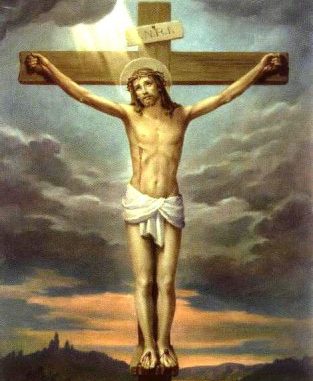
Two days before I discovered the writing of William Pynchon, I debated whether or not I would apply my belief the Crucifixion of Jesus ‘The Man’, never happened, to the Moravian church. Jesus is not God, because there would be TWO Gods.. The Jews considered this a heresy, that their ONE God was crucified, and somehow, became the God of the Christians. I believe this idea was invented by Paul/Saul of Tarsus in order to wrest Jesus ‘The Jew’ from the Judaizers who still clung to the Laws of Moses that God gave to Moses, and ‘The Jew’. Moses saw God – in person! Paul did not see God, or Jesus, after Jesus -died! This is a Great Transference, and is Anti-Semitic, a issue that was voted on in ur Congress. Most of Christianity teaches Anti-Semitism.
Paul is a GOD-HATER, who rarely talks about Jesus, he very busy talking about himself. Is this why evangelicals had no problem voting for Donald Trump? In the right light, you see Paul does much evil to the God of the Jews. I suspect Paul was an apologist for the one god of the Jews who failed to defeat Rome, whose army destroyed the temple. God failed His chosen children. Paul wrote – after the fall of the temple and is chasing down rebels. I can not accept the idea that the surviving disciples accepted Paul, the murderer of the first church. Why would Jesus-God put them through this trial of forgiving a great sinner – if he died for our sins? Why not another great flood, or fire? How about a great tribulation – and rapture? Why not bring a great comet down upon Rome? Why did God-Jesus give the world THE CURSE OF SAINT PAUL – AND TRUMP?
Jesus never said he was God. In John 17 he says he will make his disciples like God. Why so vague – if the idea is to make believers out of gentiles – and not the Jews? Why didn’t God-Jesus make his after-death message perfectly clear so the Jews can accept it? The disciples didn’t have a clue the crucifixion was coming. Why? Didn’t they know they tried to shove him of a cliff – as THE SCAPEGOAT?
Today, Americans can ask these questions without having a mob after him. My ancestors conducted real Witch Hunts, like the hunt Kim Hafner, my neighbors, and Alley Valkyrie conducted with me. They crucified me. They tried to destroy my reputation, and take away my home. They wanted to destroy me – even murder me! Is it because I am God-like? I look like God. I am very smart and have much Biblical knowledge. But, I am not like them.
I am named after John the Baptist who was bringing a New Atonement because this is what God wanted. The Jews had the Day of Judgement and absolving of their collective sins. Did God tell John His people are going to murder Him so He will go to hell and suffer some more? I don’t buy it! The Witches and the Evangelicals hate me because I wrote in this blog and said I died and saw God -and His Kingdom of Truth – that is perfect. We live in a world where THE LIE and THE LIARS are worshipped. It is that simple.
John Presco
“When considering potential heresy, clergy members kept an eye out for a series of red flags. Pynchon’s book rose just about all of them. First, he openly and defiantly questioned the nature and origin of God’s Grace. Most Puritans of the era believed that God had gifted his spiritual elect with salvation by “imputing” his son with their sins on the cross. In effect, these sins were wiped clean the moment Jesus died and descended into Hell where he “suffered the extremity of [God’s] wrath”. To Pynchon, Christ was not so much a sacrifice as a mediator. According to the historian Philip F. Gura, Pynchon believed that “since sin had come into the world through Adam’s archetypal transgression, Christ’s perfect obedience to the Father’s will — evidenced by his passion and death — and not the Father’s imputation of men’s sins to him, redeemed the elect from Adam’s curse”. In other words, mankind inflicted its wrath upon God (in the form of man), and not the other way around. The elect, then, earned salvation through the example of Christ’s perfect life, which culminated on the cross. Obedience, not Jesus’ suffering, ultimately served as the wellspring of Grace.12
While Pynchon does not explicitly say so, The Meritorious Price nonetheless put the millennia-old idea of “works” back on the table — a belief that flew in the face of Grace-based redemption. Though Pynchon in effect doubled down on predestination by denouncing Antinomians and other troublesome Anabaptist groups (which had advocated for universal Grace in the past), the Court likely did not read these contentions when it made its initial ruling. Based solely upon the nutgraph printed on the title page, the Court seems to have inferred from the text that anyone, should they live piously, might earn Grace rather than receive it. This constituted Pynchon’s second major offense. Many who read The Meritorious Price saw this belief as incongruent with the notion of a spiritual elect.
| William Pynchon | |
|---|---|
| Engraving of a contemporary portrait of William Pynchon, 1657 | |
| Born | October 11, 1590 Springfield, Essex, England |
| Died | October 29, 1662 (aged 72) Wraysbury, England |
| Known for | The Meritorious Price of Our RedemptionFounding of Springfield, Massachusetts |
| Spouse | Anna Andrews |
| Signature | |
William Pynchon (October 11, 1590 – October 29, 1662) was an English colonist and fur trader in North America best known as the founder of Springfield, Massachusetts. He was also a colonial treasurer, original patentee of the Massachusetts Bay Colony, and the iconoclastic author of the New World‘s first banned book.
Pynchon was also a prolific letter writer. He maintained a wide network of correspondents across the Atlantic and exchanged letters with figures such as John Winthrop, Jr. and Roger Williams. These letters offer valuable insights into Pynchon’s personal life, his views on trade and commerce, and his relationships with other colonists and Native Americans.
An original settler of Roxbury, Massachusetts, Pynchon became dissatisfied with that town’s notoriously rocky soil and in 1635, led the initial settlement expedition to Springfield, Hampden County, Massachusetts, where he found exceptionally fertile soil and a fine spot for conducting trade. In 1636, he returned to officially purchase its land, then known as “Agawam.” In 1640, Springfield was officially renamed after Pynchon’s home village, now a suburb of Chelmsford in Essex, England — due to Pynchon’s grace following a dispute with Hartford, Connecticut‘s Captain John Mason over, essentially, whether to treat local natives as friends or enemies. Pynchon was a man of peace and also very business-minded — thus he advocated for friendship with the region’s natives as a means of ensuring the continued trade of goods. Pynchon’s stance led to Springfield aligning with the faraway government of the Massachusetts Bay Colony rather than that of the closer Connecticut Colony. His critique on Puritanism, The Meritorious Price of Our Redemption, was published in London in 1650, and after reaching Boston the book was burned on Boston Common by the Puritan-controlled Massachusetts Colony. The Puritans pressed Pynchon to return to England, which he did in 1652.
Founding of cities

William Pynchon was one of New England’s first and most business-minded settlers. In founding Roxbury, Massachusetts, in 1630, Pynchon settled land near a narrow isthmus, which was necessary to cross in order to reach the Port of Boston — thus all of Massachusetts’ mainland trade needed to pass through his town. Roxbury — originally named “Rocksbury” for its rocky soil — was a poor site on which to farm in comparison to the fertile Connecticut River Valley. Thus, in 1635, Pynchon carefully scouted out the Connecticut River Valley for its best location to both farm and conduct business. On the banks of the Connecticut River, in an area called “Agawam” (ground overflowed by water) by local Native people, Pynchon and his collaborators found such a place. In locating the land that would become the City of Springfield (first called Agawam Plantation), Pynchon found land just north of the Connecticut River‘s first large falls, the Enfield Falls, which was the river’s northern terminus navigable by seagoing ships. By founding Springfield where Pynchon did, much of the Connecticut River’s traffic would have to either begin, end, or cross his settlement. Additionally, the land that would become Springfield was inarguably among the most fertile for farming in New England. A high-volume fur trade began.[2]
.png)
Earlier settlers of the Connecticut River Valley — who then resided in the three Connecticut settlements at Wethersfield, Hartford and Windsor — had been primarily religious-minded and did not judge land for settlement in the shrewd terms that Pynchon did. Perhaps most strategically of all, Pynchon’s settlement was located equidistant to the New World’s (then) two most important ports, Boston and Albany, with Native roads already cleared to both places. Springfield could not have been better situated — and currently, as Springfield is the Connecticut River Valley’s most populous city, history seems to have vindicated Pynchon’s original assessment of the land.[3][4]
In founding “The Great River’s” northernmost settlement, Pynchon sought to enhance the trading links with upstream Native peoples such as the Pocumtucks, and over the next generation he built Springfield into a thriving trade town and made a fortune, personally. As noted above, after disagreements with Captain John Mason and later Thomas Hooker about how to treat the native population, Pynchon became disenchanted with the Connecticut colony. Pynchon believed that Connecticut’s militant policy of intimidating and brutalizing natives was not only unconscionable, but bad for business. An example of his own attitudes towards the Native tribesmen may be found in his warrant seeking a thief who had stolen the petticoat of Sarah Chapin, wife of Rowland Thomas and daughter of Samuel Chapin. In the 1650 warrant he instructed the constable’s conduct as follows-[5]
“By virtue hereof, you [Constable Thos. Merrick] are to make inquiry among our Indians on the other side [of the river] what Indian hath broken open Rowland’s house, and taken away her best new kersey petticote & some linin in a Baskett, & you are to bring the Indian before me, or the goode, if he make an escape…[amended] if you find him at Woronoco [Westfield,] you may persuade him to come, and push him forward to make him come, but in case you cannot make him come by this means, then you shall not use violence, but rather leave him
After Pynchon became disaffected with the Connecticut Colony, he annexed Springfield to Massachusetts Bay Colony, confirming that colony’s western and southwestern boundaries. Pynchon built a warehouse in what was once Springfield, but is present-day East Windsor, Connecticut, known as Warehouse Point — and to this day, it still bears the name. In the years 1636–1652, Pynchon exported between 4,000 and 6,000 beaver pelts a year from that location, and also was the New World’s first commercial meat packer, exporting pork products.[6] The profits from these endeavors enabled him to retire to England as a very wealthy man.[7]
Books

In 1649, William Pynchon found time to write a critique of his place and times’ dominant religious doctrine, Puritanical Calvinism, entitled The Meritorious Price of Our Redemption. Published in London in 1650, it quickly reached Boston and caused a sensation. Pynchon was one of Massachusetts’ wealthiest and most important men, and in his book — which confounded Puritan theology by claiming that obedience, rather than punishment and suffering, was the price of atonement — was immediately burned on the Boston Common (only 4 copies survived), and soon after became the New World’s first-ever banned book. Officials of the Massachusetts Bay Colony formally accused Pynchon of heresy and demanded that he retract its argument. Coincidentally, Pynchon’s court date took place on the same day and at the same place that the New World’s first witch trial — that of Hugh and Mary Parsons (not Mary Bliss Parsons) of Springfield — took place. Instead of retracting his arguments, Pynchon stealthily transferred his land holdings to his son John — who later became an equally large influence in Springfield — while William Pynchon returned to England in 1652, where he remained for the rest of his life.[8] He died in Wraysbury, then in Buckinghamshire in England in 1662, and was buried there at St Andrew’s Church.
Legacy
| This section needs expansion. You can help by adding to it. (October 2017) |
After Pynchon’s return to England, his son John extended his father’s settlements in the Connecticut River Valley northward, founding Northampton, Westfield, Hadley, and other towns. His daughter, Mary Pynchon, married Elizur Holyoke, after whom the city of Holyoke, Massachusetts and the nearby Holyoke Range are named.
William Pynchon is an ancestor of the acclaimed novelist Thomas Pynchon.

 Rosamond Press


Leave a comment