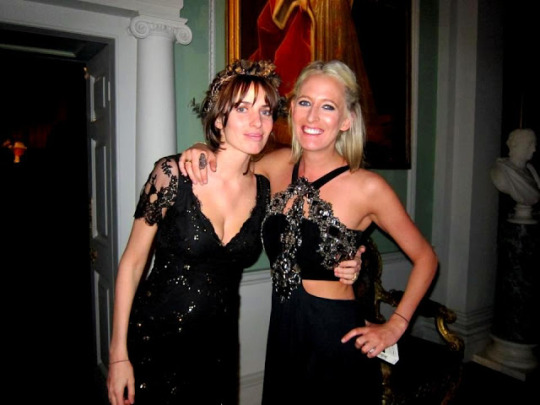
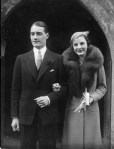
Marina Lambton, Countess of Durham; and Hon. Sophia Fermor-Hesketh, of The Barons Hesketh
Sophia Hesketh with Georg Friedrich, Prinz von Preußen
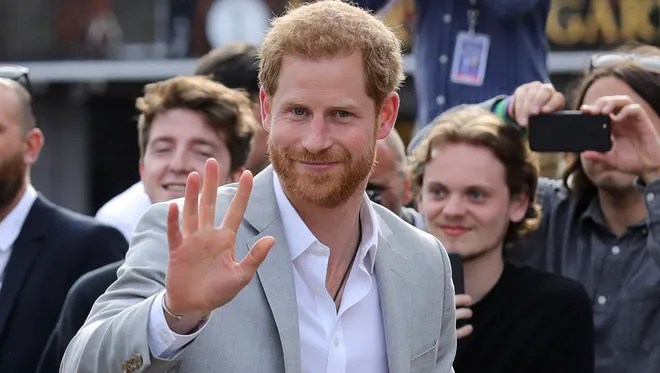
What if….Prince Harry married . Sophia Fermor-Hesketh, the first girl he allegedly kissed. Would the wedding be held at Ralston House in Belmont California, or. at Saint George Cathedral. For sure Belmont would honor the marriage of Lord Hesketh as a paramount royal event. I suggest the family of Prince Harry move to Belmont and help Gavin Newson fight the head of the Neo-Confederate, Donald Trump. Ursula van would happy to see a European City in California. Churchill could be honored here.
When my friend Bill asked me what I was up to the other day, I told him I was “playing with the Hohenzollern boys.” He had no clue. “You know, the princes of the German royal family.”
“German royal family? I thought Germany was a republic.”
“Well, it is. But they still have royals.” a. D. (ausser Dienst – out of service), I might have added.
“When did they ever have a royal family?”
“You know, Kaiser Wilhelm I and II, remember?”
Never heard of them.
Bill said he was a bit embarrassed to admit he knows nothing of the Kaisers, but he needn’t be. I doubt most people these days could identify these guys. They stepped down from the Prussian throne 98 years ago, after all. They show up for royal weddings (they are related to virtually everybody and most of them claim Queen Victoria as a first, second, or third-degree grandmother), but otherwise they live relatively quiet lives. Just for the record, the current head of the House of Hohenzollern, Georg Friedrich, whom we’ll get to shortly, is Queen Elizabeth’s second cousin twice removed.
The Hohenzollerns became the royal family because the Prussians were in the right place at the right time with the unification of the many German states into a single empire in 1871. They were by no means the only royals. Most famous, probably, is the House of Habsburg, associated primarily with Austria, but which produced emperors and kings for at least a dozen other places, Bohemia, France, Hungary, Russia, Ireland, Portugal, and on and on. But sticking strictly to Germany, there are the Wittelsbachs in Bavaria, the Guelphs (Welfen) in Hannover (who currently inhabit the British throne), and the Wettins in Saxony (whose Saxe-Coburg and Gotha branch produced Prince Albert, and got changed to Windsor when being German became a no-no). But it was the Prussian House of Hohenzollern who produced the Kaisers – and the rest is (German) history.
Now Bill is a dear friend, so I thought I’d throw together a mini-lecture on the royals of the Prussian line, so he need never be embarrassed again. * * *
Outside of Germany nobody takes Prussians seriously. How do you take a man seriously when he’s wearing a spiked helmet? Or when he prances around, as Kaiser Wilhelm II used to, with a skull face on your hat? Then there’s the issue of whether or not the tradition of militarism which the Prussians are responsible for starting is responsible for the rise of Hitler. Many, including prominent Germans like the former chancellor Helmut Schmidt have made a point of tying them together. And finally, one doesn’t argue over the fact that the Prussian state is no more; they argue only over when it ended.
Germany in 1871
Some claim it actually ended in 1871 when Bismarck created the German Second Empire (the first goes back to Otto I in 962), putting an end to the Kingdom of Prussia. However, it was the Prussian king Wilhelm I who was put in charge. Purists in the Prussian camp claimed they couldn’t be Prussian anymore if they had to represent all those other German people. Bavarians, for example. Or Saxons. Any number of other not good enough to be called Prussian types. Lots of people have trouble shedding their tribal identities and tribal loyalties for larger political goals. Prussians were no exception.
Or did Prussia end when the Prussian monarchy ended, in 1918, when the kaisers were forced to abdicate in favor of the Weimar Republic?
Or did it continue somehow until formally abolished by the Allied Victors in World War II on February 25, 1947? In any case, it’s dead and gone.
Or is it, as Mark Twain put it about himself, that “the reports of my death have been grossly exaggerated.”
You see, Prussia may have died out, but the House of Hohenzollern, the royal house of the German kaisers, is still alive, and from all reports, actually thriving.
Germany did not do what the Russians did to their tsar’s family, murder them all, men, women and children in cold blood. Instead, when they kicked the kaiser out, they sent him to a comfortable exile in Holland with thirty-six train loads of his furniture from the New Palace in Potsdam. And when members of the Hohenzollern family who had been disinherited for marrying commoners took their grand nephew, the heir to court, the court allowed they should continue to be able to feed from the Hohenzollern trough, which remains considerable, but that the title of head of the house of Hohenzollern appropriately belonged to the current heir, Georg Friedrich, as the family had determined.
Georg Friedrich, Prinz von Preußen, and his wife Sophie
The current head of the Hohenzollern family, the family of the Kaisers, the guy they’d put on the throne if the Bundesrepublik were suddenly to have a collective desire to restore the monarchy and establish what would be called a Fourth Reich, is Georg Friedrich Prince of Prussia. He appears to be a gentle kindly soul. Don’t know him personally, so I can’t say for sure, but if you look at pictures of him and his wife Sophie and their three kids, what’s not to love? They appear to have all the “noblesse” of blue-blooded folk with “class” and little or none of the upper-class twit features of Georg’s great-great-grandfather Wilhelm II, the pompous bag of wind who changed his uniforms five or six times a day and pranced around on a horse on parade grounds when he was not posing for yet another official photo. And twirling his moustache heavenwards.
Georg lost his father when he was just a year old. Father, Louis Ferdinand Oskar Christian of Prussia, Jr. – “Lulu” to his friends – had joined the Bundeswehr, the modern German army, and was crushed between two vehicles while on maneuvres. He lost his leg and died, apparently of the trauma, a few weeks later. Lulu left not only his little boy behind, but a wife who was six months pregnant. That was in July, 1977. And the baby, Georg’s sister, Cornelie-Cécile, was born developmentally disabled. Georg’s mother picked up the pieces a few years later and married a man her husband’s sister had divorced. Georg’s mother had one of those great names that make being blue-blooded worth while. She was known as the Countess Donata of Castell-Rüdenhausen. She died last September.
Amidst all this tragedy and tribulation, Georg had a paternal (i.e., Hohenzollern) grandfather, Louis Ferdinand Sr., (full name: Louis Ferdinand Victor Edward Albert Michael Hubert) who outlived his son, Georg’s father, Louis Ferdinand, Jr. by seventeen years. The two, Louis Sr. and Georg became close and Georg managed to get a royal education. Georg got from LFVEAMH a whole lot more than grandfatherly companionship, though. LFVEAMH had done his part to keep the bloodline blue, when he married the Grand Duchess Kira Kirilovna of Russia. He then got real pissed when his first two sons, FW39 and Michael, insisted on marrying commoners for love. So he cut them off from the title and it went to Louis Ferdinand Jr., and ultimately Georg was designated “sole heir.”
What a family reunion photo looks like if your name is Hohenzollern
Not without a fight. FW39 (first-born Friedrich Wilhelm 1939 – there are so many Friedrich Wilhelms that I am adding his birth year for easy identification) – and second-born Michael sued for inheritance. They had never worked a day in their lives, but they claimed that in the new modern Germany, where everybody is equal, the law requiring blue-blood marriage must certainly be unconstitutional. They wanted their renunciation of the Hohenzollern title to be dismissed, and they wanted their allowances to be commensurate with their blue blood status – which, unless I’m missing something, is what is called an argument that goes around in circles. But I guess they didn’t care if Georg got the title, as long as they got their allowances.
They got their wish. The German Supreme Court decided the boys should have their chunk of change, but the title had passed to Georg and that would be the end of it. They would henceforth be entitled to ride in the Hohenzollern limousine. They could just never expect to drive it.
And this raises the interesting question of just exactly how much money is left in the coffers. A good chunk went when the second kaiser abdicated and this wonderful German word Vermögensauseinandersetzung was on everybody’s lips. (OK, maybe not everybody’s.) I believe the English is “apportionment of assets and liabilities.” Go to the official preussen.de website and you see this word featured in the “Prussian lexicon.” No wonder. It was the takeover of the family fortune by the state. They still kept what most people would consider a fortune – the crown jewels, for example – but then lost big once more when the communists took over in the East, where most of Prussia was. 97,000 hectares of land, for example – now you see it, now you don’t.
Beau Sancy diamond
Georg Friedrich had to sell the “Beau Sancy” diamond, a couple years ago, once worn by Marie de Medici and Mary Stuart. 34.98 carats. Was hoping to get between half a million and 3 million euros, I understand. Actually went for $9.7 million. Should cover the heating bill for a while.
More recently, Georg sued the AfD, the newly formed right-wing party, for using images of the Hohenzollern Castle he calls home on their campaign posters, as a way of stressing they hold to the good old (Prussian) values. Georg lost that one. The castle is too public, the Stuttgart court decided. He can’t claim exclusive use of it. So royalty may not be running the country anymore, but neither are they out of the picture entirely.
But I’m digressing now…
Back to grand papa.
Louis Ferdinand Sr. (aka LFVEAMH ) would appear to be somewhat of a snob. Or maybe he simply didn’t care much for his lazy-ass sons FW39 and Michael. Who knows what went on in his head when he used the blue-blood excuse to disinherit them and make his grandson sole heir. It may well have been due to the fact that he himself inherited the title because his own older brother had married a commoner and lost the right of succession. That older brother, Wilhelm06 (full name: Wilhelm Friedrich Franz Josef Christian Olaf) died while invading France in 1940, and so many people showed up at his funeral so big that it made Hitler uncomfortable. Hitler then decreed that there would be no more royals fighting at the front, thus assuring that blue-bloods would be kept safe to make more blue-bloods. Grandpa not only failed to show gratitude, but began hanging out with too many anti-Nazi types. They never proved his participation in attempts to do the Führer in, but Grandpa nonetheless ended up in Dachau for a while.
But let’s get back to the latest generation of Hohenzollerns, Georg and his wife Sophie and their twin boys Carl Friedrich and and Louis Ferdinand (2013). And their baby sister, Emma Marie, who celebrated her first birthday a couple weeks ago on April 2nd. Pictures are hard, if not impossible to find. At least I have not been able to find one. Their parents are doing their damnedest to keep them out of the limelight so they can grow up like normal kids. The Prinz von Preußen family are five of the 3195 residents of the village of Fischerhude, just outside Bremen. When they’re not in Berlin, that is, where Georg works for a company specialising in helping universities bring their innovations to market. Additionally, he administers the Princess Kira of Prussia-Foundation, founded by his grandmother in 1952. (For an idea of the kind of things the foundation does, here’s a video of Georg and Sophie at Hohenzollern Castle dealing with a program to put Israeli and Palestinian kids together to create a musical project.
* * *
Kaiser Wilhelm Memorial Church in the heart of West Berlin, left standing as a reminder of the war, alongside the new church and tower
Royal families are not among my primary interests, but these days the gay liberation arguments are sort of shooting fish in a barrel, (i.e., big yawn for the most part), and the Trump/Hillary race makes me fall asleep on my feet, so I’ve been entertaining myself reading Prussian history. Because I fell in love with Berlin back in my young years and wanted to know more about this Sophie Charlotte person that Charlottenburg Castle and the Charlottenburg neighborhood were named after (she was the wife of Frederick I: first in the chart at the end, Frederick the Great’s grandfather). And the Kaiser Wilhelm Memorial Church meant asking questions about the Kaisers.
Then there was that time I found myself at the young age of twenty carried away in Munich by the Fasching (Mardi Gras) crowds singing songs like “Wir wollen unseren alten Kaiser Wilhelm wieder haben (We want our old Kaiser William back again!). (The song goes on – “you know, the guy with the beard.” Makes fun of militarism and the old folk’s fascination with the good old days.
Wasn’t long before I went off on a Freddie the Great Kick.
Let me tell you about Freddie, who came to be known eventually as “der alte Fritz” (old Fritz), since he’s where the Hohenzollerns get involved with modern times and the Enlightenment, in particular.
Fritz – he seems to be among the few, if not the only one of these guys, to have just one name. He was Friedrich II, plain and simple. Born in 1712 to a real shit of a father, Friedrich Wilhelm I (and the first of many Friedrich Wilhelms) (1688) and FWI’s cousin Sophia Dorothea, younger sister of King George II of England, who couldn’t stand the sight of her. FWI didn’t like her much either, allegedly because she liked to have fun. FWI preferred to play soldier and beat the shit out of little Freddie/Fritz. Now young Freddie/Fritz) was what we might call a sissie. He was tutored in French by Huguenot governesses and preferred the language and the literature of France to his supposedly native German (which I am told he spoke with a French accent) all his life. He also liked to play the flute and loved his dogs so much he wanted to be buried with them. He also loved his mother. Who had thirteen other kids besides Fritz to worry about.
Bullied so badly by his father. Fritz made a desperate plan to run away to England with his friend, Hans Hermann von Katte. Their escape plan was leaked and since they were technically soldiers, they were sentenced to death for treason. FWI forced his son to watch the beheading of his friend, an experience which so traumatized him he was in shock for days. But he eventually submitted. His father was simply too much for him. Not that he had a whole lot of choice. His father actually imprisoned him in a fortress in a place called Küstrin for many years.
Then comes a remarkable twist in the plot of the young flute-music composer. No sooner had his father died in 1740 than Fritz took over and began turning into the soldier-king his father had always wanted him to be. He launched an audacious and risky war on neighboring Silesia, a province that belonged to Maria Theresa of Austria, and won. Some time later, he moved into neighboring Saxony, and Prussia was on its way to becoming a major European power.
Sans Souci Palace
Potsdam is just outside Berlin and you can get there in twenty minutes from Charlottenburg. I used to go all the time. I went for the first time with my friend Craig, after the wall came down and things were still opening up. The government of the DDR had refused to spend any money fixing up Sans Souci, which Fritz built for himself, and the neighboring palace, which the Kaisers spent a lot of time in. (When the revolution came in 1918 and the Hohenzollerns were ousted, the furniture was all shipped to Holland in 34 trainloads for Wilhelm II. (I guess his father, Wilhelm I, a much plainer-living man, settled for less.) In the early days, post fall of the wall, the rococo had a decayed and decadent feel to it. The gardens were kept up and in magnificent condition, and the combination made the place magical. Now that the tourists have come in and everything has been Disneylanded up, those days are gone.
I used to fantasize about Fritz walking among the six foot hedges with Voltaire, whom he brought to
The “New Palace, now part of the Sans Souci gardens” in Potsdam
Sans Souci several times for extended stays (when he was not feuding with him and throwing him in jail), and sitting in the theater in the new palace. He saw no reason to build a royal box. He preferred the third row.
Lots of people have speculated about Fritz’s alleged homosexuality. Could be a rumor spread by Voltaire after their falling out. Voltaire, I’m told, had a penchant for gossip as well as for wit. It’s true Fritz shunned his wife from the beginning and spent years living with his soldiers, without female companionship. Used to see her once a year. One one of those occasions, his only comment was, “You’ve gotten fat.”
So gay people like to claim him as one of their own. But there is another possible explanation. One theory of his woman-shunning is that he might have caught a terrible STD (in Saxony – you know those Saxon girls – or from one of the village girls around Neuruppin – pick your rumor), and had it operated on. The operation, according to this tale, was a disaster, rendering his genitals useless. I find that argument specious. First off, who says you can’t monkey around with others whose parts are still in order? Then again, it would come as no surprise to discover that this is a theory generated by homophobic German nationalists who simply could not bear the notion that their Big Daddy and heroic Prussian King might swing the wrong way. If I ever get to the dozen* still unread biographies of Frederick the Great, (in addition to the five or six I have actually read, that is) I might come down off the fence with an opinion of my own in this regard. Especially Tim Blanning’s, which makes an open-and-shut case that Frederick was a lover of men. Then, of course, there is Nancy Mitford’s version, which makes the opposite claims.
*Tim Blanning, Robert B. Asprey, Nancy Mitford, Sir David Fraser, Dennis Showalter, Giles McDonogh, C.B. Brackenbury, Herbert J. Redman, G. A. Henry, Thomas Carlyle, Theodor Schieder, Albert Seaton, Luisa Mühlbach, John Lord, Ludwig Reiners, F. W. Longman, Pierre Gaxotte, and G. P. Gooch.
And those are biographies written in English. In German, Fritz’s biographers include:
Johannes Unger, Johannes Kunisch, Kerstin Friedrich u. Fredmund Malik, Michael Schaper, Tillmann Bendikowski, Wolfgang Stürner, Günther Bentele u. Alexander v. Knorre, Franz Kugler, Jürgen Overhoff, Rudolf G. Scharmann, Regina Ebert, Josef Schmid, Sabine Henze-Döhring, Michael Imhoff, Louise Mühlbach, Albert Ritter, Norbert Leithold, Christian Graf v. Krockow, Hans-Jürgen Bömelburg u. Matthias Barelkowski, Erich van Heiss u. Ulrike Stolz, Dieter Alfter u. Engel, Bernd Ingmar Gutberlet, Willi Kollo, Sven Externbrink, Iselin Gundermann, Michael von Preußen, Christopher Duffy, Georg Piltz, Charlotte Pangels, W. Mielke, Silke Kiesant, Frank Göse, – and that’s only eight of 75 pages on the German Amazon page under “biographies of Frederick the Great.” I’ll stop here.
* * *
Frederick the Great portrait by Anton Graff, 1781
Frederick II, known as ” Frederick the Great,” has come down in history as the best example of an enlightened absolutist. He modernized the state, the bureaucracy and the civil service. He implemented freedom of religion – a radical departure in Europe. He spoke of himself as a “servant of the state,” also a new political notion. He reformed the legal system and made it possible for commoners to become judges, encouraged immigration – although notably not for Jews. And he implemented policies of virtual freedom of artistic expression, the press and literature. He built the Berlin Opera and founded the Berlin porcelain factory. Lord Acton (you know, the man known for the phrase “power corrupts, and absolute power corrupts absolutely”) called him “the most consummate practical genius that ever inherited a modern throne.” (p. 648, Europe, a History, by Norman Davies) The Nazis glommed onto him, not only for his anti-semitism, but also for his image as a Prussian warrior.
Can’t say he’s any kind of hero. Not any more. I once fantasized about him as I walked with friend Craig in the gardens at Sans Souci – alone – just after the wall went down and before the tourists came – walking and sharing great ideas with his friend Voltaire, someone who is kind of a hero to me. Imagine my disillusionment as I read that Voltaire told friends he was bored with Frederick and his sophomoric poetry (he may have used another adjective), which he expected Voltaire to correct for him. Acquiring territory for Prussia, losing your testicles to an STD, becoming a woman-hater and an anti-Semite – how could I turn this man into a hero.
I guess I can always be selective. And turn him back into the fantasy figure I created years ago when I fell in love with the notion of a head of the German state as a lover of music and poetry, fosterer of freedom of religion, and a man who wanted to be buried with his dogs.
Nowadays, modern Germans are leading proponents of the EU. German nationalism is for the
outliers, the neo-Nazis and other crackpots, and most people look back on
Kaiser Wilhelm I
Germany’s history with something less than unadulterated pride. Too much militarism. Too much rigidity. Too much Prussianism. At the time of Prussia’s last hurrah, however, during the First World War, what others looked upon in Germany with emotions ranging from suspicion to disgust, Germans looked upon with pride. German virtues were Prussian virtues: honor, duty, loyalty, punctuality, earnestness, discipline, obedience, seriousness (the other side of which is lack of a sense of humor, of course), and many Germans will still cite these as “German virtues,” conspicuously leaving out the other one, which the Nazis stressed, soldierly bravery.
Kaiser Wilhelm II
When the two Germanys divided, the DDR liked to portray these purported virtues as imperialist tendencies which, they say, the west persisted in maintaining, while the east was developing socialist values to replace them, including eliminating the fawning after nobility once and for all. One has to wonder why they kept the goose-step when the West dropped it, but maybe that’s asking too many questions. In any case, it can’t be easy for those raised with a socialist consciousness to see the warm embrace of the current head of the pretender to the House of Prussia by so many in the west. Not all, to be sure. One of the biggies of West German postwar history, former Chancellor Helmut Schmidt, made it clear he saw entirely too close a connection between the Prussians and the Nazis and made a point of shunning a fest back in 1981 in Berlin, at which Prussian history was jumped up a notch.
On January 20, 2013, two little boys were born in the North German city of Bremen. You won’t see their pictures plastered all over the place. Their parents are committed to keeping them out of the limelight, but their names are Carl Friedrich and Louis Ferdinand Christian Albrecht. Their mother is Sophie of Isenberg. Their father, Georg Friedrich, is heir to the Prussian throne, “Kaiser-if-you-need-me.” Twin Papa Georg Friedrich got the title “Prince of Prussia” in 1994 from his father, Louis Ferdinand, who got it from his father Crown Prince William in 1951. Crown Prince William (Wilhelm, actually), remember, had to abdicate in 1918 along with his father, Kaiser Wilhelm II, when Germany lost the First World War and there was a revolution which ushered in the Weimar Republic.
The boys, Carl Friedrich and Louis Ferdinand, were baptized on June 22 in a Lutheran ceremony at Burg Hohenzollern, where the Prussian throne is kept. As well as the crown. And tons of other beautiful (and expensive) objects – many railroad cars full – from the good old days. The Republic was generous to their former rulers when they shuffled them off to a mountain top in Swabia or life in exile in Holland. You can visit Hohenzollern Castle for 7 euros (5 euros for children 6 to 17). 5 euros more if you actually want to go inside. Another €3.10 for the round-trip shuttle bus between the parking lot and the castle. Georg, as we’ve pointed out before, has a lot of Hohenzollerns on the payroll, after all.
* * *
Among the many curiosities of this age gone by is Paragraph 103 of the German Criminal Code, the law that forbids one from “Majestätsbeleidigung” – what we in English refer to as lèse majesté, the insulting of royals. The law first went into place in 1871 when the Hohenzollern line was placed in position to rule the new united Germany, and Wilhelm I took on the job. It’s commonly referred today as “the Shah paragraph” because it was Iran’s Shah Pahlavi who got his nose all twisted by satirists and others of his critics in Germany. The foreign leader has to register a complaint, you see, for the wheels to start turning.
* * *
The Russians turned “Caesar” into “Tsar.” The Germans kept the initial k sound and used German spelling to write it “Kaiser.” Works just as well as “emperor,” you have to admit. Today, when I go see a doctor, I pull out my “Kaiser Permanente” medical card. Have associated the name with the Henry J. Kaiser, the automobile, and Willi I and Willi II come to mind these days, pretty much as an afterthought.
In any case, the days of the kaisers are gone. What’s left are just the princes, including Georg, the current head of the Hohenzollern household, Wilhelm II’s great great grandson, and from all appearances really nice guy. He’ll be 40 on June 10th. Educated in Scotland, where he got his A-levels. Lost his father, Louis Ferdinand Jr., when he was only a year old and became very close to his paternal grandfather, Louis Ferdinand Sr. whom his younger son was named after. But I’m repeating myself.
I used to assume he would use Hohenzollern as the family name – just as Queen Elizabeth might call herself Betty Windsor when she’s in a casual mood, but apparently the family uses “Prinz von Preussen” as the official family name. When Georg joined the army, his name tag read, simply “Preusse” – which led to no end of ribbing by his fellow soldiers, since he was stationed in Bavaria. The Bavarians speak of “Prussians” the way U.S. Southerners speak of “Yankees”. It’s as if you were stationed at Fort Benning, Georgia and had to walk around with “Yankee” on your name tag.
But at least it seemed to deflect from the fact that this “Preusse” guy was heir to the German throne, and should the citizens of the Bundesrepublik ever tire of being republicans, could one day parade around like the kaisers of old.
Georg as a kid with his grandfather, Louis Ferdinand, in front of a portrait of his great great grandfather, Kaiser Wilhelm II
Not that he would, I imagine. I’m quite charmed with him. It’s not long ago that he was a gangly teenager with glasses, rather bookish looking. He married nobility, as was required of him, apparently finding a fellow modern thinker for a companion, and displays all the behavior his trainers inculcated. Real class, if his projected persona in the press is any indication. His grandfather, the one who raised him, was asked in an extended interview, “Would you like to be Kaiser?” The answer was perfect. “I’d do the job if the German people asked me to, but I’m happy just being a German and a European citizen.” Georg and his wife Sophie both work full time. She works at a consulting firm for non-profit organizations. He manages the family fortunes when he’s not at work “helping universities bring their innovations to market.”
Even those inclined to insist on removing any trace of sentimentality about royalty and nobility in the modern nation-state seem to find him appealing, personally. Another success, if I’m not mistaken, of modern German democracy, turning royals into decent Menschen.
As discussed previously, things were never exactly all peaches and cream within the Hohenzollern household. Remember how Louis Ferdinand Sr., as head of household, followed the rule that heirs must marry within their station, i.e., only other nobility. And how since his first and second sons both broke that rule and married commoners, the title passed to the third son, Louis Ferdinand Jr., and thus to his son Georg Friedrich. Those little twin boys? – the one named Carl who stands to inherit and the other one who missed the honor by what may have been only minutes – blue blood all the way back. At least he shares with his older twin brother (as well as pretty much anybody else in Europe who is royal) – Queen and Prince Consort of the United Kingdom and Ireland Victoria and Prince Albert of England (she’s also Empress of India) as great-great-great-great grandparents. How many kids do you know who can tell you their four-times-grannie was Emperor of India?
The modern line of the kings of Prussia began in 1701 when the duke of Prussia got permission from the committee to call himself a “King in Prussia” – but not the King ofPrussia, because that would be stepping on too many toes. That got “corrected” in 1772 when, thanks to Freddie the Great, wasn’t nobody going to push these kings around no more. If you’re familiar with the Philadelphia area, you may know the city with a population of about 20,000 called King of Prussia, Pennsylvania. It got its name from a tavern named for Freddie the Great. But I digress.
The line goes like this. To get from Frederick the Great’s grandfather, the first King in Prussia to the present-day two-year old presumptive heir to the Hohenzollern title, Carl Friedrich, Prince of Prussia, you pass through fifteen generations (counting both ends), although #11 and #13 will not appear on the family tree, since they never actually held the title. Here’s my unofficial compilation. If you want to see the official one, complete with photos and spousal units, check out here and note they begin one generation earlier, with Frederick William, the Elector.
Hohenzollern boys, modern day (i.e., since 1701)
birth and death years
Head of House of Hohenzollern from…to
1.
Friedrich I, King in Prussia, aka Duke of Prussia, aka Elector of Brandenburg
1657-1713
1688-1701 as duke1701-1713 as king
2.
Friedrich Wilhelm I
Aug. 14 1688-May 31, 1740
1713-1740
3.
Friedrich II, aka Friedrich der Große (Frederick the Great) (died childless)
Jan. 24, 1712 – Aug. 17, 1786
1740-1772 as King in Prussia;1772-1786 as King of Prussia
4.
Friedrich Wilhelm II (son of Freddie the Great’s brother Augustus Wilhelm)
Sept. 25, 1744-Nov. 16, 1797
1786-1797
Nephew FWII 1744’s mother was Fritz’s wife’s sister. Nephew married Elisabeth Christine, whom he dropped four years later to marry Frederika Louisa by whom he had seven children while having five children by his mistress Wilhelmina Enke whom he took up with while she was still a teenager. Nephew became a patron of Beethoven and Mozart and played the cello himself. Fritz thought he was a bum. Nephew removed Fritz’s ban on the German language and became a Rosicrucian and shut down the freedom of religion Fritz had installed and limited religious expression to officially accepted doctrine with himself deciding what that might be. Ironically, this policy is credited with stability. He ran into money problems and had to make deals with the newly formed French Republic, which made him a traitor to other royals. He married two more women (i.e., became a bigamist twice over) and had seven more children with them. One daughter married the Duke of York, another married William of Orange. He built the Brandenburg Gate.
5.
Friedrich Wilhelm III
Aug. 3, 1770-June 7, 1840
1797-1840
FWIII spoke without using personal pronouns. This later became the model for military officers. Unlike his father, he was happily married to just one wife, Luise, who bore him ten children. Until she died. Then he married another woman, morganatically, but they had no additional children. He is best known for uniting the Protestant Churches, Lutheran and Calvinist, into one, the Church of the Prussian Union and making himself the leading bishop. He’s buried in the Mausoleum in the park at Charlottenburg Castle.
6.
Friedrich Wilhelm IV
Oct. 15, 1795-Jan. 2, 1861
1840-1861
soldier boy
FWIV was known for completing Cologne Cathedral and for designing the Pickelhaube, the spiked helmet; patron of Felix Mendelssohn, no kids. Was king during the 1848 revolution, joined forces with the progressives and was offered the crown of all Germany. He refused, complaining that he could not accept “a crown from the gutter” – i.e., ordinary folk, as opposed to those of the noble classes authorized to determine the succession of kings. Buried at Sans Souci.
7.
Wilhelm Friedrich Ludwig, Wilhelm I – the first “Kaiser Wilhelm” brother to FWIV (who had no kids, remember)
Mar. 22, 1797-Mar. 9, 1888
1861-1888
Otto von Bismarck, the “Iron Chancellor”
Kaiser Wilhelm I was the first head of state of a modern united Germany. German Empire (Reich) established under Otto von Bismarck, and title of Emperor (Kaiser) created.
8.
Friedrich Wilhelm, Kaiser Friedrich III; married Victoria, eldest daughter of Victoria and Albert
Oct. 18, 1831-June 15, 1888
March 9 – June 15, 1888 (99 days)
9.
Friedrich Wilhelm Viktor Albrecht von Preußen, Kaiser Wilhelm II – eldest grandchild of Queen Victoria, son of Victoria; married Augusta Viktoria of Schleswig-Holstein
Jan. 27, 1859 – June 4, 1941
June 15, 1888 – Nov. 9, 1918abdicated
10.
Friedrich Wilhelm Viktor August Ernst; Crown Prince Wilhelm, last crown prince of Prussia and German Empire; married Cecilie of Mecklenburg-Schwerin; ladies’ man
May 6, 1882 – July 20, 1951
became heir apparent (after K. Wilhelm II) at age 6 in 1888 with death of Friedrich III; abdicated with his father, Nov. 9, 1918 but retained his title till death in 1951.
11.
Wilhelm Friedrich Franz Josef Christian Olaf
July 4, 1906 – May 26-, 1940
WFFJCO died before acquiring the title, fighting with the Wehrmacht in the invasion of France. 50,000 people showed up for his funeral at Potsdam. That made Hitler jealous and he forbade any more participation in his wars by the Hohenzollern boys.
12.
Prinz Louis Ferdinand Sr.
Nov. 9, 1907 – Sept. 26, 1994
1951-1994
LF Sr. married grand duchess Kira of Russia and had seven children. The first two, Prince Friedrich Wilhelm and Prince Michael pissed their father off by marrying commoners, so he refused to grant them title to the family and it went to his third son, Louis Ferdinand, Jr. Funeral held at Kaiser Wilhelm Memorial Church in Berlin.
13.
Louis Ferdinand Oskar Christian, Prince of Prussia, aka Louis Ferdinand Jr. – “Lulu” to his friends
Aug. 25, 1944-July 11, 1977
LF Jr. died in a military maneuver accident. His two children are the current pretender, Georg Friedrich, and his sister, Cornelie-Cécile, who was born developmentally disabled six months after her father’s death.
14.
Georg Friedrich, Prince of Prussia; married Sophie of Prussia, Princess of Isenburg
June 10, 1976
1994 to date;current heir to throne
15.
Carl Friedrich, Prince of Prussia, heir presumptive
Jan. 20, 2013
There’s an heir and a spare: CF has a twin brother, Louis Ferdinand
Carl Friedrich lives in a house with his mother, Sophie and his father, Georg Friedrich and his younger twin brother Louis Ferdinand and his one-year-old sister Emma Marie in a village called Fischerhude, just outside of Bremen, a lovely little town known for its painters, including Clara Westhoff, wife of Rainer Maria Rilke. They also call home the Hohenzollern Castle in Swabia, Southwest Germany, about thirty miles south of Stuttgart.
Hohenzollern Castle is one of 20,000 German castles.
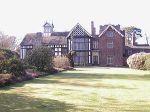
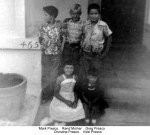
The Presco Children lived on the boundary of Oakland and Piedmont that had more millionaires per capita then any city in America. Here Sharon built a home, Roycrafters, that looks like Rufford Old Hall the seat of the Hesketh family in Britain. It is alleged Shakespeare performed a play here.
Come Saturday morning when Vic and Rosemary began their evil shout and hate match, I would get on my bicycle and ride through Piedmont, down Saint James Drive to Crocker, then to Lakeshore. I had to get away from my parents battle over lost prestige. Christine and I would lead a bunch of kids on a tour of Piedmont via the pedestrian staircases that the WPA built so The Help could get to work, and the children of the rich, make their way to school. Come Halloween we begged candy from the Piedmontese.
It was Christine’s Dream to be rich one day. Her autobiography begins with a fight we had over the last of the milk for cereal.
Vic never paid one dime for child support as ordered by the court, yet, he wanted in on the Art Game.
I noticed there is a Christmas Tree in the window of our house on San Sebastian. I think this is the one we stole from the lot on Park Blvd. above Liemert. We four boys had sewn deep pockets in our jackets, and when we went grocery shopping with Rosemary, we stole food and household items. We stole this tree by throwing it down into Dimond Canyon and retrieving it in the morning. Rosemary ordered up a flocked tree that we put red bulbs on. Then there was the precise ritual of hanging tinsel. If you did not do it right, you were shamed and replaced. It was Rosemary’s Art.
While shopping in Lucky Store in Montclair, the manager approached Rosemary and tried to shame her by saying;
“Do you know your sons are stealing us blind. I’m going to have to ask you to shop (lift) elsewhere.”
“I had no idea!”
Below is a Wikipedia article on Piedmont that may have been authored by Brad Gilbert whom I knew since he was a baby. His father, Barry Gilbert, lived below Bill Arnold on Athol Avenue. Bill painted a mural for Barry when the moved into a plush Piedmont home. Bill came to live with us when his father kicked him out. We were the Artists in Residence.
Jon Presco
Copyright 2011
Baron Hesketh, of Hesketh in the County Palatine of Lancaster, is a title in the Peerage of the United Kingdom. It was created in 1935 for Sir Thomas Fermor-Hesketh, 8th Baronet, who had previously briefly represented Enfield in the House of Commons as a Conservative. As of 2010 the titles are held by his grandson, the third Baron, who succeeded his father in 1955. Lord Hesketh held junior ministerial positions in the Conservative administrations of Margaret Thatcher and John Major. However, he lost his seat in the House of Lords after the House of Lords Act 1999 removed the automatic right of hereditary peers to sit in the upper chamber of Parliament.
The Hesketh Baronetcy, of Rufford in the County Palatine of Lancaster, was created in the Baronetage of Great Britain in 1761 for Thomas Hesketh, with special remainder to his brother Robert, who succeeded him as second Baronet. The latter’s great-great-grandson, the fifth Baronet, sat as a Conservative Member of Parliament for Preston. His grandson, the eighth Baronet, was elevated to the peerage as Baron Hesketh in 1935.
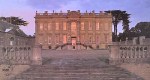
The former seat of the Barons Hesketh was Easton Neston in Northamptonshire. The house was previously the seat of the Fermor family (Earls of Pomfret since 1721), and came into the Hesketh family through the marriage in 1846 of Sir Thomas George Hesketh, 5th Baronet, to Lady Anna Maria Isabella Fermor, sister and heiress of George Richard William Fermor, 5th and last Earl of Pomfret. However, the house was sold by the current Baron in 2005.
The original seat of the Hesketh family was Rufford Old Hall in the village of Rufford in Lancashire. This house was sold to the National Trust by the first Baron Hesketh in 1936.
The hall is reputedly haunted by a grey lady, Queen Elizabeth I and a man in Elizabethan clothing.[6] The figure of a man floating above the canal at the rear of the building has also been reported.[7] On 20 February 2010, the crew of the paranormal television series Most Haunted filmed at the hall.
Piedmont is a small, affluent[2] city in Alameda County, California, United States. It is surrounded by the city of Oakland. The population was 10,667 at the 2010 census. Piedmont was incorporated in 1907 and was developed significantly in the 1920s and 1930s. Piedmont was one of the “25 Top-Earning Towns” in CNN Money Magazine’s list of ‘The Best Places to Live in 2007, and was also named one of the “Best Places To Live-Urban Enclaves” in the United States in 2007 by Forbes.[3]
Residents originally sought incorporation in 1907. Two elections were held among the citizens of Piedmont in 1907, both of which narrowly upheld the decision for Piedmont to become a separate city, rather than become a neighborhood within the city of Oakland.
By the Roaring Twenties, Piedmont was known as the “City of Millionaires” because it had the most resident millionaires per square mile of any city in the United States. Many of these millionaires built mansions that still stand, notably on Sea View Avenue and Sotelo Avenue/Glen Alpine Road in upper Piedmont. Piedmont became a charter city under the laws of the State of California on December 18, 1922. On February 27, 1923, voters adopted the charter, which can only be changed by another vote of the people.
Piedmont celebrated the year 2007 as its Centennial Anniversary since incorporation. The Centennial Committee hosted celebratory events along a trail that runs through downtown Piedmont and denoted historical landmarks in the city. The Committee also created a float for the city’s Fourth of July parade.[5]
The historical exhibit “A Deluxe Autonomy: Piedmont’s First 100 Years” was on display in the Oakland Public Library from January 5 to March 31, 2007.[6]
Notable residents [edit] Current Piedmont is home to a number of somewhat prominent figures in the political, business, sports, and academic communities, including: ex-Major League Baseball player Dave McCarty, ex-National Football League player Bubba Paris, San Francisco 49ers, ex-National Football League player Bill Romanowski, Oakland Raiders owner Al Davis, Ambassador to Australia Jeff Bleich, and Peter Docter, director of Pixar’s Monsters, Inc. and Up and co-writer of WALL-E and AFJR, extra in the Santa Claus 3, and Billie Joe Armstrong of the rock band Green Day. [edit] Past Author Jack London lived in Piedmont, and John F. Kennedy’s Secretary of Defense Robert S. McNamara grew up in Piedmont, where his family lived on Annerley Road.[12] Clint Eastwood resided in Piedmont and attended Piedmont schools. Country Joe McDonald resided in Piedmont in the 1970s. Actors Dean Butler (Little House on the Prairie) and Austin Tichenor (Reduced Shakespeare Company) also grew up in Piedmont. Further, notable tennis player and coach Brad Gilbert, grew up in Piedmont. Charles R. Schwab, founder of the discount stock brokerage firm bearing his name, and his family also lived in Piedmont in the early 1980s, as did Dean Witter, founder of Dean Witter Reynolds brokerage, in the 1940s. Brad Gilbert (born August 9, 1961), is an American tennis coach, a television tennis commentator, and former professional tennis player. He was born in Oakland, California and graduated from Piedmont High School (California). As a player, Gilbert’s career-high singles ranking was World No. 4, which he reached in January 1990. Since retiring from the tour, he has coached several top players including Andre Agassi, Andy Roddick and Andy Murray.
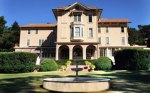
Lawyer William Sharon (1821-1885), Ralston’s one-time Bank of California agent in the Nevada silver country and later his business partner, bought some of his assets, including the Belmont house and the Palace Hotel. Sharon and his family displaced Ralston in the dwelling, living there into the late 1870s. Another owner, Mrs. Alpheus Bull, converted the house into Radcliffe Hall, a girls’ school, and after this, it functioned as an 80-room sanitarium operated by Dr. Alden M. Gardner. In 1923, the Sisters of Notre Dame, based in San Jose, CA, started the College of Notre Dame for women in Ralston Hall.
In December when Sharon hosted his daughter Flora’s extravagant wedding at the family’s waterfront estate in Belmont, Calif., Hill was there.
at is a MISS SHARON’S WEDDING. Detailed Description of the ISrldal BeDe. The Sharen-Hesketh wedding at Belmont, California, en Thursday last, was a brilliant affair. There were 100 guests present at the marriage ceremony. Dr.
Beers was the officiating clergyman. Subsequently there was a reccptieu, at which ever 1,000 invited guests were present, who were carried out by special trains te Belmont. Many of the toilets of the ladies were magnificent. The bridal robe was one fit for a queen, and never before was such a costume seen in this country. The town was of a new style of silk known as the gres de tour, the skirt being one solid mass of embroidery, wrought upon white satiu with beads, crystal and pearls of the very best description, the pattern for which was copied from a painting of an old ceuit robe, new hanging in the gallery of the Leuvre, in Paris.
Down the side of this embroidered front piece were panels of point d’Angleterre lace, fifteen inches wide with reverse of the ncarl embroidery that joined the under traiu, ever which fell a second train of the same magnificent silk, aud which is known as the Manteau dc Cour, or, te put it in English, the same style of court train that is worn at prcscu tatien te the English queen of te-day. It was put iu deep plaits en a baud and joined te the waist under the body, which was cut in points both front and eaclr, with bauds of the same embroidery around the square cut neck, down the front and around the side, and laced in the back. The demi-slecves were finished with a fall of the same rich lace, about two and a half inches wide, and above it a band of the embroidery ; but the crowning feature of the robe was the rich piece of lace (also point d’Angleterre and the same width as the panels), which commenced at the point of the body in front, was carried gracefully ever the hips, and met m the back, falling ever the entire train aud reaching te the bottom of it in two bread waves, being caught te the gown with bunches of white flowers of an indescribable style. A drapery of point de Angleterre lace fell ever the shoulders, meeting in the front, and was held together by a bunch of arbepine flowers. A perfectly plain long tulle veil reaching te the fleer, was fastened te the hair with a little knot of arbepinc.
Sir Thomas Hesketh got married at Ralston Hall where my great grandfather got married to Augustus Janke.. I was part of the planning of the revival of the family reunion at the Palace Hotel.
Above is a photo of Dottie Witherspoon and I. The Witherspoons are in the Peerage, and thanks to my discovery, are kin to the Royal Stewarts, thus, William and Harry Windsor. Dottie is also kin to the Bentons.
Below is a list of Dottie’s kin who entered American politics and won important seats in the U.S. Government. The Witherspoons are the First Family of American Politics. I traveled with Dottie to South Carolina to meet her relatives. No sooner was Dottie in my mother’s home, then she has locked herself in the bathroom after Rosemary pointed out her many freckles as being unsightly. Red hair and freckles is a trait of the Scots Ulsterman who fought the British for our Freedom. Take not of how much Dottie resembles the Signer, John Witherspoon, who descends from John Knox, a Calvinist who married a Stewart. Dottie has a double dose of Stewart blood. She is American Royalty. We talked about getting married.
Above is a painting of Louis Tevis Breckenridge Sharon, who married a Witherspoon, and then a Sharon, the weathiest family in California. Her father founded Wells Fargo bank. I have been exchanging e-mails with a member of the Sharon family about revising the Sharon Family reunion at the Palace Hotel in San Francisco. I was invited to go to Europe with a member of the Hesketh-Fermor family, who are kin to my niece, Drew Benton, and thus the Prescos. We are all kin to Lloyd Tevis the President of Welles Fargo Bank.
“I have put on pause my homework of family relations. I do know some of the California Sharons and I am familiar with the reunion that use to take place in San Francisco, but I have been swamped. I would love to refresh the reunion for our family. I am not familiar with the names on your email yet. I don’t know if you sent email to Philip or had misplaced my name. I will start more family connections with the Sharon clan soon.
Patrick Sharon
Hi Jon- Get ready- much info coming now- please go ASAP to tatler.com- June issue page 102- big article on the new owner of Easton Neston- Leon Max- I’m headed there with James Baring and Bob and Joanne Fermor tomorrow. Anne
Witherspoon Owen Breckenridge married Louise Tevis Breckenridge Sharon, the daughter of Lloyd Tevis, president of Wells Fargo and one of the richest men in California. When he became president of Wells Fargo, it was an express coach company. When he retired, it was a bank as we know it today. Tevis was assessed by the state of California as having a fortune worth $1,590,000.00 in 1880
John Witherspoon Breckenridge, son of Congressman, Senator, Vice President, Presidential Candidate and Confederate General John C. Breckenridge, c. 1878 and lived in San Rafael, CA. Their marriage ended in divorce and she married secondly Frederick W. Sharon.
Frederick Sharon was the son of Senator William Sharon (right), one of California’s very richest men. Sharon arrived in San Francisco in 1849, first investing in real estate, then also in mining and banking. By 1880, the state of California assessed his personal fortune at $4,470,000.002 and he was the largest single taxpayer in the state. Louise and Frederick were married at Sharon’s 55,360 square foot palatial estate ‘Belmont’ in 1884 (below).
The information found here comes from The Prestons of Smithfield and Greenfield in Virginia by John Frederick Dorman who is one of the preeminent authorities of Virginia genealogy. The descendants of John Preston and Elizabeth Patton are remarkable for the number of outstanding individuals spread over several generations. There are literally dozens of politicians, military men (including generals on both sides of the Civil War), preachers, doctors and authors. This is only a sampling of people who caught my attention. I strongly recommend anyone interested in this family to find The Prestons of Smithfield and Greenfield in Virginia. http://thepeerage.com/p15314.htm
Windsors and Hesketh Sisters | Rosamond Press
I have talked to Anne Farmer-Fermor, and Patrick Sharon the second, about the renewal of the Sharon Family reunions at the Palace Hotel, that William Ralston built, that his partner, William Sharon, came to own. Anne was communicated in person with members of the Hesketh family in Britain, and is friendly with Baron Revelstoke whom she was hoping to get an invite through to William Windsor’s wedding. The Baron is kin to the founder of Baring & Brothers Co. a British banking company.
William Ralston appears to be the Grand Master of the Oddfellows, and may have invited the Oddfellows of Lodge 17 in San Francisco to come celebrate with the new Oddfellows of Belmont, in Belmont. Did he build the Palace Hotel in order to accommodate Oddfellows from all over America – and the world?
Jon Presco Copyright 2011
From: Anne Farmer y@yahoo.com> Subject: Re: SHARON To: “John Ambrose” Date: Thursday, December 23, 2010, 3:34 AM Hi John- I will call Patrick Sharon after Christmas when I return to Seattle. Today I take mother to Portland on Amtrak for Chrustmas to see some friends. Please send me your mailing address as I am sending out my New Year’s cards- thank you. Have a great Holiday and a very Happy New Year. Kindest Regards- Anne —
On Sun, 12/5/10, John Ambrose wrote: From: John Ambrose Subject: SHARON To: @yahoo.com Date: Sunday, December 5, 2010, 5:03 PM Anne; Here is the number John, Thanks for all of your information. I am still trying to find the list of the California Sharon Family Reuniun. This will help me establish family connections for all of us. As I mentioned my Great grandparents were the last of our family who received the invite.Their names are Samuel and Stella Sharon of Kansas City. Lets stay in contact. Patrick Sharon II
From: Anne Farmer y@yahoo.com> Subject: Re: Withersppon To: “John Ambrose” Date: Saturday, March 6, 2010, 1:41 PM Hi Jon- These I know- the Heskeths married into my side- the Fermors so they are distant cousins of mine. The Quakers, Methodists were the Fermor side- they never owned slaves like Witherspoon did.I had heard about the Presbyterian strong influence- and how the Calvinists were more fighters. On my side we have the lovers, not fighters. Anne PS- I was just connected via a mutual friend to look up Theresa-Mary Morton while in London, who is Queen’s librarian.
James Cecil Baring, 6th Baron Revelstoke (born 16 August 1938) is a British peer. A son of Rupert Baring, the 4th Baron, and Flora Fermor-Hesketh, daughter of the 1st Baron Hesketh, he was educated at Eton College. He married Aneta Laline Dennis Fisher in 1968. They had two sons, Alexander Rupert Baring, born 9 April 1970, and Thomas James Baring, born 4 December 1971. He married Sarah Stubbs in 1983. They had two daughters, Flora Aksinia Baring, born 17 July 1983, and Miranda Louise Baring, born 1 May 1987. He succeeded his brother, John Baring, 5th Baron Revelstoke, born 2 December 1934, in 2003. His half-sisters, by a later marriage of his mother to Lt.-Cdr. Derek Lawson, are Arabella Ann Spurrier (née Lawson), born 14 August 1946, and Caroline Flora Turner (née Lawson), born 23 September 1953.
http://revelstoke.org.uk/fam/1stLordR.html Barings Bank was founded in 1762 as the John and Francis Baring Company by Francis Baring, with his older brother John as a mostly silent partner.[2] They were sons of John (né Johan) Baring, wool trader of Exeter, born in Bremen, Germany. The company began in offices off Cheapside and within a few years moved to larger quarters in Mincing Lane.[3] Barings gradually diversified from wool into many other commodities, providing financial services necessary for the rapid growth of international trade. By 1790, Barings had greatly expanded its resources, both through Francis’ efforts in London and by association with leading Amsterdam bankers Hope & Co. In 1793, the increased business necessitated a move to larger quarters in Devonshire Square. Francis and his family lived upstairs, above the offices. pened on October 2, 1875, the original Palace Hotelwas the glorious final “gift” of the colorful — but ill-fated —
William Chapman Ralston to his adopted home city of San Francisco. Born in Ohio on January 12, 1826, Ralston, an agent — and sometimes even last minute captain — of Gold Rush steamersthat ferried thousands of gold-seekers to California from Panama, was 28 when he finally settled himself in the still wild young city by the Bay in 1854. By the time he co-founded the Bank of Californiathere a decade later in 1864, the energetic and innovative Ralston was already on his way to becoming one of the city’s — and the West’s — wealthiest and most important men. The same year that he opened the bank, Ralston also began building a magnificent summer home called “Ralston Hall” on his recently purchased 14-acre estate named “Belmont” located twenty-five miles south of the city. (The magnificent four-story, eighty-room, 55,360 square foot mansionthat resulted still stands there today as a glorious example of this golden era.) Many of Ralston Hall’s magnificent architectural features such as its stately dining room, a 28′ x 61′ mirrored “Versailles” ballroom, an “opera box” galleryencircling the grand staircase leading to the second floor modeled after the Paris Opera House, and the classic columns and crystal chandeliers in its foyer all presaged the design of similar features incorporated into the design of the Palace Hotel a decade later. http://thepalacehotel.org/
There were two main Sharon families in California after 1850. The first and most prominent was that of William Sharon, son of William Sharon and Susannah Kirk. He left Illinois and made a fortune in the gold, silver, banking and hotel business in California and in Nevada. He became the fourth United States Senator from Nevada. The other family was that of William Evans Sharon, son of Smiley Sharon and Sarah Ann Hurford. Smiley Sharon was a brother of William mentioned above. William Evans Sharon went west to work with his Uncle and his family line is in the San Francisco area today. This section covers these two families. SENATOR WILLLIAM SHARON William Sharon was the second son born to William Sharon and Susanna Kirk Sharon
Belmont means ‘Beautiful Mountain’. Many folks who aspire to being California Royalty, get married at Ralston Hall in Belmont. To envision oneself as a banking heiress whose Daddy owned gold and silver mines, and then be whisked off your feet by a Knight of the Realm who takes you to his stately home in Merry Ol England, is the Acme of good breeding!
“A REGAL WEDDING FEAST; MARRIAGE OF MISS SHARON AND SIR THOMAS HESKETH.
SAN FRANCISCO, Dec. 24.–The most brilliant wedding ever celebrated in California took place last evening at Belmont, the princely country seat of Senator William Sharon. Mr. Sharon’s daughter Flora, a petite brunette of 19 years, was united, in the presence of about 150 invited guests, to Sir Thomas Henry Fermor Hesketh, Baronet, of Rufford Hall, Lancashire, England.”
Louis Tevis was the daughter of Lloyd Tevis the President of Wells Fargo Bank. She married into the Breckenridge family who were not only Kentucky Bluebloods, they are kin to the Royal Stewarts as I discovered! Louis did not know this when she got a divorce, and then marries William Sharon, a partner of William Ralston President of the Bank of California! How many banks is that?
Now, all over the internet are claims there is a divine bloodline that descends from Jesus and Mary Magdalene that begat the Stewarts and the Freemasons, who in turn owned banks. Why not gold and silver mines? Surely folks kin to King Solomon would want to have a gold collection as big as this Davidic King who collected 666 talons of gold a year in taxes! Wow! How much silver was taken out of the Comstock mine that Sharon owned?
Last month I tried to communicate some doubt to a bunch of nasty Sinclair folk, that they are all what they make themselves out to be. Surely if they own God’s blood, then His Divine Will would have bid the Sinclairs to do truly wonderous things on His Green Earth – like find plenty of gold in the new world! Actually, they do make the claim the Money Pit is their doing, their Templar line finding all this gold in the ground – then putting it back where no one can spend it – not even the Sinclairs! The check is in the mail!
What was perfectly clear when Sir Thomas sailed into San Francisco Bay, he was looking for a rich heiress to marry – like so many other landed Brits before him – so he would have the monies to remodel his decaying estates. Thomas struck pay dirt when he married Louis Tevis Breckenridge at Ralston Hall, where my great grandparents were married in what may have been seen as the Oddfellow marriage of the century. Surely the Knight Templars in this Masonic-like fraternity, compared the Stuttmeister-Janke union as ordained.
Louis took no chances, and moved the Hand of Fater back into the Breckenridge-Stewart lineage, when her son married Florence Witherspoon Breckenridge, thus tying another knot that links this titled family to the Bentons and Prescos, via the marriage of the world famous artist, Christine Rosamond Benton!
My parents died without this knowlege, and the father of my niece, Garth Benton knew nothing about it. Since Christine died, I have sent letters to the Court that are filed in Rosamond’s Probate, that speak of the Grail, Knight Templars – did mention the Stewarts?
What is curious, is that the Oddfellows, and the Orange Lodge which Bennett Rosamond was the Grand Master of, beleived they were the remnants of the Royal Kings of Judea. Did I tell you that my niece, Drew Benton, descends from Colonel Thomas Hart Benton the Grand Master of the Iowa Freemasons, who saved Albert Pike’s Masonic Library, and thus the Scotish Rite? Add it all up, folks!
Gold and Silver Mines Big Banks Knight Templars Freemasons Royal Lineages Senators Congressmen Signer of Constitution Diasporic Lineages
Looks like God’s Work to me!
“The child plays The toy boat sails across the pond The work now has just begun Oh child Lokk what you have done ”
Jon Presco
Copyright 2011
Furthering the cause was the marriage of Flora’s son Thomas to another American heiress, Florence Louise Witherspoon Breckinridge. The union kept the Fermor-Heskeths in silver, at least until next week. Flora’s branch of the Sharons does not appear to have any heirs left in the Bay Area, at least according to an online family history, and an official said there seems to be no interest in the goods at Ralston Hall — still a fine place for a wedding. Going once…….
Louise married John Witherspoon Breckenridge, son of Congressman, Senator, Vice President, Presidential Candidate and Confederate General John C. Breckenridge, c. 1878 and lived in San Rafael, CA. Their marriage ended in divorce and she married secondly Frederick W. Sharon.
Louise Tevis Breckenridge Sharon (1858-1938)
We are privileged to be able to offer a selection of exciting San Francisco made and retailed flatware owned by one of San Francisco’s leading 19th century families who married into the English nobility.
Louise Tevis Breckenridge Sharon, was the daughter of Lloyd Tevis, president of Wells Fargo and one of the richest men in California. When he became president of Wells Fargo, it was an express (coach) company; when he retired it was a bank as we know it today. Tevis was assessed by the state of California as having a fortune worth $1,590,000.00 in 18801.
Louise married John Witherspoon Breckenridge, son of Congressman, Senator, Vice President, Presidential Candidate and Confederate General John C. Breckenridge, c. 1878 and lived in San Rafael, CA. Their marriage ended in divorce and she married secondly Frederick W. Sharon.
Frederick Sharon was the son of Senator William Sharon (right), one of California’s very richest men. Sharon arrived in San Francisco in 1849, first investing in real estate, then also in mining and banking. By 1880, the state of California assessed his personal fortune at $4,470,000.002 and he was the largest single taxpayer in the state. Louise and Frederick were married at Sharon’s 55,360 square foot palatial estate ‘Belmont’ in 1884 (below).
In preference to William Sharon’s ‘Belmont’, Louise and Frederick Sharon lived in Paris, in New York at their mansion at 323 5th Avenue and at their Menlo Park mansion ‘Sharon Heights’ (below) after its completion in 1906.
In 1909 Florence Louise Breckenridge, Louise’s daughter by her first marriage to John W. Breckenridge, married Sir Thomas Fermor-Hesketh, 8th Baronet (elevated to the rank of Baron in 1935). Their wedding presents included a large selection of silver from San Francisco’s famous Shreve & Co.
Florence, then Lady Hesketh, lived in the Hesketh country seat, Easton Neston, one of England’s great country houses. It is currently on the market, see here. The silver descended in the family until recently.
It is interesting to note that after the death of William Sharon in 1885, such was his wealth that many people claimed to be related (one even claimed to be a wife) to get a share of the fortune. One person made a claim 30 years later, saying that records of his birth had been destroyed in the great San Francisco fire of 1906. None of these claims ever succeeded.
Most of these pieces appear to date to the time of her first marriage to John W. Breckenridge. Others, as noted below, are later. Some of these items, including the Vanderslice ‘Gargoyle’ pattern flatware service, the Gorham ‘Medallion’ tea knives and the Gorham ‘Old Medici’ salad forks are very rare.
“It’s quite clear the girls knew what they were up to,” Miller says. “They knew they had this cash, which would allow them to become objects of interest. Also, it was a passport to Europe, to a certain degree of freedom and what they saw as a more sophisticated environment. So they traded money for access to what they saw as the cream of world society.” So Sharon — known here mostly as “Flora,” there as “Florence” or “Emily” — traded her cash for Sir Thomas’ cachet, and they were married at Ralston Hall (known as Belmont at the time) on Dec. 23, 1880
They boarded the Lancashire Witch and made their way to Japan, then zipped over to San Francisco, where Sir Thomas heard that a ship registered in Tahiti with Americans aboard had gone missing in Mexico. Sir Thomas sent the yacht and a few of his shipmates over to search for the missing, but had the good sense to stay in San Francisco and party . “I was lucky enough to find a journal of this journey of 1879-1880, which was a pivotal moment in the family history,” Miller says. “It was written by someone aboard his ship, obviously a great friend, and it makes it quite clear that they were all aware of the, er, potential prospects America had to offer. So when they were in San Francisco, they knew there were pretty American girls who had ‘the needful.’ ”
The city toasted Sir Thomas for his heroic, though reportedly futile, rescue gesture, making him a member of the San Francisco yacht club and honoring him with a scroll from the Board of Trade, Miller says. Society also feted him at parties from San Francisco’s Palace Hotel to Belmont’s Ralston Hall. By 1880, the former Nevada senator Sharon owned both, due to the suicide of his business partner, William Ralston, and had such a massive empire that he paid more taxes than any individual in California. Here’s one of the journal entries: “I must say American girls are very pretty, dress well, have good feet, lots of fun & very sharp. Some have lots of money.” And another: “To my astonishment Hesketh has been making love to Miss Sharon, a most charming girl, daughter of Senator Sharon. The engagement was announced in the Chronicle & Newsletter.” No need to call Sir Thomas a cad, however.
When the new Lady Fermor-Hesketh boarded The Lancashire Witch, $2 million and a few hundred words of outrage accompanied her. “There were lots of newspaper reports, general comments in San Francisco, saying how disgraceful it is that this money should leech out of the country,” Miller says. The new lady of the manor quickly set out to spend some of that money when she found things not entirely to her liking. She had hoped for a “rambling, medieval” home, Miller reports, and had to work to instill those qualities in Nicholas Hawksmoor’s graceful Baroque masterpiece of architecture. Hawksmoor’s painted oak model of the house is listed among the more precious pieces at auction, valued at more than $150,000. There are also many pieces of silver in mint condition — unused wedding presents from fine American purveyors such as Tiffany and Shreve — and a striking portrait of the lady of the house by Emile Charles Wauters. “She’s got great style, doesn’t she?” says Miller, chuckling at the in- charge, elegantly clad image of Lady Fermor-Hesketh. “She was apparently very outspoken, too — you know, talked straight, where English girls didn’t, particularly. That’s a nice American characteristic.”
One perhaps Sir Thomas tired of, because after the birth of their two sons Flora eventually began to spend more time in London until she died in 1924. “She seems to have had a lover who was an admiral at some point,” Miller says. “She converted her house in London to have the sash windows bricked up and put portals in to make him comfortable.” The admiral’s comfort came at no expense to Easton Neston, which continued to be maintained by a steady flow of American dollars from San Francisco — interrupted, Miller says, only in 1906 by the great earthquake.
Furthering the cause was the marriage of Flora’s son Thomas to another American heiress, Florence Louise Witherspoon Breckinridge. The union kept the Fermor-Heskeths in silver, at least until next week. Flora’s branch of the Sharons does not appear to have any heirs left in the Bay Area, at least according to an online family history, and an official said there seems to be no interest in the goods at Ralston Hall — still a fine place for a wedding. Going once…….
Easton Neston, built by Nicholas Hawksmoor in around 1700 in Northamptonshire, England, will open to the public for the first time for viewing Friday through Monday; the three-day auction of more than 1,500 lots of furniture, art, silver and other antiques begins on Tuesday. The full catalog is online at http://www.sothebys.com, and interested parties can call the firm’s San Francisco office for more information,
Daily Alta California, Volume 42, Number 14175, 24 June 1888 STUTTMEISTER-JANKE.
One of the most enjoyable weddings of the past week took place at Belmont, Wednesday morning last, the contracting parties being Miss Augusta Janke, daughter of Mr. and Mrs. August Janke of Belmont, and Dr. Wm. Stuttmeister of San Francisco. The house was handsomely decorated with a rich profusion of ferns and flowers, and at the appointed hour was filled with the relatives and intimate friends of the contracting parties. At 11 o’clock the wedding march was played and the bridal party entered the parlor. The bride was attended by Miss Alice Stuttmeister, a sister of the groom, and Miss Minnie Janke, a sister of the bride, as bridesmaids, and Dr. Muldownado and Wm. Janke, a cousin of the bride, were groomsmen. The Rev. A. L. Brewer of San Mateo performed the beautiful and impressive ceremony under an arch composed of flowers and greens very prettily arranged, after which the guests pressed forward and offered their congratulations. The bride was attired in a very pretty and becoming costume of the crushed strawberry shade, and wore a corsage bouquet of orange blossoms. She carried a handsome bouquet of white flowers. After the guests had paid their compliments the bride and groom led the way to the dining-room, where the wedding dinner was served and the health of the newly married pair was pledged. The feast over, the guests joined in the dance, and the hours sped right merrily, interspersed with music singing and recitations, until the bride and groom took their departure amid a shower of rice and good wishes. Many beautiful presents were received. Dr. and Mrs. Stuttmeister left Thursday morning for Santa Cruz and Monterey, where they will spend the honeymoon. On their return they will make their home in Belmont.
1911: Dr. Willian O. Stuttmeister was practicing dentistry in Redwood City, CA. (Reference: University of California, Directory of Graduates,
1864-1910, page 133). Records from Tombstones in Laurel Hill Cemetery, 1853-1927 – Janke – Stuttmeister Mina Maria Janke, daughter of William A, & Cornelia Janke, born February 2, 1869, died March 1902. William August Janke, native of Hamburg, Germany, born Dec. 25, 1642, died Nov. 22, 1902, son of Carl August & Dorette Catherine Janke. Frederick William R. Stuttmeister, native of Berlin, Germany, born 1612, died January 29, 1877. Mrs. Matilda Stuttmeister, wife of Frederick W.R. Stuttmeister, born 1829, died March 17, 1875, native of New York. Victor Rudolph Stuttmeister, son of Frederick W.R. & Matilda Stuttmeister, born May 29, 1846, died Jan. 19, 1893, native of New York.
:max_bytes(150000):strip_icc():focal(1079x1047:1081x1049):format(webp)/princess-diana-death-1-567a04a8b1cd4633903e51a774b05194.jpg)









 Rosamond Press


Leave a comment