
Night Nation Notions
by
John Presco
ALL RIGHTS RESERVED
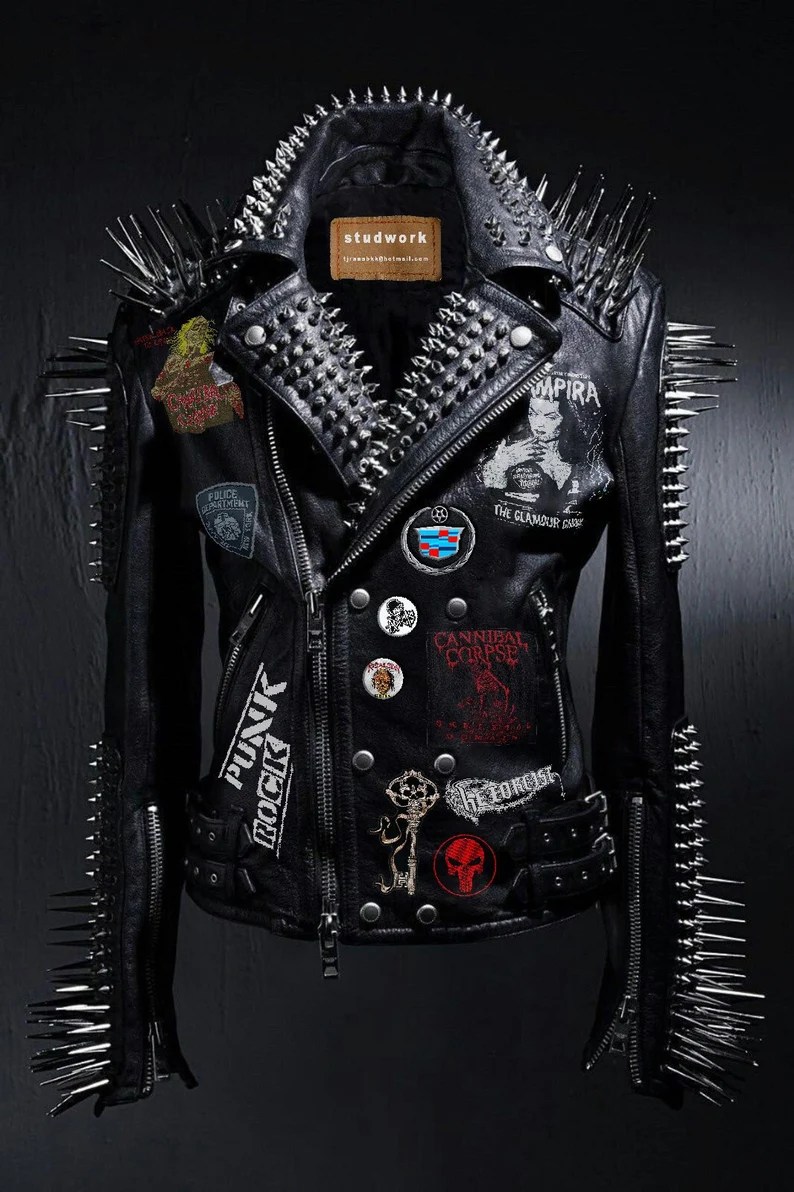
Citizens of Night Nation are going to experience a Nasty Tariff. I suggest we sew buttons on our hats and jackets as a way to show we are a Nation – within All Nations! We recognize – no borders! We want to be….FOREVER FREE!
Some of you sew and own allot of notions. Maybe you can ship some to a fellow NNC, or, a AFN…..A Friend of the Night!
Be friendly – to all! And to all……a goodnight!
Consider the Boston Tea Party!
Kristin Trainor is worried the end of de minimis will also mean the end of Diesel and Lulu’s, her 3-year-old boutique in Avon, Connecticut. Over 70% of the women’s clothes and accessories she stocks comes from small fashion houses in France, Italy and Spain. Trainor places small batch orders each week that fall under the $800 threshold.
“Our business model is to provide casual chic and unique clothes at affordable prices,” she said. “The added customs and duty charges that will go into effect on Aug. 29 will eliminate that affordability. ”
Yes, FedEx has been significantly affected by tariffs, with the elimination of the U.S. de minimis exemption for international shipments and retaliatory measures from other countries leading to higher costs, impacts on global demand, and potential disruption for its customers. This has resulted in a ~5% plunge in FedEx shares in late June 2025 and an expected $170 million reduction in adjusted operating income due to reduced trade volumes, particularly on the China-U.S. route.
The primary “tariff” at issue during the Boston Tea Party was the Townshend duty of three pence per pound on tea, which colonists resented as “taxation without representation”. Although the Tea Act of 1773 made the tea cheaper than smuggled alternatives by giving the British East India Company a monopoly and a tax break, it retained this existing duty, leading colonists to believe it was a ploy to force them to accept the tax and the company’s monopoly.


Tariff exemption for small packages ends this week
Nation Aug 26, 2025 2:13 PM EDT
NEW YORK (AP) — Low-value imports are losing their duty-free status in the United States this week as part of President Donald Trump’s agenda for making the nation less dependent on foreign goods and resetting global trade with tariffs.
An executive order signed last month eliminates a widely used customs exemption for international shipments worth $800 or less starting Friday, nearly two years earlier than the deadline set in the tax cuts and spending bill approved by Congress.
Although the president previously ended the “de minimis” rule for inexpensive items sent from China and Hong Kong, having to pay import taxes on small parcels from everywhere else likely will be a big change for some small businesses and online shoppers.
Purchases that previously entered the U.S. without needing to clear customs will require vetting and be subject to their origin country’s applicable tariff rate, which can range from 10% to 50%. For the next six months, carriers handling orders sent through the global mail network also can choose a flat duty of $80 to $200 per package instead of the value-based rate.
In response, the national postal services of more than a dozen countries said they would temporarily suspend sending some or most U.S.-bound packages due to confusion over processing and payment requirements. Japan and Switzerland on Monday joined Australia, Austria, Belgium, Finland, France, Germany, India, Italy, Norway, Spain, Sweden, Denmark, Thailand, the U.K. and New Zealand in saying they would pause shipments.
Exemption created in 1938 for $1 imports
The Trump administration says the exemption has become a loophole that foreign businesses exploit to evade tariffs and criminals use to get drugs, counterfeit products and other contraband into the U.S. Former President Joe Biden and members of Congress also discussed the issue.
Other countries have similar exemptions, but the threshold is usually lower. For example, 150 euros ($175) is the value limit in the 20 European Union countries that use the euro as their official currency. The U.K. allows foreign businesses to send parcels worth up to 135 pounds ($182) without incurring tariff charges.
In the U.S., the “de minimis” — Latin for lacking significance or importance — exemption started in 1938 as a way to save the federal government the time and expense of collecting duties on imported goods with a retail value of $1 or less. U.S. lawmakers eventually increased the eligibility cutoff to $5 in 1990, to $200 in 1993 and to $800 in 2015, according to the Congressional Research Service.
Since then, the number of shipments claiming de minimis treatment has exploded. A total of 1.36 billion packages with a combined value of $64.6 billion reached the U.S. last year, compared to 134 million packages sent under the exemption in 2015, the U.S. Customs and Border Protection agency reported.
About 60% of the 2024 shipments came from China and Hong Kong, according to an analysis logistics firm Flexport prepared based on U.S. government data. Multiple countries and regions accounted for the remainder, including Canada, Mexico, the European Union, India and Vietnam.
Boutique owner anticipates higher costs for European apparel
Proponents of limiting the exemption argue that it has served as a way for China-founded retail platforms like Temu and Shein to flood the U.S. with low-priced goods. The National Council of Textile Organizations said the move would help close a “backdoor pipeline for cheap, subsidized, and often illegal, toxic and unethical imports.” But some smaller American companies that rely on imported products and materials benefited from the exemption too.
Kristin Trainor is worried the end of de minimis will also mean the end of Diesel and Lulu’s, her 3-year-old boutique in Avon, Connecticut. Over 70% of the women’s clothes and accessories she stocks comes from small fashion houses in France, Italy and Spain. Trainor places small batch orders each week that fall under the $800 threshold.
“Our business model is to provide casual chic and unique clothes at affordable prices,” she said. “The added customs and duty charges that will go into effect on Aug. 29 will eliminate that affordability. ”
Trainor said she was looking to replace her European vendors with ones based in the U.S. But her bestselling product categories, such as apparel made of Italian linen, come from other countries. She estimates a simple linen sundress that cost $30 wholesale at the beginning of the year will rise to $43 next month.
After a corporate career, Trainor opened the store to have more time with her 9-year-old son and her 91-year old father. Raising the boutique’s prices to absorb part of the import charges would help offset higher shipping and logistics costs, but Trainor worries her customers will balk at higher prices.
“I have not made any official announcements to my customers just yet, although they have started to ask if I will stay open as they understand the economic impacts that are occurring,” she said. “At this point, I am leaning more and more towards closing the boutique, sadly.”
Trade agreement doesn’t shield products from Mexico and Canada
Ken Huening started CoverSeal, his business making and selling protective covers for cars, motorcycles, grills and patio furniture, in 2020. The company is based in Los Gatos, California, and the covers are manufactured in Mexico and China. When a customer places an order, it ships from Mexico.
Although a trade agreement that took effect in 2020 has made most goods from Mexico and Canada exempt from country-specific U.S. tariffs, the withdrawal of the de minimis rule applies to all countries.
Huening said he’ll either have to raise prices or end free shipping now that his products will be taxed when they are sent from Mexico to U.S. customers. He’s looked at setting up a U.S. production and logistics network but says domestic sewing facilities and textile manufacturers do not exist for the engineered fabric used in CoverSeal’s products.
“We are often asked why we don’t just establish a U.S. supply chain,” he said. “It is not possible in the short term. By the time the infrastructure is established, many companies and small businesses will be out of business.”
Shannen Knight imports hard-to-find sports goggles and glasses as the owner of A Sight For Sport Eyes, her online store and shop in West Linn, Oregon. She routinely received shipments from the U.K., the Netherlands and Italy that fell under the de minimis dollar cutoff.
Knight estimated that she would need to raise the retail price of the rugby goggles she gets from Italy by 50%. It took the International Rugby Board two years of testing to approve the Italian-made goggles, a specialty item without strong prospects for stateside production, she said.
“There are products that it just makes sense to be made internationally, where there is the stronger demand for them, but there still is some demand for in the U.S.,” Knight said.
This article is about sewing notions. For the culture of Winchester College, see Notions (Winchester College).

In sewing and haberdashery, notions are small objects or accessories, including items that are sewn or otherwise attached to a finished article, such as buttons, snaps, and collar stays. Notions also include the small tools used in sewing, such as needles, thread, pins, marking pens, elastic, and seam rippers. The noun is almost always used in the plural.[1] The term is chiefly in American English (the equivalent British term is haberdashery). It was also formerly used in the phrase “Yankee notions”, meaning American products.[2][3][4][5][6] A fabric store will have a section or department devoted to notions, and a spool of thread is considered a notion.
History
Origins
The roots of notions trace back around 25,000 years to the discovery of bone needles, a crucial tool in stitching garments made from fur. These early sewers also utilized thimbles to guard against occasional finger pricks, as evidenced by ancient artifacts. The emergence of buttons and buttonholes occurred during the European Crusades, around 500 years later, as Christian armies encountered novel practices in faraway regions. The landscape of sewing changed dramatically with the introduction of machine-made cotton thread in England, approximately half a millennium after the Crusades, facilitating the craft on a global scale.[7]
1700s
The 18th century stands out as a transformative period for notions. The first sewing needle factory opened in Germany in 1730, and the first mechanical needle was manufactured 25 years later. Although no surviving sewing machine from that era has been discovered, the groundwork for such a device was unmistakably laid.[7]
1800s
Notions continued to evolve with the prominence of brass buttons as favored fasteners during the War of 1812, spurred by the establishment of the Waterbury Button Company. The subsequent development of twisted cotton thread set the stage for the midcentury invention of the sewing machine. In 1851, Isaac Singer marked a significant milestone by founding the Singer sewing machine empire. Today, antique sewing tools attract collectors due to their rich history and practical utility. Galleries frequently showcase vintage sewing artifacts from diverse corners of the world, providing opportunities to build captivating collections without a substantial financial investment.[7]
As traffic generators in early department stores
Around 1900, the typical U.S. department store notions department consisted primarily of lace, trimmings, and sewing accessories. It was considered a seasonal business and received little attention. But some stores added accessories to their notions department, which they relocated to the ground floor. Accessories and notions had low price points, low margin, but high volume, and attracted casual shoppers in for a quick purchase. In a 1967 U.S. study, about half of all people in downtown stores bought something in the notions department and 84% of them went on to other departments, of whom almost half bought something else. The quick impulse buy in the notions department “softened up” the shopper and made them more open psychologically to buying things in other parts of the store. Still today, accessories such as costume jewelry and sunglasses are (as well as cosmetics and fragrances) usually placed close to main floor store entrances.[8]
WRITTEN BY CALLAGHAN
Lyrics
ALL THROUGH THE NIGHT
Music and lyrics by Callaghan
VERSE 1
Baby it’s all right, to close your eyes, see how the stars all shine for you
They shine right into your dreams, and keep you warm as you sleep
There’s no need to cry
CHORUS
I’ll be here all, all through the night
I’ll be here all, all night
BRIDGE
Ooh, Ooh…….
VERSE 2
And when the darkness comes, I will you protect you from
The world outside
CHORUS
I’ll be here all, all through the night
I’ll be here all, all through the night
I’ll be here all, all night
OUTRO
Ooh, Ooh…..
© 2018 Make Tea Not War Music Publishing (BMI)
 Rosamond Press
Leave a comment