Night Nation News
Dull and Doll People are welcome in Night Nation – where you will not be judged!
Creator of NNN
Oscar Wilde’s quote, “Only dull people are brilliant at breakfast,” is a satirical remark suggesting that being witty or particularly clever at the start of the day is a forced effort and a sign of superficiality, as it uses up one’s best intellectual reserves for the early hours. The quote appears in a book of the same name, which collects Wilde’s various witty aphorisms and observations on society and human behavior.

Until Dawn is like that haunted house in your quaint small town that your friends keep saying year after year that you should all go to, and finally, you all have a joint and go, and it’s just the lamest fucking thing you’ve ever been to and wonder why you wasted your money in the first place. Imagine if Cabin in the Woods (2011) and Happy Death Day (2017) had the most boring child devoid of fun or charisma. Some decent kills do not make up for such a horrible script that’s tonally a mess. Blowing the Groundhog Day concept for a movie is challenging, but here you go. This videogame adaptation that betrays the original material full-heartedly from PlayStation Studios might be the worst thing they’ve done since they raised video game prices to $70. If Sony wanted to give us hack stuff, they should have allowed themselves to be hacked again.
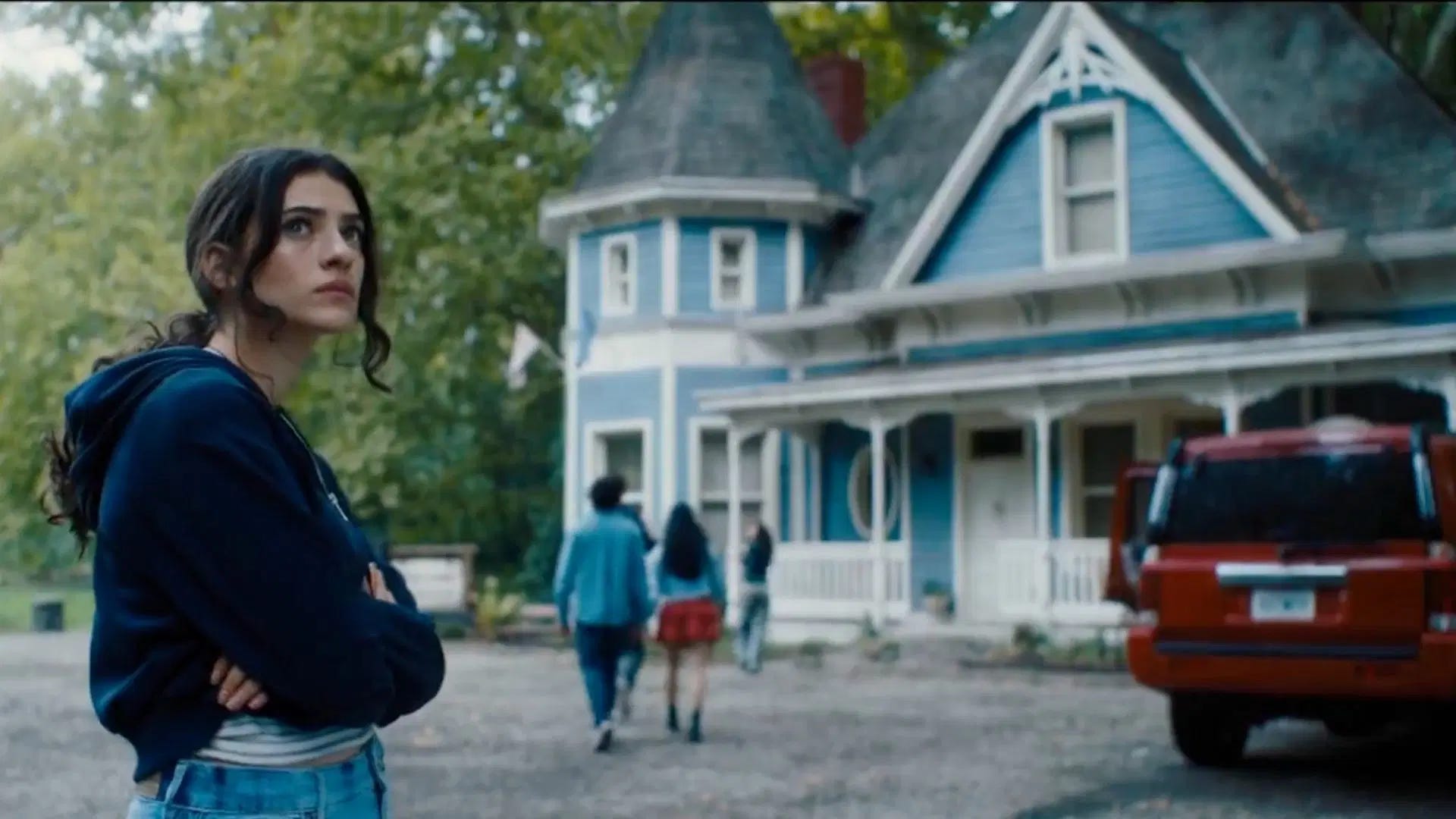
Until Dawn is about a group of friends searching for one of the members’ missing sisters, which leads them to her last whereabouts in this creepy valley. The group finds this mysterious house where they are viciously murdered each night by a different monster or psycho unless they can survive until sunrise. Sure.
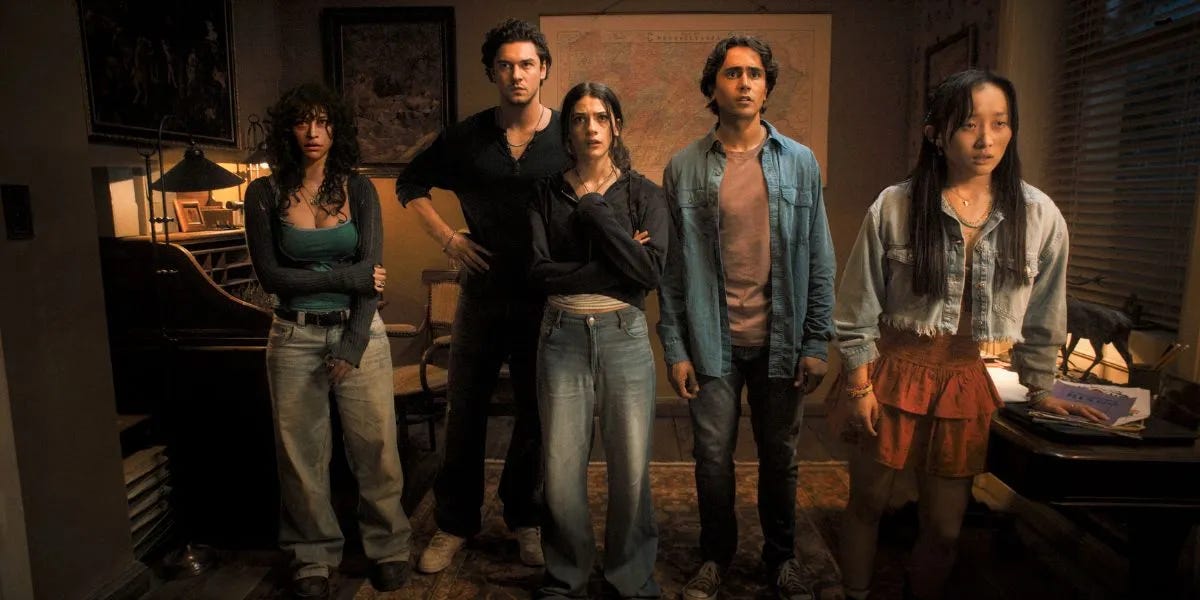
The primary issue with Until Dawn, besides its awful and cliche-riddled script that actors are genuinely doing their very best to squeeze out some energy from, is that it’s so dull. The film can’t decide for the life or lives of it what it wants to be. There is an attempt at times when it wants to be this absurd horror comedy. The best scene in the film is when the group locks themselves in a bathroom, and it turns out even the tap water is dangerous, leading to insane results. The problem is that the film sometimes wants to have its cake and eat it too, where it tries to balance the emotional toll of dying repeatedly with the campy ridiculousness of a different film. Only so many films can balance both of these, such as Cabin in the Woods, or use the Groundhog Day concept to its full effect in the modern day, like Palm Springs (2020) or Edge of Tomorrow (2014).

Some parts of Until Dawn make me wonder if there was a good movie somewhere. The water-drinking scene, for example, is just the body horror explosion I needed to get out of my seat. When one of the friends realizes they’ve been recording their deaths on their phone for weeks, we see creepy moments outside of the dull jump scares we are privy to during most of its runtime. The cast was distinct enough, and the dynamic of all or nothing when it came to escaping when friend group members had to kill or maim one another could have been interesting if I felt anything for their characters and were written like real people. I do love how hardcore some of the kills were if they meant anything really, and the ending of the film devolving into just like weird zombie werewolf things chasing our party around just seemed like cheap haunted house shit. For the most part, I found the film’s direction lacking creativity and a bland and forgettable-looking movie.

Until Dawn is a streaming guilty pleasure for many when it hits Shudder or Netflix, but for horror fans, I can’t have any recommendations outside, like a few cool kills here and there. You’ve seen this done so much better in other movies, and even the concept of a Groundhog’s Day haunted house feels like all the fun has been sucked out of it. The purpose of the original game was to make your horror movie based on your decisions or choices. This film adaptation feels like a departure from the dark and grizzly tone of the original. The lack of creativity is evident in the film’s reliance on tired horror tropes and its failure to fully explore the potential of the Groundhog Day concept. Until Dawn more like Until Yawn amiriteeee??!! Anyway.
Final Score: 3/10
Whttps://kevinjpettit.substack.com/p/until-dawn-review
ritten by Kevin J. Pettit
What happens in the brain when we are bored?
In people who are prone to boredom, this state can negatively affect their mental health. So, what happens in the brain when we get bored, and how can this help us find ways of dealing with boredom? A new study investigates.What happens in the brains of people who are prone to boredom? New research finds out.
On average, adults in the United States experience 131 days of boredom per year — at least that is what a recent commercial survey suggests.
What matters, though, is not just how much time a person spends feeling bored, but also how they react to the state of boredom.
Traditionally, boredom gets a bad rap because many people believe that the state of boredom equates with a lack of productivity or focus on a given task.
However, some research has indicated that it is good to be bored because this state helps boost creativity.
One way or the other, boredom is something we all have experienced repeatedly throughout our lives, and according to some research, it seems that animals might share this experienceTrusted Source with us, too.
“Everybody experiences boredom,” says Sammy Perone, who is an assistant professor at Washington State University in Pullman. However, he adds, “some people experience it a lot, which is unhealthy.”
For this reason, Perone and colleagues from Washington State University decided to conduct a study focusing on what boredom looks like in the brain.
The study findings — which now appear in the journal PsychophysiologyTrusted Source — might help them identify the best ways of coping with boredom so that this state does not end up affecting mental health.
At the end of the day, “we wanted to look at how to deal with [boredom] effectively,” Perone explains.
The study premises
To begin with, the research team believed there was a “hardwiring” difference in the brains of people who react negatively to boredom vs. those individuals who experience no ill effects when they are bored.
However, initial tests — using electroencephalogram (EEG) caps to measure participants’ brain activity — proved them wrong.
“Previously, we thought people who react more negatively to boredom would have specific brain waves prior to being bored. But in our baseline tests, we couldn’t differentiate the brain waves. It was only when they were in a state of boredom that the difference surfaced,” Perone explains.
So, if there was no difference in terms of brain hardwiring, then what could explain why boredom affected some people more adversely than others? The researchers decided that the most likely explanation was individual response: some people simply reacted poorly to being bored, which could affect their well-being.
Previous research, the investigators report in their study paper, has actually suggested that individuals who are often bored are also more prone to poor mental health, and particularly to conditions such as anxiety and depression.
“People who report high levels of boredom propensity have an avoidant disposition. For example, these individuals are more likely to experience depression and anxiety,” the researchers write.
Based on these premises, the researchers argue that it is possible to find ways of coping with states of boredom so that they become less likely to affect mental health. But what might these strategies be? Before they could find out, Perone and team had to solve another mystery, namely what boredom looks like in the brain.
Anxiety and depression can take many forms.
The Optum Now Anxiety & Depression Guide is here to support you with tailored content, product recommendations, and care based on your preferences. Access your guide now.
Brain activity in those prone to boredom
For their study, the researchers recruited 54 young adult participants. The researchers asked the volunteers to fill in a survey asking questions about boredom patterns and how they reacted to feeling bored.
Then, after a baseline EEG test measuring normal brain activity, the researchers assigned the participants a tedious task: they had to turn eight virtual pegs on a screen as the computer highlighted them. This activity lasted approximately 10 minutes, during which time the researchers used EEG caps to measure participants’ brain activity as they carried out the boring task.
“I’ve never done [this activity], it’s really tedious,” Perone admits. “But in researching previous experiments, this was rated as the most boring task tested. That’s what we needed,” he explains.
In assessing the brain wave “maps” obtained via the EEGs, the researchers looked specifically at activity levels in the right frontal and left frontal areas of the brain.
That was because these two regions become active for different reasons. The left frontal part, the researchers explain, becomes more active when an individual is looking for stimulation or distraction from a situation by thinking about something different.
Conversely, the right frontal part of the brain becomes more active when an individual experiences negative emotions or states of anxiety.
The researchers found that participants who had reported being more prone to boredom on a daily basis displayed more activity in the right frontal brain area during the repetitive task, as they became increasingly bored.
“We found that the people who are good at coping with boredom in everyday life, based on the surveys, shifted more toward the left. Those that don’t cope as well in everyday life shifted more right.”
Sammy Perone
‘Reacting more proactively to boredom’
The team’s next step is to identify clear strategies that will allow people to cope better with states of boredom. Clues have already emerged after asking participants in the current study how they dealt with the boring activity.
“We had one person in the experiment who reported mentally rehearsing Christmas songs for an upcoming concert. They did the peg turning exercise to the beat of the music in their head,” says Perone.
“Doing things that keep you engaged rather than focusing on how bored you are is really helpful,” he notes.
In other words, proactive thinking could be a good way of coping with boredom. The trick, however, is getting individuals to learn how to do more of this, and succumb to boredom less.
“The results of this paper show that reacting more positively to boredom is possible. Now we want to find out the best tools we can give people to cope positively with being bored,” explains Perone.
“So,” in future studies, he adds, “we’ll still do the peg activity, but we’ll give [participants] something to think about while they’re doing it.”
“It’s really important to have a connection between the lab and the real world. If we can help people cope with boredom better, that can have a real, positive mental health impact,” the researcher contends.
 Rosamond Press
Leave a comment