

How about:
The Royal Russian Witch
by
John Presco
In 1764, a group of Mighty Russian Men board a ship for America in ordet to get from under the rule of
A ROYAL WITCHY WOKE – BITCH?
Finding a home in the Ozark Mountains, they compose misogynist songs, to dance to?
“We broke away from that Evil Russian Woman Ruler, because she took a witchy knife to our cock and balls, and made us Big Sissie’s in the eyes of our woman, who could not love us anymore – at all!”
The Rusniks backed every Soviet Leader that rose to power.
“Better off a Rus Man, than a Sissy-shit Demo-boy for the arts! We got big boners and ass poppin, farts! Our dumb woman don’t want no culture, or the theatre. They just want our throbbing
PETER – THE GREAT!
We ain’t just talking about any Dickie! Co’mon, bitch, and give my Great Peter a
GIANT HICKY!
We don’t want no City Chic! We aint no – City Slick!
Yo!”
Catherine II[a] (born Princess Sophie of Anhalt-Zerbst; 2 May 1729 – 17 November 1796),[b] most commonly known as Catherine the Great,[c] was the reigning empress of Russia from 1762 to 1796. She came to power after overthrowing her husband, Peter III. Under her long reign, inspired by the ideas of the Enlightenment, Russia experienced a renaissance of culture and sciences. This renaissance led to the founding of many new cities, universities, and theatres, along with large-scale immigration from the rest of Europe and the recognition of Russia as one of the great powers of Europe.
Tsar Peter III was seen as a largely ineffective and unpopular ruler. He was a German-born prince of Prussia, and his loyalty to his native land over his inherited one earned him the ire of his people and his army. Peter had returned Russia’s conquered territories back to Prussia and withdrawn his forces from the Seven Years’ War, rendering all of Russia’s recent victories, and its sacrifices, pointless.
Many in the Russian army, as well as Russian citizens and Empress Catherine herself, feared that if Peter continued his concessions to Prussia it would lead to a nationwide uprising and threaten the stability of Russia. In the spring of 1762, conspiring with her lover Grigory Orlov and others in the court and military, Catherine began plotting to overthrow her husband.
Picture-perfect time travel
SEP 21, 2015


“The witch of Bradshaw Mountain, near Berryville, Ar. about 1925. I wrote a story about her and Thomas Hart Benton made a picture for it.”
POINT LOOKOUT – A walk through an Ozarks forest reverberates souls and stories. The nooks and crannies of the region’s hills were once filled with a people unlike any other — a culture that lived and died, married and had babies all without any distraction of an outside world.Those people are long gone. Theirs was a culture obliterated — perhaps willingly — by the introduction of modern convenience. And if it weren’t for people like Vance Randolph, their stories would be, too.The Ozarks’ premiere preservationist, Vance captured the Ozarks in a way that has never been done before or since. His words, filling the pages of more than 20 books, painted vivid pictures that were secret to the outside world — people and places that now only exist in the minds of a dwindling number of Ozarkers.Well, and at College of the Ozarks.No, the college doesn’t own a time machine — at least not one in the conventional sense. But a collection of photos taken by Vance on his travels into the hills does provide a crystal clear window into the past.
Click here to visit Vance’s Ozarks.

Those time-travel images are something that Gwen Simmons says she feels fulfill an important need. “We’re such a visual culture,” says Gwen, an associate professor of Library Science and media specialist at College of the Ozarks. “You know, I can tell you what a still looks like, but until you a picture of that still making moonshine, it doesn’t translate.”You can indeed see a picture of that still in the collection. Other images show the weathered faces of hill folk at work and play, often with a musical instrument close at hand. Many of the photos, most shot before 1940 and from around the Pineville area, depict Ozarkers in the beauty of their hardworking, everyday lives.
“Still in operation, Pineville, Mo. The man in the picture is Gifford Lee, deputy sheriff of Pineville, Mo., 1930”
However, Vance wasn’t a photojournalist — and some of the photos were more representation than reality. For example, on one of the photos — a woman showing a lot of leg — Vance wrote that he was “trying to sex up the Ozarks image.” And in the case of the still, it’s unlikely that the man pictured there wasn’t posing. You know, since he was a deputy sheriff and the photo was taken in 1930 when prohibition was still in full force.But even though a few of the photos are a little larger than life, most bring forth an Ozarks that few today have ever seen. And for Gwen, their collective story is one worth preserving. “Once we lose the pictures, we lose the history,” she says.The photos are part of The Ozarkiana Collection, a resource room at the college that’s chock full of everything Ozarks. It was a brainchild of Townsend Godsey, the college’s longtime public relations director and Ozarks enthusiast. “He and Vance Randolph were great friends,” says Gwen of Townsend. “He encouraged Vance to donate his photos to this collection.”And that’s where they’ve been for nearly 50 years. Besides Vance’s photographs, the collection includes books, recordings, newspaper articles, photographs and other local memorabilia, including the Townsend Godsey Archives, a treasure trove of the historian’s work.Even though it’s been around since the early 1970s, the room — located on the second floor of Lyons Memorial Library — isn’t too well known. “(The collection) has a certain level of notoriety, but I think it’s a pretty well kept secret,” says Gwen. The same is true of Vance’s photos, which are only available to view in person at the library (except for about 30 or so of ’em, which are here for you to see today).If today’s smattering whets your appetite, there’s around 200 more where they came from — so take time to make a trip. “There is a lot of value to seeing something in person,” says Gwen. “I think it’s important that we know what our history is, because if we don’t know where we came from, we don’t have much context for who we are.”While you’re there (because it’s likely that seeing these ones today won’t be enough), take time to read the captions, many of which were hand-written by Vance himself. Those earthy descriptions provide insight into both the historian and the people he wanted to share — you know, with people like us.
Want to see the photos?
The Ozarkiana Collection is accessible whenever Lyons Memorial Library is open. Regular library hours are Monday to Thursday 8 a.m. to 10 p.m., Friday 8 a.m. to 5 p.m., Saturday 9 a.m. to 1 p.m. and Sunday 2 p.m. to 10 p.m. Hours vary during holidays and semester break. For more information, call 417-690-3412.All photos used by permission of The Ozarkiana Collection.
Royal Rosamond Press Co.
Posted on February 2, 2015 by Royal Rosamond Press

ROYAL ROSAMOND PRESS
My grandfather was a Newspaperman – of sorts! He sold 400 copies of The Oklahoman, and 200 copies of the Oklahoma Times, at his newspaper stand in Oklahoma City. He tutored young people in poetry and had plans to build a Poet’s retreat on the Buffalo River.The Ozark Historian, Otto Rayburn, was supportive of this.
It is the objective of my newspaper to restore the dream of these two men who published their own magazine. Rayburn published ‘Arcadian Life’, and Royal’s Gem Publishing, published ‘Bright Stories’. Royal also published one novel under ‘R.R. Rosamond Publishing’ founded in 1931 in Ventura where it was printed.
Above you see letters sent to Royal, and two books he published. Rosamond’s poems are here, along with photos of his daughters, and his friends who were writers, camping on Santa Cruz Island.
Jon Presco
President: Royal Rosamond Press Co.
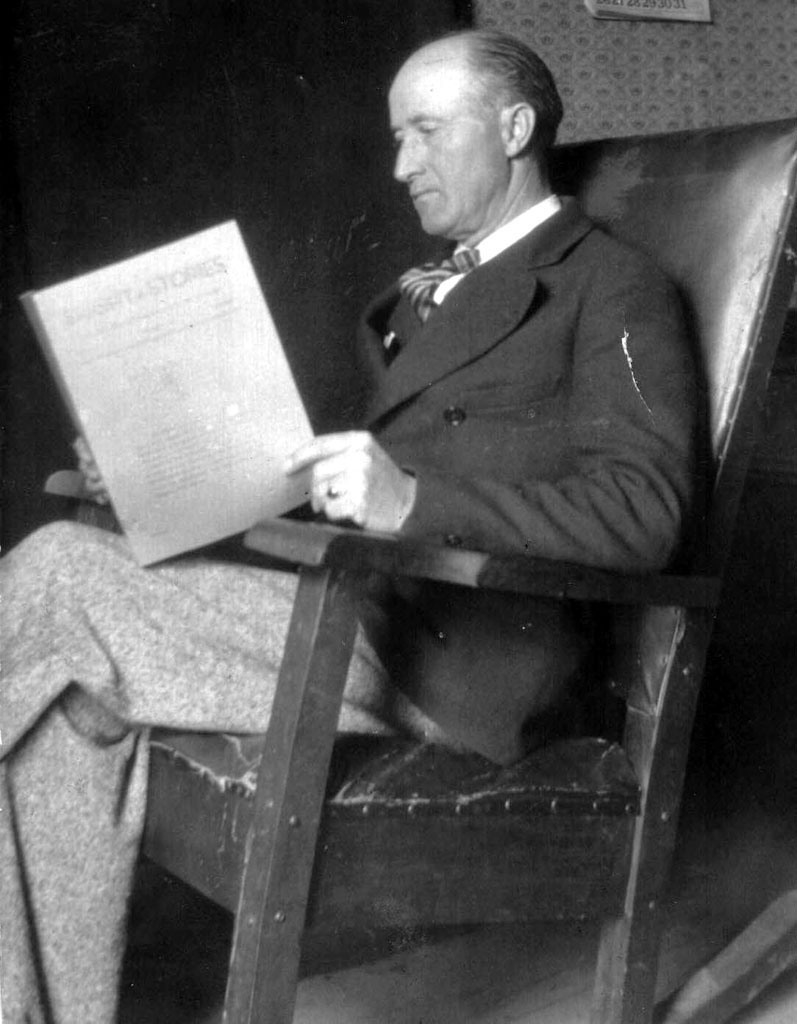
Ravola of Thunder Mountian
Posted on January 11, 2013 by Royal Rosamond Press


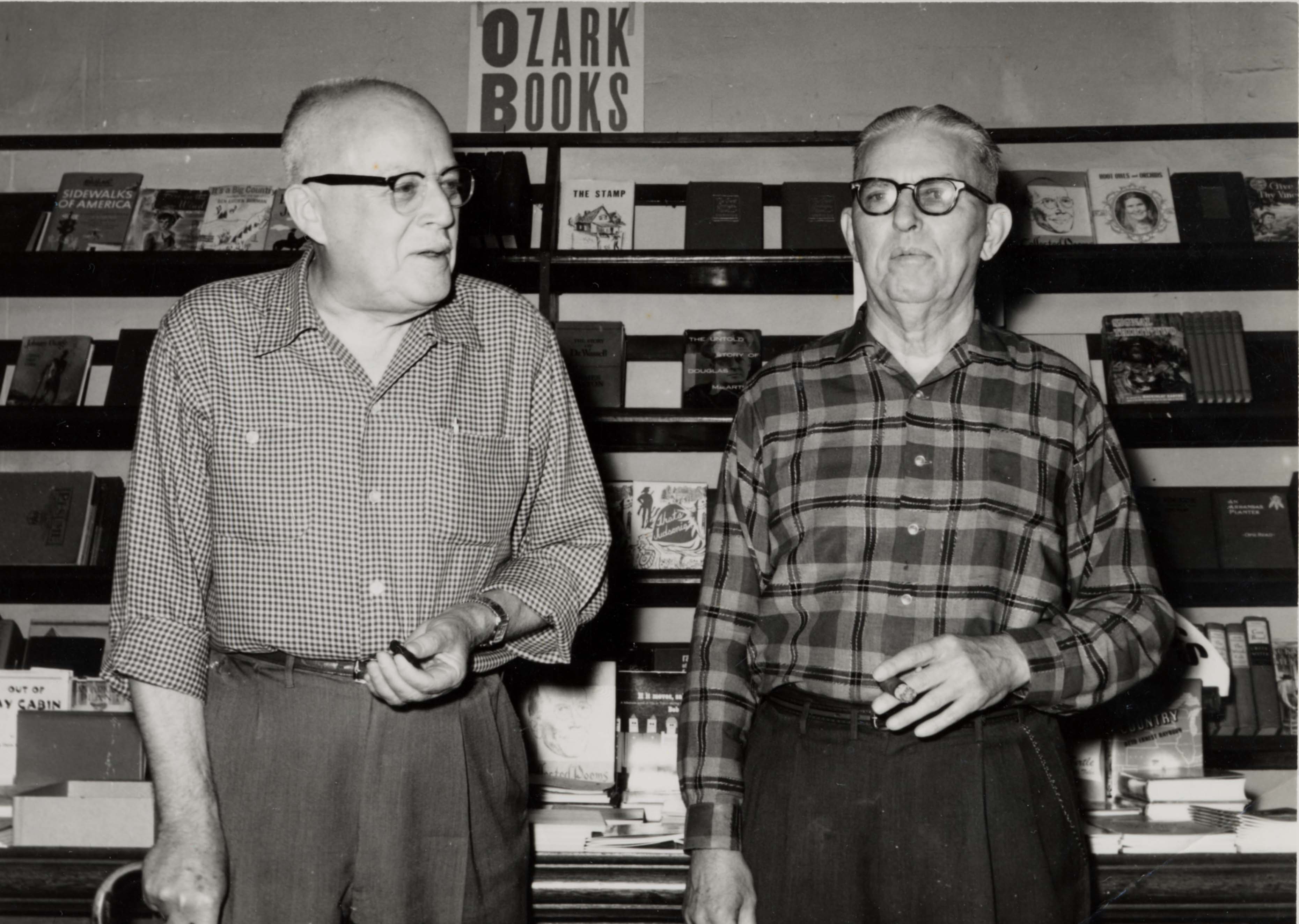

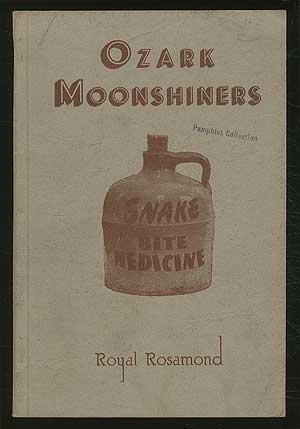
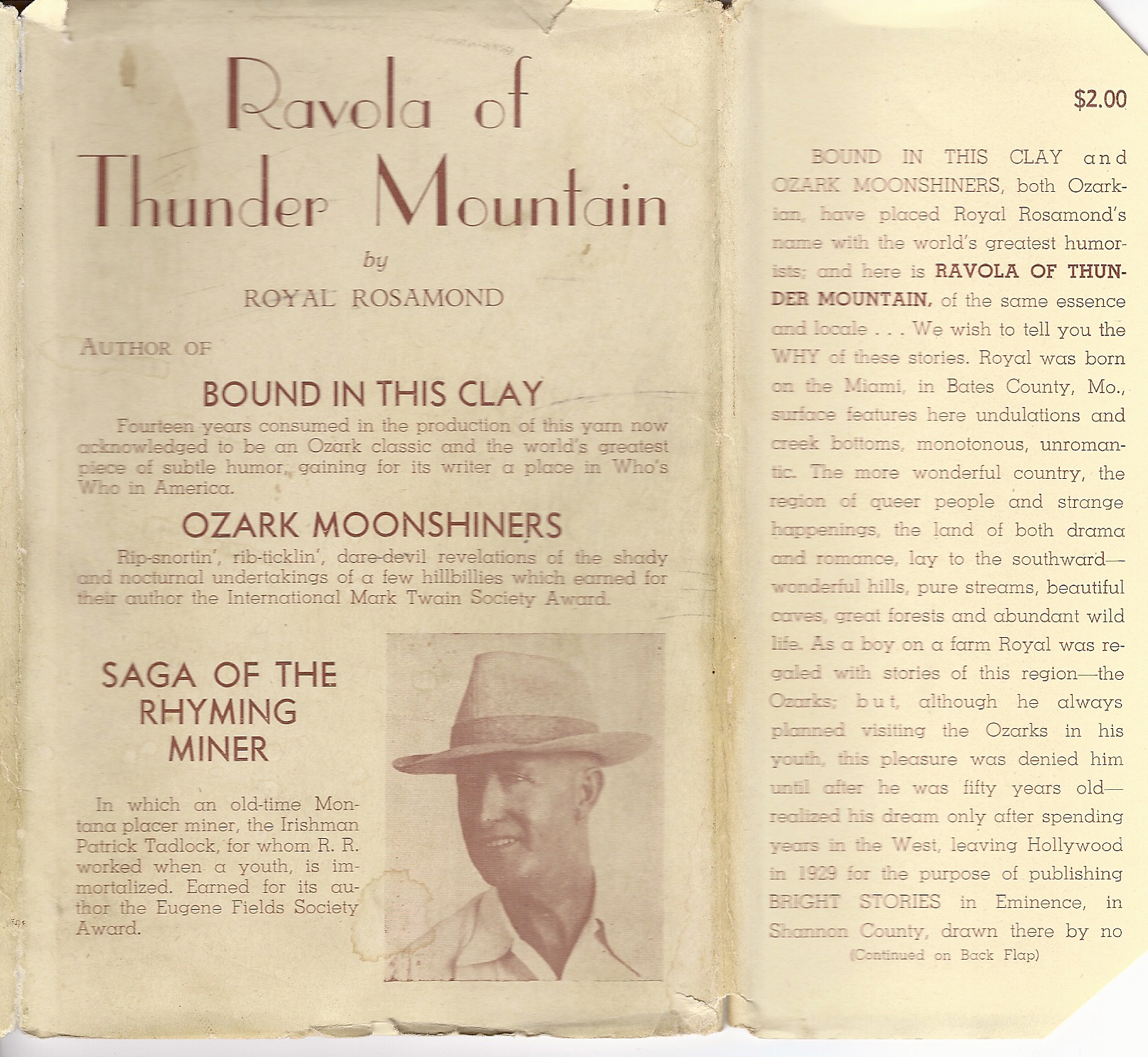
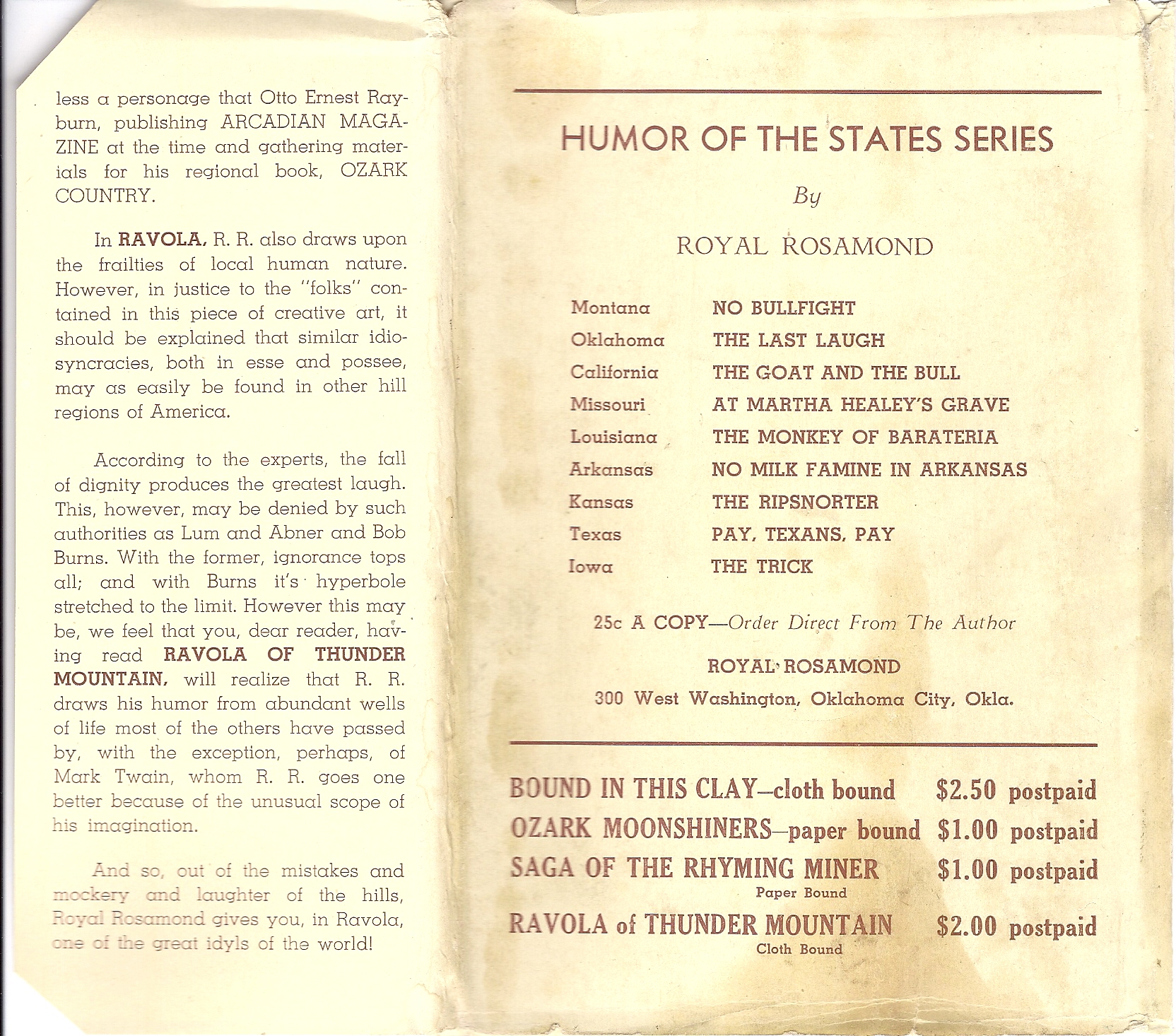
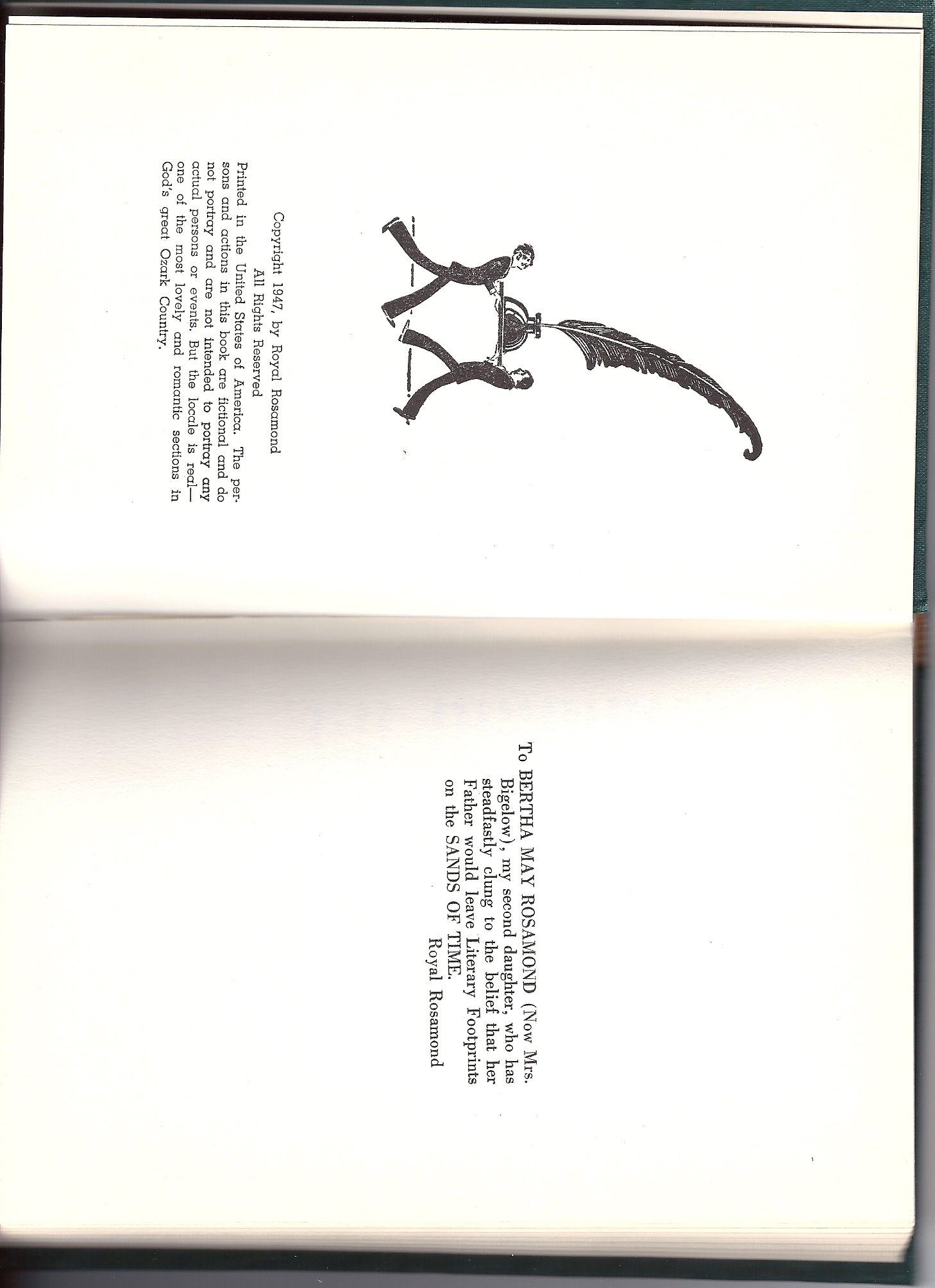
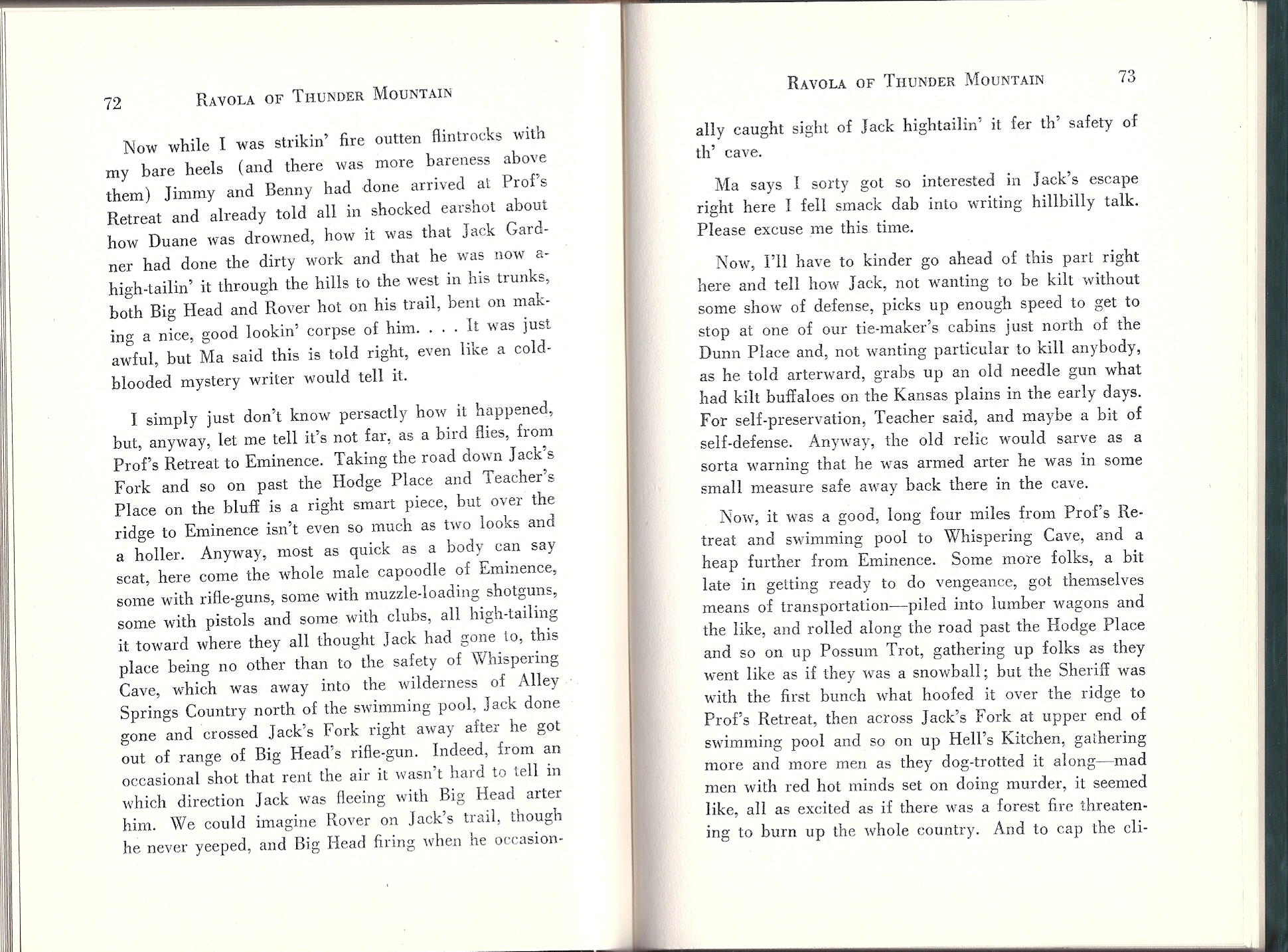
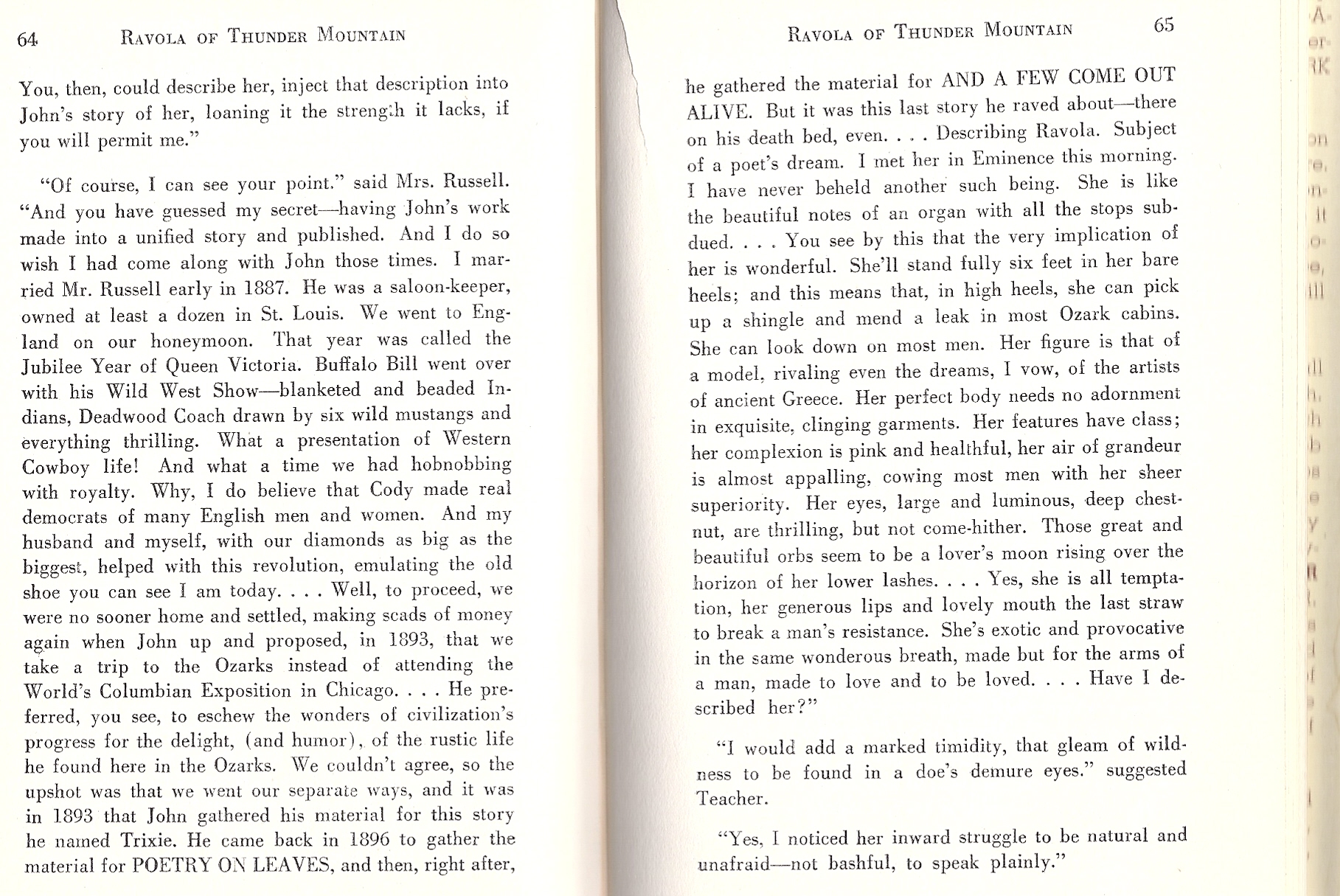
On the inside of Royal Rosamond’s novel ‘Ravola of Thunder Mountain’ we find a dedication to my aunt Bonnie:
“To Bertha May Rosamond (now Mr’s Bigalow), my second daughter, who has steadfastly clung to the belief that her Father would leave Literary Footprints in the SANDS OF TIME.”
Royal Rosamond”
In the last two days I have had bright conversations with two Keepers of History, who happen to be women, not unlike Mary Celestia Parler, who worked with Otto Rayburn and Vance Randolph to collect and preserve the vanishing history of the People of Missouri and the Ozarks. Peggy Buhr and I talked about the DMZ that was created in Missouri over the slavery debate that resulted in wholesale murder and the removal of all the folks in certain regions – along with their historic records that were taken to Kansas – and never returned. This history is lost forever. The Rosamond and Rose families may have been the first people who came to repopulate the DMZ. The historian, Albert Castile, compares Order 11 to the Japanese Interment camps during WW2. We concluded our nation is becoming polarized, again, over the same issues. Will America’s bitterness that led us into the Civil War, ever go away? Will the No Man’s Land forever leave blood stains in the Sands of Time?
Consider our President’s statement about clutching our guns and Bibles – while hunkered down in Whispering Cave under Thunder Mountain – waiting for the world to come to an end? What about America? These folks surely don’t want to see our young Democracy come to an end – after such a short life!
When I became an artist and gave my uncle and aunt a painting I had done, they were happy for it, got it framed, and hung it over their mantle. When I showed June Rice my poetry, it was like she had been kicked in the stomach – and seen a ghost. I had never seen her father’s poetry that were published in magazines, cause they were kept safely locked in Rosemary’s cedar chest lest one of her children behold them, and become a “rake and ramblin boy” like her father – who I never lay eyes on! But, someone was channeling my poetry while I was in a trance at the back ot the class. Rosey’s four daughters started saying he has Royal’s smokey-blue eyes!”
June had one of Royal’s failed books dedicated to her. Royal Rosamond was a self-publisher – and ahead of his time! Today, he would be a blogger.
When I brought my second girlfriend over to meet my kinfolk, June zeroed in on the truth Melinda Frank was not wearing any shoes, just like her father’s Hillbilly folks in those wretched Ozark stories he told – in bad english! In 1964, June threw me and my lover out of her home! I was Royal come home to roost, he estranged from his wife and four daughters for many years! June was elected to go to Oklahoma City and put Rosey to rest, just where, no one knew. As a genealogist I found his unmarked grave and got my aunt Lillian to buy a marker and we put two roses on No Man’s Land.
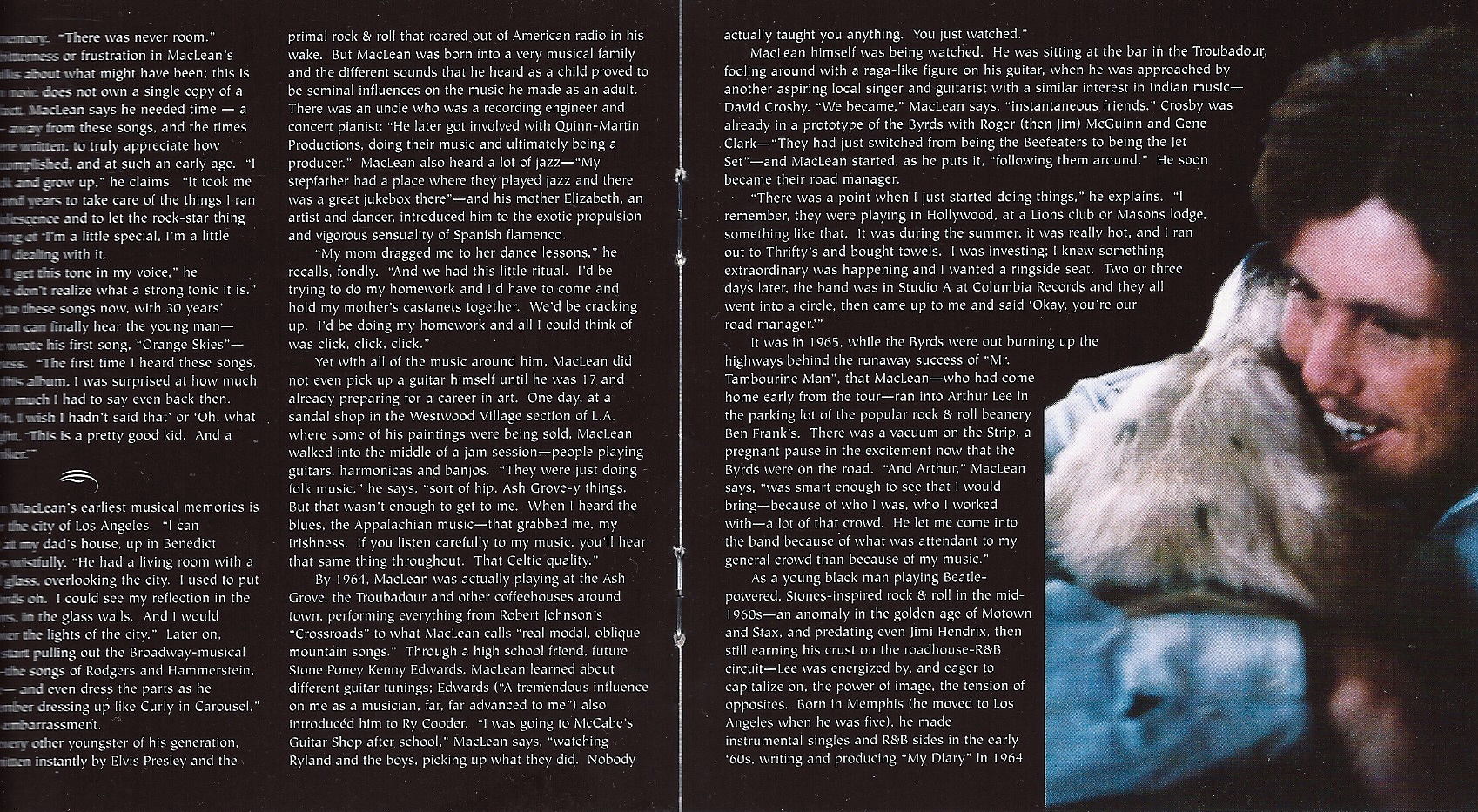
Mary Parler married Vance Randolph pictured above with Rayburn. I own letters exchanged between Rosamond and Rayburn. Mary captured folk music and singers, the foremost being, Emma Dunsenbury who sang ‘Ramblin Boy’. I would become a Ramblin Boy, as would my friend, Bryan MacLean of Love. Bryan was in love with Royal’s granddaughter, Christine Rosamond Benton. In 1964, Bryan was playing his guitar and singing what he called “oblique mountain music” Bryan and I became the first hippies who were very much like the Celtic Moonshiners who did not like the Fed on their trail, trying to put and end to our Ramblin Ways.
Elizabeth Elson of the Miami Museum agreed that we should have started to capture our beautiful American History – much sooner! But, who is reading this history? Folks today think they own this history by picking up anther gun at the gun show, rather then a book at the library. I told Peggy and Elizabeth, as a Historian, theologian, and Grail Scholar “Our history has just begun, and, our nation will reborn itself many times!”
In Thunder Mountain, there is a chapter titled ‘A Few Came Out Alive’. There are men carrying many guns in a show-down. Bryan was invited to a gathering at the Polanski house the nght Charlie Manson’s crazed killers showed up. Luckily he found better things to do. How many millions of guns has the Manson crew put in our hands – after seeing Charlie’s photo?
It may be a matter of finding some brave soul who is willing to go into Whispering Cave and talk those dangerous men into giving up their guns, and their Bible. But, then you got to take away their guitar and fiddle, and put a gag on Grandma who is singing a traditional family ballad she got from God-knows-where!
It’s high time we all take a good look at our real history so we can know exactly what, and who, our guns are protecting. We stand on common ground. We are all alike. We all have something at stake. Let’s take an inventory of what that SOMETHING is.
God bless America!
Jon Presco
Copyright 2013
http://www.sullivansfarms.net/friendsofmiami/
http://home.earthlink.net/~bcmuseum/
Mary Celestia Parler Research Materials
Mary Celestia Parler (1904-1981) taught folklore and other courses in the Department of English at the University of Arkansas from 1948 to 1975. During her career she collected and managed the folk song collection and also gathered a vast quantity of non-song materials on Ozark lives, riddles, proverbs, beliefs, and superstitions that were compiled into twenty-one volumes held in Special Collections. Her students contributed more than thirty linear feet of reports on many topics of Ozark culture All these materials were donated by Miss Parler to the University Libraries beginning in 1965, where they have been managed and preserved ever since. She was a founder of the Arkansas Folklore Society in 1950 and served on its board with the poet John Gould Fletcher, collectors Vance Randolph and Otto Ernest Rayburn, and performers Booth Campbell and Doney Hammontree. Mary Celestia Parler married Vance Randolph in 1962.
http://libinfo.uark.edu/SpecialCollections/research/guides/Folklore/Parler.asp
http://libinfo.uark.edu/SpecialCollections/findingaids/parler.html
Emma Dusenbury, one of the foremost singers of Anglo-American folk songs, is represented in the University Libraries by copies of recordings made in the 1930s by collectors who visited her on her farm near Mena. User copies of these recordings are held in the Performing Art and Media Department.
http://www.encyclopediaofarkansas.net/encyclopedia/entry-detail.aspx?entryID=1634
During the late 1920s and early 1930s, guided by F. M. Goodhue, a teacher at a nearby radical labor school, Commonwealth College, Dusenbury was recorded by some of the best-known folksong collectors in the region and nation. John Lomax, Vance Randolph (whose Ozark Folksongs lists November 1928 as the date of his first collecting from her), and Sidney Robertson all visited, as did poet John Gould Fletcher and Little Rock (Pulaski County) composer and symphony director Laurence Powell. All were greatly impressed; Lomax wrote in his autobiography that she sang continuously for two days and recorded more traditional Anglo-American ballads than any other singer.
Uploaded on Jan 25, 2011
This song is a shortened version of a song called “The Rambling Boy” collected in 1930, from Emma L. Dusenbury, Mena, Arkansas, by Vance Randolph.
According to the Association of Religion Data Archives County Membership Report (2000), Shannon County is a part of the Bible Belt with evangelical Protestantism being the majority religion. The most predominant denominations among residents in Shannon County who adhere to a religion are Southern Baptists (56.22%), Methodists (12.03%), and Christian Churches & Churches of Christ (10.84%).
John ‘The Highwayman’ Rosamond and the Delta Clodhoppers
Name: John ROSAMOND “The Highwayman” – Surname: Rosamond · Given
Name: John · Suffix: “The Highwayman”
“Many a young maid lost her baubles to my trade”
(Images: Jim Kweskin Jug Band album cover. Painting by Thomas Hart
Benton. The Highwaymen. Benton paintings)
http://en.wikipedia.org/wiki/The_Highwaymen_(country_supergroup)
“In 1724, my ancestor John ROSAMOND and his friend William Ray were
arrested in Abingdon, Berkshire, England for stealing a hat, periwig,
30 pounds British sterling, five pairs of shoes, and a brown gelding.
They were held in the gaol in Reading, Berkshire, after their trial
where they were sentenced to be exiled to the colonies for 14 years
hard labor. By March 1725, they were transported to Newgate Prison
and held there until they boarded the convict ship “Forward” owned by
Jonathan Forward, and captained by Daniel Russell. The ship set sail
on 28 September 1725 from London via the Thames River. The ship
arrived disbarked at Annapolis, Maryland on 8 December 1725. We don’t
know who bought his indenture, but he is recorded as being in CPT
Beall’s militia of Prince George Co, Maryland between 1734-1737. By
1747-1765 we find John ROSAMOND living in Augusta Co, Virginia and
listed as a master shoemaker, owned land, paid tithes, served in the
militia, etc. His wife Sarah Wilson, a daughter of Thomas and
Elizabeth Wilson, arrived with her mother, brothers:”
Eminence is located in the center of the Ozark National Scenic Riverways, Missouri’s largest national park and the nation’s first protected river system. Popular activities in the Eminence area include canoeing, hunting, fishing, and horseback riding.
Eminence maintains a small town feel, but in the summer becomes a resort city with several locally owned restaurants, motels, bed & breakfasts, including America’s largest trail riding establishment.[citation needed]
Notable People from Eminence
Thomas Dale Akers, former four-time Shuttle astronaut
Riverside Motel Cabins
Eminence, Missouri
Riverside Motel and Cabins and Beulah’s Country Home in Eminice MO wants you to enjoy your stay in the beautiful Missouri Ozark Mountains… and come back year after year. Riverside Motel and Cabins plus Stewart’s Landing, our operational old western town, and horse stalls are located in the heart of the Ozark National Scenic Riverways.
http://www.eminencemo.com/springscaveshistoricsites.html
Local folklore tells the legend
Centuries ago the Osage Indians discovered the pristine beauty that lies beneath Thunder Mountain. Local folklore tells of a legendary Indian wedding ceremony held in the cave in the early 1800s.
Today this magnificent natural wonderland is called Bridal Cave. In keeping with the tradition of the Native American legend, the Cave can be reserved for a romantic wedding chapel. Over 2128 couples from around the world have exchanged vows in the stalactite adorned Bridal Chapel.
Chapel available by Reservation
http://www.bridalcave.com/legend.htm
The Legend of the
Bridal Cave
Centuries before the paleface found his way into the Ozark Mountains, this vicinity was inhabited by the Osage Indians. Within the Osage tribe many smaller tribes were formed. The following incident is a legend which brought romance and tragedy to this section of the Ozarks and gave the names to many places as they are known today.
Conwee, son of Chief Neongo of the Big Hills (a tribe of the Osage group, which lived on the north shore of what is now known as Ha Ha Tonka State Park), fell in love with Wasena, daughter of Elkhorn, Chief of the Little Hills, who lived on the north side of the Osage River near the junction of the Niangua, and greatly desired that she become his wife. Neither Wasena nor her father looked with favor on his intentions, Conwee however was not to be discouraged. He left his camp at Ha Ha Tonka one dark night with a number of his braves, crossed the Osage River near the junction of the Niangua and kidnapped Wasena and her companion, Irona. Hastily, recrossing the Osage River, Conwee started back to Ha Ha Tonka. As dawn approached and threatened to reveal them to their pursuers, they decided to stop at the cave, now known as Bridal Cave, and conceal their captives. After a short time in the cave, Wasena eluded her captors and ran swiftly toward a high cliff that towers two hundred feet above the Niangua River. When Conwee had her almost within his grasp. she reached the edge of the cliff and without even a backward glance sprang over the the brink into the valley below, choosing death rather than life with one she did not love. From that day forward this cliff has been known as “Lover’s Leap”.
http://www.angelfire.com/mo3/jonathansharp/ozarkcaves.html
http://libinfo.uark.edu/specialcollections/research/guides/folklore/folkperiodicals.asp
https://www.youtube.com/watch?v=hmkME3Hu62Uht
Noniamus Nathaniel Rosamond, born July 1853 in Lowndes County, Mississippi; died January 01, 1908 in Newton County, Arkansas. He was the son of 232. Samuel Rosamond and 233. Frances C. Morrison. He married 117. Rosalie Augusta Bennett October 08, 1878 in Chicago, Illinois.
117. Rosalie Augusta Bennett, born 1853; died 1925 in Newton County, Arkansas. She was the daughter of 234. E.T. Bennett.
Notes for Noniamus Nathaniel Rosamond:
Gwen Rosamond Forrester one of our cousins who also descends from
Benjamin F. Rosamond and Susannah Hill, provided the follwing info.
Earlier this year my husband Mark and I with three of my sisters, Sarah
Jo, Evelyn and Gail drove to Newton County, Arkansas to meet Vernon
Rosamond and his family. Virl Rosamond drove up from Dardanelle, AR.,
Shirley Rosamond and sister Rose Cotner of Oklahoma drove over to
Vernon’s house to meet with us too. We all had the most enjoyable day.
That afternoon they took us around the countryside and showed us the
location where Nonimus’ home place was where he was killed and the
Rosamond Cemetery where he is buried and the Tarleton Cemetery.
Shirley stated that Nonimus was living in Chicago, Illinois in 1878 when
he married Rosalia “Rosie” Augustus Bennett. They later moved to
Bradleyville, Taney County, Missouri where in Nov 1892 Nonimus
homesteaded 120 acres. It was located near Swan Creek near Forsyth,
Missouri. On March 12, 1894, Nonimus and Rosie sold this 120 acres to
Joe Fletcher for $145.00. All Nonimus’ children were born in
Missouri, except Shirley didn’t know about the first two, Zora and Sarah
Frances.
It is believed that Nonimus and his family moved to Newton County,
Arkansas in 1899 – 1900. They first settled on Highway 16 toward Ben
Hur from Pelsor. Samuel, son of N.N., and his wife Delia both were
barely 15 years old when they got married. The built a little cabin in
a hollow in the woods near Nonimus’ home. It became known as the Sam
Rosamond Hollow. Virl contracted to cut timber in Sam’s hollow.
Samuel later moved to Lurton and built a log house there, I believe Virl
said this is the cabin Nonimus lived in when he was murdered. (I’ve got
to get my tapes out again and listen to them).
The story your grandmother told about the murder of Nonimus is basically
the same story that Virl told us, except he didn’t mention Yates trying
to burn the house. Virl stated that Flora, who was 11 years old at the
time of the murders, was living with her father and grandmother Mrs.
Overtruf. They lived about a mile over the hill from Nonimus. There
was a trail that went from their place to the Rosamonds. Mrs. Overtruf
and Flora had went over to spend the night with the Rosamonds the night
before the murders. Flora was raised by her father until she married
Fred Rosamond (Nonimus’ son).
Virl said he was about one year old when his mothers, Flora, father
died.
Vernon and Virl said they remember seeing the bullet holes in the door
and staircase (two hit the staircase). A Prince Albert Tobacco cans was
flattened out and nailed over the holes in the door.
This is such a sad thing that happened to this family. So sad!
In the fall of 1986, Sherri and I went to Grandma and Grandpa Nichols house to visit. Sherri had a family tree project for school that she needed to do. She was in first grade, so really it was a project for the parents to do.
In getting the information on the grandparents from Grandma Nichols, when we got to Noniamus Nathaniel Rosamond she told me he was murder. Then started telling me the story. I grabbed some more paper to write it down exactly as she told it. When I started getting confused with all the Grandpa’s and Grandma’s I stopped her to ask questions. This is the story she told.
Yates Standridge, he was a wildcat whiskey maker, had a still out in the woods. The law had caught him 2 to 3 times. Late in the evening, there were no cars at that time, the law was on horseback, the county seat jail was 27 miles and they couldn’t make it back before dark. They stayed with a family their name was Hamm (George Hamm). The law asks if they could stay all night in Lurton.
Sometime during the night, Yates got up and climbed out the window, went home in his nightclothes. The next morning he sent his wife Divinah to get his clothes and told her if she didn’t bring them back he would kill her. She knew that he would because he was a mean man. Divinah went to the Rosamond Home, she asks for a place to stay. They told her she could stay at their house. When his wife didn’t come back with his clothes the next morning he sent an old lady (Old Lady Savage) to see where his wife was. Old Lady Savage went to Mr. Ham’s house and went all through the house looking for Yates wife. When she couldn’t find her there she stopped at Grandpa and Grandma Rosamond’s house and ask if Yates wife Divinah was there. Old Lady Savage asks her to come out and talk to her. Old lady Savage asks Divinah to home with her but she wouldn’t.
Old Lady savage went back and told Yates that Grandpa and Grandma Rosamond had his wife handcuffed and chained to the floor.
The next morning was New Years Morning 1908. Yates came to Grandpa and Grandma Rosamond’s and hid behind the smokehouse until the kids went to school. Grandpa and Grandma Rosamond had bought the house from Grandma Overturf, she hadn’t moved out yet, was still staying with them. Mom didn’t go to school that morning. She was staying with her Grandma. Mom went to the spring for a bucket of water. Yates followed her to the spring and ask her who all was at the house. He then told her not to follow him back or he would kill her. There was a rail fence that ran from the spring to the back of the house. . When Yates got out of her sight she climbed over the fence and went to the house.
Grandpa Rosamond had owed and ran a sawmill in Lurton. That morning he was sick and didn’t go to work. Yates hollowerd Hello, Grandpa thinking it was someone to see about some lumber opened the door and stepped one foot outside. Yates shot him through the leg it cut the main artery. Mom went in the back door at the same time Grandpa Rosamond was shot. He turned and shut the door and said, “He’s killed me” and fell to the floor and bled to death. The women folks were trying to see who it was. Yates could see them through some cracks in the door. When he started shooting, Divinah took her baby and hid behind a bed. He shot one shot and killed Grandma Overturf, then he shot two more shots and hit Grandma Rosamond at the elbow leaving just a little piece of skin on both sides holding her arm on. He tried busting down the door, but couldn’t, he want in but they wouldn’t let him in. So he tried to set fire to the back of the house, but it wouldn’t burn. Then he tried to set fire to the roof, it was covered with shingles that were real dry and they wouldn’t burn. So he went back and tried busting down the door again, he did bust down the door and went in. Grandpa was lying there with his eyes open, they hadn’t had time to close them yet. Yates drawled up his gun to shot him again. Grandma Rosamond grabbed the gun. He jerked her up and down on her knees out into the yard. He told someone if she would of held on a minute longer she would of taken it away from him. So he left, the law caught up with in and he was sent to prison for possibly 20 years.
Question I ask Grandma at the time.
Why were the Rosamond’s and Grandma Overturf living together? Figuring out that Flora was only 12 years old at that time did not think her and Fred were married yet.
Martha Overturf had sold the house to the Rosamond; she had not found a place to live yet. Flora was staying with her Grandma until her Grandma found a new house.
Things I have found with my Rosamond Family research.
A story about the murder written in a book by CL Boyd. This was a book written on the Standridge Family. I talked to CL Boyd on the phone asking about the story. He stated it was most likely folklore, had no facts proving the story. The story goes as follows:
There has been much publicity given to Yates Standridge as an escape artist and all of his trouble with the law for various offences. How much time was actually spent in jail is not known. Various county records seem to indicate that some of his earlier problems were entirely his fault. Some say that Yates was as good as neighbor as you could ask for, but just didn’t put up with any foolishness.
NN Rosamond was a Justice of the Peace, when the law was after Yates for one of his charges. Some of the law took Yates wife and children to the Rosamond house, either for safekeeping or to draw Yates out of hiding. Yates found out where they were and went after them. When Mr. Rosamond wouldn’t let him have his wife and children, Yates started shooting through the door and killed Mr. Rosamond and wounded his wife. After this incident, one of Mr. Rosamond’s sons was passing by a field where General Standridge was plowing. He thought that General was Yates and shot him through the shoulder. Yates assured General that it would not happen again, but General carried a pistol for the rest of his life. I understand that Mr. Rosamond son left the country shortly after this.
Yates was a prisoner and was part of the convict labor that helped build the waterworks dam at Russellville. One day, one of the guards went to sleep and Yates was starting to sneak up on him, when another guard stopped him. He yelled, “What do you think you are doing?” Yates just grinned and said “if that so in so is going to sleep on the job, I’m going to trade jobs with him and hold his gun while he sleeps.” Yates did escape from there later and walked to Prices Grove, where he had a man the he knew, to take a chisel and cut off the ball and chain the he dragged from Russellville.
I have been told that NN Rosamond’s wife was Yates mother in law from a previous marriage to Mr. Dixon. After Yates shot her and Mr. Rosamond, word was received at Marshall, that Yates had been in Searcy County, so the sheriff started gathering a posse to try and arrest Yates. One old timer, who was asked to join the posse, wanted to know what Yates had done this time. Upon being told that Yates had shot his mother in law, the old timer replied “Aw hell, any feller ought to be able to shoot his ole mammy in law without the law giving him a hard time over it. I ain’t going.”
Arewine Yates Standridge died August 8, 1940 in Sallisaw, Oklahoma, killed in ambush by George Ellis. On January 1, 1908 Yates shot through a door and killed NN Rosamond and also Martha T. Overturf, wife of FM Overturf (parents of Rachel Overturf Taylor in Newton Co. Arkansas). He was in Jackson County Arkansas prison on the 1910 census for this killing.
Searching for the facts, I did find a lot of mistakes. In almost every story that I have found on the Rosamond – Overturf murder, it states that Martha T. Overturf was Flora’s Mother. Flora’s mother was M.Viola Slape; Flora’s father was Eli Overturf. I have found their marriage in Newton County, Arkansas. I also researched further and found Martha T. Overturf and found her surname was Blessing. I also found her husband Francis M. Overturf, they were married in Franklin County, Il., Francis M. and Martha T are buried in the Sexton Cemetery, FM Overturf grave must be unmarked, it is not listed but Uncle Virl told me he is also buried there. I found 2 children born in Franklin County Il, and a birth date for Rachel listed in the story above. I was not able to find a birth date for Eli.
Trying to prove that Rosalie Augusta Bennett was married prior to NN Rosamond. I was completely unable to find any facts on Rosalie beyond her father’s name E.T. Bennett (provided by Jimmy Dale Rosamond.) Rose Cotner supplied me with a marriage date & Location for NN Rosamond and Rosalie Bennett. It was a family story that Rosalie worked as a maid in a hotel in Chicago at the time of the Great Chicago fire 1871. I was able to verify the marriage of Rosalie A Bennett and Nonimus N. Rosamond in the Chicago, Illinois marriage records 1850 to 1900. Rose told me that Rosalie was born in Indiana.
(Dixon) being the surname in question. Divinah father was Rev. John Dixon. He was living in Newton County Arkansas at the time of the murders. Yates Standridge was born in 1881; Rosalie had her 2nd child in 1881 with NN Rosamond. NN Rosamond and Rosalie had been married 3 years prior to his birth. By the time Yates was old enough to marry, they had all of their children. I don’t believe that Rosalie was ever married to Mr. Dixon.
Notes for Rosalie Augusta Bennett:
Information on the children of Noniamus Rosamond and Rosalie Bennett came from the Bible of Rosalie Bennett. Copies made by Rose Cotner: All birth dates and the early death dates were also provided by Rose. Rose is the daughter of Edward Madison Rosamond and Dullie Woodard Rosamond.
Rose Cotner
17130 South 89th West Ave
Mounds, OK 74047
918-827-6535
Rose gave me alot of information, both times that I talked to her. She told me that her father was never able to talk about his father’s murder, he always became very upset. She also stated that she had went to the Jasper Court house and made copies of newspaper clippings about Yates Standridge inditment for the murder 1st degree on NN Rosamond & Martha Overturf, & assult with intent to kill inditment for Rosalie Rosamond. Filed July 1908 circuit county court records of Newton County, Arkansas. Witness: Flora Overturf, Elizabeth Stacey, Mrs. NN Rosamond, Dr. George Yates, Dr, TT Fowley and Dr. J.E. Blackwood. She told me Uncle Frank went to Shawnee Oklahoma to work in the oil fields, her familly also went to Oklahoma. Sam and Fred stayed in Arkansas. She told me that James had died thought maybe in a train accident, but could of been her husbands Uncle Jim who died in a train accident.
Children of Noniamus Rosamond and Rosalie Bennett are:
i. Zora Bernice Rosamond, born July 22, 1879; died September 21, 1879.
ii. Sarah Frances Rosamond, born February 18, 1881; died September 09, 1881.
iii. Mary Alice Elizabeth Rosamond, born January 29, 1883 in Bradleyville, Taney County, Missouri; died January 16, 1900.
iv. Samuel Erastus Rosamond, born April 16, 1885 in Bradleyville, Taney County, Missouri; died June 1960 in Newton County, Arkansas; married Jean
v. James Nathaniel Rosamond, born March 13, 1888 in Bradleyville, Taney County, Missouri; died July 09, 1915.
vi. Louie Franklin Rosamond, born March 18, 1890 in Bradleyville, Taney County, Missouri; died February 1970 in Pottawatomie, OK; married Lilly
vii. Edward Madison Rosamond, born October 30, 1891 in Bradleyville, Taney County, Missouri; died November 1985 in Tulsa, OK; married Myrtle Dulcinia (Dullie) Woodard; born 1897 in Newton County, Arkansas; died 1985 in Broken Arrow, Oklahoma.
58 viii. Frederick Addison Rosamond, born October 30, 1891 in Bradleyville, Taney County, Missouri; died June 04, 1975 in Newton County, Arkansas; married Flora Edith Overturf 1912 in Newton County, Arkansas.
 Rosamond Press


Leave a comment