
- Brandon Merritt
- David A. Burch
- Christine Drazan
- John Presco
- Bill Sizemore
- Stefan Strek
- Reed Christensen
- Raymond Baldwin
- Court Boice
- Tim McCloud
- Bob Tierman
I believe I sent Governor Kotek several messages about the Knight Templars, that the Secretary of Defense is very interested in. Is she aware the Military is getting a big budget increase, while the King’s Big Beautiful Bill – destroys the lives of thousands of seniors – and will render Oregon children…
HUNGRY
“Poor Knights of Christ”
Did Kotek google my name and find Allety’s slander? Do they know each other? Did our Governor conclude I was another Republican White Supremist, and was a Trojan Horse for the Greater Idaho Movement? I got 172 votes – and I did not campaign! I did not spend on cent. I wonder if Republicans googled my name, and saw that I was hounded by Witchy Women out to depict me as a
CHILD MOLESTER
They read my psychotic blog, and saw I talk about Jesus – allot! And – John the Baptist! How many Republican Senators and Congressmen aee themselves on a…
MISSION FROM GOD
…..when they voted to take away food stamps and Meicaid?I will prove this is extemely insane – but evil! Where is the Evil Metre is Kotek’s Secualr Rule of my State? Where do We the People sign up
FOR THIS?
This Evil President is going to rewrite Smithsonian History – and wipe out much of Oregon History – as I predicted! When is it time to – GET RADICAL? That time began the second Kotek put her hand on the Bible – and was sworn in!
Demand our Governor create a ongoing Forum and the Fair Grunds! Start a Senior Flee Market so our Senior can sell their belongings to pay for their meds. Insist ALL CHURCHES set up kitchens to FEED THE CHILDREN – or take away their TAX EXEMPTION! Let Oregon lead the way.
TAKE IT AWAY! TAKE IT ALL AWAY!
The Pretender who throws women out of The People’s Military wants that stone above the entrance to a Templar Chapel, with a Crusader Cross on it. Pete ‘The Man Meat’ wants to ring that Templar Bell, that he hopes will summon his Mighty Fighting Men of God! The only bell God will ring, is the Lunch Bell for millions ogf hungry children across America. If you don’t hear this bell, and their is a sword in your hand, go find a dark place to fall on it. God does not……WANT YOU!
John Presco ‘Knight Templar Nazarite’
The End of Oregon Political History
Posted on April 4, 2022 by Royal Rosamond Press
By far the most interesting candidate in Oregon – AND THE WHOLE WORLD – is me!
The biggest lie I read so far is this one;
“2022 battleground election”
There is no “battleground” here. It’s a boil a spaghetti noodle contest, and whip at each other and the limp issue Be-in! No way will a reporter come into my home and interview me, because I’m way too interesting, and, will stir up lost writing skills. And, who is that woman?
“That’s my old flame and muse who filed fake stalking charges against me in the ongoing Culture Wars for Planet Earth!
Why doesn’t a reporter contact Rena Easton who inspired my Bond book ‘The Royal Janitor’ and get her side of the story. After all, I predicted coming world events.
John Presco
FLASH! I just found some political history about me. I am a Highschool dropout. Tina Kotek is the candidate I referred to. She has replaced Alley Valkyrie who made a WANTED poster of me. There is no solution for the housing problem.
John Presco – John Presco describes himself as a “self-employed newspaperman.” He lives in Springfield and has no prior governmental experience, according to his candidate filing on the Oregon Secretary of State’s website. Presco said he previously worked as a manager at Upstairs Art Association. He attended University High School through grade 11.
Who’s running for Oregon governor? (koin.com)
John Gregory Presco, DOB 10/8/1946
This man’s name is John Gregory Presco, DOB 10/8/1946. He lives in Springfield, Oregon.
He frequents Eugene, especially the Whiteaker neighborhood, and regularly shows up at activist events. He is a stalker, a harasser, and an obsessed delusional sicko. He targeted a friend of mine and has been writing about her obsessively, and when I confronted him about his behavior, he decided to target me as well.
If you need a concrete example of his behavior and why I am posting this, his delusional writings can be found at https://rosamondpress.wordpress.com
If you see him in your neighborhood, on the street, or anywhere, call him out. Expose him. Make it known that you will not accept and tolerate someone who harasses and obsesses over young women in our community. This man is a very sick individual. Anyone who deliberately makes women feel unsafe should not be tolerated in this or any community.
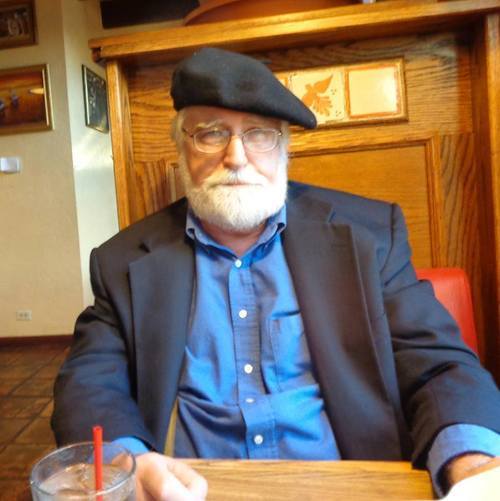
- # JOHN GREGORY PRESCO
- # SPRINGFIELD OREGON
- # EUGENE OREGON
- ∞ PERMALINK
- POSTED 7 YEARS AGO
- TWEET THIS

2022 battleground election
See also: Oregon gubernatorial election, 2022 (May 17 Republican primary)
Nineteen candidates are running in the Republican primary on May 17, 2022, for governor of Oregon. Incumbent Kate Brown (D) is term-limited and cannot run for re-election.
Oregon’s last five governors have been Democrats, but John Horvick, senior vice president at DHM Research, said there is a chance for a Republican to win in 2022. “[Since 2002], the average margin of victories has only been 5 percentage points. There is a possibility for a Republican to win,” he said.[1]
Christine Drazan, Bud Pierce, and Stan Pulliam have led in fundraising and media coverage.[1]
Pierce is an oncologist who ran as the Republican nominee in the 2016 special election to finish the term of former Gov. John Kitzhaber (D). Gov. Brown, who replaced Kitzhaber after he resigned in February 2015, defeated Pierce and three other candidates in that election. Willamette Week’s Rachel Monahan said, “Pierce has arguably the best name recognition among Republicans, thanks to his 2016 campaign. … He’s liked by Republicans who watched him carry the party banner at times when momentum was against them.”[1]
Drazan represented District 39 in the Oregon House of Representatives from 2019 until she resigned on January 31, 2022.[2] She was elected House Minority Leader in September 2019 and served in that position until November 30, 2021, when she stepped down.[3][4] Williamette Week’s Monahan said, “Many speculate that if she wins the primary, she is most likely to receive significant cash from the Republican Governors Association.”[1]
Pulliam is an insurance executive who has served as the mayor of Sandy, Oregon, since 2019.[5] “Pulliam’s opposition to COVID shutdowns and his loyalty to Trump once made him the candidate to beat in the primary,” said Monahan.[1]
All three candidates have highlighted education and public safety as critical issues for their campaigns. Pierce said he would set up a non-political oversight board to look after education in the state, and Drazan said she would make the superintendent of public instruction a statewide position that she argues would be accountable to voters.[6][7] Pulliam said the state should empower parents and local boards.[8] On public safety, Drazan said she would increase funding for state troopers, while Pulliam said he would triple the size of the Oregon State Police and temporarily deploy them in Portland.[9][10] Pierce said he would work with federal, state, and local authorities to better public safety.[6]
Drazan and Pierce have said there is a homelessness crisis in the state. To tackle it, Drazan said that she would address addiction, mental health, and affordability, which she said are the root causes of homelessness. Pierce said he would address those same issues by building more affordable housing and public shelters with services to tackle addiction and mental health.[9][6]
On the campaign trail, Pulliam has also focused on economic growth, saying, “we’ve got to stand up for our local small business owners and ignite the economic sector in this state.”[8]
Also running in the primary are Raymond Baldwin, Bridget Barton, Court Boice, David Burch, Reed Christensen, Jessica Gomez, Nick Hess, Tim McCloud, Kerry McQuisten, Brandon Merritt, John Presco, Amber Richardson, Bill Sizemore, Stefan Strek, Marc Thielman, Bob Tiernan.
Bridget Barton (R), Nick Hess (R), and Amber Richardson (R) completed Ballotpedia’s Candidate Connection survey. To read those survey responses, click here.
This page focuses on Oregon’s Republican Party gubernatorial primary. For more in-depth information on Oregon’s Democratic gubernatorial primary and the general election, see the following pages:
PORTLAND, Ore. (KOIN) – As Oregon Gov. Kate Brown’s time in office comes to an end, dozens of Democrats and Republicans are eager to seat themselves at the head of the state.
The deadline to file to run in the 2022 Oregon Primary Election passed on March 10. So far, 20 Republicans and 15 Democrats have officially filed and entered the race. This is far more candidates running for governor in a primary election than the state has seen going back as far as 1910.
In fact, between 1910 and 2018, Oregon has never had more than a dozen candidates run for the position in either party.
ADVERTISINGWho’s running for Oregon governor?
While Oregonians began electing state governors long before 1910, KOIN 6 News checked records of voter’s pamphlets the Oregon State Library has available online, which date back to 1910.
In 2022, Republicans would like to see the position return to their party. Many of the candidates are promising to allow parents more say when it comes to what their children are taught in school, stronger support for law enforcement and want to minimize taxes on small businesses.
Democratic candidates say they would like to expand access to healthcare, confront climate change and push for criminal justice reform.
Gov. Brown is term-limited and cannot run for re-election in 2022, leaving the position open for a replacement.
The Oregon Secretary of State’s Office said in 2018, at least 5% of eligible voters in the state were registered members of the Independent Party of Oregon, so the gubernatorial candidates for that party appeared on the primary election ballot. However, that is not the case in 2022. Independent Party of Oregon candidates make up less than 5% of voters, meaning the party does not meet the threshold required to maintain major party status and Independent candidates will not appear on the primary election ballot in 2022.
Here are the Republican and Democratic candidates voters can expect to see when they vote on May 17.
Democrat:
- Patrick Starnes
- Tina Kotek
- Michael Trimble
- Wilson Bright
- Tobias Read
- Keisha Lanell Merchant
- Peter W. Hall
- Michael Cross
- John Sweeney
- David Beem
- George Carrillo
- Ifeanyichukwu Diru
- David Stauffer
- Julian Bell
- Genevieve Wilson
Republican:
- William (Bud) Pierce
- Stan Pulliam
- Jessica Gomez
- Kerry McQuisten
- Paul Romero
- Marc Thielman
- Bridget Barton
- Amber Richardson
- Nick Hess
- Brandon Merritt
- David A. Burch
- Christine Drazan
- John Presco
- Bill Sizemore
- Stefan Strek
- Reed Christensen
- Raymond Baldwin
- Court Boice
- Tim McCloud
- Bob Tierman
Knights Templar and The Death of History
Posted on June 20, 2020 by Royal Rosamond Press


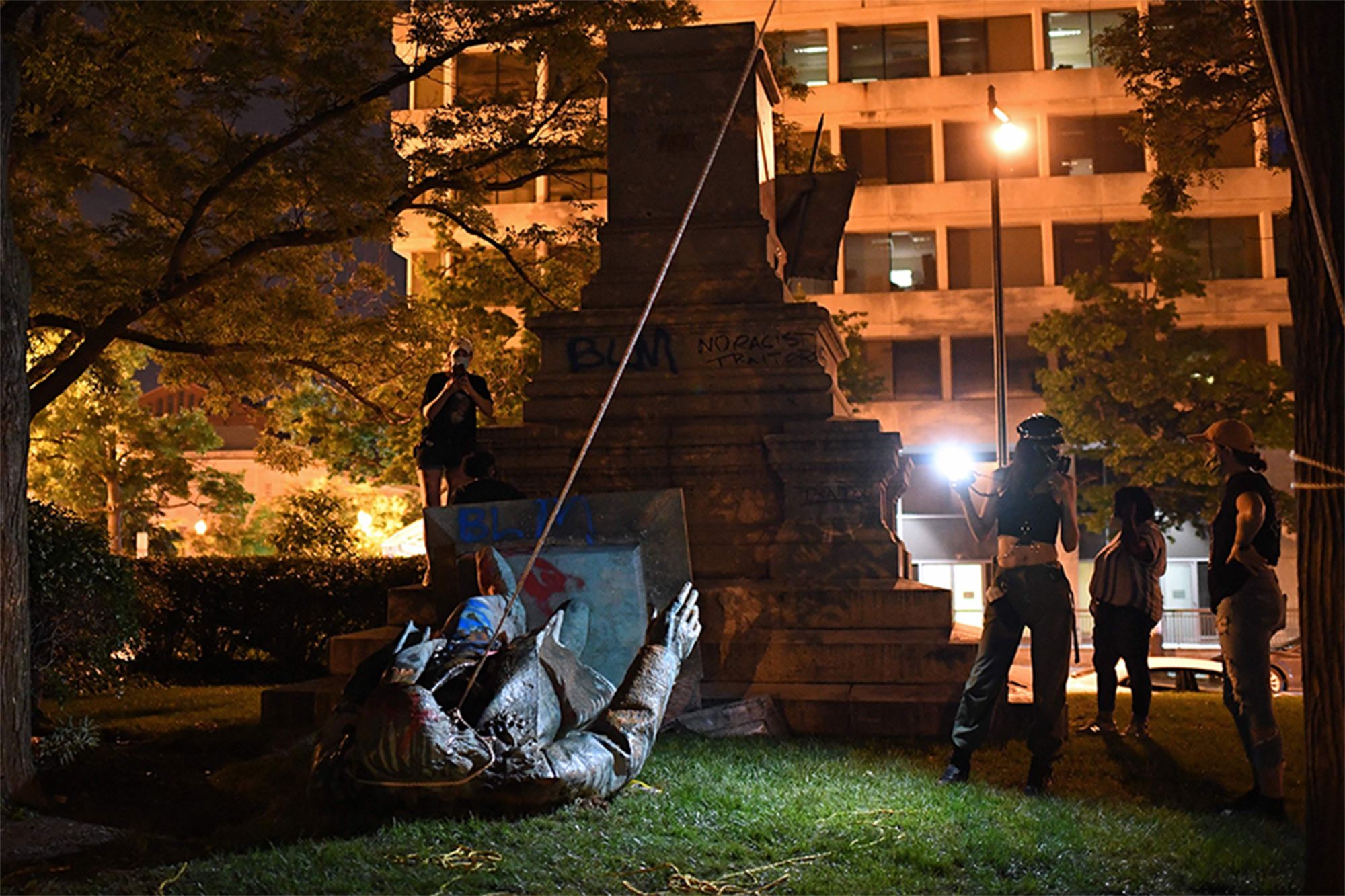
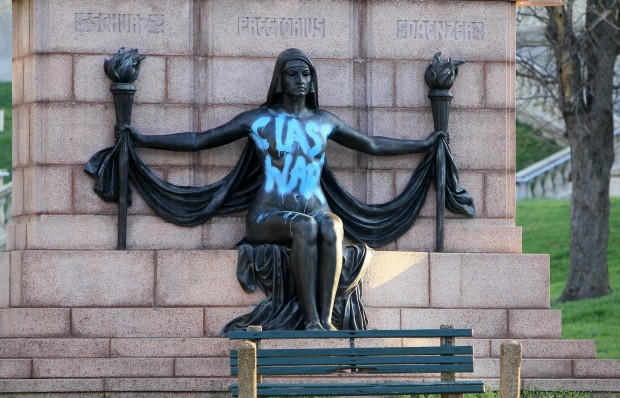
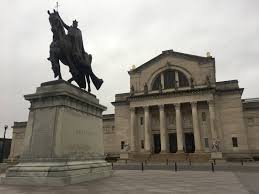
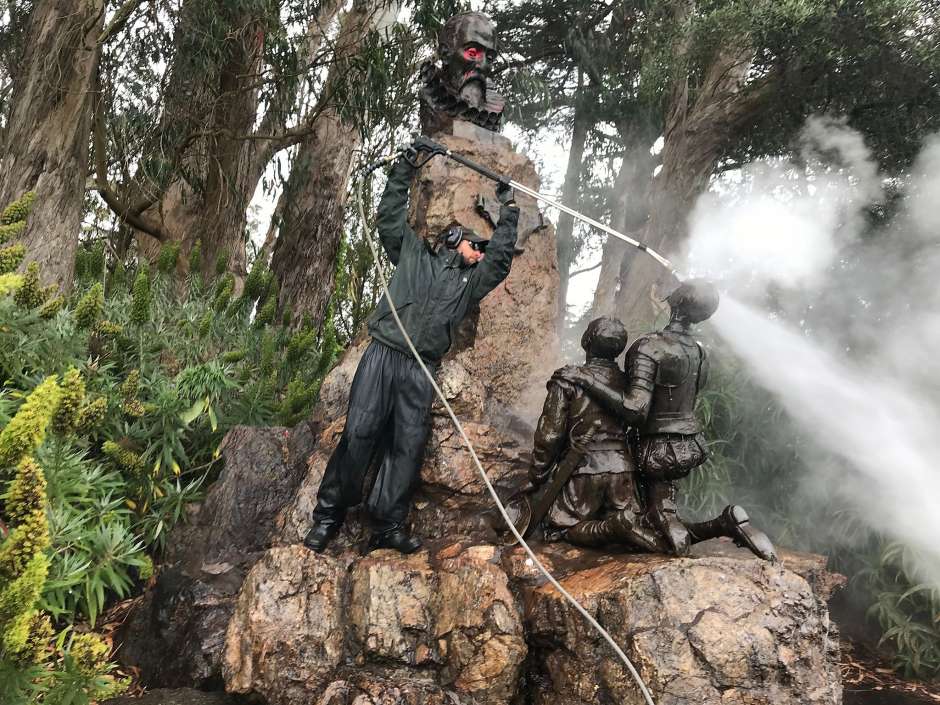
With the taking down of the statue of Albert Pike and petition to take down the statue of St. Louis, I declare American History – dead! Why Cervantes? Anything that looks white, or, smells white – is under attack! My history has been under attack since 1994. My discovery that the Rougemont Templars owned the Shroud of Turin was attacked by Sinclair Freemasons.
John Presco
“The national reckoning over racism spilled into Golden Gate Park on Friday night, where demonstrators pointed their rage toward statues of St. Junipero Serra, President Ulysses S. Grant and “Star-Spangled Banner” lyricist Francis Scott Key — toppling the emblems of a nation’s history fraught with violence and ambiguity.”
http://www.knightstemplar.org/KnightTemplar/articles/clash.htm
Vladimir Putin is concerned that civil unrest in the U.S. may make President Donald Trump and Washington unpredictable in its dealings with Moscow, Kremlin spokesman Dmitry Peskov said.
“Resolved, that in vindication of the prerogatives of this Grand Body as the knight templar supreme authority over the Orders of Masonic Knighthood in this jurisdiction, it is hereby ordered that no Knight Templar holding allegiance to the Grand Commandery of Missouri can be present in any of the bodies of the so-called Ancient and Accepted Scotch Rite and witness or assist in the conferring of any of their degrees upon any one who has not already received the Orders of Knighthood in a regularly constituted Commandery of Knights Templar.”
The resolution painted the Scottish Rite as a newcomer, an outsider, with a not-so subtle hint of its being irregular.
Pike fanned the flames in a retaliatory response of his own, indicating his official opinion that the American Knights Templar weren’t recognized by world Supreme Councils of the Scottish Rite.
Gouley responded that foreign opinion shouldn’t tarnish the high opinion held by American Masons toward their Grand Encampment of Knights Templar in America in general. …and the Grand Commandery, Knights Templar of Missouri, in particular.
Gouley was seen as a hornet buzzing around Pike’s head. Gauley had no method by which to punish Pike (aside from verbal tirades and statewide missives to Missouri Masons).
Pike, on the other hand, had an “Ace” up his sleeve. Pike used his national office of Sovereign Grand Commander and being a “Active 33°” to bring Scottish Rite charges against George Frank Gouley, 30°, for insubordination and for violating his Oath as a Knight Kadosh.
At the beginning of the Trial, Pike presided, but then retired and Mackey took to the Chair. Evidence was presented and arguments were heard. Gouley was eventually found guilty, and his Scottish Rite membership was suspended.
Juneteenth
Posted on June 19, 2020 by Royal Rosamond Press

Today Juneteenth is being celebrated.
John


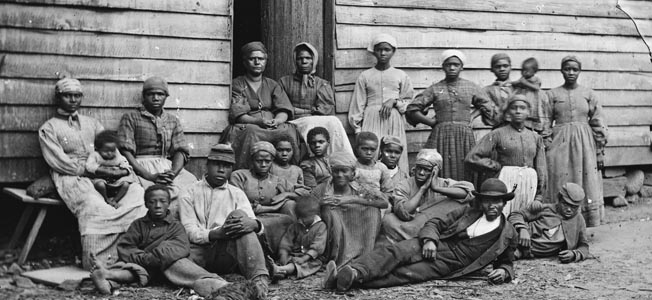
Fort Monroe and the Slave Question
The attack on Fort Sumter did not change Lincoln’s mind about the illegality of secession. On April 19, 1861, he referred to the current situation as “an insurrection against the government of the United States,” not an attack from a foreign nation. He went on to renounce any hostile actions from the seceded states as coming merely from the “pretended authority of such states.” Lincoln was working out a way to classify and eventually destroy the insurrection while also attempting to find a middle ground on the slave question in an effort to placate the border states and ultimately save the Union.
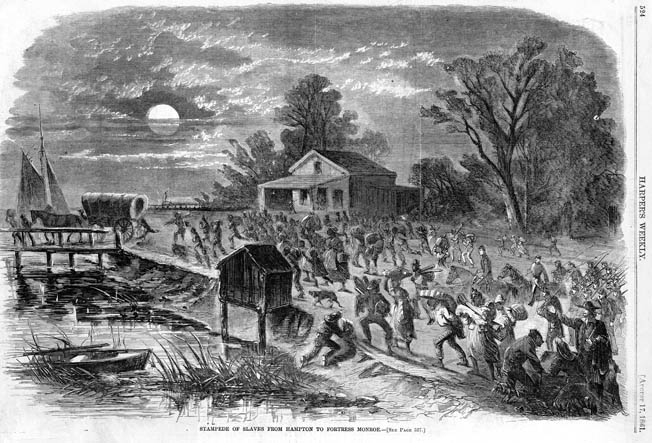
The first real test of the Federal government’s stance on the slave question came at Fort Monroe, Virginia. On May 23, three of Colonel Charles Mallory’s slaves from the 115th Virginia Militia secretly rowed across the James River to Fort Monroe, then in possession of Union soldiers under the command of Maj. Gen. Benjamin Butler. When Butler discovered that the slaves were being used to construct military fortifications in Virginia and were eventually going to be sent to North Carolina to do the same, Butler knew that he needed to make a swift decision on the fate of the runaways.
As Butler pondered his options, Major John B. Cary from the 115th Virginia Militia approached Fort Monroe under a flag of truce to request the return of the fugitives. When Cary urged him to honor his constitutional obligation to return the slaves, Butler responded, “I mean to take Virginia at her word. I am under no constitutional obligations to a foreign country, which Virginia now claims to be.” Pressed further by Cary about the Federal government’s stance of secession as being invalid, Butler replied, “But you say you have seceded, so you cannot consistently claim them. I shall hold these Negroes as contraband of war, since they are engaged in the construction of your battery and are claimed as your property.” Cary abandoned his case and returned to his regiment.
War, Not Emancipation
Butler’s ad hoc contraband policy presented the Lincoln administration with a host of major political problems, the most obvious being that Butler’s policy stood in direct opposition to Lincoln’s recent inaugural address, in which he maintained the illegality of secession. Butler’s policy was going to force Lincoln to reconsider the issue in light of his determination to preserve the loyalty of the border states, where slavery had been firmly entrenched for years. Without addressing Butler’s policy explicitly, Lincoln reminded the general that “the business you are sent upon is war, not emancipation.”
Remaining publicly silent on the issue, Lincoln crafted a special Fourth of July message to Congress in which he defined his belief that the overarching aim of his administration was to preserve the Union. He requested from Congress “the legal means for making this contest a short and decisive one,” including 400,000 men and $400 million. Republican majorities in both houses of Congress increased the appropriations to 500,000 men and $500 million in a clear show of support for the president and his agenda. Conspicuously missing from the discourse was the issue of slavery. Then, on July 21, the Union disaster at First Bull Run occurred.
The Crittenden-Johnson Resolution
The day after that decisive Union defeat, Lincoln signed a bill authorizing the enlistment of 500,000 men for three years’ service. Three days later, he signed a second bill authorizing another 500,000 men. While a general feeling of despair permeated the North in the days immediately following Bull Run, not everyone had given in to despondency. On July 25, Congress passed the Crittenden-Johnson Resolution, named for its sponsors, Representative John J. Crittenden of Kentucky and Senator Andrew Johnson of Tennessee. The Crittenden-Johnson Resolution, also known as the War Aims Resolution, committed the Union to its original aims of self-preservation and noninterference with slavery. Once again, the government walked a fine line between appeasing the border states and maintaining the Union.
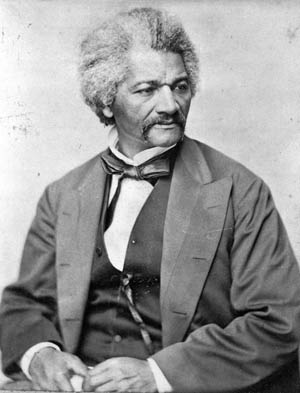
As rumors began to filter into the War Department that slaves were being pressed into service against the Union, the Lincoln administration and Congress began a new debate on what to do about the slave question. Abolitionist (and former slave) Frederick Douglass understood the complexity of the crisis immediately. “War for the destruction of liberty must be met with war for the destruction of slavery,” he said.
More moderate voices attempted to find a middle ground that would strike at the military aspect of slavery while at the same time protect the border states from breaking away.
Crittenden maintained that Congress had no right to legislate on the slave issue. Illinois Senator Lyman Trumbull argued that Congress already was able to punish treason by confiscating property, in effect attacking individual instances of slavery by confiscating slaves who aided the Confederacy during the rebellion, while not attacking the entire institution of slavery.
Lincoln’s Confiscation Act
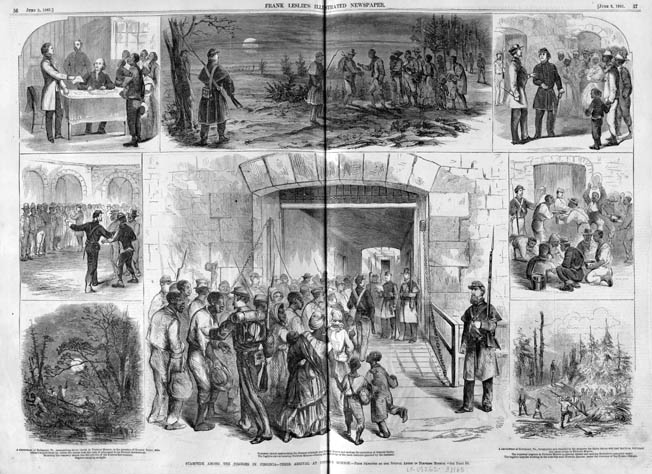
On July 30, Butler wrote to Secretary of War Simon Cameron, asking him to clarify the status of confiscated slaves at Fort Monroe. “Are these men, women, and children slaves?” Butler wanted to know. “Are they free? What has been the effect of the rebellion and a state of war upon [their] status?” Before Cameron could answer, Congress on August 6 passed the First Confiscation Act, a law designed to “confiscate property [including slaves] utilized for Confederate military purposes and declared that the owner would ‘forfeit his claim’ to any slave so employed.” The Confiscation Act was passed along party lines, with all but six Republicans voting in favor of the act and all but three Democrats voting against it. Lincoln’s bipartisan support for the war was quickly eroding. “This bill,” John J. Crittenden complained, “will be considered as giving an anti-slavery character and application to the war.” Delaware Senator James A. Bayard, a Peace Democrat, advised, “Anything is better than a fruitless, hopeless, unnatural civil war.”
Fearing that the Confiscation Act violated the constitutional right to due process under the law and would further alienate the border states by its antislavery tone, Lincoln nevertheless reluctantly signed the bill into law, bowing to pressure from the bill’s overwhelming Republican support. The Confiscation Act essentially nullified the Crittenden-Johnson Resolution. Preservation of the Union began to take on a divisive antislavery nature, just as Crittenden had predicted and Lincoln had feared.
Two days after the Confiscation Act was signed into law, Cameron responded to Butler’s letter on the status of escaped slaves. Purportedly speaking on behalf of Lincoln, Cameron instructed Butler to follow the provisions of the Confiscation Act in dealing with persons “employed in hostility to the United States.” Much to the eventual chagrin of the president, who was not speaking through his secretary of war, Cameron added, “A more difficult question is presented in respect to persons escaping from the service of loyal masters. Under these circumstances it seems quite clear that the substantial rights of loyal masters will be best protected by receiving such fugitives as well as fugitives from disloyal masters into the service of the United States. Upon the return of peace Congress will doubtless properly provide for all the persons thus received into the service of the Union and for just compensation to loyal masters.” Cameron in essence was extending the Confiscation Act to include fugitive slaves within border states, effectively nullifying the Fugitive Slave Law of 1850.
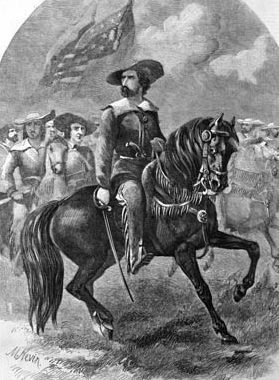
John C. Frémont: Deciding the Fate of Missouri
Four days after the passage of the Confiscation Act, on August 10, the first major battle west of the Mississippi River was fought in Missouri at Wilson’s Creek, a 14-mile waterway near Springfield. Union soldiers in the Army of the West, commanded by Brig. Gen. Nathaniel Lyon, clashed with Confederate and Missouri State Guard soldiers commanded by Generals Benjamin McCulloch and Sterling Price. Confederates carried the day after an intense fight that began at first light and lasted for more than five hours, with most of the carnage centering on a ridge soon to be known as “Bloody Hill.” Along with being the first major battle in a border state and the first major battle west of the Mississippi River, the battle was notable for the death of Lyon, the first Union general killed in the Civil War.
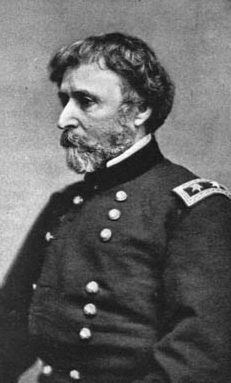
Between the Battle of Wilson’s Creek and the subsequent Battles of Fredericktown and Springfield, which both took place in late October 1861, the fate of Missouri hung in the balance as tension between pro-Unionist, and pro-secessionists flared to alarming levels. With the death of Lyon at Wilson’s Creek, it was up to the Western Department’s commander, Maj. Gen. John C. Frémont, to ensure that Missouri did not descend into anarchy and secession. He seemed imminently qualified to face the challenge. By the time the Civil War began, Frémont was already a household name and national hero, having earned the sobriquet “the Pathfinder” for his western excursions during the 1840s, including several with the noted guide Kit Carson. Frémont’s journeys included an exploration of the South Pass along the Oregon Trail, an expedition through the Sierra Nevada mountain range, a dangerous journey into California during the Mexican War, and a disastrous self-funded journey to the Southwest with the purpose of finding a suitable route for a transcontinental railroad, which ended with the death of 10 members of his party.
By the time he ran for the 1856 presidency as the first candidate of the newly organized Republican Party, Frémont had been military governor of California, one of the first two senators from the new state of California, a famous writer and explorer, and a leading voice for the antislavery platform in national politics. With the election of Lincoln to the presidency in November 1860, it was just a matter of time before Frémont would land a position somewhere in the new Republican administration. On Christmas Day, William Seward wrote to President-elect Lincoln suggesting Frémont for consideration as secretary of war.
Despite Seward’s recommendation, Frémont was never seriously considered by Lincoln for a cabinet position. But in March 1861, Lincoln wrote to Seward asking for his thoughts on Frémont as American minister to France. Seward replied: “Frémont and France—the prestige is good. But I think that is all.” Once again, Frémont was passed over for a position in the Lincoln administration. Finally, on July 3, more than half a year after the initial exchange between Lincoln and Seward, Lincoln asked Seward to assemble the cabinet to “see Gen. Scott, Gen. Cameron, about assigning a position to Gen. Frémont.” The same day, General Order No. 40 was issued creating the Western Department for the Union Army and placing Frémont in command with the rank of major general. Frémont set off to Missouri to bring the tumultuous border state in line with the Union.
Martial Law and Emancipation
Less than three weeks after the Battle of Wilson’s Creek, citing concerns for the public safety in Missouri, Frémont declared martial law in the state “in order to suppress disorders, to maintain as far as now practicable the public peace, and to give security and protection to the persons and property of loyal citizens.” That was all well and good, but what he said next threatened the entire course of the war. “The property, real and personal, of all persons in the State of Missouri who shall take up arms against the United States, and who shall be directly proven to have taken an active part with their enemies in the field, is declared to be confiscated to the public use,” Fremont declared, “and their slaves, if any they have, are hereby declared free.”
Frémont’s de facto emancipation proclamation went well beyond both Butler’s contraband policy, which applied only to fugitives, and the Confiscation Act, which dealt with slaves employed for military purposes. The proclamation sent a shockwave through the Union. If the initial military failures at Fort Sumter, Bull Run, and Wilson’s Creek were not enough to pull the states of Maryland, Delaware, Missouri, and Kentucky away from the Union, targeting the institution of slavery within those states might effectively do the trick.
Lincoln’s Letter to Frémont
On September 2, in a letter marked private and confidential, Lincoln addressed Frémont and his proclamation, stating, “Two points in your proclamation of August 30th give me some anxiety.” The first concerned Frémont’s statement that “all persons who shall be taken with arms in their hands within these lines shall be tried by court-martial, and, if found guilty, will be shot.” Lincoln believed that this policy would lead Confederates to “shoot our best men in their hands in retaliation; and so, man for man, indefinitely.” Lincoln ordered Frémont to get presidential authorization before executing any man under the proclamation.
Frémont’s proclamation and its potential impact on the border states, particularly Kentucky, made Lincoln exceedingly anxious. He wrote again to Fremont. “I think there is great danger that the closing paragraph, in relation to the confiscation of property, and the liberating slaves of traitorous owners, will alarm our Southern Union friends, and turn them against us—perhaps ruin our rather fair prospect for Kentucky,” fretted Lincoln. “Allow me therefore to ask, that you will as of your own motion, modify that paragraph so as to conform to the first and fourth sections of the act of Congress, entitled, ‘An act to confiscate property used for insurrectionary purposes,’ approved August 6th, 1861, and a copy of which act I herewith send you. This letter is written in a spirit of caution and not of censure.”
Lincoln and Frémont Sparr in Public
Frémont did not receive Lincoln’s letter in the spirit that Lincoln had intended. The stage was set for an embarrassing public confrontation. When Frémont sent his politically well-connected wife Jessie, the daughter of former Missouri Senator Thomas Hart Benton, to Washington to advocate for the proclamation on his behalf, Lincoln met with her coldly, ultimately dismissing her complaints in a letter that stated, “No impression has been made on my mind against the honor or integrity of Gen. Frémont; and I now enter my protest against being understood as acting in any hostility towards him.”
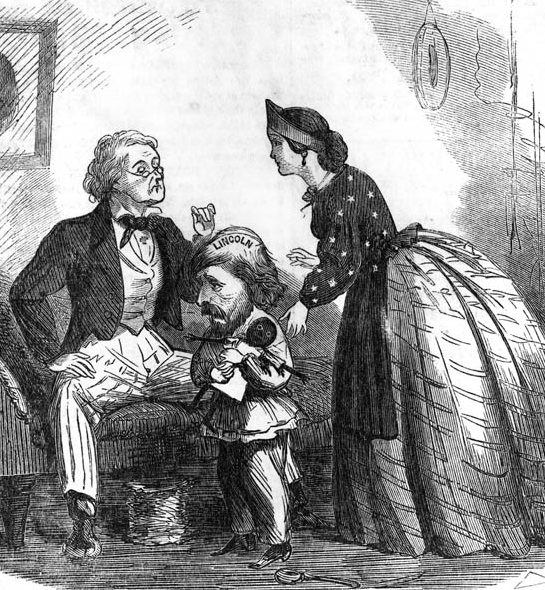
Responding to the president’s perceived snub of his wife, Frémont coolly wrote: “If upon reflection, your better judgment still decides that I am wrong in the article respecting the liberation of slaves I have to ask that you will openly direct me to make the correction. The implied censure will be received by me as a soldier always should the reprimand of his chief. If I were to retract of my own accord it would imply that I myself thought it wrong and that I had acted without the reflection which the gravity of the point demanded. But I did not do so. I acted with full deliberation and upon the certain conviction that it was a measure right and necessary, and I think so still.”
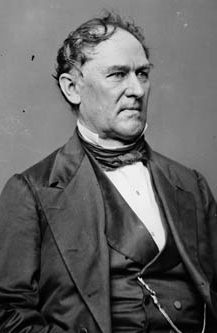
Fallout from the Frémont proclamation was quick and sharp. Kentucky slaveholder and longtime Lincoln friend Joshua Speed told the president that “Frémont’s order would inspire border slaves to ‘assert their freedom’ and would ‘crush out every vestige of a union party’ in Kentucky.” Kentucky native Robert Anderson of Fort Sumter fame warned the president that unless the Frémont order was rescinded, “Kentucky will be lost to the Union.” These dire warnings, along with the terrible timing of the proclamation itself—just as the Kentucky legislature was voting to abandon neutrality in favor of Union—prompted Lincoln to act more definitively on the slave issue.
Lincoln’s response to Frémont’s letter was swift and explicitly direct: “Your answer, just received, expresses the preference on your part, that I should make an open order for the modification, which I very cheerfully do. It is therefore ordered that the said clause of said proclamation be so modified, held, and construed, as to conform to, and not to transcend, the provisions on the same subject contained in the act of Congress entitled ‘An Act to confiscate property used for insurrectionary purposes’ Approved, August 6, 1861; and that said act be published at length with this order.”

Lincoln was acting to save the border states for the Union. While Lincoln detested slavery personally, the preservation of the Union, and not a sweeping move on emancipation, remained the ultimate goal of his administration in 1861. The decision to order Frémont to modify his proclamation was intended to ensure the Union maintenance of the border states, preeminently Kentucky. Unfortunately for Lincoln, most of the members of the Republican Party, and many more average citizens from the Union, did not see it the same way.
A Proclamation That United the North
Republican Congressman George Washington Julian of Indiana wrote, “Frémont’s proclamation stirred and united the people of the North during its ten days of life far more than any other event of the war.” And a Cincinnati citizen writing to Horace Greeley regarding Lincoln’s letter to Frémont said, “If a cheer were hip-hipped for Lincoln there the response would be a groan.” Other dissenters were even harsher. “If it is said that we must consult the border states,” wrote one prominent Connecticut Republican, “permit me to say damn the border states. A Thousand Lincolns cannot stop the people from fighting slavery.”
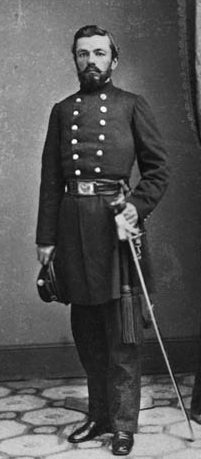
Everyone from newspaper editors to common citizens, from ministers in the pulpit to high-powered politicians, seemed to be criticizing the president for his response to Frémont, but it was criticism from his close friends that stung Lincoln most sharply. On September 17, he received a letter from his close personal friend, Illinois Senator Orville Hickman Browning, criticizing Lincoln’s response to Frémont and his stance on the slave question. According to Browning, the only way to save the government was to strike a blow against slavery, and Frémont’s proclamation represented the government’s best weapon against the rebellion.
A Response to Browning
On September 22, in a letter marked private and confidential, Lincoln responded to Browning. Clearly surprised by Browning’s letter, Lincoln wrote: “I confess it astonishes me. That you should object to my adhering to a law, which you had assisted in making, and presented to me, less than a month before, is odd enough.” Lincoln went on to say that he felt the Frémont stance on slavery and emancipation was “purely political, and not within the range of military law, or necessity.” Elaborating on the rule of law, Lincoln added, “If the General needs them, he can seize them, and use them; but when the need is past, it is not for him to fix their permanent future condition. This must be settled by law-makers, and not by military proclamations. The proclamation in the point in question is simply dictatorship.”
Lincoln then addressed Browning’s position that the Frémont proclamation on emancipation was the only way to save the government. “But I cannot assume this reckless position; nor allow others to assume it on my responsibility,” wrote Lincoln. “You speak of it as being the only means of saving the government. On the contrary it is itself the surrender of the government.”
A careful reading of Lincoln’s letter to Browning shows the president methodically working his way through the legalities of emancipation, Union war objectives, presidential war powers, and border state political strategy. In this early stage of his presidency, Lincoln did not feel that he could permanently emancipate slaves, nor did he think that his role as commander-in-chief allowed him the power to extend permanent emancipation to slaves through his military commanders. “What I object to, is, that I as President, shall expressly or impliedly seize and exercise the permanent legislative functions of the government.” Lincoln’s response to Browning highlighted the fact that Lincoln was truly conservative regarding the possibility of emancipation and that his primary focus during the early months of the war was always the preservation of the Union.
Since preservation of the Union represented Lincoln’s highest objective, maintenance of the border states and not emancipation of the slaves remained his chief war objective. No border state was more important to Lincoln than Kentucky, and in Lincoln’s response to Browning, he explicitly stated that. “I think to lose Kentucky is nearly the same as to lose the whole game. Kentucky gone, we can not hold Missouri, nor, as I think, Maryland,” said the president. “These all against us, and the job on our hands is too large for us. We would as well consent to separation at once, including the surrender of this capital.”
“Frémont’s Pets”
Back in Missouri, Frémont continued to stew, bombarding Washington with demands that he be given a vote of confidence for his actions. “I want the Secretary of War to put an end to the kind of action which is impeding me by producing want of confidence,” he told Jessie Frémont. He complained that Adjutant General Lorenzo Thomas, then visiting Frémont’s Missouri headquarters, was “not friendly to me, and therefore I have a right to demand that he be at once removed from my department. I think that he has been purposely sent with the object that being unfriendly, he would embarrass me. I ought not to have impediments.” When Thomas removed several of Frémont’s subordinates without clearing it first with Frémont, the Pathfinder exploded: “General Thomas is my enemy. He is one of those who opposed my appointment, and I am told indulged in some of the abusive and false language which a certain class about Washington has habitually permitted to themselves in reference to me.”
Surrounding himself with a handpicked personal bodyguard of mostly European officers led by Hungarian Major Charles Zagonyi, Frémont governed like a potentate. “I doubt whether there was as much difficulty and ceremony displayed in gaining an audience with any emperor or king as there was in order to be ushered into the presence of General Frémont,” one visitor complained. Other soldiers in the army took to calling the elaborately uniformed bodyguard “Frémont’s Pets” and the “Kid Glove Brigade.” Frémont’s 10-year-old son, Charley, was given a special cut-down uniform and named an honorary member of the unit. He even drilled with the troops. When Quartermaster General Montgomery C. Meigs and Postmaster General Montgomery Blair went to Missouri to look into complaints that Fremont was dealing with fraudulent or incompetent arms suppliers, Frémont’s bodyguard denied them admission to his headquarters.
The End of Frémont’s Reign
Frémont’s arrest of Congressman Frank Blair for “insidious and dishonorable efforts to bring my authority into contempt with the government, and to undermine my influence as an officer” created another political headache for Lincoln, as did rumors that Frémont was abusing opium. The general’s subsequent arrest of the editor of the influential St. Louis Evening News for daring to criticize Frémont’s military decisions was the last straw. On November 2, Lincoln removed Fremont from command and replaced him with Maj. Gen. David Hunter. Ironically, Hunter would later issue his own unilateral emancipation proclamation while serving as commander of the Department of the South in May 1862, leading Lincoln to remove yet another high-handed general from command.
Frémont was transferred to West Virginia and given command of the newly created Mountain Department, but had the bad luck to go up against Confederate Maj. Gen. Thomas “Stonewall” Jackson during Jackson’s fabled Shenandoah Valley campaign. After losing to Jackson at the Battle of Cross Keys, Frémont was replaced by his subordinate, Maj. Gen. John Pope. He immediately resigned. His war was over.
Frémont’s Legacy
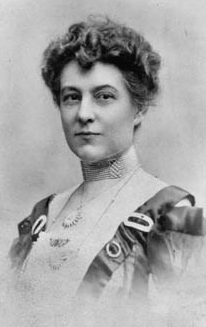
After the Civil War, Frémont eventually retired to New York, but several poor financial investments involving railroads left his family all but destitute. In 1878, a sympathetic President Rutherford B. Hayes appointed Frémont governor of the Arizona Territory, but he resigned from office in 1881 following well-founded charges of dereliction of duty. Frémont spent very little time in the territory he was called upon to govern, preferring to haunt the political corridors in Washington, where he and Jessie devoted much of their time to wining and dining big-money investors for their personal mining and cattle-raising enterprises. Politically and financially ruined, Frémont died in New York City on July 13, 1890, at the age of 77.
Frémont’s historical legacy remains controversial. Gifted with an iron will, a strong moral compass, and an intrepid heart, Frémont was his own worst enemy, often acting with impulsive self-righteousness and without prudence. Frémont truly was a pathfinder in his legendary explorations of the American West, but Lincoln in his way was also a pathfinder. And though Lincoln’s path was more moderate and prudent, reflecting the president’s much greater grasp of political reality and moral suasion, it ultimately proved more successful and far-reaching in the long run. Frémont’s explorations helped expand the American nation. Lincoln’s steely determination held it together.
 Rosamond Press
Leave a comment