The Mission of the Rougemont Templars
God is on my side! More proof of this, is, after my last post I go to my facebook and find a message from William Rozier. Then I see a video of Willy Rozier having a real dangerous duel with a movie critic. What!!! “Monsieur de Rougemont was a known duelist “
Keep you eyes on the prize. For thousands of years Rich Rulers and Lords gave money to the poor. When Trump was sworn in, behind him stood billionaires, who declared…
THE POOR WILL GIVE BILLIONS TO US!
A planned rein of terror began, when they poorer half of America were threatened with cuts. They thought these threats would go away. Finally the coup de gras –
A SABER TO THE HEART!
And Trump, the Billionaire is till laughing about what chumps the poor are!
Bill Rozoer and I have been dueling for many years. It is distrbing that someone wants you to die so they can own your study, and your titles.
John ‘The Nazarite Templar’
Based on historical accounts, there was a Count de Rougemont who had a significant encounter with Saint Vincent de Paul.
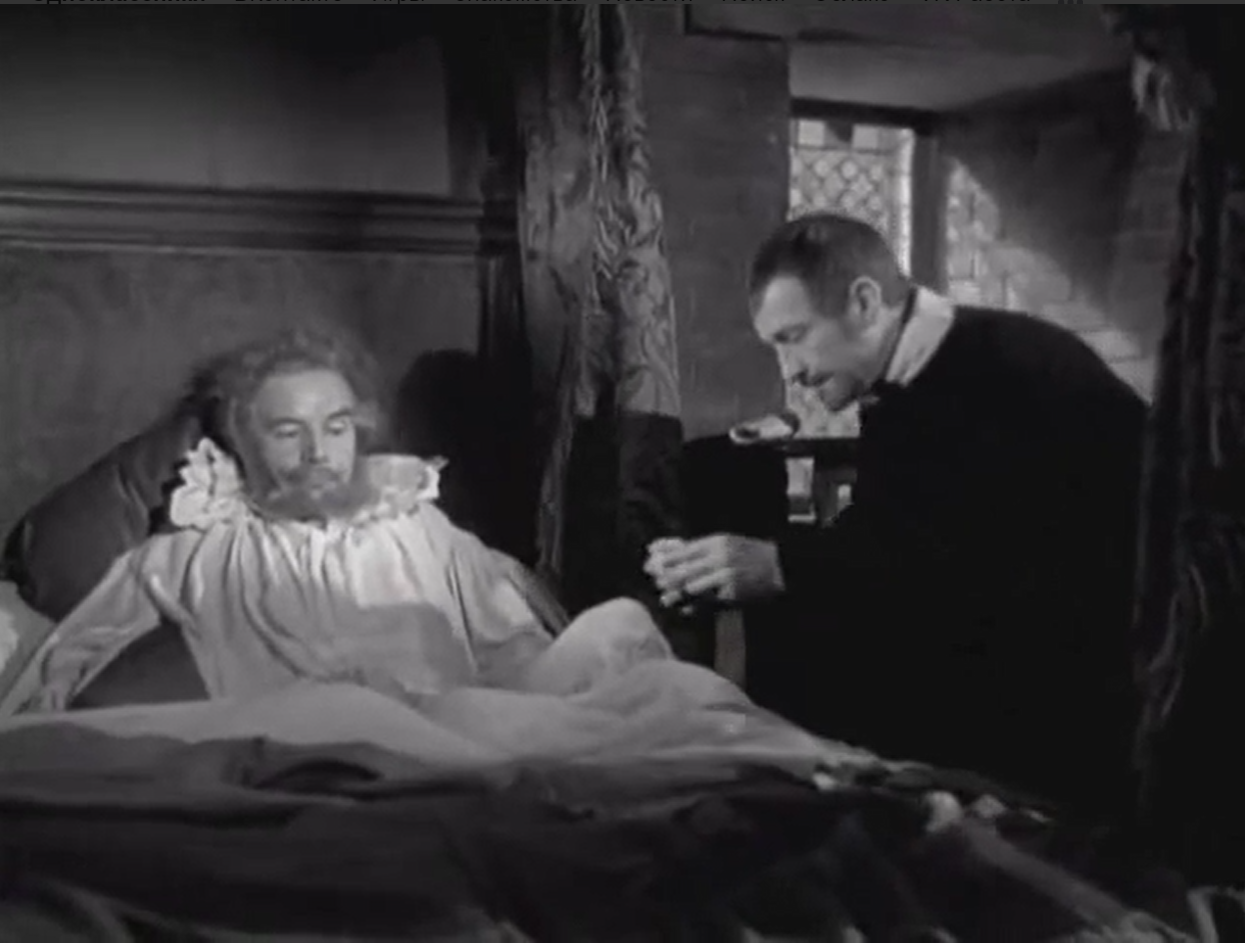
Monsieur de Rougemont was a known duelist with a reputation for a dissolute life in the area where Saint Vincent de Paul served as pastor. Intrigued by Vincent de Paul’s eloquence, de Rougemont attended one of his sermons out of curiosity.
His encounter with Vincent de Paul deeply impacted him, leading him to confess his sins and seek guidance on how to amend his life. Inspired by Vincent’s example and his vision of the good that a man of his position could do, de Rougemont vowed to change his ways. He even sold off some of his estates to fund Vincent de Paul’s charitable initiatives and broke his beloved sword as a symbol of his changed life.
This encounter is seen as an example of Saint Vincent de Paul’s ability to inspire conversion and reform, even among individuals with challenging pasts.
Born in Strasbourg in 1919, Chalais’ real name was François-Charles Bauer. His journalism career began under the German occupation of France during World War II, as a writer for several collaborationist publications. Nevertheless, he was awarded the Médaille de la Résistance after the liberation and continued a lengthy and distinguished career, most notably with France Soir from 1976 to 1986 and Le Figaro from 1980 to 1987. Chalais was a regular fixture on French television during the Cannes festival, interviewing celebrities and movie stars, often with his first wife and cohost France Roche.
In 1949 he fought and lost a duel with swords with director Willy Rozier, provoked by comments Chalais had made about actress Marie Dea. In one of his reports for the French television program Panorama, titled “Spécial Vietnam: le nord vu par François Chalais” (Vietnam Special: The North Seen by François Chalais), Chalais interviewed an American pilot who was in a North Vietnamese prison hospital, John McCain. The report offered a rare glimpse of everyday life in North Vietnam during the war and featured an interview with North Vietnamese Prime Minister Pham Van Dong.
Chalais was the author of numerous books, including 18 novels and 3 memoirs.
Chalais married his second wife, Mei-Chen (née Nguyen Thi Hoa), after his famed 1968 broadcast on North Vietnam. In 1969, he was a member of the jury at the 19th Berlin International Film Festival.[1]
Chalais died of leukemia in Paris in 1996.
William Xavier Rozier 27 June 1901 Talence (Gironde) | |
| Died | 29 May 1983 (aged 81) Neuilly-sur-Seine |
| Years active | 1931 – 1976 |
Willy Rozier (27 June 1901 – 29 May 1983) was a French actor, film director, film producer and screenwriter who also used the pseudonym Xavier Vallier.[1]
He wrote and directed a series of films starring Tony Wright as the detective Slim Callaghan.[2]
Filmography
Director
- Les Monts en flammes (1931)
- Calais-Dover (1931)
- Le Petit Écart (1931)
- The Night at the Hotel (1931)
- Avec l’assurance (1932)
- Trois cent à l’heure (1934)
- Pluie d’or (1935)
- Maria of the Night (1936)
- Veinte mil duros (1936)
- Men of Prey (1937)
- The Dark Angels (1937)
- Champions of France (1938)
- Hopes (1941)
- Melody for You (1942)
- L’Auberge de l’abîme [fr] (1943)
- Solita de Cordoue (1946)
- Les Trafiquants de la mer [fr] (1947)
- Monsieur Chasse [fr] (1947)
- 56 Rue Pigalle (1949)
- The Wreck (1949)
- The Convict (1951)
- The Damned Lovers (1952)
- Manina, the Girl in the Bikini (1952)
- The Adventurer of Chad (1953)
- Your Turn, Callaghan (1955)
- More Whiskey for Callaghan (1955)
- Et par ici la sortie (1957)
- Un homme se penche sur son passé [fr] (1958)
- Callaghan remet ça (1960)
- Prisonniers de la brousse [fr] (1960)
- Le Roi des montagnes [fr] (1964)
- Les Chiens dans la nuit [fr] (1965)
- Les Têtes brûlées [fr] (1969)
- Dany la ravageuse [fr] (1972)
- Dora, la frénésie du plaisir [fr] (1976)
- yacout 1934
Actor
- La venenosa (1928)
- About an Inquest (1931)
- Calais-Dover (1931)
- Les Monts en flammes (1931)
- Le Petit écart (1932)
- Haut comme trois pommes [fr] (short film, 1932)
- The Night at the Hotel (1932)
- Avec l’assurance (1932)
- Court Waltzes (1933)
- The Adventurer of Chad (1953)
Theatre
- 1933 : Cette nuit-là… by Lajos Zilahy, directed by Lucien Rozenberg, Théâtre de la Madeleine
Saint Vincent de Paul had a significant connection with a “Countess of Rougemont” (the exact name isn’t specified in the provided text). He was instrumental in converting both the Count of Rougemont and many other aristocrats from their reportedly dissolute lives.
Following the positive impact of his work, the Countess offered Saint Vincent de Paul a large sum of money to establish a perpetual mission wherever and however he deemed appropriate. Initially, nothing came of this idea due to Vincent’s hesitation to undertake such a large undertaking.
However, the Countess, with her husband’s assistance, actively worked to establish a company of zealous missionaries to serve their own vassals and the surrounding peasantry. They also discussed the idea of a perpetual mission with the Count’s brother, Jean Francois de Gondi, the Archbishop of Paris. This led to the establishment of the College des Bons Enfants as a reception house for the planned community.
The Countess of Rougemont played a key role in the early stages of Saint Vincent de Paul’s charitable endeavors and the development of his vision for serving the poor. She secured Vincent’s promise to remain her spiritual director throughout her life and assist her at its end.
Jean François Paul de Gondi, Cardinal de Retz (20 September 1613 – 24 August 1679) was a French churchman, writer of memoirs, and agitator in the Fronde.
The Florentine banking and noble Gondi family had been introduced into France by Catherine de’ Medici; Catherine offered Jérome (Girolamo) de Gondi in 1573 the château that he made the nucleus of the Château de Saint-Cloud; his hôtel in the Faubourg Saint-Germain of Paris became the Hôtel de Condé in the following generation. The Gondi acquired great estates in Brittany and became connected with the noblest houses of the kingdom.
Early life

Jean-François de Gondi was born in Montmirail, in the Brie region of northern France.[1] He was the third son in his family, and according to Tallemant des Réaux was made a knight of Malta on the very day of his birth. The death of his second brother, however, destined him for a closer connection with the Church. The Retz side of his family had much church influence, and though young Jean-François was not much attracted to the clergy, his family insisted that he join it. They said he lacked the appearance of a soldier, being short, near-sighted, ugly and awkward.[2]
He was tutored by St. Vincent de Paul and educated at the Sorbonne. When he was eighteen, he wrote Conjuration de Fiesque, a little historical essay, influenced by the Italian of Agostino Mascardi, and audaciously insinuating revolutionary principles.[3]
Family background
The district of Retz or Rais is in southern Brittany, and has been under the control of several different families. Retz always spelled the word “Rais.” The barony of Retz first belonged to the House of Retz, then to the Chabot family and the Laval family. Gilles de Rais, a Laval and comrade in arms of Joan of Arc, was executed without an heir, so the barony passed successively to the families of Tournemine, Annebaut and Gondi.[citation needed]
In 1581, it became a duchy, with Albert de Gondi its first duke. His brother Pierre de Gondi became bishop of Paris in 1570 and cardinal in 1587. Pierre was succeeded by his nephews Henri de Gondi (d. 1622) and Jean-François de Gondi (d. 1654), for whom the episcopal see of Paris was erected into an archbishopric in 1622. Finally, Jean François was then succeeded by Pierre’s great-nephew Jean François Paul de Gondi.[citation needed]
Archbishop of Paris
Retz received no preferment of importance during Cardinal Richelieu‘s life. Even after the minister’s death, though he was presented to Louis XIII and well received, he found difficulty in attaining the co-adjutorship with reversion of the archbishopric of Paris. But almost immediately after the king’s death, Anne of Austria appointed him to the coveted post on All Saints Eve, 1643. Retz, who had, according to some accounts, already plotted against Richelieu, set himself to work to make the utmost political capital out of his position. His uncle had lived in great seclusion; Retz, on the contrary, gradually acquired a very great influence with the populace of the city. This influence he gradually turned against Cardinal Mazarin, which helped lead to the outbreak of the Fronde in October 1648.[4][3]
Of the two parties who joined the Fronde, Retz could only depend on the bourgeoisie of Paris. He had some speculative tendencies in favour of popular liberties, and even perhaps of republicanism, but represented no real political principle, which inevitably weakened his position. When the breakup of the Fronde came he was left in the lurch, having more than once been in no small danger from his own party. However, because of a misapprehension on the part of Pope Innocent X, he had been made cardinal.[3]
In 1652, he was arrested and imprisoned, first at Vincennes, then at Nantes; he escaped after two years, and traveled through Europe. He went to Rome more than once, and helped elect Pope Alexander VII. In 1662, Louis XIV received him back into favor, and asked him to formally serve as envoy to Rome several times. For this reconciliation to occur, he resigned his claims to the archbishopric of Paris. He was appointed abbot of St-Denis, and restored to his other benefices with the payment of arrears.[3]
Later life
The last seventeen years of Retz’s life were passed partly in his diplomatic duties (he was again in Rome at the papal conclaves of 1667 and 1669[1]), partly in Paris, partly at his estate of Cornmercy, but mostly at Saint-Mihiel in Lorraine. His debts were enormous, and in 1675 he made over to his creditors all his income except twenty thousand livres. He died at Paris on 24 August 1679. During these last years he corresponded with Madame de Sévigné, a relative by marriage.[3]
Writings

During the last ten years of his life, Retz wrote his Memoirs, which go up to the year 1655. They are addressed in the form of narrative to a lady who is not known, though guesses have been made at her identity, some even suggesting Madame de Sévigné herself. In the beginning there are some gaps. They are known for their narrative skill and the verbal portraits of their characters. Alexandre Dumas, père drew heavily on the Memoirs for Vingt ans après. Besides these memoirs and the youthful essay of the Conjuration de Fiesque, Retz has left diplomatic papers, sermons, Mazarinades and correspondence.[3]
Retz and François de La Rochefoucauld, the greatest of the Frondeurs in literary genius, were personal and political enemies, and each left a portrait of the other. De la Rochefoucauld wrote of Retz: “Il a suscité les plus grands désordres dans l’état sans avoir un dessein formé de s’en prévaloir.” (He stirred up the greatest disorder in the State, without having a clear plan of how to gain from it).[3]
The Memoirs of the cardinal de Retz were first published in a very imperfect condition in 1717. The first satisfactory edition appeared in the twenty-fourth volume of the collection of Joseph François Michaud and Jean Joseph François Poujoulat (Paris, 1836). In 1870 a complete edition of the works of Retz was begun by Alphonse Feillet in the collection of Grands Ecrivains.[3]
Perhaps his most famous quotation with respect to modern culture was from Vol 2. of his Memoirs,[5] discussing the unrest in the day, with a philosophical reflection,”Il n’y a rien dans ce monde qui n’ait un moment decisif…” (There is nothing in the world that does not have its decisive moment…)
The full translated passage goes on: “It seemed that everyone was surprised and intoxicated by the smoke of the grape harvest; and you will see scenes at the cost of which the past has been nothing but greenery and pastures. There is nothing in the world that does not have its decisive moment, and the masterpiece of good conduct is know and take this moment. If we miss it in the revolution of States, we run the risk of not finding it, or of not noticing it.”
Henri Cartier-Bresson used this passage as the keynote to his classic work “Images à la Sauvette” which was renamed in English “The Decisive Moment.”
 Rosamond Press
Leave a comment