

Queen Helena had made a gold object that was placed in the temple area, so that when the sun rose, it cast a golden glow that signaled the devout Jew to prayer. There were no Devout Muslims or Devout Christians, or, Devout Republican Leaders who are fretting through the night on how they can take tons of food away from hungry people, and disappear billions of dollars of Medical Help for millions of people. Is this what Jesus would want – and work for? Millions of Christian Republicans belive Donald Trump is giving signs and messages to them. Is this true? They suggest Trump is a Messiah of sorts. Does he know what Jesus wrote in the dust? I do.
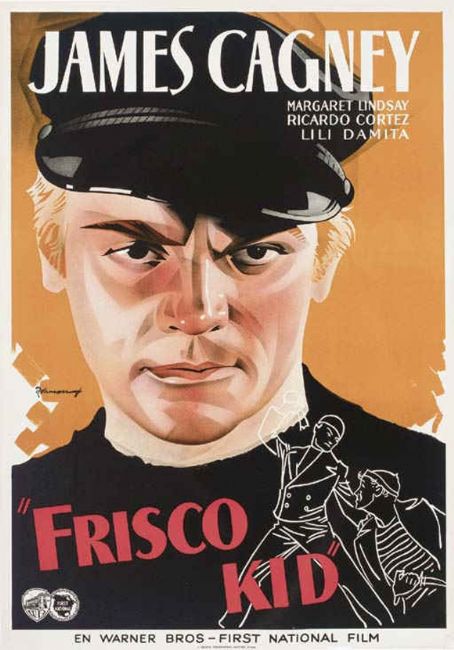
The world is poised to spend a Trillion Dollars to – GET RID OF SEX SINNERS – like the kind that passed under the two arches on International Street. Im sure my father’s father did so on his way to work as a professional Gambler. He was the real Frisco Kid. At Yale Trucking, they called me….
THE CALIFORNIA KID
I have come to solve the world’s problems and save the world trillions of dollars, Here are evil men who exploit sin in the world in order to have power over men, women, and children,
Ali Khamenei
Bibi Netanyahu
Vladimir Putin
Donald Trump
Remove these four men from power and much of the worlds violence will stop. Emergency Food and Medical Care is needed to keep a million people from dying. This is what the real Jesus wants.
On this day, May 28, I call upon all Nato Nations, and all United Nations, to send telegrams to the President of the United States, and the Speaker of the House, sahying they are morally against cuts in Medicaid and Food Stamps.
Above is the Menorah Queen Helena gave to the temple. This is a sign unto you. Helean and her family were foreign converts to Jusaism – who put on armor and fought the Roman Empire for…
THE HOUSE OF GOD
John ‘The Nazarite’
Many Evangelical voters in the United States believe that Donald Trump is a kind of messiah. This is at least somewhat insofar as Trump’s life story is anything but saintly.
After all, viewed in a biblical context, he cheats, lies, steals and covets his neighbor’s wife. He is vain, venal and vengeful.
In short, there are very few of the Ten Commandments Donald Trump has not yet violated.
Trump as King David?
Even so, Trump’s Christian supporters argue that he is very much like a modern-day King David – sinful, yes, but he is being used by the Lord for His purposes. All his sins are therefore redeemed by his service to the Christian cause.
Trump is aware of this unquestioning support. He has said, famously, that he can even shoot someone in plain daylight and not lose any voters. He deliberately positions himself as a defender of Christians.
What is known of Helena is based on the writings of Josephus, Movses Khorenatsi, Kirakos Gandzaketsi, and the Talmud. Josephus, although younger, was almost contemporary with Helena, living in Jerusalem at the time when she lived and was buried there, and he wrote substantial parts of his work from first-hand knowledge. The earliest parts of the Talmud, while based on older sources, were compiled and redacted from around 200 onward.
What is known of Helena is based on the writings of Josephus, Movses Khorenatsi, Kirakos Gandzaketsi, and the Talmud. Josephus, although younger, was almost contemporary with Helena, living in Jerusalem at the time when she lived and was buried there, and he wrote substantial parts of his work from first-hand knowledge. The earliest parts of the Talmud, while based on older sources, were compiled and redacted from around 200 onward.
SOTAH – The Case of the Suspected Adulteress
The Golden Plaque
King Monobaz made all the handles of the vessels of the Day of Atonement of gold. Helena, his mother, made a golden chandelier to hang over the entrance to the sanctuary. She also made a golden plaque inscribed with the Torah portion of Sotah – the case of the suspected adulteress wife. (Yoma 3:10)
In addition to the golden chandelier, Queen Helena also contributed another curious golden object – a plaque inscribed with the Torah portion of Sotah[17]
The Lord spoke to Moses, saying: Speak to the Israelite people and say to them:
If any man’s wife has gone astray and broken faith with him in that a man has had carnal relations with her unbeknown to her husband, and she keeps secret the fact that she has defiled herself without being forced, and there is no witness against her—but a fit of jealousy comes over him and he is wrought up about the wife who has defiled herself; or if a fit of jealousy comes over one and he is wrought up about his wife although she has not defiled herself—the man shall bring his wife to the priest. And he shall bring as an offering for her one-tenth of an ephah of barley flour. No oil shall be poured upon it and no frankincense shall be laid on it, for it is a meal offering of jealously, a meal offering of remembrance which recalls wrongdoing.
Judging the Adulteress
Posted on August 10, 2015 by Royal Rosamond Press

Jesus is judging the woman accused of adultery employing an ancient custom that was done away with before he was born. Being a candidate for the Messiah, Jesus must be WITHOUT SIN….without error. Sin means ‘missing the mark’. This is why Jesus pretends not to hear the accusations against the woman accused of adultery. When I read this lesson by Rabbi Eliezer Irons eight years ago, I got it, the answer to the riddle.
“Not only witnessing the actual criminal act, but even witnessing the
punishment and humiliation of the crime can have a deleterious
influence on the viewer.”
Rabbi Jesus gives the same lesson to the witnesses and crowd, who are now all – with sin! Did he suggest they take the Oath of the Nazarite?
Jon Presco
Copyrigt 2015
“Parshas Naso :
Witness to Sin
By Rabbi Eliezer Irons
The Sotah, a woman suspected of adultery, is a topic in this week’s
Parsha. A Sotah must either confess her guilt, or suffer public
humiliation. The Sotah, upon denying her guilt, would be forced to
drink waters, in which G-d’s name was placed. If she were truly
guilty, her stomach would expand and burst.
The Nazir (Nazarite) is discussed immediately following Sotah.
Nazir is a voluntary status that one pursues to attain greater levels
of holiness. A Nazir is forbidden to drink wine or eat grapes, cut
his hair, or become defiled by a human corpse.
Rashi, quoting the Talmud, asks,
“What is the connection between these two topics?”
(A connection exists when the Torah places two topics sequentially.)
The Talmud answers that one who sees the humiliation of the Sotah
should abstain from wine, etc., and become a Nazir. If one sees a
Sotah, a woman who fell victim to her desires, it may influence him
to sin as well. In order to protect himself against the type of evil
inclination that corrupted the Sotah, he should become a Nazir.
Why would witnessing the humiliation of a Sotah influence one to sin?
Logic dictates that the exact opposite should occur! Onlookers
should be fearful when witnessing the consequences of the averah (the
sin).
To answer this question, we must first examine a difficult
passage Sefer D’varim (12,17) in prohibiting the eating of maaser
sheni (the second tithe) outside Jerusalem. The verse uses the
curious terminology “you are not able to eat.” It would appear to
make more sense had the Torah said “You should not eat forbidden
food.” One is certainly able to eat forbidden food; it is among his
physical capabilities.
The Telzer Rosh Yeshiva Reb Eliyahu Meir Bloch zt”l explains that
the Torah here teaches us that sin should be viewed as something
unimaginable and far removed from the realm of possibility. To
illustrate the point, consider this example: A man on a roof who is
ordered to jump is likely to respond “I can’t.” Of course, he is
physically able, but in his mind it is utterly unimaginable and
psychologically impossible.
Based on this explanation, we can now proceed to our original
question. When one witnesses the humiliation of the Sotah, he
realizes that the averah he once thought to be unimaginable is now a
distinct possibility. In order to protect himself, the witness must
therefore become a Nazir and thereby elevate himself to his former
level.
This idea parallels the concept of Chilul Hashem (a disgrace to G-
d) expressed by Tosafos Yom Tov, in Yoma 8:8. “Anyone who does an
averah (a sin) and others are influenced thereby to take the matter
lightly and to act likewise is committing the sin of Chilul Hashem.”
This week’s Parsha takes the Tosafos Yom Tov idea one step further.
Not only witnessing the actual criminal act, but even witnessing the
punishment and humiliation of the crime can have a deleterious
influence on the viewer.
>From this we can derive a practical halacha (law) regarding the
law of lashon harah (talebearing and gossiping). Lashon harah is a
serious averah, but can one speak lashon harah about himself? The
Chafetz Chaim addresses self-abasing lashon harah in two places.
First, he warns that one cannot absolve himself from the guilt of
lashon harah by including himself in the story about a friend. One
may speak unfavorable about himself, but not about a friend.
In another instance, the Chafetz Chaim writers that if upon
hearing lashon harah, it is forbidden to believe it. However, if the
talebearer mentions himself in the story, it is permissible to accept
his story as true . . . but only about himself. It is forbidden to
believe what he says about his friend.
From these two places one could possibly deduce that it is
permitted to speak lashon harah about oneself. *According to the
lessons of Parshas Naso, even though one may not be violating the
laws of lashon harah, it is forbidden to tell others of one’s own
sins, because by doing so, one is violating the law of chilul Hashem.
If one repeats tales of his own sins, he may entice a friend to sin.
It will show him that it is possible to commit the sin.
May we be only good, positive influences on each other and all of
Kl’al Yisroel.”
Down For The Count On Eddy Street
Posted on October 2, 2016 by Royal Rosamond Press


My grandfather worked for Max Silver at 186 Eddy Street. He lived at the infamous Thomas Hotel that caught fire and killed 20 people. At 891 Mission Street, elderly folks were jumping out windows on to piles of mattresses the fireman had made in order to save their lives. How many millions of us had visualized doing this – as kids? To do so as abandoned seniors your brats don’t care about, is the height of existentialism.
Barbary Coast & Frisco Kid
Posted on August 4, 2012 by Royal Rosamond Press



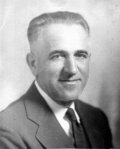

My father’s father, Hugo Presco, was a professional gambler who gambled in the Barbary Coast, and Crockett where he lived on a houseboat. When he died, five thousand people came to Hugo’s funeral, including the mayor of San Francisco. He was well liked, even loved, he famous for his sense of humor. In 1986, I talked to the old curator of the Crockett museum who knew Hugo. He told me my grandfather was a great man a “Man’s man!”
My father, Victor William Presco, was born in San Francisco. Hugo was a house painter in that great city, but, soon tired of being a family man. When Vic was three, he abandoned his family and made a living gambling in the Barbary Coast. His wife, Melba, moved in with her parents who owned a orchard farm in Oakland. She would take the trolley to San Francisco to visit her husband carrying my infant father. The Poet of the Sierras, Joaquin Miller, would accompany Melba holding Vic in his lap.
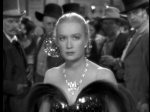
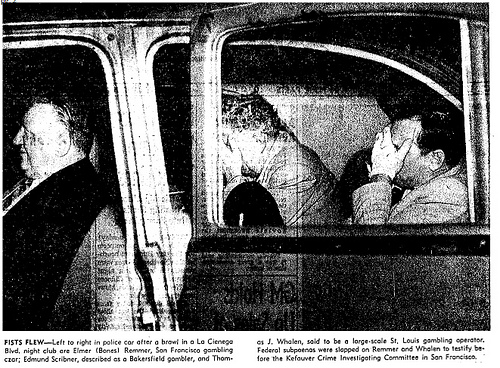
It was a special occasion when the movie ‘Barbary Coast’came on T.V. Rosemary worked with the gambler, Big Bones Remmer, in Emeryville. I was titled ‘The California Kid’ by tough stevedores in Hell’s Kitchen New York. James Cagney played ‘The Frisco Kid’ in a movie made in 1935, the same year the Barbary Coast came out.
America and the World had an interest in this lifestyle long before Reno and Las Vegas was established as gambling towns. Remmer played a big role in making gambling a multi-billion dollar industry. Many folks want to be sinners, even Christians who gamble like crazy. Gambling is the true Sport of Kings!
There are walking tours of the Barbary Coast. Add to this Carl Janke’s theme park built in 1849, then one can conclude my family helped found California and Nevada’s entertainment industry. I have been considering applying for a job as a tour guide. I will dress the part. I don’t need to act, or read from a script.
Jon Presco
Copyright 2012
http://www.barbarycoasttrailwalk.org/
http://www.youtube.com/watch?v=IplulP-U9i8
From the days of the Gold Rush and the Barbary Coast, to the 1906 earthquake and the Beat renaissance, San Francisco’s history is rich with dynamic events and storied characters. The Barbary Coast Trail® is a San Francisco walking tour that connects the City’s most important historic sites, drawing you into a world of gold seekers and railroad barons, writers and visionaries, shanghiers and silver kings.
A series of bronze medallions and arrows embedded in the sidewalk connect the Barbary Coast Trail’s historic sites. Along a 3.8-mile path (mostly flat or gently sloping), the trail weaves its way through Downtown, Union Square, Chinatown, Portsmouth Square, Jackson Square Historic District, Old Barbary Coast, Beat San Francisco, North Beach, Telegraph Hill, Coit Tower, Fishermans Wharf, San Francisco Martime Historical National Park, Ghirardelli Square and Nob Hill.
Our Barbary Coast Trail® walking tours of San Francisco feature historic sites that made the city famous.
• You’ll see the plaza where Sam Brannan kicked off the Gold Rush
• A graveyard of Gold Rush ships buried beneath the streets
• A shanghaiing den where sailors were once kidnapped
Barbary Coast is a fine, solid melodrama that is nevertheless an anomaly in the early career of Howard Hawks. The film bears little trace of Hawks’ imprint, perhaps because he came to the project relatively late: MGM’s Samuel Goldwyn had been developing the idea for a long time, shuffling it through an endless series of directors, screenwriters and stars before finally handing the reins to Hawks. The director does an admirable job of shepherding the film through to completion, but the film, as entertaining as it often is, with plenty of memorable images scattered throughout, seldom actually feels like a true Hawks film. It’s a story set in Gold Rush era San Francisco, and the film’s primary aim is undoubtedly to capture something of the wild, lawless, sin-and-decadence aura of the city, a tall order in the context of the newly enacted Hays Code.
Even so, the film’s best sequences tend to be the one that establish this milieu, that depict the setting in broad strokes. The opening is as atmospheric and foggy as the very similar opening of Hawks’ later Only Angels Have Wings, as a ship pulls into the San Francisco harbor, carrying among its passengers Mary Rutledge (Miriam Hopkins), who is coming to the city to marry a man she doesn’t love, but who she knows will at least give her security and stability. Instead, she finds that the man has been killed after losing all his money at a casino owned by the powerful Luis Chamalis (Edward G. Robinson), who is the de facto ruler of the city on the strength of his crooked gambling palace. The opening is moody and dark, depicting Mary’s arrival in the city amidst the all-encompassing fog, as she is instantly surrounded by the local men, excited by the incredibly rare arrival of a fresh-faced, glamorous woman in this muddy, filthy, rough-and-tumble town. She’s propelled through the streets, literally carried aloft by the men over mud puddles, and her winding way through San Francisco, towards Chamalis’ Bella Donna, provides an excuse for a tour of the city’s vices and dark character. Ruffians chase “Chinamen” through the streets, taunting and threatening them, and a montage within the casino itself cuts fluidly among all the fights, drunken carousing, womanizing, and gambling going on in this den of sin. It’s a great opening, evocative and beautifully shot as Hawks’ conscious tribute to the nighttime cinematography of Josef von Sternberg’s films.
Most of the rest of the film takes on a more conventional template, focusing in on the story of Mary and her tormented relationship with the slick, nasty Chamalis. Mary, shedding her scruples, latches onto the casino owner, becoming both his girl and the prize attraction at his crooked roulette wheels, where men are happy to lose all their money just for the privilege of standing next to this beautiful, flirtatious woman. Of course, it’s not long before the obligatory second man arrives to complete the triangle, in the form of the New York poet Jim Carmichael (Joel McCrea). Carmichael’s the usual handsome dud one expects in these kind of romances, but at least there’s a great scene where, after discovering that Mary is actually one of the “harpies” of San Francisco who lures men to give up their gold, the two wayward lovers engage in some spiteful, sharp-tongued repartee across a roulette table.
For the most part, though, the romance subplot limps along in the background, with the foreground devoted to actorly grandstanding. Robinson and Hopkins are of course both great, in a certain hammy, over-emoting way. Robinson, with his wide froggy lips, slit-eyed glare and faux-gentlemanly airs, projects a slimy good humor that’s perfect for this expansive gambling don. And Hopkins has a fiery intensity that’s equally well-suited to her down-and-out lady, willfully shedding the respectability of her past to become a cheating, bad-hearted “harpy.” She acts, as so many actresses of the time did, primarily with her eyes, with the glinting steel of her stare that could communicate so much barely restrained hatred and anger. As good as these two leads are, though, Walter Brennan often threatens to take over the film in his bit part as the crafty harbor rat Old Atrocity, a nasty old coot who’s cheerfully proud to live up to his name. The gangly, wheezing Brennan is simply hilarious, which is perhaps why Hawks kept bringing his character back in for a surprising number of scenes. It’s a bit part that seems to keep expanding, and one suspects that Brennan was Hawks’ real interest in the film. Even the inevitable reformation of this jolly old crook is handled with aplomb, with Brennan’s bemused line that he “feels like a pure white kitten.”
The scenes with Brennan and the atmospheric opening aside, the film’s best sequence is one in which the men of the town, organized as vigilantes to finally fight back against Chamalis, lead one of his thugs (Brian Donlevy) on a grim march through the town’s back streets, conducting a mock trial along the way. The march ends with a hanging, and Hawks lets the tense mood of the sequence linger over the subsequent scene where Chamalis and his corrupt judge friend (J.M. Kerrigan) discover the hanging corpse, whose shadow is reflected on the wall behind them. The film is at its best in expressionist moments like this, when the town’s seemingly constant coating of fog lends it some Gothic atmosphere to elevate its conventional melodrama. The finale, with its tacked-on happy ending and the abrupt, nonsensical reversal of Chamalis from unfeeling baddie to sympathetic good sport, threatens to dissipate some of the good will earned by the film’s better moments. Ultimately, though, this is a fine if unexceptional melodrama, buoyed by some vibrant performances. It’s a decent film by Hawks, even if it never actually feels like a Hawks film.
Victor Hugo of the Barbary Coast
Posted on May 26, 2016 by Royal Rosamond Press


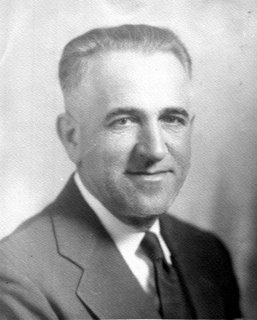
My brother, Mark Presco, described Melba as a ‘Control Freak’. Coming from a master control freak, this is quite an honor. Mark stopped seeing our grandmother, because she put him to work every time he did. That was my experience. Vic was the same way. This is why I almost conclude the Stuttmeisters were Prussian Royalty. Vic and Melba have the look and baring. Hugo could not hang!
Rosemary Rosamond made porno movies for Big Bones Bremmer. Later, she was a high class hooker working out of the Beverly Hills Hotel. Hollywood Stars has seen he infamous movies. Our mother was hardly ever home. I was the family cook. Christine watched me render large canvases in the little studio I built in the back of our home on Glendon.
There are blue-eyed Austrian Jews. I was befriended by one. Hugo had amazing blue eyes. After getting away from the ‘Control Freak’ he moved to the Barbary Coast in San Francisco. When he discovered he was a great poker player, we will never know. He made a living sitting at a table with gamblers. Victor Hugo Presco, was a professional gambler of the Barbary Coast. You can’t get any more Bohemian than this. Did he have a room above the Hippodrome? I would. When evening falls, I would put on my best duds and head for a card room. Who wants to get stuck with a bossy bitch and her spoiled brat – who demand all your attention? Victor Hugo – is my main man! I’m going to hang with his memory – till I die! We would have made great pals. Screw the Hansons!
1849: Badly drawn paintings of nude women adorn the walls of the best cafes in the city. Prostitutes begin to arrive from the east. They are frequently auctioned off from the decks of the arriving ships. Cafe owners often hire them to pose nude in displays in the dining halls. Gambling houses were everywhere. At the El Dorado it was reported that $80,000 once changed hands on the turn of a single card. Liquor and female companionship were often provided free of charge by the house as an incentive to frequent patrons.
This place was the Sin City of the world. It had an international reputation. It made the Capitol of Bohemianism, great. If we were told the truth, then we would know from where the dilemma came that ruined out lives. Melba’s father ran the California Barrel Company and delivered wood barrels to Bootleggers all over America. Rosemary made porno movies for Big Bones Remmer, the only Mafia boss working the West Coast out of Emeryville. Hugo and Rosemary would have gotten along great. Did they ever meet?
Men wanted to get drunk, see naked women, and get laid. There is nothing new under the sun. They also wanted to be bedazzled and entertained. I love the pic of the Bella Union Dance Hall. Looks like an exotic dancer sitting on a crescent moon. Human beings also love to dance. Here is the rebirth of Ancient Rome. Here is the new Hippodrome. Then came Bill Graham and the………..
THE HIPPIEDROME
Then there was the Red Mill, later called ‘The Moulin Rouge’. We Prescos got it covered. The Faux Caretakers have destroyed us. I will sell our True Story to HBO! We will be reborn. We will dance naked again, in the woods with the Woodminster and the Faun. Did Hugo meet any artists?
Captain Gregory
Copyright 2016
http://hoodline.com/2015/04/art-supply-store-artist-craftsman-has-storied-barbary-coast-past


Interior of the Moulin Rouge nightclub in the Barbary Coast, 1911
555 Pacific was such a place, going through multiple iterations of clubs and dance halls. The existing building is pretty much a reconstruction of a saloon that was there before the earthquake, but was known as the Red Mill, later renamed in French to Moulin Rouge in attempts to class up the joint. The exterior was covered in plaster reliefs of satyrs chasing naked wood nymphs. By the late 1930s, the Hippodrome moved into the spot.
http://sf.curbed.com/2013/5/24/10239866/have-a-good-time-at-the-hippodrome-on-terrific-street
BARBARY COAST
Historical Essay

Barbary Coast, 1909.

The Hippodrome by day, c. 1900-1920.
Photos: San Francisco History Center, SF Public Library
1849: Badly drawn paintings of nude women adorn the walls of the best cafes in the city. Prostitutes begin to arrive from the east. They are frequently auctioned off from the decks of the arriving ships. Cafe owners often hire them to pose nude in displays in the dining halls. Gambling houses were everywhere. At the El Dorado it was reported that $80,000 once changed hands on the turn of a single card. Liquor and female companionship were often provided free of charge by the house as an incentive to frequent patrons.
1860-1880: It was in the mid-1860s that the term “Barbary Coast” came into being. It derived its name from its similarity to the notorious Barbary Coast in Africa, and stretched from Montgomery to Stockton along Pacific Street, with branches off into Kearny and Grant Ave. The area had already been cleaned out twice before by the Vigilantes, but once again it began to grow with dives gambling halls, and houses of prostitution. One particularly dangerous block on Pacific between Kearny and Montgomery was known as Terrific Street. A writer in 1876 described the area:
The Barbary Coast is the haunt of the low and the vile of every kind. The petty thief, the house burglar, the tramp, the whore monger, lewd women, cut-throats, murderers, are all found here. Dance halls and concert-saloons, where blear-eyed men and faded women drink vile liquor, smoke offensive tobacco, engage in vulgar conduct, sing obscene songs and say and do everything to heap upon themselves more degradation, are numerous. Low gambling houses, thronged with riot-loving rowdies, in all stages of intoxication, are there. Opium dens, where heathen Chinese and God-forsaken men and women are sprawled in miscellaneous confusion, disgustingly drowsy or completely overcome, are there. Licentiousness, debauchery, pollution, loathsome disease, insanity from dissipation, misery, poverty, wealth, profanity, blasphemy, and death, are there. And Hell, yawning to receive the putrid mass, is there also.
–from Lights and Shades of San Francisco by Benjamin Estelle Lloyd, 1876.
One of the more colorful and memorable characters of the Barbary Coast was a one-time actor whose only name was Oofty Goofty. Oofty Goofty’s great claim to fame was his insensitivity to pain. For many years he made his living along the Barbary Coast by being the willing victim of physical abuse. For ten cents a man might kick Oofty Goofty as hard as he pleased; for a quarter he would let himself be hit with a walking stick; and for fifty cents he would take a blow from a baseball bat.

The Old Hippodrome and Bella Union Dance Halls at 557 Pacific Street between Kearny and Montgomery. Jesse B. Cook on sidewalk, February 1925.
Photo: Jesse Brown Cook collection, online archive of California I0050526A

Hippodrome, early 1930s.
Photo: San Francisco History Center, SF Public Library
Those who escaped the clutches of the crimps and runners trying to shanghaithem frequented the dance halls of the Barbary Coast, where “dancing” with a woman could take any form or degree the patron wished. Those who desired serious drinking could choose from a variety of establishments, the most dangerous of which was The Whale–as tough a bar-room as San Francisco ever boasted. The most famous criminals of the time could frequently be found there, as for the most part, even the police were afraid to enter. Another famous drinking establishment was the Cobweb Palace, run by Abe Warner, a lover of spiders, who let them spin their webs without interference. The webs hung were festooned across the ceiling and down the walls. Liquor was especially cheap at Martin and Horton’s, where one of its most infamous patrons was a shy little man who tended to sit unobtrusively at the back of the room. He was in fact, Black Bart, the highway bandit who held up stages with an unloaded gun and always left behind a bit of poetry signed “Black Bart the PO8.”
The primary industry of the Barbary Coast was prostitution. Three particular types of brothels were to be found: the cow-yard, which served as both apartment building and brothel; the crib, the lowest and most disreputable of the houses; and the parlor house, whose employees were considered the “aristocracy” of San Francisco’s red-light district.
The women who worked in the dives, regardless of their age, were called “pretty waiter girls.” They were usually paid $15 to $25 a week to serve as waitresses, entertainers and prostitutes. For a small fee a man could view any pretty waiter girl free of her clothing. During the 1870s one Mexican fandango den dressed its girls in no more than red jackets, black stockings, garters and slippers. This dress code was abandoned in a few weeks due to overwhelming and uncontrollable crowds.
More often than not the owners of these brothels, regardless of what kind of house they operated, came away with great fortunes. The more frequented parlor houses seemed each to have its own speciality. Madame Bertha, who ran a parlor house located in Sacramento Street, in addition to the usual activities of such an establishment, gave organ recitals on Sunday afternoons to specially invited guests. The prostitutes sang popular songs while Madame Bertha accompanied.
Madame Johanna employed three French girls who gave erotic exhibitions and were known as the Three Lively Fleas. She was also the originator of “direct mail advertising” for brothels, sending pictures of the naked girls to specially procured mailing lists.

Little Egypt on the Barbary Coast, 1890
The bagnio owned by Madame Gabrielle at Geary and Stockton featured a weekly show in which the participants were black men and white women. Frequently a parlor house had its own particular motto which could be found framed in every room. The motto of a California street house was What is Home Without Mother?Each of the parlor houses in Commercial Street boasted a chamber called the “Virgin Room,” where a gullible customer could be accommodated at double or triple the usual price. Usually the room was staffed with a girl young enough, and enough of an actress to simulate fright and bewilderment. She was usually paid slightly more than the other prostitutes.

The Hippodrome in 1890; Photo: San Francisco History Center, SF Public Library
A frequent patron of these house was San Francisco’s most notorious murderer of the time, Theodore Durrant. When not frequenting prostitutes or murdering them, Durrant spent his time as a medical student and an assistant superintendent of Sunday school, prominent in the work of the Christian Endeavor Society. His modus operandi was to bring a small bird to the parlor house and at some time during the evening slit its throat and let the blood drip over his body.In the cribs and cow-yards, customers were not permitted to remove their shoes, or often any garments at all–except for their hats. Only a specific kind of crib, called a “creep joint” permitted the removal of clothing, and the reason for that was in order that an accomplice could steal all his money and valuables. It was, however, customary to leave a shiny new dime in the customer’s pocket. The origin of the custom is unknown–perhaps it was left as car-fare.
Cribs were located throughout the Barbary Coast, but black and Hispanic establishments were concentrated on Broadway between Grant and Stockton. The French houses could be found primarily in Commercial Street.
1900: Three blocks of dance halls with the loudest possible music blasting forth from orchestras, steam pianos and gramophones in such establishments as The Living Flea, The Sign of the Red Rooster, Ye Olde Whore Shop. Extended from the foot of Telegraph Hill to the shoreline, largely along Pacific Street and Broadway. The Dew Drop Inn, Canterbury Hall and Opera Comique all specialize in erotica of a high order. Dead Man’s Alley, Murder Point and Bull Run form a secret network of tunnels through which people as well as booty were smuggled. The area takes in Chinatown, and Asians are often blamed for this blight on the city.
The San Francisco Examiner, the newspaper owned by William Randolph Hearst, is nicknamed The Whore’s Daily Guide and Handy Compendium due to the thinly disguised ads for prostitutes in the classified section.
Dancers at Spider Kelly’s on the Barbary Coast, 1911.
Photo: San Francisco History Center, SF Public Library
The worst of cribs were to be found on Morton Street (now ironically enough called Maiden Lane). The most notorious was the Nymphia on Pacific Street, the Marsicania on Dupont Street (Grant Ave.), and the Municipal Brothel on Jackson Street near Kearny. On a slow night the pimps might sell the privilege of touching a prostitute’s breasts for the fee of ten cents. On a good night a prostitute might service as many as a hundred men.
The Nymphia, a three-story building with about a hundred and fifty cubicles on each floor, was erected in 1899. The intention of the owners was to name the place the Hotel Nymphomania and to stock it with women suffering from that condition. When the police refused to permit that name, the owners compromised, calling it the Nymphia. Each female resident was required to remain naked at all times and was obliged to entertain any man who called. For a dime a customer would view the activities in any room through a narrow slit in the door. The place was first raided by police in 1900 and after several legal battles, finally closed down in 1903.
The San Francisco Call described the Marsicania as “one of the vilest dens ever operated in San Francisco.” Its population was about 100 prostitutes, each of whom paid $5 a night rental cost. It was opened in 1902 and enjoyed a period of prosperity when the police were legally restrained from blockading or entering the premises except under extreme emergencies. This decision was overturned in 1905 and the Marsicania was forced to close.
On Jackson Street the Municipal Brothel or the Municipal Crib was called so due to the fact that most of its profits went into the pockets of city officials and prominent politicians. It was build in 1904 on the site of the underground Chinese tenement known as the Devil’s Kitchen, or (with great sarcasm) the Palace Hotel. The women were graded by floors with the Mexican prostitutes in the basement, and the black women on the fourth floor. In between a variety of nationalities were represented. The Municipal Crib was protected from police raids until the prosecution of formerMayor Eugene Schmitz and Abe Ruef, who had received regular payments from the profits.
When it was at last closed in 1907, the Municipal Crib was the last significant cow-yard to operate in San Francisco. For all intents and purposes the flesh-pits that were the Barbary Coast were wiped off the face of the map by the great earthquake and fire of 1906.
The opium dives, slave-dens, cowyards, parlorhouses, cribs, deadfalls, dance-halls, bar-rooms, melodeons and concert saloons were all turned to ash. The destruction of Sodom and Gomorrah, it was called by the clergymen. The day following the great fire, men lined up for blocks in order to patronize the brothels of Oakland. The slave-trade of Chinatown came to an end and the opium dens were never rebuilt. But the entrepeneurs of the Barbary Coast were determined to rebuild the quarter upon the ruins of the old. By 1907 it was once again in full operation.
While the city of San Francisco officially disdained the goings-on of the Barbary Coast, it took a secret pride in this area widely proclaimed as the wickedest town in the U.S.A. After the great earthquake and fire, the Barbary Coast became more of a tourist attraction than its predecessor. Such luminaries as Sarah Bernhardt and ballet dancer Anna Pavlova were known to frequent the area. British poet John Masefield is to have said immediately after disembarking, “Take me to see the Barbary Coast.” Dance-floors and variety shows designed to shock the tourists replaced prostitution as the chief business. Indeed, many of the dance crazes that swept America during this period were originated in this section of San Francisco: the turkey trot; the bunny hug; the chicken glide; the Texas Tommy, the pony prance, the grizzly bear, and other varieties of semi-acrobatic dancing. Among the many dance halls on the Barbary Coast, the Thalia, on Pacific between Kearny and Montgomery, remained the most popular. It usually featured a “Salome dancer” or strip-tease artist.
The number of women working on the Barbary Coast during this period ranged from 800 to 3,000. They were paid from $12 to $20 a week to dance and drink with the customers and to appear on stage in ensemble choruses. Many engaged in prostitution but usually in their after hours. Their dress was described as “of the cheapest fabric, many of them torn and stained, none reaching below the knees, and here and there hooks missing and bodices yawning in the back, but always the silk stocking as the inevitable mark of caste.” [San Francisco Call, 1911] Often the girls were barely in their teens, and the dance-halls frequently served as recruiting agents for the brothels.
Barbary Coast after the ’06 quake
The first dive to open after the earthquake, and perhaps the most notorious establishment on the Barbary Coast of the post-earthquake period, was the Seattle Saloon and Dance Hall, in Pacific St. near Kearny. The women employed there were paid from $15 to $20 a week, and following the custom of an earlier deadfall, they were forbidden from wearing underwear. Advertisements of this feature were discretely passed around the saloons of the city. The women were also paid a slight percentage of the drinks they sold and entitled to half of whatever they might pick from the pockets of their dance partners. (The proprietors often complained that the girls were dishonest in reporting the true amounts they had stolen.) But the women of the Seattle soon developed another source of income by supposedly selling their house keys to drunken patrons who would pay from $1 to $5 each for a key. The keys of course were bogus, and the police soon put an end to this practice after receiving numerous complaints from homeowners about drunken men searching hopelessly in the middle of the night for locks their keys might open.
When the Seattle was sold in 1908, its name was changed to the Dash. The waitresses were replaced by male cross-dressers who for $1 would perform whatever sex act was requested. It was soon revealed that the new managers were two officers of the Superior Court under Judge Carroll Cook. The place was closed six months after it had opened.
1910-1920: In 1911 the Board of Health established a Municipal Clinic which compelled every prostitute to submit to examination and necessary treatment for disease. Prostitutes were required to carry a booklet listing her record of medical examinations, and no woman was permitted inside a brothel without a medical certificate. The Clinic existed for only two years, but in that time reduced venereal disease in the red-light district by 66 percent. The Clinic was fought bitterly by nearly every clergyman in the city. Mayor James Rolph, Jr., who had gone on record as supporting the work of the clinic, eventually succumbed to the political pressure brought to bear by the clergymen and ordered police protection withdrawn from the clinic. Soon afterward the Clinic closed its doors and diseases once again raged unhindered throughout the red-light district.
The defeat of the Union Labor Party in 1911 marked the beginning of the end of the Barbary Coast. Gone was the general feeling of Gold Rush days that San Francisco must remain a “wide-open” city. In 1912 the new Police Commissioner Jesse B. Cook launched a direct attack on the Barbary Coast publishing his plans in the newspapers:
1) All dance-halls and resorts patronized by women in Montgomery Avenue (now Columbus) west of Kearny Street and on both sides of Kearny Street to be abolished.
2) Barkers in front of the dance-halls in Pacific Street to be done away with and glaring electric signs forbidden.
3) No new saloon licenses to be issued until the number had been reduced to 1500 which was to be the limit in future.
4) Raids to be made against the blind pigs.
In February of 1913 another resolution was adopted:
Resolved, That no female shall be employed to sell or solicit the sale of liquor in any premises where liquor is sold at retail to which female visitors or patrons are allowed admittance. The enforcement of this resolution proved completely futile, but it did send out the message that the Barbary Coast of old was not to be tolerated.
But it was the San Francisco Examiner under the leadership of William Randolph Hearst which led the crusade that eventually brought down the Coast. Many churches and welfare organizations promptly jumped on the Examiner’s bandwagon, and on September 22, 1913, the Police Commission adopted the following resolution:
Resolved, That after September 30, 1913, no dancing shall be permitted in any cafe, restaurant, or saloon where liquor is sold within the district bounded on the north and east by the Bay, on the south by Clay street, and on the west by Stockton Street. Further Resolved, That no women patrons or women employees shall be permitted in any saloon in the said district. Further Resolved, That no license shall hereafter be renewed upon Pacific Street between Kearny and Sansome Streets, excepting for a straight saloon.
In September of 1913 the Thalia displayed the following sign:
THIS IS A CLEAN PLACE FOR CLEAN PEOPLE — NO MINORS ALLOWED.
This sign perhaps more than any other signalled the end of the Barbary Coast. Even the most notorious of the dance halls now had trouble attracting enough customers to stay in business.

The Thalia Dance Hall at 732 Pacific Street, with Jesse B. Cook on sidewalk, February 1925.
Photo: Jesse Brown Cook collection, online archive of California I0050528A
In 1914 the Red-Light Abatement Act gave the city authorities the right to impose civil court actions against any property used for purposes of prostitution. Also during this same time a young Methodist clergyman, Reverend Paul Smith, took it upon himself to launch a tireless campaign against whatever sin and vice yet remained on the Barbary Coast. (It was reported that his sermons were so provocative that prostitutes flocked to the vicinity of his church after the services, where they found eagerly aroused customers). Rev. Smith’s campaign against immorality came to a head on a January morning when more than 300 prostitutes dressed and perfumed in their finest marched to the Central Methodist Church to confront the minister. When admitted to the church they posed the question, “How are we to make a living when all the brothels have closed?” The Rev. is said to have replied that he would work tirelessly to establish a minimum-wage law and would assist the women in finding new employment. He claimed that a virtuous woman with children could live on $10 a week. “That’s why there’s prostitution!” came the reply, at which point the ensemble left the church in disgust.

January 25, 1917, three hundred prostitutes march to Central Methodist Church to protest anti-prostitution campaigning by Rev. Paul Smith.
In 1917 the Supreme Court rendered its final decision on the Red-Light Abatement Act. Dancing was now prohibited in all cafes and restaurants anywhere in the vicinity bordered by Larkin, O’Farrell, Mason and Market; all private booths were removed in establishments where liquor was sold; and unescorted women were to be ejected from such premises. These regulations effectively closed down such notorious Barbary Coast establishments as the Black Cat, the Panama, the Pup, Stack’s, Maxim’s, the Portola, the Louvre, the Odeon and the Bucket of Blood.
1920s: In one final gasp at life, the Barbary Coast recalling its former glory as the most notorious section of San Francisco, once again attempted to resurrect itself in 1921. The Neptune, Palace, Elko and Olympia again opened their doors, selling near beer and featuring a few dancing girls. But the watchful eye of Mrs. W. B. Hamilton, Chairman of the Clubwomen’s Vigilante Committee, soon saw to it these newly opened dens of iniquity were not to be endured. She reported to the newspapers, “I have visited dancing places in Honolulu, Tahiti and various islands of the South Pacific, but I saw nothing in those places more obscene and morally degrading than I saw in the Neptune Palace.” The police took immediate action and the Barbary Coast was at last closed down for all time.

Patrons in the Hippodrome, 1934.
Photo: San Francisco History Center, SF Public Library
1940s: U.S. military insists on shutting down brothels and bars around the city as tens of thousands of soldiers pour through San Francisco en route to and from the Pacific Theatre of War.
1950s: Mayor George Christopher appoints a beat cop as police chief and Chief Ahern instigates a crackdown on police corruption and vice tolerance.

Pacific Avenue looking west between Montgomery and Kearny, November, 1953.
Photo: Charles Ruiz collection
The Old “International Settlement” sign at Kearny and Pacific just before its final removal, June 6, 1957.
Photo: Bancroft Library
1960s: Carol Doda takes off her top at the Condor Club at Broadway and Columbus. She becomes a big celebrity and contributes mightily to San Francisco’s now-restored reputation as a town where anything goes.
1970s: Pornography industry gets a big boost by the entry of two Bay Area brothers, the infamous Mitchell Brothers. Their first feature porn film, Behind the Green Door, brings hardcore pornography into wide circulation. Their club on O’Farrellendures hundreds of raids by SFPD Vice officers, but is never shut down. “Lap Dancing” and other forms of nude entertainment are accepted in the City.
Barbary Coast (TV series)
From Wikipedia, the free encyclopedia
Jump to: navigation, search
Barbary Coast
Genre
Western/Spy-fi
Created by
Douglas Heyes
Written by
Howard Beck
Michael Philip Butler
Cy Chermak
James Doherty
William D. Gordon
Douglas Heyes
Harold Livingston
Stephen Lord
Directed by
Hal De Windt
Alexander Grasshoff
Don McDougall
Herb Wallerstein
Don Weis
Starring
William Shatner
Dennis Cole
Doug McClure
Composer(s)
John Andrew Tartaglia
Country of origin
USA
Language(s)
English
No. of seasons
1
No. of episodes
13 (+1 TV movie)
Production
Executive producer(s)
Cy Chermak
Producer(s)
Douglas Heyes
Cinematography
Robert B. Hauser
Running time
60 mins.
Production company(s)
Francy Productions
Paramount Network Television
Distributor
CBS Television Distribution
Broadcast
Original channel
ABC
Audio format
Monaural
Original run
May 4, 1975 – January 9, 1976
Barbary Coast is a short-lived American television series that aired on ABC. The pilot movie first aired on May 4, 1975 and the series itself premiered September 8, 1975; the last episode aired January 9, 1976. One of the episodes didn’t even air in it’s entirety. President Ford gave about a twenty minute spech at the top of the hour and Monday Night Football had to start at the next hour, so when they joined it in progress, an announcer quickly described what the audience missed. Barbary Coast was inspired by a similar 19th-century spy series, The Wild Wild West, and like the earlier program, Barbary Coast mixed the genres of Western and secret agent drama.
[edit] Synopsis
Barbary Coast featured the adventures of 19th century government agent Jeff Cable (played by William Shatner), and his pal, conman and gambler Cash (“Cash makes no enemies”) Conover (Doug McClure; played by Dennis Cole in the pilot). This was Shatner’s first attempt at a live-action series since Star Trek (also produced by Paramount Television). While on the college lecture circuit in the late 1970s, he said the show “lasted about five minutes.”
In their battle against various criminals and foreign spies, Cable and Conover operated out of the latter’s saloon and casino located on San Francisco’s notorious Barbary Coast. Like Wild Wild West’s Artemus Gordon, Cable frequently donned disguises in the course of his investigations.
The producers modeled the show’s Byzantine plotlines/conspiracies on the Mission: Impossible paradigm[citation needed](in fact, they hired a number of Mission: Impossible’s writers). Other regulars on the series included recurring Wild Wild West villain actor Richard Kiel as Moose Moran and Dave Turner as Thumbs.
• The first Asian temple in North America
• A barstool where beat writer Jack Keroauc once sat
• The finest Italianate Victorian buildings in San Francisco
• The largest collection of historic ships in the United States
• Beautiful views of San Francisco Bay, and more . . .
Also along the Barbary Coast Trail® walking tour, you’ll find great restaurants offering a wide array of distinctive dishes, from dim sum to garlicky pasta to fresh crab to all American hamburgers.
Share this:
Habsburg Lip
Posted on August 3, 2012 by Royal Rosamond Press
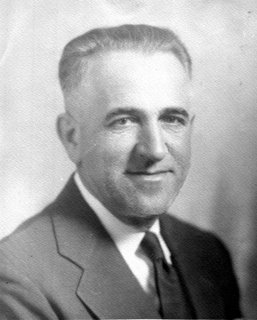

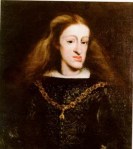
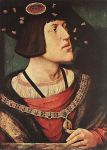
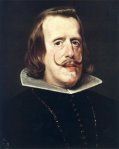



Pope Adrien was the tutor of Charles V Von Habsburg, and Adrien’s good friend, Godeschalk Rosemondt, escorted Charles when he visited Leuven. This suggests they are kindred. Rosemndt may have taught Charles art because he was the Master of Falcon Art College.
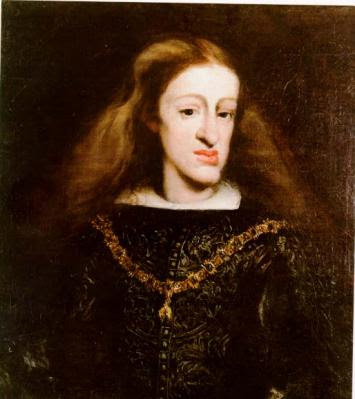
I suspect the Habsburg Lip came from Jeanne de Rougemont Ferrette who married Albert Von Habsburg. Jeanne was an heiress that was examined by the Pope in Rome who may have questioned her conversion to Christianity. There was a large population of Jews in Rougemont from early times. I have seen, and know Jews who have long faces and a jutting lower jaw.
Above is my grandfather, Hugo Presco. His mother was a Jew, but, he had deep blue eyes. His lower jaw protrudes. His grandfathers lived in Bohemian Germany where the Habsburgs ruled. The Prescos could descend from a Habsburg bastard. However, when Victor Presco married Rosemary Rosamond-Rougemont……..?
That is me before the mirror showing my jutting lower jaw. My lower teeth overlap my upper teeth. I look like a Habsburg.
Jon Presco
Inbreeding & the downfall of the Spanish Hapsburgs
The Hapsburgs are one of those royal families who are relatively well known, and in the minds of the public are to a great extent the emblems of the downsides of inbreeding. To painting to the left is of Charles II, king of Spain, the last of the Spanish Hapsburgs, and an imbecile whose premature death at the age of 39 ushered in a period of dynastic chaos which led to the War of Spanish Succession These conflicts between France and other European powers were one of those turning points in history, a sad capstone to the long reign of the Sun King, Louis the XIV. France’s position as the unchallenged power of Europe ended due to the fiscal and military overextension necessitated by Louis’ war to secure the Spanish throne for his grandson.
But this a story of genetics as well as history, because historians have long assumed impressionistically that there was something rotten in the gene pool of the Spanish Hapsburgs. Here is an excerpt from an online biography of Charles II:
The Habsburg King Carlos II of Spain was sadly degenerated with an enormous misshapen head. His Habsburg jaw stood so much out that his two rows of teeth could not meet; he was unable to chew. His tongue was so large that he was barely able to speak. His intellect was similarly disabled. His brief life consisted chiefly of a passage from prolonged infancy to premature senility. Carlos’ family was anxious only to prolong his days and thought little about his education, so that he could barely read or write. He had been fed by wet nurses until the age of 5 or 6 and was not allowed to walk until almost fully grown. Even then, he was unable to walk properly, because his legs would not support him and he fell several times. His body remained that of an invalid child. The nature of his upbringing, the inadequacy of his education, the stiff etiquette of his court, his dependence upon his mother and his superstition helped to create a mentally retarded and hypersensitive monarch.
A new paper in PLoS One offers a more precise genetic framework for understanding the decline of the Spanish Hapsburgs, The Role of Inbreeding in the Extinction of a European
Royal Dynasty:
The kings of the Spanish Habsburg dynasty (1516-1700) frequently married close relatives in such a way that uncle-niece, first cousins and other consanguineous unions were prevalent in that dynasty. In the historical literature, it has been suggested that inbreeding was a major cause responsible for the extinction of the dynasty when the king Charles II, physically and mentally disabled, died in 1700 and no children were born from his two marriages, but this hypothesis has not been examined from a genetic perspective. In this article, this hypothesis is checked by computing the inbreeding coefficient (F) of the Spanish Habsburg kings from an extended pedigree up to 16 generations in depth and involving more than 3,000 individuals. The inbreeding coefficient of the Spanish Habsburg kings increased strongly along generations from 0.025 for king Philip I, the founder of the dynasty, to 0.254 for Charles II and several members of the dynasty had inbreeding coefficients higher than 0.20. In addition to inbreeding due to unions between close relatives, ancestral inbreeding from multiple remote ancestors makes a substantial contribution to the inbreeding coefficient of most kings. A statistically significant inbreeding depression for survival to 10 years is detected in the progenies of the Spanish Habsburg kings. The results indicate that inbreeding at the level of first cousin (F = 0.0625) exerted an adverse effect on survival of 17.8%612.3. It is speculated that the simultaneous occurrence in Charles II (F = 0.254) of two different genetic disorders: combined pituitary hormone deficiency and distal renal tubular acidosis, determined by recessive alleles at two unlinked loci, could explain most of the complex clinical profile of this king, including his impotence/infertility which in last instance led to the extinction of the dynasty.
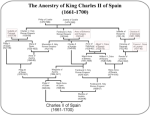
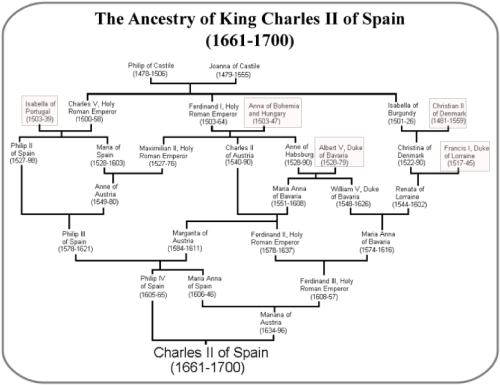
F, or the coefficient of inbreeding, is critical here. Charles II was not simply the offspring of a first cousin marriage, he was the culmination of a repeated instances of cousin marriage over several generations. Below is a pedigree of Charles’ descent from Philip and Joanna of Castile (the latter being the daughter of the famed Ferdinand and Isabella of Aragon & Castile respectively). I have highlighted those ancestors who enter the lineage from the outside, that is, they are introducing relatively “fresh blood.”
As you can see, Charles’ genealogy loops back into itself quite often! Philip & Joanna are Charles’ forebears many times over. This is a problem. To see how, consider if Philip or Joanna carry a deleterious mutation which is recessive in its expression. Presumably their children would be unaffected, because only one of them should carry a rare deleterious mutation, resulting complementation so that one full functional copy is sufficient. But in Charles’ cases both of his parents are descendants of Philip & Joanna, so the probability that he will inherit the same faulty allele from both parents is heightened. The formula for F, the inbreeding coefficient is:
FI = Σ (0.5)i X ( 1 + FA )
What are you doing here is summing up through all of the distinct paths to common ancestors. You weight this by the number of individuals between the common ancestor and the individual whose inbreeding coefficient you are calculating (note that, for example, some of Charles’ lines up ancestry back up to his common ancestors have different numbers of generations). Finally you have to include in the inbreeding coefficient of that common ancestor.
Let’s play this out for a brother-sister mating. Assuming that the grandparents, of whom there are only two, are unrelated. So FA = 0. Then, it simplifies to:
FI = (0.5)3 X ( 1 ) + (0.5)3 X ( 1 ) = 0.25
In other words, Charles II was moderately more inbred than the average among the offspring from brother-sister matings!
Over time this sort of process would result in radically increased inbreeding coefficients. The chart to the left plots out the process of repeated brother-sister matings within an isolated population over time. The inbreeding coefficient naturally converges upon 1. In some ways inbreeding can be thought of as a way to crank down long term effective population size and increase the power of stochastic processes within a gene pool. If drift becomes powerful enough it can lead the population toward extinction through mutational meltdown. Mutational meltdown can be thought of as a snowball effect, whereby small populations allow for the fixation of deleterious mutants, which reduce fitness, and further drive down the population and increase the probability of the fixation of deleterious mutations. In the case of the Hapsburgs there is no need for de novo mutations, all humans carry within them numerous deleterious alleles which are masked because they only express recessively. Over the generations of inbreeding these alleles may slowly been unmasked, ending in Charles II.
Within the data set from the Spanish Hapsburgs the researchers find strong evidence for inbreeding depression, as defined by reduced fitness of the offspring from population mean fitness:
From 1527 to 1661, when Philip II and Charles II were born respectively, the Spanish royal families had 34 children, 10 (29.4%) of them died before 1 year, and 17 (50.0%) of these children died before 10 years…These figures are clearly higher than the mortality rates registered for contemporary Spanish villages which include families belonging to a wide range of social classes and where, for example, infantile mortalities were about 20%.
The Spanish Hapsburgs had a higher infant mortality than Spanish commoners. This is extremely suggestive. But the data set here is large enough, just barely, to go a little further. Here is a multiple regression (least squares) which shows the effect of inbreeding coefficient on mortality (take from Table 4):
In plain English, the higher the inbreeding coefficient the higher mortality. None of this is qualitatively surprising, the impressionistic assumption by historians has always been that there was a degeneration of the Spanish Hapsburgs due to inbreeding (see Henry Kamen’s Empire: How Spain Became a World Power, 1492-1763. But it is nice to see it laid out in a precise manner. Not only did the Spanish Hapsburgs have a high infant mortality rate, but it got higher as their inbreeding become more advanced. Correlation is not causation, but correlation is necessary for an inference of causation.
The authors finish with some detailed speculations on the specific diseases and genetic abnormalities which Charles II might have been subject to. Since the paper is Open Access, I recommend you just go straight to it. Rather, I want to point to something interesting:
The highest levels of inbreeding in major populations have been found in urban Pondicherry (South India) and among army families in Pakistan where 54.9% and 77.1% of marriages are consanguineous, respectively…In Pondicherry 20.2% of marriages are uncle-niece and 31.3% first cousins, whereas in the Pakistan study 62.5% of marriages are between first cousins.
Though in many cultures cousin-marriage is preferred for various reasons, until recently it was extant at lower frequencies than is the case today. Why? Consider that lower infant morality in modern societies, and the large families the norm in many developed societies. This increases the pool of possible mates in many extended families. As you can see above iterated generations of inbreeding tend to result in some serious problems. The Samaritans of Israel are even engaging in a program of marrying out to reduce the high frequency of birth defects. That being said, smaller families sizes in many developed nations in the near future might mean that there is a natural social break on the practice of cousin marriage. Consider if you have a dozen first cousins to choose from vs. three. That might make a big difference in terms of the probability of exogamy or not.
Related: Also see Ed Yong’s post, he focuses a bit more on the specific pathologies of Charles II.
 Rosamond Press

Leave a comment