
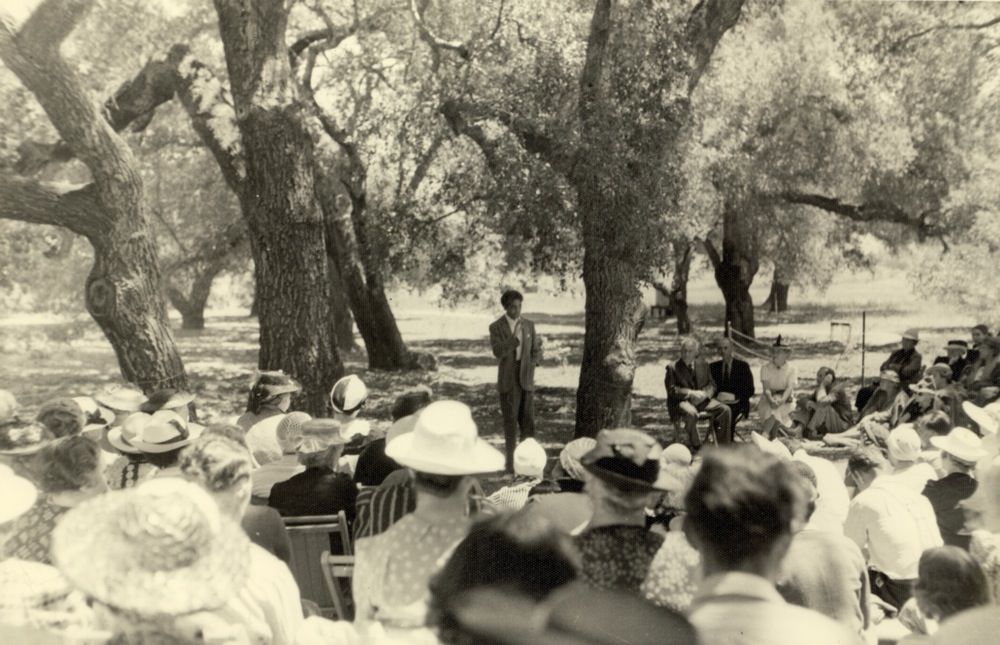
What is an Archetypal Beauty? I cut and pasted Rena’s image, but, Khrisnamurti appeared. Was this an accident? I Google his name, and the word Beauty! Walah!
I saw Murti in San Francisco in 1975 with two friends that are gone. James went with on our jorney to take Rena home to Nebraska.
For four three monts I have been seeing these AI Beauties. More and more they look like Rena. What kind of subconcious collection is going on? Did Eve look like Rena? They conclude we descend from one person, but don’t say if this person is a he or she.
For several days I have been struggling why I believe I was not worthy to even gaze upon Rena. yet we slept in a small tent for over thirty days. I have written it was fifty days. Rena is an Aries. So is my cat, who has not desire to be, or, see, anyone – but me! She stares at me – when I am thinking hard. When I dont feed her, or, pay attention to her, she goes out on the balcony and cries for someone to come take her away…….from me!
I will return to this post and add the Beauty I behold.
Seer John
Archetypal beauty refers to universal, recognizable patterns or models of beauty that transcend specific cultures and time periods. These archetypes are rooted in the collective unconscious and represent fundamental aspects of human experience, often appearing in myths, stories, and art. They are not merely physical attributes, but embody deeper symbolic meanings related to identity, power, and inner truth.
‘ll just offer for your consideration another model of femininity — this one developed by Toni Wolff, an analyst trained by Carl Jung.
She argues that there are four archetypes at play around the notion of femininity. More specifically, two pairs of diametrically opposed archetypes.
One pair represents the relational side of feminine. The mother relates intensely to the human world — we are pretty familiar with these qualities. The medium, on the other hand, is in touch with psyche, with the unknown and unrecognized, yet very real and dynamic reality, sometimes called the unconscious. Her knowingness, her spiritual courage, her intuitive state, we, as a culture know less about, since we are so materialistically inclined. Both of these archetypes are defined in terms of their respective realities; each exists, in other words, for the sake of that reality, not for their own sake.
The other pair represents the non-relational side of the feminine. One might say the self-centered, individualistic, or independent, action-oriented side, if archetypes had personalities. The amazon kicks butt whenever necessary, with no concern for consequence — her own safety or others’. The hetaera is her counterpart, and the most mysterious figure in Wolff’s scheme due to our acculturation. Hetaerae were courtesans of ancient Greece, independent, self-employed women. They were not prostitutes (the Greeks called women who sold sex pornai), but rather, well-educated women who, by means of their charm and breadth of knowledge, and probably also by their unavailability, inspired men to their best work.A hetaera might be likened to the exciting older woman you have a crush on, or the legendary artist’s muse.
Read her Structural Forms of the Feminine Psyche (1956) or explore these feminine sensibilities in your own life.
As I always do when discussing archetypes, I am drawn to say that this thread is discussing models of femininity, not of women, and not only applicable to women. The time has come to recognize and engage with the feminine in each of us, women and men.
Jiddu Krishnamurti (/ˈdʒɪduː ˌkrɪʃnəˈmʊərti/ JID-oo KRISH-nə-MOOR-tee; 11 May 1895 – 17 February 1986) was an Indian spiritual speaker and writer. Adopted by members of the Theosophical tradition as a child, he was raised to fill the advanced role of World Teacher, but in adulthood he rejected this mantle and distanced himself from the related religious movement. He nevertheless spent the rest of his life speaking to groups and individuals around the world to set mankind free, gaining a wider recognition in the 1950s, after Aldous Huxley had introduced him to his mainstream publisher. Many of his talks have been published since, and he also wrote several books, among them Commentaries on Living (1956–60). His last public talk was in January 1986, a month before his death at his home in Ojai, California.
According to Krishnamurti an “immense energy and intelligence went through this body,”[a] a consciousness which had always been there, but became more clear over time, as did his intellectual capability to express it in words.[1] During his life he tried to express this in ‘the teachings’, but a few days before his death he stated that nobody had understood what his body went through, and after his death, this consciousness would be gone, and no other body would support it “for many hundred years.”[a]
Krishnamurti asserted that “truth is a pathless land” and advised against following any doctrine, discipline, teacher, guru, or authority, including himself.[2][3] He dismissed the need for contrived meditation techniques, instead emphasizing the practice of choiceless awareness as the essence of “true meditation”.[4] He also emphasized psychological inquiry and liberation from cultural conditioning.
 Rosamond Press
Leave a comment