
“We’re bringing religion back in America. We’re bringing a lot of things back, but religion is coming back to America. That’s why you see the kind of numbers that you see.”
Notes of a New Nazarite
by
John Presco
ALL RIGHTS RESERVED
Having had a near-death experience, like Pope Francis had days before his final death – I believe I can see what Papal History flashed him. He WAS THERE as Conquistadors slaughtered the Aztec royalty, then he was a sailor on a ship laden with stolen gold, that Phillip the second used to build an Armada to murder Queen Elizbeth and put her head on a lance, then parade it in around the streets. Philip almost married Elizabeth, but she had her cousin murdered because she would secure Catholicism in Protestant England. Why did I hear Francis regret that he never spoke of these women, never had the courage to settle the oldest family feud in history. Would President arrest any author who dare write about this wicked DEI? How dare any woman be so great that Trump finds himself in……HER SHADOW!
Today, as Trump announce the death of The Foreign Pope – from his balcony, I pondered what he meant by this religious edict…..,” but religion is coming back to America.“
Where did it go – and how did it get here?
Above is a painting of the Wintrop Fleet that brought my 8th. grandfather to the New World. He brought his son to America in a subsequent voyage, and, perhaps his reluctant wife? John Wilson Jr. was the in the first graduating class of Harvard that was title ‘First Fruit’. My ancestor gives me permission to take up all these important matters. Am I correct? What will become of The Vision of Saint Francis as the
CONCLAVE BEGINS?
I hear this song coming from the place in the Vatican where the bodies of the Popes
ARE PREPARED.
Prepared for what….a place where all humiliation is – banned?
To be continued.
Inside the museums, infinity goes up on trial
Voices echo this is what salvation must be like after a while
But Mona Lisa musta had the highway blues
You can tell by the way she smiles
See the primitive wallflower freeze
When the jelly-faced women all sneeze
Hear the one with the mustache say, “Jeez, I can’t find my knees”
Oh, jewels and binoculars hang from the head of the mule
But these visions of Johanna, they make it all seem so cruel
As with many other Puritan divines, Wilson came to New England, and sailed with his friend John Winthrop and the Winthrop Fleet in 1630. He was the first minister of the settlers, who established themselves in Charlestown, but soon crossed the Charles River into Boston. Wilson was an encouragement to the early settlers during the very trying initial years of colonization. He made two return trips to England during his early days in Boston, the first time to persuade his wife to come, after she initially refused to make the trip, and the second time to transact some business. Upon his second return to the Massachusetts Bay Colony in 1635, Anne Hutchinson was first exposed to his preaching, and found an unhappy difference between his theology and that of her mentor, John Cotton, who was the other Boston minister. The theologically astute, sharp-minded, and outspoken Hutchinson, who had been hosting large groups of followers in her home, began to criticize Wilson, and the divide erupted into the Antinomian Controversy. Hutchinson was eventually tried and banished from the colony, as was her brother-in-law, Reverend John Wheelwright.
The True Story of Mary, Queen of Scots, and Elizabeth I
Josie Rourke’s film sees Saoirse Ronan and Margot Robbie transform from allies into rivals, but in actuality, the queens’ relationship was far more complex
/https://tf-cmsv2-smithsonianmag-media.s3.amazonaws.com/accounts/headshot/mellon.png)
Meilan Solly – Senior Associate Digital Editor, HistoryDecember 6, 2018
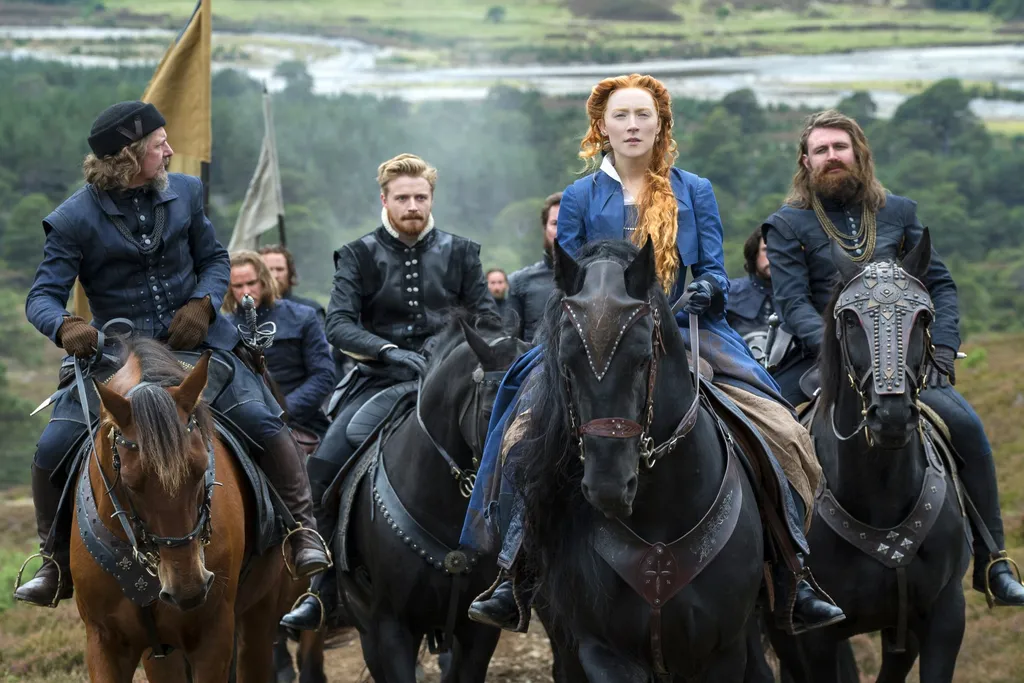
Mary, Queen of Scots, towered over her contemporaries in more ways than one. Not only was she a female monarch in an era dominated by men, she was also physically imposing, standing nearly six feet tall.
5
Her height emphasized Mary’s seemingly innate queenship: Enthroned as Scotland’s ruler at just six days old, she spent her formative years at the French court, where she was raised alongside future husband Francis II. Wed to the dauphin in April 1558, 16-year-old Mary—already so renowned for her beauty that she was deemed “la plus parfaite,” or the most perfect—ascended to the French throne the following July, officially asserting her influence beyond her home country to the European continent.
As Mary donned dual crowns, the new English queen, her cousin Elizabeth Tudor, consolidated power on the other side of the Channel. Unlike her Scottish counterpart, whose position as the only legitimate child of James V cemented her royal status, Elizabeth followed a protracted path to the throne. Bastardized following the 1536 execution of her mother, Anne Boleyn, she spent her childhood at the mercy of the changing whims of her father, Henry VIII. Upon his death in 1547, she was named third in the line of succession, eligible to rule only in the unlikely event that her siblings, Edward VI and Mary I, died without heirs. Which is precisely what happened.Report This Ad
From the beginning of her reign, Elizabeth was keenly aware of her tenuous hold on the crown. As a Protestant, she faced threats from England’s Catholic faction, which favored a rival claim to the throne—that of Mary, the Catholic Queen of Scots—over hers. In the eyes of the Catholic Church, Elizabeth was the illegitimate product of an unlawful marriage, while Mary, the paternal granddaughter of Henry VIII’s older sister Margaret, was the rightful English heir.
The denouement of Mary and Elizabeth’s decades-long power struggle is easily recalled by even the most casual of observers: On February 8, 1587, the deposed Scottish queen knelt at an execution block, uttered a string of final prayers, and stretched out her arms to assent to the fall of the headsman’s axe. Three strikes later, the executioner severed Mary’s head from her body, at which point he held up his bloody prize and shouted, “God save the queen.” For now, at least, Elizabeth had emerged victorious.
/https://tf-cmsv2-smithsonianmag-media.s3.amazonaws.com/filer/35/8f/358fb2ef-4e6a-4a87-863e-448af4613d23/2000_1.jpeg)
It’s unsurprising that the tale of these two queens resonates with audiences some 400 years after the main players lived. As biographer Antonia Fraser explains, Mary’s story is one of “murder, sex, pathos, religion and unsuitable lovers.” Add in the Scottish queen’s rivalry with Elizabeth, as well as her untimely end, and she transforms into the archetypal tragic heroine.Report This Ad
To date, acting luminaries from Katharine Hepburn to Bette Davis, Cate Blanchett and Vanessa Redgrave have graced the silver screen with their interpretations of Mary and Elizabeth (though despite these women’s collective talent, none of the adaptations have much historical merit, instead relying on romanticized relationships, salacious wrongdoings and suspect timelines to keep audiences in thrall). Now, first-time director Josie Rourke hopes to offer a modern twist on the tale with her new Mary Queen of Scots biopic, which finds Saoirse Ronan and Margot Robbie stepping into the shoes of the legendary queens. Robbie provides the foil to Ronan’s Mary, donning a prosthetic nose and clown-like layers of white makeup to resemble a smallpox-scarred Elizabeth.
All too frequently, representations of Mary and Elizabeth reduce the queens to oversimplified stereotypes. As John Guy writes in Queen of Scots: The True Life of Mary Stuart (which serves as the source text for Rourke’s film), Mary is alternately envisioned as the innocent victim of men’s political machinations and a fatally flawed femme fatale who “ruled from the heart and not the head.” Kristen Post Walton, a professor at Salisbury University and the author of Catholic Queen, Protestant Patriarchy: Mary, Queen of Scots, and the Politics of Gender and Religion, argues that dramatizations of Mary’s life tend to downplay her agency and treat her life like a “soap opera.” Meanwhile, Elizabeth is often viewed through a romanticized lens that draws on hindsight to discount the displeasure many of her subjects felt toward their queen, particularly during the later stages of her reign.Report This Ad
***
Mary Queen of Scots picks up in 1561 with the eponymous queen’s return to her native country. Widowed following the unexpected death of her first husband, France’s Francis II, she left her home of 13 years for the unknown entity of Scotland, which had been plagued by factionalism and religious discontent in her absence. (Francis’ younger brother, Charles IX, became king of France at just 10 years old with his mother, Catherine de Medici, acting as regent.)
Mary was a Catholic queen in a largely Protestant state, but she formed compromises that enabled her to maintain authority without infringing on the practice of either religion. As she settled into her new role—although crowned queen of Scotland in infancy, she spent much of her early reign in France, leaving first her mother, Mary of Guise, and then her half-brother James, Earl of Moray, to act as regent on her behalf—she sought to strengthen relations with her southern neighbor, Elizabeth. The Tudor queen pressured Mary to ratify the 1560 Treaty of Edinburgh, which would’ve prevented her from making any claim to the English throne, but she refused, instead appealing to Elizabeth as queens “in one isle, of one language, the nearest kinswomen that each other had.”Report This Ad
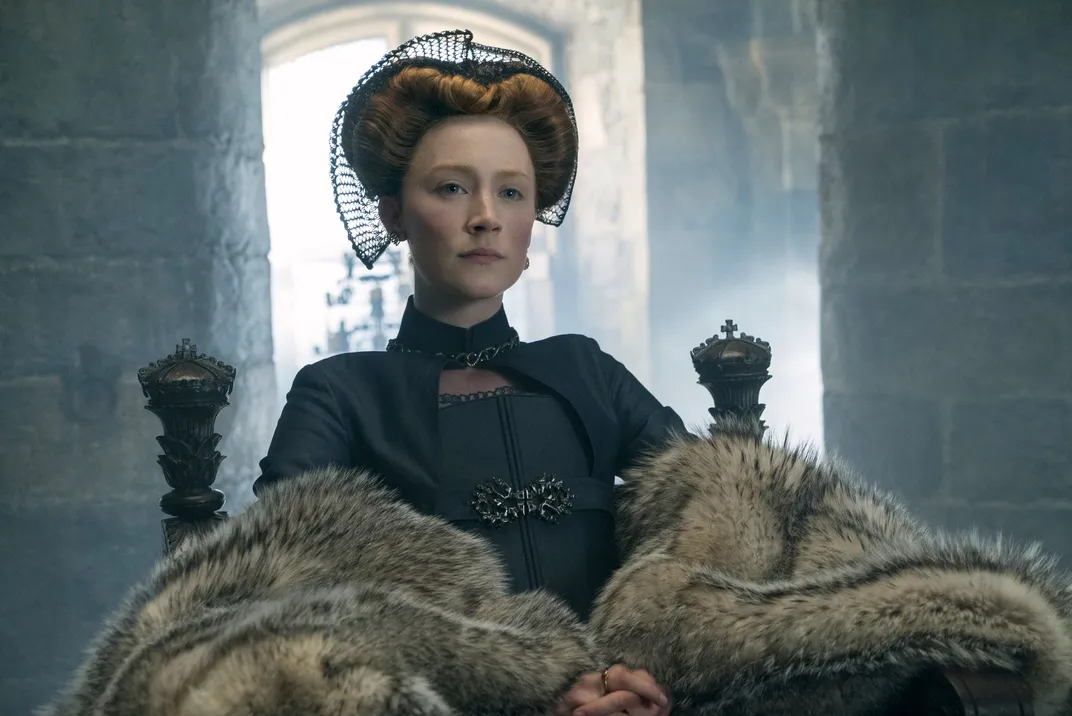
To Elizabeth, such familial ties were of little value. Given her precarious hold on the throne and the subsequent paranoia that plagued her reign, she had little motivation to name a successor who could threaten her own safety. Mary’s blood claim was worrying enough, but acknowledging it by naming her as the heir presumptive would leave Elizabeth vulnerable to coups organized by England’s Catholic faction. This fear-driven logic even extended to the queen’s potential offspring: As she once told Mary’s advisor William Maitland, “Princes cannot like their own children. Think you that I could love my own winding-sheet?”
Despite these concerns, Elizabeth certainly considered the possibility of naming Mary her heir. The pair exchanged regular correspondence, trading warm sentiments and discussing the possibility of meeting face-to-face. But the two never actually met in person, a fact some historians have drawn on in their critique of the upcoming film, which depicts Mary and Elizabeth conducting a clandestine conversation in a barn.Report This Ad
According to Janet Dickinson of Oxford University, any in-person encounter between the Scottish and English queens would’ve raised the question of precedence, forcing Elizabeth to declare whether Mary was her heir or not. At the same time, Post Walton says, the fact that the cousins never stood face-to-face precludes the possibility of the intensely personal dynamic often projected onto them; after all, it’s difficult to maintain strong feelings about someone known only through letters and intermediaries. Instead, it’s more likely the queens’ attitudes toward each other were dictated largely by changing circumstance.
***
Although she was famously dubbed the Virgin Queen, Elizabeth only embraced this chaste persona during the later years of her reign. At the height of her power, she juggled proposals from foreign rulers and subjects alike, always prevaricating rather than revealing the true nature of her intentions. In doing so, the English queen avoided falling under a man’s dominion—and maintained the possibility of a marriage treaty as a bargaining chip. At the same time, she prevented herself from producing an heir, effectively ending the Tudor dynasty after just three generations.Report This Ad
Mary married a total of three times. As she told Elizabeth’s ambassador soon before her July 1565 wedding to Henry Stuart, Lord Darnley, “not to marry, you know it cannot be for me.” Darnley, Mary’s first cousin through her paternal grandmother, proved to be a highly unsuitable match, displaying a greed for power that culminated in his orchestration of the March 9, 1566, murder of the queen’s secretary, David Rizzio. Relations between Mary and Elizabeth had soured following the Scottish queen’s union with Darnley, which the English queen viewed as a threat to her throne. But by February 1567, tensions had thawed enough for Mary to name Elizabeth “protector” of her infant son, the future James VI of Scotland and I of England. Then, news of another killing broke. This time, the victim was Darnley himself.
/https://tf-cmsv2-smithsonianmag-media.s3.amazonaws.com/filer/6a/99/6a99d7f8-1963-4d7a-bb8a-8bb18287fefe/mary_queen_of_scots_after_nicholas_hilliard.jpg)
Three months after Darnley’s death, Mary wed the man who’d been accused of—and acquitted of in a legally suspect trial—his murder. James Hepburn, Earl of Bothwell, was a “vainglorious, rash and hazardous young man,” according to ambassador Nicholas Throckmorton. He had a violent temper and, despite his differences from Darnley, shared the deceased king’s proclivity for power. Regardless of whether sexual attraction, love or faith in Bothwell as her protector against the feuding Scottish lords guided Mary’s decision, her alignment with him cemented her downfall.
In the summer of 1567, the increasingly unpopular queen was imprisoned and forced to abdicate in favor of her son. Bothwell fled to Denmark, where he died in captivity 11 years later.
“She had been queen for all but the first six days of her life,” John Guy writes in Queen of Scots, “[but] apart from a few short but intoxicating weeks in the following year, the rest of her life would be spent in captivity.”
The brief brush with freedom Guy refers to took place in May 1568, when Mary escaped and rallied supporters for a final battle. Defeated once and for all, the deposed queen fled to England, expecting her “sister queen” to offer a warm welcome and perhaps even help her regain the Scottish throne. Instead, Elizabeth placed Mary—an anointed monarch over whom she had no real jurisdiction—under de facto house arrest, consigning her to 18 years of imprisonment under what can only be described as legally grey circumstances.
Around 8 a.m. on February 8, 1587, the 44-year-old Scottish queen knelt in the great hall of Fotheringhay Castle and thanked the headsman for making “an end of all my troubles.” Three axe blows later, she was dead, her severed head lofted high as a warning to all who defied Elizabeth Tudor.
***
Today, assessments of Mary Stuart range from historian Jenny Wormald’s biting characterization of the queen as a “study in failure” to John Guy’s more sympathetic reading, which deems Mary the “unluckiest ruler in British history,” a “glittering and charismatic queen” who faced stacked odds from the beginning.
Pope Sixtus V (Italian: Sisto V; 13 December 1521 – 27 August 1590), born Felice Piergentile, was head of the Catholic Church and ruler of the Papal States from 24 April 1585 to his death, in August 1590. As a youth, he joined the Franciscan order, where he displayed talents as a scholar and preacher, and enjoyed the patronage of Pius V, who made him a cardinal. As a cardinal, he was known as Cardinal Montalto.
| Pope Sixtus V | |
|---|---|
| Bishop of Rome | |
| Sixtus V depicted in an anonymous 17th century painting, exhibited in the Albi Cathedral | |
| Church | Catholic Church |
| Papacy began | 24 April 1585 |
| Papacy ended | 27 August 1590 |
| Predecessor | Gregory XIII |
| Successor | Urban VII |
| Previous post(s) | Bishop of Fermo (1571–1577)Bishop of Sant’Agata de’ Goti (1566–1571)Cardinal-Priest of San Girolamo dei Croati (1570–1585) |
| Orders | |
| Ordination | 1547 |
| Consecration | 12 January 1567 by Antonio Lauro |
| Created cardinal | 17 May 1570 by Pius V |
| Personal details | |
| Born | Felice Piergentile, then Felice Peretti 13 December 1521 Grottammare, Papal States |
| Died | 27 August 1590 (aged 68) Rome, Papal States |
| Motto | Aqua et panis, vita canis (Water and bread are a dog’s life)[1] |
| Signature | |
| Coat of arms | |
| Other popes named Sixtus | |
| Papal styles of Pope Sixtus V | |
|---|---|
| Reference style | His Holiness |
| Spoken style | Your Holiness |
| Religious style | Holy Father |
| Posthumous style | None |
As Pope, he energetically rooted out corruption and lawlessness across Rome, and launched a far-sighted rebuilding programme that continues to provoke controversy, as it involved the destruction of antiquities. The cost of these works was met by heavy taxation which caused much suffering. His foreign policy was regarded as over-ambitious; he excommunicated King Henry IV of France and renewed the excommunication of Queen Elizabeth I of England. He is recognized as a significant figure of the Counter-Reformation. He is the most recent pope to date to take on the pontifical name “Sixtus”.
The New World
‘The greed of some of our subjects’
Colonial Expansion
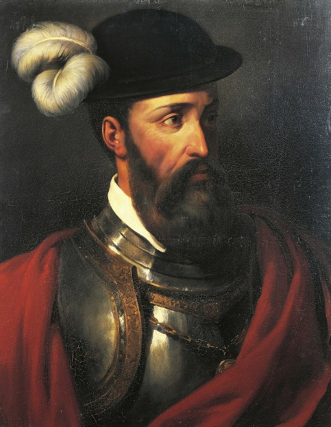
Charles’ accession was closely followed by the expansion of Spanish territories in the New World. Earlier settlements in the Caribbean, particularly on Hispaniola and Cuba, were extended by the invasions of the Aztec Empire in Mexico (which became known as ‘New Spain’) by Hernando Cortes (1519-1521) and then of the Inca Empire in the Andes (known as ‘New Castile’ and then ‘Peru’) by Francisco Pizarro (1532). Charles was sent some of the treasures of Montezuma, the Aztec ruler, by Cortes from Mexico. The gold shields and feathered cloaks, the sun of gold and moon of silver, the coats of armour and fine clothing, had gone first to Spain and then on to Brussels where Charles was by late 1520. They impressed all who saw them with their beauty, ingenuity and value. Albrecht Durer wrote: ‘In all my life, I have seen nothing that rejoiced my heart so much as these things’. Charles and Isabella met both conquistadores in 1529, shortly before travelling to Italy for his coronation. Cortes wished to be reinstated as governor in ‘New Spain’ but had to be content with being appointed military commander. Pizarro had returned to Spain to put his case for a third expedition to the Inca Empire. Charles was impressed and the following year Isabella gave permission for the venture.
![19th century portraits of Hernando Cortes (left) José Salomé Pina, Prado, Madrid. [Public domain], via Wikimedia Commons and Francisco Pizarro (right) Annable-Paul Coutan, Palace of Versailles. [Public domain], via Wikimedia Commons.](https://www.emperorcharlesv.com/wp-content/uploads/2018/09/Hernando-Cortes_1.jpg)
19th century portraits of Hernando Cortes (left) José Salomé Pina, Prado, Madrid. [Public domain], via Wikimedia Commons and Francisco Pizarro (right) Annable-Paul Coutan, Palace of Versailles. [Public domain], via Wikimedia Commons.
In 1493 Pope Alexander VI (Rodrigo Borgia) had issued a papal bull giving Spain rights to newly discovered lands to the west of a pole to pole line 100 leagues west of the Portuguese Cape Verde islands. This line was shifted a further 270 leagues to the west the following year by the Treaty of Tordesillas between Spain and Portugal (who gained the rights to lands to the east of the line). Spanish control of central and southern America (except Brazil) was thus agreed by the European powers. The eventual consequences of this colonisation were the shipping of vast amounts of bullion from the Americas to Spain, the exploitation of the indigenous population as a cheap labour force and a catastrophic decline of their numbers as they succumbed to both the ‘European’ diseases, particularly smallpox and measles, to which they had no natural resistance, and the harsh conditions in which they worked.
There were two key motives for the colonisation: to spread Christianity and to gain riches. How such small forces were able to defeat these large empires has been well described and explained elsewhere. The promise of land and riches meant that there was no shortage of adventurers and settlers from Spain, many from the lesser nobility who lacked a role in Spain with the completion of the Reconquista, and especially from the poorer regions such as Extremadura. Charles and his predecessors had not been willing to share in the costs of opening up these ‘new lands’, but they were naturally keen to share in the profits to be made from the growing trade and from the increasing amounts of gold and silver being produced. The trade through the port of Seville, which was given a monopoly, could be controlled and taxed. In addition, the crown had the right to one-fifth of the bullion from the annual treasure conveys, formed to protect the cargo from the attacks of English and French ‘pirates’. The approximate annual value to Charles of the bullion arriving in Spain was 40,000 ducats in the 1520s, rising to 280,000 ducats in the 1540s and 871,000 in the early 1550s.
The Government of the Spanish Colonies
Although having no direct role in the colonisation of these lands, once they were part of Castile Charles could not abdicate all responsibility for them. The religious, moral and ethical issues that Charles attempted to resolve resonate through the centuries, right up to the present time. The existence of a large population with a completely different culture created practical and moral problems.1 How were these lands to be ruled and what methods should be used to convert the native inhabitants to the ‘true faith’? Should the focus be on saving their souls or on the exploitation of the natural resources found there?2 On the death of Juan Rodriquez de Fonseca, the Bishop of Burgos, who had previously had responsibility, the Council of the Indies was established in 1524 to oversee the administration of these new territories. This was always going to be a difficult task given the conflicting priorities, the distances involved, the slowness of communications, delays in responding to petitions, and the independent nature of the conquistadores and settlers.
There was an underlying conflict in the responsibilities of European rulers generally (in this case specifically the Spanish crown) to the establishment of colonies and the treatment of the inhabitants. On the one hand Charles had a duty to care for all his subjects (the ‘real consciencia’). On the other he was expected to develop and exploit the new lands for the benefit of the country and the individual settlers who had risked much in the colonisation (the ‘real servicio’)3, especially if the crown delegated to the settlers the important role of converting the population. The perceived self-interest of the settlers would mean that little attention would be given to humanitarian concerns if left ungoverned.
The Treatment of the Native Inhabitants
Queen Isabella had forbidden the introduction of slavery at the time of the first settlements. Instead the ‘encomienda’ system was introduced, giving settlers control over local native communities, together with the responsibilities of converting them to Christianity and ‘protecting’ them, in return for their use as cheap labour in the exploitation of local resources. Efforts were made to control the actions of the settlers. Charles requested that much care should be taken to explain to the inhabitants in their own language the consequences of resistance and that force should only be used as a last resort. However as early as 1526 the Council of the Indies recognised the ‘greed of some of our subjects’ and the abuses of the native population that were taking place – excessive labour, lack of food, cruel punishments.
Most were employed on the land where they worked very long hours for little reward. Despite efforts to limit the number of workers in an ‘encomienda’ to 300, most were large, often with 6,000 workers. Those inhabitants that resisted were enslaved along with their families. Little effort was made to convert them by education. Others working in mines experienced extremely hazardous conditions. The most famous of all South American silver mines was at Potosi. Opened in the 1540s, in modern day Bolivia, it has become a by-word for exploitation and suffering, with dangerous mining methods and a refining process which caused thousands of deaths through mercury poisoning. For the settlers and mine owners in the Americas, as well as the Spanish crown, the rewards were considerable.
![A 1552 image of Potosi. At its peak the settlements around the silver mines had 160,000 inhabitants. By Pedro Cieza de León (Crónica del Perú, 1552) [CC BY-SA 4.0 (https://creativecommons.org/licenses/by-sa/4.0)], via Wikimedia Commons.](https://www.emperorcharlesv.com/wp-content/uploads/2018/09/A-1552-image-of-Potosi.png)
A 1552 image of Potosi. At its peak the settlements around the silver mines had 160,000 inhabitants. By Pedro Cieza de León (Crónica del Perú, 1552) [CC BY-SA 4.0 (https://creativecommons.org/licenses/by-sa/4.0)%5D, via Wikimedia Commons.
The introduction of a royal ‘Audience’ (a group of high ranking royal officials), to act as the highest court of appeal, did help to provide some protection for indigenous people who wished to challenge the way they were treated. In theory they could have access to the legal system without having to pay for the cost of litigation.4 The appointment of members of the highest Spanish nobility as Viceroys of New Spain – Antonio de Mendoza (1535 – 1550) and Luis de Velasco (1550 – 1564) – gave more status to the role; these were people whose decisions had to be taken notice of.5
Nevertheless abuses continued, recorded by Bartolome de las Casas, a Dominican priest who had experience of the colonisation from its early days. In his ‘History of the Indies’ and ‘A Short Account of the Destruction of the Indies’ he outlined the murder, expropriation and exploitation of the population and argued the case for improving their welfare and allowing only peaceful conversions. Such was the hostility to his ideas amongst the settlers that he had to travel to the Spanish court to put his case. His work persuaded Charles to support the ‘New Laws’ of 1542, preventing further enslavement and forbidding the inheritance of ‘encomienda’, which would end the system within a generation. Such was the reaction of the settlers with protests and riots, that concessions were made whereby ‘encomienda’ could be passed on once, thus continuing the system.
The Disputation of Valladolid in 1550
In Spain, de las Casas’ arguments did not go unanswered. Juan Gines de Sepulveda, a philosopher, humanist and Greek scholar made the case that it was legitimate to wage war on the native population. Charles requested a panel of jurists to hear the opposing cases and reach conclusions about their proper treatment. They met in the Colegio de San Gregorio in Valladolid (see Chapter 23 in ‘Charles V:Duty and Dynasty: The Emperor and his Changing World‘). Sepulveda argued that there was a right to rule over ‘inferior’ peoples. Using Aristotle’s ideas on ‘natural slavery’, he believed that because they were ruled by ‘passion’ rather than ‘reason’ they were inferior barbarians. Since they committed crimes against natural law, such as idolatry and cannibalism, and also themselves killed ‘innocents’ in human sacrifice, it was Spain’s duty to punish and put a stop to these crimes. In addition, they were infidels who needed to be instructed in the ‘true faith’. As many of them would not willingly undergo such changes, it was ‘just’ to carry out a war of conquest in order to pave the way for preaching. The indigenous peoples had to be first subdued and then converted.6
De las Casas responded that they were not ‘barbarians’. They were certainly non-Christian, but met most of Aristotle’s criteria of civilisation – they lived in harmonious societies, had expressive languages, and the ‘unnatural crimes’ were committed by a small minority. The people of the Indies were born free, regardless of papal consent for Spain to rule the area, and therefore there was no natural right of conquest in name of higher civilisation or superior faith. He argued that ‘punishment’ required jurisdiction and that Charles or the Pope had no such jurisdiction over infidels (as opposed to heretics). While he agreed that human sacrifice was evil, he argued that war, with its numerous deaths of even more ‘innocents’, was a greater evil, and went on to question how God could wish his Church to kill pagans in war in order to save them from their own ignorance. True conversion, he argued, required peace and freedom of choice, and forced conversions had no part to play.
There was no attempt at compromise. Both sides claimed ‘victory’ and no final judgement or decision was ever issued. Over time the encomienda system was reformed but essentially the pre-colonial inhabitants remained an exploited cheap labour force. The catalogue of abuses produced by de las Casas was in future to be used as evidence of cruelty and inhumanity by other countries whenever they wished to criticise Spanish rule. This ignored the fact that those countries were equally culpable of appalling treatment of native inhabitants in their own colonies, but never perhaps had it documented so well.
The Empire of Charles V, also known as the Habsburg Empire, included the Habsburg hereditary lands in central Europe, the kingdoms of Spain, the colonial Spanish Empire, the kingdom of Naples, the Habsburg Netherlands and other territories and principalities across Europe. It is sometimes considered to include, in addition, the kingdoms of Bohemia and Hungary which were held by Charles’s brother Ferdinand during his reign. Charles was also Holy Roman Emperor and, as such, was suzerain of the states of the Holy Roman Empire.
The empire was the first to be labelled as “the empire on which the sun never sets“, a term used to describe several global empires throughout history. The lands of the empire had in common only the monarch, Charles V, while their boundaries, institutions, and laws remained distinct.
Charles V, the Holy Roman Emperor, played a key role in the Spanish conquest of the Aztec Empire. He was the king of Spain at the time, and Hernán Cortés, who led the conquest, acted in Charles’s name. Charles V was the ruler of a vast empire that included Spain, much of Europe, and various territories in the Americas.
 Rosamond Press
_Cath%C3%A9drale_Sainte-C%C3%A9cile_-_Tr%C3%A8sor_-_Portrait_du_pape_Sixte_V_-_PalissyIM81001477.jpg)


Leave a comment