For three days I was preparing to nominate Mimi Farina to be the model for the new Pacifica. This morning I awoke to the news of a giant statue being erected near the Ferry building.
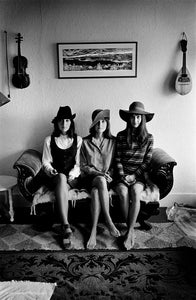
On this day, April 11m 2025, I propose a fifty foot statue be rendered and put on Treasure Island. This work will be modeled after Joan sitting and playing her guitar, something millions of people did all over the world. The face will be a composite of the three Baez. Sisters. The face of the guitar will reflect the golden sun setting in the West.
John Presco
Artist Marco Cochrane’s sculpture “R-Evolution” is installed in Embarcadero Plaza in front of the Ferry Building on Tuesday.Craig Lee/The Examiner
Joan Baez 1962
Ralph Crane The LIFE Picture Collection/Shutterstock
From her performance at the landmark civil rights march from Selma to Montgomery in 1965 to her advocacy for migrant farm workers and gay rights to her denunciation of torture and the death penalty, Baez has championed human rights both on- and offstage. Like two of her major influences, Pete Seeger and Marian Anderson, Baez demonstrated how fame can be used as a platform for activism.
These portraits of Baez by LIFE photographer Ralph Crane were taken in 1962, when she was a mere 20 years old, near her home in Carmel, Calif. “Standing on the shore,” the description in LIFE read, “she evokes the same wistful intensity that goes into her rare but luminous recordings of sweet laments.” Some of them were sweet laments, to be sure, but half a century later it’s clear that her music has been so much more.
Liz Ronk, who edited this gallery, is the Photo Editor for LIFE.com. Follow her on Twitter at @LizabethRonk.
Joan Baez 1962
Ralph Crane The LIFE Picture Collection/Shutterstock
Joan Baez 1962
Ralph Crane The LIFE Picture Collection/Shutterstock
Joan Baez 1962
Ralph Crane The LIFE Picture Collection/Shutterstock
Joan Baez 1962
Ralph Crane The LIFE Picture Collection/Shutterstock
Joan Baez 1962
Ralph Crane The LIFE Picture Collection/Shutterstock
Joan Baez 1962
Ralph Crane The LIFE Picture Collection/Shutterstock
Joan Baez 1962
Ralph Crane The LIFE Picture Collection/Shutterstock
Did Beryl Buck ever meet, or see, Mimi Farina, who was a good friend of my ex? Where are Beryl’s things and letters? Did she ever buy a ticket to go see Bread&Roses?
Above is a pic of where B&R was located in Mill Valley in Marin Couty. Mimi lived on Mount Tamalpais. Mimi created the ideal charity. She is the model for all Buck Foundations. Instead we get a dude playing with his expensive toys.
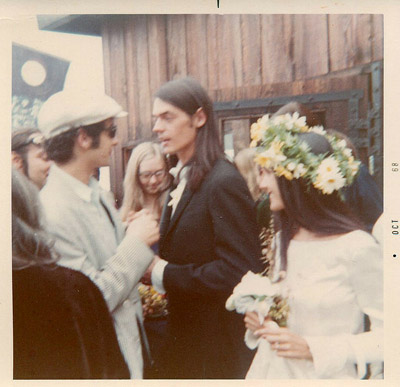
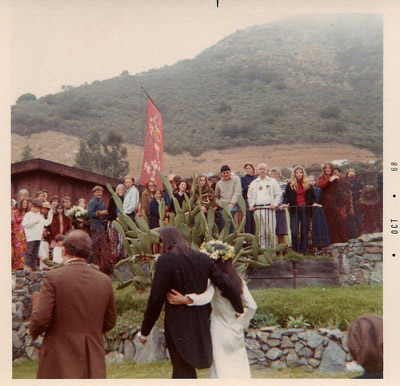
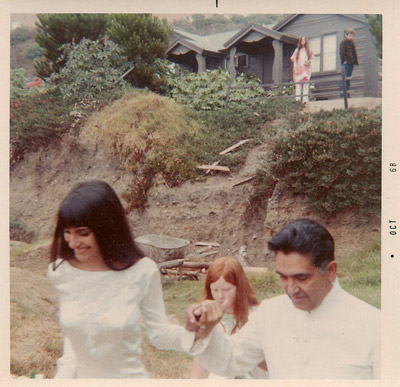
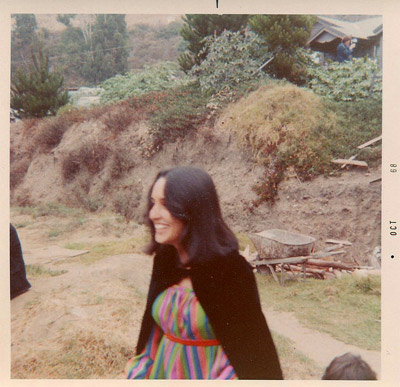
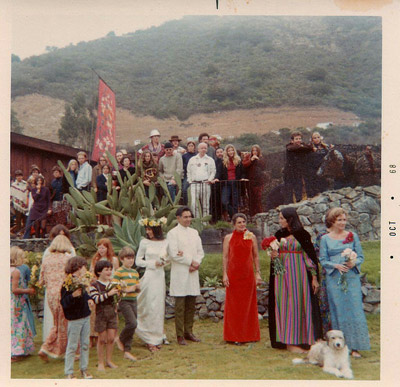
I just discovered this film that may be the West Coast’s answer to Woodstock. Mimi farina got remarried for this event. It was filmed by Baird Bryant who filmed ‘Gimme Shelter’ a film about Altamont that was the Hippie Doomsday. I was Chris Wandel’s roommate when Peter Shapiro dropped in and asked me if I was going to see the Stones. I warned him not to go because I had a bad feeling. Consider my musical ‘Love Dance’ a.k.a.’My Beautiful Blue Bicycle’ Mimi was a dancer.
Jon Presco
Wenzell Baird Bryant (Columbus, Indiana, December 12, 1927 – Hemet, California, November 13, 2008) was an American filmmaker. He is best known as the cameraman on the Albert Maysles film Gimme Shelter who filmed the fatal stabbing of Rolling Stones concertgoer Meredith Hunter by Hells Angel Alan Passaro at the Altamont Free Concert in December 1969.
As a cinematographer, Bryant also worked on Easy Rider, filming the famous LSD scene with Dennis Hopper in a New Orleans cemetery. He was also a writer, living in 1950s Paris with William S. Burroughs, Allen Ginsberg, and Jack Kerouac and writing Play This Love With Me (1955) pseudonymously. He also wrote the first translation of Pauline Réage’s erotic novel Story of O.
He studied at Deep Springs College and Harvard University.[1][2]
Celebration at Big Sur
Celebration at Big Sur
Directed by Baird Bryant, Johanna Demetrakas Produced by Ted Mann, Carl Gottlieb Cinematography Baird Bryant, Johanna Demetrakas, Gary Weis, Peter Smokler, Joan Churchill[1] Distributed by 20th Century Fox Release date(s) 1971 Running time 82:24[2] Language English Celebration at Big Sur (also known simply as Celebration) is a film of the 1969 Big Sur Folk Festival in Big Sur, California, featuring Crosby, Stills, Nash and Young (CSNY), Joan Baez, Joni Mitchell and others. Released in 1971, the film was directed by Baird Bryant and Johanna Demetrakas. A young Gary Weis was among the cinematographers;[3] other members of the camera and sound crew also went on to become famous in their fields, including Peter Smokler,[4] Peter Pilafian,[5] and Joan Churchill.[6] As of 2011, the film has finally been released as at least a Region 1 DVD. The festival, one in an annual series of concerts held on the grounds of the Esalen Institute in Big Sur from 1964 to 1971, was held on the weekend of September 13–14, 1969,[7] only one month after the famous and considerably larger Woodstock Music & Art Fair, which is referred to repeatedly. Celebration at Big Sur did not receive the same critical acclaim as the 1970 Woodstock film.[8]
Celebration at Big Sur (also known simply as Celebration) is a film of the 1969 Big Sur Folk Festival in Big Sur, California, featuring Crosby, Stills, Nash and Young (CSNY), Joan Baez, Joni Mitchell and others. Released in 1971, the film was directed by Baird Bryant and Johanna Demetrakas. A young Gary Weis was among the cinematographers;[3] other members of the camera and sound crew also went on to become famous in their fields, including Peter Smokler,[4] Peter Pilafian,[5] and Joan Churchill.[6] As of 2011, the film has finally been released as at least a Region 1 DVD. The festival, one in an annual series of concerts held on the grounds of the Esalen Institute in Big Sur from 1964 to 1971, was held on the weekend of September 13–14, 1969,[7] only one month after the famous and considerably larger Woodstock Music & Art Fair, which is referred to repeatedly. Celebration at Big Sur did not receive the same critical acclaim as the 1970 Woodstock film.[8]
Contents [hide] 1 Performances 1.1 Crosby, Stills, Nash & Young 1.2 Joni Mitchell 1.3 Joan Baez 1.4 Others 2 Songs performed 3 Notes 4 External links Performances[edit] The concert occurs on a low stage by the Pacific Ocean, which the audience faces. Musical performances dominate the film, with footage of surrounding occurrences interspersed and montaged into the music sequences. Crosby, Stills, Nash & Young[edit] The film includes early footage of Neil Young,[9] who had recently appeared at Woodstock with Crosby, Stills & Nash, but refused to be filmed. Here, fortified by session drummer Dallas Taylor and Motown bassist Greg Reeves, CSNY perform Young’s “Sea of Madness” and “Down by the River”. Perhaps the film’s most famous scene is an altercation between Stephen Stills and a heckler.[10] Joni Mitchell[edit] Mitchell, who did not appear at the Woodstock Festival, performs the song “Woodstock” prior to any album release, first attempting to teach the audience to sing the melodically complicated refrain. Ironically, Mitchell would later develop a well-known distaste for festival gigs, but in this performance her enthusiasm is evident. Mitchell talks about having spotted whales off the coast, and is generally seen with then-boyfriend Graham Nash of CSNY. She also sings “Get Together” with members of Crosby, Stills & Nash in a seemingly impromptu jam. Although Mitchell had made earlier televised appearances, this may be her earliest filmed performance.[11] Joan Baez[edit] Baez was a Big Sur-festival regular whose folk-music workshop at Esalen in 1965 helped attract pop/rock acts later to the festival.[12][clarification needed] She is featured prominently throughout the film. Celebration begins with Baez opening the festival with Bob Dylan’s “I Shall Be Released” and closes with her leading a large crowd in singing “Oh Happy Day” in the event’s finale. She also sings two of her own compositions, “A Song for David” and “Sweet Sir Galahad”, during the course of the film. Others[edit] In addition to CSNY, Baez and Mitchell, other performers featured in Celebration included John Sebastian, Dorothy Combs Morrison and The Combs Sisters, Mimi Fariña, Carol Ann Cisneros, Julie Payne, Chris Ethridge and The Struggle Mountain Resistance Band.[8] While Ruthann Friedman, The Flying Burrito Brothers and The Incredible String Band performed at this event,[7][13] they do not appear in the film. In the opening scene the filmmakers attempt to interview local patrol police, but fail to get permission. Songs performed[edit] 1. “I Shall Be Released” – Baez 2. “Mobile Line” – Sebastian with Stills offstage 3. “Song for David” – Baez shown rehearsing offstage, with stage performance of same song cut in 4. “All of God’s Children Got Soul” – Morrison and the Combs Sisters 5. “Sea of Madness” – CSNY 6. “4 + 20” – Stills solo performance Stills introduces this number discussing his interaction with a heckler in the previous scene 7. “Get Together” – Mitchell with Crosby, Stills & Nash and Sebastian 8. “Put a Little Love in Your Heart” – Morrison and the Combs Sisters incomplete non-musical footage of nude sauna, audience happenings 9. “Swing Down Sweet Chariot” – various offstage, incomplete 10. “Rainbows All Over Yours Blues” – Sebastian 11. “Woodstock” – Mitchell non-musical footage of self-identified “freak” with Woodstock-themed bus 12. “Red-Eye Express” – Sebastian with Stills 13. “Changes” – Fariña and Payne with Stills incomplete 14. “Malagueña Salerosa” – Cisneros 15. “Rise, Shine, and Give God the Glory” – The Struggle Mountain Resistance Band incomplete 16. “Down By the River” – CSNY incomplete, over 7 minutes folk musician improvising outside the festival 17. “Sweet Sir Galahad” – Baez 18. “Oh Happy Day” – Morrison and the Combs Sisters with Baez opens with Baez rehearsing same number with Morrison
He was Thomas Pynchon’s roommate, he hung out with Bob Dylan and wrote an American cult classic, yet Fariña is a name few know outside of literary circles. That’s something that should change
On 30 April 1966, at around lunchtime, Richard Fariña sat down at a table at the Thunderbird bookstore and cafe in Carmel, California, to sign copies of his freshly minted first novel Been Down So Long It Looks Like Up To Me, published just two days before.
The sky was blue and California-cloudless, and Fariña, 29, had organised a surprise 21st birthday party for his wife Mimi, the sister of Joan Baez. Fariña signed copy after copy of his novel, the dedication page of which read: “This one is for Mimi.”
A little after seven that evening, Richard Fariña was dead, a motorcycle accident on the winding Carmel Valley Road had claimed the life of an artist bursting with potential, at the very beginning of his career.
Richard Fariña was born in Brooklyn, New York, in 1937 to an Irish mother and a Cuban father. He studied at Cornell University – sharing a room with Thomas Pynchon – and after leaving Cornell in 1959 he became a fixture of the nascent folk scene in Greenwich Village, befriending Bob Dylan and through him meeting Joan Baez and her sister Mimi, who Fariña married in 1963 when she was just 17.
Fariña and Mimi moved into a cabin in Carmel and made beautiful music together – quite literally, writing songs on guitar and dulcimer and releasing two albums in 1965, Celebrations for a Grey Day and Reflections in a Crystal Wind. If you know any of their songs, it’s likely to be Pack Up Your Sorrows, recorded since by the likes of Joan Baez, Johnny Cash and Loudon Wainwright III.
When I first read Been Down So Long It Looks Like Up To Me, on the recommendation of a friend back in the dog-end days of the 80s, I’d never heard of Fariña and was unaware of his folk scene fame. All I had to go on was my Penguin paperback (joyfully battered in front of me, right now), with a mischievous-looking curly-haired Fariña smiling toothily from the cover, and a brief biography at the front of the book that raised as many questions as it answered.
“At 18 he worked with members of the Irish Republican Army but eventually had to leave the country. Much the same happened in Cuba, which he visited often when Fidel Castro was still in the mountains and again during the heavy fighting in Santa Clara and while the revolutionary army was entering Havana.”
More information on Fariña was hard to come by in those pre-internet times, so I had to content myself with the book. But oh, what a book. To call it perhaps the finest example of the American campus novel ever written does it a huge disservice. It bridges the gap between the beats and the hippies and the politically charged student protests, it’s drugs and sex and campus shenanigans with a puff of nightmarish magical realism and the long shadow of Vietnam. And at its heart is Gnossos Pappadopoulis, a libertine force of nature built on myth and rumour, who washes into Athené, a thinly disguised Cornell University, on a tide of disinformation.
“… rumors have him dead of thirst, contorted on his back at the bottom of Bright Angel Trail, eyes gnawed out by wild Grand Canyon burros; fallen upon by tattooed pachucos and burned to death in the New Mexico night by a thousand cigarettes dipped in aqua regis; eaten by a shark in San Francisco Bay, a leg washed up in Venice West.”
But Gnossos is alive, and how. Crashing back into student life, he takes rooms and warns his new housemate: “I’m a bit of a bore about noise.”
“You don’t like it?” she asks.
“He makes it,” helpfully supplies his friend.
There aren’t many books about Richard Fariña, but even if there were a hundred, the best of them would still be David Hajdu’s Positively 4th Street, which braids together the narratives of Fariña, Mimi, Joan Baez and Bob Dylan. He says of Been Down So Long: “It’s exceptional. It’s a first-rate novel, it’s dynamic, it’s imaginative, it’s robust. In a way, it’s of a piece with Pynchon.”
But it also, in the creation of Gnossos Pappadopoulis, offers some clues as well as to the nature of Fariña and his own fascinating biography as a wanderer who threw in his lot with the IRA and Castro.
“Fariña had what you might call that James Dean mystique,” says Hajdu. “He had an acute sense of cool, and that isn’t to be belittled. That’s why he gravitated to music … he could tell that’s where the action was. And through sheer force of will he became a damn good songwriter. Take Hard Lovin’ Loser … you can take that as a manifesto for the quality of postwar songwriters. He was every bit as good as Gershwin, Cole Porter, you name it.”
Fariña, says Hajdu, had a determination to succeed and a desire to be famous. Which is why he created a carefully crafted mythology around himself, just as he had Gnossos do in the novel. “He was a serial fabulist,” says Hajdu. “He made up wild stories about his life. He created a persona, and in him you can see the mercurial identity we know so well in artists from David Bowie to Madonna to Lady Gaga.”
And, according to Hajdu, the stories about the IRA and Castro were just part of the persona. “I interviewed the family he stayed with in Ireland. He was just a quiet kid, didn’t do anything like that. And he just couldn’t have been even old enough to fight in the mountains with Castro.”
Half a century after his death, there are only a handful of people left who knew Fariña personally. The folk singer Judy Collins is one, someone who was extremely close to the man his friends called Dick. Speaking from New York as she waits for her flight to Nashville, she tells me: “The first time I met him was in 1960 at a folk festival near New Haven. He was married to his first wife Carolyn Hester at the time. He grabbed hold of me and proceeded to sing me two or three songs. It was just dazzling.”
She remembers Fariña as being “very dramatic, very impetuous”. Collins says: “At one time I was going through a very difficult period and having a custody battle over my son and Dick was saying: ‘Let’s go get him! Let’s go get him now.’ He was always ready for a fight.”
Collins wrote songs with Fariña and Mimi – “They were spellbinding together,” she says of the couple – and had her last recording session with them in the month that he died. It was that impetuousness, that sense of the dramatic, that led him to get on the back of a red Harley-Davidson Sportster owned by Willie Hinds, a friend of a friend who Fariña barely knew but who was persuaded by the exuberant writer to take him for a spin.
For his book, David Hajdu took Mimi – she died of cancer in 2001 – back to the winding roads where Hinds lost control of the bike when Fariña, unused to riding, failed to lean properly into the corners and unbalanced the Harley, throwing it into a barbed wire fence post. Hinds survived, though was badly injured; Fariña died outright.





 Rosamond Press
Leave a comment