

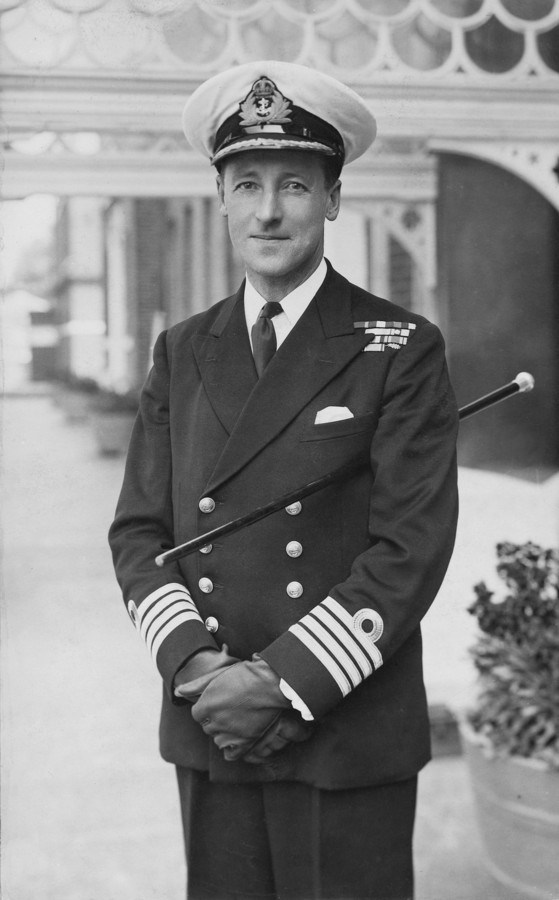
This blog is a record of my fictional character, Miriam Starfish Christling, becoming manifest in the person of Shoshana Chatfield, especially in her firing! The Royal Janitor, starring Victoria Rosemond Bond, and her bodyguard, is now completely in the realm of prophetic literature – and them some! I might be the author of a Think Tank, that Ian Fleming founded. A War of Words is getting very capable military personnel fired. Shoshana headed a NATO branch of the military, and had to be aware of the British Defense Staff Washington, that was headed by Admiral Ian Easton.
John Presco
Ian Easton (Royal Navy officer)
Add languages
| Sir Ian Easton | |
|---|---|
| Born | 27 November 1917[1] Tenby, Pembrokeshire, Wales |
| Died | 14 June 1989 (aged 71)[2] Freshwater, Isle of Wight, Hampshire, England |
| Allegiance | United Kingdom |
| Service / branch | Royal Navy |
| Years of service | 1931–1978 |
| Rank | Admiral |
| Commands | Royal College of Defence Studies (1976–78) HMS Triumph (1968–69) HMAS Watson (1962–64) |
| Battles / wars | Second World War |
| Awards | Knight Commander of the Order of the Bath Distinguished Service Cross |
Admiral Sir Ian Easton, KCB, DSC (27 November 1917 – 14 June 1989) was a Royal Navy officer who held various command positions in the 1970s.
Naval career
[edit]
Easton joined the Royal Navy in 1931 and qualified as a pilot at the start of the Second World War, during which he saw active service on aircraft carriers.[3] On 4 January 1941, flying a Fairey Fulmar of 803 Naval Air Squadron from HMS Formidable during a raid on Dakar, he force landed with his aircrewman Naval Airman James Burkey and was taken prisoner and held by the Vichy French at a camp near Timbuktu, until released in November 1942.[4]
Easton was appointed Assistant Director of the Tactical and Weapons Policy Division at the Admiralty in 1960. He was seconded to the Royal Australian Navy as captain of HMAS Watson in 1962.[3] He went on to be Naval Assistant to the Naval Member of the Templer Committee on Rationalisation of Air Power in 1965, Director of Naval Tactical and Weapons Policy Division at the Admiralty in 1966 and Captain of the aircraft carrier HMS Triumph in 1968.[3] After that he was made Assistant Chief of Naval Staff (Policy) in 1969, Flag Officer for the Admiralty Interview Board in 1971 and Head of British Defence Staff and Senior Defence Attaché in Washington, D.C. in 1973.[3] He last posting was as Commandant of the Royal College of Defence Studies in 1976: he commissioned armourial bearings for the college which were presented during a visit by the Queen in November 1977.[5] He retired in March 1978.[6]
Keywords
China, PRC, China Maritime Studies Institute, CMSI, People’s Liberation Army, PLAN, Taiwan, Formosa, World War II, Causeway, Operation Causeway
Recommended Citation
Easton, Ian, “China Maritime Report No. 42: Invasion Plans: Operation Causeway and Taiwan’s Defense in World War II” (2024). CMSI China Maritime Reports. 42.
https://digital-commons.usnwc.edu/cmsi-maritime-reports/42
Easton lived in Taiwan and China for five years, worked as a translator for Island Technologies Inc. and the Foundation for Asia-Pacific Peace Studies (亞太和平研究基金會) in Taipei, conducting research with the Asia Bureau Chief of Defense News there. He lectured at the U.S. Naval War College and National Defense Academy of Japan and worked as a China analyst at the Center for Naval Analyses. During summer 2013, he was a visiting fellow at the Japan Institute of International Affairs in Tokyo. At the Project 2049 Institute, his research focused on quadrilateral defense and security issues involving the U.S., China, Japan, and Taiwan.[1]
From Wikipedia, the free encyclopedia
| Former names | Imperial Defence College |
|---|---|
| Motto | “To prepare senior officers and officials of the United Kingdom and other countries and future leaders from the private and public sectors for high responsibilities in their respective organisations, by developing their analytical powers, knowledge of defence and international security, and strategic vision.” |
| Type | Senior military college |
| Established | 1927 |
| Parent institution | Constituent college of the Defence Academy of the United Kingdom |
| Commandant | Lieutenant General Sir George Norton |
| Location | Seaford House, London, United Kingdom |
| Campus | Urban |
| Website | www.da.mod.uk/study-with-us/colleges-and-schools/royal-college-for-defence-studies |
The Royal College of Defence Studies (RCDS) instructs the most promising senior officers of the British Armed Forces, His Majesty’s Diplomatic Service and Civil Service in national defence and international security matters at the highest level, to prepare them for the top posts in their respective services. It forms part of the Defence Academy of the United Kingdom, and is its most senior and prestigious component. In addition, there are many overseas attendees from countries who are close allies of the United Kingdom.
The college is based in London. It was known as the Imperial Defence College from its foundation in 1927 until 1970.
History
[edit]
Following discussion in the Committee of Imperial Defence in June 1920, a cabinet committee under Winston Churchill, then Secretary of State for the Colonies, met in March 1922 and recommended the formation of the College as “the beginnings of a common brain for the three Services”.[1] The college was founded in 1927 as the Imperial Defence College and was located at 9 Buckingham Gate until 1939.[1] Its objective at that time was to instruct senior military officers in the defence of the British Empire, “to look at the problem of war as whole and not merely from a land, or sea, or air point of view.”[1] In 1946, following the end of World War II, the college reopened at Seaford House, Belgrave Square and members of the United States Armed Forces started attending the course for the first time.[1]
In 1970, the IDC was renamed the Royal College of Defence Studies and several royal visits followed. The Queen and Prince Philip visited the college in 2007 to mark its 80th anniversary.[1]
RCDS course
[edit]
The RCDS mission is:”To prepare senior officers and officials of the United Kingdom and other countries, and future leaders from the private and public sectors, for high responsibilities in their respective organisations, by developing their analytical powers, knowledge of defence and international security, and strategic vision.”[2]
RCDS forms a part of the Defence Academy of the United Kingdom. In fulfilment of its mission, the college runs one course a year, from September to July.[3] As of 2024, each course is attended by approximately 110 full-time members.[4] Attendees are military officers of Colonel/Brigadier or equivalent rank, and also include Home Office and Ministry of Defence civil servants, Foreign Office diplomats, police officers and a few representatives from the private sector.[3] All members would have been selected to attend the course on the strength of their potential to progress to high positions within their professions.[3]
The course composition has been progressively widened to include members from nearly 50 overseas countries per year,[3] who are invited by the Ministry of Defence through diplomatic channels.[4] Graduates of the college are entitled to the post-nominal letters rcds, while prior to 1970 the post-nominal letters idc were used.[5]
Since 2001, course members have had the option of studying in a joint programme that leads to an MA in International Security and Strategy from King’s College London.[3][6]
Commandants
[edit]
Main article: Commandant Royal College of Defence Studies
The College is led by the Commandant, currently Lieutenant General Sir George Norton. The Commandant leads the Senior Directing Staff of the College, who are in effect the faculty and are a mixture of active and retired military officers, diplomats and civil servants.[7][8][9]
Alumni
[edit]
See also: Category:Graduates of the Royal College of Defence Studies
Faculty
[edit]
See also: Category:Academics of the Royal College of Defence Studies
Chatfield is a toponymic surname of English origin with Old English roots, first appearing in the region of Sussex.[1][2] Records indicate that the first people to bear this name were from a location named Catsfield, in Southern England.
Etymology
[edit]
The surname Chatfield can be traced to the village of Catsfield in East Sussex. The first recorded instance of this name is William de Cattefeld, found within tax records from the area in the early 1300s.[3] Since the surname was most likely granted as a byname, the origin of the name Chatfield is directly tied to the etymology of the village itself. Several theories currently exist as to how the village of Catsfield was named.
The earliest record of Catsfield comes from the Domesday Book, in which the village is referred to as Cedesfelle.[4] It’s believed that Catsfield is combination of two Old English words, the first being Catte and the second being Feld, which translates to, “field, pasture, plains, or open country“.[5] More specifically, the word refers to an uncultivated land without forests.[2]. There has been some speculation as to the true meaning behind the word Catte.
Firstly, the suspected origin of Catte is that it was derived from a personal name of Anglo-Saxon origin. The namesake of Catsfield, however, is also subject to debate. The leading theory is that the village church, now called The Church of Saint Laurence, was initially constructed in the name of, or later dedicated to, Saint Cedd or his brother, Chad of Mercia. The name may also be derived from an obscure saint, Ceatta of Lichfield, though this may simply be another name for Chad of Mercia, as there are few records containing the former name and Saint Chad was also a Bishop of Lichfield.[6]
Secondly, the origin of Catte could be traced back to an ancient Germanic tribe named the Chatti or Catti that is known to have settled in Sussex. Their settlement may have been named Cattefeld, which could have literally meant, plains of the Catti. Since the word catte is an old English feminine word for cat, it could be that the name may have changed to Chatfield following the Norman Conquest. From old English, the words Catte + Feld may have transformed over time into their Frankish equivalent, Chat + Field.
Coat of Arms
[edit]
A coat of arms was granted to the Chatfield family in 1564 and recorded at the College of Arms in London, England.[7]
The crest is a heraldic antelope’s head of erased argent, ducally gorged – meaning with a ducal crown around its neck. The antelope symbolizes unwavering fidelity while argent is emblematic of purity.
The escutcheon is composed of an argent charge displaying a sable griffin and a purple chief displaying three argent scallop shells. The griffin symbolizes both temporal and spiritual authority, as in the case of early church barons, while sable is indicative of antiquity. The scallop shells indicate that ancestors of the family made a trip to the Holy Land.[3]
Motto
[edit]
The Chatfield family motto is set on purple beneath the coat of arms. It reads, in Latin, “fidus ad extremum”, which translates to “faithful to the end”.[3][7]
The Day James Bond Movies Died

10 hours ago
7 min read

A case can be made that the recent announcement of Amazon gaining creative control of the James Bond series from producers Barbara Broccoli and Michael G. Wilson, its caretakers of the last thirty years, should be welcome news. After all, there hasn’t been a new film since “No Time to Die” opened in 2021, and there have only been two in the last ten years. This is a series that once spewed out a new entry after another every couple of years like clockwork, including some of their very best. At times, it’s felt like the customary “James Bond will return” sign that appears at the end of each movie should have been substituted with something more accurate like “James Bond will return…more likely than not…maybe.”
In hindsight, it doesn’t seem like a coincidence that in “No Time to Die” the filmmakers did away not only with two of the series’ most memorable and longest standing characters (Felix Leiter and Blofeld) but also with 007 himself, even when the MacGuffin in turn provided more alternatives to wrap up the plot than in most every other entry in the history of the series. Looking back, Q, M, and Moneypenny were more than a bit lucky to make it all the way through that movie. And yet, considering how long and hard the producers had fought to secure exclusive rights to the character, as well to the Blofeld and SPECTRE names, the announcement still came as a shock.
At the end of the day, the only criteria to decide if this change of direction should be seen as good news would be identifying what exactly has distinguished the Bond series and how likely it is to remain the same way with this change of direction. There have surely been even more financially successful series than 007, like the “Star Wars” saga, but the longevity and constant quality standards of the Bond movies through twenty-five features and over sixty years remains unmatched. I don’t think that necessarily came from Ian Fleming’s character or its many qualities. Instead, it comes from the series’ caretakers acquiring the rarest and most valuable commodity in any occupation: a personal trade, a know-how about a very specific subject, and the way they made their films was the cinematographic equivalent of doing something by hand. They grew to see the Bond movies as something of their own, which was evident during the filming of “Spectre,” in which producer Barbara Broccoli personally dealt with every production department (direction, special effects, public relations). These producers were the equivalent of the Christian Bale character in “Ford v. Ferrari” who simply had grown to know more about cars than most anybody alive and made all the Ford company “yes men” look clueless.
This is not to say that Broccoli and Wilson didn’t make their share of mistakes during their tenure. Just remember the digital CGI wave from “Die Another Day” (surely the most unbearable moment in the series’ history). There was also the script of “Quantum of Solace” that was shot well before it was finished due the threat of a writer’s strike, resulting in the one almost unwatchable film in the series. And how about Hoyte van Hoytema’s yellow and gray cinematography from “Spectre” that flattened the feel of that movie for no good reason?

More importantly, it seems like they were starting to overthink their character. Since the success of “Skyfall,” which unpacked Bond’s roots (“orphans make the best recruits”), they went out of their way to provide a big surprise with each movie to the point where they unwillingly ended up imitating the Austin Powers satire of their very own series by suggesting that Bond and the villainous Blofeld were brothers. More recently, they went even further and decided to “jump the shark” by providing Bond with a daughter.
Whatever their mistakes, no one can say that Broccoli, Wilson and their predecessors didn’t know their subject. Just consider how hard it is to cast the main part and how they were able to pick six different Bonds that on different levels were all more than acceptable. Anybody can play Bruce Wayne or Clark Kent, but only the rarest of actors can play James Bond convincingly. More importantly, it was in large part because of a few seemingly questionable decisions that they made throughout the years that the series lasted so long. For all of their financially success, they mostly avoided the temptation of choosing to go bigger per se, otherwise the series would have become irrelevant a long time ago.
Think, for example, how, after completing some of their biggest and most successful entries like “Moonraker” and “Die Another Day,” they realized that they had gone over the top and proceeded to bring series back to Earth with the following feature, ignoring what audiences seemed to want at that time. Additionally, it didn’t make sense to let the actor go after the last Pierce Brosnan entry. He had made for a more than adequate Bond, all of his Bond films were extremely successful, and he was still relatively young. Add to this the fact that most everybody originally seemed to hate the idea of Daniel Craig taking over the part. It was hard not to believe they weren’t making a huge mistake, yet the end result was one of the true irreplaceable entries in the series (“Casino Royale”).
It’s hard to say why Broccoli and Wilson finally decided to step down. They must have had their reasons, but they must also have wondered whether they could keep providing something original. How many more worthy chases through land, water, snow, and air could they possibly come up with? If there is another similar series that has kept its standards through a very extended period of time (if not yet through a comparable number of entries) that would probably be the “Mission: Impossible” movies, but as consistently excellent as they have been, they have also reached a point where most of their action sequences have been based on something Bond has already done in the past, even if made with more recent, flashy technology.

There is no guarantee that Amazon will either succeed or fail. Unfortunately, there is more than enough precedent of corporations taking over a beloved movie series, and their main goal is to maximize the return of investment, their vision extending no further than a certain fiscal year. They will surely hire the best available people and churn out one movie and spin-off after another, with the presumption that lighting in a bottle is something that money will buy. This is exactly what happened with a “Star Wars” series that, in the seven years after being acquired by Disney, released more projects than George Lucas did in the first thirty-five. The same applies to the Disney live-action remakes of their animated classics, which truly deserve a case study of their own. Except for a very few notable exceptions, they have invariably felt repetitive, unoriginal, and unnecessary, lacking a cinematographic soul, if such a thing exists.
On its part, the James Bond series never felt tired under the watch of the two generations of producers, even in the face of surging competition like the Bourne movies that some predicted would take over, but instead ran out of gas after just a few entries. The same thing happened when “Lethal Weapon 2” greatly out-performed “License to Kill” head-to-head in the summer of 1989, but these Richard Donner features didn’t last very long either. Even the magic of the Indiana Jones films that took the medium by storm in the early ’80s didn’t remain for more than two or three entries.
When it comes to the Bonds, not only were they able to keep their standards decade after decade, but they also reached some of their highest highs in a couple of their twenty-something entries (“Casino Royale” and “Skyfall”). It’s hard to know what we can expect from Amazon’s 007 in the future, but if there is one thing that seems certain, it is that whatever comes will be completely different. Their makers will surely have every necessary resource to succeed. Still, with the recent of history of corporations taking over beloved film series, I suspect that the James Bond movies have been given an expiration date, even if yet unknown.
c
 Rosamond Press
.png)
Leave a comment