Capturing Beauty
I took a nap after my last post, and had a dream. I was in water with my sister, Christine. We were around two and three. Her hands and arms were dirty, and I washed them. Her face was dirty, also. I went to wash he face and she gave me she a joyous smile.
My sister loved me dearly. I was the human in her life that one applies all the categories of love to. Sometime we were like husband and wife, but we never consummated our marriage. We never touched each other, that way. I believe she wanted us o do this, and that was a problem, for all around us who needed our love. Who needed….to love us!
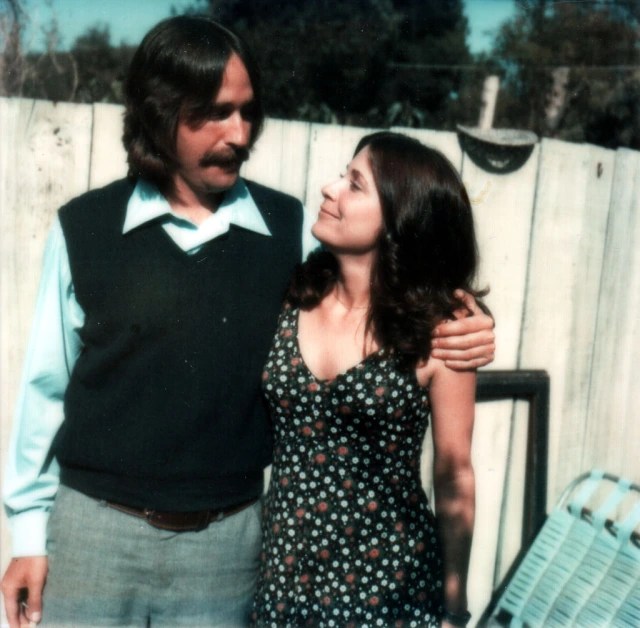
Christine Rosamond Benton loved me best when I became an artist. I suspect she took up art so nothing could come between us. She wanted to teach me her style after she became famous, so I would be famous. too.. She wanted us to paint side by side. She wanted us to live together again..
We own the strangest Wikipedia citation that is under a portion of her name. I know the editors had problems with her – with us! Is there something – INCESTUOUS – here, that must be avoided? Did we grow – too close? In the realm of un-attainable love, there is the……The Brother and the Sister! I was her protector! I was her…..mentor.
Here is the paragraph on the history of Gwen John that inspired me to author a James Bond novel. This is a family of creative souls, that I connected to Liz Taylor, and the Getty family, via Talitha Pol, who married John Paul Getty Jr., whose sister, Aileen, married Christopher Wilding, the son of Rosemond Taylor, who was a Dangerous Hollywood Star, who brings many famous thespians into the Getty Orbit of Art, including all the men who played James Bond! I put this together. I wonder…
Am I the embodiment of Augustus John? Liz grew up in his home. His father and uncle sold John’s art. How about Gwen’s art? Aileen purchased the Pitt Chateau, that looks like the Getty Villa.
To be continued
John was the aunt of the cellist Amaryllis Fleming, her brother’s illegitimate daughter with his other mistress Evelyn Fleming, whose husband Valentine was a Member of Parliament.[58] Other nephews and nieces included Sir Caspar, Vivien, Tristan de Vere Cole and Gwyneth Johnstone. Cole and Johnstone were also born from Augustus’s other relationships.[59][60][61]
Tristan John de Vere Cole (born 16 March 1935) is an English television director, now retired. He is believed to be the last-surviving illegitimate son of the painter Augustus John (1878–1961).
In his first career, he was a Royal Navy officer for seven years. His career as a television director included work on Z-Cars, Doctor Who, Emmerdale Farm, Howards’ Way and Bergerac.
Life
[edit]
His mother, Mavis Cole, met painter Augustus John (1878–1961) at the Café Royal in 1928, and agreed to model for him. In 1931 she married Horace de Vere Cole, a well-known Edwardian practical joker, then in 1932 she became the mistress of Augustus John. Cole was born in 1935 and is believed to be John’s last-surviving illegitimate son. Cole was brought up in the John household at Fryern Court, Fordingbridge, from the age of 18 months, partly by his mother, and then later by Dorelia McNeill.[1][2] Cole was educated for three years at Kelly College, Tavistock.
He married Diana Crosby Cook in 1962 and they had two children, including a son, London fine art dealer Cassian de Vere Cole (born 1966).[3] She died in 2025.[4] In 2000, he married lawyer Prudence Murdoch. She died in 2010.[5] He lives in Sutton Scotney, not far from his partner Anne Stow, eldest grandchild of Neville Chamberlain, a former prime minister, whose wife was a sister of Horace de Vere Cole.[6]
Through his father, Gwen John was Cole’s aunt, his half-siblings were cellist Amaryllis Fleming, Sir Caspar John, Gwyneth Johnstone, and Vivien John; Johnstone and Vivien also were artists in their own right. Only Caspar was born from his father’s marriage, and he later became prominent as an admiral also in the Royal Navy and First Sea Lord.[7][8][9][10][11]
Career
[edit]
From 1951, Cole trained for a naval career at the Royal Naval College, Dartmouth. He went on to serve as an officer in the Royal Navy from 1953 to 1960.[12]
After his return to civilian life, Cole worked at the Bristol Old Vic as assistant stage manager and actor,[13] before moving on to a career with BBC television.[citation needed]
In May 2024 it was reported that Cole had written the screenplay for the adventure thriller Storm Witch, an independent U.K./Ireland co-production, to be directed by David Blair and starring British actress Gemma Arterton.[14]
Work as television director
[edit]
- Z-Cars (episodes in 1968)[15]
- Doctor Who: The Wheel in Space (1968)[16]
- Take Three Girls (1969)
- Emmerdale Farm (1972–1973)
- Trinity Tales (1975)
- Angels (1976)
- Survivors (1977 episodes)[17]
- Secret Army (1979)
- Juliet Bravo (1980)
- The Spoils of War (1981)
- Howards’ Way (1985–1988)
- Rockliffe’s Folly (1988)
- Bergerac (1988–1992)
- Trainer (1992)
Work as film director
[edit]
- Orion’s Belt (1985)
- The Dive (1990)
Publications
[edit]
- With Roderic Owen, Beautiful and Beloved: the Life of Mavis de Vere Cole (Hutchinson, 1974)
Mavis Wheeler (née Mabel Winifred Mary Wright, also known as Mavis Cole, 1908 – 14 October 1970)[1] was an English artist’s model, the mistress of painter Augustus John, and the wife of prankster Horace de Vere Cole and archaeologist Sir Mortimer Wheeler. She came to public notice in 1954 when she shot her lover Anthony Vivian, 5th Baron Vivian.
Life
[edit]
Wheeler was born in 1908 in Woolwich, Greater London. She was secretive about her background, saying her mother had been “stolen by gypsies” as a child. Her father was a grocer’s assistant. At the age of 16, Wheeler was working as a scullery maid. During the 1926 United Kingdom General Strike, she hitchhiked to London carrying a golf club and took a job as nursery governess to a clergyman’s children in Wimbledon, London. The next year she was working as a waitress at Veeraswamy Indian restaurant in London.[2]
Wheeler became one of the bright young things of the 1920s, according to The Times.[3] She met the Welsh artist Augustus John at the Café Royal in 1928, when she was 19 and he was 50, and agreed to model for him.[4] He painted her portrait many times.
She also met John’s friend, the eccentric Irish prankster William Horace de Vere Cole. His most famous prank was the Dreadnought hoax in 1910 where he and several others in blackface, pretending to be an Abyssinian prince and his entourage, were given a tour of the Royal Navy ship HMS Dreadnought.[5] Wheeler lived with Cole for two years, and married him in January 1931 after he divorced his first wife.[2]
Wheeler became Augustus John’s mistress, and in March 1935, she gave birth to Tristan de Vere Cole, who was John’s natural son. Tristan Cole was brought up in the John household at Fryern Court, Fordingbridge, from the age of 18 months, partly by his mother, and later by Dorelia McNeill, common-law wife of John. Tristan Cole became a Royal Navy officer and later a television director. He is believed to be the last-surviving illegitimate son of John.[4]
After Horace Cole died in 1936, Wheeler went to 11 Downing Street, the official residence of the Chancellor of the Exchequer, who was Cole’s brother-in-law Neville Chamberlain, to collect Cole’s belongings from his sister Anne.[2]
In 1937, Mavis met the archaeologist Sir Mortimer Wheeler. She was still John’s mistress at the time, and “in a desperate moment, after Mortimer Wheeler climbed into Mavis’s room at Fryern, John had challenged his rival to a duel”.[2] The duel did not proceed as Mortimer chose field guns as the duelling weapon.
Mavis and Mortimer married in March 1939. Guests included novelist Agatha Christie and her husband, archaeologist Max Mallowan.[2] Mavis was Mortimer’s second wife of three. Their relationship was strained; Mavis’s diaries revealed that Mortimer hit her when she annoyed him, which he was later shocked at having done.[6] They divorced in 1942 on the grounds of her adultery with Anthony (Tony) Vivian, 5th Baron Vivian, a British impresario-restaurateur.[7][8]
Criminal trial and later life
[edit]
In July 1954, Wheeler was arrested for shooting and seriously wounding Lord Vivian at her country home, Pilgrim Cottage, at Potterne, Wiltshire. Giving evidence from his hospital bed in Devizes, Lord Vivian said he was shot while climbing in a window, having lost the key. He said: “I cannot believe now Mrs. Wheeler wanted to kill me. I was always devoted to her and I still am.” He and Wheeler lived together in Chelsea, he said, “happily – except she was often jealous even of certain of his men friends”.[9] Wheeler was found not guilty of attempted murder and shooting with intent to cause grievous bodily harm.[10] She served a six-month prison sentence at Holloway Gaol for unlawful and malicious wounding. On 2 February 1955, she was released from jail and was photographed by the press strolling with Lord Vivian.[11] According to English socialite Nicky Haslam, Wheeler and Lord Vivian got back together after she was released from prison, and “they lived together happily ever after”.[12]
Wheeler died on 14 October 1970.[1]
Tristan de Vere Cole, with author Roderic Owen, wrote a biography of Wheeler, Beautiful and Beloved, (published by Hutchinson, London, 1974), in which his mother was described as a “warm and impulsive woman, the friend and confidante of many of the most fascinating people of the 1930s, the glory and the victim of a social system now vanished.”[13]
Dorelia McNeill (born Dorothy McNeill; 19 December 1881 – 23 July 1969) was best known as a model for the Welsh artists Gwen John and Augustus John, was the common-law wife of the latter, and has been credited for inspiring “his first unequivocally personal work”.[1] In her time she was regarded by some as an exemplar of bohemian fashion.[2]
Biography
[edit]
Dorothy McNeill, later known as Dorelia McNeill, was born in Camberwell, the daughter of a clerk and the fourth of seven children.[3] While attending the Westminster School of Art in 1903 she met Gwen John, who in turn introduced her to her brother Augustus. That year Gwen and McNeill traveled together on foot through France, following the river Garonne.[4] During a stay in Toulouse Gwen John painted several oils of McNeill, including Dorelia in a Black Dress,[5] before the two proceeded to Paris, where they briefly shared quarters in 1904.[6]
It has been suggested that Gwen John had romantic feelings for McNeill.[7] McNeill left for Bruges with a Belgian artist, and was pursued by Augustus, with whom she returned to England. She lived in a ménage à trois with Augustus John and his wife Ida Nettleship, sometimes as part of a Gypsy caravan that would grow to include John’s children by both women.[8] The arrangement lasted until Nettleship’s death in 1907, when McNeill became the principal female figure in the John household.[3][9] Later she had an affair, at Augustus’ encouragement, with the painter Henry Lamb.[3]
McNeill is often described as quiet and enigmatic.[4][10] In Gwen John’s work she appears detached and simply dressed; in Augustus John’s art she at times served more exotic purposes, wearing scarves and long dresses,[11] but was also the subject of domestic scenes, including those which show her with Augustus’ first wife and their children.[10][12] It is said that she “made a significant contribution to the ‘bohemian utopianism’ of the artist’s most intensely creative period, c. 1903-1914.”[10] Eventually she had two sons and two daughters with Augustus, including Vivien, who became an artist in her own right.[13] McNeill lived with Augustus until his death in 1961.[3] Her step-granddaughter was the 1960s bohemian fashion icon Talitha Getty.
Talitha Dina Getty (née Pol; 18 October 1940 – 11 July 1971)[1] was a Dutch actress, socialite, and model who was regarded as a style icon of the late 1960s. She lived much of her adult life in Britain and, in her final years, was closely associated with the Moroccan city of Marrakesh. Her husband was the oil heir and subsequent philanthropist John Paul Getty Jr.
Early life
[edit]
Talitha Dina Pol was born in Java, then part of the Dutch East Indies (now Indonesia), daughter of the artists Willem Jilts Pol [nl] (1905–1988) and Arnoldine Adriana “Adine” Mees (1908–1948).[2]
Her father subsequently married Poppet John (1912–1997), daughter of the painter Augustus John (1878–1961), a pivotal figure in the world of Bohemian culture and fashion. She was thus the step-granddaughter of both Augustus John and his muse and second wife, Dorothy “Dorelia” McNeil (1881–1969), who was a fashion icon in the early years of the 20th century. By Ian Fleming‘s widowed mother, Evelyn Ste Croix Fleming née Rose, Augustus John had a daughter, Talitha’s step-aunt, Amaryllis Fleming (1925–1999), who became a noted cellist.
Pol spent her early years, during the Second World War, with her mother in a Japanese prison camp. Her father was interned in a separate camp, and her parents went their own ways after the war, Pol moving to Britain with her mother, who died in 1948 in The Hague.[3]
Pol studied at the Royal Academy of Dramatic Art (RADA) in London. Writer and journalist Jonathan Meades, who was at RADA several years later, recalled that, after first coming to London in 1964, he saw Pol with her stepmother at Seal House, Holland Park (home of Poppet John’s sister, Vivien). Meades thought her “the most beautiful young woman I had ever seen … I gaped, unable to dissemble my amazement”.[4] In 1988, a former Labour Member of the British Parliament Woodrow, Lord Wyatt recalled, with reference to the “success with women” of Antony, Lord Lambton, former Conservative Government Minister, that
…there was that Talitha Pol who was very pretty and had a little starlet job in Yugoslavia; and he went and stayed at the hotel and sent her huge bunches of flowers about every two hours and showered her with presents.[5]
Another to come under Pol’s spell was the dancer Rudolf Nureyev, who first met her at a party in 1965. According to Nureyev’s biographer, Julie Kavanagh, the two were enthralled with each other, to the extent that Nureyev “had never felt so erotically stirred by a woman” and told several friends that he wished to marry Pol.[6] In the event, Nureyev was unable to attend a dinner party given by Claus von Bülow, at which he and Pol were to have been seated next to each other, and so von Bülow invited instead John Paul Getty Jr., son of his employer, the oil tycoon Paul Getty. Pol and Getty Jr. forged a relationship that led to their marriage in 1966.
Marriage to John Paul Getty
[edit]
.jpg)
Pol became the second wife of John Paul Getty Jr. on 10 December 1966. She was married in a white miniskirt, trimmed with mink.[7] The Gettys became part of Swinging London‘s fashionable scene, becoming friends with, among others, singers Mick Jagger of the Rolling Stones and his girlfriend Marianne Faithfull. Faithfull has recounted her apprehension, through “ingrained agoraphobia“, about an invitation to spend five weeks with the Gettys in Morocco (“but for Mick this is an essential part of his life”) and how, after splitting from Jagger, she took up with Talitha Getty’s lover, Count Jean de Breteuil [fr], a young French aristocrat (1949–1971). Breteuil supplied drugs to musicians such as Jim Morrison of The Doors (with whose girl friend Pamela Courson he had a relationship), Keith Richards, and Marianne Faithfull, who wrote that Breteuil “saw himself as dealer to the stars”[8][9][10] and has claimed that he delivered the drugs that accidentally killed Morrison[11] less than two weeks before Talitha’s own death in 1971. For his part, Richards recalled that John Paul and Talitha Getty “had the best and finest opium“.[12]
Print designer Celia Birtwell, who married designer Ossie Clark, recalled Talitha Getty as one of a number of “beautiful people” who crossed her threshold in the late 1960s, while couturier Yves Saint Laurent likened the Gettys to the title of a 1922 novel by F Scott Fitzgerald as “beautiful and damned”.[13] Among other glamorous figures of the Sixties, the fashion designer Michael Rainey, who founded the Hung on You boutique in Chelsea, and his wife Jane Ormsby-Gore, daughter of British ambassador David Ormsby-Gore to the United States during the Kennedy era, “hung out” with the Gettys in Marrakesh between their moving from Gozo to the Welsh Marches.[14]
John Paul Getty, who has been described as “a swinging playboy who drove fast cars, drank heavily, experimented with drugs and squired raunchy starlets”,[15] eschewed the family business, Getty Oil, during this period, much to the chagrin of his father. However, in later years, he became a philanthropist and, as a U.S. citizen, received an honorary British knighthood in 1986. His luxury yacht, built in 1927 and renovated in 1994, was the MY Talitha G.
In July 1968, the Gettys had a son, Tara Gabriel Galaxy Gramophone Getty,[16] who became a noted ecological conservationist in Africa, dropped his third and fourth forenames, and took Irish citizenship in 1999. He and his wife Jessica (a chalet maid he met in Verbier) have three children, including a daughter named Talitha.[17]
By 1969, the dissolute lifestyle the Gettys were leading in Italy and Morocco had begun to wear on Talitha, who wished to pursue treatment for heroin and alcohol addiction and return to Britain. Both she and Paul were unfaithful to one another (Paul was having an affair with Victoria Holdsworth, whom he would go on to marry in 1994), and Paul showed no commitment to becoming sober. He agreed to a separation and purchased a house for his wife and son to live in on Cheyne Walk in London.[18] In early 1970 Talitha was sober and living an active social life in London.
Marrakesh rooftop photo
[edit]
Talitha Getty is probably best remembered for an iconic photograph taken on a rooftop in Marrakesh, Morocco, in January 1969 by Patrick Lichfield.[19] With her hooded husband in the background, this image, part of the collection of the National Portrait Gallery in London, portrayed her in a crouching pose, wearing a multi-coloured kaftan, white harem pants and white and cream boots.
The look seemed stylishly to typify the hippie fashion of the time and became a model over the years for what, more recently, has been referred to variously as “hippie chic“, “boho-chic” and “Talitha Getty chic”.[20]
Film career
[edit]
As an actress, Pol appeared in several films, including Village of Daughters (1962) (as a daughter, Gioia Spartaco); an Edgar Wallace mystery, We Shall See (1964) (as Jirina); The System (1964) (aka “The Girl-Getters” as Helga, a German tourist and the first girl to be hit on by the young men); Return from the Ashes (1965) (as Claudine, alongside Maximilian Schell, Ingrid Thulin and Samantha Eggar); and Barbarella (1968), a sexually charged science-fiction fantasy starring Jane Fonda, in which she had the minor uncredited role of a girl smoking a hookah pipe.
Death
[edit]
In the spring of 1971, Talitha Getty asked her husband for a divorce after years of living separately, but Paul Jr. was adamant that he still loved her and pleaded with her to come to Rome for a reconciliation. Her lawyers advised her that divorce proceedings would be easier if Talitha could show that she had attempted to reconcile with Paul, so on 9 July 1971 she flew to Rome.[21] She was found dead on 11 July in the Getty apartment on Piazza d’Aracoeli, allegedly of a heroin overdose.[1] However, her death certificate listed the cause as cardiac arrest, with high levels of alcohol and barbiturates found in her blood.[22]
The Italian press speculated that Paul’s continued heroin usage had caused Talitha to relapse. An autopsy conducted 8 months after her death found traces of heroin in Talitha’s system, but this was inconclusive since heroin can persist in the body for many months, and might therefore have pre-dated her sobriety. In January 1973, Italian authorities announced that an inquest would be held into the causes of Talitha’s death; they requested that Paul Jr. submit to an interview. Getty was afraid that his continued drug use would lead to arrest and prosecution, so he fled Italy for the UK in February, and never returned.[23]
Talitha Getty died within the same 12-month period as Jimi Hendrix, Janis Joplin, Edie Sedgwick and, as noted, Jim Morrison, other cultural icons of the 1960s. Her friend Brian Jones of the Rolling Stones, with whom she had spent time in Marrakesh, had predeceased Hendrix by a little over a year.[24]
In 1993 Paul Getty named his new yacht Talitha G in memory of his late wife; it continues in service as Talitha for her step-son Mark.[25][26]
Number One
[edit]
The death of Talitha Getty is the subject of the Italian political drama Number One (1973). The film, which disappeared from the public eye because of its clear references to the Getty case and the Number One nightclub, was restored and screened again in 2021. The death of Talitha Pol serves as a trigger for major investigations into drug trafficking and art theft surrounding the nightclub.[27][28][29] Talitha Getty’s cinematic stand-in character “Deborah Garner” is played by Josiane Tanzilli; John Paul Getty II is the character of “Teddy Garner Jr.”, played by Paolo Malco.[30]
Selected filmography
[edit]
- Village of Daughters (1962)
- The Comedy Man (1964)
- The Edgar Wallace Mystery Theatre (“We Shall See”, 1964)
- The System (1964)
- The Long Ships (1964)
- Return from the Ashes (1965)
- Barbarella (Uncredited, 1968)
References
Aileen Getty is an American heiress and activist. She is a member of the Getty family, the granddaughter of J. Paul Getty, a British petroleum industrialist who founded the Getty Oil Company. She co-founded the Climate Emergency Fund in 2019. The fund has distributed over $4 million to several environmental activist organizations including Extinction Rebellion and Just Stop Oil.[1]
Early life
[edit]
She is the daughter of John Paul Getty Jr.. Her brother Mark Getty is the co-founder of Getty Images. Her brother, John Paul Getty III was kidnapped and ransomed in 1973.[1]
She spent her childhood in Italy and attended boarding school in the United Kingdom.[1]
Activism
[edit]
In 2019, Getty co-founded the Climate Emergency Fund. The fund has distributed over $4 million to several environmental activist organizations including Extinction Rebellion and Just Stop Oil.[1][2][3][4]
As of 2018, she has given $92,400 to campaigns and independent committees of Gavin Newsom.[5]
Personal life
[edit]
In 1981, she married Christopher Wilding, son of Elizabeth Taylor.[1][6] They had two children before divorcing.[1]
In 1984, she was diagnosed with HIV/AIDS, later saying she was unsure whether the source of infection had been a blood transfusion or an extramarital affair.[7][1]
In 2023, Getty purchased Brad Pitt’s estate near Los Feliz for $33 million.[8]
 Rosamond Press
Leave a comment