Did Denny Lawhern ever tend to the Janke graves? How about Cynthia McCarthy? How about the City of Belmont?
JRP
“In Montrose, Scotland, “lots of local people” welcomed the mother of a Nazi killed nearby in a plane crash, when she visited her son’s grave in the early 1950s. “Somebody wanted to drive her to the cemetery, somebody wanted to find her a hotel, someone else wanted to take her out for dinner. All to show her: we’re no longer enemies, we understand your loss, let’s work together.”
‘A common humanity’: the British families who tended graves of German soldiers
Across the country men and women have cared for the resting places of their enemy’s fallen, finding peace and hope

Donna FergusonSat 29 Mar 2025 11.00 EDTShare
For some, tending the graves was an act of reconciliation. For others, it was about acknowledging shared losses and shared grief.
Thousands of Germans who died in Britain during the first and second world wars were laid to rest in local graveyards. British people tended these graves for decades, even laying flowers and wreaths for their former foes.
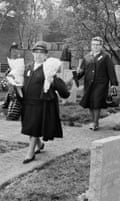
A historian has uncovered new details of this extraordinary relationship, and found that more than 7,000 German soldiers and prisoners of war were once buried in cemeteries near the British towns and villages where they died. Tim Grady, professor of modern history at the University of Chester, unearthed a previously overlooked pile of documents “wrapped in brown paper” in the German War Graves Commission (VDK) archives, which turned out to be interwar records about the graves from the German embassy in London that no scholar had ever consulted.
After the wars, Grady said, there were so many dead soldiers scattered across the globe that people felt that tending to the war graves in their local area was a “tangible” way of overcoming the “horrors of war”.
“If you can do something for the war dead who are close to you, perhaps other people will do the same for your loved ones, wherever they are buried,” he said.
The policy of the Imperial War Graves Commission was to leave the bodies of British soldiers in the country where they had died, too, meaning thousands were buried in military cemeteries abroad rather than repatriated.
Grady discovered that one British couple who lost their son in the first world war tended the grave of a German fighter whose plane came down near their home. “They’ve got this shared experience of loss that they feel is bonding them together with the other bereaved family,” he said.
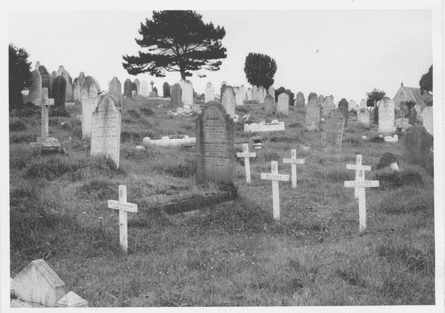
Most of the time, however, it wasn’t a straightforward reciprocal arrangement, he said. “It was based on a kind of common humanity, coming out of the wars, where I think people wanted to try to build a better future and they saw caring for the enemy dead was a way to do this.”
In Bishop’s Stortford, Herts, one family made it “almost their life’s mission” to look after the graves of 15 German war dead buried there. “They spent all their money tending these graves – they say they do it to comfort the mothers back in Germany, and as a basis for reconciliation.”
There are even examples of people laying wreaths on German graves on Remembrance Day “because they want to unite them” with British graves, Grady said. Others left flowers or took photos of the graves for bereaved family members back in Germany, inviting them to visit.
Some people also responded to letters German families wrote to local councils in the UK, asking for information after learning a loved one had died nearby. “And so you start to get genuine human contact between the two sides – and that breaks down barriers between the British and the Germans after both wars. That’s the initial basis for some form of reconciliation between the two populations that were enemies.”
Between 1962 and 1963 the German government systematically exhumed almost all the bodies of their war dead from graves across the UK and reburied them in a single military cemetery on Cannock Chase, Staffordshire. But its efforts were met with unexpected resistance from British people who had, in some cases, been tending the graves for almost 50 years.
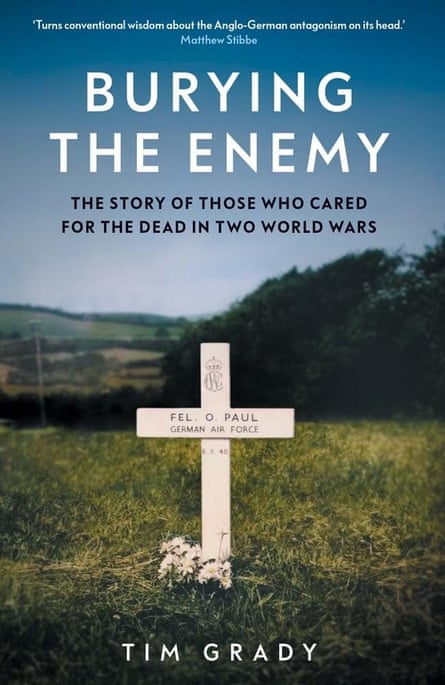
“In one cemetery in Yorkshire, a local councillor saw the German team coming to exhume a couple of these German graves and he threatened to call the police,” said Grady, whose book, Burying the Enemy: The Story of Those Who Cared for the Dead in Two World Wars, was published last week. “He said: ‘You can’t take them. These are our Germans. We’ve been looking after them.’ And he tried to stop them. But the exhumation team had papers from the Home Office that say they’re allowed to do this. They can’t be stopped.”
The graves of the German war dead in Britain played a crucial role in restoring relations between the countries after the world wars, Grady said.
One RAF commander filled 12 wooden urns with soil from German graves near his base in Sussex, and sent the urns to the bereaved German families of those who were buried there. “One of them was an unknown pilot, so they couldn’t trace his family. The VDK has still got that urn sitting in its archive.”
In Poole, Dorset, a British man who lived opposite a cemetery bumped into the widow of a Nazi bomber who had been shot down and buried there. “She was visiting her husband’s grave after the war.” After meeting at the graveside, they stayed in contact, exchanging Christmas cards and letters. “He tends the grave, laying flowers there and writing to her about how the grave is. He even ends up going over to Germany on holiday, and stays with her and her new husband.”
In Montrose, Scotland, “lots of local people” welcomed the mother of a Nazi killed nearby in a plane crash, when she visited her son’s grave in the early 1950s. “Somebody wanted to drive her to the cemetery, somebody wanted to find her a hotel, someone else wanted to take her out for dinner. All to show her: we’re no longer enemies, we understand your loss, let’s work together.”
Such connections were important for Anglo-German relations, Grady said, as they involved ordinary people and their communities. “Because the enemy bodies were buried locally, it forced people locally to recognise that the other side also experienced loss.”
Three Flags – One Grave
Posted on May 27, 2023 by Royal Rosamond Press
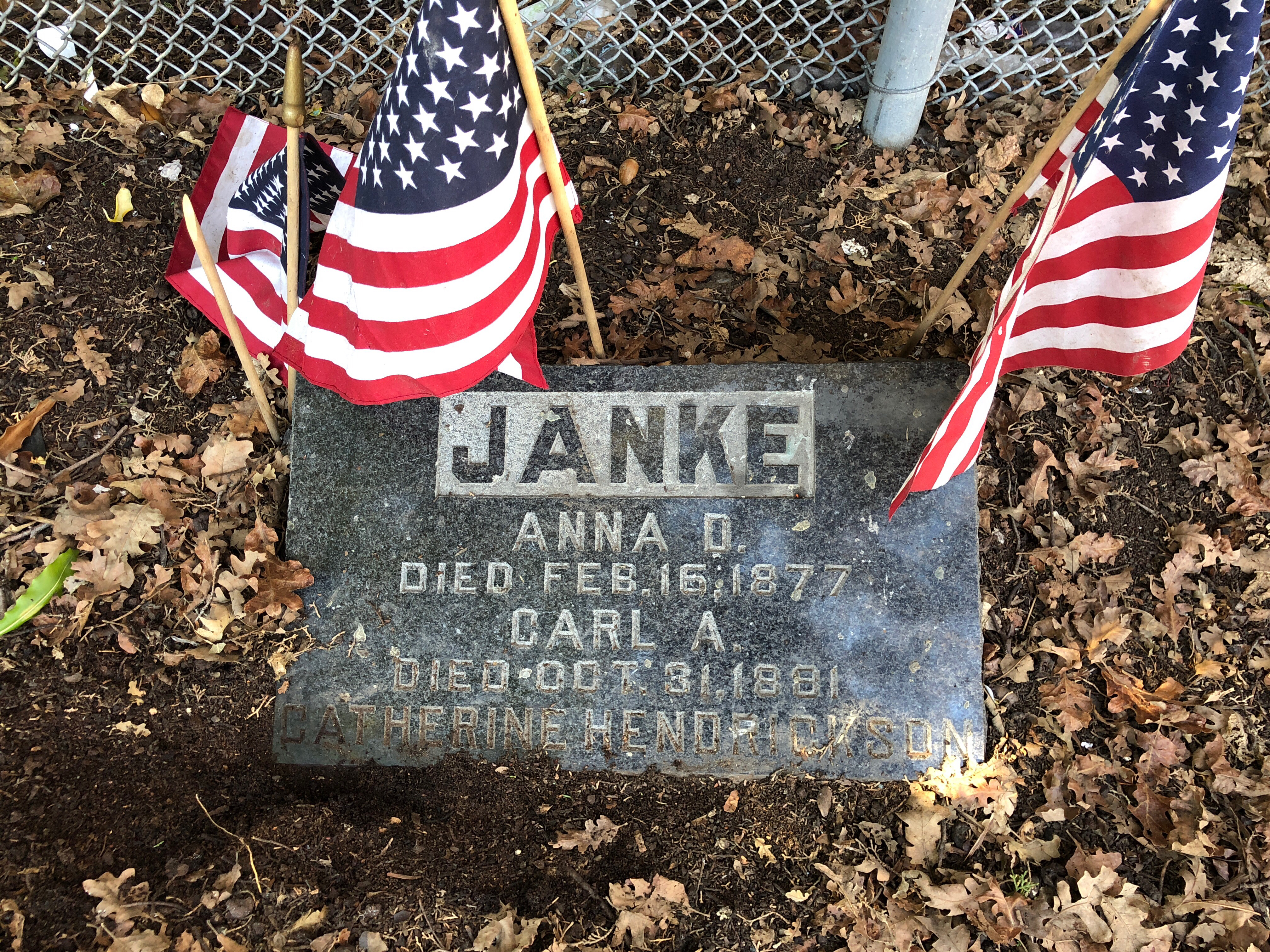
It is 8:33 A.M. May 27, 2023 – and I am still in shock having discovered my grandparents are buried in the same grave! I saw TWO flags put on one gravestone. That was a half hour ago. THEN – I see another flag! There are three of my ancestors buried in the same grave! WHY? Did the caretakers conclude this was a very poor family? William Stuttmeister knew they were Belmont before he died. At great expense to himself, he moved the Jankes to Colma after they were evicted from the Odd Fellow cemetery – at great expense! This was a wealthy pioneer family whose graves keep being defiled! They were moved to the Union cemetery i 1972?
Below is a video I made after I met with LDS Sisters who wanted to meet at the genealogy center to look at these illustrious people who have a magnificent crypt in Berlin. I don’t know if I told them I was considering putting Amanda Gorman in my painting of the two pages saving our electoral votes.
John Presco
“Originally Carl abd Doretha were buried under a huge bay tree there and bodies later moved to the Union Cemetary “during the dark of night” my mother used to tell us.”
 Rosamond Press
Leave a comment