“In a chain of private messages among President Donald Trump’s top national security officials, Vice President JD Vance appeared, even behind the scenes, to be serving as one of the administration’s most consistent skeptics of foreign intervention — a key component of Trump’s “America First” platform.
security/?fbclid=IwY2xjawJShZxleHRuA2FlbQIxMQABHXLdnaiKn_DuSPR7PhO3B7Br70zZRxTv1rACLQw8ZmZoIayvT6-w9-TtbQ_aem_zI-3Yg2CXTLzDMMDMMg1Ig

“You’ll never take Jesus from me!”
Applancian Creed
by
John Presco
ALL RIGHTS RESERVED
The true story of how Big Bank and Big Oil, wrested the radical socialist Jesus of The Downtrodden – away from the Poor Ulster-Scott Hillbillies. Margaret Thatcher and New Gingrich are The Thieves In The Night, who promised poor Southern Christians…THEY WILL GET JESUS BACK –
FOR THEM
“We did this – FOR YOU!”
“I’d die FOR Trump! He GAVE Jesus back – TO ME! He put ME FIRST in line to receive REWARDS!”
There it is, the Republican Platform….to turn Born Rebels into Grateful Loving Voters For The Very Rich And Powerful. No money is GIVEN. Just the same ol religious BS that has been addressing the crisis early Christians born amongst themselves – so long ago, There were so many Doubters back then. The best way to make them True Believers is INVENT a group that is
TRYING TO TAKE JESUS FROM YOU
“In a chain of private messages among President Donald Trump’s top national security officials, Vice President JD Vance appeared to be serving as one of the administration’s most consistent skeptics of foreign intervention — a key component of Trump’s “America First” platform.”
“Me first! Make Jesus great again! Do all that Trump asks you to do!”
Why is the Vance Hillbilly family helping Trump acquire Greenland – a foreign county? Get back to where you belong and shoot more squirrel meat!
Here are some videos of my rich Rougemont relative, Hunt Master Kim Richardson. His father was Thatcher’s righthand man. Thatcher owned Three Mile Island, that was targeted by 991 Terrorists, who were citizen of Saudi Arabia.- that relatives of 911 Victims are suing. What if Prince Salman was in on that Signal chat?
I suspect Vance is the invention of a Think Tank. He is now being scrutinized by a member ot
THE ROUGEMONT FAMILY
To be continued!
EXTRA! The Sacred Hillbilly Team is being sued because the Secret Government used Signal to elude being put in OUR National Archives and thus made accessable to all Americans. Are the Signal chats being ERASED? Will Doge be allowed IN – to make sure!
SuperBilly was created by think tanks such as the Heritage Foundation who has had many years to make a plan to EVICT most Americans from this Democracy. Superbilly hates the Revenuers and outsiders snooping around. My grandfather, Royal Rosamond, wrote books about the Ozark people. I just found out someone published his book ‘Bound In This Clay’ that was still under Copyright! I need to sue!
In the text thread with Trump’s top national security advisers on the encrypted chat app Signal, which was first published by the Atlantic, Vance stood out among a raft of senior administration officials by raising a red flag of concern about the planned attack on the Houthis, which began to unfold March 15.
National security adviser Mike Waltz said during tonight’s Fox News interview that he does not support releasing a chain of messages on military planning that inadvertently included The Atlantic’s top editor.
“I certainly want our deliberations to stay confidential,” Waltz told host Laura Ingraham. “Of course, I don’t want it all out there, because these were conversations back and forth that you should be able to have confidentially.”
Since 2001, Kreindler has been relentless in its dedication to representing thousands of Americans and their families who were injured or killed as a result of the 9/11 terrorist attacks. In 2017, after leading the fight for Justice Against Sponsors of Terrorism Act (JASTA) and the right to hold a foreign sponsor of terrorism responsible for its action, Kreindler filed the lawsuit, Ashton et al v. Kingdom of Saudi Arabia.
March 26, 2025, 5:55 AM PDT
By Astha Rajvanshi
Vice President JD Vance said Tuesday that he will join his wife this week as part of the U.S. delegation planning to visit Greenland, with changes also being made to a schedule that had sparked anger on the Arctic island.
On the visit, which Greenlanders have seen as provocative, Vance and second lady Usha Vance will travel to the American Pittufik space base along with national security adviser Mike Waltz and Energy Secretary Chris Wright.
“We want to reinvigorate the security of Greenland because we think it’s important to protecting the security of the entire world,” Vance said in a video posted on X.
“Leaders in America and in Denmark ignored Greenland for far too long and that’s been bad for Greenland. It’s also been bad for the security of the entire world. We think we can take things in a different direction so I’m gonna go check it out,” the vice president added.
Barbary corsairs and crews from the quasi-independent[8] North African Ottoman provinces of Algiers, Tunis, Tripoli, and the independent Sultanate of Morocco under the Alaouite dynasty (the Barbary Coast) were the scourge of the Mediterranean.[9] Capturing merchant ships and enslaving or ransoming their crews provided the rulers of these nations with wealth and naval power. The Trinitarian Order, or order of “Mathurins”, had operated from France for centuries with the special mission of collecting and disbursing funds for the relief and ransom of prisoners of Mediterranean pirates. According to Robert Davis, between 1 and 1.25 million Europeans were captured by Barbary pirates and sold as slaves between the 16th and 19th centuries.[10]
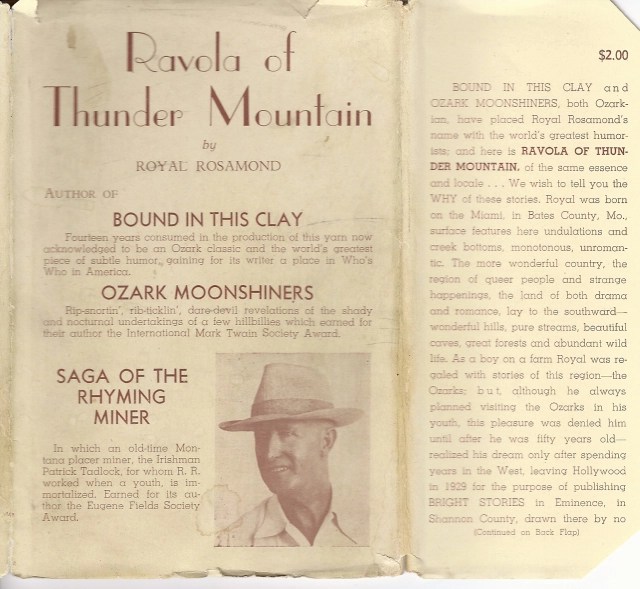
BOUND IN THIS CLAY A Story of the Ozarks Hardcover – January 1, 1945
by Royal Rosamond (Author)
| Jean-Henri de Rougemont (1757 – 1805) | |
| Birthdate: | July 08, 1757 |
| Birthplace: | Neuchâtel, Neuchâtel District, NE, Switzerland |
| Death: | January 23, 1805 (47) London, Greater London, England, United Kingdom |
| Immediate Family: | Son of François-Antoine de Rougemont and Henriette de Rougemont Husband of Frances Mary Rachel Rivaz Father of George De Rougemont and Denis Alexandre de Rougemont Brother of Georges de Rougemont and Charlotte de Rougemont |
|---|---|
He told Mr D’Monte: “Have you got my missing hound, you lot? You f******* better not nick it because I’ll put this straight down your f****** throat.”
Michael Richardson was born on 9 April 1925 in London.[2][3][4] His father worked in insurance in the City of London.[2] His mother Audrey de Rougemont was of Huguenot origin.[2]
He was the master of the Crawley and Horsham Hunt and summered on the Isle of Wight, where he enjoyed sailing.[2] He was a freemason.[2][4]
On 10 October 2017, Hunt Master Kim Richardson was found guilty of a public order offence at Horsham magistrates for threatening a hunt saboteur in February 2017 during a hunt meet on the Wiston estate. He was fined £2500 with £650 prosecution costs and £130 victim surcharge.[19]
Hunt Master Kim Richardson
Jean-Henri de Rougemont
Birth: July 08, 1757 Neuchâtel, Neuchâtel District, NE, Switzerland
Death: January 23, 1805 London, Greater London, England, United Kingdom
Managed by: Michael Lawrence Rhodes
Son of François-Antoine de Rougemont and Henriette de Rougemont
Husband of Frances Mary Rachel Rivaz
Father of George De Rougemont and Denis Alexandre de Rougemont
Brother of Georges de Rougemont and Charlotte de Rougemont
Lerona Rosamond
Posted on June 5, 2016 by Royal Rosamond Press

JD Vance, in Signal chat, cements his role as skeptic of foreign intervention
Foreign policymakers worry that the vice president embodies a potentially permanent shift in the United States’ approach to European allies.
March 26, 2025 at 2:11 p.m. EDTYesterday at 2:11 p.m. EDT
10 min502
By Natalie Allison and
In a chain of private messages among President Donald Trump’s top national security officials, Vice President JD Vance appeared, even behind the scenes, to be serving as one of the administration’s most consistent skeptics of foreign intervention — a key component of Trump’s “America First” platform.
The dynamic has been on display in rancorous encounters in Europe, in an angry Oval Office meeting with Ukraine’s leader, in blistering assessments of U.S. allies during Vance’s public appearances — and now inside a private group chat about plans to bomb Yemen’s Houthi militants.
All of it has international policymakers scrambling to adjust their strategies.
Diplomats, ministers and other senior leaders abroad are zeroing in on Vance as one of their biggest challenges as they confront how to handle Trump’s second term. They say Vance appears to be the most committed in Trump’s inner circle to scaling back international commitments.
That ideological viewpoint contrasts with what these leaders say is Trump’s more transactional nature. The president, they felt, could be swayed with flattery, U.S. investments and other deals that he could present as easy victories. Vance is a trickier counterpart and more skeptical of them in ways they can do little to address.

Follow Trump’s first 100 DaysFollow
Mindful that the vice president could be Trump’s successor in 2029, some officials say Vance’s policies could be emblematic of a deeper and more permanent shift in how the United States operates in the world — one that extends even beyond the massive disruption that Trump has already created.
“There’s a battle going on within the party over foreign policy. And there was a little window in that Signal chat,” said Kelley Beaucar Vlahos, a senior adviser at the Quincy Institute for Responsible Statecraft, a group that advocates a more restrained role for U.S. military engagement in the world and has hosted Vance for foreign policy discussions.
“I was heartened to see that JD Vance was at least providing some red-teaming, some pushback on what seemed to be another unauthorized military action against another country,” Vlahos said.
In the text thread with Trump’s top national security advisers on the encrypted chat app Signal, which was first published by the Atlantic, Vance stood out among a raft of senior administration officials by raising a red flag of concern about the planned attack on the Houthis, which began to unfold March 15.
Vance told the group he would be out of town for most of the day visiting a manufacturing facility in Michigan, a trip intended to highlight his and Trump’s stated commitment to bringing jobs back to the U.S.
“But I think we are making a mistake,” Vance said to the group about the bombing, according to the text messages obtained by the Atlantic. Vance went on to explain that the Houthis were interfering much more with Europe’s trade in the Suez Canal than with that of the U.S., and it would be hard to explain to the public why it was necessary for the U.S. to get involved.
Signal chat leakNext
Attorney General Pam Bondi avoids questions about investigating Signal chat
Why is the U.S. bombing Yemen? Here’s what the Trump team Signal chat revea…
Poll: Signal chat leak more serious than Clinton emails, Trump documents
How the Signal transcript undermines key Trump administration claims
Atlantic publishes transcript of Trump team’s Signal chat
Gabbard, Ratcliffe face fresh questions from House on Yemen war chats
Trump team keeps digging on Signal chat leak
Who was in the Signal group chat that disclosed sensitive military plans?
Hegseth faces renewed scrutiny after Signal chat disclosures
Was classified information on Signal? Trump team doesn’t seem totally sure.
Trump defends national security adviser Waltz in Signal group chat blunder
Why government workers and military planners all love Signal now
For Europeans, Signal chat gives unfiltered view of Trump team’s disdain
Democrats slam spy chiefs over Trump team’s Signal leak of war plans
The Trump team’s strained spin on its war plan leak, broken down
People close to Vance have noted that the vice president, apparently unaware that a journalist was on the thread, committed in the group text to keep private his reservations about the operation and said he would support the plan if Defense Secretary Pete Hegseth and other officials involved believed they should move forward.
That didn’t stop him from raising concerns with the others on the chain about who stood to benefit the most from the operation, if Trump’s foreign policy would come across as inconsistent and if U.S. officials were acting too quickly.
Vance was “open” to a strike on the Houthis — despite being “skeptical” of taking action immediately — and was not suggesting that conducting one should be off limits altogether, according to a person with knowledge of his position, who, like others interviewed for this article, spoke on the condition of anonymity because they were not authorized to speak publicly on the matter.
Had Vance been adamantly opposed to taking action, he would have been more insistent, the person said. And when Hegseth sent text messages shortly before the bombings outlining the specifics of the planned attack’s timeline, Vance replied with a message of support: “I will say a prayer for victory,” the Catholic convert wrote.
But the vice president made clear in his messages that he saw downsides worth considering — chiefly that Europeans stood to benefit more from the action.
“I just hate bailing Europe out again,” Vance wrote.
That message came weeks after the vice president delivered a blistering rebuke of European officials at the Munich Security Conference in February.
The speech astonished many of Europe’s centrist leaders, especially Germans, who saw it as an effort to boost the right-wing Alternative for Germany days ahead of national elections. Like Vance, the party is deeply skeptical of migration. Some of its supporters have also embraced the “extremist” label and revel in acts such as the stiff-armed Nazi salute, which is banned in Germany.
“You cannot win a democratic mandate by censoring your opponents or putting them in jail,” Vance told the crowd of Europe’s security elite.
Friedrich Merz, the center-right politician who days later led his Christian Democrats to election victory, has reacted by saying that Germany can’t continue to depend on the U.S. nuclear umbrella, upending generations of national policy that viewed close transatlantic relations as core to the country’s security and identity.
Later that month, Vance instigated a public argument in the Oval Office with Ukrainian President Volodymyr Zelensky that ended with administration officials ejecting the Ukrainian from the White House.
“You should be thanking the president for trying to bring an end to this conflict,” Vance told Zelensky, sparking the fierce exchange.
The Trump administration, in particular Vance, has argued repeatedly about how European nations have been coasting on U.S. defense spending. People with knowledge of Vance’s mindset have noted that his comments in the text thread echoed those same concerns.
Beyond his tough-on-Europe stance, Vance raised other concerns about the downstream effects of such an attack. Oil prices could see a “moderate to severe spike,” he wrote in the Signal exchange.
Vance allies suggested that his frank remarks reflected his desire not only to prompt a conversation about ideological consistency for consistency’s sake but also to look out for Trump’s public image. Trump, according to multiple officials in the text thread, including Hegseth, had already given the green light for the mission.
“I am not sure the president is aware how inconsistent this is with his message on Europe right now,” Vance wrote, in a rare deviation from Trump’s positions since taking office, though doing so in private.
Others downplayed scrutiny of Vance’s comments by noting that he made the same arguments in private that he has already made in public. Vance wanted to ensure that Trump had been given all the facts about the potential attack, including that European nations stood to benefit more from it than the U.S., said a second person with knowledge of his intentions.
Vance was seeking input from his colleagues, the person said, about whether they also shared concerns over how well-briefed Trump had been. But he ultimately trusted the rest of the group’s consensus, the person added.
Trump has backed Vance’s skeptical approach to Europe in the days since the conversation was published.
Trump “believes that Europe has been, as the vice president put it, freeloading on the backs of American taxpayers and off the backs of the United States of America. And he wants to ensure that Europe pays their fair share,” White House press secretary Karoline Leavitt said Wednesday.
Trump’s focus on trade imbalances has led many U.S. allies to settle on a formula they hoped would curry his favor: major purchases of U.S.-made weaponry that could boost U.S. jobs while bolstering their defenses at the same time.
The approach was successful during Trump’s first term in part because many of the president’s foreign policy advisers came from traditional Republican backgrounds and were not averse to a robust U.S. military presence around the globe. Mike Pence, Trump’s first-term vice president, fit that bill — but the two men are no longer on speaking terms.
Pence’s nonprofit advocacy group, Advancing American Freedom, issued a policy paper Tuesday congratulating Trump on the military action in Yemen. “The isolationists are wrong,” the paper read.
Vance is now at the forefront of Republican leaders who view U.S. power differently. Many, like Vance, are wary of anything that could drag Washington into foreign entanglements, even if U.S. jobs could result from European orders of U.S. weaponry.
Vance has been happy to serve the role of provocateur — including this week, when he plans to visit a U.S. military base in Greenland, an autonomous territory of Denmark that Trump has said he wants to take over. Danish and Greenlandic leaders were riled by the original plan for second lady Usha Vance to come uninvited to the territory to watch a dogsled race in Greenland’s capital, but now they say they are comfortable with a trip that is confined to the base.
A third person familiar with Vance’s role in internal conversations said that, similar to the Signal chat, the vice president frequently takes the role of sharp skeptic of decades of U.S. policy toward Europe.
Three years into the war in Ukraine, for instance, Vance has regularly questioned the U.S. interest in continuing to ship arms to Kyiv — especially when major economies such as Germany have continued to be slow to increase defense spending, invest in their military industries and display as much urgency to help Kyiv as he says Washington has.
“We have to accept that there are trade-offs,” Vance said last year before he was picked by Trump to be the vice president, saying that he believed that U.S. industrial might needed to focus on competition with China. “America cannot manufacture enough weapons to support four different wars in four different corners of the world. We just can’t do it.”
Vance’s allies say his approach is indicative of a generational shift in U.S. policy and that his views are on the upswing.
“You see younger people under the age of 55, Gen X and younger, who are like, ‘You know what? Those wars sucked. We were sold a bill of goods. We aren’t the world’s policeman anymore, and we can’t be,’” Vlahos said. “And I think he reflects a lot of that.”
Hunt Master, 59, who threatened to RAM his BUGLE ‘straight down the throat’ of a saboteur he accused of kidnapping one of his hounds is fined £2,500
- Hunt Master Kim Richardson confronted saboteur Raoul D’Monte in February
- The hunter, dressed in the traditional red coat, shouted in Mr Demont’s face as he brandished the hunting horn and demanded the return of his dog
- He shouted at Mr D’Monte: ‘Have you got my missing hound, you lot? You f*****g better not nick it because I’ll put this straight down your f*****g throat’
- Richardson was fined £2,500 and ordered to pay prosecution costs of £635
By ANTHONY JOSEPH FOR MAILONLINE
Published: 09:21 EDT, 11 October 2017 | Updated: 12:15 EDT, 11 October 2017
1.3kshares

+2
View gallery
Crawley and Horsham Hunt Master Kim Richardson, 59, confronted committed hunt saboteur Raoul D’Monte in February this year
A Hunt Master, who threatened to ram his bugle ‘straight down the throat’ of a saboteur he accused of kidnapping one of his hounds, has been fined £2,500.
Crawley and Horsham Hunt Master Kim Richardson, 59, confronted committed hunt saboteur Raoul D’Monte in February this year.
The hunter, dressed in traditional red coat, shouted in Mr Demont’s face as he brandished the hunting horn.
Horsham Magistrates Court heard the Hunt Master was aggressive and threatening when he demanded the return of his dog.
He told Mr D’Monte: ‘Have you got my missing hound, you lot? You f*****g better not nick it because I’ll put this straight down your f*****g throat.’
Mr D’Monte, 53, who described himself as a hunt sab with 35 years experience, said he feared for his life during the confrontation.
He described the Crawley and Horsham Hunt as the most prosecuted in the country.
Richardson grinned at him from the dock as Mr D’Monte described the incident.
‘He approached me and became very very aggressive and said you’re a hunt sab, you’ve stolen my hound.
‘I was trying to say excuse me we’re trying to return your hound to you.

00:03
02:24
Read More
‘He approached with his left arm raised, holding a hunting horn.
‘He was jabbing the hunting horn towards my face, it was millimetres from my face.
‘He had not mentioned the missing hound before. It was a terrifying moment and it has left quite an impact. He was very, very aggressive.
‘As he was jabbing the horn at my face, he was saying he was going to ram it down my throat.
‘I think he had his riding crop in his other hand,’ Mr D’Monte said.
‘It was really scary because we were actually trying to help him. We were trying to return his hound to him. It seemed so irrational, I was really in fear. It was terrifying.
‘I was really, really scared for the welfare of the people with me. We really thought we were going to get attacked in the woods.’
TRENDING
Parents reveal signs bullied daughter aged TEN was on verge of suicide
2.9k viewing nowLeaked war plan texts expose JD Vance using an old Washington trick21.5k viewing nowInternet swoons over White House guard who carried boy back to parents1.6k viewing now
Following the confrontation, Mr D’Monte said he and two other hunt sabs fled.
‘We ran for our lives. I was in fear of my life. These hunters are violent.’
Mr D’Monte, who acts as the Hunt Saboteurs Association press officer, said: ‘I thought we were going to die if we stayed there.’
Richardson had been on a legal drag hunt in countryside around Ashington, Sussex with 40 dogs and 30 riders being followed by around 50 saboteurs.
The drag hunt has replaced the traditional fox hunt since hunting with dogs was banned in 2004.
The court heard one of the pack of hounds had gone missing during the hunt on Saturday, February 25 this year.
Richardson told the court Chapter the dog had been raised by his wife and he would be in trouble if he went home without her.
The master of the Crawley and Horsham hunt, who started fox hunting aged 18, described his dogs as part of his family and said he has never lost one.
Richardson said he saw hunt sabs every time he went out in the season.
‘It is strict hunt policy not to fight with the hunt sabs’, he told the court.
‘We move away when they get to us.’
When he realised one of his dogs was missing, Richardson said he sent assistants to find her.

+2
View gallery
Mr D’Monte, who acts as the Hunt Saboteurs Association press officer, said: ‘I thought we were going to die if we stayed there’
‘My wife had brought her up from a very young age. They can hear the horn from miles away and always come back to it. After an hour, she hadn’t returned.
‘There were two or three of them standing watching and they were trying to stroke the hounds, which I’ll be honest I don’t like.
‘One of my people said he’d just overheard on the sabs radio they had got a hound and were talking about whether or not they should they return it.
‘I slightly lost my temper and, probably a little bit over enthusiastically, asked if he wouldn’t mind giving my hound back. I went back and sat down. About 45 mins later, it was returned to us.’
Asked if it was true he did not like hunt sabs, Richardson said: ‘Of course not. I dislike them. Of course I don’t like what they do.
‘I accept it, I see them 41 times a year. My dogs are very precious to me.
‘They’d stolen my hound. I was making sure my hound came back.
‘I was asking him to give my hound back in perhaps an over enthusiastic manner.’
The saboteurs were accompanied by a crew from the Huffington Post who filmed them following the the hunt.
District Judge Christopher James told Richardson he had let himself down.
‘It is clear he wanted to cause alarm,’ the judge said.
‘I’m satisfied he intended to cause alarm so that I am sure. I am satisfied that the witness in the case and Mr Ashdown were alarmed by what they heard given the circumstances.
‘It is clear the words and manner were intended to be alarming and it was so.’
The judge said Richardson’s behaviour became increasingly threatening.
‘This was not reasonable conduct, the action was aggressive and needn’t have been.’
Richardson looked over at his wife as the judge told him: ‘I find each aspect of the case proved and the defendant guilty.
‘There is an element of provocation, but nonetheless your reaction was unreasonable and unbecoming of the position that you held and of your character.
‘A professional gentleman, who is a hard working man, you acted in a way that has let yourself down significantly.’
Richardson was fined £2,500 and ordered to pay prosecution costs of £635 and a victim surcharge of £130.
DJ James said: ‘Given your circumstances, I will make a collection order giving you 14 days to pay the total £3255.’
After the verdict, Mr D’Monte said: ‘I am very pleased to see Mr. Richardson finally being convicted as he has along history of violence and aggression towards Hunt Saboteurs which has, so far, gone unpunished.
‘The behaviour of the Sussex Police on the day needs to be questioned as they arrested a Hunt Saboteur on a wholly fictitious accusation of assault. When this couldn’t be substantiated, they charged him with Aggravated Trespass, which fell through due to lack of evidence in court.
‘The police did not, however, respond to the panic phone call from the three Hunt Saboteurs who were hiding in the woods for over half an hour after being threatened by Mr. Richardson.
‘The Crawley and Horsham is Britain’s most convicted hunt, and yet still seems to enjoy an unprecedented level of Police protection.
‘We would, however, like to thank the officers in this case, the CPS and the Judge for finally bringing Mr. Richardson to justice.’
After leaving court, Richardson said: ‘You listened to it, you know why anyone would want to do it.’
Share or comment on this a
| This article needs additional citations for verification. Please help improve this article by adding citations to reliable sources. Unsourced material may be challenged and removed. Find sources: “HM Treasury” – news · newspapers · books · scholar · JSTOR (December 2023) (Learn how and when to remove this message) |
1 Horse Guards Road in Westminster | |
| Department overview | |
|---|---|
| Formed | Before 1086 |
| Jurisdiction | Government of the United Kingdom |
| Headquarters | 1 Horse Guards Road Westminster, London |
| Employees | 1967 FTE (+114 in DMO)[1][2] |
| Annual budget | £279.5 million (current) and £8.3 million (capital) (2021–2022) |
| Ministers responsible | The Rt Hon. Sir Keir Starmer KCB KC MP, First Lord of the TreasuryThe Rt Hon. Rachel Reeves MP, Second Lord of the Treasury, Chancellor of the ExchequerThe Rt Hon. Darren Jones MP, Chief Secretary to the Treasury |
| Department executive | James Bowler, Permanent Secretary to the Treasury |
| Child Department | UK Debt Management Office |
| Website | gov.uk/hm-treasury |
| This article is part of a series on |
| Politics of the United Kingdom |
|---|
| showConstitution |
| showThe Crown |
| showExecutive |
| showLegislature |
| showJudiciary |
| showBank of England |
| showElections and referendums |
| showDevolution |
| showAdministration |
| showCrown Dependencies |
| showOverseas Territories |
| showForeign relations |
 United Kingdom portal England United Kingdom portal England Northern Ireland Scotland WalesOther countries Northern Ireland Scotland WalesOther countries |
| vte |
His Majesty’s Treasury (HM Treasury), occasionally referred to as the Exchequer, or more informally the Treasury,[3] is a ministerial department of the Government of the United Kingdom. It is responsible for developing and executing the government’s public finance policy and economic policy.[4] The Treasury maintains the Online System for Central Accounting and Reporting, the replacement for the Combined Online Information System, which itemises departmental spending under thousands of category headings,[5] and from which the Whole of Government Accounts annual financial statements are produced.
History
[edit]
| This section needs additional citations for verification. Please help improve this article by adding citations to reliable sources in this section. Unsourced material may be challenged and removed. Find sources: “HM Treasury” – news · newspapers · books · scholar · JSTOR (March 2024) (Learn how and when to remove this message) |
The origins of the Treasury of England have been traced by some to an individual known as Henry the Treasurer, a servant to King William the Conqueror.[6] This claim is based on an entry in the Domesday Book showing the individual Henry “the treasurer” as a landowner in Winchester, where the royal treasure was stored.[7]
The UK Treasury traces its origins to the Treasury of the Kingdom of England, founded by 1126, in the reign of King Henry I. The Treasury emerged from the Royal Household. It was where the king kept his treasures, such as in The King’s Chamber. The head of the Treasury was called the Lord Treasurer. Starting in Tudor times, the Lord Treasurer became one of the chief officers of state, and competed with the Lord Chancellor for the principal place. Thomas Cromwell transformed the financial administration of the country, restoring authority to the Exchequer and making the King’s Chamber, of central importance under Henry VII, back into a small spending department overseeing the Royal Household. The fact that Cromwell had a key post in the old Chamber system as well as being Chancellor of the Exchequer shows how he did this. For the majority of the medieval period the office of the Treasury was within the Exchequer (responsible for managing the royal revenue in addition to collecting and issuing money). As is often the case, wars are expensive and in 1433 war with France led to a deficit of £30,000 – the equivalent of over £100 billion today. Money that the Treasury received was recorded by using tallies. These were sticks with notches marked on them according to the amount of money involved. The stick was cut in two and one half given to the Sheriff as receipt for the money. They were in use until 1834 when a fire destroyed the Palace of Westminster. By 1584, the deficit had been turned into a surplus equivalent to one year’s revenue. Monarchs tended to bypass the Exchequer because of its ineffectiveness until it was reformed by Lord Treasurer Winchester and his successor, Lord Burghley, under Elizabeth I.
In contrast, the Stuarts failed to enforce limits on inflation, war, corruption and extravagant tendencies and were forced into debt again. In 1667, King Charles II was responsible for appointing George Downing, the builder of Downing Street, to radically reform the Treasury and the collection of taxes. The Treasury was first put in commission (placed under the control of several people instead of only one) in May or June 1660.[8] The first commissioners were the Duke of Albemarle, Lord Ashley, (Sir) W. Coventry, (Sir) J. Duncomb, and (Sir) T. Clifford.[9] From the middle of the 17th century the need for a national bank became pressing. England and, in particular, London was greatly changing due to fast expansion of The Empire’s trade, not least N.America, but also entrepot trade that grew to over one third of trade and with Continental Europe, however, what was needed was a “fund of money,” or a term familiar today, but by which is really meant either precious metals or ‘hard’ currency such as US dollars mainly that grew in importance after WW1 to pay external trade bills i.e. questions of financial liquidity or circulation needed to maintain and grow the nation’s national income and trade, but above all to honour the nation’s foreign obligations. Failures to do so can lead to casus belli.
The early 1700s saw the meteoric rise of the banking and financial markets, with the emerging stock market revolving around government funds. The ability to raise money by means of creating debt through the issue of bills and bonds heralded the beginning of the National Debt. Improved controls over public spending ensured that creditors were more willing to lend money to the government. By the 1730s an early version of the public spending survey and the annual Budget had been established. In its evolution the Treasury had to learn some valuable lessons. In 1711, the Treasury established a scheme whereby it secured government debt by the authorisation of its subscription into the capital of the South Sea Company, with government creditors in return holding stock in the company. After 1714, the Treasury was always in commission. The commissioners were referred to as the Lords of the Treasury and were given a number based on their seniority. In 1720 the South Sea bubble burst and thousands of investors were affected; such was the outrage that the Chancellor of the Exchequer was sent to the Tower of London. Eventually the First Lord of the Treasury came, however, to be seen as the natural head of government, and from Robert Walpole on, the holder of the office became known, unofficially, as the Prime Minister. Until 1827, the First Lord of the Treasury, when a commoner, also held the office of Chancellor of the Exchequer, while if the First Lord was a peer, the Second Lord usually served as Chancellor. Since 1827, however, the Chancellor of the Exchequer has always been Second Lord of the Treasury.
If important lessons were learnt that the National Debt (and public finances) require prudent management, when the Exchequer was abolished in 1833, HM Treasury became the ministerial department under the Chancellor of the Exchequer. When the Treasury was under commission, junior Lords were each paid £1,600 a year.[10] It is insensible to consider the Treasury’s history without the Bank of England, set up in the 17th century. The argument for England’s bank grew after the “Glorious Revolution” of 1688 when William of Orange and Queen Mary ascended to England’s throne. London-based Scottish entrepreneur, William Paterson proposed a “Bank of England” with a “fund for perpetual Interest” (not yet bonds or bills) that was passed by Parliament, supported by Charles Montagu, Chancellor of the Exchequer and Michael Godfrey, another leading City merchant. The public were invited to invest subscriptions totalling £1.2 million forming the initial capital stock onward loaned to the Government in return for a Royal Charter. At the same time the National Debt was born, paper money came into existence.
 Rosamond Press


.svg)
Leave a comment