

There is talk from Canadians about James Bond being a Canadian. The copyright for Fleming has expired in Canada. I just made an astounding discovery. I have to go to Rosemount House in Canada.. Ian Fleming was very much in the Peerage, and was a extremely desirable. I have to keep my find –
TOP SECRET!
This is the real Rose Line connected to the Knights Templar. I now know the riddle of the sled in Citizen Kane. Kane had found out who the wealthiest family on earth….IS. He died knowing he was outclassed, and out-moneyed. Surely Ian Fleming would be against wealthy tyrants creating CHAOS in the world!
OMG! In re-reading this post I discovered it was John Rose that my kin Jessie Benton Fremont communicated with in regards to John’s inquiry whether or not her father was pro-slavery or not. Sir Rose must have heard about the pro-slavery stance of Joseph Lane and wanted assurance the Oregon Territory would not be pro-slavery. I thought I would die before owning this incredible gem…..that is a rose. I want to move to Canada and author first class Bond books. I want to join….The Rose Clan!
The President of CHAOS claims the borders of Canada, are “artificial”. My Rose is not artificial. Below is Clan Rose playing in Denmark.
John Presco
Copyright 2025
He was Lower Canada’s Solicitor General from 1857 to 1858 and from 1858 to 1859, and he also acted as various times as commissioner of public works and Receiver General. In 1864, the British government appointed him to the commission to settle claims under the Oregon Treaty with the United States.
H. R. H. Prince Arthur and sleigh at “Rosemount”, Montreal, QC, 1870

Ontario Premier Doug Ford criticizes US President Donald Trump’s tariff plans, saying they have “created chaos.” Speaking on “Balance of Power,” Ford says Trump will create a recession.
He was succeeded by his elder son Sir William Rose, 2nd Baronet. His daughter Mary Rose married Major-General Sir Stanley de Astel Calvert Clarke, K.C.V.O., C.M.G.
The Rose Baronetcy, of Montreal in the Dominion of Canada, was created in the Baronetage of the United Kingdom on 9 September 1872 for the Canadian politician John Rose. On the death of the fourth Baronet in 1979 the title was passed on to Sir Julian Rose, 4th Baronet, of Hardwick House (see below).
James Bond Enters Canadian Public Domain
“Bond is a highly romanticized version of a true spy,” said Fleming. “The real thing is…William Stephenson.”
Spymaker: The Secret Life of Ian Fleming (Photo credit: Wikipedia)
The next James Bond thriller could take place in Canada. As reported last month by The Globe and Mail, stories written by Ian Fleming featuring the international man of mystery are now in the Canadian public domain. If this seems early, you’re right; Canadian copyright laws only meet the Berne Convention‘s minimum copyright term of assuring exclusive rights fifty years beyond an author’s death. (The United States and Europe set their standard at 70 years.) Since Ian Fleming died in 1964, his works entered the public domain on January 1, 2015.
James Bond remains copyrighted by the Ian Fleming Estate in Europe and the USA, so new books in the series would have to be written and published in Canada. Not that many Canadian authors are interested in picking up the mantle–according to the The Globe and Mail’s story, sticking to what’s in the books could be tricky, because the copyright issue only extends to written works–the Bond movies are still protected, meaning a new book could not use material from any of the films without infringement.
Still, it’s tempting to envision a Canadian Agent 007, and Ian Fleming may have had some Canadian connections. As a Lieutenant Commander in the Naval Intelligence Division during World War II, he was rumored to have trained at Camp X (now Intrepid Park), a paramilitary and commando installation in Whitby, Ontario. There, over five hundred Allied secret agents mastered the dark arts of espionage such as silent killing, sabotage, and other forms of tradecraft.
There’s speculation that Canada might extend the James Bond copyright, but there’s been no official word on that yet, and requests to the Ian Fleming Estate for comment went unanswered. Fleming’s series and subsequent films remain hugely popular, with global book sales of 100 million copies and generating over 150 million dollars, to say nothing of the movies and related licensed merchandise. Perhaps there’s room yet in the Bond legacy for another heart-stopping tale of cloak and swagger.
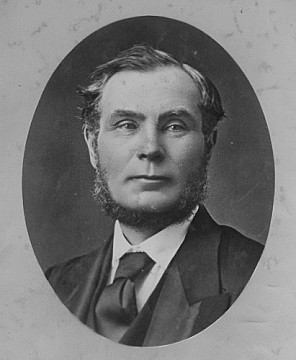
Sir John Rose, 1st Baronet
Sir John Rose, 1st Baronet GCMG PC QC (2 August 1820 – 24 August 1888) was a Scots-Quebecer politician. He was a member of the Legislative Assembly of the Province of Canada and the Executive Council of the Province of Canada. After Confederation, he held the offices of Solicitor General of Canada, Minister of Public Works and Minister of Finance in the new federal government. In the United Kingdom, he held the offices of Receiver General of the Duchy of Cornwall and Privy Counsellor.
In 1872, he was created 1st Baronet Rose, of Montreal. His eldest son inherited the title and in 1909, his second son, Sir Charles Day Rose, was created 1st Baronet Rose of Hardwick House in his own right. His home from 1848, Rosemount, was in Montreal’s Golden Square Mile. From 1872, he lived in England at Loseley Park.
Early life in Scotland
[edit]
John Rose was born 2 August 1820, at Gask, near Turriff, Aberdeenshire. He was the son of William Rose (b. 1792), of Gask, and Elizabeth (d. 1822), daughter of Capt. James Fyfe.[2] John’s father, William, was a great-grandson of Hugh Rose, 16th Baron of Kilravock and Chief of Clan Rose. The estate of Gask had passed to John’s father through his ancestor, Lt.-General Alexander Forbes (d. 1672), 10th Lord Forbes. John Rose was educated at Udny Academy and King’s College, Aberdeen.
Career
[edit]

In 1836, he immigrated to Huntingdon, Quebec, in what was then Lower Canada, where he was active in suppressing the Lower Canada Rebellion of 1837. He was admitted to the bar in 1842 and established a commercial practice in Montreal. From 1857 until 1867, he was a member of the Legislative Assembly of the Province of Canada, and he was a member of the Executive Council from 1858 until 1861.
He was Lower Canada’s Solicitor General from 1857 to 1858 and from 1858 to 1859, and he also acted as various times as commissioner of public works and Receiver General. In 1864, the British government appointed him to the commission to settle claims under the Oregon Treaty with the United States.
Rose was elected to the House of Commons of Canada for the electoral district of Huntingdon, Quebec on 20 September 1867, and was later appointed Minister of Finance in the government of John A. Macdonald. He resigned from Parliament on 29 September 1869, to return to private life with the banking firm of Morton, Rose and Co.[3]
Rose was a delegate to the London Conference of 1866. In 1869, Rose moved to England to practise law and acted as an unofficial representative of the Canadian government. His was one of the first missions of a partly diplomatic nature which Canada ever sent abroad. He was sent partly because his was perceived as being “gentlemanly” enough for the world of London politics. He worked for Canada’s interests in trade and immigration, and lobbied for Canada’s viewpoint on matter of Anglo-American relations. In this function, he answered directly to the Prime Minister, John A. Macdonald, since it was an informal position and was therefore not under the purview of the Governor General, meaning that communications could be kept secret from the Imperial Government. As well, Canada did not have a foreign affairs department at the time.
He also sat on a number of Royal Commissions in Britain and became a baronet in 1872, and a member of the Imperial Privy Council in 1886. Following his passing in 1888, Sir John Rose was interred at Mount Cemetery in Guildford, near the Loseley Park estate, which he had rented for some years.[citation needed]
Family
[edit]

He was succeeded by his elder son Sir William Rose, 2nd Baronet. His daughter Mary Rose married Major-General Sir Stanley de Astel Calvert Clarke, K.C.V.O., C.M.G.
His Clarke granddaughters, Mrs. Edith Mary Bibby and Mrs. Baird, were two of the noted beauties of the day, and their portraits by Fildes, R.A. (former) and by Shannon (latter) were exhibited at the Royal Academy, 1896.
They were the daughters of Mrs. Edith Mary Bibby married Frank Bibby, of Sansaw, near Shrewsbury, England, 1890, and the couple had two sons and two daughters.[4]
Arms
[edit]
| CrestA harp Or stringed Argent.EscutcheonOr a boar’s head couped Gules between three water bougets Sable on a chief of the second as many maple leaves of the first.MottoAudeo, Constant and True[5] |
References
Sir Philip Rose, 1st Baronet, DL (12 April 1816 – 17 April 1883) was a British solicitor and political agent. A close political associate of Benjamin Disraeli, he is perhaps best-known today as one of the namesakes of the law firm Norton Rose Fulbright.
Biography
[edit]
Rose was the son of William Rose, Esq. of High Wycombe, an Assistant Surgeon in the British Indian Army, and Charlotte Rose (born Baly).[1]
He was admitted as a solicitor in 1836 at the age of 20 and for many years was a partner in the law firm of Baxter, Rose, Norton & Co., resigning his partnership in 1872 after a disagreement with his colleagues. The firm still practices today under the name Norton Rose Fulbright.
At the age of 25, reputedly after one of the clerks at the law firm who was suffering from consumption was refused admittance to several hospitals, Rose was a prime mover in the setting up of a hospital, the Hospital for Consumption and Diseases of the Chest, for sufferers of tuberculosis without the financial means to pay for such treatment as was available at the time. Rose was Honorary-Secretary of the hospital from its inception until his death.
In 1854 he was the first recognised agent for the Conservative Party and after the defeat of Lord Derby’s first administration was largely responsible for the restoration of its political fortunes. He was assisted by Markham Spofforth. He had to resign as agent in 1859 because of concerns about corruption.[2] He was also a close friend of and adviser to Benjamin Disraeli. After his resignation from the law firm he devoted himself to public affairs including Treasurer of the County Courts of Derbyshire, Deputy-Lieutenant of Middlesex, and first Magistrate and then in 1878 High Sheriff of Buckinghamshire.[3] He was created a Baronet in 1874 for his work as legal adviser to the Conservative Party.
In 1868 he founded the Foreign & Colonial Investment Trust as The Foreign & Colonial Government Trust, the world’s first collective investment scheme.[4]
For special services to the Ottoman Empire he was made a Knight Commander of the Turkish Order of the Medjidie.
He also served as a director of several public companies.
Family
[edit]
On 2 Jan 1840, at St Clement’s Church, Hastings, Sussex, he married Margaretta Ranking (1816–1889), daughter of Robert Ranking.[1] They had ten children, including Sir Philip Frederick Rose, 2nd Bt, and Evelyn St. Croix Fleming, mother of writers Ian Fleming and Peter Fleming.
Item: Rosemount. The Residence of H.R.H. Prince Arthur (The Property and Former Residence of Hon. John Rose)

Title:
Rosemount. The Residence of H.R.H. Prince Arthur (The Property and Former Residence of Hon. John Rose)
Artist:
Unknown
Date:
1869-10-30
Pagination:
vol.I, no. 1. 12
Subject:
Date:
1869-10-30
Item Number:
781
Sir John Rose (1820-1888)
Sir John Rose, 1st Bt., M.P., P.C., of “Rosemount” Montreal; Minister of Finance
zoom_in1 images
FamilyNotes / BiographyAssociated Houses (1)References
thumb_upLike
0
Parents (2)
William Rose
William Rose, of Gask, near Turriff, Aberdeenshire
1792-1877
Elizabeth (Fyfe) Rose
Mrs Elizabeth (Fyfe) Rose
d.1822
Spouse (1)

Charlotte (Temple) Rose
Charlotte (Temple) Mrs Sweeney, Lady Rose of Montreal
1819-1883
Children (4)

Mary (Rose) Clarke
Mrs Mary Temple (Rose) Clarke
1844-1913

Sir William Rose
Sir William Rose, 2nd Bt., of London & Moor Park, Farnham, Surrey
1846-1902

Sir Charles Day Rose
Sir Charles Day Rose, 3rd Bt., of Hardwick House, Oxfordshire
1847-1913

Charlotte (Rose) Sloane-Stanley
Mrs Charlotte Amy (Rose) Sloane-Stanley
1849-1917
Associated Houses (1)

Loseley Park
Guildford
Rose baronets
Add languages
Tools
Appearancehide
Text
- SmallStandardLarge
Width
- StandardWide
The content is as wide as possible for your browser window.
Color (beta)
- AutomaticLightDark
From Wikipedia, the free encyclopedia

There have been four baronetcies created for persons with the surname Rose, all in the Baronetage of the United Kingdom. Three of the creations are extant as of 2010.
The Rose Baronetcy, of Montreal in the Dominion of Canada, was created in the Baronetage of the United Kingdom on 9 September 1872 for the Canadian politician John Rose. On the death of the fourth Baronet in 1979 the title was passed on to Sir Julian Rose, 4th Baronet, of Hardwick House (see below).
The Rose Baronetcy, of Rayners in the County of Buckingham, was created in the Baronetage of the United Kingdom on 14 May 1874 for Philip Rose, founder of the Brompton Hospital for Consumption and legal adviser to the Conservative Party.
The Rose Baronetcy, of Hardwick House in Whitchurch in the County of Oxford, was created in the Baronetage of the United Kingdom on 19 July 1909 for the businessman and Liberal politician Charles Rose. He was the second son of the first Baronet of the 1872 creation. The fourth Baronet also inherited the Rose Baronetcy on Montreal in 1979 (see above).
The Rose Baronetcy, of Leith in the County of the City of Edinburgh, was created in the Baronetage of the United Kingdom on 2 July 1935 for the Scottish public servant Arthur Rose, Commissioner for Special Areas for Scotland under the Special Areas Act 1934.[1] The title became extinct on the death of the second Baronet in 1976.
Rose baronets, of Montreal (1872)
[edit]
| Rose baronets | |
|---|---|
| Crest | A harp Or stringed Argent. |
| Shield | Or a boar’s head couped Gules between three water bougets Sable on a chief of the second as many maple leaves of the first. |
| Motto | Audeo, Constant and True[2] |
- Sir John Rose, 1st Baronet (1820–1888)
- Sir William Rose, 2nd Baronet (1846–1902)
- Sir Cyril Stanley Rose, 3rd Baronet (1874–1915)
- Sir Francis Cyril Rose, 4th Baronet (1909–1979)
- Sir Julian Day Rose, 5th Baronet (born 1947) (had already succeeded as fourth Baronet of Hardwick House; see below)
The Heir Apparent to both the Rose Baronetcy of Montreal and the Rose Baronetcy of Hardwick House is Lawrence Michael Rose (born 1986), only son of the current baronet.
Rose baronets, of Rayners (1874)
[edit]
- Sir Philip Rose, 1st Baronet (1816–1883)
- Sir Philip Frederick Rose, 2nd Baronet (1843–1919)
- Sir Philip Humphrey Vivian Rose, 3rd Baronet (1903–1982)
- Sir David Lancaster Rose, 4th Baronet (1934–2020)[3]
- Sir Christopher David Rose, 5th Baronet (born 1968)
The heir presumptive is the current holder’s third cousin, Philip Vivian Sainte Croix Rose (b. 1961).
Line of Succession
[edit]
- Sir Philip Rose of Rayners, 1st Baronet (1816—1883)
Rose baronets, of Hardwick House (1909)
[edit]

- Sir Charles Day Rose, 1st Baronet (1847–1913)
- Sir Frank Stanley Rose, 2nd Baronet (1877–1914)
- Sir Charles Henry Rose, 3rd Baronet (1912–1966)
- Sir Julian Day Rose, 4th Baronet (born 1947) (also succeeded as fifth Baronet of Montreal in 1979; see above)
The Heir Apparent to both the Rose Baronetcy of Montreal and the Rose Baronetcy of Hardwick House is Lawrence Michael Rose (born 1986), only son of the current Baronet.
Rose baronets, of Leith (1935)
[edit]
- Sir (Hugh) Arthur Rose, 1st Baronet (1875–1937)
- Sir Hugh Rose, 2nd Baronet (1907–1976)
| CrestA falcon properEscutcheonOr, two water bougets in chief and in base an ancient galley with two masts, sails furled sable, flagged gules, seated therein the Virgin Mary with the infant Saviour in her arms, all proper.[4] |
Notes
[edit]
| This article needs additional citations for verification. Please help improve this article by adding citations to reliable sources. Unsourced material may be challenged and removed. Find sources: “Rose baronets” – news · newspapers · books · scholar · JSTOR (October 2020) (Learn how and when to remove this message) |
- ^ Mitchell , Anne (1993), “The People of Calton Hill”, pp. 99-112 (Chapter 5) Mercat Press, James Thin, Edinburgh, ISBN 1-873644-18-3
- ^ Joseph Foster (1881). The Baronetage and Knightage.
- ^ “Rose, David Lancaster”. GRO Index. Retrieved 24 February 2024.
- ^ Burke’s Peerage, Baronetage & Knightage.
Sir Philip Rose, 1st Bt.1 
M, #562193, b. 12 April 1816, d. 17 April 1883
Last Edited=29 Jul 2016
Sir Philip Rose, 1st Bt. was born on 12 April 1816.1 He was the son of William Rose and Charlotte Baly.2 He married Margaretta Ranking, daughter of Robert Ranking, on 2 January 1840.1 He died on 17 April 1883 at age 67.1
He was Honorary Secretary to the Hospital for Consumption Brompton in 1841.1 He held the office of Deputy Lieutenant (D.L.) of Middlesex.1 He held the office of Justice of the Peace (J.P.) for Buckinghamshire.1 He was created 1st Baronet Rose, of Rayners, co. Buckingham [U.K.] on 14 May 1874.1 He was awarded the Knight Commander, Order of the Medjidie.1 He held the office of High Sheriff for Buckinghamshire in 1878.1
Children of Sir Philip Rose, 1st Bt. and Margaretta Ranking
- Louisa Frances Rose+2 d. 13 Jan 1942
- Lucy Rose2 d. 15 Mar 1904
- Margaret Amelia Rose2 b. 30 Oct 1842, d. 8 Oct 1882
- Sir Philip Frederick Rose, 2nd Bt.+2 b. 4 Nov 1843, d. 23 Oct 1919
- William Barker Rose2 b. 1845, d. 1872
- Robert Baxter Rose+2 b. 3 Mar 1847, d. 8 Apr 1887
- Harcourt Ranking Rose2 b. 2 Jul 1850, d. 25 Oct 1908
- Bateman Lancaster Rose+2 b. 27 Feb 1852, d. 11 May 1912
- George Alfred Sainte Croix Rose+2 b. 31 Jan 1854, d. 14 Feb 1926
- Charles Marston Rose+2 b. 15 Jan 1858, d. 6 Dec 1924
Citations
- [S37] BP2003 volume 3, page 3393. See link for full details for this source. Hereinafter cited as. [S37]
- [S37] BP2003. [S37]
Robert Ranking1
M, #562194
Last Edited=27 Jul 2016
Robert Ranking lived at Hastings, Kent, England.1
Child of Robert Ranking
- Margaretta Ranking+2 d. 13 Mar 1889
Citations
- [S37] BP2003 volume 3, page 3393. See link for full details for this source. Hereinafter cited as. [S37]
- [S37] BP2003. [S37]
Margaretta Ranking1
F, #562195, d. 13 March 1889
Last Edited=27 Jul 2016
Margaretta Ranking was the daughter of Robert Ranking.2 She married Sir Philip Rose, 1st Bt., son of William Rose and Charlotte Baly, on 2 January 1840.1 She died on 13 March 1889.1
From 2 January 1840, her married name became Rose.
Children of Margaretta Ranking and Sir Philip Rose, 1st Bt.
- Louisa Frances Rose+2 d. 13 Jan 1942
- Lucy Rose2 d. 15 Mar 1904
- Margaret Amelia Rose2 b. 30 Oct 1842, d. 8 Oct 1882
- Sir Philip Frederick Rose, 2nd Bt.+2 b. 4 Nov 1843, d. 23 Oct 1919
- William Barker Rose2 b. 1845, d. 1872
- Robert Baxter Rose+2 b. 3 Mar 1847, d. 8 Apr 1887
- Harcourt Ranking Rose2 b. 2 Jul 1850, d. 25 Oct 1908
- Bateman Lancaster Rose+2 b. 27 Feb 1852, d. 11 May 1912
- George Alfred Sainte Croix Rose+2 b. 31 Jan 1854, d. 14 Feb 1926
- Charles Marston Rose+2 b. 15 Jan 1858, d. 6 Dec 1924
Citations
- [S37] BP2003 volume 3, page 3393. See link for full details for this source. Hereinafter cited as. [S37]
- [S37] BP2003. [S37]
Sir Philip Frederick Rose, 2nd Bt.1
M, #562196, b. 4 November 1843, d. 23 October 1919
Last Edited=29 Jul 2016
Sir Philip Frederick Rose, 2nd Bt. was born on 4 November 1843.1 He was the son of Sir Philip Rose, 1st Bt. and Margaretta Ranking.2 He married Rosa Anne Pym, daughter of Reverend William Wollaston Pym, on 25 July 1866.1 He died on 23 October 1919 at age 75.1
He was educated at Harrow School, Harrow, London, England.1 He succeeded as the 2nd Baronet Rose, of Rayners, co. Buckingham [U.K., 1874] on 17 April 1883.1 He held the office of Deputy Lieutenant (D.L.) of Buckinghamshire.1 He held the office of Justice of the Peace (J.P.) for Buckinghamshire.1 He held the office of High Sheriff of Buckinghamshire in 1898.1
Children of Sir Philip Frederick Rose, 2nd Bt. and Rosa Anne Pym
- Margaret Edith Rose2 d. 8 Jan 1869
- Mary Gertrude Rose2 d. 21 Nov 1956
- Rose Annie Dorothy Rose2 d. 12 May 1941
- Violet Annie Rose2 d. 5 Feb 1934
- Philip Vivian Rose+2 b. 25 Mar 1869, d. 25 Apr 1917
- Cecil Guy Rose2 b. 29 Jul 1877, d. 8 Nov 1962
- John Philip Sebastian Rose2 b. 4 Feb 1889, d. 17 Aug 1904
Citations
- [S37] BP2003 volume 3, page 3394. See link for full details for this source. Hereinafter cited as. [S37]
- [S37] BP2003. [S37]
Jonathan Birchall1
M, #562197
Last Edited=7 Dec 2014
Jonathan Birchall married Hon. Sarah Lucy Pym, daughter of Francis Leslie Pym, Baron Pym and Valerie Fortune Daglish, on 16 December 2006 at St. Mary Magdalene Church, Great Offley, Hertfordshire, England.1
Citations
- [S212] Obituaries, The Independent, London, U.K.. Hereinafter cited as The Independent.
Rosa Anne Pym1
F, #562198, d. 7 May 1925
Last Edited=27 Jul 2016
Rosa Anne Pym was the daughter of Reverend William Wollaston Pym.2 She married Sir Philip Frederick Rose, 2nd Bt., son of Sir Philip Rose, 1st Bt. and Margaretta Ranking, on 25 July 1866.1 She died on 7 May 1925.1
From 25 July 1866, her married name became Rose.
Children of Rosa Anne Pym and Sir Philip Frederick Rose, 2nd Bt.
- Margaret Edith Rose2 d. 8 Jan 1869
- Mary Gertrude Rose2 d. 21 Nov 1956
- Rose Annie Dorothy Rose2 d. 12 May 1941
- Violet Annie Rose2 d. 5 Feb 1934
- Philip Vivian Rose+2 b. 25 Mar 1869, d. 25 Apr 1917
- Cecil Guy Rose2 b. 29 Jul 1877, d. 8 Nov 1962
- John Philip Sebastian Rose2 b. 4 Feb 1889, d. 17 Aug 1904
Citations
- [S37] BP2003 volume 3, page 3394. See link for full details for this source. Hereinafter cited as. [S37]
- [S37] BP2003. [S37]
Philip Vivian Rose1 
M, #562199, b. 25 March 1869, d. 25 April 1917
Last Edited=29 Jul 2016
Philip Vivian Rose was born on 25 March 1869.1 He was the son of Sir Philip Frederick Rose, 2nd Bt. and Rosa Anne Pym.2 He married Maud Winifred Gillian, daughter of William Gillian, on 10 January 1899.1 He died on 25 April 1917 at age 48, from wounds received in action.1
He gained the rank of Staff Captain in the 63rd Infantry Brigade.1 He gained the rank of Captain in the 3rd Battalion, Oxfordshire Light Infantry.1 He fought in the First World War, where he was severely wounded and became a POW.1
Children of Philip Vivian Rose and Maud Winifred Gillian
- Marjorie Winifred Rose+2 b. 21 Feb 1900, d. 1994
- Sir Philip Humphrey Vivian Rose, 3rd Bt.+2 b. 16 Mar 1903, d. 1982
- June Dorothy Rose+2 b. 12 Jun 1913
Citations
- [S37] BP2003 volume 3, page 3394. See link for full details for this source. Hereinafter cited as. [S37]
- [S37] BP2003. [S37]
William Gillian1
M, #562200
Last Edited=27 Jul 2016
William Gillian lived at Kensington, London, England.1
Child of William Gillian
- Maud Winifred Gillian+2 d. 4 Oct 1958
Citations
- [S37] BP2003 volume 3, page 3394. See link for full details for this source. Hereinafter cited as. [S37]
- [S37] BP2003. [S37]
Major-General Sir Stanley de Astel Calvert Clarke, GCVO, CMG (died 29 November 1911) was a British Army officer and courtier.
Clarke was the son of John Frederick Sales Calvert-Clarke. He was educated at the Royal Military College, Sandhurst and commissioned into the 13th Hussars. He subsequently exchanged into the 4th Queen’s Own Hussars and served with the regiment in India for five years.
On 15 September 1867 he married Mary Temple Rose, daughter of Sir John Rose, 1st Baronet. He and his wife were present at the 1877 Delhi Durbar. He went on to have 5 children, Edith, Millicent, Florence, Frederick and Albert.
In 1878 Clarke, who was by this time a colonel, was appointed Equerry to the Prince of Wales and in 1886 he became Private Secretary to the Princess of Wales.[1] He retired from the army on 20 September 1894, received the honorary rank of major-general six days later,[2] and was invested as a Knight Commander of the Royal Victorian Order (KCVO) in 1897. After successfully taking part in the arrangements for the Coronation of King Edward VII and Queen Alexandra, he was appointed a Knight Grand Cross of the Royal Victorian Order (GCVO) two days after the ceremony, on 11 August 1902.[3][4] He held the office of Clerk Marshal and Chief Equerry to Edward VII from 1 January 1904 and was Serjeant-at-Arms in the House of Lords from 1910 until he resigned in November.[5]
 Rosamond Press
_Achievement.png)


Leave a comment