In 2022, Canada and Denmark agreed to in effect create the first land border between Canada and Europe on the tiny, barren and uninhabited outcrop in the Arctic.


The Royal Janitor
Does Trump believe Britain and Canada are giving him and the American People a raw deal? Or, did Putin convince his buddy Canada, Britain, and the Ukraine, were out to screw him?? There are questions on the internet asking if Russia will invade Canada. How about Greenland?. If this happened today, would the U.S. come to the aid of Canada, a fellow NATO Nation?
I am in such a unique place, being, I based my James Bond Spy Novel on Rena Easton’s late husband who was the head of the British Defense Staff Washington. Rear Admiral Tim Woods has Easton’s job. Woods spent time in Ukraine and had to be watching the Oval Office meeting. He had to be in total shock when VP Vance went on the attack! Did Vance know Woods, and look at this Facebook? PM Sir Keir Starmer just made a visit. Did Vance have a private talks with him about his views the U.S. should stay out of Foreign Conflicts?
If Kamala Harris were President, I might have my agents of BAD investigate Vice President Victor ‘Hillbilly’ Hogsbreath who has been very Pro-Putin. Is he plotting with Russia to invade Canada and Greenland? I would want to remove U.S. Spy satellites, and leave Ukraine defenseless! But, this is this just a ruse. The early warning of a Russian Attack over the Artic Circled, is – OUT OF COMMISION!
Canada and the US have been conducting a destructive Trade War. Seventy-two million seniors have lost their Medicaid and Social Security. They demand their child come rescue them, take them to their house. The economy has tanked. U.S. Citizens are already in a panic. Have they been softened up? The price of Coffee makes it a addictive drug. Americans got a Caffeine Jones!
“Why got to war with Russia? They are bringing a shitload of eggs over the North Pole – just like Santa Claus!”
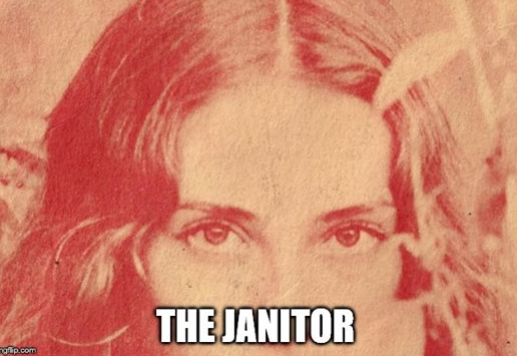
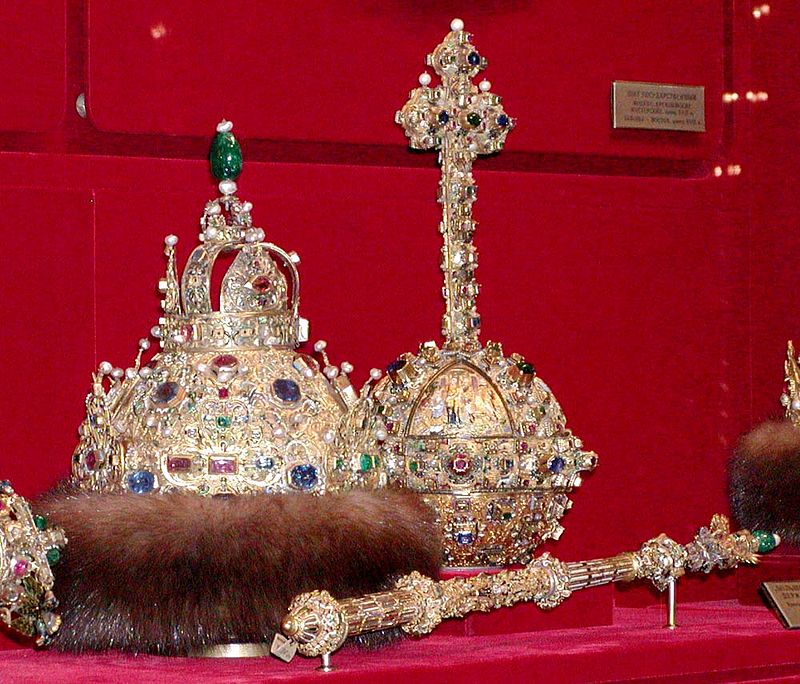
The World War for the Crown of Nicholas the Second – is on! Premiere Rasputinvich, wants President Gugglebutt the Third to crown him…..King of the North Pole!
“Beware of Greeks baring gifts!”
John Presco
Author: The Royal Janitor
EXTRA! I just discovered Vance wrote a book about his Hillbilly Roots! I got the greatest Historic Story of all time – that is a Love Story! I compare Rena Easton to Moonbeam McSwine! I believe she was thirty when she married Admiral Easton who was in charge of 80 Americans across thirty states – who had to be aghast when Vance attacked Zelensky. After I found her, I longed to see a picture of her in an evening gown at one of the Diplomatic Dinner parties!. I got a great Ian Fleming story here – and a great Russian Novel!
In the meantime, America remains the most significant military and financial backer of Ukraine in its war against Russian aggression. There is $3.85 billion in military equipment already designated for delivery to Ukraine, and it is not clear if Mr. Trump will still clear it for delivery.
Admiral Sir Ian Easton, KCB, DSC (27 November 1917 – 14 June 1989) was a Royal Navy officer who held various command positions in the 1970s.
Naval career
[edit]
Easton joined the Royal Navy in 1931 and qualified as a pilot at the start of the Second World War, during which he saw active service on aircraft carriers.[3] On 4 January 1941, flying a Fairey Fulmar of 803 Naval Air Squadron from HMS Formidable during a raid on Dakar, he force landed with his aircrewman Naval Airman James Burkey and was taken prisoner and held by the Vichy French at a camp near Timbuktu, until released in November 1942.[4]
Easton was appointed Assistant Director of the Tactical and Weapons Policy Division at the Admiralty in 1960. He was seconded to the Royal Australian Navy as captain of HMAS Watson in 1962.[3] He went on to be Naval Assistant to the Naval Member of the Templer Committee on Rationalisation of Air Power in 1965, Director of Naval Tactical and Weapons Policy Division at the Admiralty in 1966 and Captain of the aircraft carrier HMS Triumph in 1968.[3] After that he was made Assistant Chief of Naval Staff (Policy) in 1969, Flag Officer for the Admiralty Interview Board in 1971 and Head of British Defence Staff and Senior Defence Attaché in Washington, D.C. in 1973.[3] He last posting was as Commandant of the Royal College of Defence Studies in 1976: he commissioned armourial bearings for the college which were presented during a visit by the Queen in November 1977.[5] He retired in March 1978.[6]
Defence Attaché, USA
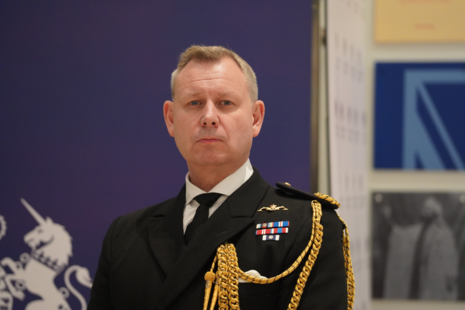
Rear Admiral Tim Woods
Contents
Biography
Rear Admiral Tim Woods serves as Defence Attaché at the British Embassy Washington. He leads the UK’s extensive military engagement and partnerships across all branches of the United States military.
Rear Admiral Woods joins the team in Washington from Kyiv, Ukraine where he was the British Defence Attaché – at the frontline of the UK’s support to the Ukrainian military. In Kyiv he also served as Head of the British Defence Staff in Eastern Europe, commanding all Defence Attaches across Belarus, Moldova, Georgia, Armenia, Azerbaijan and Ukraine at a defining moment in European security.
He brings more than three decades’ experience both on land and at sea. Previous roles have included active duty in Afghanistan, deployments to the Far East, submarine patrols, secondments to NATO, the UK Ministry of Defence and the National Security Secretariat.
Rear Admiral Woods joined the Royal Navy in 1988 after training at Britannia Royal Naval College in Dartmouth, south west England, and at sea. He is a graduate of the prestigious Royal College of Defence Studies, where he was awarded the Wellington Prize for Strategic Analysis.
Defence Attaché, USA
A Defence Attaché is a member of the armed forces who serves in an embassy as a representative of their country’s defence establishment abroad. The Defence Attaché is responsible for bilateral military and defence relations.
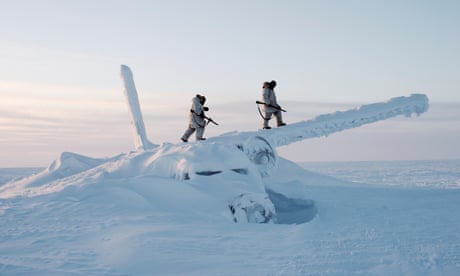
Canadian military flies the flag in frozen north as struggle for the Arctic heats up
Operation Nanook, carried out in conjunction with allies, aims to ‘project force’ in a region attracting growing interest from Russia and China
British Defence Staff
USA
British Defence Staff in the USA
Location:USAPart of:Ministry of Defence
The Ministry of Defence (MOD) protects the security, independence and interests of our country at home and abroad.
We work with our allies and partners whenever possible. Our aim is to ensure that the armed forces have the training, equipment and support necessary for their work.
The MOD works with the United States on joint overseas operations and contingency planning, bilateral defence co-operation, interoperability and engages on defence trade.
Our team in the United States assists this work and communicates the broader transatlantic defence relationship, elevates the UK’s interests and reputation and provides high-quality advice and reporting to the UK on all aspects of defence business.
Responsibilities
The MOD is responsible for: defending the UK and its overseas territories, providing strategic intelligence, providing nuclear deterrence, supporting civil emergency organisations in times of crisis, defending our interests by projecting power strategically and through expeditionary interventions, providing a defence contribution to UK influence and providing security for stabilisation.
The British Defence Staff in the United States comprises some 750 military and civilian MOD personnel based in over 30 states across the US. Their mission is to protect and advance the UK and its interests by reinforcing the transatlantic defence and security relationship.
Priorities
Preserving global peace & security — The UK and the US co-operate to address the world’s most pressing security challenges.
Supporting trade and investment — Driving forward industry, the UK works with the US on facilitating defence trade and investment.
Co-operating in science, innovation, energy and higher education — The UK and the US collaborate in science and innovation; including advanced defence technologies.
Departments at post
- Ministry of Defence civil servants
- Royal Navy personnel
- British Army personnel
- Royal Air Force personnel
- Joint Forces Command
Follow us
The following links open in a new tab
Our people
- Rear Admiral Tim WoodsDefence Attaché, USA
- Mark NewtonMinister Defence (Director USA)
Contact us
British Defence Staff
British Embassy Washington
3100 Massachusetts Avenue NW
Washington DC 20008
USA
Email
bdsus-communications@mod.uk
Enquiries
+1 202 588 6500
Reflections on the United Kingdom’s Support to Ukraine After Two Years of War
- Friday, March 1, 2024
- 12:45 PM 2:00 PM
The United Kingdom’s leadership in responding to Russia’s expanded war against Ukraine in February 2022 was instrumental to the country’s defense. Its assistance via Operational Orbital following the 2014 annexation of Crimea, the provision of arms and munitions such as the NLAW and Storm Shadow missile in the wake of the invasion, and ongoing training of Ukrainian forces has been and remains vital to Kyiv’s continued survival and future offensive successes.
As Ukraine progresses to joining NATO, the United Kingdom will serve as a key partner in the process. Beyond Ukraine, the United Kingdom is set to play a critical role in Euro-Atlantic and continental security through the Joint Expeditionary Force, NATO, and key bilateral partnerships.
On 1 March, CSPC is honored to welcome Rear Admiral Tim Woods, the Defence Attaché of the United Kingdom, to reflect on London’s support to Kyiv, the course of the war, and the prospects of future success. Prior to assuming his position in London, Rear Admiral Woods served as the Defence Attaché to Kyiv and brings with him a wealth of knowledge, expertise, and insights.
Rear Admiral Woods will be in conversation with Joshua C. Huminski, the Director of the Mike Rogers Center for Intelligence & Global Affairs at CSPC.
This article is more than 2 months old
Canada boosting Arctic presence in face of Russian threats
This article is more than 2 months old
New plans include more aircraft and drones to grow foothold as other powerful countries seek base in far north
Agence France-Presse in OttawaFri 6 Dec 2024 12.37 ESTShare
Canada will boost its military and diplomatic presence in the Arctic to counter what it calls threats from Russia and others seeking a foothold in the far north, as part of a new doctrine unveiled on Friday.
The government envisions the deployment of new patrol ships and navy destroyers, ice breakers and submarines capable of operating beneath ice sheets, as well as more aircraft and drones.
Along with the United States it is modernizing continental defences including surveillance of northern approaches with new maritime sensors and satellites.
The foreign policy document notes that Ottawa for years has sought to manage the Arctic cooperatively with other states and keep it free from military competition.
“However, guardrails that prevent conflicts are increasingly under immense strain,” foreign minister Mélanie Joly told a news conference.
“The Arctic is no longer a low-tension region,” she said, blaming Russian designs on the Arctic and deepening geopolitical rivalries.
The minister said Russia was also teaming up in the far north with China, which is itself seeking greater influence in the governance of the region.
The Arctic is warming on average four times faster than the rest of the world. That is opening up new opportunities for shipping and exploration of resources such as oil, gas and minerals.
The growing access is heightening security challenges, defense minister Bill Blair warned.
Canada’s revised doctrine, he said, calls for strengthening military capabilities to “conduct and sustain operations in the Arctic” where biting cold and unpredictable storms, long periods of darkness, and drifting sea ice pose severe hazards.
Ottawa will also seek deeper collaboration – including more joint military drills – with allied Nordic nations, of which five are now also Nato members with the recent additions of Finland and Sweden.
The report outlining Canada’s shift highlighted recent increased Russian activity along the edges of North American airspace.
It also called “deeply troubling” Russian weapons testing and deployment of missile systems in the Arctic capable of striking North America and Europe.
Canada accused China of regularly deploying in the north vessels equipped with dual-use military-research capabilities to collect data.
In response, Canada will now apply a national security lens to foreign research in its Arctic region, while Ottawa explores ways to deepen Arctic cooperation with Japan and South Korea, similar to the allies’ Indo-Pacific partnership.
It will also create a new Arctic ambassador post and open consulates in Alaska and Greenland, as it seeks to settle a boundary dispute with the United States in the Beaufort Sea and finalize a deal with Denmark to split Hans Island.
In 2022, Canada and Denmark agreed to in effect create the first land border between Canada and Europe on the tiny, barren and uninhabited outcrop in the Arctic.
What led up to Trump’s tense meeting with Zelenskyy, according to White House advisers
By Jennifer Jacobs, Margaret Brennan
Updated on: March 3, 2025 / 2:17 PM EST / CBS News
President Trump’s advisers on Saturday morning were still uncertain how to salvage a mining deal with Ukraine, which had been intended as a key first step in a Trump strategy to eventually secure a ceasefire and peace deal between Moscow and Kyiv.
What began as a formal meeting with Ukrainian President Volodymyr Zelenskyy Friday — a confidence-building step in a path toward peace between Russia and Ukraine — devolved into a feud, with finger-pointing and accusations.
The president’s closest advisers — stunned after the debacle in the Oval Office — huddled around the Cabinet Room’s oblong table for lunch, sources familiar with the events told CBS News.
Vice President JD Vance, Secretary of State Marco Rubio, Defense Secretary Pete Hegseth, National Security Adviser Mike Waltz, Treasury Secretary Scott Bessent, special envoy to Ukraine and Russia, retired Gen. Keith Kellogg, and White House chief of staff Susie Wiles were joined by Republican Sen. Lindsey Graham of South Carolina as the group rehashed what had just transpired.
They shared disbelief over what one source characterized as Zelenskyy badgering the president. Another official said that, had Zelenskyy kept his disagreements behind closed doors, the blowup wouldn’t have happened.
During the contentious meeting, Mr. Trump and Vance took an aggressive and sometimes belittling tone with Zelenskyy after he expressed doubt over whether Russian President Vladimir Putin would honor a potential peace agreement given that he had repeatedly violated ceasefire deals, including the Minsk agreements, leading up to Russia’s 2022 invasion of Ukraine.
In the hours after Zelenskyy was asked to leave the White House at the behest of Rubio and Waltz — with a joint press conference scrapped — there was discussion about whether the Ukrainian leader should fire whoever may have advised him on Friday’s strategy. CBS News has reached out to Ukrainian officials for comment.
Some of the Trump team’s frustration targeted Zelenskyy’s chief adviser, Andriy Yermak, whom they believed had undermined negotiations in recent days. Others said they weren’t so sure it was an adviser problem.
It wasn’t the first time Zelenskyy had clashed with his American counterpart. President Biden once hung up on Zelenskyy because of the Ukrainian president’s perceived combativeness, sources familiar with the call told CBS News. The friction was kept private and officials insist the dispute was over policy — not basic facts like which country had started the war.
In recent days, there were signs the multibillion-dollar critical minerals deal might not come to fruition. Neither side had signed preliminary paperwork that typically precedes an economic agreement of this scale.
On Friday morning, Graham, Republican Sen. Roger Wicker of Mississippi, Democratic Sens. Amy Klobochar of Minnesota, Mark Kelly of Arizona and others met privately with Zelenskyy at the Hay-Adams Hotel in Washington, D.C. They recommended that Zelenskyy avoid being contentious, say thank you and sign the deal without changes, according to people in the room.
Despite Vance’s assertion during the White House spat that Zelenskyy hadn’t said “thank you” for U.S. support, Kelly maintained that the Ukrainian leader was thankful for U.S. support — and said so during the meeting with senators.
“He has this like habitual gratitude,” Kelly told CBS News’ “Face the Nation” Sunday. “He was very thankful, and the chairman of the Armed Services Committee kicked the cameras out of the room before we started to talk. That’s the way this should be handled, not what — not what Donald Trump did.”

Advertisement
“He was cornered and he was bullied in the Oval Office,” Kelly continued, adding, “I think Donald Trump was trying to look tough. JD Vance was trying to look tough. The only winner in that exchange is Putin.” Kelly called the White House eruption “a dumpster fire of diplomacy.”
Some Trump advisers were nervous the deal might go south before the ceremonial signing, but felt confident by the time Mr. Trump greeted Zelenskyy. They viewed it as an economic security guarantee, a shared investment binding the U.S. and Ukraine for a generation, sources said.
Zelenskyy had appealed to the West for ceasefire and post-war security guarantees, which were not explicitly included in the minerals deal. In Kyiv last month, Treasury Secretary Bessent had described the agreement as the foundation for a larger peace deal, and an economic partnership that would provide once the conflict is over a ‘long term security shield for all Ukrainians.’ However, the deal itself was not a ceasefire or peace agreement. Bessent described it as a very strong signal to Russian leadership of American commitment.
Kyiv had hoped for security guarantees up front that would secure a pledge by the U.S. to help keep the long term peace and prevent Russia from invading again.
The White House expected to finalize a version of the deal Friday that was essentially the same as one Bessent presented to Kyiv in mid-February. One modification: a provision was removed that would have placed a $500 billion cap on the value of minerals Ukraine would provide. The change was made at Ukraine’s request because Zelenskyy disliked the narrative that Ukraine owed a certain repayment for past aid, people familiar with the deal said.
“We were trying to make it reasonable for them,” one Trump adviser said. Trump’s team privately discussed how they liked the new version better because it meant a deal could be worth more than initially conceived.
The minerals deal was a concept Graham had circulated as an avenue to create a new, mutually beneficial relationship for the two countries. Zelenskyy had presented it to Mr. Trump, at Graham’s urging, at a meeting at Trump Tower in September.
But on Friday, staff quietly removed the formal ceremonial set-up from the East Room — a conference table and two podiums, and two sets of binders with unsigned documents.
Zelenskyy on Saturday arrived in London to meet with sympathetic European allies. No plans had been made for Mr. Trump and Zelenskyy to speak again.
In the meantime, America remains the most significant military and financial backer of Ukraine in its war against Russian aggression. There is $3.85 billion in military equipment already designated for delivery to Ukraine, and it is not clear if Mr. Trump will still clear it for delivery.
PM pays tribute to British troops after Vance comments
4 days agoShareSave
Becky Morton
Political reporter
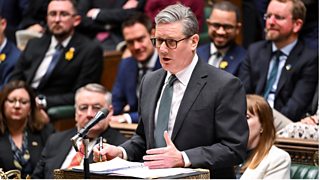
1:02Watch: Sir Keir Starmer pays tribute to UK troops after JD Vance comments
Sir Keir Starmer has paid tribute to British veterans who fought in Afghanistan and Iraq, after US Vice-President JD Vance was accused of disrespecting UK troops.
Without directly referring to Vance’s comments, Sir Keir opened Prime Minister’s Questions by remembering those who “died fighting for Britain alongside our allies”.
On Tuesday, Vance was criticised for saying a US stake in Ukraine’s economy was a “better security guarantee than 20,000 troops from some random country that hasn’t fought a war in 30 or 40 years”.
The UK and France have said they would be willing to put troops in Ukraine as part of a peace deal – although Vance later insisted he did not mention either country.
Advertisement
Follow live updates: Trump tells Congress he ‘appreciates’ Zelensky’s message on Ukraine peace
JD Vance: The ‘hillbilly’ Maga loyalist who became vice-president
What hurdles does Europe’s peace plan for Ukraine face?
The prime minister told the Commons: “Tomorrow marks 13 years since six young British soldiers were on patrol in Afghanistan when their vehicle was struck by an explosive tragically killing them all.”
He added: “These men fought and died for their country, our country. And across the wars in Afghanistan and Iraq, 642 individuals died fighting for Britain alongside our allies, many more were wounded.
“We will never forget their bravery and their sacrifice, and I know the whole House will join me in remembering them and all those who serve our country.”
Challenged over whether the tribute was a direct response to Vance’s comments, the prime minister’s official spokesman said: “You can draw your own conclusions.”
It is not standard practice for the PM to mark the anniversaries of the deaths of soldiers.
Vance’s comments were later raised by Liberal Democrat MP Richard Foord, who suggested the vice-president should have more respect for those who lost their lives.
He asked Sir Keir whether he would remind the US government the UK supported the country in Iraq following the 9/11 attacks.
In response, the PM said: “He speaks for the whole House.
“We do remember the role we played historically with our allies and we particularly remember those that made the ultimate sacrifice in that duty for their country and for our allies and that’s why it’s so important that we make that point today.”
After the UK offered peacekeepers to Ukraine, Vice President Vance opined on “some random country” that haven’t fought wars in decades, angering Britons.
 Rosamond Press
Leave a comment