On March 8, 2025, I John Presco, claim all of the North American Continent, in the name of Prince Rupert of Bohemia. I also declare I am the King of Wittelsbach Nations in Europe. Many of my people’s nations were captured by the Soviet Union that Vladimir Putin wants to restore – and wear the crown of the Romanovs. Because it is apparent Donald Trump has changed sides, and pledged felty to Lord Putin ‘The Beast of Revelations’, and because he pledged to take Greenland by force, I here by crown Traitor Trump the King of Beulah Land. May his MAGA subject retreat from reality there. As King of North America I swear a carton of eggs and a gallon of milk, will not cost more that $1.50.
“Be careful of what you wish for!”
1 Samuel 8:19-22 is a INTERPOLATION. Samuel was a Nazarite. Nazarites ADMITTED MEN AND WOMEN AS EQUALS. I will show you how God created a Abolitionist Democracy in the Wilderness.As the Nazarite King of North America, I will give Biblical lessons on the first of the month.
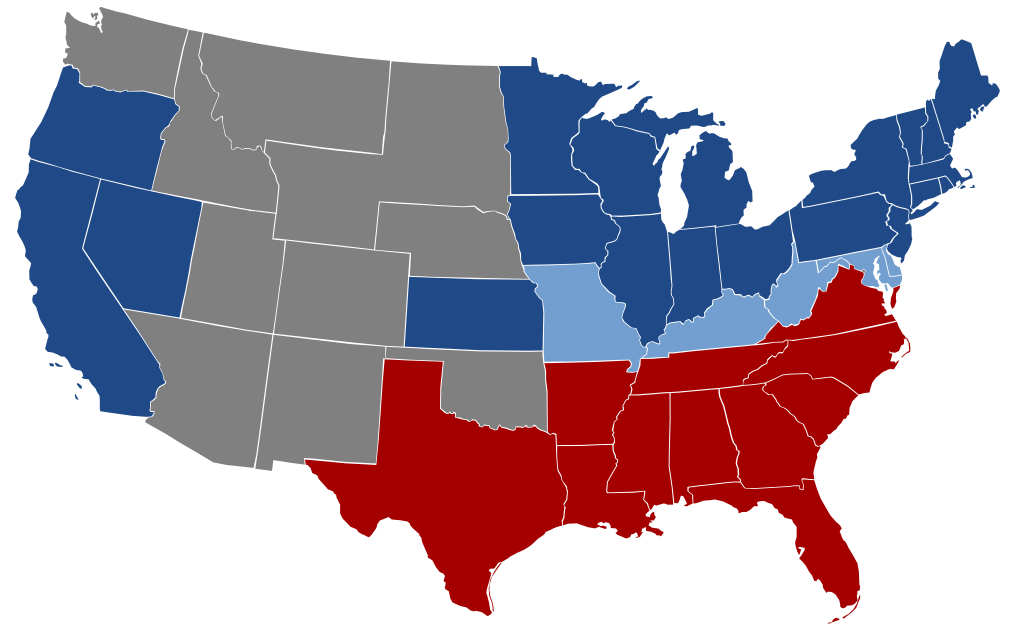
On this day, I found the African Nation of North America – IN THE WHOLE STATE OF TEXAS! To those white people who do not want to live around black people, go home! To black people who do not want to live around white people, go home. You do not have to segregate yourself, You can stay where you are. But, we are done employing the late Democracy, in a racist manner – disguised as a religious movement. You Neo-Confederate Christians destroyed America Democracy, and are responsible for the deaths in Ukraine when your Fake King stabbed many nations in the back,
Go home, Go home to your beloved Beulah Land – and wait for your Jesus there. I would humble yourself – and repent of your sins…..For the true King, has returned!
John Presco ‘King of North America’
1 Samuel 8:19-22 The Message (MSG)
But the people wouldn’t listen to Samuel. “No!” they said. “We will have a king to rule us! Then we’ll be just like all the other nations. Our king will rule us and lead us and fight our battles.” Samuel took in what they said and rehearsed it with GOD. GOD told Samuel, “Do what they say. Make them a king.” Then Samuel dismissed the men of Israel: “Go home, each of you to your own city.”
:In one corner: The world’s largest island, 80% of it covered in ice, whose Prime Minister Múte Bourup Egede says the Americans and their leader need to understand that Greenland is not for sale; it can’t be taken; it’s “ours.”
In the other corner, President Donald Trump appears determined to use the approximately 1,300 days he has left of his second term to acquire the mineral-rich, strategically located Arctic territory, making it America’s 51st state (if Canada doesn’t get there first). Trump plans to get it “one way or the other,” as he said Tuesday night in a joint address before Congress.
Greenland is part of Denmark. It’s been that way since the 18th century. It has its own local government, with a parliament that oversees some domestic and civil affairs. Laws pertaining to Greenland’s defense, national security and economy are controlled by policymakers in Copenhagen, more than 2,000 miles away. (The closest U.S. point to Greenland is about 1,600 miles.) Trump first indicated he wanted to buy Greenland in 2019, during his first term. In his second, he’s refused to rule out economic or military force to take control of it.


Parents and ancestry
[edit]
Rupert’s father was Frederick V of the Palatinate, of the Palatinate-Simmern branch of the House of Wittelsbach. As Elector Palatine, Frederick was one of the most important princes of the Holy Roman Empire. He was also head of the Protestant Union, a coalition of Protestant German states. The Palatinate was a wealthy state, and Frederick lived in great luxury.[2]
Frederick’s mother, Countess Louise Juliana of Nassau, was daughter of William the Silent and half-sister of Maurice, Prince of Orange, who as stadtholders of Holland and other provinces were the leaders of the Dutch Republic.[3]
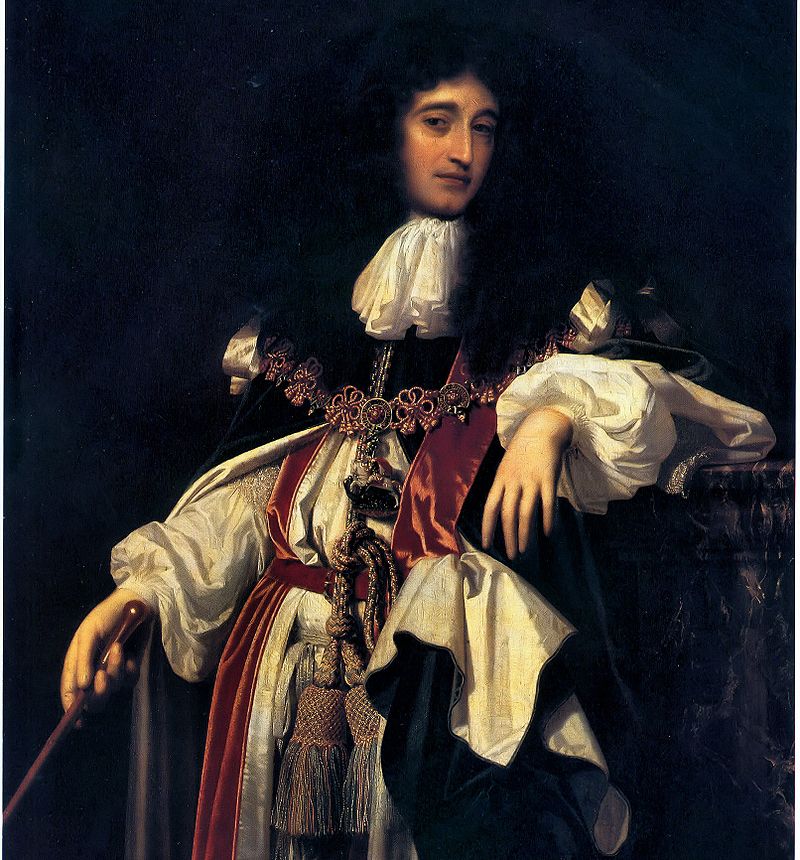
Rupert’s mother was Elizabeth Stuart, daughter of King James VI of Scotland and I of England. Thus Rupert was nephew of King Charles I of England and Scotland, and first cousin of King Charles II of England and Scotland, who made him Duke of Cumberland and Earl of Holderness. His sister Electress Sophia was the mother of George I of Great Britain.[4]
Rupert was named in honour of Rupert, King of Germany, a famous Wittelsbach ancestor.[5]
Rupert was born in Prague, Bohemia, in 1619, and was declared a prince by the principality of Lusatia.[6] His father had just been elected king by the largely Protestant estates of Bohemia. This was perceived as an act of rebellion by the Catholic House of Habsburg, who had been kings of Bohemia since 1526, and initiated the Thirty Years’ War. Frederick was not supported by the Protestant Union, and in 1620 was defeated by Emperor Ferdinand II in the Battle of White Mountain.[7] Rupert’s parents were thus mockingly termed the “Winter King and Queen”.[8] Rupert was almost left behind in the court’s rush to escape Ferdinand’s advance on Prague, until courtier Kryštof z Donína (Christopher Dhona) tossed the prince into a carriage at the last moment.[9]
Rupert did, however, become a noted artist in mezzotint in his own right. He produced a few stylish prints in the technique, mostly interpretations of existing paintings, and introduced the form to England after the Restoration, though it was Wallerant Vaillant, Rupert’s artistic assistant or tutor, who first popularised the process and exploited it commercially. Rupert’s most famous and largest art work, The Great Executioner, produced in 1658, is still regarded by critics such as Arthur Hind and Antony Griffiths as full of “brilliance and energy”,[107] “superb” and “one of the greatest mezzotints” ever produced;[108] other important works by Rupert include the Head of Titian and The Standard Bearer.[109]
Career following the Restoration
At the start of the Second Anglo-Dutch War (1665–1667), Rupert was appointed as one of the three squadron commanders of the English fleet, under the overall command of the Duke of York, taking HMS Royal James as his flagship.[127]
After 1673, Rupert remained a senior member of the Royal Navy and Charles’s administration. Rupert allied himself with Lord Shaftesbury on matters of foreign policy, but remained loyal to King Charles II on other issues,[124] and was passionate about protecting the royal prerogative. As a consequence, he opposed Parliament’s plan in 1677 to appoint him to Lord High Admiral—on the basis that only the King should be allowed to propose such appointments—but noted that he was willing to become Admiral if the King wished him to do so.
In 1670, the King approved the charter for “The Governor and Company of Adventurers of England trading into Hudson’s Bay” that would form the Hudson’s Bay Company, which was granted a trading monopoly in the whole Hudson Bay watershed area, an immense territory named Rupert’s Land, with Rupert appointed the first Governor.[160] Rupert’s first company secretary was Sir James Hayes and Radisson named the Hayes River, in present-day Manitoba, in his honour. The company continued to prosper, forming the basis for much of the commercial activity of colonial Canada. Rupert’s role in colonial commerce was marked by his being asked to lay the cornerstone of the new Royal Exchange in 1670, and being made one of its first councillors.[161][b]
Rupert’s Land (French: Terre de Rupert), or Prince Rupert’s Land (French: Terre du Prince Rupert), was a territory in British North America which comprised the Hudson Bay drainage basin. The right to “sole trade and commerce” over Rupert’s Land was granted to Hudson’s Bay Company (HBC), based at York Factory, effectively giving that company a commercial monopoly over the area. The territory operated for 200 years from 1670 to 1870. Its namesake was Prince Rupert of the Rhine, who was a nephew of King Charles I and the first governor of HBC. In December 1821, the HBC monopoly was extended from Rupert’s Land to the Pacific coast.
Under the principles of the doctrine of discovery, after the English visited and “discovered” Hudson’s Bay, they could claim any lands found that were not already owned or “possessed” by other European or Christian nations. England claimed ownership of the lands surrounding Hudson’s Bay. After explorations in 1659, Prince Rupert took interest in the Hudson’s Bay region. The 1668–1669 expedition of the Nonsuch to the Hudson’s Bay area returned with £1,400 (equivalent to £284,123 in 2023) worth of furs.[1] However, England was not ready to organize a government on those lands. Instead, a “Company of Adventurers of England” was formed to administer those lands for England, thereby taking possession.
Surrender of the territory
[edit]
See also: Timeline of Rupert’s Land and North-Western Territory transfer
In 1869–1870, when the Hudson’s Bay Company surrendered its charter to the British Crown, it received £300,000 in compensation. Control was originally planned to be transferred on 1 December 1869, but due to the premature action of the new lieutenant governor, William McDougall, the people of Red River formed a provisional government that took control until arrangements could be negotiated by leaders of what is known as the Red River Rebellion and the newly formed government of Canada. As a result of the negotiations, Canada asserted control on 15 July 1870.[citation needed]
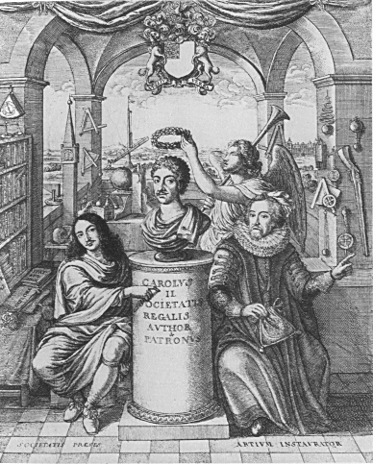
Rupert had already become the third founding member of the scientific Royal Society, being referred to by contemporaries as a “philosophic warrior”,[163] and guided the Society as a Councillor during its early years
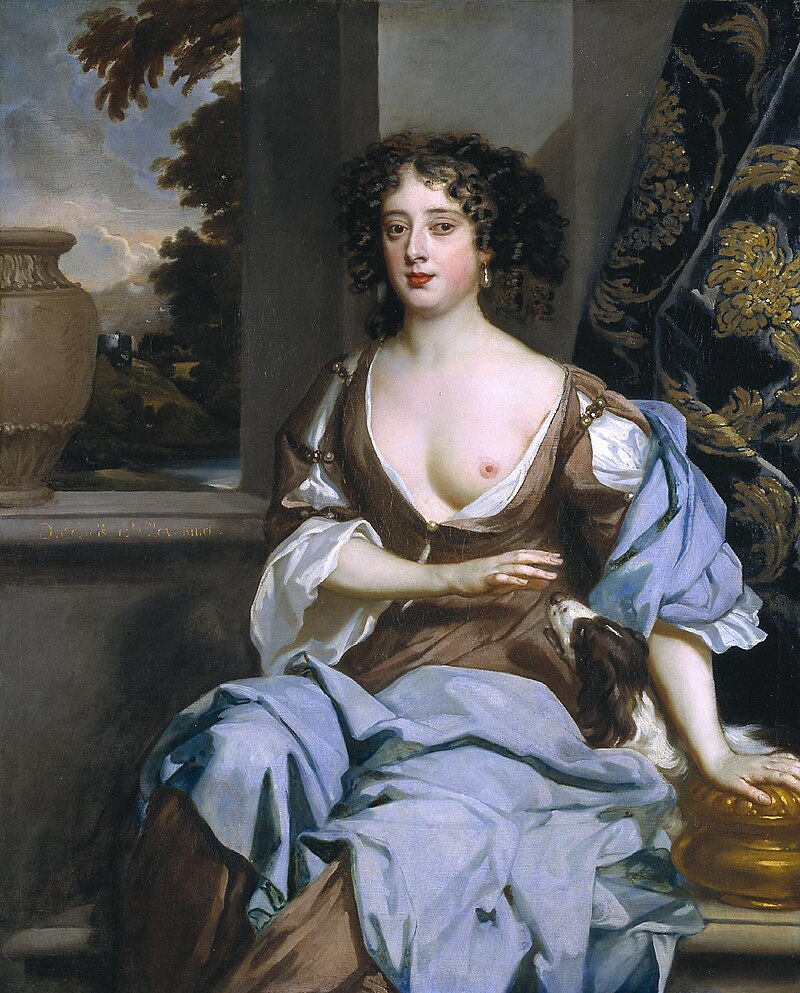
Margaret Hughes (29 May 1630 – 1 October 1719), also Peg Hughes or Margaret Hewes, was an English actress who is often credited as the first professional actress on the English stage, as a result of her appearance on 8 December 1660.[nt 1] Hughes was the mistress of the English Civil War general Prince Rupert of the Rhine.
Frederick V (German: Friedrich V.; 26 August 1596 – 29 November 1632)[1][2] was the Elector Palatine of the Rhine in the Holy Roman Empire from 1610 to 1623, and reigned as King of Bohemia from 1619 to 1620. He was forced to abdicate both roles, and the brevity of his reign in Bohemia earned him the derisive sobriquet “the Winter King” (Czech: Zimní král; German: Winterkönig).
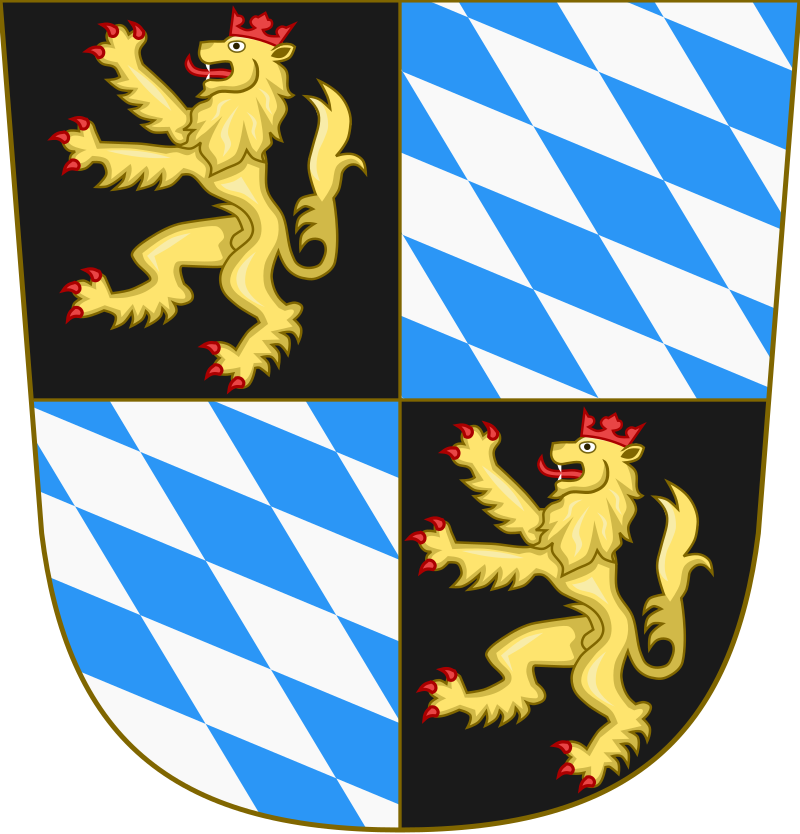
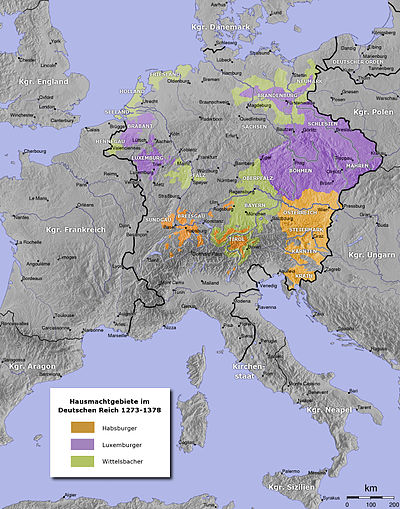
The House of Wittelsbach (German: Haus Wittelsbach) is a former Bavarian dynasty, with branches that have ruled over territories including the Electorate of Bavaria, the Electoral Palatinate, the Electorate of Cologne, Holland, Zeeland, Sweden (with Swedish-ruled Finland), Denmark, Norway, Hungary, Bohemia, and Greece. Their ancestral lands of Bavaria and the Palatinate were prince-electorates, and the family had three of its members elected emperors and kings of the Holy Roman Empire. They ruled over the Kingdom of Bavaria which was created in 1805 and continued to exist until 1918.
The House of Windsor, the reigning royal house of the British monarchy, are descendants of Sophia of Hanover (1630–1714), a Wittelsbach Princess of the Palatinate by birth and Electress of Hanover by marriage, who had inherited the succession rights of the House of Stuart and passed them on to the House of Hanover.[1][2
Now I saw in my dream, that by this time the pilgrims were got over the Enchanted Ground, and entering into the country of Beulah, whose air was very sweet and pleasant, the way lying directly through it, they solaced themselves there for a season. Yea, here they heard continually the singing of birds, and saw every day the flowers appear in the earth, and heard the voice of the turtle [dove] in the land. In this country the sun shineth night and day: wherefore this was beyond the Valley of the Shadow of Death, and also out of the reach of Giant Despair; neither could they from this place so much as see Doubting Castle. Here they were within sight of the city they were going to…[2]
Denis de Rougemont & L’Ordre nouveau
Posted on October 8, 2013 by Royal Rosamond Press

It was more then fate that brought Virginia and I together. Our blood came together long ago. I am certain my Rougemont ancestors were the family that begat the Habsburg line. In weeks, the Republican Party founded by my kindred, will lie in ruin thanks to the followers of John Darby. We will be a one party nation. It’s time to sweep the evangelical redneck trailer-trash into the sea. It’s time to bring a New World Cultural Order from Europe and in theory create the New Louisiana Order in the heartland of America. The Hapsburgs were great patrons of the arts after Rene d’Anjou, whom is their kin. A Artistic Dynasty has been established in my family tree that awaits to be married to the de Bourmont tree.
On September 8th. Virginia got down on her knee she had major surgery on, and proposed marriage. I had brought my camera along because I had an idea how to solve my dear friend’s memory loss she suffered when she was in a terrible auto accident. She was twenty years of age, and was in a coma for twenty-eight days. It was a miracle she came out of it.
What I wanted Virginia to do was wear a camera around her neck and record her encounters with people, especially new people. Being her memory appendage for sixteen years I offered to store her videos on her facebook, so she could review her life.
On the 9th. of September, Virginia forgot she was my fiancé. She also forgot I proposed to her two weeks later, and that I gave her a ring. Today, so many royal families are all but forgotten. I am a bottomless well of information. I am Lazarus ‘The Boatman’ adrift in a sea of family trees. Virginia and I own near-death-experiences. We are old in years like Elizabeth and Zachariah. Today is my birthday. I was named after John the Baptist. The sky was filled with shooting stars minutes after I was born.
Ursule de Ferrette de Sundgau married Hughes de Hohenzollern. Ursule is the sister of Jeanne de Rougemont de Ferrette who married Albert von Habsburg. From this couple most of the Habsburgs descend. This branch is spliced into the Ursule Hohenzollern branch, begetting most of the royalty of Europe via the de Bar family. There is a modern myth that says members of the de Bar family were Grand Masters of the Priory de Sion, that with the help of the Knights Templar, guard a Grail Bloodline. If true, this Holy Bloodline could not help but be swallowed in the blood that flow from these two sisters who may descend from “The People of the Bear”.
The name Ursule means “she-bear”. From this she-bear Georg Friedrich Hohenzollern ‘Prince of Prussia and Orange’ is born, as was Kaiser Wilhelm a grandson of Queen Victoria. Georg is close kindred of William and Harry Windsor.
Ursule’s son, “Hugo VII was a scion of the comital house of Montfort at Bregenz, head of an old and influential Swabian family of nobles, holding numerous high administrative posts. By his mother Countess Ursula of Ferrette (Pfirt), he was related with the Austrian House of Habsburg.
Hugo wrote songs and Minnebrief rhymes, as well as political and didactic speeches. About 1402 he had a first manuscript of his works drawn up. Approximately 40 of his texts are preserved in an elaborate 1414 codex. Though still standing in the shadow of his famous contemporary Oswald von Wolkenstein, he is today considered one of the last importatnt representatives of the German Minnesang.”
It is this bloodline I beheld when I died. It takes us to the Bradenberg Gate where my Stuttmeister kin lived. I was born to raise it from the ashes of tryanny and dispair. These ‘People of the Bear’ are kin to John Fremont whose Bear Flag flew over California after he took it from the Habsburgs.
Jon Presco
Copyright 2012
Diversity of European identities
The purpose of Denis de Rougemont’s book The Idea of Europe is precisely to rip off our identity from the grip of the present and selective memory of nation-states and ground it in the timely and space-bound objective narrative of Europe. Rougemont’s preface to the book also forms the general leitmotif that weaves through the whole work:
‘Europe is much older than the European nations. Their lack of unity and their ever more illusory claims to absolute sovereignty endanger its very existence. If only they could unite, Europe would be saved, and with it all that remains valuable in its richly creative diversity’.
Denis de Rougemont was titled ‘The Prince of European Culture’. He was at the first Bilderberg meeting, and is considered a co-founder of the European Union. Frederich the Great granted the Rougemonts of Neufchatel a title of old nobility when he came to this area in Switzerland.
Rougemont was the Director of Congress of Cultural Freedom that employed Writers and Artists against the Soviet Block. There is a creative subconscious that may have created a psychic force that brought many to a vortex that a core group created, and was like a psychic internet. The Roza Mira of Russian is sustained outside this Western Vortex, but, subliminal messages are being exchanged by what you might call Art Angels.
Jon Presco
http://modernhistoryproject.org/mhp?Article=Kulturkampf
Rougemont, Denis (de)
8.09.1906, Couvet (Neuchâtel) – 6.12.1985, Geneva
Source Fondation Denis de Rougemont
next article
Denis de Rougemont
Biography
Denis de Rougemont was born on on September 8th, 1906 in Couvet in the Canton from Neuchâtel in Switzerland. His/her father is Pasteur. He continues studies of letters at the University of Neuchâtel between 1925 and 1930. In parallel, it starts its first voyages and remains in particular in Vienna, in Hungary and Souabe.
In 1930, it settles in Paris and becomes, within the Esprit movements and the Order New one of the founders of Personalism, at the sides of Emmanuel Mounier, Arnaud Dandieu, Robert Aron, Henri Daniel-Rops and Alexandre Marc. They were called “the nonconformists of the Thirties”. Rejecting as well Hitler as Stalin, just as nationalism and individualism, they preach the idea of an political organization, economic and social which is with the service of the Person designed like a unit at the same time distinct (the individual) and connected to the Community (the citizen), at the same time free (as an individual) and person in charge (as a citizen).
The Federalism appears the model to them which makes it possible best to link the People without giving up their diversity, and this is why they preach it. On the other hand, they reject the State-Nation centralized like mode of organization of the company.
During the years 1930, Denis de Rougemont develops the topics of Personalism through two works: Policy of the Person (1934), To think with the Hands (1936). In 1935-1936, it remains in Germany like French reader at the University of Francfort-sur-le-Main and brings back from there a very negative testimony on the Nazism, which it delivers in his Newspaper of Germany (1938). In 1939 appears the Love and the Occident which shows the influence D `a certain number of accounts mythical (of which Tristan and Iseult) on the typically Western design of an impassioned love and finally destructor, that the author opposes to the true charity.
In 1940, it is mobilized in the Swiss army and, with other personalities, it founds the League of Gothard which aims at stimulating the spirit of resistance to Hitler. Its positions being considered to be not very compatible with Swiss neutrality, it is sent on mission of conferences to the United States. Installed in New York, it publishes the share of the devil into 1942 who is a reflection on the disorders of the modern world, limed in totalitarianism and the materialism. It binds with many writers or European artists in exile (Saint-Exupéry, André Breton, Max Ernst, Marcel Duchamp, Saint-John Perse, Wystan Auden). After Hiroshima and Nagasaki, it shows, in its Letters on the atomic bomb (1946), that the nuclear weapon places the men in front of a world danger which must encourage them to exceed the idea of national sovereignty.
Returned definitively to Europe in 1947, it takes part, at the sides of the federalists, the efforts to link Europe. On August 26th, 1947, he makes the inaugural speech of the first Congress of the European Union of the Federalists (the federalistic attitude). At the time of the Congress of $the Hague (7 May 10th, 1948), he is at the same time rapporteur of the cultural Commission and writer of the Final declaration (Message to Europeans). During this Congress, the cultural Commission proposes the creation of a Center European of the Culture, tries whose seizes itself Denis de Rougemont who to this end organizes the first European Conference of the Culture (Lausanne, 8 December 12th, 1949). The Center European of the Culture is finally made up in Geneva in 1950 and placed under the direction of Denis de Rougemont.
At the same time, it is mobilized with other intellectuals against Stalinist propaganda conveying the idea of a culture to the service of the class struggle, within the Congress for the Freedom of the Culture of which he becomes President in 1952 (he will occupy this function until 1966).
In charge of the Center European of the Culture, Denis de Rougemont provided the foundations, in December 1950, of an organization gathering the European scientists working on nuclear energy: it will be the CERN. He was at the origin of the first association joining together the very first Institutes of European Studies, which was drawn up in Geneva in 1951 (it existed until 1991), as well as European Association of the Festivals of Music. In the sides of Robert Schuman, it took part in the creation of the European Foundation of the Culture (Geneva, December 16th, 1954) which was transported to Amsterdam in 1957 when it always continues its activities.
He undertakes a deliberation on the cultural features which characterize the Occident compared to other civilizations. It is the topic of its work the Western Adventure of the Man (1957) and the think tank on the “dialog of the cultures” (formulates begun again later by UNESCO) which it organizes as from 1961. This same year, it publishes a work on the history of the European idea entitled Twenty-eight centuries of Europe. In 1963, it founds in Geneva the Institute of European Studies which will be incorporated in the University in 1992.
From the years 1960, its activity will concentrate on two topics: the rise of the areas and the transborder areas which carries out it towards the idea of a federalism being combined to the ideal of “Europe of the Areas”; destruction of the environment which leads it to call in question the finalities of our companies. He sees in the emergence of areas to human size at the same time an alternative to the State-Nation and the chance to reintroduce in our companies the concept of responsibility so essential to safeguarding for the environment. Ecology and areas are in the center of its last two major works: Open letter with Europeans (1970), the Future is our business (1977).
One will also raise permanence of his reflection on the technical development and his consequences, since his work on the atomic bomb going back to 1946 until data processing (article “Information is not to know” in 1981), via civil nuclear energy (the CERN).
Denis de Rougemont dies in Geneva on on December 6th, 1985.
The Foundation Denis de Rougemont
One finds on the site of the Foundation Denis de Rougemont of the many information on the writer, in particular of the reference books, the images and bibliography.
The Idea of Europe in the work of Denis de Rougemont and the French non-conformists
09/03/2009 Leave a comment
Denis de Rougemont was a main thinker of the so-called non-conformistes des années trente, a movement of young intellectuals that appeared in France at the beginning of the turbulentcover 1930s, in opposition to both the individualism of liberalism and the collectivism of the Soviet Russia. [1] The main bulk of their work was published between 1930-34 and was concentrated around three separate currents:
◾ The founders and members of L’Ordre nouveau. An intellectual movement established by the Russian migrant Alexandre Marc (born in 1904 in Odessa as Aleksander Markovitch Lipiansky), its goal was to prepare the conditions for a ‘spiritual rebirth’ of the European culture. Its effort was concentrated on going beyond such dualistic divisions as nationalism-internationalism and capitalism-communism. Its inspirations came, among other sources, from the Christian existentialism of Kierkegaard, the federalism of Proudhon, the great critique of Modernity Nietzsche, or from the historicism of Péguy. The thinkers who were a part of L’Ordre nouveau also included Robert Aron, Arnaud Dandieu, Daniel-Rops, Jean Jardin and finally Denis de Rougemont.
◾The Catholic revue L’Esprit of Emmanuel Mounier, founded in 1932. From the beginning it evolved in tight collaboration with L’Ordre nouveau. In reaction to the events of the Second World War it radically shifted to the political left , in order to slowly move back to more moderate positions of the ‘New Left’, under which it still publishes to this date.
◾Young thinkers of Jeune Droite, who were mostly dissidents of the French reactionary and monarchistic right Açtion française. These thinkers included Jean de Fabrègues, Jean-Pierre Maxence and Thierry Maulnier.
Furthermore, Ferdinand Kinsky also includes among them those thinkers, from whom the non-conformists drew their inspiration: Stern, Blondel, Buber, Nédoncelle, Karl Barth, Gabriel Marcel, Jacques Maritain or Nicholas Berdiaeff.[2]
Although the non-conformists came from different backgrounds and their thinking took on some issues rather opposing positions, they all subscribed to the doctrine of ‘personalism’, and, consequently, to federalism. The non-conformists converged on the point that
‘man was above all not an “individual.” He is a “person,” that is both responsible and free, committed and autonomous, a being in himself, but related to his fellowmen by his responsibility’.[3]
As a person, human being is not a lonely monad, not even a rational being, which could exist outside of society, but a social entity whose nature is fulfilled only by sharing his life in common with others. To live within a society does not mean to be enclosed in a ‘homogeneous’ nation-state, but to be a part of multiple and overlapping ‘intermediary’ communities, which are most naturally formed around family, territory, or profession. For the non-conformists/personalists, these intermediary communities both historically and philosophically ultimately share the common European ‘well’ from which they draw their actual particular ideas and traditions. Europe and its culture for them necessarily precede nations and nation-states. The thinkers such as the Schlegels or Herder constructed the idea of a self-sufficient nation from already present, primordial European philosophical and historical traditions. The English historian Christopher Dawson best summarises this position in his 1932 work The Making of Europe, when he notes that
‘The evil of nationalism does not consist in its loyalty to the traditions of the past or in its vindication of national unity and right of self determination. What is wrong is the identification of this unity with the ultimate and inclusive unity of culture which is a supernatural thing.
The ultimate foundation of our culture is not the national state, but the European unity’.[4]
The nation-state was thus only one realised possibility of the European culture. A peculiar thing about nationalist movements was that they consciously denied the notion of their own continuity and grounding in the common European history and philosophical thought. Martin Heidegger would say this was a perfect manifestation of the ‘metaphysics of subjectivity’ – they picked up one particular set of characteristics out of their European heritage and by intellectual sleight of hand, suppressing the memory of their nations continuity with other European sources,[5] argued for their ‘homogeneity and cultural self-sufficiency’.
The French thinker Alain de Benoist recently argued from the same perspective, when he distinguished our ‘objective’ history as ‘a pile of representations of identity of past times and past protagonists’,[6] from our actual-assumed identity, whose dimension is always political since it is based on the projection of our past towards the future. In other words, our actual identity (in the 19th and 20th c., it was that of nations and nation-states), always grounds the collective ‘I’ in the past, based on values and necessities of the present and possibilities of the future. As Alain de Benoist adds, ‘memory screens [our timely, historical identity] and retains what conforms to its idea of the past and to the image it wants to give in order to give it a meaning’.[7]
Diversity of European identities
The purpose of Denis de Rougemont’s book The Idea of Europe is precisely to rip off our identity from the grip of the present and selective memory of nation-states and ground it in the timely and space-bound objective narrative of Europe. Rougemont’s preface to the book also forms the general leitmotif that weaves through the whole work:
‘ Europe is much older than the European nations. Their lack of unity and their ever more illusory claims to absolute sovereignty endanger its very existence. If only they could unite, Europe would be saved, and with it all that remains valuable in its richly creative diversity’.[8]
titian_rape_of_europa
The Rape of Europa by Titian
‘from that time onward the name of Europe and the concept of Europe will recur in even more solemn contexts down to the Carolingian Empire, in apostrophes to the Pope, in ecclesiastical panegyrics, in prose and verse chronicles, and in the lives of the saints’.[12]
The final step was taken with Charlemagne, whose dominium was called ‘Europe vel Regnum Caroli’ and on whom his court poet Angilbert bestowed the titles of ‘head of the world . . . summit [or tiara] of Europe . . . supreme father’.[13] Europe thus becomes a political entity, which is not merely constructed as one of the contemporary three divisions of the map of the world (Europe, Libya or Africa, Asia), it is finally an ‘autonomous entity, endowed with spiritual virtues’.[14]
As we know however, this was a premature spring and the fragmentation of Charlemagne’s empire under his three sons soon followed, as if in the anticipation of the things to come in the period from the 17th to 20th century. On 434 pages, Denis de Rougemont continues to recount various conceptualisations of Europe that followed. Nevertheless, what is probably the most intriguing section of the book is part seven,[15] where he tries to mend together various 20th century historians and thinkers to give us an idea what ‘European identity’ means, if it went through such diverse historical manifestations.
Rougemont’s conceptualisation of European identity
First of all, through his overview of different conceptualisations of Europe, Rougemont lead us to reject the idea that there could be one ‘ true’ atemporal European essence, which could be taken as the lowest ‘common denominator’ of everything European.[16] Europe is above all the totality of its representations – and a European is in the first instance the one who finds in its diversity something that resonates with his ‘present I’. The first step in the formation of any identity is thus conscious self-identification, finding one’s possibilities not by ‘returning to the sources’, but by resorting to the sources in order to discover how do they fit into one’s present and future. It might be therefore said that there are ‘two Europes’, the one which is philosophical and historical, i.e., the one which provides us through its totality with different representations of what it has meant to be a European, and the other which is inherently bound to politics. The latter is dependent on the way one answers the question of what one wants Europe to be – 0n the way how does one ‘chooses’ one’s identity from the possible sources. In other words, in one way Europe (‘unconsciously’) already ‘is’, but in the other way it is still dormant, waiting to be appropriated as a political project – consciously adopted as a part of our own present identity. Only when Europe materialises through the political process as a cultural entity, it will be possible to ‘grasp’ it and built upon it in our social life in new ways.
This idea of ‘two Europes’ is in fact very close to the constitutive or expressivist theory of language of Herder. Its importance was recently recognised by the Canadian communitarian thinker Charles Taylor.[17] Herder, and through him Taylor, argued that the language not only describes the reality (‘what is already there’, on the background), as such theorists as Condillac claimed, but also constitutes and recreates it anew, under a different perspective. For Condillac or Locke, linguistic expression was always linked to some pre-existing content, to the idea that ‘at each stage of [linguistic] process, the idea precede[d] its naming, albeit its discriminability results from a previous act of naming’.[18] Herder, however, adds to the language a new, ‘expressive’ dimension, claiming that the interlocution not only describes, but that ‘it also open[s] possibilities for us which would not be there in its absence’.[19] In other words, by saying something, we do not only describe what is already there, but also shape it to a new dimension. By creating a political Europe, we do not only re-represent what is already there, but we are giving Europe a new dimension by the creative process itself.
Perhaps this was also a reason why Heidegger in his later thought credited the poetry for allowing us to temporally ascend to the ‘authentic’ Being. As one of Heidegger’s interpreters Richard Polt notices, ‘if Heidegger is right, then our most authentic relation to language is poetic. Instead of using language as a tool for representation, we should respect it as a rich source of poetic revelation’.[20] The poet thus represents an authentic existence – instead of using old words and worn out meanings, he ‘appropriates’ the reality in relation to his own person. Does it mean that all great minds who try to build Europe politically are also poets?
The Abduction of Europa by Rembrandt (1632)
The Abduction of Europa by Rembrandt (1632own person.
This excurse to the theory of language might help us appreciate what Denis de Rougemont is ultimately suggesting in his search for ‘the’ European identity. Although there are undeniable sources of European culture such the ancient Greece, Rome and Christianity, the Celts, or the ancient German tribes, what Europe is for us will in the last instance depend on what do we want it to be. It is true that the most of the European thought arose as the positive or negative reaction to the ancient Greeks, be it the Romans with their sombre gravitas who unsuccessfully tried to emulate the joyous Greek spirit, or the Christians who upheld the rational Apollo at the expense of Dionysos. Nevertheless, in the last instance it always depends on ourselves whether we identify with these sources or not. Paul Valéry for instance felt closest to the Greeks, claiming that
‘what we owe to Greece is perhaps what has most profoundly distinguished us from the rest of humanity. To her we owe the discipline of the Mind, the extraordinary example of perfection in everything. To her we owe the method of thought that tends to relate all things to man, the complete man. Man became for himself the system of reference to which all things must in the end relate. He must therefore develop all the parts of his being and maintain them in a harmony as clear and even as evident as possible. He must develop both body and mind’.[21]
Denis de Rougemont would have certainly agreed with Valéry. One might even argue that personalism itself – with its conception of a person as against the liberal idea of a self-sufficient individual, is the conscious adoption of the Greek heritage on the part of the non-conformists. Rougemont keenly notices that our Greek heritage has become in the recent years more important, arguing that
‘the revival of our interest in things Greek is reflected in the twentieth century by the most varied symptoms: discovery of the pre-Socratic philosophers . . . the vogue for mythology (Freud’s Oedipus complex, the Ulysses of Joyce or Kazantzakis, Spitteler’s Prometheus, Gide’s Theseus, Cocteau’s Orpheus, etc); revival of the themes and titles of Greek tragedy by many playwrights, poets, and composers (“Choephores and Eumenides,” by Claudel and Darius Milhaud, to mention only one example, re-created the sacred thrill of the ancient drama, of which a poet like Racine retained only the plot); rediscovery of the secret of the Doric style; passionate researches into the mystery religions . . .[22]‘.
Philosophically and historically, as Denis de Rougemont shows us in The Idea of Europe, we therefore already are Europeans. Politically and in our memory, some still consider themselves to be enclosed within ‘homogeneous’ national entities and deny their shared European roots. Only the future will shows us, however, whether we will also manage to appropriate our identity politically.
 Rosamond Press
Leave a comment