
President Donald Trump holds a cabinet meeting at the White House in Washington, DC, on Feb. 26, 2025.
Jim Watson/AFP via Getty Images
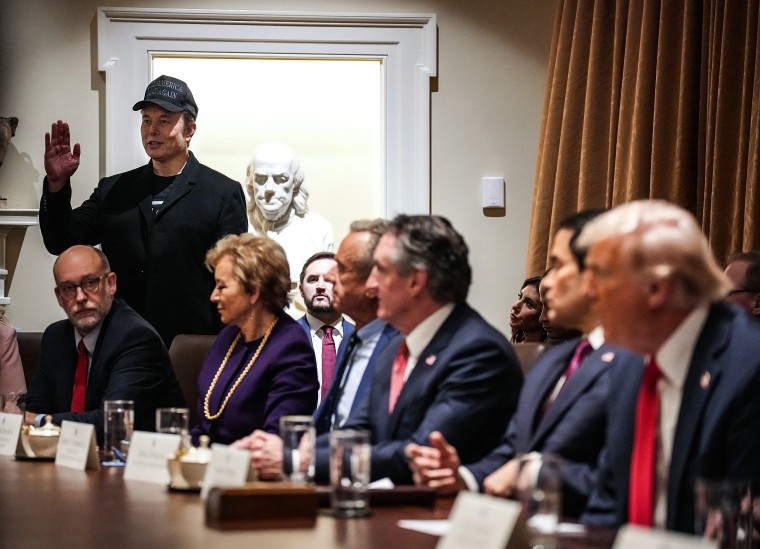
Elon Musk speaks during a Cabinet meeting today.
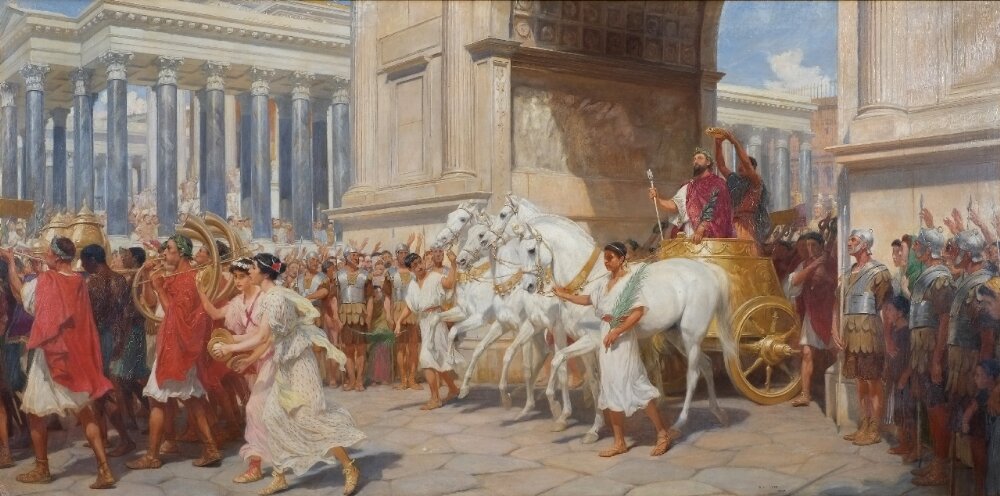
Modern Depiction of a Triumphator
“They have great rare earth!”
President of the United States 2-26-25
So far, no respected historian has been able to give Trump a real sense of real history. General Mark Milley, tried. Below is his Wikipedia citation that is – a real mind blower! He had to have watched the cabinet meeting – that might become a series? Mark knows he rained on Don John’s parade like no one in history. I began my search for his portraits today. They will be in my letter to Governor Kotek that I hope to publish tomorrow. I will present the idea that Trump has been waging warfare against Democrats – who are the No.1 Enemy of Putin! This is key. Mark believe he averted a nuclear war with China, because – TRUMP FLIPPED!
Donald John Trump has a alter-ego that he worships at his rallies. Why did Don Juan allow Elon Musk to be the manifestation of The Phantom called……..DON JUAN? Does Putin have strings attached to
THE DEVIL-PUPPET OF THE CABINET ROOM?
That is a bust of Benjamin Franklin behind Musk – who should be wearing a suit and tie! Take off that damn hat – El Frieko! I see Musk fashioning a white mast from that bust. I am working on a proposal for a AI News Studio. How about a reality show called ‘King For A Day”. There’s got to be more than one Donald John…..DJ.
I have resolved my identity crisis and will be signing many of my posts, thus….
JAMES BOND AUTHOR
John Presco JBA ‘James Bond Author
In Republican Rome, truly exceptional military achievement merited the highest possible honours, which connected the vir triumphalis (“man of triumph”, later known as a triumphator) to Rome’s mythical and semi-mythical past. In effect, the general was close to being “king for a day”, and possibly close to divinity.
St. John’s Church incident
.jpg)
On June 1, 2020, during the protests in Washington, D.C. which followed the murder of George Floyd, Milley, in combat uniform, walked with the president from the White House across Lafayette Square to St. John’s Episcopal Church about half an hour after federal officers and police had used tear gas and other riot control tactics to disperse protestors, drawing sharp criticism from former military officers and others.[74][75][76][77][78]
According to Peril, Milley attended the walk in combat fatigues as he had been summoned away at short notice from a planned visit to an FBI operations center, and immediately departed once he and Esper realized the political implications of the walk, saying that he felt “sick” and was “fucking done with this shit” to Esper.[79][80] As a result, Milley was not present for Trump’s photo op at St. John’s Church.[79][81] The House Armed Services Committee later requested that Esper and Milley testify before the committee about the military’s role in the George Floyd protests, which they did on July 9.[82][83]
Unsent resignation letter
Milley reportedly considered resigning over the incident in front of the St. John’s Church, going so far as to draft a highly critical resignation letter to President Trump, but then deciding against handing the letter over to him. The resignation letter draft was later published in 2022.[84] At the last minute before submitting the resignation letter to the president, Milley opted against resignation and instead apologized for his presence at the St. John’s Church incident in a video recorded as his commencement address at the National Defense University on 11 June. At the commencement speech he explained that he should not have been at the event because his presence created a perception of military involvement in domestic politics.[85][86]
After the 2020 election
After losing his bid for reelection in November 2020, Trump and his allies made attempts to overturn the 2020 United States presidential election, presaging the attack on the Capitol on 6 January 2021. According to I Alone Can Fix It, a July 2021 book by Washington Post reporters Philip Rucker and Carol Leonnig, Milley became concerned Trump was preparing to stage a coup, and held informal discussions with his deputies about possible ways to thwart it, telling associates: “They may try, but they’re not going to fucking succeed. You can’t do this without the military. You can’t do this without the CIA and the FBI. We’re the guys with the guns”.[87]
Rucker and Leonnig’s book also quoted Milley as saying “this is a Reichstag moment”, comparing Trump’s attempts to overturn the election to the event used to cement Nazi Germany and referring to Trump’s false statements about electoral fraud as “the gospel of the Führer“. Milley reportedly told police and military officials preparing to secure Joe Biden‘s presidential inauguration: “Everyone in this room, whether you’re a cop, whether you’re a soldier, we’re going to stop these guys to make sure we have a peaceful transfer of power. We’re going to put a ring of steel around this city and the Nazis aren’t getting in”.[88][89] Trump later said that he had not threatened or spoken about a coup and falsely claimed that Obama had fired Milley.[90]
On January 12, 2021, Milley and the Joint Chiefs of Staff issued a statement condemning the storming of the U.S. Capitol by supporters of Trump and reminding all service members of their obligation to support and defend the Constitution and reject extremism.[91][92] They said: “As we have done throughout our history, the U.S. military will obey lawful orders from civilian leadership, support civilian authorities to protect lives and property, ensure public safety in accordance with the law, and remain fully committed to protecting and defending the Constitution of the United States against all enemies, foreign and domestic”.[93] In an interview on April 2, Milley said that the military reaction and response were “sprint speed” and “super fast”.[94] Speaker of the House of Representatives Nancy Pelosi said from her personal experience that was not the case, and called for a commission to find the truth.[95]
Calls with Chinese general

According to a September 2021 Axios report, in mid-2020 Pentagon officials were concerned about the Chinese having received bad intelligence from dubious sources that had them worried about a possible surprise U.S. strike against China.[96] In a report released in November 2021, the Pentagon confirmed these Chinese worries and that Esper had directed Milley and the deputy assistant defense secretary for China Chad Sbragia in mid-October to reassure their Chinese counterparts that the U.S. “had no intention of instigating a military crisis against China”.[96][97] Milley called his Chinese counterpart on October 30.[98]
In Woodward and Costa’s book Peril, the authors wrote that on October 30, 2020, four days before the U.S. presidential election day, Milley called his counterpart in China, General Li Zuocheng, quoting Milley as saying: “I want to assure you that the American government is stable and everything is going to be okay… We are not going to attack or conduct any kinetic operations against you … If we’re going to attack, I’m going to call you ahead of time. It’s not going to be a surprise”.[99][100] The authors wrote that Milley again called Li in January 2021, two days after the 2021 United States Capitol attack, quoting Milley as saying: “Things may look unsteady… But that’s the nature of democracy… We are 100 percent steady. Everything’s fine. But democracy can be sloppy sometimes”.[99][101] Unnamed defense department officials said Sbragia had called his Chinese counterpart two days earlier, with the authorization of then-acting secretary of defense Christopher C. Miller.[102][103] One briefed on Milley’s call said that it was “implausible that (Milley’s call) would have been done without” Sbragia’s knowledge.[103]
The Lord Chamberlain of the Household is the most senior officer of the Royal Household of the United Kingdom, supervising the departments which support and provide advice to the Sovereign of the United Kingdom while also acting as the main channel of communication between the Sovereign and the House of Lords. The office organises all ceremonial activity such as garden parties, state visits, royal weddings, and the State Opening of Parliament. They also oversee the Royal Mews and royal travel, as well as the ceremony around the awarding of honours.
The Second Triumvirate was an extraordinary commission and magistracy created at the end of the Roman republic for Mark Antony, Lepidus, and Octavian to give them practically absolute power. It was formally constituted by law on[1] 27 November 43 BC with a term of five years; it was renewed in 37 BC for another five years before expiring in 32 BC. Constituted by the lex Titia, the triumvirs were given broad powers to make or repeal legislation, issue judicial punishments without due process or right of appeal, and appoint all other magistrates. The triumvirs also split the Roman world into three sets of provinces.
While Antony was in Italy, his lieutenant Publius Ventidius scored major victories against the Parthian invasion of Asia Minor: he defeated Labienus’ forces and presumably had him killed. He also won the Battle of Amanus Pass against Phranipates, the Parthian satrap of Syria, killing the satrap and forcing the Parthians to retreat beyond the Euphrates. All of these victories were won before the autumn of 39 BC.[56]
Parthian campaign
[edit]
Antony demanded the return of Crassus’ eagles from Phraates; Phraates, needing to ensure his own position, refused.[67] Antony struck north towards Armenia, where he was joined by detachments from allied kings and a Roman governor. With sixteen legions and many auxiliaries, he drove south into Persia.[68] Moving quickly without his siege engines, he arrived to Phraata, the Parthian capital, but then discovered that his slow-moving siege engines had been intercepted and destroyed. He was then abandoned by Artavasdes, the Armenian king; Antony, while successful in some defences, was unable to effectively counter the swift Parthian cavalry.[69]
Abandoning the siege, he was forced into a difficult retreat with few supplies and harried by Parthian archers. Over 27 days, the army returned after a famous display of resilience and valour, to Armenia. Reaching an agreement with Artavasdes, Antony continued to retreat through the winter until he reached Cappadocia.[69] In total, he lost around a third of his entire army.[70]
The failure of the Parthian campaign fatally damaged Antony’s military prestige and power. If it had been successful, it would clearly placed him above Octavian; but after its failure, Antony’s fortunes turned for the worse.[70]
The vir triumphalis
[edit]
In Republican Rome, truly exceptional military achievement merited the highest possible honours, which connected the vir triumphalis (“man of triumph”, later known as a triumphator) to Rome’s mythical and semi-mythical past. In effect, the general was close to being “king for a day”, and possibly close to divinity. He wore the regalia traditionally associated both with the ancient Roman monarchy and with the statue of Jupiter Capitolinus: the purple and gold “toga picta”, laurel crown, red boots and, again possibly, the red-painted face of Rome’s supreme deity. He was drawn in procession through the city in a four-horse chariot, under the gaze of his peers and an applauding crowd, to the temple of Capitoline Jupiter. His spoils and captives led the way; his armies followed behind. Once at the Capitoline temple, he sacrificed two white oxen to Jupiter, and laid tokens of victory at the feet of Jupiter’s statue, thus dedicating the triumph to the Roman Senate, people, and gods.[1]
His unarmed soldiers followed in togas and laurel crowns, chanting “io triumphe!” and singing ribald songs at their general’s expense. Somewhere in the procession, two flawless white oxen were led for the sacrifice to Jupiter, garland-decked and with gilded horns. All this was done to the accompaniment of music, clouds of incense, and the strewing of flowers.[14]
It contained a new temple to Pompey’s patron goddess Venus Victrix (“Victorious Venus”); the year before, he had issued a coin which showed her crowned with triumphal laurels.[29] Julius Caesar claimed Venus as both patron and divine ancestress; he funded a new temple to her and dedicated it during his quadruple triumph of 46 BCE. He thus wove his patron goddess and putative ancestress into his triumphal anniversary.
To Roman historians, the growth of triumphal ostentation undermined Rome’s ancient “peasant virtues”.[52] Dionysius of Halicarnassus (c. 60 BCE to after 7 BCE) claimed that the triumphs of his day had “departed in every respect from the ancient tradition of frugality”.[53] Moralists complained that successful foreign wars might have increased Rome’s power, security, and wealth, but they also created and fed a degenerate appetite for bombastic display and shallow novelty. Livy traces the start of the rot to the triumph of Gnaeus Manlius Vulso in 186, which introduced ordinary Romans to such Galatian fripperies as specialist chefs, flute girls, and other “seductive dinner-party amusements”. Pliny adds “sideboards and one-legged tables” to the list,[54] but lays responsibility for Rome’s slide into luxury on the “1400 pounds of chased silver ware and 1500 pounds of golden vessels” brought somewhat earlier by Scipio Asiaticus for his triumph of 189 BCE.[55]
 Rosamond Press
Leave a comment