America has had a tyrant like Trump before: We fought a revolution to get rid of him
Hitler comparisons are lazy and sophomoric — a far superior historical analogy for Trump is King George III
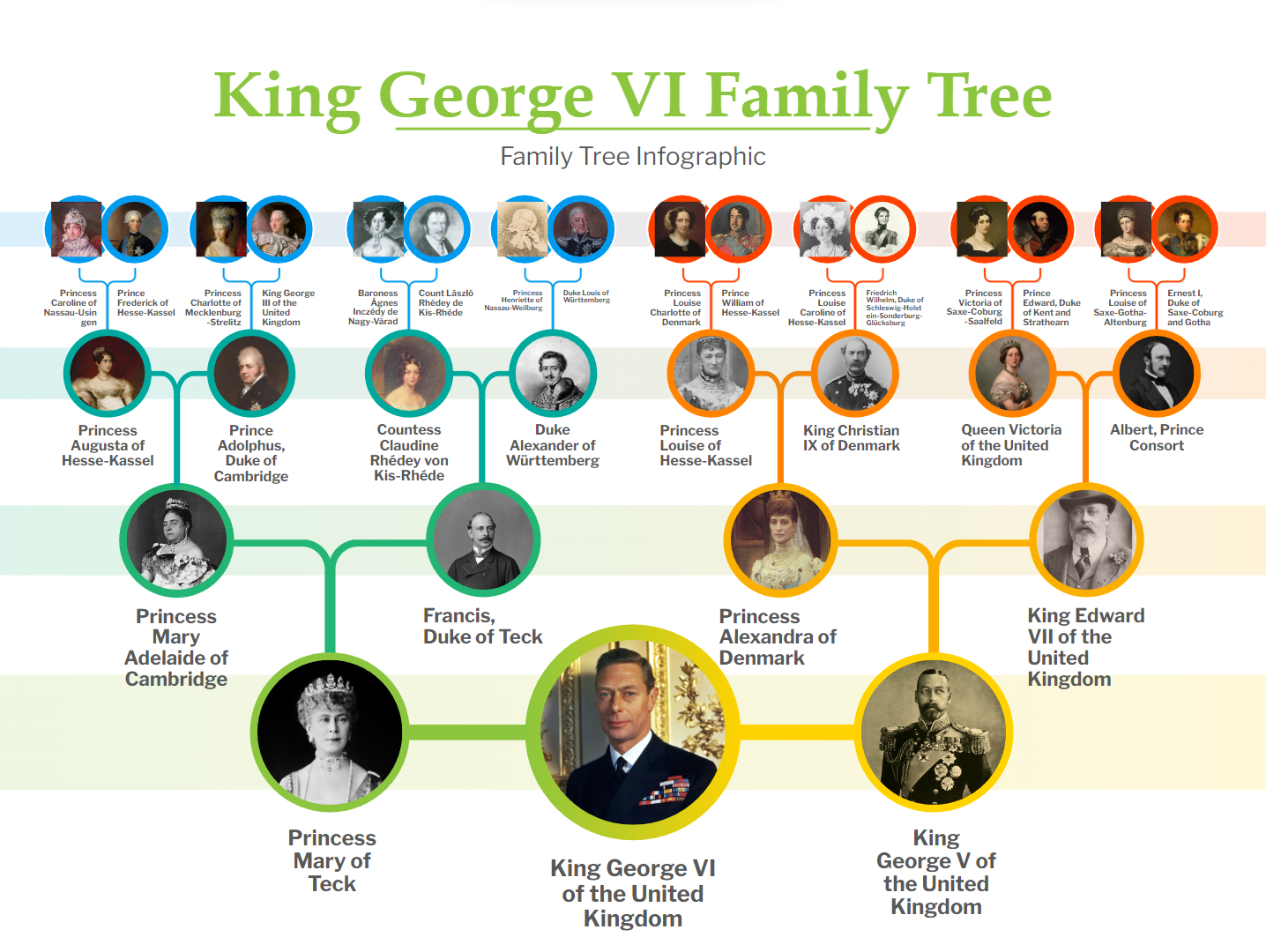
Sophia is one of the most important royals in history! She is the daughter of Frederick ‘The Winter King’of Bohemia. Note Anne of Denmark that owns Greenland. If King Trim[ acquires Greenland and Canada, then he has access to a title. How about – a crown?
John Prescowitz ‘King of Bohemia In America’
He married Elizabeth Stuart, the daughter of James VI of Scotland and I of England and of Anne of Denmark in the Chapel Royal, Whitehall on 14 February 1613 and had the following children:
Family and children
[edit]
He married Elizabeth Stuart, the daughter of James VI of Scotland and I of England and of Anne of Denmark in the Chapel Royal, Whitehall on 14 February 1613 and had the following children:
- Frederick Henry (1614–1629)—(drowned)
- Charles Louis (1617–1680), became Elector Palatine in 1648
- Elisabeth (1618–1680)
- Rupert (1619–1682) of English Civil War fame.
- Maurice (1620–1652) who also served in the English Civil War.
- Louise Hollandine (1622–1709)
- Louis (1623–1624), died in infancy.
- Edward (1625–1663)
- Henriette Marie (1626–1651)
- Philip Frederick (1627–1650)
- Charlotte (1628–1631)
- Sophia (1630–1714), heir presumptive to the thrones of England and Ireland by the Act of Settlement, 1701. Married Ernest Augustus, Elector of Hanover. Her son became King George I of Great Britain in 1714.
- Gustavus (1632–1641), died young, of epilepsy.
Sophia (born Princess Sophia of the Palatinate; 14 October [O.S. 3 October] 1630 – 8 June [O.S. 28 May] 1714) was Electress of Hanover from 19 December 1692 until 23 January 1698 as the consort of Prince-Elector Ernest Augustus. She was later the heiress presumptive to the thrones of England and Scotland (later Great Britain) and Ireland under the Act of Settlement 1701, as a granddaughter of King James VI and I. Sophia died less than two months before she would have become Queen of Great Britain and Ireland. Consequently, her son George I succeeded her first cousin once removed, Queen Anne, to the British throne. The succession to the throne has since been composed entirely of, and legally defined as, Sophia’s legitimate and Protestant descendants.
Sophia was born in The Hague to Frederick V, formerly Elector Palatine and King of Bohemia, and Elizabeth (Stuart), daughter of King James VI and I. She grew up in the Dutch Republic, where her family had sought refuge after the sequestration of their Electorate during the Thirty Years’ War. Sophia’s brother Charles Louis was restored as elector in the Palatinate as part of the Peace of Westphalia. During this time, the English Stuarts also went into exile and Sophia was courted by her cousin, Charles II of England.
Sophia instead married Prince Ernest Augustus, her third cousin, in 1658. Despite his temper and frequent absences, Sophia loved him and bore him seven children who survived to adulthood. Born a landless cadet, Ernest Augustus succeeded in having the House of Hanover raised to electoral dignity in 1692. As a result, Princess Sophia became Electress of Hanover, the title by which she is best remembered. A patron of the arts, Sophia commissioned Herrenhausen Palace and its gardens and sponsored philosophers, such as Gottfried Leibniz and John Toland.
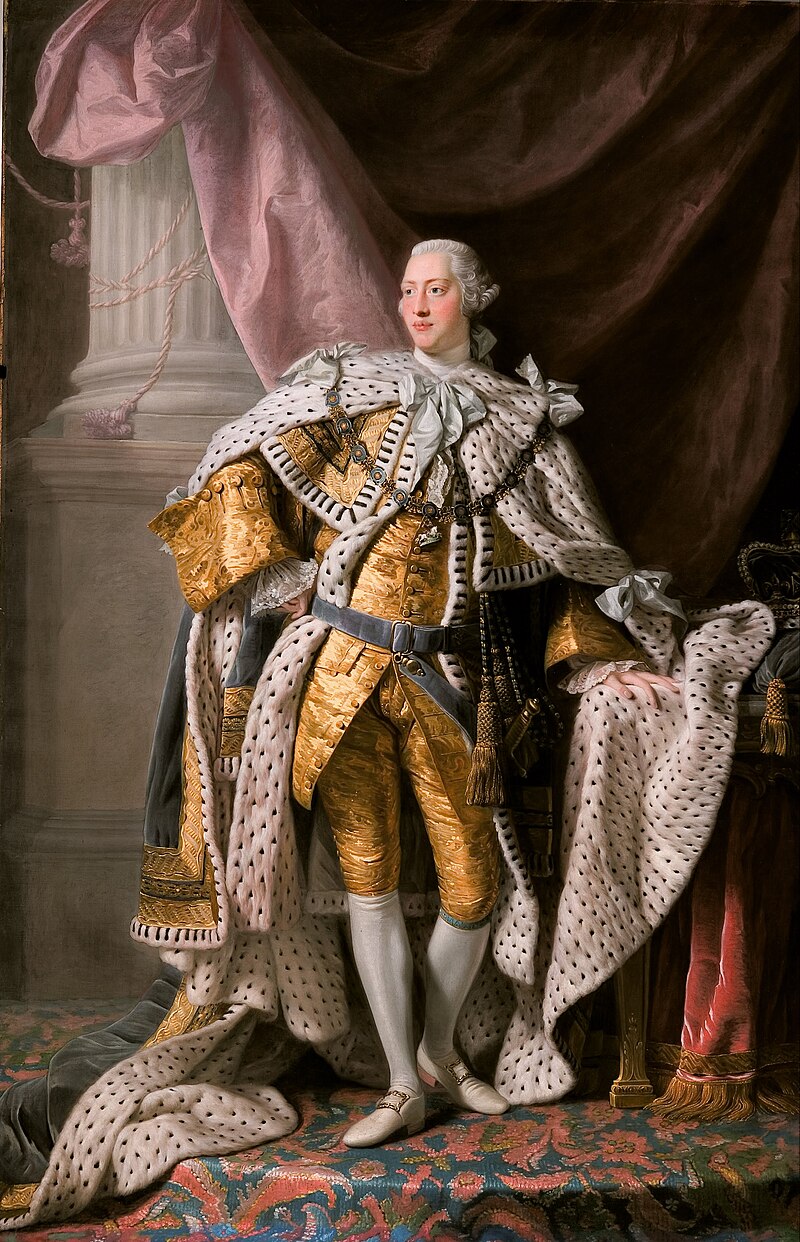
King George’s ancestor, Sophia of Bohemia, was his grandmother through his mother, making her the key link between the Stuart dynasty and the Hanoverian dynasty that ascended to the British throne with George I; Sophia was the daughter of Elizabeth Stuart, Queen of Bohemia, who was herself the daughter of James I of England.
Key points about Sophia and her connection to King George:
- Who she was:
Sophia was the Electress of Hanover, married to Ernest Augustus, Elector of Hanover.
- Her relation to King George:
Sophia is the grandmother of King George I, the first Hanoverian king of Great Britain.
- Why she was important:
Because of the Act of Settlement, Sophia was named as the heir presumptive to the British throne due to her being the closest Protestant relative to Queen Anne.
Search

America has had a tyrant like Trump before: We fought a revolution to get rid of him
Hitler comparisons are lazy and sophomoric — a far superior historical analogy for Trump is King George III
By Matthew Rozsa
Staff Writer
Published July 4, 2016 12:00PM (EDT)
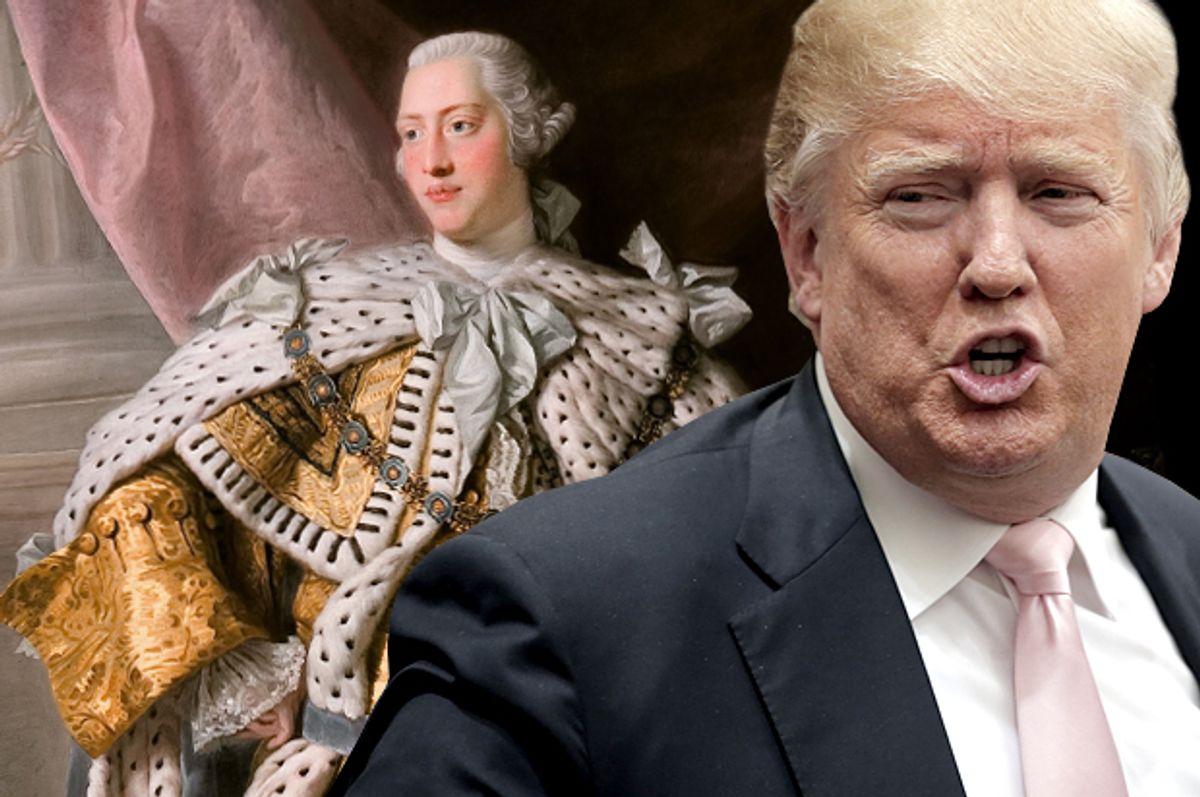
King George III, Donald Trump (Wikimedia/Reuters/Chris Keane/Salon)
As America celebrates its 240th anniversary, the Donald Trump campaign confronts us with the vivid possibility that our democracy could look vastly different if he’s elected.
No, I’m not implying that Trump is another Adolf Hitler. You don’t need to be a latter-day Fuehrer to hold positions antithetical to the spirit of the Declaration of Independence. That said, when you look at Trump’s avowed ideology, it becomes apparent that he has inadvertently aped the very tyrant whose reign prompted the American Revolution in the first place… King George III.
To understand why, let’s look at three of the grievances identified by the Continental Congress in 1776:
“He has endeavoured to prevent the population of these States; for that purpose obstructing the Laws for Naturalization of Foreigners; refusing to pass others to encourage their migrations hither, and raising the conditions of new Appropriations of Lands.”
Donald Trump Is Claiming Powers That Even King George III Didn’t Have
By Frank Bowman
Jan 29, 20251:51 PM
Sign up for the Slatest to get the most insightful analysis, criticism, and advice out there, delivered to your inbox daily.
In the first nine days of his return to the White House, Donald Trump has said and done a great many shocking things. The four most dangerous are his pardons of the Jan. 6 insurrectionists (a topic I have addressed elsewhere); his effort to transform the Department of Justice from an independent, neutral law-enforcement agency to an instrument of partisan revenge; his attempt to reverse 150 years of laws and regulations designed to ensure a professional, apolitical federal civil service; and his freezes on broad categories of congressionally authorized expenditures across the federal government.
These initiatives are all part of a unified effort to transform the government of the United States from a democratic, constitutional republic into a presidential dictatorship. It’s worth focusing on all these components separately, but the budgetary-freeze component of the scheme has demanded particular attention in recent days. Although on Wednesday the White House Office of Management and Budget rescinded without explanation its memo of two days before freezing “all activities related to obligation or disbursement of all Federal financial assistance, and other relevant agency activities that may be implicated by [Trump’s previous] executive orders,” additional, more limited freezes, such as on expenditures for domestic refugee resettlement programs and virtually all foreign aid, seemingly remain in effect.
about:blank
0:12
/
0:14
Skip Ad
Therefore, it’s worth comparing what’s going on in Washington with the history of the English monarchy and how it shaped the founding generation’s decisions about how American government was to operate.
The United States of America is neither a monarchy nor a dictatorship. We have agreed from our beginnings that kings and dictators are bad, not merely because they offend the high-minded principle that sovereignty ought to reside in the people rather than in any single person, but also because we believe that rule by the collaborative effort of separate, intellectually independent, and mutually checking government branches representing a spectrum of societal interests will best protect us all from tyranny and produce objectively better policy.
This foundational premise was both written into the U.S. Constitution and engrained in the national fabric by more than two centuries of American practice. It is especially evident from a comparison of the many specifically defined and sweeping powers entrusted to Congress by Article 1 of the Constitution and the parsimonious grant of few, and those mostly consultative, presidential powers in Article 2. The strained efforts of modern “unitary executive” theorists to stretch the surpassingly modest presidency actually authorized by Article 2 into the domestically unconstrained, globe-straddling colossus they prefer (at least when he’s a Republican) are at their least convincing when presidents claim authority to usurp Congress’ undoubted power over raising and spending money.
Advertisement
The two indispensable powers of legislatures in all Anglo-American constitutional systems are the complementary powers to tax the people and to authorize expenditure by the executive. The rule that kings could not levy taxes without legislative consent has its origins in the Magna Carta of 1215 and was made definite by 1300. But over time, Parliament became equally insistent that the king could not spend the revenue raised by Parliament however he pleased. In the five centuries that preceded the American Revolution, parliamentary control of the national purse was the primary weapon in preventing royal absolutism.
The matter was so important that became was a central issue in the Glorious Revolution of 1688, when Parliament and its allies forced the abdication of King James II and installed in his place King William and Queen Mary. The ascension of the dual monarchs was contingent upon their accepting the English Bill of Rights.
The preamble of the Bill of Rights was a list of complaints against James. It alleged that the monarch had suspended the operation of laws he did not like, had employed a so-called dispensing power to grant special prospective exemptions from the law for favored persons, and “did endeavour to subvert and extirpate … the Lawes and Liberties of this Kingdome … By Levying Money for and to the Use of the Crowne by pretence of Prerogative for other time and in other manner then the same was granted by Parlyament.” In other words, the legislative body accused James of unilaterally nullifying statutory law both generally and for particular people; of collecting taxes without legislative consent; and of spending money in ways not authorized by Parliament. The operative portion of the 1688 Bill of Rights declared that it was illegal even for a king to do any of those things.
Advertisement


PauseUnmute
Loaded: 0%
Progress: 0%
Remaining Time-0:03
The Americans who revolted against Britain and later wrote the U.S. Constitution looked upon the relationship between executive and legislature codified in the English Bill of Rights not only as fundamental to maintaining the traditional liberties of Englishmen but as central to the new American constitutional order. They thought it central, most particularly, to their emphatic rejection of monarchy. Accordingly, they rejected the idea that a president could unilaterally suspend the operation of statutory law either generally or as to particular people. And in Article 1 of the Constitution, they expressly conferred on Congress, not the president, the power to raise money (whether by taxation or borrowing) and to authorize its expenditure.
To be sure, the president participates in the legislative tax and appropriations process by signing bills that raise money and designate how it shall be spent. But the only legal effect of presidential acquiescence in such legislation is to make its provisions law—binding not merely on the president who signs a bill but on his or her successors. If a statute is permissive, saying that funds “may” be expended for a stated purpose up to a statutory cap, then a president may employ judgment and discretion in deciding how much to spend in aid of that purpose. And if a president can accomplish a statute’s stated objectives by spending less than congressionally authorized, so much the better. But a president lacks the power to simply refuse to carry out a statutory directive to use congressional appropriations to create an agency or program or to spend money in amounts and for purposes statutorily commanded by Congress.
Advertisement
Presidents have tried to assert such authority under the benign-sounding term impoundment. In recent days, multiple constitutional experts have explained why Trump’s “freezes” amount to impoundments and why they violate the Constitution and express statutory prohibitions. In Train v. City of New York, the Supreme Court held unanimously that presidents have no general power of impoundment. And in 1974, Congress passed the Impoundment Control Act, which forbids impoundment—including a total refusal to spend appropriated funds, as well as postponements of mandated expenditures—except under limited and carefully defined conditions, which the Trump freeze orders do not meet. Indeed, the Monday OMB decree ordering the freezes expressly declared that vast swaths of expenditures are frozen pending determination of whether they are consistent not with congressional intent or even the express language of authorizing statutes, but with the “priorities” of the Trump administration.
But the big point here is not the technical one, that general impoundments are illegal. Nor is it the question of whether the current Supreme Court will do a backflip and hold otherwise. Nor is it even that freezing and ultimately incapacitating or destroying innumerable congressionally authorized domestic and foreign programs is objectively terrible policy.
Related From Slate
Nitish PahwaTrump Isn’t Going to Like the Fallout From His Fight With ColombiaRead More
The big point is that Donald Trump is openly, baldly trying to reverse some eight centuries of Anglo-American constitutional tradition as well as the express commands and fundamental design of the U.S. Constitution. If a president can ignore direct statutory commands about whether—and if so, how—money will be spent, then Congress is denied its most basic authority and becomes a toothless and essentially advisory body. If Congress meekly accedes to Trump’s attack on its prerogatives—as the body’s Republicans, led by House Speaker Mike Johnson, seem to be signaling they are inclined—it will confer on him power not even King George III would have dared to assert.
The weakness in the grand edifice of American constitutionalism is that it depends on the determination, in every generation, of those in positions of authority to uphold it. The most terrifying aspect of the national response to Trump’s comprehensive freezes is the complete silence or, in some instances, enthusiastic endorsement of the Republican congressional majority.
Recommended for You
I’ve Reunited With My Ex-Wife. But What I Did Immediately After the Divorce Is Haunting Me.
Why Everyone Calls JLaw, Abbi and Ilana, and Hannibal Buress Their “Spirit Animals”I Finally Got a Penis Implant. But I Was Not Prepared for My Wife’s Reaction.
A few congressional Republicans may either believe in what Trump is doing or be so staggeringly ignorant that they know no better. But most are perfectly aware that the Trump freezes will do immense damage to the national interest and are a direct challenge to the constitutional authority of their own body. The Constitution gives Congress an immense number of levers to check an overreaching president. But there is so far no suggestion that congressional Republicans have the least disposition to use any of them, or even to criticize the commander in chief’s power grab.
Some Republicans doubtless privately hope that somebody else—perhaps the courts—will take a stand. But the predominant emotion among GOP politicians in Congress seems to be terror that the least expression of dissent, even in defense of their own constitutional prerogatives, will draw a frown or, worse, a Truth Social post from the Great Man. So they either scramble over one another to find a camera before which they can perform stomach-turning genuflections to the Dear Leader’s infinite wisdom or scurry into their office burrows and sit, quivering, like rabbits paralyzed by the passing shadow of a bird of prey.
Donald Trump’s attempt to seize from Congress its power of the purse is one key element of his bid for dictatorial power. The refusal of the congressional majority to resist bodes poorly for us all.
 Rosamond Press
Leave a comment