Seventy-five million Democrat Voters have to REALIZE they are THE ONLY AMERICAN MEMBERS OF NATO. Speak up! No Republican is loyal to NATO, or any NATO NATION. How many are loyal to Putin? Democrats have a right to consider themselves CITIZENS OF THE WORLD!
Voting NATO Members outnumber Republican voters – by half a billion citizens! Don’t let them play mind games with you – and divide you! There are rules to the game of chess. The Trumpites changed the rules, and want the world to play Muskrat Love with your lives – and money! Musk is not a member of NATO. He is Anti-NATO!
STOP the weaponization of the DOJ in New York! STOP the right-wing in Berlin! STOP Elo Musk! put a Million members in the streets! We got our theme song!
John Presco
European Leaders Meet in Paris as U.S. Pushes Ahead With Ukraine Plan
The hastily called gathering was part of a flurry of diplomacy expected to center on Ukraine this week as Trump officials prepare to start talks with Russia on their own.
Listen to this article · 9:46 min Learn more


By Catherine Porter and Steven Erlanger
Reporting from Paris
Feb. 17, 2025Updated 12:40 p.m. ET
Sign up for Your Places: Global Update. All the latest news for any part of the world you select. Get it sent to your inbox.
The leaders of many of Europe’s biggest countries came to Paris on Monday in an effort to forge a strategy for their own security, as President Trump’s envoys prepared for talks with Russia over ending the war in Ukraine without them.
The meeting in Paris was pulled together hastily after the first visit to Europe last week by Vice President JD Vance and Defense Secretary Pete Hegseth that left European leaders alarmed by both the tone and message of the new Trump administration and what it might hold for the continent.
Europeans were shocked by the hostility of Mr. Vance’s scathing speech in Munich criticizing Europe’s exclusion of far-right groups from power, and the sudden American plans to begin peace talks with Russia in Saudi Arabia, starting on Tuesday, without the presence of Ukrainian or European leaders.
Mr. Trump’s phone call last week to President Vladimir V. Putin of Russia broke ranks with most European allies who have tried to isolate the man who ordered the invasion of sovereign Ukraine three years ago next week.

The meetings with the new U.S. officials sowed real fear that the United States wants to pull thousands of troops out of Europe on a timetable that would leave Europe vulnerable to an aggressive Russia, and that Mr. Trump will cut a deal with Mr. Putin over the heads of Ukrainians and Europeans.
“Europe’s security is at a turning point,” said Ursula von der Leyen, the president of the European Commission, on X after arriving in Paris on Monday. “Yes, it is about Ukraine — but it is also about us. We need an urgency mind-set. We need a surge in defense. And we need both of them now.”
The meeting, called by President Emmanuel Macron of France at the Élysée Palace, is an initial effort to discuss a more coordinated and collective response to the Trump administration. The Élysée Palace said that Mr. Macron and Mr. Trump held a 20-minute phone call before the meeting began.
On the agenda in Paris: what Europeans are willing to commit to secure any peace deal over the war in Ukraine in the short term, and in the long term, how to secure the continent as it faces an expansionist Russia and the predicted withdrawal of the assurance of American support.
Leaders will discuss issues including military spending and how to guarantee Ukraine’s security once some sort of permanent cease-fire or peace deal is reached, including the possibility of troop commitments in Ukraine.

Trump officials have said that they expect the Europeans to be responsible for the main financial and military support for Ukraine in the future, but there is enormous vagueness around the whole issue. Europeans want to be at the negotiating table, if one is ever created.
Keith Kellogg, Mr. Trump’s envoy to Ukraine, annoyed Europeans in Munich when he said that was unrealistic and that he foresaw a meeting between Russia and Ukraine with the United States as some sort of mediator. If the Europeans are supposed to secure and finance Ukraine, they say, they have a right to be part of any negotiation.
But Mr. Kellogg admitted in Munich that there is no fixed American plan, but that he and other officials are in “listening mode.”
The Paris meeting comes the same day that Secretary of State Marco Rubio arrived in Riyadh, Saudi Arabia. The State Department said he would be joined by Mike Waltz, the national security adviser, and Steve Witkoff, Mr. Trump’s Middle East envoy.
They are supposed to discuss with Russian officials the future of the Russia-Ukraine war, but even those talks are more about how to set up future peace talks rather than about the substance of them.
President Volodymyr Zelensky of Ukraine was in the United Arab Emirates on Monday for a track of negotiations with Russia that is separate from the Trump administration’s effort, focusing on prisoner exchanges and returning Ukrainian children from Russia.
He reiterated that Ukraine would accept no terms negotiated between Russia and the Trump administration without Ukrainian participation, and confirmed that Ukrainian representatives would not be at the talks in Saudi Arabia.
“The issue of a peacekeeping contingent is being discussed in France,” Mr. Zelensky told journalists in Abu Dhabi. “Emmanuel told me he would share all the details. If we talk about a peacekeeping contingent, then what will be its size? Where will it be deployed? Which countries will be part of it? How will they be armed? It is crucial not to lose the U.S. in this process in one way or another.”
Advertisement
Mr. Zelensky also said that when it comes to making a deal with Russia, “Europe must be at the negotiating table — I don’t know in what format, but this is very important for us.”
Ivo Daalder, a former American ambassador to NATO, who was in Munich, said Mr. Zelensky told the gathering that Europeans “have realized they’re in this boat together and can no longer rely on the U.S., and that the concern that Trump and Putin will do a deal over their heads is real.”

“So they have to depend on each other, and Europeans have to decide whether to step up to help the Ukrainians continue the war, if the proposed deal is a bad one, or to throw Kyiv under the bus, which would be appeasing Putin,” Mr. Daalder said. “They now realize that they have no real choice and that they have to back Ukraine, and that’s what this meeting is all about.”
But already there were fissures. The Paris talks included leaders from Germany, Britain, Italy, Poland, Spain, the Netherlands and Denmark, as well as the president of the European Council, the president of the European Commission and the secretary general of NATO.
There was criticism from frontline European states who were not invited, with one senior Baltic official saying that Mr. Macron’s initiative splits the unity of the European Union, and that the meeting should have been called by European Council President António Costa, not by Mr. Macron.
“In public Europeans will say we all must stand together, but this selective meeting is not a good start to a united Europe on these issues,” said Mary Elise Sarotte, a diplomatic historian who wrote an influential book on the early days of NATO expansion, “Not One Inch.”
As he often does, Mr. Macron seized on a perceived vacuum in European leadership to call this informal meeting to talk about a collective response to what many perceive as an American retreat from decades of security responsibility in Europe, in order to focus on Asia and domestic challenges.
Mr. Macron has made calls for increased European sovereignty and capacity for self-defense a hallmark of his presidency, which he has sometimes called “strategic autonomy,” less reliant on Washington.
This meeting is expected to be the first of many among European leaders in the coming weeks, an adviser to Mr. Macron said, adding that the meetings would include other countries in the future.
“Europeans must do more, do better and work in a coherent manner toward our collective security,” the adviser, who insisted on anonymity in line with French political practice, said Sunday night.
On Sunday, Prime Minister Keir Starmer of Britain said in an article published in The Daily Telegraph that he was “ready and willing to contribute to security guarantees to Ukraine by putting our own troops on the ground if necessary.”

“Securing a lasting peace in Ukraine that safeguards its sovereignty for the long term is essential if we are to deter Putin from further aggression in the future,” Mr. Starmer wrote.
Mr. Macron has been speaking for months to European leaders about forming a cease-fire buffer force in Ukraine to ensure that any peace deal with Russia is maintained. But his original idea was to have European forces far from the front lines, to help Ukrainians with training and logistics.
Military experts have said that it is first necessary to decide what kind of force is required, with what kind of resources, and what happens if they are attacked by Russia. This is why European leaders have said that they must have guarantees of American involvement, even if American troops are not on the ground, for key weapons systems, air defense, air cover, satellite intelligence and the like.
But all that would depend on what kind of deal emerges and whether Ukraine would accept it. For that reason many other European leaders have said the discussion is preliminary, if not premature.
As a former NATO official, Camille Grand, said, “Europeans cannot reasonably be expected to provide the security guarantees for a deal they are not negotiating.”
Spain’s foreign minister, José Manuel Albares, said before the meeting that while it was necessary for Europeans to meet and prepare decisions, “nobody is currently planning to send troops to Ukraine, especially because peace is still far off.” German officials have regularly said that it is premature to discuss sending troops to Ukraine.
European leaders are also expected to discuss the acceleration of European defense capabilities, as many now believe that the United States will withdraw tens of thousands of American troops from Europe.
Just 23 of 32 NATO members now spend at least 2 percent of GDP on defense — more than a decade after vowing to do so in 2014. And NATO has made it clear that 2 percent must be “a floor, not a ceiling,” and more must be spent. A new spending goal will be set at the NATO summit meeting this summer and is likely to be 3 percent or 3.5 percent.
American Culture – IS DEAD!
Posted on November 21, 2021 by Royal Rosamond Press


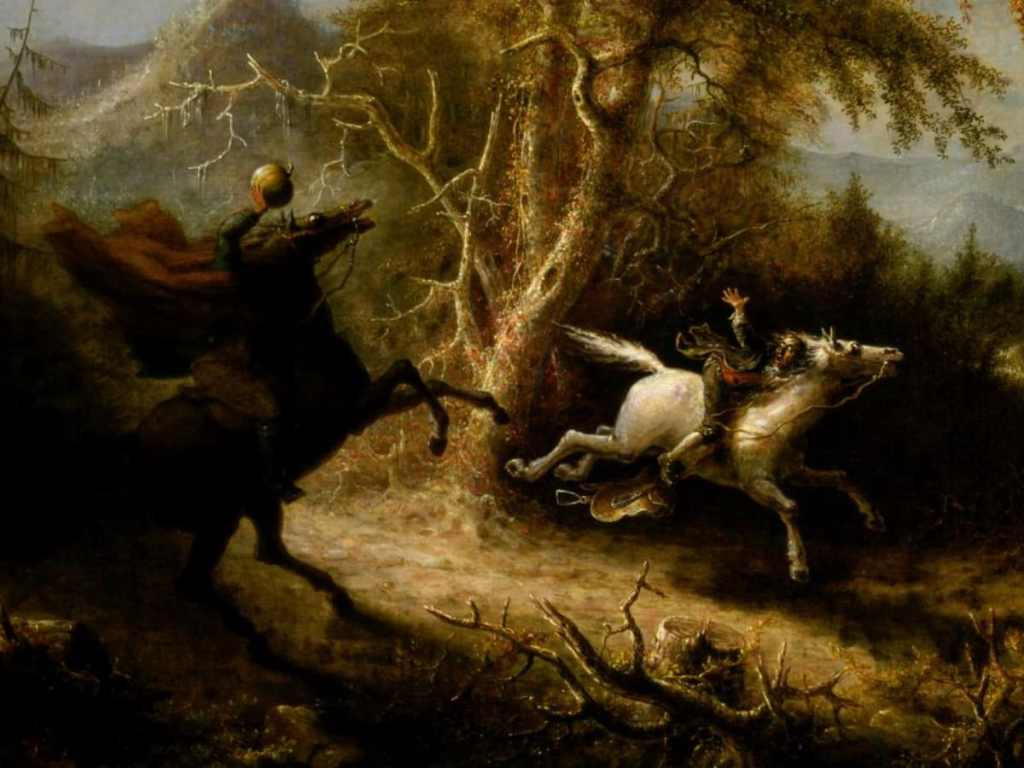
The hi-jacked Republican Party – DESTROYED AMERICAN CULTURE! I challenge any noted historian to pen a history of America beginning when Donald Trump announced he is running for President. I call upon Hawthorne and Washington Irving – to begin again! How many days to Thanksgiving? The Headless Horseman begins his infamous ride! Rumple stretches’ and yawns, then heads for home. Having lived back East, I know this is…..The Season of The Witch! I will be playing Halloween music till New Years.
John ‘The Seer’
Bohemian Nation of Washington Woodstock
Posted on September 5, 2017 by Royal Rosamond Press




Henry Brevoort, and Sir Walter Scott, corresponded. They discussed the writing of Washington Irving. Scott wrote about Woodstock and Fair Rosamond who is the subject of the castle Singer built on an island. Churchill grew up in Blenheim Palace were Rosamond’s Labyrinth was located. A lake was named after her. Here is The Fair Lady of the Rose and Lake.
The artist, Marcel Duchamp, climbed atop the arch in Washington Square, and declared Washington Square a sovereign nation. On this day I found the New Bohemian Nation of Washington Woodstock, named after Washington Irving, and a generation known as The Woodstock Nation of Flower Children who will be forever known as….
THE ROSE OF THE WORLD
Washington Woodstock will be a Sanctuary for all children who have demonstrated Literary and Artistic Gifts, and find themselves being bullied and harassed. I suggest a Art and Poetry event take place in Washington Woodstock Square for The Dreamers’.
Consuelo Vanderbuilt, and Jennie Jerome, were the daughters of American Millionairs who married into the royal family that lived at Blenheim, and had to be familiar with the Legends of Rosamond. These are the Beautiful American Daughters of Wall Street. Let there be a sanctuary and new understanding of how sane business people conduct business, and themselves in The Bohemian Renaissance.
“In 1817, Washington Irving spent several days with his literary idol, Sir Walter Scott, at Abbotsford, Scott’s stately home near Melrose, Scotland. At the time, Scott was known more for his romantic poetry than his novels, though at the time of Irving’s visit, Scott was reviewing the proofs of his historical novel Rob Roy, part of his popular Waverley series.”
On this day, let the Knight Templars of Rougemont pour out of the Arch of Washington Woodstock, and form a Rouge Line along 14th. Street, from river to river.
Haters of Democracy……………You will not pass! We will crush the fake reports of Breitbart with real history. We will make America and England great again!
Jon Presco
Copyright 2017


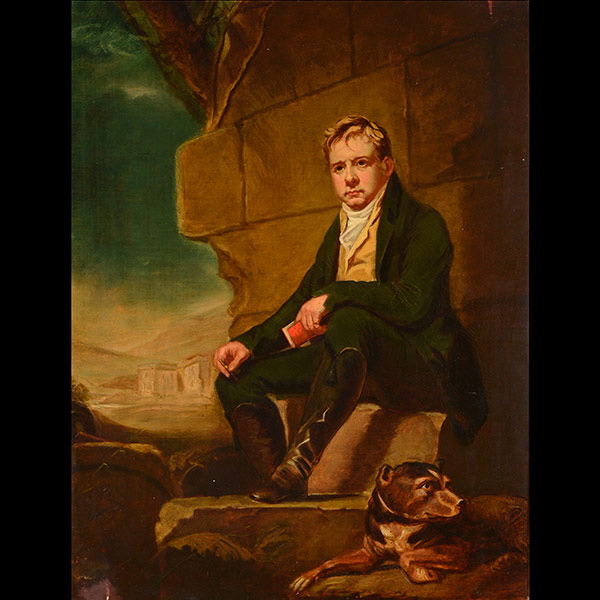


Woodstock Manor was destroyed in the English Civil War (1642-51). But a description of it came into the hands of Sir Walter Scott, the great Scottish novelist, and he included it in his 1826 novel Woodstock or The Cavalier.
The original hunting lodge at Woodstock in Henry I’s day became Rosamund’s Bower, or Rosamund’s Labyrinth, in Henry II’s day, as legend would have it (this legend was completely debunked very much later in history, along with the idea that Eleanor of Aquitaine killed the fair Rosamund, though Henry II did have a deep and long-lasting affair with Rosamund Clifford); Henry II did make the original hunting lodge into a very elaborate country estate for his fair Rosamund; then…
Blenheim Palace was built on the site of the original hunting lodge and Rosamund’s Labyrinth, and was completed in 1724. It’s now a World Heritage Site, and one remarkable building.
The Free And Independent Republic Of Washington Square (Part II)

John Sloan (1871-1951) Arch Conspirators, 1917; Courtesy of New York University
Yesterday in The Daily Plant:
But perhaps as significant a break with the artistic past as the 1913 Armory Show was an event that occurred 90 years ago today in Washington Square Park.
And now, today’s conclusion:
It was on the cold, snowy evening of January 23, 1917 that painters John Sloan and Marcel Duchamp, poet Gertrude Drick, and Provincetown Playhouse actors Alan Russell Mann, Betty Turner, and Charles Ellis slipped through an unlocked door and climbed up the spiral staircase to the roof of the Washington Arch. These six so-called “Arch Conspirators” then spread out blankets, hung Chinese lanterns, tied red balloons to the arch’s parapet, sipped tea, shot off cap pistols, and conversed until dawn. At some point during the night, the ringleader, Gertrude Drick, read a proclamation by candlelight into the windy night — a declaration of independence for what the Arch Conspirators, somewhat ironically, called the “Free and Independent Republic of Washington Square.”
That cold January night on the top of the Washington Arch was immortalized graphically by John Sloan’s 1917 print entitled “Arch Conspirators,” depicting the artists and bohemians chatting by candlelight high above Fifth Avenue, balloons buffeted by the wind. Social commentator Luc Sante astutely noted that the slightly comical declaration of January 23, 1917 “actually named the thing that all the inhabitants of the Greenwich Village bohemia of that time were aiming for, a revolution in more than just a legislative sense, a free territory untrammeled by convention.”
While 1917’s Declaration of Independence was soon forgotten, Greenwich Village’s spirit of rebellion and breaking with the past was very much alive, then and now. It is no understatement to declare that modern American art became deeply rooted in and around Washington Square in the decades after the Arch Conspirators’ stunt. Artists like Sloan and Glackens were the vanguard of an entire movement of realist painters, including Thomas Hart Benton and Edward Hopper, who painted around Washington Square. Other strains of art followed in Duchamp’s iconoclastic footsteps, most notably Jackson Pollock and other abstract expressionists. Gertrude Vanderbilt Whitney established the Whitney Museum of American Art in a studio a few blocks from the square, and sustained an entire generation of emerging artists by her encouragement and patronage.
In more recent years, Washington Square continued to exert creative gravity for new generations of artists, writers, and performers — Bob Dylan, Joan Baez, Charlie Parker, and Allen Ginsberg all performed in and around the square. These days, the access door on the west pier of Washington Arch is locked, the spiral stairs secured, and the arch roof off limits. But on a chilly January night, 90 years after Sloan, Drick, Duchamp and the other Arch Conspirators proclaimed the independence of Washington Square, rebellion and artistic expression remain very much a part of the spirit of Greenwich Village.
http://rightherenyc.com/THEYLIVEDHERE_artist.html
http://www.nycatelier.com/map-artists.html
Duchamp’s contempt for conventionalism is reflected in his involvement with the “Arch Conspirators.” In January of 1917, Duchamp and a group of fellow artists (including poet Gertrude Drick; painter John Sloan; and Provincetown Playhouse actors Russell Mann, Betty Turner, and Charles Ellis) entered the inside of the Washington Square Arch’s staircase through an unlocked door, climbed to the top of the arch, and declared liberation for the “Free and Independent Republic of Washington Square” with the intent of having a neighborhood free from mainstream convention. The Daily Plant, the paper of the City’s Parks Department, wrote: “These six so-called ‘Arch Conspirators’ then spread out blankets, hung Chinese lanterns, tied red balloons to the arch’s parapet, sipped tea, shot off cap pistols, and conversed until dawn.” (Read more about the Arch Conspiracy here).
http://gvshp.org/blog/2013/01/23/conspiracy-atop-the-arch/
Posted On Fri, September 19, 2014 By Dana Schulz In Celebrities, Cool Listings, Greenwich Village, Interiors
You won’t find any paint-splattered masterpieces here, but you will get the exclusive bragging rights of saying you live in the former home of Jackson Pollock at 46 Carmine Street. And if that wasn’t enough of a conversation starter, the Greenwich Village building was once owned by Aaron Burr.
On Dark Island, Ponder Fair Rosamund’s Fate

Singer Castle, built for the Singer Sewing Company’s president Frank Bourne in 1902, was modelled on Sir Walter Scott’s description of the place where Henry II’s mistress, Fair Rosamund, was imprisoned in the 12th century.
MITCHELL SMYTH/Meridian Writers’ Group
BY MITCHELL SMYTH
Meridian Writers’ Group
A MEDIEVAL mystery echoes down the centuries and across an ocean to the halls of a faux castle on this island in the St. Lawrence River.
The mystery: what happened to Fair Rosamund, the beautiful young mistress of King Henry II (1133-1189) of England? Was she murdered by his jealous queen, Eleanor of Aquataine? Or did she live out her later years anonymously, in a convent?
It’s a riddle you can ponder as you walk the corridors and gardens, study the ancient weapons and suits of armour, and peer into the secret passages of Singer Castle, here on Dark Island, a few hundred metres south of the Canada-U.S. border in the St. Lawrence. (Belying its name, Dark Island is a pleasant place, not in the least eerie or brooding.) Or, if you want to pay $725, you and your lover can ponder in the bridal suite, which may be a replica of Rosamund’s bedchamber.
Regrettably, the guide on the day of my visit appeared to know very little about the castle’s medieval connection, beyond saying the building “was modelled on an English castle.”
In fact, the original was not a castle. Medieval castles were fortified structures. Woodstock Manor, in Oxfordshire, was a royal hunting lodge in a forest stocked with deer and wild boar for the entertainment of Henry and his courtiers. (“Woodstock,” in Norman English, means a clearing in the woods.)
It was there that, sometime around 1160, Henry sequestered Rosamund de Clifford, the woman who has gone down in English folklore as Fair Rosamund.
Supposedly—and there are a lot of suppositions in the tale—the entrance to Rosamund’s quarters was guarded by a maze, but the jealous Eleanor found a silken thread that had been torn from her rival’s gown. She followed it to the tragic young woman’s chamber and poisoned her. (Another version says Eleanor’s knight stabbed the young woman.)
Serious historians reject the story. They say Rosamund died in a nunnery, where she had fled to atone for her adultery with the king. Some say Henry “leaked” the murder story to blacken Eleanor, whom he had grown to hate.
Woodstock Manor was destroyed in the English Civil War (1642-51). But a description of it came into the hands of Sir Walter Scott, the great Scottish novelist, and he included it in his 1826 novel Woodstock or The Cavalier.
Fast forward to 1902. It was the Gilded Age for America’s industrialists and tycoons and Frank Bourne, president of the Singer Sewing Company, wanted a summer “cottage” on his three-hectare Dark Island. He commissioned architect Ernest Flagg, who had designed the Singer Building in New York.
Flagg was a fan of Sir Walter so, switching his talents from skyscrapers to castles, he modelled Flagg’s summer home on the novelist’s description, red-topped turrets, a dungeon, tunnels and all. The cost: $500,000, a fortune in those days.
Singer Castle remained a private residence until 2003, when the present owners opened it to public tours. Among the books in its library is a first edition of Scott’s Woodstock.
In 1817, Washington Irving spent several days with his literary idol, Sir Walter Scott, at Abbotsford, Scott’s stately home near Melrose, Scotland. At the time, Scott was known more for his romantic poetry than his novels, though at the time of Irving’s visit, Scott was reviewing the proofs of his historical novel Rob Roy, part of his popular Waverley series.

Rebecca Gratz
Three years after Irving’s visit–right around the time Irving was enjoying international success with the publication of The Sketch Book—Scott published a blockbuster of his own, another installment of the Waverley series, the medieval adventure novel Ivanhoe. Featured prominently in Scott’s story is the character Rebecca, the beautiful daughter of a Jewish moneylender, as well as a healer who saves Ivanhoe and is later tried–and, with the help of Ivanhoe as her champion, cleared–of charges of witchcraft.Title:Sir Walter Scott, Abbotsford, letter signed to Henry Brevoort, 23 April 1813Description:Expresses the writer’s delight in Washington Irving’s History of New York, by Diedrich Knickerbocker.Author:Scott, Walter, 1771-1832Addressee:Brevoort, Henry, 1782-1848Date:April 23, 1813
e estate given by the nation to Marlborough for the new palace was the manor of Woodstock, sometimes called the Palace of Woodstock, which had been a royal demesne, in reality little more than a deer park. Legend has obscured the manor’s origins. King Henry I enclosed the park to contain the deer. Henry II housed his mistress Rosamund Clifford (sometimes known as “Fair Rosamund”) there in a “bower and labyrinth”; a spring in which she is said to have bathed remains, named after her.
Charles, 9th Duke of Marlborough (1871–1934) can be credited with saving both the palace and the family. Inheriting the near-bankrupt dukedom in 1892, he was forced to find a quick and drastic solution to the problems. Prevented by the strict social dictates of late 19th-century society from earning money, he was left with one solution; he had to marry money. In November 1896 he coldly and openly without love married the American railroad heiress Consuelo Vanderbilt. The marriage was celebrated following lengthy negotiations with her divorced parents: her mother, Alva Vanderbilt, was desperate to see her daughter a duchess, and the bride’s father, William Vanderbilt, paid for the privilege. The final price was $2,500,000 (worth about $62m in 2007) in 50,000 shares of the capital stock of the Beech Creek Railway Company with a minimum 4% dividend guaranteed by the New York Central Railroad Company. The couple were given a further annual income each of $100,000 for life. The bride later claimed she had been locked in her room until she agreed to the marriage. The contract was actually signed in the vestry of St. Thomas Episcopal Church, New York, immediately after the wedding vows had been made. In the carriage leaving the church, Marlborough told Consuelo he loved another woman, and would never return to America, as he “despised anything that was not British”.[25][26]
Sir Winston Churchill was born at the palace on 30 November 1874. He proposed to his wife, Clementine Hozier, in the Temple of Diana summerhouse in the palace gardens on 11 August 1908. He is quoted as having said: “At Blenheim I took two very important decisions; to be born and to marry. I am content with the decision I took on both occasions.”
During the Second World War, between 1939 and 1940, more than 400 boys were evacuated to the palace from Malvern College. For one academic year the college used the State Rooms as dormitories and classrooms – and the boys even had lessons in the bathrooms, according to a spokesperson for the palace.
Meanwhile, Blenheim Park was used by the Home Guard, and the lake for preparation for the D-Day landings. The country house was later used by MI5.
http://culturelocker.com/story/2013/New-York-State-castle.html
 Rosamond Press

Leave a comment