
I believe the plan is to gather the wealthy and white middleclass in the Republican Party, and have them make MORE money for Billionaires. Did Musk make a list?
This blog, and my novel ‘The Royal Janitor’ , has been on this story of The Great Betrayal. It makes me sick to write about it – and watch the news! I may concentrate on my books.
VP Vance scolded and denigrated European Leaders headed by Ursula von der Leyen who went to Stanford and gave birth to children in California. Gavin Newson delegated $25,000,000 dollars to fight Trumpism. I have writted him about Ursuala, and he ignored me. Kamala is considering running for Governor of California. I need to be funded, or I am going to end up on the street with no medical. The Democrats got to form an Alliance with the European Union – and IGNORE the Ignorant Evil that pours out of the White House like a poisonous gas.
Russis……IS THE AGRESSOR! European Nations have spent billions defending themself from Putin. How much has the U.S. spent” We need to see a cable broadcast every other day from Europe. We can form a Hands Across The Water – and ignore the Madman who wants to be like Putin.
John Presco
European Commission President Ursula von der Leyen said the world had reached a “moment in history” where “great challenges loom,” as she called on the international community to hold Russian President Vladimir Putin accountable for proving “he has given up” a bid to “destroy Ukraine.”
Vance berates European leaders as tensions with close allies burst into the open
The vice president used the podium at the high-level security gathering in Munich that had been focusing on the Russian invasion of Ukraine to raise social issues animating many on the American right.
Feb. 14, 2025, 4:05 AM PST / Updated Feb. 14, 2025, 9:33 AM PST
Vice President JD Vance publicly berated European leaders on a host of issues from free speech to security and mass migration, as simmering tensions between the United States and its close allies boiled over at an international conference in Munich on Friday.
The vice president used the podium at the high-level security gathering that had been focusing on the invasion of Ukraine and the threat Russia poses to Europe and the rest of the world to raise social issues animating many on the American right.
0 seconds of 1 minute, 55 secondsVolume 90%

Vance warns Europe democracy faces a ‘threat from within’
01:53
“The threat that I worry the most about vis-à-vis Europe is not Russia. It’s not China. It’s not any external actor,” he said at the Munich Security Conference. “What I worry about is the threat from within — the retreat of Europe from some of its most fundamental values, values shared with the United States of America.”
He added: “I’ve heard a lot about what you need to defend yourselves from and of course, that’s important. But what has seemed a little bit less clear to me … is what exactly you’re defending yourselves for?”
The vice president’s comments were met with an icy reception and only scattered applause — and groans when he joked about how if American democracy could “survive 10 years of Greta Thunberg scolding, you guys can survive a few months of Elon Musk.”
German Defense Minister Boris Pistorius denounced Vance’s remarks during a session at the conference later in the day, saying in German that it was “not acceptable” that the U.S. vice president compared “the condition of Europe with the condition that prevails in some auto-authoritarian regimes.”
“This is not acceptable,” Pistorius said. “This is not the Europe, not the democracy where I live and where I conduct my election campaign right now. And this is not the democracy that I witness every day in our parliament. In our democracy, every opinion has a voice.”
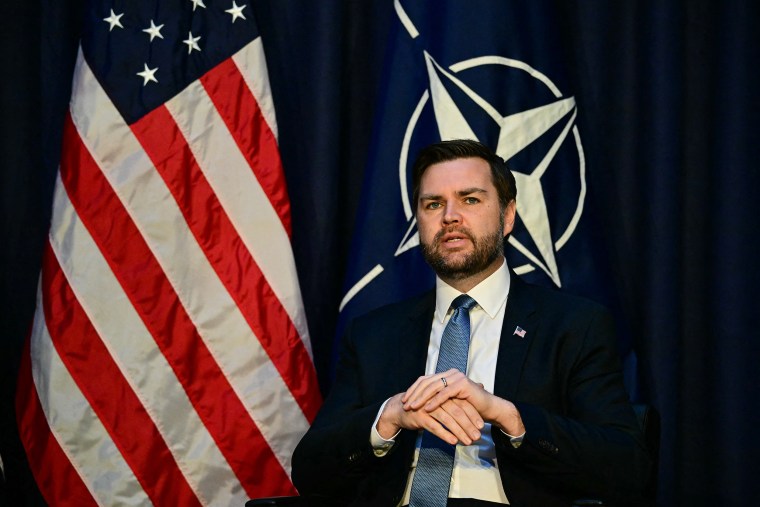
“I was in the room in Munich for VP Vance’s speech,” Sen. Andy Kim, D-N.J., wrote in a post on X. “No talk about Russia, Ukraine, China. Just criticisms of our allies and focus on “the threat from within.” His speech is going to embolden our adversaries who will see this as a green light to act while America is distracted/divided.”
A rift between the U.S. and Europe had been growing after President Donald Trump was accused of excluding Kyiv and the continent from peace talks to end the nearly three-year war in Ukraine.
Later in the day, Vance, Secretary of State Marco Rubio and Gen. Keith Kellogg, the U.S. special envoy for Ukraine and Russia, were part of the U.S. delegation that met directly with Zelenskyy and other Ukrainian officials for a bilateral meeting at the conference.
“The goal is, as President Trump outlined it, we want the war to come to a close,” Vance told reporters who were briefly brought into the room after the meeting started. “We want the killing to stop, but we want to achieve a durable, lasting peace, not the kind of peace that’s going to have Eastern Europe in conflict just a couple years down the road.”
Zelenskyy thanked the U.S. and Trump for supporting Ukraine and said they will work toward a plan that addresses “how to stop Putin and finish the war.”
Throughout the event, European leaders appeared to ramp up their criticism of the Trump administration’s handling of peace efforts.
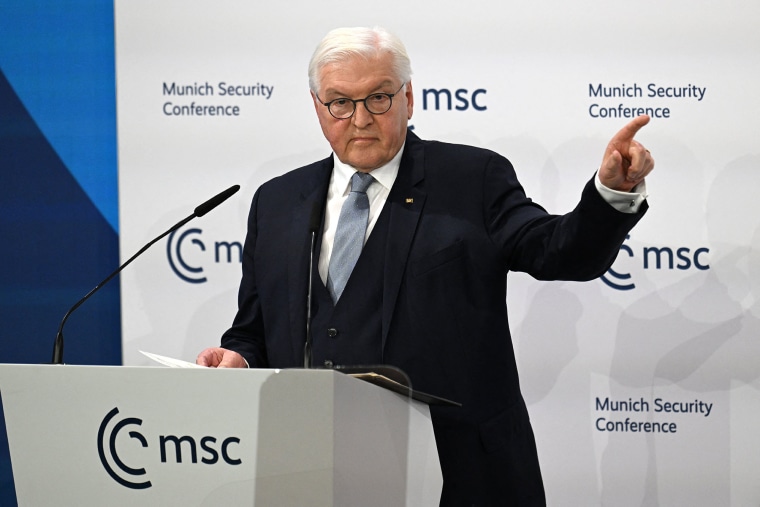
“The new American administration has a very different world view to ours, one that has no regard for established rules, partnership and grown trust,” German President Frank-Walter Steinmeier said at the conference Friday, prior to Vance’s comments.
“We have to accept that and we can deal with it. But I am convinced that it is not in the interests of the international community for this worldview to become the dominant paradigm,” said Steinmeier, whose post is largely ceremonial, according to Reuters.
European Commission President Ursula von der Leyen said the world had reached a “moment in history” where “great challenges loom,” as she called on the international community to hold Russian President Vladimir Putin accountable for proving “he has given up” a bid to “destroy Ukraine.”
There is growing alarm across Europe after what Trump described as a “lengthy and highly productive” conversation with Putin about ending the war in Ukraine.
Trump was accused of shutting Kyiv and Europe out of peace talks, while comments he made about the future of Ukraine prompted fear and anger in that country and across Europe.
Speaking at the security conference Friday, Ukrainian President Volodymyr Zelenskyy said he had spoken with Trump and warned the American president not to believe Putin when he said he wanted to be part of a peace process.
“I said to him that he is a liar,” Zelenskyy said he told Trump about Putin, adding that he urged the U.S. president to increase pressure on Putin because, he said, “I don’t trust him.”
Zelenskyy said it’s important that no decisions about Ukraine are made without Ukraine. He also said that in his first phone call with Joe Biden, the then-president told him Ukraine could not join NATO. The United States “never saw us in NATO,” Zelenskyy told attendees. “They just spoke about it, but they really didn’t want us in NATO.”
Friday’s security conference comes amid growing concerns over what actions Moscow might take if it is handed a win in Ukraine, particularly amid Trump’s suggestions that the U.S. would not defend NATO allies if they are attacked.
0 seconds of 2 minutes, 51 secondsVolume 90%

Ukraine says Russian drone hit Chernobyl nuclear power plant
02:52
Last year, NATO members had indicated that Ukraine was on an “irreversible path” to eventual membership in the alliance. But both Trump and Defense Secretary Pete Hegseth have indicated that NATO membership and Ukraine regaining lost territory are effectively off the table.
Earlier, Vance may have offered European allies some reassurance in an interview with The Wall Street Journal, warning that Russia could face more sanctions and even military action if it refuses to agree to a deal ensuring Ukraine‘s long-term independence.
“There are economic tools of leverage, there are of course military tools of leverage,” Vance told the newspaper, describing the possible pressures the U.S. could apply. “There are any number of formulations, of configurations, but we do care about Ukraine having sovereign independence.”
He did not expand on those comments during his address at Friday’s security conference.
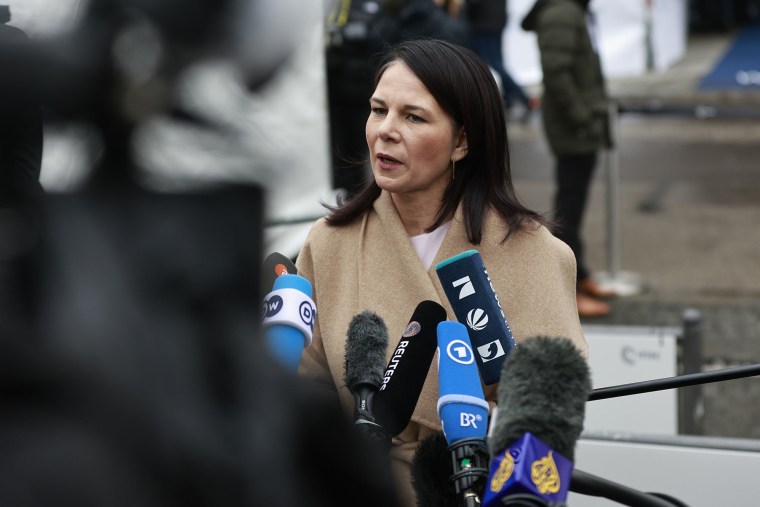
German Foreign Minister Annalena Baerbock on Friday condemned any plan for peace talks that does not involve Ukrainians and Europeans.
“A sham peace — over the heads of Ukrainians and Europeans — would gain nothing,” Baerbock said in a statement as the security conference got underway. “A sham peace would not bring lasting security, neither for the people in Ukraine nor for us in Europe or the United States,” she said, according to Reuters.
Baerbock called for talks between U.S. and international partners to be held at the Munich conference, an annual gathering of political and military leaders, as well as diplomats.
Ursula von der Leyden – Rose Ladson
Posted on September 23, 2016 by Royal Rosamond Press

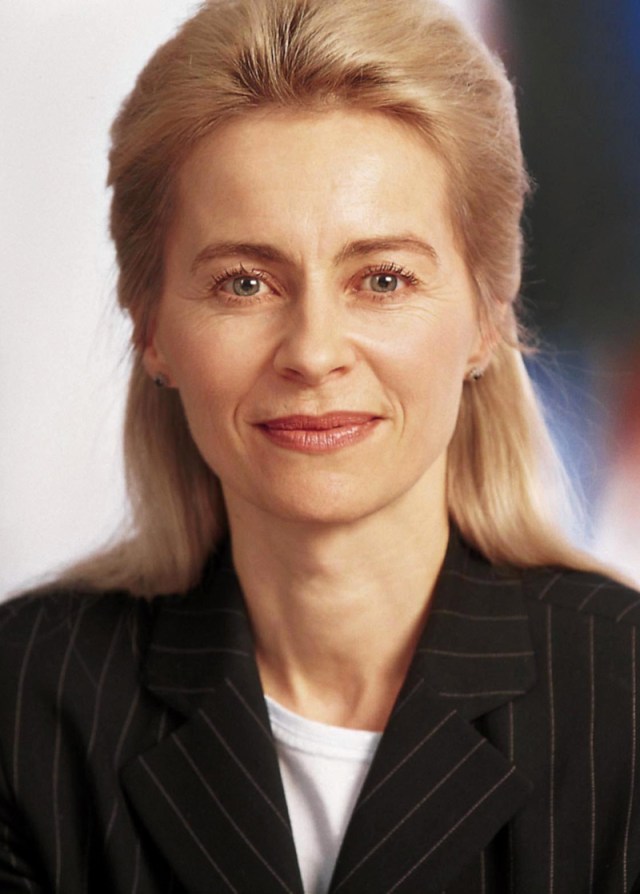


Here is “Rose Ladson”. Here is my Heir! Ursula fits most of the visions I have been having. My Prussian Teutonic Knights stand behind her. She is the woman in my painting whom I gave the name ‘Rose of the World’.
“While studying in London in 1978, she used the pseudonym “Rose Ladson“, because she was seen as a potential target for West German left-wing terrorism.[ “Röschen“
I was seeing names in the word THRONES. I saw THE SON. I saw a ROSE. Now I see a LAD, a SON, and a ROSE. Now I see VAN ANDERSON.
Rose Laden and I share the same birthday, October 8th. She she was four, she had a dream.
“Ursula von der Leyen is four years old when she told her mother about a strange dream. In it she says: “Heavenly Father, I break the clouds!And I broke the clouds! And as I said: Heavenly Father, I break the door! And I broke the door!When the door was broken, I was floating towards the sky, and I was an angel. Small brown wings I had, and a small, white underpants … “
Jon Presco ‘The Seer’
http://rudaw.net/english/kurdistan/230920161
Ursula von der Leyen was brought up in Belgium and speaks both German and French at a native level, as well as English.[10]
In 1977 she became a student of economics at the University of Göttingen, soon moving to Münster and then the London School of Economics. While studying in London in 1978, she used the pseudonym “Rose Ladson”, because she was seen as a potential target for West German left-wing terrorism.[11] “Röschen” (“Rosie”) has been her nickname since childhood.[12] In 1980, she switched to studying medicine and subsequently enrolled at the Hanover Medical School, where she graduated in 1987 after seven years.[13]
From 1988 to 1992, she worked as an assistant doctor at the Women’s Clinic of the Hanover Medical School. Upon completing her postgraduate studies, she graduated as a Doctor of Medicine in 1991.
From 1992 to 1996, after the birth of twins, she was a housewife in Stanford, California, while her husband was a faculty member of Stanford University.
From 1998 to 2002, she was a faculty member at the Department of Epidemiology, Social Medicine and Health System Research at the Hanover Medical School, where in 2001, she earned a Master’s degree in Public Health.[14]
Minister of Defence, 2013–present[edit]

Von der Leyen with German soldiers (2014)
In 2013, Ursula von der Leyen was appointed as Germany’s first female defence minister.[22] By placing a major party figure such as von der Leyen at the head of the Defence Ministry, Merkel was widely seen as reinvigorating the scandal-ridden ministry’s morale and prestige.[28] Along with Finance Minister Wolfgang Schäuble and Interior Minister Thomas de Maiziere, von der Leyen is one of only three ministers to remain with Merkel since she became chancellor in 2005.[29]
Von der Leyen chairs the EPP Defence Ministers Meeting, which gathers EPP defence ministers ahead of meetings of theCouncil of the European Union.[30]
While some other party officials were, like Merkel, also elected with scores over 90% to the CDU executive board at a party convention in December 2014, von der Leyen scraped only 70.5%.[31]
International crises[edit]
Within her first year in office, Von der Leyen visited the Bundeswehr troops stationed in Afghanistan three times and oversaw the gradual withdrawal of German soldiers from the country as NATO was winding down its 13-year combat mission ISAF.[32] In summer 2014, she was instrumental in Germany’s decision to resupply the Kurdish Peshmerga fighters with lethal assistance.[33] In September 2015, she signalled that she was open to delaying the withdrawal of 850 German soldiers from Afghanistan beyond 2016 after the Taliban’s surprise seizure of the northern city of Kunduz; German forces used to be based in Kunduz as part of NATO-ledISAF and remain stationed in the north of the country.[34]
Following criticism from German officials of Turkish President Recep Tayyip Erdoğan‘s military crackdown against Kurdish militants in August 2015, von der Leyen decided to let Germany’s three-year Patriot missile batteries mission to southern Turkey lapse in January 2016 instead of seeking parliamentary approval to extend it. By April 2016, under her leadership, the German Federal Armed Forces announced they would commit 65 million Euro to establish a permanent presence at Incirlik Air Base, as part of Germany’s commitment to the military intervention against ISIL.[35][36][37]
At the Munich Security Conference in 2015, von der Leyen publicly defended the German refusal to supply Ukraine with weapons. Stressing that it was important to remain united in Europe over Ukraine, she argued that negotiations with Russia, unlike with Islamic State jihadists, were possible. Germany sees Ukraine and Russia as a chance to prove that in the 21st century, developed nations should solve disputes at the negotiating table, not with weapons, she said. In addition, she noted, Russia has an almost infinite supply of weapons it could send in to Ukraine. She questioned whether any effort by the West could match that or, more important, achieve the outcome sought by Ukraine and its supporters.[38] On the contrary, von der Leyen said giving the Ukrainians arms to help them defend themselves could have unintended and fateful consequences. “Weapons deliveries would be a fire accelerant,” von der Leyen was quoted as telling the Süddeutsche Zeitung daily. “And it could give the Kremlin the excuse to openly intervene in this conflict.”[39]
When Hungary used a water canon and tear gas to drive asylum seekers back from the Hungarian-Serbian border in September 2015, von der Leyen publicly criticized the government of Prime Minister Viktor Orbán and called the measures “not acceptable and […] against the European rules that we have.”[40]
Under von der Leyen’s leadership, the German parliament approved government plans in early 2016 to send up to 650 soldiers to Mali, boosting its presence in the U.N. peacekeeping mission MINUSMA in the West African country.[41]
 Rosamond Press
Leave a comment