 |
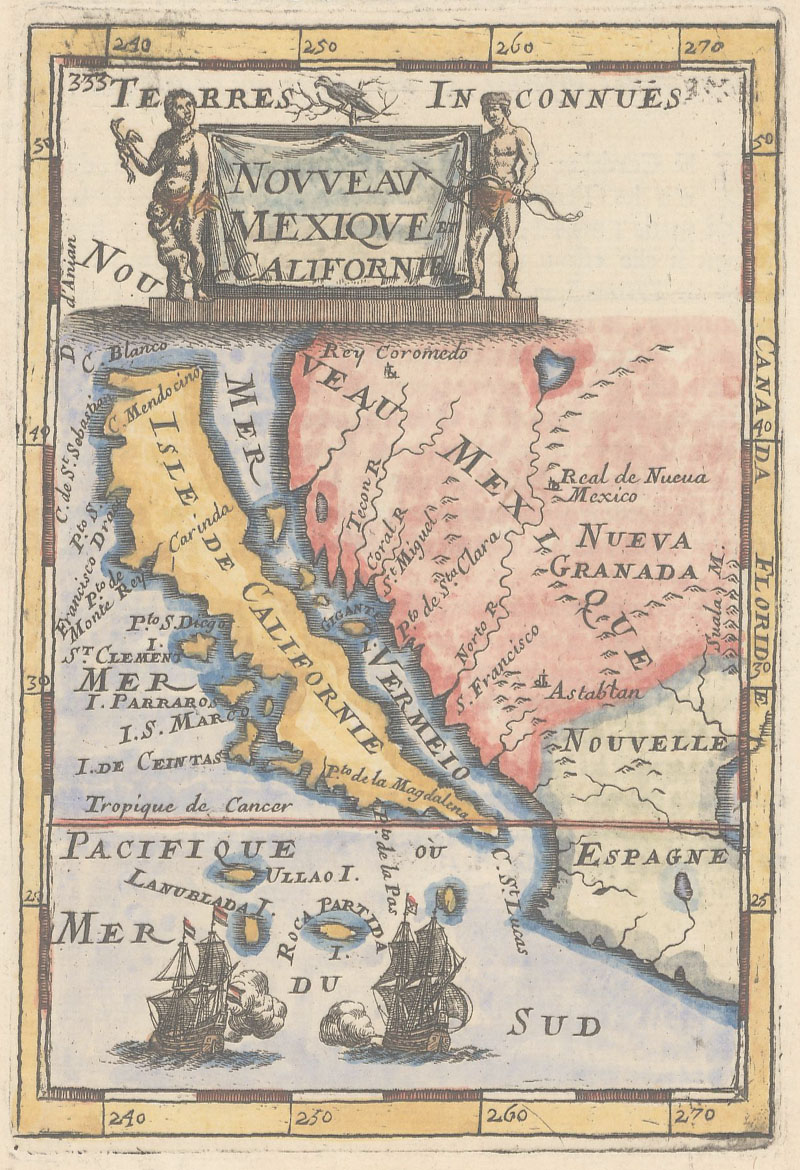
| Alain Manesson Mallet, Nouveau Mexique et Californie, 1683. |
The Search For Prester John
By
John Presco
ALL RIGHTS RESERVED
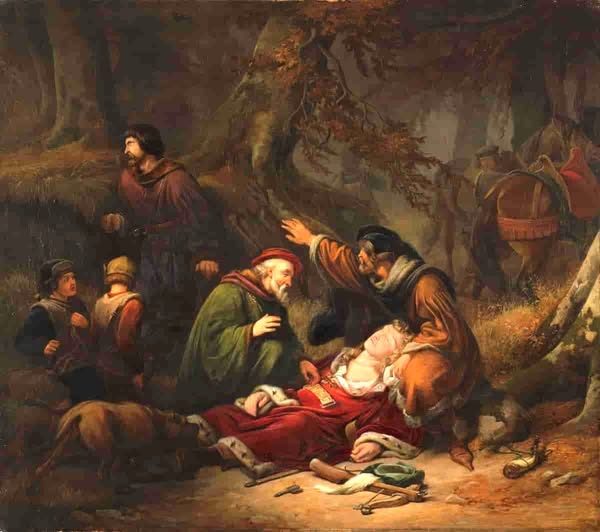
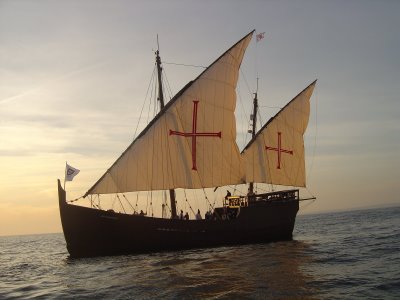
Synopsis: Valdemar the Young survives the assassination attempt by a Frankish agent and is taken to Helgoland and hidden by descendants of Radbod. Valdemar lived a good like in exile. He died peacefull and had royal issue. On July 1486, three Portuguese Caravel docked at Helgoland. Three men enter the home of young Valdemar Janke and tell him he is going on a voyage. He had no time to protest. Two men packed his belongings and told his family he is going on a Mission of God. The priest of Helgoland is asked to perform a ritual, and Valdemar boards the Caravel named The White Rose (of Bohemia’).
To be continued.
Around 11:30 A.M, on February 12, 2025 I came upon Prester John in looking for a Portuguese Captain who could have possibly made a voyage to California. I found Dias, and gasped when I read he went looking for the Kingdom of Prester John! When I discovered Janke was a form of John, my memory was toggled. I used John Von John as a central character in ‘The Royal Janitor’. I read about John when I read ‘Holy Blood, Holy Grail’ by Baigent and Leigh in 1996. I wondered later if Prester was a Nazarite Priest, named after John the Baptist.
In 1970 Irene Victoria Christensen came out of a dark doorway and asked to walk with me. She later told me she is Danish due to her last name. Today, we are the model and inspiration for the Last and Greatest Exploration, that will save California, and America from the new Dark Age at our door!
My President is authoring terrible fiction that is destroying Democracy in America. A Danish group wants to purchase Californian from Trump, but, this day I suspect the Danes can claim to California via the discovery of San Francisco Bay by The White Rose whose crew beheld a Beautiful Mountain.
Away!
John Presco
President: Royal Rosamond Press

Before his first marriage, Valdemar had been betrothed to Rixa of Bavaria, daughter of the Duke of Saxony. When that arrangement failed, he married first Dagmar of Bohemia, also known as Margaret of Bohemia, in 1205. She was the daughter of King Ottokar I of Bohemia by his first wife, Adelaide of Meissen, and soon became popular with the Danes. By this marriage, Valdemar had a son, Valdemar the Young, whom he elevated as co-king at Schleswig in 1218. Valdemar the Young was accidentally shot while hunting at Refsnæs in North Jutland in 1231. Queen Dagmar died in childbirth in 1212. Old folk ballads say that on her death bed, she begged Valdemar to marry Kirsten, the daughter of Karl von Rise, and not the “beautiful flower”, Berengaria of Portugal (Bengerd). In other words, she predicted Berengaria’s sons’ fight over the throne would bring trouble to Denmark.
aldemar II Valdemarsen (28 June 1170 – 28 March 1241), later remembered as Valdemar the Victorious (Danish: Valdemar Sejr) and Valdemar the Conqueror,[1][2] was King of Denmark from 1202 until his death in 1241.
In 1207, Valdemar invaded and conquered Lybeck and Holstein, expanding the Danish territories. His involvement in the Norwegian succession led to the second Bagler War, temporarily settling the issue and making the Norwegian king owe allegiance to Denmark. He faced disputes with the papacy over the appointment of the Prince-Archbishop of Bremen and the Bishop of Schleswig. Valdemar’s military campaigns included conflicts in northern Germany and the establishment of Danish rule in Estonia in 1219. His reign saw the adoption of a feudal system in Denmark and the creation of the Code of Jutland, which served as Denmark’s legal code until 1683.
Voyage around Africa
[edit]
.jpg)
In 1486 he seems to have been a cavalier of the king’s household and superintendent of the royal warehouses; on 10 October in that year, he received an annuity of 6000 reis from King John II of Portugal for “services to come”; and sometime after this (probably about July or August 1487, rather than July 1486, the traditional date) he left Lisbon with three ships to carry on the work of African exploration so significantly advanced by Diogo Cão. Dias was also charged with searching for Prester John, a legendary figure believed to be the powerful Christian ruler of a realm somewhere beyond Europe, possibly in the African interior. Dias was provided with two caravels of about 50 tons each (São Cristóvão and São Pantaleão) and a square-rigged supply ship captained by his brother Diogo. He recruited some of the leading pilots of the day, including Pêro de Alenquer and João de Santiago, who had previously sailed with Cão.[6][7]
No contemporary documents detailing this historic voyage have been found, as almost all maritime records were destroyed in the 1755 Lisbon earthquake and ensuing tsunami. Much of the available information comes from the sixteenth-century historian João de Barros, who wrote about the voyage sixty years later.[8]

The small fleet left Lisbon in or around July 1487. Like his predecessor, Cão, Dias carried a set of padrões, carved stone pillars to mark his progress at significant landfalls. Also on board were six Africans who had been kidnapped by Cão and taught Portuguese. Dias planned to drop them off at various points along the African coast so that they could testify to the grandeur of the Portuguese kingdom and make inquiries into the possible whereabouts of Prester John.[9]
Background
[edit]

He was the second son of King Valdemar I of Denmark and Sophia of Polotsk. When his father died, young Valdemar was only twelve years old. He was named duke of Southern Jutland (Latin: dux slesvicensis.[3]) His regent was Bishop Valdemar Knudsen, the illegitimate son of King Canute V of Denmark. Bishop Valdemar was an ambitious man and disguised his own ambitions as young Valdemar’s. When Bishop Valdemar was named archbishop of Bremen in 1192, his plot to overthrow King Canute VI of Denmark (elder brother of Duke Valdemar) with the help of the German nobility and place himself on Denmark’s throne, was revealed.
Duke Valdemar realized the threat Bishop Valdemar represented. He thus invited him to Aabenraa in 1192. The bishop then fled to Norway to avoid arrest. The following year, Bishop Valdemar organised – supported by the Hohenstaufens – a fleet of 35 ships and harried the coasts of Denmark, claiming the Danish throne for himself based on the fact that he was the son of King Canute V. In 1193, King Canute VI captured him. Bishop Valdemar stayed in captivity in Nordborg (1193–1198) and then in the tower at Søborg Castle on Zealand until 1206. He was later released upon the initiative of Dagmar of Bohemia (the wife of Duke Valdemar) and Pope Innocent III, after swearing to never interfere again in Danish affairs.[4]

Young Valdemar faced another threat from Count Adolf III of Holstein. Adolf tried to stir up other German counts to take southern Jutland from Denmark, and to assist Bishop Valdemar’s plot to take the Danish throne. With the bishop again in prison, Duke Valdemar went after Count Adolph, and with his own troop levies, he marched south and captured Adolph’s new fortress at Rendsburg. He defeated and captured the count at the Battle of Stellau in 1201, and imprisoned him in a cell next to Bishop Valdemar. Two years later, due to an illness, Count Adolph was able to buy his way out of prison by ceding all of Schleswig, north of the Elbe, to Duke Valdemar. In November 1202, Duke Valdemar’s elder brother, King Canute VI, unexpectedly died childless.
Reign
[edit]

Duke Valdemar was subsequently proclaimed king at the Jutland Assembly (landsting). The nearby Holy Roman Empire was torn by civil war due to having two rivals contesting for its throne, Otto IV, House of Guelf, and King Philip, House of Hohenstaufen. Valdemar II allied himself with Otto IV against Phillip.
In 1203 Valdemar invaded and conquered Lybeck and Holstein, adding them to the territories controlled by Denmark. In 1204 he attempted to influence the outcome of the Norwegian succession by leading a Danish fleet and army to Viken in Norway in support of Erling Steinvegg, the pretender to the Norwegian throne. This resulted in the second Bagler War which lasted until 1208. The question of the Norwegian succession was temporarily settled and the Norwegian king owed allegiance to the king of Denmark.

In 1207, a majority of Bremian capitulars again elected Bishop Valdemar as prince-archbishop, while a minority, led by the capitular provost Burkhard, Count of Stumpenhausen fled for Hamburg, being the seat of a Bremian subchapter with regional competence and delegating for episcopal elections two participants to the main Bremian chapter. The German King Philip recognised Valdemar as the legitimate prince-archbishop of Bremen, because thus the prince-archbishopric would become his ally against Valdemar II.
Valdemar II and the fled capitulars protested to Pope Innocent III, who first wanted to research the case. When Bishop Valdemar left Rome for Bremen against Pope Innocent’s order to wait his decision, he banished Valdemar by an anathema and in 1208 finally dismissed him as Bishop of Schleswig. In 1208, Burkhard, Count of Stumpenhausen, was elected by the fled capitulars in Hamburg as rival prince-archbishop and Valdemar II, usurping imperial power, invested Burkhard with the regalia – with effect only in the prince-archiepiscopal and diocesan territory north of the Elbe. In 1209 Innocent III finally consented the consecration of Bishop Nicholas I of Schleswig, a close confidant and consultant of King Valdemar, as successor of the deposed Bishop Valdemar. In 1214 King Valdemar appointed Bishop Nicholas I as Chancellor of Denmark, succeeding the late Peder Sunesen [Wikidata], Bishop of Roskilde.
In the same year Valdemar II invaded with Danish troops the prince-archiepiscopal territory south of the Elbe and conquered Stade. In August Prince-Archbishop Valdemar reconquered the city only to lose it soon after again to Valdemar II, who now built a bridge of the Elbe and fortified a forward post in Harburg upon Elbe. In 1209 Otto IV persuaded Valdemar II to withdraw into the north of the Elbe, urged Burkhard to resign and expelled Prince-Archbishop Valdemar.
In 1210, Innocent III made Gerhard I, Count of Oldenburg–Wildeshausen Bremen’s new Prince-Archbishop. In 1211 Duke Bernard III of the younger Duchy of Saxony escorted his brother-in-law Valdemar, the papally dismissed Prince-Archbishop, into the city of Bremen, de facto regaining the See and enjoying the sudden support of Otto IV, who meanwhile fell out with Innocent over Sicily. As a reaction Valdemar II recaptured Stade, while in 1213 Henry V, Count Palatine of the Rhine, conquered it for Prince-Archbishop Valdemar.
In 1213 Valdemar instituted a war tax in Norway, and the peasants murdered Valdemar’s tax collector at the Trøndelag Assembly and revolted. The uprising spread over several regions in Norway.
In 1216, Valdemar II and his Danish troops ravaged the County of Stade and conquered Hamburg. Two years later Valdemar II and Gerhard I allied to expel Henry V and Otto IV from the Prince-Archbishopric. Prince-Archbishop Valdemar finally resigned and entered into a monastery. Valdemar supported Emperor Frederick II and was rewarded with the emperor acknowledging Denmark rule of Schleswig and Holstein, all of the Wendish lands and Pomerania.
Battle of Lindanise
[edit]

Christian August Lorentzen
(1809)
The Livonian Knights, who had been attempting to Christianize the peoples of the eastern Baltic, were (by 1219) being hard pressed and turned to Valdemar for help. Pope Honorius III elevated Valdemar’s invasion of Estonia into a crusade. Valdemar raised an army and called all of Denmark’s ships to gather to transport the army eastward. Once assembled, the fleet numbered 1500 ships.
When the army landed in Estonia, near modern-day Tallinn, the chiefs of the Estonians sat down with the Danes and agreed to acknowledge the Danish king as their overlord. A few of them allowed themselves to be baptized which seemed to be a good sign. Three days later on 15 June 1219 while the Danes were attending mass, thousands of Estonians broke into the Danish camp from all sides. Confusion reigned and things looked bad for Valdemar’s crusade. Luckily for him, Vitslav of Rügen gathered his men in a second camp and attacked the Estonians from the rear.

During the Battle of Lindanise, the legend says that whenever Bishop Sunesen raised his arms the Danes surged forward and when his arms grew tired and he let them fall the Estonians turned the Danes back. Attendants rushed forward to raise his arms once again and the Danes surged forward again. At the height of the battle Bishop Sunsen prayed for a sign and it came in the form of a red cloth with a white cross which drifted down from the sky just as the Danes began to fall back. A voice was heard to say “When this banner is raised on high, you shall be victorious!”[5] The Danes surged forward and won the battle. At the end of the day thousands of Estonians lay dead on the field, and Estonia was added to the Danish realm. Estonians were forcibly baptised as Christians, but according to an in depth study of the Liber Census Daniæ by the historian Edgar Sachs, the Estonians quite voluntarily converted to the Christian faith.
Valdemar ordered the construction of a great fortress at Reval, near the site of the battle.[6] Eventually a city grew around the hilltop castle which is still called Tallinn, “Danish-castle/town” in the Estonian language. The red banner with a white cross (Dannebrog) has been the national flag of the Danes since 1219. Dannebrog is Europe’s oldest flag design still in modern use.
Battle of Bornhöved
[edit]
In 1223, King Valdemar and his eldest son, prince Valdemar, were abducted by Count Henry I of Schwerin (Heinrich der Schwarze), while hunting on the island of Lyø near Funen.[7] Count Henry demanded that Denmark surrender the land conquered in Holstein 20 years ago and become a vassal of the Holy Roman Emperor. Danish envoys refused these terms and Denmark declared war. While Valdemar sat in prison, most of the German territories tore themselves away from Denmark. Danish armies were dispatched to hold them in line. The war ended in defeat of the Danish troops under the command of Albert II of Orlamünde at Mölln in 1225.[7] To secure his release Valdemar had to acknowledge the break away territories in Germany, pay 44,000 silver marks, and sign a promise not to seek revenge on Count Henry.
Valdemar immediately appealed to Pope Honorius III to have his oath declared void, a request granted by the Pope. Honorius III excused Valdemar from his forced oath, and he immediately set about trying to restore the German territories.[7] Valdemar concluded a treaty with his nephew Otto I, Duke of Brunswick-Lüneburg and headed south to take back what he thought were his lands by right, but his luck deserted him. A series of Danish defeats culminating in the Battle of Bornhöved on 22 July 1227 cemented the loss of Denmark’s north German territories.[7] Valdemar himself was saved only by the chivalrous acts of a German knight who carried Valdemar to safety on his horse.
Code of Jutland
[edit]

From that time on, King Valdemar II focused his efforts on domestic affairs. One of the changes he instituted was the feudal system, where he gave properties to men with the understanding that they owed him service in return. This increased the power of the noble families (højadelen) and gave rise to the lesser nobles (lavadelen’), who controlled most of Denmark. Free peasants lost the traditional rights and privileges they had enjoyed since the Viking era.[8]
King Valdemar II spent the remainder of his life putting together a code of laws for Jutland, Zealand, and Skåne. These codes were used as Denmark’s legal code until 1683. This was a significant change from the local law-making at the regional assemblies (landting), which had been a long-standing tradition. Several methods of determining guilt or innocence were outlawed, including trial by ordeal and trial by combat. The Code of Jutland (Jyske Lov) was approved at the meeting of the nobility at Vordingborg Castle in 1241, just prior to Valdemar’s death there. Valdemar was buried next to his first wife, Queen Dagmar, at Ringsted in Zealand.
Marriages
[edit]
Before his first marriage, Valdemar had been betrothed to Rixa of Bavaria, daughter of the Duke of Saxony. When that arrangement failed, he married first Dagmar of Bohemia, also known as Margaret of Bohemia, in 1205. She was the daughter of King Ottokar I of Bohemia by his first wife, Adelaide of Meissen, and soon became popular with the Danes. By this marriage, Valdemar had a son, Valdemar the Young, whom he elevated as co-king at Schleswig in 1218. Valdemar the Young was accidentally shot while hunting at Refsnæs in North Jutland in 1231. Queen Dagmar died in childbirth in 1212. Old folk ballads say that on her death bed, she begged Valdemar to marry Kirsten, the daughter of Karl von Rise, and not the “beautiful flower”, Berengaria of Portugal (Bengerd). In other words, she predicted Berengaria’s sons’ fight over the throne would bring trouble to Denmark.
After Dagmar’s death, in order to build good relations with Flanders, Valdemar married Berengária of Portugal in 1214. She was the orphan daughter of King Sancho I of Portugal and Dulce of Aragon, and a sister of Ferdinand, Count of Flanders, with whom she stayed until her marriage. Queen Berengária was beautiful, but so hard-hearted that she was generally hated by the Danes until her early death, in childbirth, in 1221. Valdemar’s two wives played a prominent role in Danish ballads and myths – Dagmar as the soft, pious, and popular ideal wife, and Berengária as the beautiful and haughty woman.[citation needed]
Issue
[edit]
With his first wife, Dagmar of Bohemia, whom he wed in 1205, Valdamar had the following children:
- Valdemar the Young of Denmark (1209 – 28 November 1231), married Eleanor of Portugal.
- Stillborn son (1212)
With his second wife, Berengaria of Portugal, whom he wed in 1214,[9] he had the following children:
- Eric IV, King of Denmark (1216 – 10 August 1250)[10]
- Sophie of Denmark (1217–1247), married in 1230 to John I, Margrave of Brandenburg[10]
- Abel, King of Denmark (1218 – 29 June 1252)[10]
- Christopher I, King of Denmark (1219 – 29 May 1259)[10]
- Stillborn child (1221)
Legacy
[edit]
Valdemar enjoys a central position in Danish history because of his position as “the king of Dannebrog” and as a legislator. To posterity, the civil wars and dissolution that followed his death made him appear to be the last king of a golden age. Since 1912, June 15 has officially been called Valdemarsdag (Valdemar’s Day). The date now belongs to the group of 33 Danish annual Flag Days where Dannebrog is raised in celebration.[citation needed]
The 1997 film Eye of the Eagle was about a fictional story about Valdemar the Young. His father Valdemar was played by Lars Lohmann.
The Estonian capital Tallinn has a park at Toompea called the Danish King’s Garden where the Danish flag Dannebrog was born according to prevailing legends. Every year on 15 June, the Day of the Danish Flag is celebrated in the garden.[11]
Heligoland (/ˈhɛlɪɡoʊlænd/; German: Helgoland, pronounced [ˈhɛlɡoˌlant] ⓘ; Heligolandic Frisian: deät Lun, lit. ’the Land’, Mooring Frisian: Hålilönj, Danish: Helgoland) is a small archipelago in the North Sea.[2] The islands were historically possessions of Denmark, then became possessions of the United Kingdom from 1807 to 1890. Since 1890, they have been part of the German state of Schleswig-Holstein, although they were managed by the United Kingdom as a war prize from 1945 to 1952.
In 697, Radbod, the last Frisian king, retreated to the then-single island after his defeat by the Franks – or so it is written in the Life of Willebrord by Alcuin. By 1231, the island was listed as the property of the Danish king Valdemar II. Archaeological findings from the 12th to 14th centuries suggest that copper ore was processed on the island.[9][page needed]
Danish, 1817–1844
Actress Lillian Gish, Berlin 1925, 1925
Medium
silver contact print
Size
11.9 x 8.9 cm. (4.7 x 3.5 in.)
Beauty Beyond Compare
Posted on October 4, 2024 by Royal Rosamond Press
Made In The Image of God
Posted on September 6, 2023 by Royal Rosamond Press

Rena and I were made in the image of God. When Christine Rosamond Presco saw a photo of the painting I did of Rena Christensen standing on a hill watching the sunset, she took up art. She couldn’t stand it, that I got so much, and she got – nothing! Out of vengeance – she had to have it all! In her autobiography that the New Narcists disappeared, my jealous sister began Her Story, this way
“Everyone thought my brother would be a famous artist someday, but, it wasn’t meant to be!”
Rosamond hated to go to shows because men and women always asked…
“Are you a Lesbian? Are you in love with women?”
I was in love with women – including the most beautiful woman in the world – whose back sent me to heaven. I just made this sunset on Fotor, that is close to the painting I did that I showed Christine in person, and that my brother – disappeared! They both wanted me to be…The Hidden One!
After spending the day on Monte Rio beach, we would shop for food, then drive into the Armstrong Woods. Putting the Dodge in second, and finding music to go with on the radio, we began our ascent to the top of our mountain. I felt I was stealing Beauty away from the World. I accused Rena of wanting to be in a crowd of people, but, she just wanted to be……with me!
John ‘The Hidden One’
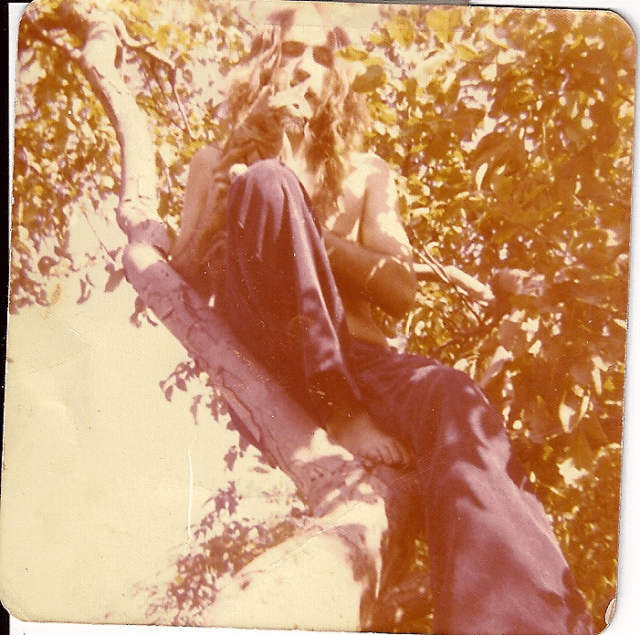
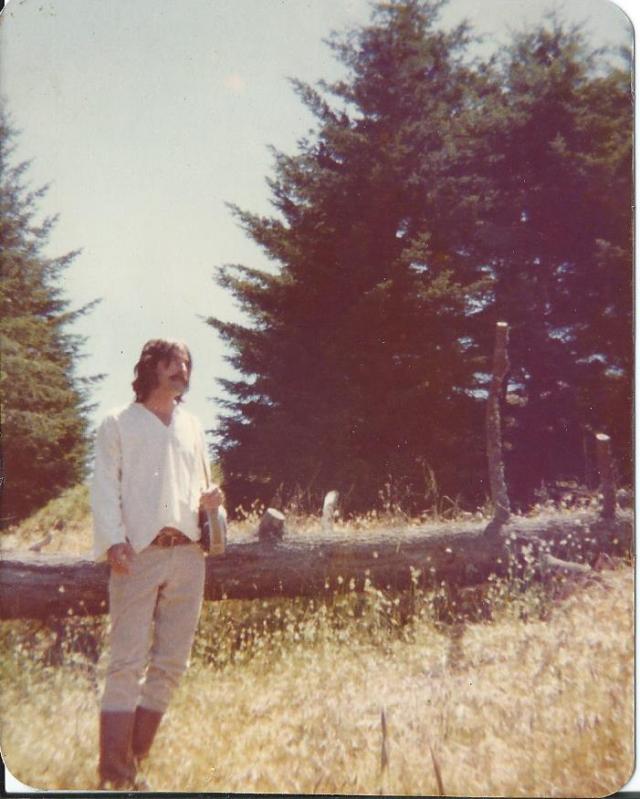
“It was very uncool for a Hippie to get caught taking a pic with a camera, a rule I wished I had broke. This is a…….re-creation.“



The Healing Ride
Posted on October 5, 2019 by Royal Rosamond Press
Alas I found the road that Rena and I traversed almost every day for fifty days. It was a miracle my 1950 Dodge held up. Mind you Rena grew up in Grand Island Nebraska where it is completely flat. There were some hairy turns and deep drop-offs that my love looked down with some unease. This was her High School graduation excursion her harrowing climb in the Swiss Alps. Coming down, my breaks would get hot and we stopped at the usual pullover. We wee healing for a swim in the Russian River, or a day at Victoria Beach.
In the bottom video, the water in the pond was much higher. Rena would swim here at dusk, in the buff. I made all the meals, and the camp coffee. I gave lessons about the Indian Religion around the campfire. Then we watched the sunset, and the milky way appear.
Rena was afraid to even look at the ocean. I took her to our beach about five times, and she was trying to brave, more than I knew. Looking at the video taken near Jenner, I can now put myself in her place, a flat safe, place.
I was concerned our Dodge would break down going up one of the greatest roads in the West. I was going to post a map, but changed my mind. We took a back pack with us in case we had to bail, and put our thumbs out and hitchhike to Nebraska. Rena was such a special cargo. She called her grandmother every time we went to town. Rena was part Nerd. She sure got her ticket punched for the California Dream Ride.
It was very uncool for a Hippie to get caught taking a pic with a camera, a rule I wished I had broke. This is a…….re-creation.
John Presco
Bonding With a Beautiful Angel
Posted on December 28, 2014by Royal Rosamond Press


Rena let me take her in, capture her beauty as we stood together looking down at the clear pool of water at the bottom of the waterfall. To behold her perfect face, her chestnut hair against the vibrant green of the forest, was overwhelming. I could not get enough of her. I knew I would never behold such a beautiful vision. I now plotted how to capture her, keep her with me, forever: for the world would no longer exist for me if she was not by my side.
Tow hours earlier we were naked in bed at Hell Hotel. Since our kiss two days earlier, we longed to make love. But, being homeless in a tent in a friends backyard, we put out there like animals, would not do. Now, we heard a maniacal scream of some hippie wanna-be having a bun trip at four in the afternoon that stopped me in my tracks.
“I can’t. I won’t make love to your here! C’mon. Let’s get out of here!”
Rena did not ask where we going. We put our clothes on, and we were out of there. I had to marvel at what I had just done. The perfect nakedness of Eve, was gone. As my Dodge Coronet went over the San Raphael Bridge, I felt Rena grow tense. She was afraid of the ocean, and even more afraid to be suspended over the San Francisco Bay.
In Nebraska, everything is flat, and safe. Now my vintage car was climbing a mountain. At the Zenith, I parked, and bid Rena to follow me.
“I have something wonderful to show you!”
I parted the barbed wire, and taught her how to do the same for me. We waked across a field of golden grass drying in the hot summer afternoon.
“Behold!” I said to the beauty I had rescued!
“I watched Rena intently as she took it in, the vast Pacific Ocean, and Stinson Beach below.
“Listen! You can hear the waves break from way up here! We are on Mount Tamalpais, which means ‘Sleeping Maiden’.
I watched Rena walk towards the bank of fog that lay offshore until the sunset, then it moved in an hugged the maiden, covering her in a blanket of down. To behold her beautiful form against this backdrop, was the painting of my dreams. Here was my masterpiece, that fate had a hand in. If we had not taken that late night walk on the Venice Pier, we would have never met. What are the odds.
Against the vibrant green of the moss on the trees, I was now in Eden, with Eve. My mind was racing, I filing threw mu brain looking for just the right trick, the perfect piece of magic that would make her mine – until the end of time! Rena turned to gaze at me. She trusted me because I did what no man had done before, when she got naked for them.
“Rena. I am having a very difficult time here. You are the most beautiful creature – any man has seen. Your beauty has made me very insecure. I feel so unworthy of being in your presence. I don’t know you. You don’t talk that much. Your beauty is like a mask that conceals your true identity. For this reason, I no longer want to make love with you.”
Rena, winced. I watched her demure, change. No one had done what I had just done. I had unmasked her. She changed before my eyes. The person before me was even more stunning. I knew I was in deep trouble, for now it would be impossible to let go that look upon her face. I looked at the deep pool of turquoise water and saw us naked there. It would be a Baptism. A spiritual experience. She had asked me if there was a place we could go swimming.
“Will this do?” I asked, hoping I would now be getting more direct answers.
“I don’t want to swim there. Is there a river nearby.”
For the next fifty days I spoiled her, the most beautiful woman in the world. After making her a wonderful dinner at Camp Laura Dell, we walked to edge of the world and watched a magnificent sunset.
Copyright 2014
 Rosamond Press
Leave a comment