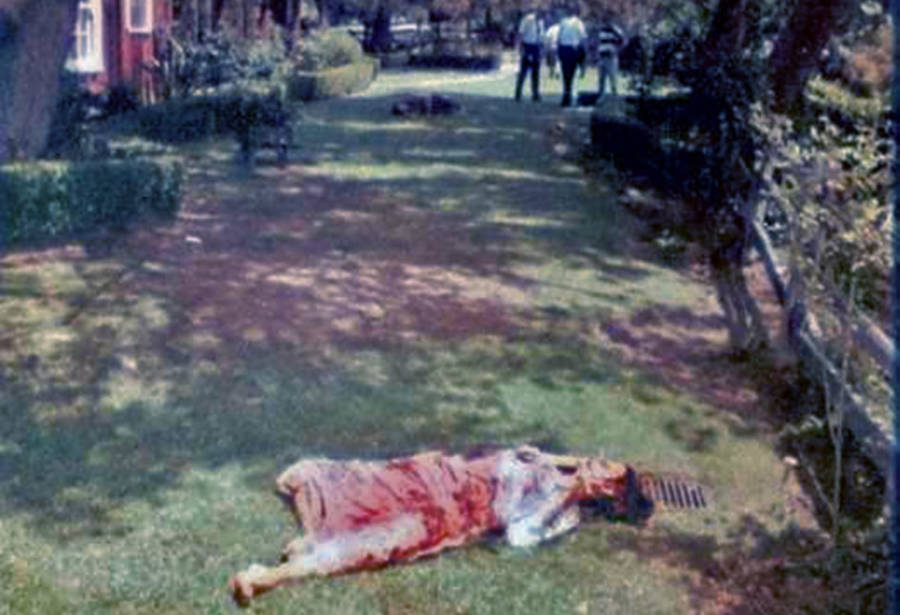
Police Handout Abigail Folger died in Sharon Tate’s yard.
Capturing Beauty
The Native American Princess
John Presco
Copyright 2025
The murder of Abigail Folger was a INTERNATIONAL INCIDENT – but it was kept under wraps. Abigail is of the First Family of El Salvador that is famous for its coffee plantations. Did Peter Folger get all his coffee beans from El Salvador? Did the Manson Family know this? Did Manson want new land for his Utopian Hippie Commune Dream. Ines Mejia worked as a volunteer for the Height Ashbury Free Clinic. Abigail did charitable work. These very wealthy women are saying they are not a part of the system. How many Hippies shared their ideals?
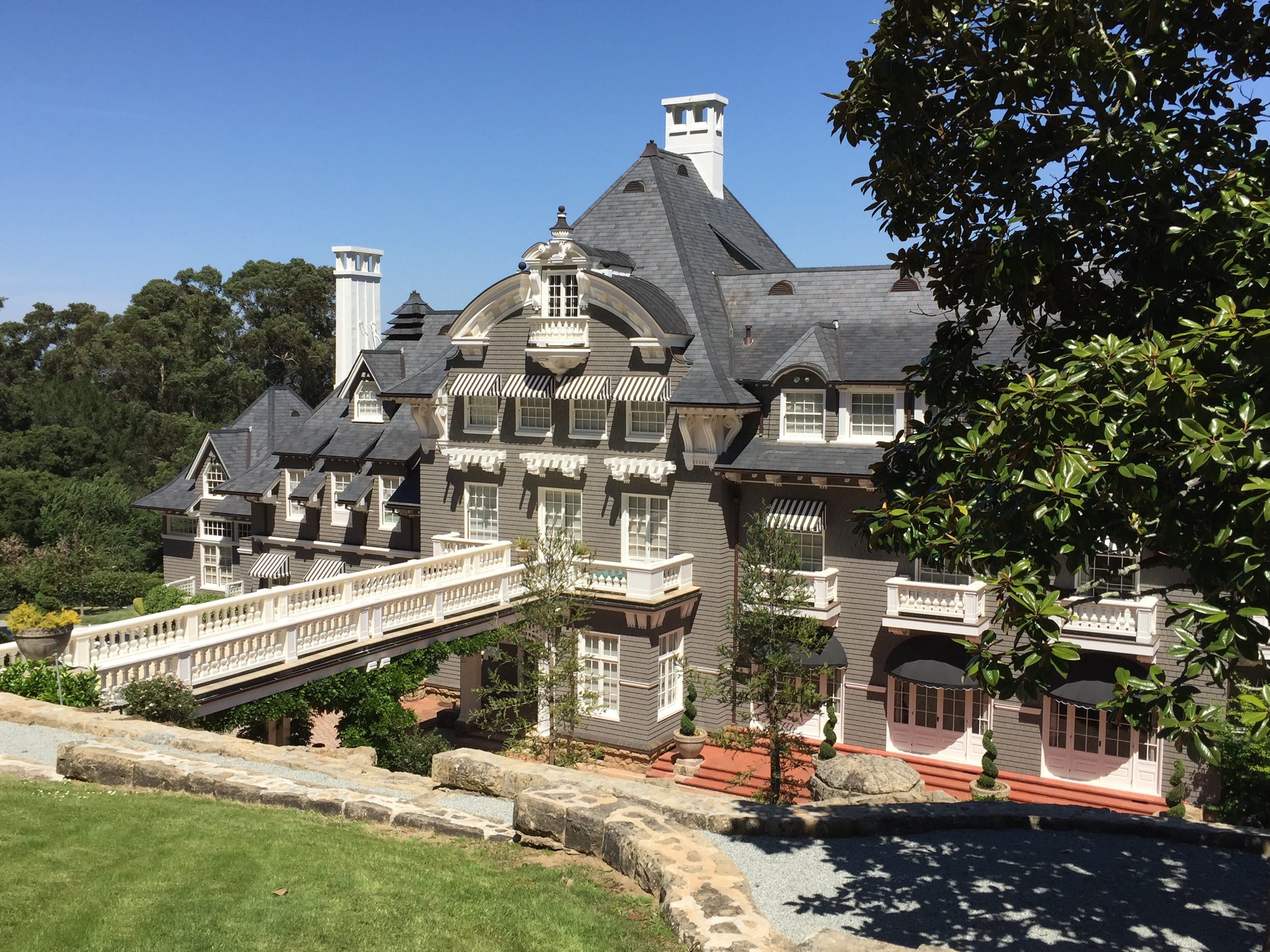
Peter Folger moved from the castle you see above after Tate and his daughter was murdered, Did he fear he was also a target of the Manson Family? I would – be afraid! It was built on a land grant. The Mejias were a First Family of San Francisco until they moved to Oakland after the Earthquake. I wonder if this was the fate of the Carl Janke Family, who founded Belmont on a land grant.
The CIA would want to put a damper on what I reveal to the public – for the first time! Once again I may have put myself in danger for – digging too deep! That there is so little information on the Mejia Family in the U.S. suggests it is dangerous to write about them. There needs to be a DNA of this Native Family. Abigail was half Native American. It is difficult for me to read about the stab wounds. I have trouble believing my niece, Drew Benton stabbed herself twenty-two times.
I am asking my Parasite-Stalker to leave me and my family alone. To pretend to be my friend, helping me with research, is diabolical;. I suspect this creep conducted conference calls without my knowledge – at least! Yes I just put you alongside the Manson Family. Sue me!
The impact Folgers and Hillbrother’s coffee had on San Francisco – is yet to be told!
JRP
“Hill envisioned a better life for himself. He arranged for Spanish classes and at age 18, he was off to El Salvador in 1889 to work as a textile salesman. Hill married a Salvadoran woman and inherited her family’s coffee plantations. Hill’s idea to plant coffee beans near an active volcano in the town of Santa Ana was ridiculed. While Hill saw the economic potential of coffee, his vision was not widely shared. However, coffee eventually became a major cash crop in El Salvador. By planting some coffee beans, Hills helped to create what eventually became a giant beanstalk: a Coffee Republic.
On August 9, 1969, company heiress Abigail Folger was stabbed to death in Los Angeles as part of the Manson Family‘s Tate–LaBianca murders.[8]
Brief Life History of Encarnacion
When Encarnacion Mejia was born on 25 March 1842, in San Salvador, San Salvador, El Salvador, his father, Jose Encarnacion Mejia, was 22 and his mother, María Jazinta Medina Mendoza, was 27. He married Gertrude Guirola Duke in Inmaculada Concepción, Santa Tecla, La Libertad, El Salvador. They were the parents of at least 2 sons and 5 daughters. He lived in Oakland, Alameda, California, United States in 1910. He died on 15 March 1917, in San Francisco, California, United States, at the age of 74, and was buried in Colma, San Mateo, California, United States.
Portraits of Emperor Maximilian of Mexico, Tomás Mejía, and Miguel Miramón and firing squad, superimposed on photograph of their place of execution, at Querétaro] b&w film copy neg.
Fit screenZoom outZoom inRotate rightFull expand
Tomás Mejía: the general executed with Maximilian who remained embalmed in the living room of his house for 3 months
Because of his poverty, Agustina Rodríguez, wife of conservative general Tomás Mejia, who was executed next to Maximilian of Habsburg, was unable to bury her husband, so she took advantage of the embalming of the body and had him for three months in the living room of her house, sitting on a chair
Folger Estate Stable Historic District
Folger Estate Stable Historic District also known as Jones Ranch, Mountain Home Ranch, is located at 4040 Woodside Road in Woodside, California at Wunderlich Park, with the majority of the historic buildings built between 1905 and 1906.[1] It was listed on the National Register of Historic Places on April 16, 2004.[1] The historic district is a three-acre site with ten buildings, including the main horse stable building, carriage house, stone walls lining the roads, blacksmith barn, and the cold house.[1][2]

The site of the Folger Estate was a Redwood forest occupied by the Ohlone Native Americans, prior to the arrival of Europeans.[1] By 1840, the land was part of the Rancho Cañada de Raymundo land grant, granted to John Coppinger.[1] A large part of the land (including the site of Folgers Estate) was sold in 1846, to Charles Brown, a lumberjack who built the city’s first sawmill and named the property “Mountain Home Ranch”.[1] After Brown heavily logged the land (specifically near Folgers Estate) he abandoned the property and it changed ownership more than nine times.[1]
In 1872, Simon Jones and his son, Everett acquired the property, then referred to as “Jones Ranch”, the land had been logged for more than twenty six years and it was mostly treeless.[1] The Jones family had the stone structures (the dairy house and many of the stone walls) built between 1874 and 1902, as well as a wooden house, barn and related buildings which was torn down in the 1970s and 1980s.[1] The stone wall on the property was built by Chinese laborers.[3]
Folger family
James Athearn Folger, II (1864–1921) and his wife Clara E. (née Luning, 1866–1940), heir to J. A. Folger and Folgers Coffee Company, built the estate and stables between 1905 and 1906. This is considered the historically significant period of architecture (per the National Park Service).[1] The house and stable were designed by the architectural firm of Schultze and Brown and the design was influenced by French Baroque architecture and the Arts and Crafts movement.[1] A recent graduate of the Ecole des Beaux Arts, this architectural site was Arthur Brown Jr.’s first California design project and he went on to design San Francisco City Hall, the War Memorial Opera House, and Hoover Tower at Stanford University.[4]
The property was used to breed horses; the horses were used for recreational riding as well as for transportation.[4][5] The stables are from the Gilded Age and feature pink marble baseboards, redwood wainscoting, and skylights.[6] The horse stable consists of stalls, tack and harness rooms, a carriage room, feed rooms, living quarters for staff, workshop and boiler room, with hay storage on the lofted second floor.
In c.1940-1941, after the deaths of the Folgers, the estate sold the property.[1]
Later history
In 1955, the house which is located a half-mile away from the stables was sold as a separate property and is a private residence.[1][4]
In 1956, the stable and adjoining 940+ acres of land were sold to Martin Wunderlich, who later donated it to the county for a public park.[6][7] In the 1960s a few Stanford University students lived in the upper loft of the stables.[6] In 1974, the property became part of Wunderlich Park, with the Folger Estate Stable Historic District occupying 3-acres, within the 945-acre county park.[6] In 1977, Atari co-founder Nolan Bushnell bought the property due in part to his financial windfall from selling Atari to Warner Communications. He and his wife raised 8 children and would remain on the property for 19 years before selling it.[citation needed]
Starting in 2003, large scale fundraising efforts by “Friends of Huddart and Wunderlich Parks” were made in order to repair the structures, form an endowment, and receive the National Register of Historic Places recognition, which included early donations by locals Bill Lane and Bill Butler.[4][6] In 2010, architect Adolph Rosekrans completed the restoration of many of the buildings.[3][8]
As of 2022, the stables are still actively used for horses.
The Coffee Oligarchy: How El Salvador Became Homicidal
31 May
Written By Ayesha Kuwari
Originally Published: 10 September 2020
Coffee created an oligarchy in El Salvador, which fuelled a massacre, leading the nation on the footpath to endless violence.

“We were all born half-dead in 1932”
– from a poem by Roque Dalton
History is buried with chain reactions. A single event so powerful that it spurs into an unstoppable flurry of trauma that shakes a nation. For El Salvador, that event was the ‘La Mantaza’ (‘The Massacre’) of 1932.


Advertisement
Sponsor this memorial with an exclusive premium layout and no ads.Sponsor this page
Ines Mejia Folger Known to her friends as “Pui”, died peacefully on July 15, 2007, three weeks after celebrating her 100th birthday. Born in Piedmont, California on June 25, 1907, she was the sixth and youngest child of Encarnacion and Gertrude Mejia, both of whom were born in El Salvador. At the time of his youngest child’s birth, Mr. Mejia was the Consul General for El Salvador in San Francisco. After attending the Convent of the Sacred Heart in San Francisco for the primary grades, Mrs. Folger was sent to Europe at the age of 12 to attend schools in Paris and London. During her schooling in Paris, she witnessed numerous historic post-World War I events, including the pageantry surrounding the burial of the Unknown Soldier beneath the Arc de Triomphe. She finished high school at the …
Read More
Gravesite Details
she is interred in a crypt to the right of her daughter Abigail who along with actress Sharon Tate and 2 others was murdered in August 1969 by the infamous Manson Family.
Arthur Ralph Mejia
Birth28 Mar 1902
San Francisco County, California, USADeath2 Aug 1979 (aged 77)
San Francisco County, California, USABurial
Colma, San Mateo County, California, USAAdd to MapPlotGarden / Section: CATACOMBS SECTION 1 UNIT 4 Row/Tier: TIER 2Memorial ID87709486 · View SourceShareSave to
Suggest EditsToggle Dropdown


Advertisement
Sponsor this memorial with an exclusive premium layout and no ads.Sponsor this page
Gravesite Details
Ref: Cemetery Records
Family Members
Parents
Spouse
Siblings
- Sr Maria Leonor Mejia1892–1992
- Maria Coralia del Carmen Mejia Carrigan1893–1990
- Ines Mejia Folger1907–2007
Flowers • 6
Military and Politician. José Tomás de la Luz Mejía Camacho, better known as Tomás Mejía, was a Mexican soldier. He was of Otomi indigenous origin and came from a humble background, studying in the local rural school. He was a loyal Catholic siding with the conservatives during the Reform war and later the Second French Intervention. HAe served in the Mexican Army from 1841 to 1867, fought against the Americans in the Mexican-American War where he distinguished himself at the Battle of Buena Vista. He sided with the conservatives during the reform war in opposition to the separation of church and state during liberal reforms. After the war was lost, he fought as a cavalry general on the side of Maximilian I of Mexico during the war between Monarchists and Republicans after the French intervention in 1862 and the rise of the Second Mexican Empire in 1863–1864. Overall, Mejía would wage guerilla war in the region of Sierra Gorda around 8 years.
Second Mexican Empire
[edit]
In Mexico City he was received warmly by Marshal Forey, then commander in chief of the French forces in Mexico, who resupplied Mejía s troops.[24] Mejía was then given military command over the interior of the nation.[25]
Mejía was present at the opening of the Assembly of Notables in July, which resolved to found a monarchy and invite Maximilian of Habsburg to assume the throne.[26]
Mejía now took part in the military campaigns by Franco-Mexican forces to consolidate control of the rest of the nation. On 25 December, he captured the city of San Luis Potosi. Two days later liberal forces under Miguel Negrete attempted to take back the city only to be utterly routed, losing all of their war material and leaving nine hundred prisoners. The defeat also resulted in the voluntary surrender of the liberal generals Aramberri, Parrodi, and Ampudia.[27]
Mejía protested to the American commandant at Clarksville that American aid and troops was being given to Republican forces, but the commandant replies that such men did so on their own behalf and not on that of the United States government. In spite of that, another American raid cause the U.S. government to remove the commandant from his post and to reprimand the soldiers involved.[32]
As the Empire began to falter, Mejía was forced to retreat from Matamoros on 23 June 1866, and withdraw to Vera Cruz. By December of that year he and his troops found themselves at Guanajuato.[33] By January 1867, French troops had evacuated Mexico. Imperialist forces while retaining control of Mexico City, began to consolidate at Queretaro, where the Emperor and his leading generals, including Mejía, now found themselves.
Suppression of rural dissent was subtle and institutionalized; campesinos generally accepted the status quo because of the implied threat of retaliation from the GN or other military units. One exception to this pattern was Aquino’s rebellion. Although it predated the coffee boom, its reverberations were felt throughout Salvadoran society for decades.[5]

Throughout the period of the liberal state in El Salvador, the preeminent position of the oligarchy was never threatened by the actions of the government. Some have attributed this to the pervasive influence of the organization that has been described as the “invisible government” of the country, the Coffee Growers Association (Asociacion Cafetalera).[5] The direct (in the case of the Melendez-Quinonez mini-dynasty) and indirect connections of the presidents of the period with the country’s powerful families undoubtedly came into play as well. Generally speaking, however, the system continued to function without adjustment because it worked well from the perspective of the small percentage of Salvadorans who benefited from it, namely the economic elite, upper-echelon government officials, and the military High Command.[5]
Although society in general appeared to be static under the liberal state, the same truly cannot be said for the Salvadoran oligarchy. The introduction of coffee production in itself changed the composition of that group, as the new coffee barons joined the ranks of the old plantation owners (who in many cases were slow to recognize the potential of coffee and lost some wealth and standing by delaying their switch from indigo production). New blood also was introduced into the oligarchy by way of foreign immigration. These immigrants, who would eventually come to constitute the bulk of the Salvadoran merchant class, frequently married into the landowning oligarchic families, further diversifying the composition of the elite stratum of society.
Portraits of Emperor Maximilian of Mexico, Tomás Mejía, and Miguel Miramón and firing squad, superimposed on photograph of their place of execution, at Querétaro] b&w film copy neg.
Fit screenZoom outZoom inRotate rightFull expand
- [Portraits of Emperor Maximilian of Mexico, Tomás Mejía, and Miguel Miramón and firing squad, superimposed on photograph of their place of execution, at Querétaro]
Created / Published
- [between 1867 and 1880?]
Headings
- – Maximilian,–Emperor of Mexico,–1832-1867–Death & burial
- – Miramón, Miguel,–1831-1867–Death & burial
- – Mejía, Tomás,–1820-1867–Death & burial
- – Executions–Mexico–Querétaro–1860-1870
- – Firing squads–Mexico–Querétaro–1860-1870
- – Government officials–Mexico–Querétaro–1860-1870
- – Soldiers–Mexico–Querétaro–1860-1870
Folgers Coffee is a brand of ground, instant, and single-use pod coffee produced and sold in the United States, with additional distribution in Asia, Canada and Mexico. It forms part of the food and beverage division of The J.M. Smucker Company. Folgers roasts its coffee in New Orleans.[3]
History
[edit]
“J.A. Folger & Co. were established in 1850 as Wm. H. Bovee & Co”[4]
The precursor of the Folger Coffee Company was founded in 1850 in San Francisco, California, as the Pioneer Steam Coffee and Spice Mills. The founding owner, William H. Bovee, saw an opportunity to produce roasted and ground coffee ready for brewing.[5] Before that, Californians had to purchase green coffee beans, and roast and grind them on their own. To help build his mill, Bovee hired J. A. Folger as a carpenter. Folger had arrived from Nantucket Island at age 15 with his two older brothers during the California Gold Rush. In the 1850s, kerosene became a cheaper alternative to whale oil, Nantucket’s dominant business. Many Nantucket ships were re-purposed to instead bring coffee from South America to San Francisco.[6] After working at Bovee’s mill for nearly a year, Folger had saved enough money to buy part of the company, and went to mine for gold. He agreed to carry samples of coffee and spices, taking orders from grocery stores along the way. Upon his return to San Francisco in 1865, Folger became a full partner at Pioneer Steam Coffee and Spice Mills. In 1872, he bought out the other partners and renamed the company J.A. Folger & Co.
In 1861, James Folger married. He and his wife had four children, and two of the children worked for the family business. In 1889, Folger died, and his oldest son, James A. Folger II, became president of J.A. Folger & Co at the age of 26.
In the 1900s, the company began to grow dramatically due primarily to a salesman named Frank P. Atha. Atha sold coffee in the California area, but proposed to James Folger II that he open and manage a Folgers Coffee plant in Texas. The company grew exponentially after Atha opened the Texas plant.
Under the mid-20th century leadership of Peter Folger, the brand became one of the principal coffee concerns in North America. In 1960, the construction of a Folger Coffee Company plant in New Orleans was started due to new shipping routes from Central America.[1] Procter & Gamble acquired Folger’s in 1963[1] and removed the apostrophe from its name.[7][a] During P&G’s ownership, Folgers became the number one coffee brand in America.
On August 9, 1969, company heiress Abigail Folger was stabbed to death in Los Angeles as part of the Manson Family‘s Tate–LaBianca murders.[8]
P&G announced in January 2008 that Folgers would be spun off into a separate Cincinnati-based company[9] but reversed itself that June and announced Folgers would be acquired by the end of 2008 by The J.M. Smucker Company.[10][11] Utilizing a rare financial technique called a Reverse Morris Trust, Smucker purchased Folgers in November 2008 and made it a subsidiary, whose products lead the $10 billion USD at-home retail coffee category.[12]
Folgers also produces and sells non-instant coffee products.[13]
Drew Benton Was On “Kill List”
Posted on September 26, 2024 by Royal Rosamond Press

Yesterday I communicated with someone who loved my niece. He was very respectful of my feelings – and privacy, Like me, he did not think much of Damien Bosley whose primary concern is for me to get authorization for him to come to the mortuary in person – and get Drew Benton’s death certificate! No matter what I said, he comes back to that DC. I just reread his text – before I had a sip of coffee. He says he’ll mail me anything I want. So far, he hasn’t mailed me a thing I asked for. When his brother called and told me Damien was clearing out my niece’s apartment, my mother’s jewelry box popped in my mind – like a vision! I had asked Drew’s cousin Shamus Dundon for the box when he asked if there was anything I wanted from his mother’s estate.
“Screw the jewelry box! Tell us about the “KILL LIST!“
Cameron Bosley told me Drew was……”hearing voices!” Daimen never mentioned the….”voices”.
“Shut up already about the voices. Are you going to tell us about the damn “KILL LIST”
Today is my late mother’s birthday. Rosemary Rita Rosamond, was the third girl born to Royal and Mary Magdalene Rosamond. When someone dies in your family all members of the immediate family come to mind. Damien and Cameron could care less. Drew co-signed a financial agreement, and Damien needs proof of death to get out of the contract. He’s promising me a lot. He even went down to the Morturary – and pounded on the door! He promises to spread Drew’s ashes at the place – she wanted them spread….IF I get him that DEATH CIRTIFICATE! Did Drew see the end of her life – was near?
What his kind, caring, and respectful friend of Drew told me, was that my niece went on leave from her job at Walmart, because she feared for her life. Two years earlier a fellow employee went to prison for making a “KILL LIST” and Drew’s name was – AT THE TOP! After getting out of prison, he stops by the store. A member of my family was utterly terrified something bad was going to happen – just before some truly awful happened to her! Why didn’t the Bosley Brothers tell me about Drew’s……
STALKER?
Why didn’t officer Holstrom mention DREW’S STALKER? Maybe Drew told me about the ex-convict? Maybe I knew the asshole? Perhaps he wanted something from Drew, and all she had to do was
COMPLY!
Here are The Family Names on Drew’s Death Certificate.
Drew Tylor Benton
Garth Benton
Christine Benton
John Presco
Drew saw Rosemary’s Jewelry box every time she came in the front door. Drew and Vicki Presco were roommates for several years. That’s a [photograph of Vicki and Drew peering over the top of the painting I did when I was sixteen. Drew’s cousin promised he would mail it to me – five years ago? I am still waiting for the mailman. And I’m still waiting for the police report from the Bullhead City Police Department, so I can read it, and KNOW who I should be WATCHING OUT FOR!
I did not ask for the name of Drew’s Stalker. Does he check in on her Facebook? Has he
CHECKED ME OUT? DOES HE KNOW WHERE I LIVE?
John Presco
President: Royal Rosamond Press
EXTRA! I can’t help but wonder aloud. THE KILL LIST consisted of employees of Walmart. Does Damien work at Walmart? Maybe THE STALKER wants proof Drew is dead, and is not faking it? Was there a story about Drew’s alleged suicide in the newspaper? How about in T.V.? Maybe Walmart has a motive for shutting down all dark rumors about………THE KILL LIST?
Are you hearing voices……..too?
EXTRA! EXTRA! Make THE VOICES….stop! Perhaps none of Drew’s relatives responded my niece’s death, because they knew all about THE KILL LIST.…And THE TRIAL! And, THE CONVICTION. And the threats to…..ALL MEMBERS OF DREW’S FAMILY?
Just thinking aloud!
Rosemary’s Jewelry Box
Posted on September 5, 2019 by Royal Rosamond Press
 Rosamond Press
Leave a comment