I am reeling with Trump’s raging against PBS and NPR Radio News. Is there a million young Americans who can’t believe they voted for a Lover of Censorship?
JP
Hell’s Kitchen Radio Show
Posted on October 30, 2020 by Royal Rosamond Press
For a couple of years my friend, Casey Farrell, and I have been talking about doing a radio show. Every time we converse we end up doing an hour long radio show – that is out of this world. No one talks about what we talk about. What about hardboiled broadcast from Hell’s Kitchen that will try to get to the nitty gritty about everything? Is the world coming to an end. Does COVID-19 have a Black Mary?
25 Cent Pay Radio
Posted on July 19, 2012by Royal Rosamond Press


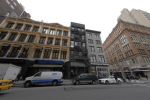


I lived in the Saint George Hotel on 13th. Street New York City, two doors down from Broadway. Everything was painted a Juvy Green, a color Bill Arnold coined after his stay in Juvenile Hall for stealing a car and leading the Oakland Cops on a wild chase up Trestle Glen Blvd. There were shots fired. Bill jumped out of car and knocked a cop to the ground with the door, and got away. A fink turned him in.
There was a marble fireplace that was blocked off. Above it was an old mirror that was losing its reflection, there dark cancerous blotches all over it that were like black holes sucking reality out of the room. This mirror had seen alot. But what was truly haunting was the old pay radio by the bed made out of pressed board painted the same Juvy Green. No one wanted to steal this thing, this robber of the airwaves that anticipated the internet, cable, and Ipod. I rarely had a quarter to play it I living on $8.89 cent day. This room cost $6.00 dollars a night. I ate two meals, one at the buffet two blocks away that cost $1.25, and the other at a cafe on 5th. street and Broadway where I had a breakfast for $1.25. I bought a pack of cigarettes for .25 cents. That left me with $.14 cents which went for a candy bar and cup of coffee when I took my 20 minute lunch break at work around 3:40 A.M. Sometimes I would grab a $.15 cent hotdog at Nehis at the subway station with the 4 cents I saved up.
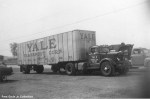
In 1963 I worked in Hell’s Kitchen at Yale Transport located on the Hudson River at 40th. street and 12th avenue from 12 AM to 8 AM. I was seventeen years and three months old. Manpower Inc. gave me two tokens to get to work and back. They sent a forty year old black man with me who was castrated down south for talking to a white woman. If he was a with a white guy, his chances of being jumped by a Westend gang, was not as likely. We were always ready for a fight. We played it cool. We worked together unloading trucks in the middle of winter. I had no money for winter clothes. My foreman was once a heavyweight boxer with a flat nose. Walking in the snow through the wharehouses, was other worldly.
Sometimes I would put a quarter in the radio, and fall asleep about 11 A.M. to a half hour of music. I was so tired I would not wake till around 10 P.M. I bought books around the corner for a nickle. I read Jewish survival autobiographies. My Christ Complex got started here.
If my mother had lent me a $100 dollars, I could have gotten this room for $90 dollars a month which would have given me extra quarters to hear music. I was paying $150 a month. If Rosmeary had shown me some mercy, I could have had $2 more dollars a day which would have allowed me to take the subway out to Far Rockaway on my day off which I could not afford to take. I worked seven days a week.
The day my mother said she could not help me, and I was on my own, I mixed the flour in a cup and made myself a unleavened pancake. It was my Passover. I would never take my mother’s victimhood serious again. She deserved everything she got.
Today, the Saint George Hotel, Yale transport, and the pay radio, is gone. However, in my novel ‘The Gideon Computer’ that I began in 1986, I move that radio to an old hotel room in downtown Oakland, turn it into a computer, and put this message on it;
“Talk tome Pilgrim”
The year is 2000.
I lived in New York for nine months. Today, a millionaire can not afford the lifestyle I enjoyed. I was a real New Yorker, even though my co-workers called me ‘The California Kid’. When tough westend stevedores give you a moniker, you are a Made Man. The idea I could get a job anyhwere in the world, was awesome! I had my passport.
The California Kid sounds like a prize fighter. In 1968 I returned to the Saint George Hotle and took on Max The Mafia. We played a game of chess as he held a gun to my friend Keith’s head. I lost the chess game, but won the life of my best friend. I could have run. But, I am a Fighter from Hells Kitchen.
Jon Presco
Copyright 2012
Jon Presco
Hell’s Kitchen, Manhattan
View from between 47th and 48th streets on Ninth Avenue looking northeast toward Time Warner Center and Hearst TowerHell’s Kitchen, also known as Clinton and Midtown West, is a neighborhood of Manhattan in New York City between 34th Street and 59th Street, from 8th Avenue to the Hudson River.[1]
The neighborhood provides transportation, hospital and warehouse infrastructure support to the Midtown Manhattan business district. Its gritty reputation kept real estate prices below those of most other areas of Manhattan until the early 1990s. Since then, rents have increased enormously, and are currently above the Manhattan average.[2]
West Side StoryDuring the 1950s, immigrants, notably Puerto Ricans, moved into the neighborhood. The conflict between the Irish, Italians, and the Puerto Ricans is highlighted in West Side Story. The movie was filmed from 65th Street and 69th Street between Amsterdam and West End Avenue, north of Hell’s Kitchen. Part of the sites seen are old P. S. 94 on the corner of 68th Street and Amsterdam Avenue and St. Michael’s Church. The movie was filmed during the demolition of this area that was to become Lincoln Center.
In 1959, an aborted rumble between rival Irish and Puerto Rican gangs led to the notorious “Capeman” murders in which two innocent teenagers were killed.
By 1965, Hell’s Kitchen was the home base of the Westies, a deeply violent Irish American crew aligned with the Gambino crime family. It was not until the early 1980s that widespread gentrification began to alter the demographics of the longtime working-class Irish American neighborhood. The 1980s also saw an end to the Westies’ reign of terror, when the gang lost all of its power after the RICO convictions of most of its principals in 1986.
Today Hell’s Kitchen is an increasingly upscale neighborhood of actors and affluent young professionals, as well as residents from the ‘old days’. It has also acquired a large diverse community as residents have moved north from Chelsea.
The rough-and-tumble days on the West Side figure prominently in Damon Runyon’s stories and the childhood home of Marvel Comics’ Daredevil. Various Manhattan ethnic conflicts formed the basis of the musical and film West Side Story.
Once a bastion of poor and working-class Irish Americans, Hell’s Kitchen has changed over the last three decades of the 20th century and into the new millennium because it is near Midtown. The 1969 edition of the Plan for New York City book by the City Planning Commission said that development pressures related to its Midtown location were driving people of modest means from the area. Today, many actors live in the neighborhood because it is near the Broadway theaters and Actors Studio training school.
[edit] Geography
New York Passenger Ship Terminal in Hell’s Kitchen at 52nd Street.”Hell’s Kitchen” generally refers to the area from 34th to 59th streets. Starting west of 8th Avenue, city zoning regulations generally limit buildings to 6 stories. As a result, most of the buildings are older, often walk-ups. For the most part, the neighborhood encompasses the ZIP codes 10019 and 10036. The post office for 10019 is called Radio City Station, the original name for Rockefeller Center on Sixth Avenue.
Southern boundary: Hell’s Kitchen and Chelsea overlap and are often lumped together as the West Side since they support the Midtown Manhattan business district. The traditional dividing line is 34th Street. The transition area just north of Madison Square Garden and Pennsylvania Station includes the Jacob K. Javits Convention Center.
Eastern boundary: The neighborhood overlaps the Times Square theater district to the east at Eighth Avenue. On its southeast border, it overlaps the Garment District also on Eighth Avenue. Here, two landmarks reside – the New Yorker Hotel and the dynamic Manhattan Center building (at the northwest corner of 34th Street and Eighth Avenue). Included in the transition area on Eighth Avenue are the Port Authority Bus Terminal at 42nd Street, the Pride of Manhattan Fire Station (from which 15 firefighters died at the World Trade Center), several theaters including Studio 54, the original soup stand of Seinfeld’s Soup Nazi, and the Hearst Tower.
Northern boundary: The neighborhood edges toward the southern boundary of the Upper West Side, and 57th Street is considered by some the traditional northern boundary. However the neighborhood often is considered to extend to 59th Street (the southern edge of Central Park starting at Eighth Avenue) where the avenue names change. Included in the 57th to 59th Street transition area are the Time Warner Center at Columbus Circle, St. Luke’s-Roosevelt Hospital Center, where John Lennon died in 1980 after being shot, and John Jay College.
Western boundary: The western boundary is the Hudson River.
[edit] Name
Hell’s Kitchen gear for sale in the Video Cafe on Ninth AvenueSeveral explanations exist for the original name. An early use of the phrase appears in a comment Davy Crockett made about another notorious Irish slum in Manhattan, Five Points. According to the Irish Cultural Society of the Garden City Area:
When, in 1835, Davy Crockett said, “In my part of the country, when you meet an Irishman, you find a first-rate gentleman; but these are worse than savages; they are too mean to swab hell’s kitchen.” He was referring to the Five Points.[3]
According to an article by Kirkley Greenwell, published online by the Hell’s Kitchen Neighborhood Association:
No one can pin down the exact origin of the label, but some refer to a tenement on 54th Street as the first “Hell’s Kitchen.” Another explanation points to an infamous building at 39th as the true original. A gang and a local dive took the name as well…. a similar slum also existed in London and was known as Hell’s Kitchen.[4]
Local historian Mary Clark explained the name thus:
…first appeared in print on September 22, 1881 when a New York Times reporter went to the West 30s with a police guide to get details of a multiple murder there. He referred to a particularly infamous tenement at 39th Street and 10th Avenue as “Hell’s Kitchen,” and said that the entire section was “probably the lowest and filthiest in the city.” According to this version, 39th Street between 9th and 10th Avenues became known as Hell’s Kitchen and the name was later expanded to the surrounding streets. Another version ascribes the name’s origins to a German restaurant in the area known as Heil’s Kitchen, after its proprietors. But the most common version traces it to the story of Dutch Fred The Cop, a veteran policeman, who with his rookie partner, was watching a small riot on West 39th Street near 10th Avenue. The rookie is supposed to have said, “This place is hell itself,” to which Fred replied, “Hell’s a mild climate. This is Hell’s Kitchen.”[5]
[edit] Alternative names
Public housingHell’s Kitchen has stuck as the general and informal name of the neighborhood even though real estate developers have offered alternatives of Clinton and Midtown West or even “the Mid-West”. The Clinton name, used by the municipality of New York City, originated in 1959 in an attempt to link the area to DeWitt Clinton Park at 52nd and 11th Avenue, named after the 19th century New York governor.
[edit] History This section needs additional citations for verification. (November 2008)
Mission house, Hell’s Kitchen, c1915On the island of Manhattan as it was when Europeans first saw it, the Great Kill (Dutch: Grote Kil, Middle Dutch: Groote Kille), which formed from three small streams that united near 10th Avenue and 40th street, wound through the low-lying Reed Valley renowned for fish and waterfowl[6] to empty into the Hudson River at a deep bay on the river at the present 42nd Street.[7] The name was retained in a tiny hamlet, Great Kill, that became a center for carriage-making, as the upland to the south and east became known as Longacre, the predecessor of Longacre, now Times Square.[8] One of the large farms of the colonial era in this neighborhood was that of Andreas Hopper and his descendants; it spanned the distance between today’s 48th Street nearly to 59th Street and stretched from the river east to what is now Sixth Avenue. One of the Hopper farmhouses, built in 1752 for John Hopper the younger, stood near 53rd Street and 11th Avenue; christened “Rosevale” for its extensive gardens, it was the home of the War of 1812 veteran, Gen. Garrit Hopper Striker, and lasted until 1896, when it was demolished; the site was purchased for the city and naturalistically landscaped by Samuel Parsons Jr. as DeWitt Clinton Park. In 1911 New York Hospital bought a full city block largely of the Hopper property, between 54th and 55th Street, Eleventh and Twelfth Avenues.[9] Beyond the railroad track, projecting into the river at 54th Street, was Mott’s Point, with an 18th-century Mott family house, surrounded by gardens, that was inhabited by members of the family until 1884 and survived until 1895.[10]
A lone surviving structure that dates from the time this area was open farmland and suburban villas is the carriage house (pre-1800) that once belonged to a villa owned by ex-Vice President and New York State governor George Clinton, now in a narrow court behind 422 West 46th Street.[11] From 1811 until it was officially de-mapped the ghostly Bloomingdale Square was part of the city’s intended future; it extended from 53rd to 57th Streets between Eighth and Ninth Avenues. It was eliminated in 1857 after the establishment of Central Park,[12] and the name shifted to the junction of Broadway, West End Avenue, and 106th Street, now Straus Park. In 1825, for $10 the City purchased clear title to a right-of-way through John Leake Norton’s[13] farm, “The Hermitage”, to lay out 42nd Street clear to the river. Before long, cattle ferried from Weehawken were being driven along the unpaved route, to slaughterhouses on the East Side.[14] Seventy acres of the Leake, later Norton property, extending north from 42nd to 46th Street and from Broadway to the river, had been purchased before 1807 by John Jacob Astor and William Cutting, who held it before dividing it into building lots as the district became more suburban.
The first change that began to unite the area more closely to New York City was the construction of the Hudson River Railroad, which completed the forty miles to Peekskill on 29 September 1849, to Poughkeepsie by the end of that year, and extended to Albany in 1851. As far as 60th Street, the track ran at street grade up 11th Avenue, before the independent riverside roadbed commenced.[15]
“Hell’s Kitchen and Sebastopol” circa 1890 photographed by Jacob RiisThe formerly rural riverfront was transformed for industrial uses such as tanneries that could discharge their effluent into the river and ship their production by the rails. Hence the beginnings of the neighborhood of the southern part of the 22nd Ward, which would become known as Hell’s Kitchen, start in the mid-19th century, when immigrants from Ireland, most of whom were refugees from the Great Famine, began settling on the west side of Manhattan in shantytowns along the Hudson River. Many of these immigrants found work on the docks nearby, or along the railroad that carried freight into the city along 11th Avenue.
After the American Civil War the population increased dramatically, as tenements were erected and increased immigration added to the neighborhood’s congestion. Many in this poverty stricken area turned to gang life and the neighborhood soon became known as the “most dangerous area on the American Continent”. At the turn of the century, the neighborhood was controlled by gangs, including the violent Gopher Gang led by the notorious Owney Madden.[16]
The violence escalated during the 1920s, as Prohibition was implemented. The many warehouses in the district served as ideal breweries for the rumrunners who controlled the illicit liquor. Gradually the earlier gangs such as the Hell’s Kitchen Gang were transformed into organized crime entities around the same time that Owney Madden became one of the most powerful mobsters in New York.
After the Repeal of Prohibition, many of the organized crime elements moved into other rackets, such as illegal gambling and union shakedowns. The postwar era was characterized by a flourishing waterfront, and work as a longshoreman was plentiful. By the end of the 1950s, however, the implementation of containerized shipping led to the decline of the West Side piers and many longshoremen found themselves out of work. In addition, the construction of the Lincoln Tunnel had devastated much of Hell’s Kitchen to the south of 39th Street.[17]
[edit] West Side StoryDuring the 1950s, immigrants, notably Puerto Ricans, moved into the neighborhood. The conflict between the Irish, Italians, and the Puerto Ricans is highlighted in West Side Story. The movie was filmed from 65th Street and 69th Street between Amsterdam and West End Avenue, north of Hell’s Kitchen. Part of the sites seen are old P. S. 94 on the corner of 68th Street and Amsterdam Avenue and St. Michael’s Church. The movie was filmed during the demolition of this area that was to become Lincoln Center.
In 1959, an aborted rumble between rival Irish and Puerto Rican gangs led to the notorious “Capeman” murders in which two innocent teenagers were killed.
By 1965, Hell’s Kitchen was the home base of the Westies, a deeply violent Irish American crew aligned with the Gambino crime family. It was not until the early 1980s that widespread gentrification began to alter the demographics of the longtime working-class Irish American neighborhood. The 1980s also saw an end to the Westies’ reign of terror, when the gang lost all of its power after the RICO convictions of most of its principals in 1986.
Today Hell’s Kitchen is an increasingly upscale neighborhood of actors and affluent young professionals, as well as residents from the ‘old days’. It has also acquired a large diverse community as residents have moved north from Chelsea.
The California Kid Rides Again
Posted on October 30, 2020 by Royal Rosamond Press


On January 22, 1964, I quit my job at May Company, withdrew my money from the bank, and put my thumb out. I was seventeen years, four months, fourteen days old. I am on my own.
Seven days later I am getting out of a car driven by an original hippie couple who had love birds in the back seat. I was allowed to stay with the guys sister, and artist on the East Side, but, I had to try to get a job at Man Power Inc. down the street. At 11:00 P.M. I am making my way thru Hell’s Kitchen to Yale Trucking on 12th. Avenue. I am put to work on ‘The Jam’. Can the kid handle the Jam?
Two months later, in the lunch room, a tough New Yorker calls me ‘The California Kid’. Not only could I handle the Jam – I mastered it. I figured out how it could be licked. Not only was I strong for a guy that weighed only 155 pounds, I was smart. I also wore a “Don’t fuck with me!” look, that I acquired when I worked as a Lumper in the Oakland Produce Market when I was eleven. I did a painting of this market with red Ford truck and water tower. That was the second painting I did that toured the Red Cross show. Put those two paintings together, a boat and warehouses, and who do you get –
Jack London
So, it was a real honor to be given a moniker by the working class of New York. That meant I could go anywhere in the world, and hold my head up high. The California Kid had conquered New York.
I lived in the Saint George Hotel in Greenwhich village. I would still be in New York, if I was able to get me a woman, one who would be loyal to a working stiff from Hell’s Kitchen.
When Rena Easton came out of that dark doorway and asked if she could walk with me, I should have said;
“What kept ya? I’ve been looking for you toots – most of my life. Where you from kid?”
“Nebraska.”
“Good. That’s good place to be from. From now on your ‘The Nebraska Kid’. Can you hang with that?”
I look at the photo above of me with my kindred just after I came home from New York. I am Rena’s age. I was this age when we met, inside, and will be this age for the rest of my life due to my near-death experience. You see, I wasn’t the same after that. The head of Serenity Lane thinks I am a Walk-on, meaning, when I died another entity took over my body – and life. The person I used to be has been trying to come home ever since in order to get grounded and recover who he was. He was doing this when he was looking down at the waves that came ashore in Venice.
“Where are you?” I asked.”Where’s the one that can hang…..with the California Kid?”
Above is a comic book with an illustration of the Daredevil of Hell’s Kitchen, and Shi, who looks like Rena, who could have made a living modeling for action comics. Here is Rena’s archetype.
In 1967, at the age of twenty, I met a beautiful woman who had to have me. Later, she told me why.
“You looked like a young Humphry Bogart. You had his sexy tough guy aura.”
Rena Christensen had the same presence and good looks as Lauren Becall. Let us manipulate time with the help of the Muses. I meet Rena in Hell’s Kitchen and take her up to my loft and show her my paintings. We are both seventeen.
“I took you for a tough guy. But now that I see your work, you’re tougher than I thought. Takes guts to be an artist in Hell’s kitchen, then go to work the graveyard shift with New York stevedores. Who are you…really?
“They call me the California kid.”
During the break at the psychic reading I had in 1987. A woman sat next to me and asked what I do.
“I’m a writer. I write spiritual comedies in a science fiction format.”
“Your novels are being dictated to you by a powerful entity who roams the unviverse coming to the aid of planets in dire distress.”
It’s time to take off my mortal disguise. Where is the girl of my dreams? Is she going to punk-out on me like she did in Winnemucca?
Jon Presco
Copyright 2013
http://journalism.berkeley.edu/projects/gorneyj200/produce.html
http://en.wikipedia.org/wiki/Shi_(comics)
Q: What is a walk-in experience?
A: This is where two individual souls have agreed to switch places. The first soul has gone as far as it can in its development and is ready to move on. The soul that has taken its place will serve in a different capacity than before. Normally, permission has been granted in order for this to take place. Another way to call the experience is soul transference.
Q: How do I know if it has happened to me?
A. You usually feel totally different. You will not necessarily recognize the people around you. You may have lapses of memory of the other occupant and will not be able to recognize the reason you came. It is usually quite a shock to the body especially if this has happened due to a car accident, operation, or a very long illness. You will feel somewhat estranged from everyone around you though you retain the memories of your body’s past history. After all, you are a totally different entity.
http://www.greatdreams.com/walkin.htm
At 4 AM. fumes from propane-powered forklifts cut the soft aroma of green tomatoes and half-ripe bananas. Dawn is hours away, but the business day is in full swing at Oakland’s wholesale produce market, four square blocks of open-faced stores with sweeping awnings just off Jack London Square.
Lumpers – the colloquial term for workers who unload produce – dart forklifts between a jumble of trucks, crates and each other, building a maze of Big Jim Oranges and Pim Fresh Cabbage along the sidewalks and storefronts. Other lumpers wheel dollies stacked with gnarled ginger, plump eggplant and vibrant chilies through the cold and onto rigs waiting to deliver them to customers. The fruits and vegetables arrived from farm shippers as early as 1 a.m. As the sun rises they’ll be trucked as far away as Napa County to chain grocery stores, independent markets, restaurants, caterers and other wholesalers.
12th Ave. Truck Sign Refurbished
By JOSH BARBANEL
Perched two stories above seven lanes of traffic along the Hudson, the Mack tractor-trailer emblazoned with the name Yale symbolized the gritty industrial role of the far West Side for decades. Now the headlights in the sign, above 12th Avenue just north of the sleek glass and concrete facade of the Jacob K. Javits Convention Center, have flicked on again after being dark for years, and the side of the truck sports a new logo.
The name on the old sign had stood for Yale Express Systems, once a major regional trucking company that teetered on the brink of bankruptcy through much of the 1970’s before collapsing into insolvency.
The nine-story terminal that covers most of a city block between 39th and 40th Street has been mostly vacant since 1978, and in January 2000, the Convention Center paid $68.5 million for the site. Its expansion into the site is part of a long-delayed plan to transform the area into a new upscale neighborhood of residential towers and office buildings.
But the purchase of what is known as the Yale Building has given the sign and the neighborhood a new blue-collar life. While waiting, the Convention Center leased out space in the huge building to United Rentals, an equipment rental and supply company with 750 branches across the country.
United has refurbished the truck sign, repairing the sheet metal panels, restoring the white headlights and the yellow flashing lights that make the truck’s wheels seem to revolve and painting its logo on the sign. It turned the lights on last week. “We all like to see some remnant of our history survive,” said John N. Milne, president of United Rentals.
All this provides some cheer to activists trying to stop the Convention Center’s expansion and to maintain an eclectic neighborhood. “People are seeing blue-collar jobs disappearing,” said Meta Brunzema, an architect preparing an alternative plan for the Hell’s Kitchen Neighborhood Association. “There is a real concern in the community that a vibrant mix be maintained.” *
Hell’s Kitchen, also known as Clinton and Midtown West, is a neighborhood of Manhattan in New York City between 34th Street and 59th Street, from Eighth Avenue to the Hudson River.[1] The area provides transportation, hospital and warehouse infrastructure support to the Midtown Manhattan business district. Its gritty reputation kept real estate prices below those of most other areas of Manhattan until the early 1990s; rents have increased dramatically since and are currently above the Manhattan average.[2]
Once a bastion of poor and working-class Irish Americans, Hell’s Kitchen’s proximity to Midtown has changed it over the last three decades of the 20th century and into the new millennium. The 1969 edition of the City Planning Commission’s Plan for New York City reported that development pressures related to its Midtown location were driving people of modest means from the area. Today, the area is gentrifying.
The rough-and-tumble days on the West Side figure prominently in Damon Runyon’s stories and the childhood home of Marvel Comics’ Daredevil. Being near to both Broadway theatres and Actors Studio training school the area has long been a home to actors learning and practicing their craft.
Living in the Hell’s Kitchen neighborhood of New York City, Matt Murdock is blinded by a radioactive substance that falls from an oncoming vehicle. While he no longer can see, the radioactive exposure heightens his remaining senses beyond normal human ability. His father, a boxer named Jack Murdock, supports him as he grows up, though Jack is later killed by gangsters after refusing to throw a fight. After donning a yellow and black, and later a dark red, costume, Matt seeks out revenge against his father’s killers as the superhero Daredevil, fighting against his many enemies including Bullseye and the Kingpin.[2] Daredevil’s nickname is “the Man Without Fear”.[3]
http://journalism.berkeley.edu/projects/gorneyj200/produce.html
A similar scene has unfolded in the neighborhood most mornings for the last 120 years. Now some of the largest produce merchants say economic pressures will kill the market – about 15 wholesalers who combined do about $100 million in annual sales – unless the city helps them move quickly and collectively.
“We’re drowning,” said Albert Del Masso, co-owner of Bay Cities Produce and president of the Oakland Produce Association, a coalition of wholesalers founded 9 years ago to lobby the city for help. “If this produce market fails, Oakland won’t have a produce market.”
The market is being pressured from several directions as the city looks to implement Mayor Jerry Brown’s vision to revitalize Oakland. It lies in the middle of an area slated for redevelopment under the city’s Estuary Plan. Adopted by the City Council in June 1999, the Estuary Plan envisions a tourist-friendly area of eclectic retail stores, charming restaurants and designated open spaces incorporated with residential lofts and high-tech businesses. The bulk of Oakland’s waterfront property – a mix of heavy industry, commercial stores, and registered historic buildings from Adeline St. to 66th Avenue, and the water to the Nimitz Freeway – is being rezoned for that purpose. The produce market lies in a key corridor that links downtown Oakland and Chinatown with the bay-front Jack London Square, promoted in the Estuary Plan as the “East Bay’s primary dining and entertainment venue.”
The Estuary Plan does not call for the removal of the produce market, but real estate prices in the area have soared, increasing the incentive for building owners to bring in tenants who pay higher rents. Oakland Produce Square, a group of 13 businesspeople that owns the four main buildings in the market, has put them up for sale and refused to renew long-term leases. Leases that recently expired are now on a month-to-month basis. Judy Chu, one of the owners, said the time is right to develop the area, and her group is keeping its options open. She said it would be a smart business decision for Oakland Produce Square to sell some or all of its buildings to developers, or else bring in technology companies, preferably by constructing high-rises.
“The area is due for development,” Chu said. “Really anything is possible.”
But putting in high-rises is not part of the Estuary Plan and would seem a remote possibility, said Betty Marvin of the city’s Community and Economic Development Agency. It would require petitioning for an exemption to the zoning laws currently being hammered out by the City Council, since none of the proposals allow high-rises. Oakland Produce Square’s buildings, all built between 1916 and 1917, are also on the Local Register of Historic Resources. Any significant structural changes would require an environmental impact report, a lengthy and costly study outlining potential effects on everything from recreation to air quality to geology that would then be scrutinized by the city, Marvin said.
The historic buildings have also handcuffed the produce merchants, but for different reasons. The merchants said they simply don’t have room to put in loading docks, modern refrigeration units or additional warehouse space. They said their businesses have reached critical mass, and they’ve had to turn away potential customers like Ralph’s Groceries and some restaurant chains because they don’t have the facilities to fill more large orders. The lack of loading docks also makes the operation less efficient because workers have to do all the unloading by forklift or by hand.
“I don’t have enough outlets in the office for computer equipment,” said Gaile Momono, general manager of Fuji Melon, which has a year and a half left on its lease. “It’s tough to put money into rewiring a building you don’t own and don’t know how long you’ll be there.”
The antiquated buildings have prompted produce merchants to talk on and off for 30 years about moving. But the influx of dot-coms, uncertainty about leases and desire to expand have added a sense of urgency to discussions with the city about a new site.
“We need to be out of here, and they need to help us get out,” Del Masso said. “I need to grow and I’ve got people I can’t supply.” Steve Del Masso, Albert’s son and co-owner of Bay Cities, estimated the market lost $10 million last year because of customers it had to turn away.
The merchants say all they want is the city to sell them at a fair price a parcel of land large enough to transplant the whole market intact
.
Don Ratto, who helped found the Oakland Produce Association lobbying group and co-owns Leo Cotella Produce, the largest merchant in the market, rents his store from Chu’s group. He has a month-to-month lease, which allows him 30 days notice if Oakland Produce Square sells and the new owner wants him out.
“If they throw us out of here, we’re going to relocate,” Ratto said. “It’ll take a lot of adjusting, but the market has to stay together.”
Most owners agreed the market needs to be a close group of wholesalers to be successful. Proximity to other produce merchants gives buyers a broad selection in one place, and allows the wholesalers to simply go next door to buy parts of a large order they wouldn’t otherwise be able to fill. If customers have to drive to multiple sites to fill an order, they will take their business elsewhere, merchants said.
“Collectively you have a viable market,” Albert Del Masso said. “Separately the selling power will be so low we won’t survive.”
The Oakland Produce Association has a site in mind, but they say political foot-dragging has kept them waiting. They want 18 acres between 7th and Grand streets, on the former Oakland Army Base. The site would provide them with space to expand, loading docks to increase turnover and a location where trucks would have easy highway access but wouldn’t disturb neighbors at 2 a.m. But securing the land requires complicated negotiations between the produce merchants, the city and the Army.
Wendy Simon, the produce market project manager at the Community and Economic Development Agency, acknowledged the city’s pace has been slow, but said the process is complex.
“Everything moves a lot slower than everybody wants, but we are trying to push the action,” Simon said. “It is the city’s intention to retain these merchants.”
The former base is still owned by the Army, but the particular site the produce merchants want is owned by the Army Reserve, which negotiates its own contracts. After initial talks with lawyers representing the produce merchants, Simon said, the Army Reserve decided to deal only with the city on the transfer, Simon said. This has added another layer to already complex negotiations, she said—and the merchants’ group is only one of many competing now for Oakland officials’ attention.
“Personally, I think the market is important,” Simon said. “But I’ve never heard the mayor mention a new produce terminal.”
Produce merchants said their less-than-glamorous image has worked against them in talks with the city, which the merchants contend is more interested in attracting high-tech companies. “The city is kissing the buns of the dot-coms,” Albert Del Masso said. “All the high-tech in the world is not going to do you any good if you can’t get fed.”
Fuji Melons’ Gaile Momono said the market is often overlooked because it operates while most people sleep and involves down-to-earth work. But it does employ 400 unskilled Oakland laborers and pays them good wages, Momono said. Figures from the city’s Business Tax Division show merchants last year generated an estimated $100,000 in sales tax revenue for the city.
A long-time produce merchant who wished to remain anonymous said the market also provides an opportunity for workers who couldn’t hold 9-to-5 jobs to be successful.
“People are different here,” he said. “In society they are marginal, out of place. But people survive here. Are these people going to be able to get jobs if this market closes down? Probably not.”
The market has long since closed for the day by the time the trendy Soizic Bistro-Café begins to hum in the afternoon. Half a block down a black Volvo sedan crushes bruised green tomatoes that had scattered in the street sometime during the morning mayhem. The driver parks in front of a law office next to the shuttered store fronts. Without a glance back the car’s occupants head for Soizic, making Momono’s words seem eerily prophetic: “Honestly, for most people, they wouldn’t know it’s gone.”
 Rosamond Press
Leave a comment