I’m seeking a powerful law firm to protect my families literary and thespian legacy.
John Presco
Royal Rosamond Press
 By Ryan Britt|December 21, 2024|
- Share on Facebook (opens in a new tab)
- Share on Twitter (opens in a new tab)
- Share on Linkedin (opens in a new tab)
- Share on email (opens in a new tab)
|80
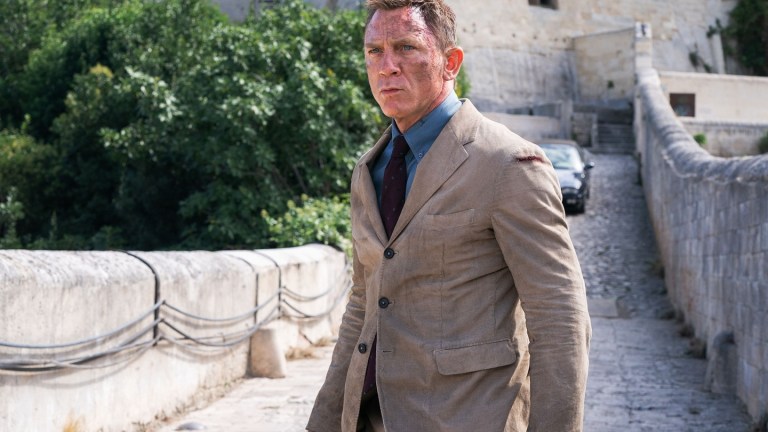
I’ll admit it, I would probably watch an entire TV series that was just about James Bond’s housekeeper. Did you not know he has one? Oh, well, let me tell you about May, this funny lady who looks after Bond’s apartment in the original novels. She’s Scottish. She’s old. She knows how to cook an egg. Aren’t you riveted? Don’t you want an entire show just about May? Here’s the thing, as a Bond nerd I do want a show about May, Miss Moneypenny, or M’s random friends. I also love Kim Sherwood’s Double-O books, all about agents in the world of Bond who aren’t Bond. If there was a Marvel-like build-out of the world Bond (which arguably, in print, there has been for decades) I’d be all in.
But, I, a Bond nerd, should not be calling the shots. And based on a new explosive report in the Wall Street Journal, the person who should be calling those Bond shots is the same woman who has been running things since the 1990s. To put it succinctly, if you think Amazon is right and Barbara Broccoli is wrong, you know nothing about how art is made or why good things are good.
When Amazon acquired MGM, it gained not only a legendary Hollywood studio but also its most prized asset: the James Bond franchise. MGM has held the distribution rights to the Bond films since purchasing United Artists, the original distributor of Dr. No, back in 1981. With this acquisition, Amazon also inherited MGM’s longstanding partnership with Eon Productions, the studio behind nearly every Bond film since 1962.
At the helm of Eon and the Bond franchise is Barbara Broccoli, who has consistently asserted her authority over the franchise. Now, according to recent reports, tensions are brewing between Broccoli and Amazon, potentially jeopardizing the future of 007 after Daniel Craig’s departure from the lead role.
A Wall Street Journal article sheds light on the friction. Broccoli — who, love or hate her creative decisions, is undeniably the foremost expert in crafting Bond films — is reportedly less than thrilled with Amazon’s involvement. Her reservations seem rooted in distrust of Amazon’s algorithm-driven approach, which she views as “incompatible” with the cinematic storytelling that has defined Bond for decades.
According to the WSJ, Broccoli has told confidants that Amazon, a company built on selling consumer goods, is ill-equipped to handle the nuances of a globally iconic character like Bond. When Amazon executives floated the idea of creating Bond-related TV spin-offs, Broccoli’s sharp response was reportedly, “Did you read the contract?”
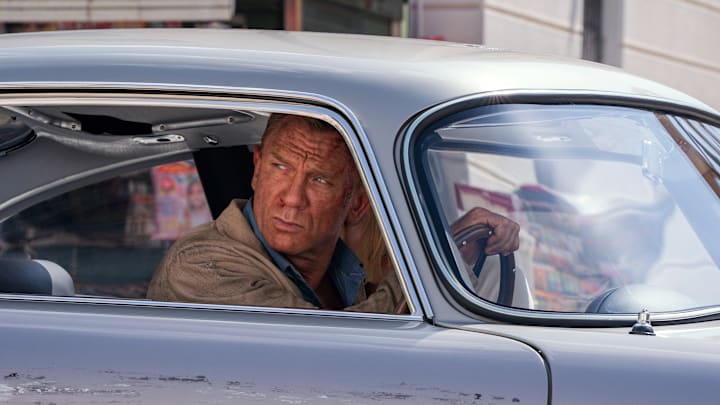
Adding fuel to the fire are reports that Broccoli has bluntly criticized her new corporate partners, allegedly calling them “f***ing idiots.” While the harsh words may be hearsay, they draw attention to a growing divide. It’s been three years since Craig’s final outing as Bond in No Time to Die. The lack of progress on the next installment is becoming increasingly glaring. No new Bond actor has been announced despite rumors and betting, nor is there even a script in development, leaving fans and industry insiders alike speculating about what’s next for the storied series.
The Battle for Bond (2007), by Robert Sellers, is a cinema history book of how the literary character James Bond metamorphosed to the cinema James Bond. The book details the collaboration among film producer Kevin McClory, novelist Ian Fleming, screenwriter Jack Whittingham and others to create the film Thunderball.[1]
| Author | Robert Sellers |
|---|---|
| Language | English |
| Subject | Film |
| Genre | Non-fiction |
| Publisher | Tomahawk Press Publishers |
| Publication date | 1 July 2007 |
| Publication place | United Kingdom |
| Media type | Print (paperback) |
| Pages | 264 pp (first edition) 272 pp (second edition) |
| ISBN | 0-9531926-3-6 (Tomahawk press) |
| OCLC | 154708298 |
After the film project’s collapse, without his collaborators’ permission, Fleming based his Thunderball (1961) novel upon their joint work.[1] In 1963 McClory and Whittingham sued him for plagiarism. The Battle for Bond concerns the court case.
Kevin McClory won the film rights and chose a single co-production deal with Harry Saltzman and Albert R. Broccoli: Thunderball (1965) that was released at Christmas. McClory’s court victory also entitled him to remake Thunderball (1965) as Never Say Never Again (1983), again with Sean Connery as James Bond, the cinematic competition Broccoli had tried to legally ban.[1] With the remake, McClory attempted to continue with his own James Bond film series, but was stopped after legal action by Broccoli and MGM.[1] In a later unsuccessful lawsuit, McClory went further and now claimed that he created the cinematic James Bond, and demanded a share of the three billion dollars earned by the official Eon film series.[citation needed]
Legal ban of the first edition
The book features unpublished letters, private lawsuit documents and cast-crew interviews; there are also five Thunderball screenplays, two by Fleming, three by Whittingham, and two treatments by Fleming that document the creation and development of this James Bond project. The Ian Fleming estate, the Ian Fleming Will Trust, protested the inclusion of several Fleming letters in the book, which it said were used without permission. The book was subsequently withdrawn and unsold copies sent to the estate for disposal.
The publisher, Tomahawk Press, later published a second edition without the letters, which it claimed were not fundamental to the story.[2]
 Rosamond Press

Leave a comment