


Capturing Beauty
Last night I went to the Roadhouse and had my Christmas Dinner. I was with people for ths first time in over a month, When I came home, I found articles by Robert Sellers satiating my relative, Richard Burton, was considered a candidate to play James Bond. There is a book by Sellers that just came out, saying this was true. Sellers does not know Burton is in the Getty Family Tree, via, Elizabeth Rosemond Taylor – who children may not know. Does any Getty know the most famous Thespian Couple in history are in their family tree? I am there, too. As is my later sister, the famous artist, Christine Rosemond Benton, whose deceased daughter was abandoned by Shamus Dundon, and Shannon Sidle, Christine other daughter. The Bullhead Police had trouble finding Shamus, and never found Shannon, who wrote me the nastiest message in regards to the death of her half-sister. For this reason I claim my Family Legacy, and all that was sold to outsiders, so I can reboot The Rosamond Artistic, Literary, and Theatric Legacy. I am enthralled by the giant waves breaking on the shores of California.
Three days ago I sent an e-mail to my old friends, Mark Gall, and Marilyn Reed, informing them my Christmas food is missing. I got no answer. I gave Snyder’s bio to Marilyn to read, which she did. I asked her for a page of her thoughts, and never got it. The same goes for Gall. Only Kim Haffner had the guts to give me and Rosamond’s book a damning review. For this reason Haffner is the model for the No.1 enemy of my Bond characters. She reminds me of the book ‘Misery’.
BIG MAMMA ‘The Castrator and Holy Starver’
John Presco
President: Royal Rosamond Press
Guy Masterson, a theatrical producer and director, and Burton’s great-nephew, told me that the great man once confided in him about his decision to turn the Bond role down. “At the time he was doing Camelot on stage and enjoying great stardom because of it. My uncle told me that Ian Fleming had approached him, asking him to play Bond. But back then Bond was a new concept – nobody had any idea it would be as big as it became. My uncle told me that he thought it was going to be just another movie.” No matter how big Bond became Burton never admitted to family or friends that he regretted missing out on the role. “Had Burton played Bond,” says Masterson. “I think he would have been absolutely fantastic.”The potential casting of Burton was inspired and showed far greater insight into what kind of actor any potential Bond film needed in order to connect with world audiences than a previous screen incarnation of the character.
The Search for Bond by Robert Sellers – exclusive advance review
26 Jul
Written By David Lowbridge-Ellis
The Search for Bond couldn’t be arriving at a better time – or a worse one, if you’re hoping it won’t be long until we find out who the next Bond will be.
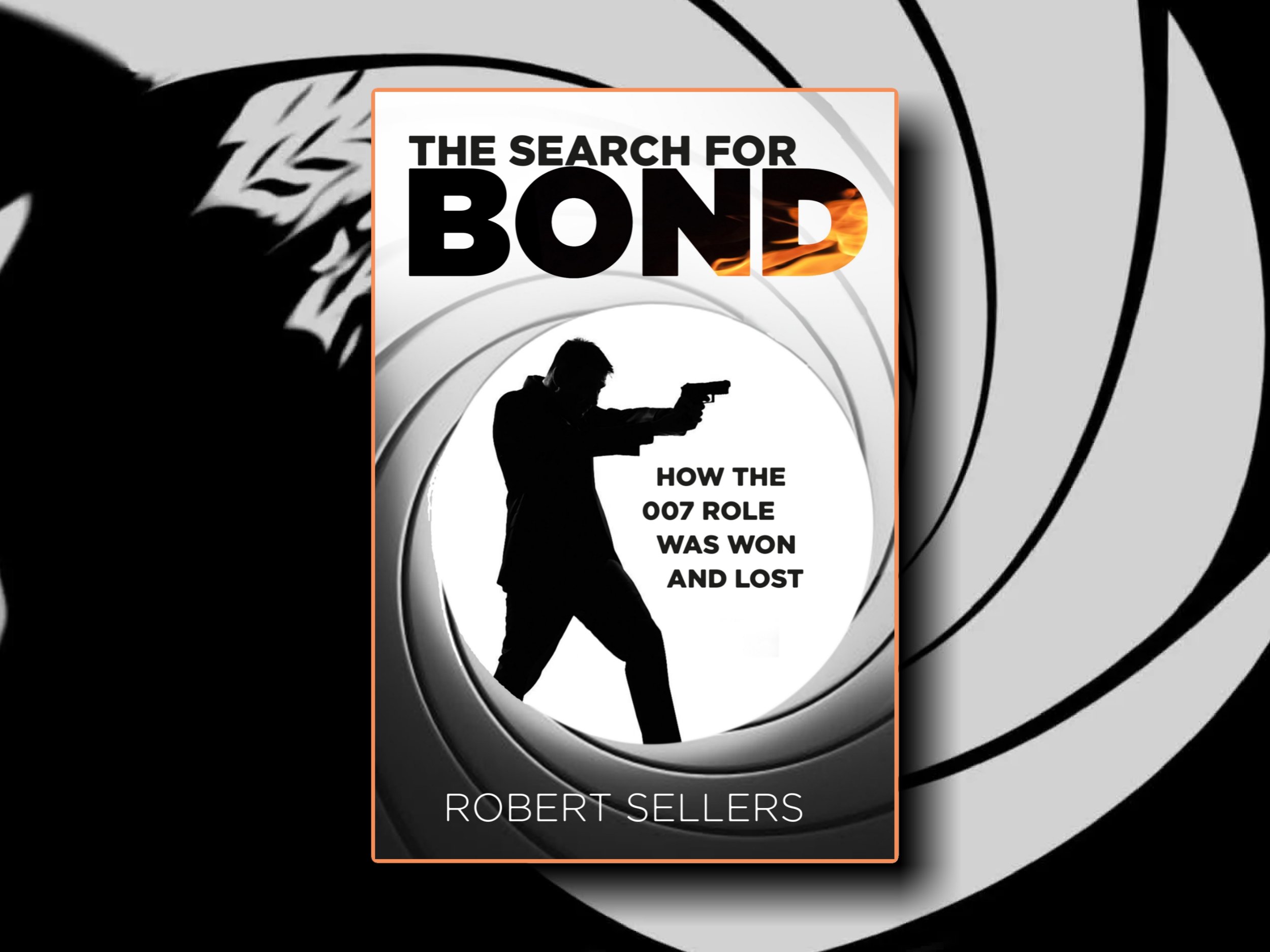
I went into the Sellers’s latest feeling like I might emerge by the end with a much clearer sense of what might be going through the Eon producers’ minds right now. Perhaps it might even give us some hope that choosing a new Bond wasn’t as tricky a process as we might think it to be and an announcement would be soon around the corner…
Because here we are again, in another one of those interregnum periods, without an incumbent Bond. Behind the scenes, we assume that Eon are eyeing up contenders. And while poring over pictures of attractive men all day does – for some of us at least – hold a certain appeal, I actually don’t envy them. Because The Search for Bond makes it abundantly clear that the search itself is more like a pitfall-strewn quest than a pleasant stroll through the countryside.
Bond fans abhor a vacuum. And the press are only too eager to fill it.
Well before Connery was on anyone’s radar, journalists were remarking that the search for a screen Bond “makes good copy”. Sellers tracks this back to 1959, only six years after 007 came into being. Fast forward to 2024 and there’s copy about the casting of Bond practically every day. Plus ça change!
That this was far from a modern phenomenon wasn’t the only thing I found surprising during my read through of The Search for Bond. There are so many insights – even hardcore Bond fans will be surprised.
The core of the book is a series of interviews with people involved in casting Bond and actors who were themselves considered for the role. We are so fortunate that Sellers has at last declassified these interviews, which he conducted over decades, many with people who are no longer here. Where subjects had predeceased Sellers’s mission, he tracked down the people who knew them best. Priceless.
The story of muscleman Steve Reeves turning down the role drew me in particularly – for entirely non-prurient reasons, I assure you. Had he gone for it and been Bond, it would have certainly given a song lyric in The Rocky Horror Picture Show a new resonance. In the song ‘Sweet Transvestite’, pansexual basque and fishnet-clad Frank-N-Furter suggests they all snuggle up (nowadays we’d say ‘Netflix and chill’) to watch a “Steve Reeves movie” – most likely one of his historical adventures designed to show off Steve’s rippling assets. Had Reeves said yes to Bond we’d have perhaps had a different connotation to the phrase ‘Steve Reeves movie’ – and Bond movies may have been very different beasts! (Although, as Sellers observes, both Reeves and Connery were bodybuilders and entrants in the Mr Universe contest, so maybe not so different after all.)

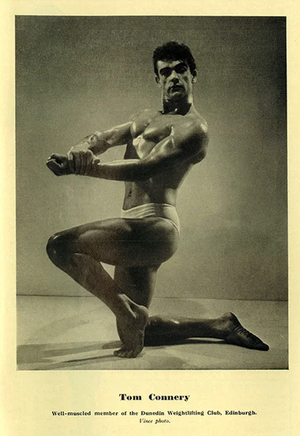
I found reading this book a truly multiversal experience. As I read, my brain fizzed with alternate timelines in which people other than Connery, Lazenby, Moore, Dalton, Brosnan and Craig strapped on the Walther PPK – and changed the franchise irrevocably.
Hardly a stranger to the travails of showbusiness, there’s no one better suited than Robert Sellers to take us through the adventure of casting Bond. He’s already made significant contributions to Bond studies: as well as The Battle for Bond (relating the behind the scenes trouble with Thunderball) he’s written or collaborated on biographical works about the people who worked on Bond, or were Bond adjacent. I’m a particular fan of his book Hellraisers, charting the inebriated existences of four British actors, one of who crops up again here as a Bond contender.
Sellers adroitly sifts facts from rumours and suppositions, while also not being afraid to share some of his own feelings. For instance, he describes a co-star of one of Connery’s early films as having the “sex appeal of a haddock”. Say what you really think Robert!
In his closing chapter, Sellers himself invokes the analogy of alternate Bond universes, the possibilities firing off in different directions. We’re in that same space now, post-Craig. And while the waiting might be a test of our willpower, it’s still an exciting place to be.
| The Search For Bond Part 1 of an exclusive 3-part article | |
| 007 MAGAZINE HOME • JAMES BOND NEWS • FACT FILES • MAIN MENU • PURCHASE 007 MAGAZINE | |
| Part One of The Search For Bond was originally published in 007 MAGAZINE Issue #55 in August 2012. This issue is now out of print but included as part of 007 MAGAZINE OMNIBUS #4. | |
 | |
| Only six men can lay claim to wearing the famous Savile Row tuxedo but hundreds more came within an inch of the 007 role. In this new exclusive three-part series, ROBERT SELLERS (author of the controversial book The Battle For Bond) tells the extraordinary story of how cinema’s most famous role was cast, featuring ‘exclusive’ contributions from Michael Billington, Michael Craig, Sir Ranulph Fiennes, Julian Glover, Michael Jayston, Sam Neill, Ian Ogilvy, Adrian Paul, Peter Snow, Oliver Tobias, Rikki Lee Travolta, and many others. |
| The search for an actor to play James Bond didn’t start with the journey that ultimately led to the monumental casting of Sean Connery in 1962, but a full three years before in 1959 when 007 looked a dead cert to make his cinematic debut in a film directed by Alfred Hitchcock; though Ian Fleming had his fingers heavily crossed on that one. After years of hawking his books around film studios in England and Hollywood, with no takers, Fleming had teamed up with a young maverick Irish filmmaker called Kevin McClory and together formulated an original plot line that saw Bond take on nuclear terrorism. |
 |
| It was during Fleming’s meetings with Paul Dehn, an early candidate to write the screenplay, that the subject of who to cast as Bond first arose. In a letter dated 11th August 1959 to his long-standing friend Ivar Bryce, Fleming announced, ‘Both Dehn and I think that Richard Burton would be by far the best James Bond!’ It’s a fascinating suggestion, and undeniably the first recorded statement by Fleming about who should play his hero. Years later Fleming would champion David Niven as Bond, a very traditional English actor and a million miles away from the wild Celtic image and brooding manner of Burton. But what a Bond a pre-Cleopatra/pre-Elizabeth Taylor Burton would have been, before vats of vodka and a heady dose of disillusionment had frayed his edges beyond repair. According to Burton’s brother, Graham Jenkins, the Welsh actor was a fan of the Bond books, numbering them amongst his favourite pulp reading along with Agatha Christie. Guy Masterson, a theatrical producer and director, and Burton’s great-nephew, told me that the great man once confided in him about his decision to turn the Bond role down. “At the time he was doing Camelot on stage and enjoying great stardom because of it. My uncle told me that Ian Fleming had approached him, asking him to play Bond. But back then Bond was a new concept – nobody had any idea it would be as big as it became. My uncle told me that he thought it was going to be just another movie.” No matter how big Bond became Burton never admitted to family or friends that he regretted missing out on the role. “Had Burton played Bond,” says Masterson. “I think he would have been absolutely fantastic.”The potential casting of Burton was inspired and showed far greater insight into what kind of actor any potential Bond film needed in order to connect with world audiences than a previous screen incarnation of the character. Back in 1954 CBS broadcast a live one hour production of Casino Royale. Since 007 was virtually unknown Stateside the network took creative licence to Americanize the character and cast the Hollywooden Barry Nelson. The whole affair was pretty dismal and Nelson’s only merit was to become one of the great movie trivia questions. |
 ABOVE: ORIGINAL BONDS (left) Barry Nelson played James Bond in the 1954 CBS TV Broadcast of Casino Royale and (right) Bob Holness, who voiced 007 in a 1958 South African radio adaptation of Ian Fleming’s third novel MOONRAKER. ABOVE: ORIGINAL BONDS (left) Barry Nelson played James Bond in the 1954 CBS TV Broadcast of Casino Royale and (right) Bob Holness, who voiced 007 in a 1958 South African radio adaptation of Ian Fleming’s third novel MOONRAKER. |
| Another pre-Connery James Bond that must be mentioned in the history of those who have played the character is, apparently, Bob Holness, a TV presenter who became a cult figure in the 1980s with the quiz show Blockbusters. Born in South Africa, Holness was 25 when he began to find work as an actor in local theatre in Durban. As he has related on many occasions, “Then in 1955 I started a career in radio and was in a repertory company that did a multitude of different productions from soaps to the classics and it was with the South African Broadcasting Corporation that I was offered the chance to play 007 in a live radio adaptation of MOONRAKER in 1958, I think.” When he won the part Holness hadn’t even heard of James Bond, let alone read a Fleming novel. Holness recalled, “However, when enquires were made about the possibility of doing another adaptation we were told that there were plans to turn a novel into a film and they wanted to see how that went. The rest, as they say, is history.” As far as playing Bond on the big screen, “It never even occurred to me,” said Holness. “When my children were younger I would take them to the cinema to see the latest Bond release but we all agree that after Sean Connery it was never really the same. Having said that, I think Daniel Craig was extremely impressive, so maybe I’ve now changed my mind.”Editor’s Note: For many years this story was believed to be apocryphal, as there was no evidence corroborating Bob Holness’ claim. However, in 2019 a copy of the Artist’s Contract Form offering Bob Holness the role of James Bond in the 1958 South African Broadcasting Corporation was reproduced in the book The Many Lives Of James Bond by Mark Edlitz. The contract had been recently discovered by Ros Holness after her father’s death in 2012, and the few details do confirm several aspects of the production. MOONRAKER was adapted by Hugh Rouse (1920-1998), with rehearsals taking place on January 26th and 28th/29th January 1958. The production performed between 7.30pm and 9.00pm on Thursday January 30, 1958. Holness’ fee for the production was £11. |
 |
| The failure of the CBS production of Casino Royale didn’t do much to endear the Bond novels to prospective film backers, but in 1955 Hollywood actor John Payne purchased the film rights to Fleming’s third Bond novel MOONRAKER with the intention of starring as 007 himself. The details of Payne’s prospective Bond movie have never before been revealed and they make for fascinating reading. Born in 1912 in Virginia, Payne was a contract player with 20th Century Fox during the 40s and early 50s, starring in a string of forgettable musicals but also little gems like Miracle on 34th Street (1947) and the controversial drama The Razor’s Edge (1946) in which he co-starred with Tyrone Power, an actor he shared many similarities with, not least a certain muscular, dark matinee idol charm.By the time MOONRAKER was published Payne was disheartened by most of the poorly conceived scripts he was getting and Fleming’s novel offered him something better and very different. ‘It was the William Morris Agency in Beverly Hills who first alerted him to the thrillers of Ian Fleming,’ reveals Ronald Payne, the actor’s distant cousin. ‘John was very receptive and enthusiastic and immediately went about seeking the option rights to MOONRAKER with hopes of doing a series of films. Fleming’s hard living and dangerous super-spy appealed to Payne, who wanted his film to be absolutely faithful to Fleming’s novel. Payne liked the speed of Fleming’s rollercoaster plot.’For director Payne sought out his friend Delbert Mann, then a hot property having just directed Ernest Borgnine’s Oscar winning performance in Marty. The two men set about making notes on how James Bond was to be portrayed on the screen, but friction emerged over whether or not Payne should actually play the character. Mann personally thought the actor was physically right for 007 but couldn’t ignore the fact that Bond was British and suggested Payne merely produce the film and bring in David Niven as 007, an idea also proposed to Payne by the actor/director Dick Powell, who was also interested in the project. Payne personally liked and admired David Niven but saw the MOONRAKER project as vitally important in helping re-launch his by then flagging career. ‘He loved the book and saw himself as Bond,’ Ronald Payne recalls Delbert Mann telling him in a series of conversations. ‘He would not budge on this.’ |
 The James Bond film MOONRAKER as imagined by American actor John Payne (1) would have featured Basil Rathbone (2), Maureen O’Hara (3) and Peter Lorre (4) as his co-stars. The James Bond film MOONRAKER as imagined by American actor John Payne (1) would have featured Basil Rathbone (2), Maureen O’Hara (3) and Peter Lorre (4) as his co-stars. |
| Mann went on to say: ‘I suggested that he portray James Bond as an American FBI agent or former OSS agent, but he did not want to go in that direction. Payne did not want to change the locale to New York or Washington DC or San Francisco (Dick Powell’s suggestion). He wanted to remain completely faithful to Ian Fleming and shoot the picture in Technicolor and Cinemascope in London with a fully British cast and crew. He placed all emphasis on his fidelity to Fleming, whom I don’t think he ever met. He was obsessed with the creation of a certain noir element in the writing of the script and the big slam bang conclusion at the end when Bond saves London and the girl from total annihilation.’ |
| Payne also had a clear mind when it came to casting. The Irish-born actress Maureen O’Hara, who made many films for John Ford and her friend John Wayne including the classic The Quiet Man, and had also co-starred successfully with Payne, was at the top of his short list to portray Gala Brand. For Hugo Drax Payne looked no further than Basil Rathbone, with instructions for the Sherlock Holmes actor to play the villain as, ‘cunning, dangerous and quite mad.’ In one scene, an obvious nod to Rathbone’s Robin Hood/swashbuckler days, Bond and Drax were to have engaged in an elaborate duel, ‘slicing at each other with fencing swords,’ according to Mann (strangely reminiscent of Bond and Gustav Graves’ swordfight in 2002’s Die Another Day). While in another, the famous card game at Blades, Payne told Mann he thought it would be fun to get some of his old Hollywood pals to come in and play nonspeaking cameos. The camera would pan around the table and the audience would spot the likes of Tyrone Power and Peter Lorre. In fact Lorre’s character, although non-speaking, was intended to be quite integral to the plot, as a former Nazi psychiatrist and Drax henchman (most likely modelled on Fleming’s specialist in torture in the novel, Willy Krebs). After the card game Lorre tails Bond’s ally, actor Cesar Romero, and knifes him to death in a dark Mayfair street.As to how the film would look visually, Payne found inspiration in the bold, almost pulp magazine-like covers of the British PAN paperbacks, as Delbert Mann recalled: ‘He wanted that heightened sense of death defying last minute live-or-die suspense. He loved the Bond covers created for the Pan editions and kept repeatedly showing them to me and asking if I could reproduce them in the framing of the film in terms of lighting and cutting. Seeing them only once, I knew exactly how he wanted his Bond film to look and be perceived.’ |
 ABOVE: British PAN paperbacks were the visual inspiration for John Payne’s proposed film version of MOONRAKER. Illustrated by (left) Josh Kirby, (centre) Sam Peffer ‘Peff’ and (right) Pat Owen – whose representations of James Bond and Gala Brand look remarkably like Christopher Lee and Joan Collins. The man pictured as Bond ‘holding’ a gun on the strap panel was in fact Ralph Vernon-Hunt, PAN Books’ Managing Director. ABOVE: British PAN paperbacks were the visual inspiration for John Payne’s proposed film version of MOONRAKER. Illustrated by (left) Josh Kirby, (centre) Sam Peffer ‘Peff’ and (right) Pat Owen – whose representations of James Bond and Gala Brand look remarkably like Christopher Lee and Joan Collins. The man pictured as Bond ‘holding’ a gun on the strap panel was in fact Ralph Vernon-Hunt, PAN Books’ Managing Director. |
| Mann recalled two set pieces that Payne was particularly excited about putting up on the screen. One involved the lorry carrying rolls of heavy newsprint that are dropped in front of Bond’s Bentley on Charing Hill in Kent and almost take him off the road. ‘Payne wanted Mann to shoot that from every conceivable angle and cut it to look like a real life threatening, hair raising event,’ confirms Ronald Payne. ‘White knuckle stuff!’Another was Bond’s dramatic rescue of Gala Brand from being roasted alive from the flames of the Moonraker rocket as it’s fired on London. ‘He wanted the audience to be practically screaming in their seats to get out of there before it was too late. And, he wanted the audience to feel the heat of the exhausts and see the sweat on Bond’s face.’So impressed was Mann by Payne’s rolled-up sleeves approach that he believed had the film been made it would have been a success. ‘In many ways he was on the same track creatively later followed by Broccoli & Saltzman. It didn’t really matter to me if John Payne’s James Bond was British or American, the story as he envisioned it was so gripping and exciting no one would have cared. John Payne’s James Bond would have been a hero like none other of that era. He would have been quite acceptable, I think, even to British viewers.’ It’s evident that John Payne wanted to pull out all the stops with his Bond film and avoid it looking like just another cheap B-movie. He was also keen on making a series of 007 films, but ultimately dropped the MOONRAKER option, for which he paid $1,000 a month, once he learned that the rights of the other Bond books would not be available to him. |
http://www.007magazine.co.uk/search/search_for_bond1b.htm
Joan of Hart
Posted on May 22, 2024 by Royal Rosamond Press
The Royal Janitor
by
John Presco
Copyright 2024
Chapter: Joan of Hart
Victoria Bond could not believe how fast the workman, worked. Most of the workers were from Scotland. They came to America to participate in a soccer match – that never existed. An item in the Register Guard said their families came along to root for the Rose and Sinclair clans. There were pipes and drummers going to and fro in the new Waterfront Park. They were practicing. The practicing went on for a month. By that time – it was done!
After finding John Presco, the pieces of the puzzle began to fall into place. He was pretty shaken up. A month earlier he had a vision in the University of Oregon Library the day before October 7th. He was doing research for his book ‘A Rose Amongst The Woodwoses’ Twenty years earlier he found a book on rulings of the Sanhedrin that revealed Jesus was very close to these rulings. When I (he) found the book, missing, he thought of his old nemesis ‘The Green Swastika’ who had hid a book about Rosamond The Cupbearer from him. He called the Uof O police. They came.
Victoria and The Wizard grilled John extensively about what he said to Mr. Swastika.
“We shared alot of information. But, I kept the core of my book, a secret…..or, did I?”
“What did you let slip?” asked The Wizard?”
“I dare not tell you, then you will know the incredible secret that will stand Christianity – and Judaism – on it;s head!”
“You can tell us!” Victoria said, and put her hand on John’s forearm.
“I believe I told Green I suspect Jesus was an upstanding member of the Sanhedrin!”
Both Victora and John were spray with warm coffee, as The Wizard let go a mouthful!
“For fuck sake! I hope you did not suggest this idea to anyone else!” cried Wizard. And out of his attaché came his dart gun – and hit John Presco with a tranquillizer next to his Adam’s Apple.
…..
The British Art Department never opened its doors to the public. British Billionaires paid for it’s wonderful restoration. Every day, at tea time, a door opened, and out marched a Scotch Guard that carried loaded weapons. just in case…they came! And….they would come! And…Mr. Green will lead them, and point out…..Mr. Presco!
Prelude to The World Holy Word War
Posted on October 7, 2023 by Royal Rosamond Press

Yesterday, on October 6, 2023, I went to the Knight Library to look for a book I found twenty years ago, that proves Jesus was a Priest overturning rulings by the Sanhedrin. He was not a prophet, or a Zealot, though I believe his judgements were the PRELUDE to the War of the Jews against Rome. When his revolt was defeated, his history was altered to keep the suppression of his followers – going – as long as it takes. The suppression of Jesus ‘The Freedom Fighter’ led to the attack on Israel – on the Sabbat. I did not find that book, but took this pic of me amongst a wall of books about the Jews. I knew my prophecies were about to come true. I am for Reformed Judaism which is being demonized by Israelis.
Joan Shakespeare – William Hart
Posted on November 15, 2022 by Royal Rosamond Press
The Royal Janitor
by
John Presco
Copyright 2022
In thirty minutes Victoria and Miriam would be landing in Eugene Oregon. Our intelligence agents for BAD (the British Anglian Directive) were in shock and had been ever since the Librarian at Wormsley had shown Victoria the ancient genealogy of Shakespeare and the Bard’s Will that left everything to his grandson, Hart.
“There’s a Hart in my family tree!” The head of BAD exclaimed. I am kin to the Hart family of Connecticut, and possibly Sir Isaac Hull, a Captain of the U.S.S. Constitution.”
“Oh my!” the Librarian said, excitedly. “You are kin to Princess Diana Spencer, and all the Harts in America, via, Stephen Hart. And you are British, or course. This makes you a literary ambassador, a Hand Across the Water. You are kin to Senator Thomas Hart Benton, the first propirator of the Oregon Territory. How long have you been interested in Shakespeare?”
“Most of her life!” Starfish piped in. “And she’s really interested in American History! We are heading to Oregon where Tina Kotek just won the race for Governor.”
“How wonderful! You must look up John Presco who is kin to Alexander Webb, and thus the Arden family. He has used our reference library on several occasions. He is kin to all members of the Getty family via his second, Elizabeth Rosemond Taylor.”
“That’s your middle name!” Starfish – screeched!
“Oh my! It appears you are American Royalty! Did you know the Gettys are kin to Ian Fleming?”
“Who’s that?”
“You never heard of James Bond? They made ten movies about him.”
“We don’t watch movies!”
“Only the movie PI.”
“Do you read books?”
“No!”
“No books!”
“We spend allot of time on our smart phones.”
“Oh. Well…. perhaps you can look John up? He lives in Springfield. Did you know Sir Sam Mendes is directing a play about your kin, Hamnet? He already directed a play about your kin Liz Taylor. He made two James Bond movies. I can give him a call. He would be glad to meet a descendant of Shakespeare.”
“No. We are running late!”
“Got to go!”
“Stephen Hart was the progenitor of many descendants who now live in
all fifty of the United States, as well as Canada, South America,
Europe, and probably other parts of the world.
He was born about 1605 in England. By 1632, he had arrived in New
England on the Lyon. Four years later he was among the original
settlers of Hartford, Connecticut.”
To be continued
Wolf’s Son – A Rose Amongst the Woodwoses
Posted on November 25, 2021 by Royal Rosamond Press


A Rose Amongst the Woodwoses
by
John Presco
Chapter Two
John Wilson Lands In Salem
John Wilson stood on the deck of the Eagle (later renamed the Arbelle) surveying the new Colony the Puritans had made in the American Wilderness. This Man of God could not help but entertain the family legend that he descended from Leif Erikson, for sure his father, Thararldson, who remained a pagan even though his wife converted to Christianity. It is alleged said wife withheld sex from him, until he too converted, so he would surely have sought out other women of Woden, who would lay with him, and begat children.The name Wilson comes from Wolf’s Son. It is alleged that King Henry of Normandy made a Wolfson a Knight Templar. A line of Wilsons became lawyers at the Temple where they dwelt. It is said a Wilson took part in The Memorable Masque of the Middle Temple and Lincoln’s Inn at Whitehall Palace that encouraged other members of the Templar Bar to invest in the Virginia Company. Sir Richard Martin wrote this masque. A hundred investors settled near Jamestown, that is known as Martin’s Hundreds. The Webb family were investors, as was Bacon and Shakespear.
This Colony was founded by pseudo Knight Templars, actors, poets playwrights, and secret investors in the Rose Theatre. Marlowe taught John poetry when he was a boy. It is for this reason William Wilson’s pagan past was disappeared by friend and foe alike as William ascended to the highest positions of the Church of England. Even his brass in Saint George’s Cathedral was disappeared because his epitaph was too revealing. It celebrated the marriage of Margaret of Denmark to the King of Scotland.
Sir John Thomas Wilson lived at Ravenscraig castle that was built just for Margaret. Wilson was allegedly the last of the real Knight’s Templar, and revealed to the Queen a secret Bible. There was a dispute who owned Orkney and other isles, that resorted in a trade. William Sinclair took possession of Ravenscraig, and vacated Orkney, ending a long feud. It was at Ravenscraig that John met Lady Ada Antoinette Erasmus, a Lady in Waiting. They soon married, and Wilson was now in a illustrious family tree that had its roots in Bohemia. William Rosenberg was a sponsor of John Dee.
Sir John Robert Wilson II, Earl of Cuper, Burgess of Edinborough1425–1492 Lady Ada Antoinette Erasmus
When Frederick William, completely inexperienced in politics, succeeded his father as elector in December 1640, he took over a ravaged land occupied by foreign troops. Under his father’s powerful favourite, Graf Adam von Schwarzenberg, Brandenburg had changed sides from the Swedes to the Habsburgs and had thus been drawn into the struggle on both sides.
Frederick William | elector of Brandenburg | Britannica
Richard Martin (Recorder of London) – Wikipedia

A Rose Among The Woodwoses
Posted on April 1, 2019 by Royal Rosamond Press


A Rose Among The Woodwoses
by
John Gregory Presco
Copyright 2019
Chapter One
Roseflower
Lady Mary Wilson Webb, inherited the job of keeping the fire lit below deck. All those who had gone before her, had failed. The fire tendered in a square iron tray, held together with rivets, then filled with sand, had become the altar of the Pilgrims. It, and the black pot hung on a trident, was watched most of the day by the lost souls packed under the creaking and leaking timbers. Moving about was almost impossible. Everyone was frozen in their place. But for the brave excursions above, met by some tempest, and cold sea spray, the wayfarers relieved themselves in a vile oaken bucket that was too close for comfort. Bible’s were taken out from under pillows when a lady went to tithe the Oaken Monster as they called it. Reading verses aloud, was the polite thing to do.
Tiring of the gory and bloody Biblical tales, that increased the Cargo Dread, the men brought out their bawdy jokes that they had memorized and gathered since their school days. The women pretended they ne’er heard a one. But, that guarded secret was soon out. And, a new kind of boredom set in. It was dreadful. Ones farting was amplified in the silence. The women ran out of perfume. Everyone got to know what a women really smelled like, including the women! Everyone was grateful for the occasional flying fish that was thrown in the pot, to cook all day, like temple incense.
The men ran out of jokes. Nothing was ever going to be funny again. The art of Mary keeping the fire alive was the highlight of their existence. You could hear the beards growing. In the glow of the red coals, the women felt like roses among the Woodwoses.
Two weeks at sea and another three weeks to go. Something had to be done.
“I brought my father’s book on rhetoric with me. Does anyone know it? My kindred William Shakespeare read it and was quite impressed. I saw him perform at the Rose theatre, on several occasions. He and my father were friends. They used to go the Bearbait Theatre and sit among the Protestant Spies. There were lawyers of the Temple present. Thomas called them the Roman Senators. There were horrific scenes of animal torture going on in the round arena. It was like the Roman Coliseum. I know enough about rhetoric where I can teach you. It will make the time fly.”
“For God’s sake, Mary. Why have you withheld this book from us!”
“My father was taken prisoner by the Inquisition, put in prison, and tortured. His books were ruled heretical, I don’t want to instigate spurious opinions about me and my father, for, I have nowhere to go to get away from you if you start in on that!”
“In Jesus’ name, relieve of us of our excruciating tedium! We are dying here Mary! Don’t be cruel!”
“My tutor taught my brother and I rhetoric from your father’s book. We can have a rhetorical argument about having Mary produce it for our salvation from our mind-numbing malaise!”
“Good idea! But, it is fair we all receive a sample. Is it not?”
“Would you care to elaborate?”
*****
On March 31, 2019 I found Thomas Wilson’s book ‘The Art of Rhetorike’. There are several spellings. After reading forty, pages I believe my theory that Thomas Wilson had a hand in writing some of William Shakespeare’s’ plays, if not all, is sound.
On this day, I copyright my idea that I arrived at with my battle I am having with Meg Whitman, and the alleged owners of the California Barrel Company, over ownership of this company name that once made barrels. I spoke with an attorney. I am critical of Quibi. To discover Apple TV is being backed by Steven Spielberg, and a bevy of Hollywood talent, is ironic, for Elizabeth Rosemond Taylor and Richard Burton are in my Rosamond Family Tree, as is, Sir Thomas Wilson. I do not want Shakespeare to fall into either capitalist camps, because William made Acting more than an Art Form, as I will show in my novel. Then there is the question……..
Who owns America – and why?
I will give my reader a good example of how Rhetoric fits well with Shakespeare’s’ work. Peter G. Platt has written one of the finest essays I have read. I am envious.
http://www2.idehist.uu.se/distans/ilmh/Ren/platt.htm
Then, there is this illustration. It took my breath away. Do you know who he is, the man leading noble women with chains linked to the tip of his tongue. He is my hero.
What really got my interest is this line……….
“And God save the Queen’s majesty.”
Where were Britain’s great Rhetorical Men when the Brexit issue came up?


http://www.people.vcu.edu/~nsharp/wilsded1.htm
http://www2.idehist.uu.se/distans/ilmh/Ren/platt.htm
Share this:
Royal Shakespeare Company reopens theatre with play about the bard’s family life
Charlotte McLaughlin – Yesterday 3:15 AM
The Royal Shakespeare Company (RSC) will reopen a theatre with a new play about the inner working of the famous playwright’s family life.
Women’s Prize for Fiction 2020© PA Media
The best-selling Hamnet book by Maggie O’Farrell will be adapted to run at the newly refurbished Swan Theatre in Stratford-upon-Avon.
The story pulls back the curtain in an imagined tale on the “neglected life” of William Shakespeare’s wife, Anne, daughters, Susanna and Judith, and son, Hamnet, who died at the age of 11.
O’Farrell won Waterstones Book of the Year and winner of the National Book Critics Circle Award in 2020 for the novel, which has sold over 1.5 million copies.
She said without Shakespeare’s grief at his son’s early death there would be no Hamlet or Twelfth Night.
O’Farrell added: “That Hamnet the boy will now be appearing in a play with his name, in the very town where he lived and died, is an incredibly moving thought.”
The novel has been adapted by Olivier award-winning playwright Lolita Chakrabarti and sees the RSC work with director Sam Mendes’ production company Neal Street Productions.
Joan Shakespeare (married name Joan Hart; baptised 15 April 1569 – buried 4 November 1646) was the sister of William Shakespeare. She is the only member of the family whose known descendants continue down to the present day.
Life[edit]
Joan was Shakespeare’s younger sister.[a] She married a hatter named William Hart with whom she had four children, William (1600–1639), Mary (1603–1606), Thomas (1605–1661), and Michael (1608–1618).
She may have been a secret Catholic, the author of the “J. Shakespeare” who wrote a Catholic testament. (See Religious views of William Shakespeare#Shakespeare’s family.)
Little is known about Joan’s husband, William, apart from the fact that he was sued for debt in 1600 and 1601.[3] He died in April 1616, and was buried 17 April, a week before William Shakespeare died. In his will her brother left her a legacy of £20, some clothing and the right to live in the western part of the double family house on Henley Street in Stratford for a nominal yearly rent of one shilling. She continued to reside there for the remainder of her life, dying at the age of 77.[4]
Her son William never married. Her other descendants via Thomas lived in Stratford until 1806. Thomas inherited the Henley Street house known as Shakespeare’s Birthplace.[3] He had many descendants. By the 18th century Joan’s descendants were identifying themselves as carrying the poet’s family line. John Hart (1755–1800) was identified as “the 6th descendant of the poet Shakespeare” on his gravestone in Tewkesbury Abbey Churchyard, Gloucestershire.
In literature[edit]
In her essay A Room of One’s Own, Virginia Woolf created a character, “Judith Shakespeare”, supposed to be Shakespeare’s sister. In fact Judith was his daughter. It is unknown whether this was a mistake or a deliberate conflation of the two women. In her story Shakespeare’s sister is denied the education of her brother despite her obvious talent as a writer. When her father tries to marry her off, she runs away to join a theatre company but is ultimately rejected because of her sex. She becomes pregnant, is abandoned by her partner and commits suicide.[5]
A teenage Joan appears in Laurie Lawlor’s novel The Two Loves of Will Shakespeare (2006), in which she is presented as an aspirant poet who resents the restrictions placed on her as a woman. She writes sonnets, one of which her brother plagiarises. She is in love with Richard Field, but he pursues Anne Whateley.[6] In Shakespeare’s Will, Vern Thiessen‘s speculative biographical play about Anne Hathaway, Joan is a “bitch” who is constantly interfering in Anne’s life.[7]
 Rosamond Press
Leave a comment