
I am in a health crisis. Two days ago I found this. Gideon was a Nazarite.
John
The kingdom of the Jews was finally eradicated by the Emperor Susenyos in the third decade of the 17th century. By that time the kingdom was already considerably smaller. Susneyos waged three campaigns until Gideon, the Jews’ leader, was killed. Afterward, he stationed army forces at key points, massacred the Jews in the area, laid siege to their capital, Segenet, and brought about the surrender of those entrenched in the eponymous last fortress there.
Overall, Kribus says, “This is an important and distinctive story in the history of the Jewish people, and one that merits broader exposure and study. I believe that this research could serve as a basis for cooperation between Israel and Ethiopia. There is a common interest here to transform the region into a historic-tourism site, which tells stories Jewish heroism and can attract large numbers of visitors from around the world.
The Kingdom of the Gideonites
19.01.202215:30 – 21:10
Via ZOOM APP
The Ethiopian Jewry Heritage Center presents the second annual conference:
The Kingdom of the Gideonites
The Political Autonomy of the Beta Israel (Ethiopian Jews) and Their Wars with the Christian Solomonic Kingdom
Online conference
Wednesday, January 19th, 2022
15:30-21:10
Throughout the Middle Ages and early modern times, Jews commonly lived as a religious minority under Christian or Muslim rule. The Beta Israel (Ethiopian Jews), on the other hand, maintained political autonomy in the Semien Mountains, the highest mountains in the Horn of Africa, and initially, in surrounding areas as well. This self-governed area is known in Beta Israel tradition as the Kingdom of the Gideonites, named after the monarchs who ruled over it and were called Gedewon (Gideon). The acts of valor of the Beta Israel in the wars waged between them and the Christian Solomonic kingdom (15th–17th century) served for generations as a source of inspiration for the community and for World Jewry in general, and had a deep impact on the interaction between the Beta Israel and the Jewish World.
This conference is dedicated to the history of the Beta Israel at the time of their political autonomy and military conflicts with the Solomonic kingdom. This period in the community’s history, despite its crucial importance, has so far received very little scholarly and public attention.
In the heart of the Simien Mountains in northern Ethiopia, on the slopes of a steep hill, stands the village of Segenet. An immense cliff looms above, an abyss yawns below. Life here is made possible by the existence of a broad plateau on the hillside, where the farmers grow their crops, suspended between heaven and earth. About a year and a half ago, an Israeli archaeologist, Bar Kribus, arrived in the small village, closing a circle that had opened two decades earlier.
“I knew immediately that we were in the right place,” Kribus says, the thrill of that moment still palpable in his voice. “We are quite confident that this was the capital of the independent Jewish kingdom in Africa.”
Indeed, an independent Jewish kingdom in Africa. The kingdom, situated in present-day northwestern Ethiopia (adjacent to Gondar province, where most of the country’s Jews lived before their emigration to Israel), is thought to have been in existence for about 300 years, at its peak covering an area almost the size of today’s sovereign Israel. Over time, legends and myths that fire the imagination sprang up about it, and it spawned a messianic hope of redemption. But no one had found physical evidence and concrete testimony to confirm the kingdom’s existence. That was precisely the task Kribus took on himself.
The spark that ignited the adventure occurred on a mountaintop in the Golan Heights, when Kribus, who had not yet begun his university studies, would accompany youth orienteering groups on outings. On one such occasion, at the Gamla nature reserve and archaeological site, he recounted to the group the dramatic account from the period of the Great Jewish Revolt against Rome in 67 C.E. Gamla refused to surrender to the Roman troops, the story goes, and the inhabitants chose to leap to their deaths from the top of the cliff, rather than be taken captive, sold as slaves and handmaidens, and being forced to forsake their religion.
After Kribus read out the narrative of the battle as described by the first-century Jewish-Roman historian Flavius Josephus, the group’s leader, a young woman of Ethiopian origin, added a new twist to the story. Jews, she said, had done similar deeds some 500 years ago, while fighting a lengthy war in defense of their independent kingdom in Africa, in a region that is today part of Ethiopia.
“Her comment took me very much by surprise,” Kribus – who holds a doctorate in archaeology and whose post-doctoral research at Tel Aviv University focuses on the history of Ethiopian Jewry – recalls, laughing. “Like every product of the Israeli education system, I learned the conventional narrative of Jewish exile: Life in the Diaspora was always under foreign rule, Christian or Muslim. And suddenly I hear about a free Jewish kingdom with an autonomous leadership and its own army that is not modern-day Israel.”
The written testimony about the kingdom’s existence doesn’t originate in the contemporary Beta Israel community, nearly all of whose members resettled in Israel over the past four decades. The traditions associated with there having been a Jewish kingdom of their ancient forebears have indeed been preserved in the community. However, because they were transmitted orally down through the generations – as tales told from fathers to children – they exist in a multiplicity of versions.
The written testimony about the kingdom’s existence doesn’t originate in the contemporary Beta Israel community, nearly all of whose members resettled in Israel over the past four decades. The traditions associated with there having been a Jewish kingdom of their ancient forebears have indeed been preserved in the community. However, because they were transmitted orally down through the generations – as tales told from fathers to children – they exist in a multiplicity of versions.
The written testimony about the kingdom’s existence doesn’t originate in the contemporary Beta Israel community, nearly all of whose members resettled in Israel over the past four decades. The traditions associated with there having been a Jewish kingdom of their ancient forebears have indeed been preserved in the community. However, because they were transmitted orally down through the generations – as tales told from fathers to children – they exist in a multiplicity of versions.
The acrobatic battle actually evokes the name “Segenet,” which in the ancient holy language of Ge’ez means “observation tower,” and in Amharic translates as “balcony.” But even so, the description sounds somewhat over the top, as it were.
Today’s Segenet is a long valley sandwiched between two chains of high mountains and through which a river flows. One of the small communities that are perched on the steep slopes bears the same name as the valley. The village sits on a broad rock shelf and is abutted by arable land that is extensively farmed; in the vicinity are independent sources of natural water. The conditions are ideal for withstanding a long siege without fear of a shortage of food and water.
The village’s location enables it to act as a military outpost possessing extraordinary natural fortification and offering a clear-cut strategic advantage. Dominating the main road that crosses the valley, it is the transition point between the Simien Mountains and the terrain to the east. Towering over the village is a vast cliff, while below are steep bluffs that make access to it difficult. In a situation of danger, Segenet can be fortified quickly and easily, and the pass blocked, leaving the village virtually impenetrable.
“When I encountered the landscape, which matched the written descriptions precisely and picturesquely, I knew I was in the right place,” Kribus relates. “The next stage is to identify remnants that are on the surface, and in line with the topography to surmise the stronghold’s exact location – and then to start digging.”
The historical writings mention the existence of a synagogue in Segenet, Kribus points out. That’s a fascinating detail, because until now no synagogues predating the 19th century have been documented in Ethiopia.
* * *
Written documentation of the kingdom’s existence comes largely from its neighbor, in the empire ruled by the Solomonic dynasty of Orthodox Christian monarchs. Relations between the two kingdoms had their ups and downs. Naturally, history recounts primarily the wars between them. When the Solomonic kings launched attempts to encroach on territory inhabited by the Jews, the court chroniclers of the Christian kingdom began taking notice of developments in the Jewish kingdom.
There were also periods of cooperation and closeness, even family relations. In 1597, for example, an emperor named Yaqob ascended to power in the Solomonic dynasty; his father, whom he succeeded, was a Christian, while his mother was the sister of that era’s Gideon, the Jewish ruler. In 1604, when a revolt broke out against Yaqob, he sought refuge in the Jews’ kingdom.
The latter also played a crucial role in the regional struggle that took place at the beginning of the 16th century between the Christians and the Muslim Adal Sultanate. The Muslims captured territories, put monasteries to the torch and forcibly converted Christians to Islam. In response, the Ethiopian king sent emissaries to Europe to request assistance in repelling the Muslim force, prompting the dispatch to Ethiopia of a trained Portuguese army. As the Portuguese troops advanced on their way to join up with the Christian emperor, in 1542, the Jews offered them safe passage through their territory.
A Portuguese soldier by the name of Miguel de Castanhoso, who took part in the campaign and wrote an account of it, noted that a Jewish officer had invited the troops to the “Hill of the Jews.” His account indicates that the Christian forces remained at the Jewish site for a lengthy period. Obtaining weapons and food, they trained and organized ahead of the battles against the Muslim occupation. According to the soldier’s account, thousands of Jews lived on the hill, though this sounds excessive for one community in that period.
Kribus investigated the subject of the Hill of the Jews on the ground, seeking its exact location and historical role. Written sources mention “the hill of the Jews” synonymously with a place called “Saloa.” That name has been preserved in a still-existing community that is located not far from Segenet, at a site that is quite compatible with the events of the war as recounted by the soldier. However, other sources, dating from about 100 years later, mention the Hill of the Jews as being synonymous with a different site, some 20 kilometers to the south.
Both sites are on the same mountain plateau. We have, then, testimony about thousands of Jews living on the Hill of the Jews, as well as about other places that are identified as such by various witnesses. Accordingly, we can conclude that Jewish communities were scattered across the entire plateau, or at least that there were communities under Jewish governance in these places. The chronological gap between the testimonies – about 100 years – hints at a continuity of Jewish rule in the region.
The fact that the Beta Israel kingdom posed a military and ideological challenge to the Solomonic dynasty, which was the largest and most influential kingdom in the region over a period of hundreds of years, underscores the Jewish might in the region. Despite its small dimensions, the Jewish kingdom was able to survive for 300 years. Its durability in the face of a far larger regional power is a considerable achievement in itself.
Indeed, the Jews of Ethiopia possessed singular independence in ruling themselves. The chronicles also note the existence of an administrative division in the Jewish kingdom, into at least two separate districts, perhaps more. Muslim and Christian accounts also tell of communities that lived under Jewish governance.
A text written by one of the chroniclers in the Solomonic court reflects the confidence and the sense of potency that the Jews displayed. The writer complained about the brazenness of the leader of the Jews, who dared “to call the mountains by the names of the mountains of Israel. One he called Mount Sinai, the other he called Mount Tabor.” This attests to the hegemony of the Jews – marking the territory they ruled with names associated with the biblical Land of Israel.
According to the chronicles, at some point in the 15th century the Jews refused to pay taxes to the Christian emperor. The refusal led to war, in the wake of which the emperor expropriated part of the Jewish lands; he declared that those who did not convert to Christianity would lose their hold on the land they owned. The wars that followed gradually reduced the kingdom’s areas of political autonomy to the slopes and peaks of the Simien Mountains.
* * *
The kingdom of the Jews was finally eradicated by the Emperor Susenyos in the third decade of the 17th century. By that time the kingdom was already considerably smaller. Susneyos waged three campaigns until Gideon, the Jews’ leader, was killed. Afterward, he stationed army forces at key points, massacred the Jews in the area, laid siege to their capital, Segenet, and brought about the surrender of those entrenched in the eponymous last fortress there.
The written sources relate with amazement the Jews’ heroism in the battles. There is an account of a Jewish woman who was taken captive by a Christian soldier and was led, bound, along the edge of the cliff. Suddenly the woman jumped, pulling the soldier with her into the abyss. “How wondrous the heroism of this woman,” the chronicler of the conquering army writes, and also expresses his astonishment at other cases of Jews who plunged from the cliff to avoid being taken into captivity.
There is no doubt that the chronicler was influenced by the writings of Flavius Josephus, as he refers directly to the events of the Great Revolt and notes that the Jews told themselves, “We will kill ourselves as our forefathers did in the days of Titus son of Vespasian.”
Susneyos coerced the Jews to surrender to Christianity. According to the chronicles, in order to drive home the fact of their submission, he commanded them to plow the land on the Sabbath. Nevertheless, a Jewish community survived in the Simien Mountains, from which, as noted above, many of the members of the Ethiopian community in Israel originate
The memory of their independent kingdom and its heroic end continue to be an important element in the identity of Ethiopia’s Jews and a source of deep pride. The village of Simien Minata in the Simien Mountains, for example, became sacred in the wake of an exceptional tradition, and over the generations became a significant spiritual center for the community.
According to the tradition, during the period of the forced conversions to Christianity, Jews who refused to comply with the edict fled to the mountaintops. When the army approached, they entered a box tied to the brink of a cliff, then cut the rope, causing them to fall to their deaths.
According to the tradition, during the period of the forced conversions to Christianity, Jews who refused to comply with the edict fled to the mountaintops. When the army approached, they all entered a box that was tied with a rope to the brink of a cliff, then cut the rope, causing them to fall to their deaths. In every place a Jew fell a spring gushed forth, and each spring possesses singular healing virtues. In the course of time, an important Jewish spiritual center was established in the community, which offered training and ordination for the priesthood. (Among Ethiopian Jews, religious leaders are called priests, rather than rabbis.)
Stories of collective suicide seem to run like a thread through Jewish history across the continents. “Look at Masada,” Kribus says. “Flavius Josephus left us a heroic story about the Jewish rebels who committed suicide after barricading themselves [on the mountain-top] for a lengthy period. For years a debate raged among scholars: Did they really kill themselves as related by Josephus, or was the gifted historian invoking a literary genre that was a convention in that period?
“When the great [Israeli] archaeologists Shmarya Gutmann and Yigael Yadin arrived at Masada [in 1963] at the head of their teams of excavators and uncovered the ruins, they discovered the ‘cave of skeletons’ that contained the remains of at least 15 people of different ages. It was a critical finding that brought us close to a decision on the issue of the credibility of Josephus’ report. Just as at Masada, here too, only archaeological excavations will be able to give us true answers about the Beta Israel kingdom.”
Overall, Kribus says, “This is an important and distinctive story in the history of the Jewish people, and one that merits broader exposure and study. I believe that this research could serve as a basis for cooperation between Israel and Ethiopia. There is a common interest here to transform the region into a historic-tourism site, which tells stories Jewish heroism and can attract large numbers of visitors from around the world.
“The Ethiopian Jewish community has a long and fascinating history, only part of which has been subjected to in-depth study and is known to the general public. Just as earlier generations of researchers came up with riveting findings at Masada, Yodfat and Gamla, and generations of hikers are thrilled to visit those places and learn about the past through them, I hope the same will happen with the heritage of Ethiopia’s Jews. Once people get to know the sites first-hand, things become far more palpable. They move from the realm of legend into concrete reality that can be investigated and studied in depth.”
The Zulu African Nazarites
Posted on December 4, 2022 by Royal Rosamond Press
In 1987 I became a Nazarite. In 1990 I talked to rabbi at the Hillel Center in Eguene, about converting to Judaism. Here is what a Nazarite is about.
John
The Great Reversal Has Arrived
Posted on February 16, 2012 by Royal Rosamond Press
When I tried to become a Christian at forty years of age, I was asked to leave the Christian church at McKenzie Bridge by a man who I thought was my friend, who said this;
“As a Christian, I am bid to love you. But, that doesn’t mean I have to like you.”
I had suggested to him a week earlier that the grove of trees next to the church would be a wonderful place for folks up river to hear the Inspiration Gospel Choir that my childhood friend, Marilyn, sang in. What a look I got, that told me the old peckerwoods in the logging industry won’t like black folks singing in their trees.
A few weeks later I Baptize myself in the McKenzie River, after write on a piece of paper “I am a Nazarite’. A week later, I find ‘My People’ in South Africa. I sent them a letter.
A few weeks later I have a psychic reading, and am told this;
“You own your own creation – You died!”
I am coming to understand that Jesus was killed just after his ministry began. Just after he read from Isaiah, the Jews grabbed him and tried to throw him off a cliff. Allegedly, he got away. The introduction of Lazarus to the story of Jesus has confused Biblical scholars. I believe he is included for the reason the original Church was saying their Lord and Rabbi was raised from the dead – and was with them for months! Was he then crucified for saying he was of the dead, and had come to raise the dead into the New Heaven and Earth?
The Shembe Zulu live in the shadow of the Drankeburg mountians where the arks arrive to found a new earth in the movie 2012.
One day, Marilyn dropped in unexpecedty.I was reading the Bible. When I opened the door, she was startled;
“Your face! It’s all white! your glowing!”
The Great Reversal has arrived!
“The last will be first,and the first will be last!”
Jesus himself was gathering the Gentiles that had at one time helped the Jews, and had been considered Jews. What need of Paul? The Shembe Zulu……………..are The Last!
I warned you at Christmas when a great star appear in the heaven. Repent!
The prophet Shembe got it right, that Jesus was the Liberator Redeemer of the Jews. His Nazarites contacted the Hasidic Jews in order to be recognized as Children of God. They were ignored. But, I hear you my brothers and sisters. Come, let us prepare THE WAY for our Lord. Bring out the Ark of the Covenant! Let us see our Lord before we die!
Jon the Nazarite
Copyright 2012

God’s Nazarites Are Reborn
Posted on February 16, 2012 by Royal Rosamond Press
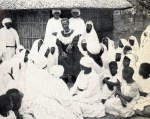


Shembe got it so right, and he and his people were so isolated from the world. Nazarite means “seperated and concecrated to the Lord.”
“Like a voice crying in the wilderness!”
He who is cast down, shall be raised up!
John and Jesus were Nazarites, for they both went out into the wilderness to undergo a ritual where they resist the temptations of Satan that has everyhting to do with the Great Reversal, for you are joined to the Kingdom of God on earth, and in heaven. This is a test, to see if your are worthy to be a Councilor, a Judge filled with the Holy Ghost and Spirit. All Nazarites are eqaul to one another in the eyes of the Lord when they are joined to the secret NAME of their Lord. Consider John 17.
Five months ago I put Shembe’s words in a poem and read them at the Granary poetry reading. I bid all Africans to wake up! Kadafi was a very wealthy dictator and king. He left this world with nothing.
Play all videos as you read the Zulu Nazarite Cosmology – and be taken to the mountain tops where you will be filled with joy!
Amen
Jon the Nazarite
“Those are bestowed kingly authority
upon the mountain,
Wake up, wake up
ye Africans’.
The Scriptures of the amaNazaretha of EkuphaKameni
The amaNazarites of Isaiah Shembe are the oldest African Independent/Indigenous Church in South Africa. The church divided into two main sections in 1976 following the death of its leader Johannes Galilee Shembe [1904-1976]. The largest group was led by Amos Shembe [1907-1996], the other, smaller group, by Londa Shembe [1944-1989]. The following texts were produced with the encouragement of Londa Shembe. By reproducing them we remain neutral with regard to the division in the church. Our only concern is to publicize the work of the founder the “prophet” Isaiah Shembe.
THEOLOGY OF THE AMA-NAZARITES WRITTEN AT THE REQUEST OF THE RIGHT REVEREND LONDA NSIKA SHEMBE BY G. C. OOSTHUIZEN
INTRODUCTION
Shortly before his tragic murder in April 1989 the Right Reverend Londa Nsika Shembe,[1] leader of the Ekuphakameni amaNazarites,[2] asked me to write a theological introduction to his translation of Some Prayers and Writings of the Servant of Sorrows: Thumekile Isaiah Shembe.[3] Although Londa Shembe and I had many long discussions about theology in general, and his church in particular, we had never really talked about the specifics of his theology. Therefore this chapter is based on general conversations and hints he gave before he died. The most important clue to his thinking is found in the fact that he repeatedly told me and many foreign visitors[4] that he completely agreed with the view given in my book The Theology of a South African Messiah,[5] and my article “Isaiah Shembe and the Zulu World View.”[6] He also told me that his father Johannes Galilee Shembe had referred him to both of these publications and advised him to read them.[7]
The theology of Isaiah Shembe was not based on the sword or violence but on his sincere conviction that he was the mouthpiece and instrument of Jehova, whom he reflected among the people, to lead the Zulu nation out of bondage. This
view also seems to have been held by Londa Shembe whose ideas were deeply embedded in the spirit of Isaiah Shembe. He firmly believed that Isaiah Shembe, his grandfather, had a special place in the celestial sphere. For him Isaiah Shembe was a messianic figure who had been a messiah to eight other peoples before he was incarnated into the Zulu people. Thus Londa Shembe saw Isaiah Shembe as a global figure who was born into the Zulu nation at a specific stage of their history to be their messiah. But, in his view, Isaiah Shembe was a cosmic messiah who should not be identified with the Zulus alone.
Londa Shembe maintained that his grandfather, Isaiah Shembe continued the essence of Jewish religion in his own teachings. He taught that the Biblical prophet Jeremiah referred to the Zulu people whom he believed were descended from the Jews.[8] As a result Londa Shembe began to study Hebrew and was a voracious reader of books dealing with Jewish Religion. He also made contact with an Orthodox rabbi in Durban and unsuccessfully attempted to contact an Hasidic group in Johannesburg. Developing this theme he believed that the teachings of Isaiah Shembe and the teachings of “the old Afrikaner people” were the same because they both emphasized “Unkulunkuln Ka Adam”, the God of Adam.
The place of Jesus in Isaiah Shembe’s theology is problematic. According to Londa Shembe, Jesus was important to Isaiah Shembe when he first founded his church, as a result in his early hymns the name of Jesus was frequently mentioned. But, as time past, the name of Jesus disappeared from the hymns and the names Unkulunkulu,[9] Umvelingqangi[10] and Jehova, which are names for God, gradually became prominent.
Isaiah Shembe referred to Jesus as Liberator and Redeemer in Hymn 2:4 where he praises “the liberation of the hosts of heaven through Jesus the uMkhululi, Liberator, Redeemer.” In Hymn 5 the way of Jesus is pictured as hard and difficult, verse 1, because the gate is narrow, verse 2, and Jesus had no place to rest, verse 3. Therefore his followers have to take up the Cross, verse 5. Later in Hymn 23:4 Shembe stated that Jesus said if people love Him they will stay with Him[11] and in Hymn 50.2 he stated “the brave ones are of Jesus,” amaqhawe ngaka Jesu.” Later in the same Hymn Jesus is referred to as “the judge of men, verse 6, while in Hymn 66:6 Isaiah Shembe refers to “the Father of Jesus” and “the Rewarder of love.” In an interview with Londa Shembe he stated:
When Isaiah started you find Jesus, for example, in Hymn 2 which was the first hymn he composed on Mount Nhlangakazi. In many of the songs and early hymns Jesus’ name appeared but towards the middle period no specific references are made to Jesus but the references are to Unkulunkulu, Umvelingqangi and Jehova. Towards the end it is neither Jesus nor Jesus Christ but Baba Isaiah himself. Isaiah Shembe in the last hymn states he went to the valley of sorrow/distress, cf. Hymn 219:4. His flock has broken his word. It is now his word that they have broken. One sees here how he has been growing. When one looks at the ezitsha (the objects) that he used for communion, there was a crucifix inside the box which means that he accepted it but he gradually grew more into himself. `When the bell rings at 9 o’clock’ he said, ‘you must remember me’. That’s why the services at all the churches and mission stations start at nine.[12]
The theme of liberation touched Londa Shembe deeply as a law student and later as a church leader. He saw, however, that his grandfather’s theology must be seen in the context of the whole of South Africa and its enslavement under an apartheid ideology not just the liberation of the Zulu.
Zulu Christians, belonging to mission churches, often claim that followers of Isaiah Shembe believe he is God. On the basis of our conversations and my own research, I believe, it would be wrong to describe Isaiah Shembe as God, a god or even as a Black Jesus Christ. Rather, he was, and still is, a reflection of “Jehova” in the iBandla lamaNazaretha. This is because his spirit rules supreme in the hearts and minds of his people within the church. Londa Shembe believed that the spirit of his grandfather Isaiah Shembe was manifest in his father, Johannes Galilee Shembe, and finally, in his own person, thus giving unique authority to his own ministry.
In the history of religions people have often built messianic features into a founder of a religious movement and members of the iBandla lamaNazaretha are no exception. The hymns of Isaiah Shembe played a great role in this regard by elevating Isaiah Shembe above mortal men. To understand this development it is necessary to review the history of the founding of the church and Isaiah Shembe’s spiritual development.
THE HISTORY OF Isaiah SHEMBE AND THE AMA-NAZARITES
The church of the ama-Nazarites, also generally known as The Nazareth Baptist Church, or iBandla LamaNazaretha as they are known in Zulu, was founded by Isaiah Shembe around 1911. Isaiah Shembe was born around 1867 near the white town of Harrismith,
in the Orange Free State, into the family of an illiterate farm labourer who had great respect for the culture and tradition of his ancestors the Zulu people. When he died on May 2, 1935 he left behind one of the most influential churches in Africa. This church was and is totally separate from missionary churches and white control and is in no way dependent on them for ideas or financial support.
Isaiah Shembe firmly believed he received his calling directly from `Jehovah’. According to tradition Isaiah Shembe heard a “Voice” in a thunderstorm which told him to leave his mother and four wives, to shun immorality, and to serve God. During the storm he was burned by lightning but obeyed the “Voice” which told him not to have the lightning burns healed by medicine because Jehovah said he should be healed by His word alone. Following this experience Isaiah Shembe developed the qualities of an oboniswayo, a seer, within Zulu society and acted with great self-assurance. Relatively little is known, however, about Isaiah Shembe’s involvement with Christianity or missionaries. It seems he had some contact with the Methodist Church and became a member of the African Baptist Church in 1906. At that time he was already known among African Christians for his preaching and leadership abilities.
When he founded the iBandla lamaNazaretha in 1911 he did so because he was fully convinced that the Christians had failed to obey God’s law as laid down in the Hebrew Bible. In particular he emphasized that only through observation of the Sabbath could the Zulu nation be fully restored to its independence and former glory. In 1913 he selected a mountain in southern Natal, Nhlangakazi,[13] as the “holy mountain,” or Sinai, of his church and founded the holy city of Ekuphakameni[14] in 1914. Both places were to be sites of pilgrimage and annual rejoicing.
In 1911, when the ama-Nazarite movement was born, over 85 percent of the African population in South Africa still practised the indigenous religion of their ancestors. It is probable that Isaiah Shembe left the Methodist Church to join African Baptist Church in 1906 because of its indigenous character, Biblical literalism, and the importance it attached to adult baptism.
But, Shembe also had a deep concern for the restoration of the independence of the Zulu nation which was lost as a result of the Anglo-Zulu Wars of 1879[15] and further weakened by the Zulu Rebellion of 1906.[16] Yet he realized that it was impossible for a small and isolated church to restore the spiritual well being of the Zulu people as a whole. Therefore he had the vision of a people’s movement which is what, under his able leadership, the Ama-Nazarites became.
We can safely say that the mission of Isaiah Shembe was to restore the dignity of the Zulu person and the independence of the Zulu nation who suffered greatly when they resisted the invasions of their country by first the Boers and later the British. The aim of Isaiah Shembe was to restore his people to the previous glory and this he believed could be done on the basis of God’s presence among the Zulu people in the same way as God had revealed His presence to ancient Israel. In 1913, two years after he founded The Church of the Nazarites, he had a vision which led him to declare that the church accepted the Sabbath as God’s holy day instead of the Christian Sunday. As a result of this vision he considered the Sabbath to be the key to Zulu fortunes because it was the test of true obedience to God.
All accounts make it clear that Shembe was a tremendous, dynamic preacher, counsellor and healer. He brought a sense of God’s presence into the midst of his hearers. His son Johannes Galilee Shembe described his father’s work by saying: “Isaiah Shembe showed you a God who walks on feet and who heals with his hands”.[17] In this statement he acknowledges the fact that his own ministry depended on the spirit of his father, Isaiah Shembe. Furthermore, as the King was the sum and substance of the Zulu nation so too Isaiah Shembe was the King of his people. The Kingship pattern of Zulu society and its system of rank is deeply ingrained in “The Church of the Nazarites.” Londa Shembe emphasized this continuously. In an interview shortly before his death he stated:
My grandfather said to DiniZulu KaSolomon this is a kingdom of blood. He said: `You must come to Ekuphakameni and I will unite the tribes before God – they are still separate tribes and not united’. King Solomon agreed. There was then a house built for King Solomon (emzi Nkosi). My grandfather said that the house half-built should remain like that as a memorial to the fact that he called the Zulu King but he eventually declined the call which he eventually will regret. My grandfather told him that his Kingship will end and that his grandson Zwelithini will be the last Zulu King with the royal surname. Mangosuthu Buthelezi’s mother stayed at Ekuphakameni just before she had to go to McCords Hospital in Durban for the birth of her famous son. Mangosuthu is taking over all but in name from the King. My grandfather said all Zulus will be ruled by a man who comes from Ekuphakameni.
Thus Isaiah Shembe was not only a mediator between man and God but became a messianic figure – a messiah for the Zulu nation which he hoped to restore to its former glory.
Isaiah SHEMBE’S CONSCIOUSNESS OF HIS OWN MISSION
Towards the end Isaiah Shembe’s life it appears that his consciousness of his mission for the liberation of the Zulus became more evident. This is very clear in his hymns. For example in Hymn 214 each stanza as the refrain: “Ye Zulus, we have heard him now”. Thus stanza 1 reads:
Our uMkhululi – (Liberator, Redeemer)
we the progeny of Dingaan
we have heard him, he has arrived.
uMkhululi has arrived!
uMkhululi has now arrived!
Ye Zulus, we have heard him now.[18]
The whole tone of this Hymn emphasizes a people which suffered greatly as the result of white penetration and, as they saw it, the destruction of their country and nationhood. Significantly, reference is made to both Dingaan and Sendzangakhona. Dingaan was the Zulu chief who resisted white settlement only to be destroyed through the victory of his white enemies at the Battle of Blood River in 1838. Sendzangakhona, is generally accepted as the father of the Zulu people. These men also feature in Hymn 216 alongside the great folk hero of Zulu history Shaka and his half-brother Mhlangana.
 Rosamond Press
Leave a comment