 article
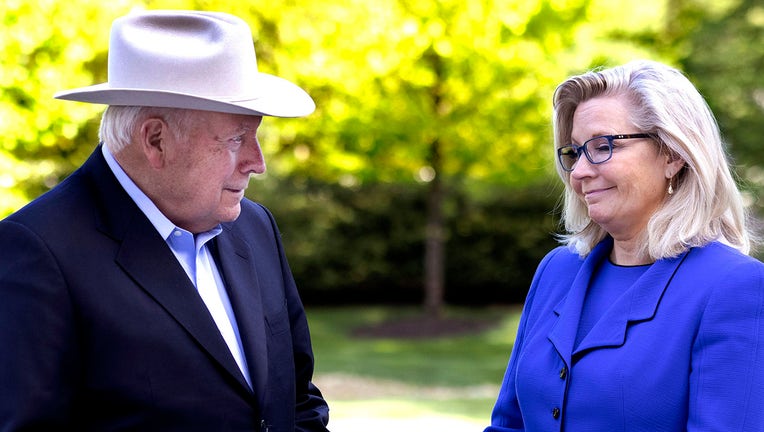
File: Congresswoman Liz Cheney with her dad, former Vice President Dick Cheney, at his house in Virginia after she was ousted from her GOP leadership role, May 12, 2021, McLean, Virginia. (Photo by David Hume Kennerly/Center for Creative Photography/
View image in fullscreenLiz Cheney and Dick Cheney in Jackson Hole, Wyoming, in 2022. Photograph: Jabin Botsford/AP
Former vice-president Dick Cheney confirms he will vote for Kamala Harris
Lifelong Republican makes announcement day after daughter Liz also endorses Democratic candidate
Abené Clayton and agenciesFri 6 Sep 2024 18.36 EDTShare
The former vice-president Dick Cheney, a lifelong Republican, will vote for the Democratic nominee, Kamala Harris, in November’s presidential election, he said in a statement on Friday.
Dick and Liz just declared they will vote for Kamala Harris – WHO WAS BANNED IN BELMONT! Did Deanny Lawhern read this post with his Gang of Eight, and get a good chuckle?
John Presco
https://www.theguardian.com/us-news/article/2024/sep/06/dick-cheney-vote-kamala-harris
I Claim The Republican Party!
Posted on October 5, 2023 by Royal Rosamond Press
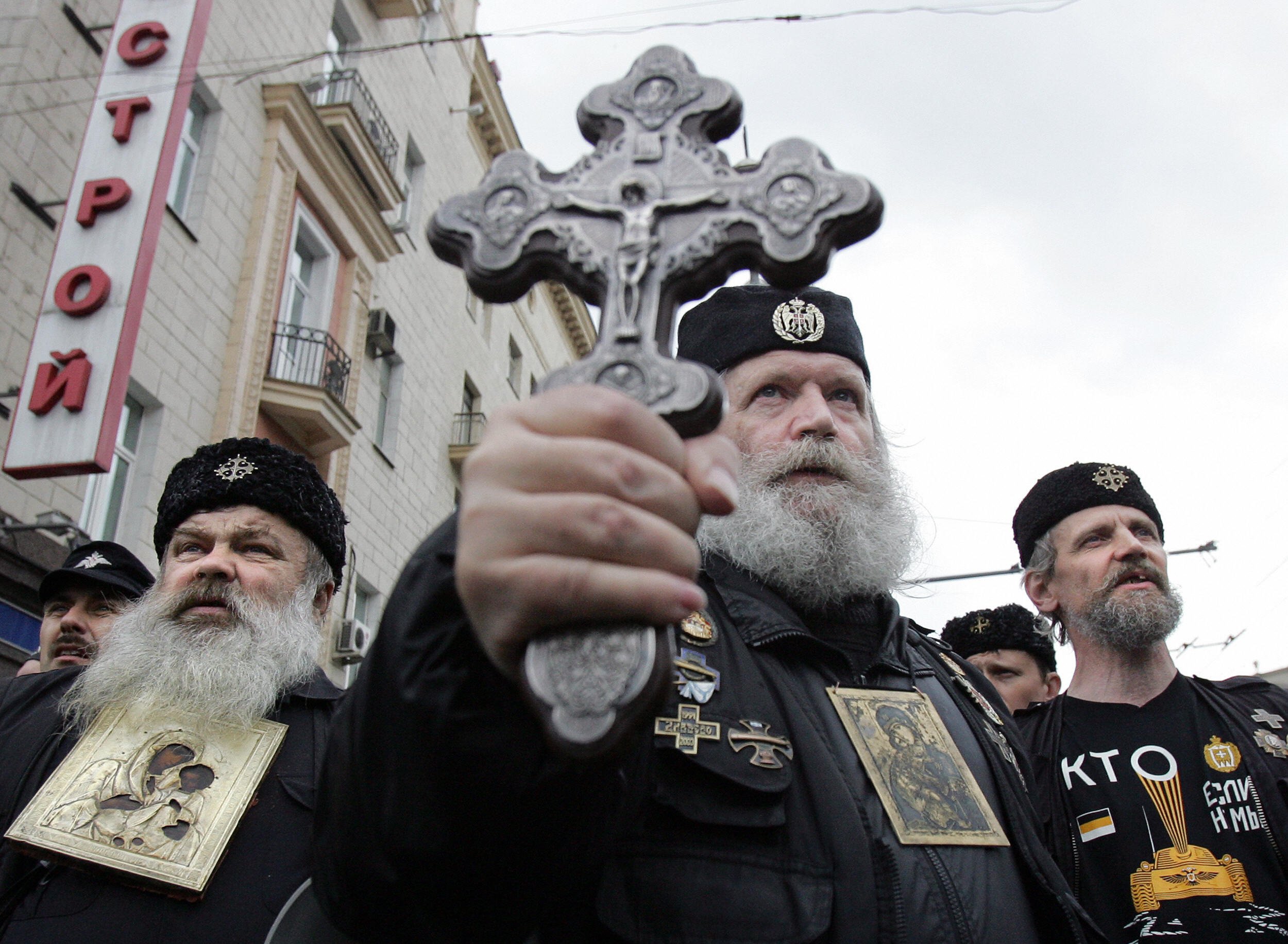
Russian Orthodox demonstartors protest against an unapproved LGBT groups’ rally in front of the Moscow City Hall, 27 May 2006.GETTY IMAGES
Cunning Christians Get Out!
Posted on December 27, 2021 by Royal Rosamond Press

All Christians who still back the treacherous Trump are not welcome in the Republican Party! GET OUT! Form your own party!
Congressman Jim Jordon has threatened to NOT TO HONOR our NATO agreement that was approved by Republican Lawmakers when it was SIGNED! The U.S. has spent a trillion dollars reinforcing this agreement. Americans who vote both parties paid for the defense of Europe with their tax money. We have an investment in the future of The Free World. The Free World is being undermined by the MASSIVE FRAUD the ex-president inflicted on our Honest Business World, and is the No.1 Republicans candidate. Trump instructs Jim Jordon in a covert manner. This constitute Conspiracy to Defraud.. This goes against the bylaws of the Republican’ Party Co-founded by my kin, John Fremont – who blesses my lawsuit I will bring against those who NOW claim John’s Party, when so many experts are saying – IT IS DEAD! Do not fund this defunct party! Instead, send your hard-earned monies to Zelinzkyy and the Ukrainians!
John Presco ‘Legal Owner of The Republican Party’
The United States and 11 other nations establish the North Atlantic Treaty Organization (NATO), a mutual defense pact aimed at containing possible Soviet aggression against Western Europe. NATO stood as the main U.S.-led military alliance against the Soviet Union throughout the duration of the Cold War.
Relations between the United States and the Soviet Union began to deteriorate rapidly in 1948. There were heated disagreements over the postwar status of Germany, with the Americans insisting on German recovery and eventual rearmament and the Soviets steadfastly opposing such actions. In June 1948, the Soviets blocked all ground travel to the American occupation zone in West Berlin, and only a massive U.S. airlift of food and other necessities sustained the population of the zone until the Soviets relented and lifted the blockade in May 1949.
In January 1949, President Harry S. Truman warned in his State of the Union Address that the forces of democracy and communism were locked in a dangerous struggle, and he called for a defensive alliance of nations in the North Atlantic—U.S military in Korea.NATO was the result. In April 1949, representatives from Belgium, Canada, Denmark, France, Great Britain, Iceland, Italy, Luxembourg, the Netherlands, Norway, and Portugal joined the United States in signing the NATO agreement. The signatories agreed, “An armed attack against one or more of them… shall be considered an attack against them all.” President Truman welcomed the organization as “a shield against aggression.”
Two days before Russia invaded Ukraine with an assault that intelligence officials had warned was coming, conservative commentator Candace Owens insisted that the U.S. was “at fault.”
“NATO (under direction from the United States) is violating previous agreements and expanding eastward,” Owens said in the Feb. 22 tweet, which directed her more than 3 million followers to remarks from Russian President Vladimir Putin that she said showed “what’s actually going on.”
https://www.history.com/this-day-in-history/nato-pact-signed
I hereby Copyright the name ‘REPUBLICAN’
Posted on February 17, 2017 by Royal Rosamond Press
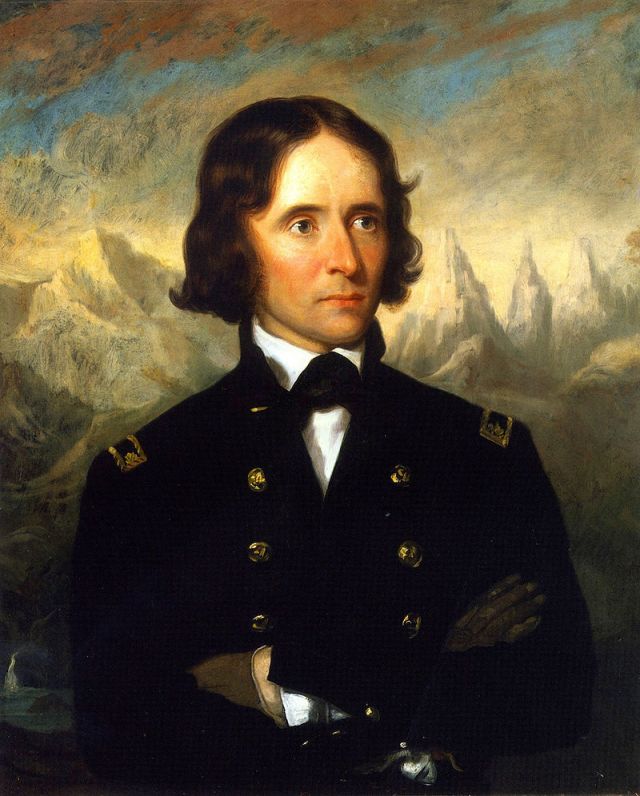
I hereby Copyright the name ‘REPUBLICAN’.
Jon Presco
Copyright 2017
President: Royal Rosamond Press
https://en.wikipedia.org/wiki/John_C._Fr%C3%A9mont
https://en.wikipedia.org/wiki/Ripon_Society
https://en.wikipedia.org/wiki/ConservAmerica
The first “anti-Nebraska” local meeting where “Republican” was suggested as a name for a new anti-slavery party was held in a Ripon, Wisconsin schoolhouse on March 20, 1854.[6]
John C. Frémont ran as the first Republican nominee for President in 1856 behind the slogan: “Free soil, free silver, free men, Frémont and victory!” Although Frémont’s bid was unsuccessful, the party showed a strong base. It dominated in New England, New York and the northern Midwest, and had a strong presence in the rest of the North. It had almost no support in the South, where it was roundly denounced in 1856–1860 as a divisive force that threatened civil war.[9]
https://en.wikipedia.org/wiki/History_of_the_United_States_Republican_Party
Ideological beginnings[edit]
See also: Third Party System
The Republican party began as a coalition of anti-slavery “Conscience Whigs” and Free Soil Democrats opposed to the Kansas–Nebraska Act, submitted to Congress by Stephen Douglas in January 1854. The Act opened Kansas Territory and Nebraska Territory to slavery and future admission as slave states, thus implicitly repealing the prohibition on slavery in territory north of 36° 30′ latitude, which had been part of the Missouri Compromise. This change was viewed by Free Soil and Abolitionist Northerners as an aggressive, expansionist maneuver by the slave-owning South.
The Act was supported by all Southerners, by Northern “Doughface” (pro-Southern) Democrats and by other Northern Democrats persuaded by Douglas’ doctrine of “popular sovereignty“. In the North the old Whig Party was almost defunct. The opponents were intensely motivated and began forming a new party.[2]
The new party went well beyond the issue of slavery in the territories. It envisioned modernizing the United States—emphasizing giving free western land to farmers (“free soil”) as opposed to letting slave owners buy up the best lands, expanded banking, more railroads, and factories. They vigorously argued that free market labor was superior to slavery and the very foundation of civic virtue and true republicanism—this was the “Free Soil, Free Labor, Free Men” ideology.[2]
The Republicans absorbed the previous traditions of its members, most of whom had been Whigs; others had been Democrats or members of third parties (especially the Free Soil Party and the American Party, also known as the Know Nothings). Many Democrats who joined were rewarded with governorships,[Note 1] or seats in the U.S. Senate,[Note 2] or House of Representatives.[Note 3] Since its inception, its chief opposition has been the Democratic Party, but the amount of flow back and forth of prominent politicians between the two parties was quite high from 1854 to 1896.
Historians have explored the ethnocultural foundations of the party, along the line that ethnic and religious groups set the moral standards for their members, who then carried those standards into politics. The churches also provided social networks that politicians used to sign up voters. The pietistic churches emphasized the duty of the Christian to purge sin from society. Sin took many forms—alcoholism, polygamy and slavery became special targets for the Republicans.[3]
The Yankees, who dominated New England, much of upstate New York, and much of the upper Midwest were the strongest supporters of the new party. This was especially true for the pietistic Congregationalists and Presbyterians among them and (during the war), the Methodists, along with Scandinavian Lutherans. The Quakers were a small tight-knit group that was heavily Republican. The liturgical churches (Roman Catholic, Episcopal, German Lutheran), by contrast, largely rejected the moralism of the Republican Party; most of their adherents voted Democratic.[3]
The early standard bearers of the Party expressed views of government that marked the first years of its existence. For instance, William H. Seward, New York governor who vied with Lincoln for the nomination in 1860, had called for welcoming immigrants with “all the sympathy that their misfortunes at home, their condition as strangers here, and their devotion to liberty, ought to excite.”[4] And Lincoln, in his 1861 message to Congress, argued that the essential reason for preserving the central government was to maintain “in the world, that form, and substance of government, whose leading object is to elevate the condition of men – to lift artificial weights from all shoulders – to clear the paths of laudable pursuit for all – to afford all, an unfettered start, and a fair chance, in the race of life.”[5]
Organizational beginnings (1854)[edit]
The first “anti-Nebraska” local meeting where “Republican” was suggested as a name for a new anti-slavery party was held in a Ripon, Wisconsin schoolhouse on March 20, 1854.[6] The first statewide convention that formed a platform and nominated candidates under the name “Republican” was held near Jackson, Michigan on July 6, 1854. It declared their new party opposed to the expansion of slavery into new territories and selected a statewide slate of candidates. The Midwest took the lead in forming state party tickets, while the eastern states lagged a year or so.
There were no efforts to organize the party in the South, apart from St. Louis and a few areas adjacent to free states. The party initially had its base in the Northeast and Midwest.

This Democratic editorial cartoon links Frémont to other radical movements including temperance, feminism, Fourierism, free love, Catholicism, and abolition.
Establishing a national party, and opposition[edit]
The party launched its first national convention in Pittsburgh, Pennsylvania, on February 22, 1856,[7] with its first national nominating convention held in the summer in Philadelphia, Pennsylvania,[8] presided by Francis Preston Blair, Sr..
John C. Frémont ran as the first Republican nominee for President in 1856 behind the slogan: “Free soil, free silver, free men, Frémont and victory!” Although Frémont’s bid was unsuccessful, the party showed a strong base. It dominated in New England, New York and the northern Midwest, and had a strong presence in the rest of the North. It had almost no support in the South, where it was roundly denounced in 1856–1860 as a divisive force that threatened civil war.[9]
Without using the term “containment“, the new Party in the mid-1850s proposed a system of containing slavery, once it gained control of the national government. Historian James Oakes explains the strategy:
The federal government would surround the south with free states, free territories, and free waters, building what they called a ‘cordon of freedom’ around slavery, hemming it in until the system’s own internal weaknesses forced the slave states one by one to abandon slavery.[10]
Leading up to the second presidential election after the party’s establishment, disdain for it grew considerably among Democrats, particularly those from the South. In reference to the Republicans’ anti-slavery position, prominent Democrats applied the slur “Black Republican” against them, as seen repeatedly in the speeches of Senator Stephen Douglas during the Lincoln-Douglas Debates of 1858 in Illinois. During the presidential campaign in 1860, at a time of escalating tension between the North and South, Abraham Lincoln addressed the harsh treatment of Republicans in the South in his famous Cooper Union speech:
[W]hen you speak of us Republicans, you do so only to denounce us as reptiles, or, at the best, as no better than outlaws. You will grant a hearing to pirates or murderers, but nothing like it to “Black Republicans.” ….But you will not abide the election of a Republican president! In that supposed event, you say, you will destroy the Union; and then, you say, the great crime of having destroyed it will be upon us! That is cool. A highwayman holds a pistol to my ear, and mutters through his teeth, “Stand and deliver, or I shall kill you, and then you will be a murderer!”
h,
 Rosamond Press
Leave a comment