
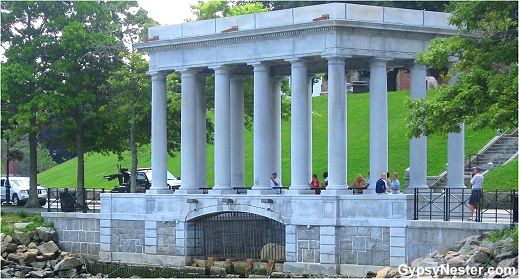
San Sebastian Avenue
by John Presco
The Stuttmeister family got wealthy dealing in pelts and furs. Where did they get them? How about California? Did member of my family come to California to take pelts, or, were they agents for the early trappers – that may have come with John Sutter to California. Sutter was very involved in trapping, and came to Oregon where John Astor was taking pelts. My kin, Thomas Hart Benton, was Astor’s attorney. Astor paid Washington Irving to author a book about the Beaver State. But the San Francisco Bay was teeming with beavers – and otters!
Not once did the head Historian of Belmont comment on the photos of my Stuttmeister family. Nor did Cynthia McCarthy – who used images of the Janke family to enrich herself. They both treated me like shit for personal reasons. Denny had it out for his dad. Do we know his name? If I had not persisted in studying my family history, I would not be able to connect Belmont – founded by Carl Janke – with the the California Fur Rush – and the Germans that came with Sutter, who were members of the Turnverein. Carl Jake came to California – before the Gold Rush – with six portable houses that were not meant for Gold Miners, but for a Turnverein Colony – that he may have thought about founding in Sacramento! This very sound theory – puts Belmont on the map, and is equivalent to the history of the Massatuchetts Bay Colony, and ever the Pilgrims. Did Denny Lawhern make the Sutter connection – and oppress it – because he hates Germans, like his Doggitt ancestor did – in Brattain?
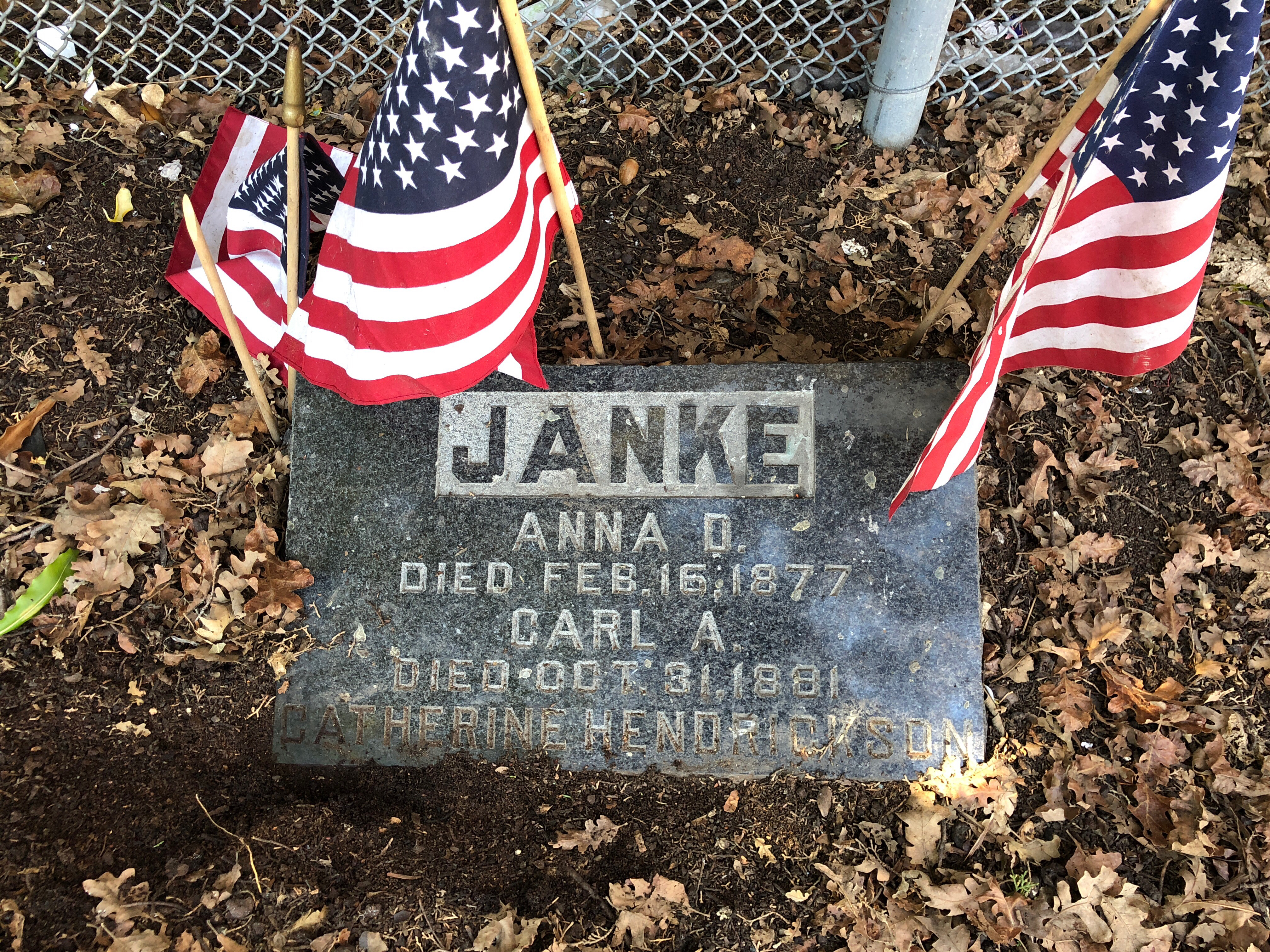
I am activity seeking a attorney who will give me full access to all the Historic Societies in the area. I am going to stop the sale to Stanford, and demand they do a thorough historic study, including forensics. I suspect Lawhern had a hold on the City of Belmont.My kin, Doris Vannier was a member of the BHS and spoke about putting a plaque on a Bay tree, after discussing the tombstone we see above, placed in Redwood City, where William Stuttmeister, and William Janke had a dental office!
I have made no agreement with anyone concerning thi history. I suspect one person of being a Claim Jumper. Everything I have written about Belmont – is copyrighted. Because there are religious considerations, all my written study is protected by my special copyright for ministers.
When Denny beheld the Stuttmeister crypt in Berlin, he went into shock. He felt his grubby and stubby fingers losing grip on the city he came to conquer. It took Mr. Lawhern five days to respond to me. I suspect he ransacked this blog looking for evidence I was not kin to Janke and Stuttmeister who got married at Ralston Hall. This is a Pioneer Wedding! Only when he found my posts on Kamala Harris and the German Turnverein, did he feel emboldened to give me…….The Bum’s Rush!
I do get to talk about Denny Lawhern in a very despairing way, because he trashed Real History, in order to get back at his daddy!
“How the mighty, and the tiny – have fallen!”
John Presco
Copyright 2024
California Fur Trade
Before the 1849 California Gold Rush, American, English and Russian fur hunters were drawn to Spanish (and then Mexican) California in a California Fur Rush, to exploit its enormous fur resources.[1] Before 1825, these Europeans were drawn to the northern and central California coast to harvest prodigious quantities of southern sea otter (Enhydra lutris nereis) and fur seals (Callorhinus ursinus), and then to the San Francisco Bay Area and Sacramento – San Joaquin River Delta to harvest beaver (Castor canadensis), river otter (Lontra canadensis), marten, fisher, mink, gray fox (Urocyon cinereoargenteus), weasel, and harbor seal. It was California’s early fur trade, more than any other single factor, that opened up the West, and the San Francisco Bay Area in particular, to world trade.[2]

The massive increase of hunting and trapping in the 19th century caused the near extinction of many species in the state by 1911, including the California Golden Beaver and California Sea Otter.[3]
Coastal or maritime fur trade
The earliest record of fur being traded with Europeans in California was in 1733 of Spanish missionaries trading with tribes in upper and lower California for sea otter pelts. [3]

Just three years after Juan de Ayala sailed the first ship to pass through the Golden Gate in 1775, North America’s Pacific Coast fur trade began, but not by the Spanish who had sailed the California coast since João Rodrigues Cabrilho‘s voyage in 1542 and Sebastián Vizcaíno‘s mapping of coastal California in 1602. It began in 1778 with Captain James Cook‘s third voyage, when otter skins were obtained at Nootka Sound on the Northwest Coast and, although Cook was killed in Hawaii on the way to China, his men were shocked at the high prices paid by the Chinese.[4] A profit of 1,800% was made. In 1783, when John Ledyard reported in Connecticut that enormous profits could be made selling otter skins to China, New England began sending American ships to hunt sea otter, and later, beaver, on the Pacific coast as early as 1787.[4] That the California fur trade had begun by 1785, just ten years after Ayala landed in San Francisco Bay, is evidenced by the Spanish issuance of regulations to govern the collection of otter skins in California.[5] The west coast fur trade enabled New England merchants to recover from the economic collapse which followed the American Revolutionary War, and was exacerbated by closure of British home and colonial ports to American trade.[6]
France sent La Pérouse to California in 1786 to investigate the fur trade opportunity and he “obtained about a thousand sea otter skins which he sold in China for ten thousand dollars” and shared that “The Indians…at Monterey…catch them on land with snares…”. La Perouse also said that “Antecedent to this year (1786) an otter’s skin bore no higher value than two hare’s skins; the Spanish never suspected that they would be much sought after.”[5] Apparently the Spanish had not earlier appreciated the value of furs, being from warmer climes, despite sea otter described in 1776 off Fort Point (then Cantil Blanco) in San Francisco Bay by Father Pedro Font on the De Anza Expedition. Font wrote, “I beheld a prodigy of nature, which is not easy to describe…. We saw the spouting of young whales, a line of dolphins or tunas, besides seals and otters…”[7] However, they mounted a major commercial otter hunting enterprise in California when Vicente Vasadre y Vega arrived just one month before La Perouse, and implemented a plan whereby all otter skins had to be sold to him and they quickly recruited the Christian Indians at the Missions to bring in pelts. Vasadre sailed to San Blas on November 28, 1786 with 1,060 otter skins, to be shipped to the Philippines on the Manila galleons.[8]
Robert Gray, captain of the ship Columbia rediscovered the mouth of the Columbia River in 1792 on his second voyage to the Pacific Coast.[9] Although the Spanish explorer Bruno de Heceta came to the river’s mouth in 1775, no other explorer or fur trader had been able to find it since. By the 1790s American ships dominated the coastal fur trade south of Russian America.[4] In fact, Bostonian ships dominated the fur trade between California and China through the 1820s, when the sea otter supply was exhausted, and well before the first American mountain man, Jedediah Smith pioneered overland to California in pursuit of beaver pelts in 1826.[10]

The Russian-American Company‘s Ivan Kuskov sailed into Bodega Bay in 1809 on the Kad’yak and returned to Novoarkhangelsk (Sitka) with beaver skins and over 2,000 sea otter pelts.[11] They settled Fort Ross and vicinity in order to pursue the animals in the region and to provide food for their Alaskan settlements.[12] In his 1896 history of the Russian settlement of California, Thompson wrote of Kuskov’s first voyage to Bodega Bay in 1809: “After carefully exploring the surrounding country, some temporary buildings were erected, some otter and beaver skins were procured, and friendly relations were established with the Indians”.[11] Before establishing a southern colony at Fort Ross, the Russian-American Company contracted with American ships beginning in 1810, providing them with Aleuts and baidarkas (kayaks) to hunt otter on the coast of Spanish California.[13] From 1810 to 1812, Americans contracted to the Russians snuck Aleuts into San Francisco Bay multiple times, despite the Spanish capturing or shooting them while hunting sea otters in the estuaries of San Jose, San Mateo, and San Bruno and around Angel Island.[13] Kuskov, this time in the schooner Chirikov, returned to Bodega Bay in 1812; finding otter now scarce, he sent a party of Aleuts to San Francisco Bay where they met another Russian party and an American party and caught 1,160 sea otters in three months.[14] By 1817, sea otters in the area were practically eliminated and the Russians sought permission from the Spanish and the Mexican governments to hunt further and further south of San Francisco.[15] In 1824, Russian-American Fur Company agent and writer Kiril Timofeevich Khlebnikov contracted with Captain John Cooper to take several of their hunting baidarkas on his trading schooner Rover along with Aleut hunters to hunt sea otter as far south as the 30th parallel on the Baja California peninsula.[16]
The American ships Albatross under Nathan Winship O’Cain under his brother Jonathan Winship were sent from Boston in 1809 to establish a settlement on the Columbia River. In 1810, they met up with two other American ships at the Farallon Islands, the Mercury and the Isabella, and at least 30,000 seal skins were taken.[17][18] By 1822, the Farallons’ fur seal hunt had diminished to 1,200 annually and the Russians suspended the hunt for two years.[16] Although American ships had already exploited the islands, the Russians maintained a sealing station in the Farallon Islands from 1812 to 1840, taking 1,200 to 1,500 fur seals annually, .[19] From 1824 on, the subsequent catch continued a steady decline until only about 500 could be taken annually; within the next few years, the seal was extirpated from the islands.[20]
The California fur trade ended as fur-bearers of all kinds were depleted in the first half of the nineteenth century. After sailing up and down the California coast, Richard Henry Dana recorded on May 8, 1836 at his last stop in San Diego how the trade in cattle hides had overtaken the fur trade: “Our forty thousand [cattle] hides and thirty thousand horns, besides several barrels of otter and beaver skins, were all stowed below, and the hatches calked down.”[21] As the marine fur-bearers became too depleted to hunt and contracts with the Hudson’s Bay Company provided food for the Alaskan settlements, the Russians abandoned Fort Ross in 1841.
By the end of the 19th century, California sea otters had been hunted to near extinction. The US government began to manage sea otter as a valuable natural resource in 1911. However, due to the previous two centuries of unregulated exploitation of the species, it was uncertain whether they would be able to revive the population.[3]
California fur-bearers today

In 2019, California State Legislature passed a bill banning the manufacturing, import, and sale of new fur products in the state. The law went into effect beginning January 1, 2023.[22]
California golden beaver are recolonizing the Bay Area by traversing north San Francisco Bay (from east to west) : Kirker Creek in the Dow Wetlands of Pittsburg, Fairfield Creek in Cordelia, Alhambra Creek in Martinez, Southampton Creek in Benicia State Recreation Area, the Napa Sonoma Marsh in north San Pablo Bay, the Napa River, and Sonoma Creek. These beaver likely emigrated from the Delta which once sustained the densest beaver populations in North America.[23] In addition, beaver were re-introduced in the 1930s by the California Department of Fish and Game to Pescadero Creek and sometime before 1993 in Lexington Reservoir in the south San Francisco Bay area, where they have colonized Los Gatos Creek, then the Guadalupe River, and then traversed the south Bay to colonize Coyote Creek in East San Jose and up to Matadero Creek in Palo Alto.[24]

The spring 2019 sea otter survey counted 2,962 sea otters in the central California coast, down from an estimated pre-fur trade population of 16,000. [25] California’s sea otters are the descendants of a single colony of about 50 southern sea otters discovered near the mouth of Bixby Creek along California’s Big Sur coast in 1938;[26] their principal range is now from just south of San Francisco to Santa Barbara County.[27] The US Geological Survey reports that the 5 year trend for sea otter population counts for the northern range was positive at 9.4 percent growth per year while the southern edge of the range had minimal growth at 0.55 percent per year. [25] A colony of translocated sea otters near San Nicholas Island is showing population growth after ten years of low numbers. In 1991, only 16 individuals remained out of the original 139 from only a year prior, however, the current population is around 100 otters which follows the trend of other successful sea otter translocations. [28]
Both the California golden beaver and southern sea otter are considered keystone species, with a stabilizing and broad impact on their local ecosystems.
.jpg)
Northern fur seals (Callorhinus ursinus) were one of the first species to become protected through legislation with an international Fur Seal Treaty in 1911 which banned hunting fur seals in the ocean. The Marine Mammal Protection Act identifies the Northern Fur Seal population as depleted with the California population of fur seals estimated to be around 14,000. In 1966, the United States Congress passed the Fur Seal Act which banned the hunting of fur seals with the exception of substance hunting by Indigenous Americans. [29] The seals began to recolonize the Farallon Islands in 1996.[20]
In contrast, the Pacific Harbor seal (Phoca vitulina richardsi) is considered a species of least concern for endangerment of extinction. Their pelts were not nearly as popular as the otter or beaver. According to the Marine Mammal Center, the population of Pacific Harbor Seals off the coast of California is estimated to be around 34,000 individuals.[30]
The Stuttmeister Fur Shop – Berlin
Posted on July 26, 2024 by Royal Rosamond Press

San Sebastian Avenue
by
John Presco
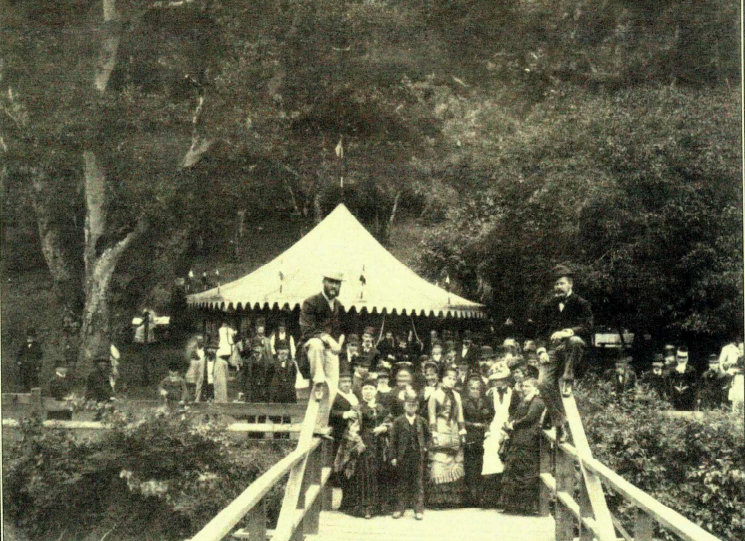
The Stuttmeister family might have been the wealthiest family to step foot in Belmont California after William Ralston. How about Cark Janke? That is William Stuttmeister on left, and William Janke holding children. Are those the infamous Twin Pines? This family got married at Ralston Hall, and took the Janke Stagecoach to Halfmoon Bay. The Stuttmeisters got pelts in the New world. Amalie is listed as a millionaire. Did she invest in America?
The Stuttmeisters lived on Berliner Straffe and may have known the Janke family, who may have operated a beer garden – with amusement. Wealthy people lived here. Did the Stuttmeisters fiancé Carl Janke’s expedition to California? Were they members of the Berlin Turnverein?
John Presco
https://publicdomainreview.org/collection/hamann-turner/
Three Flags – One Grave
Posted on May 27, 2023 by Royal Rosamond Press
It is 8:33 A.M. May 27, 2023 – and I am still in shock having discovered my grandparents are buried in the same grave! I saw TWO flags put on one gravestone. That was a half hour ago. THEN – I see another flag! There are three of my ancestors buried in the same grave! WHY? Did the caretakers conclude this was a very poor family? William Stuttmeister knew they were Belmont before he died. At great expense to himself, he moved the Jankes to Colma after they were evicted from the Odd Fellow cemetery – at great expense! This was a wealthy pioneer family whose graves keep being defiled! They were moved to the Union cemetery i 1972?
Below is a video I made after I met with LDS Sisters who wanted to meet at the genealogy center to look at these illustrious people who have a magnificent crypt in Berlin. I don’t know if I told them I was considering putting Amanda Gorman in my painting of the two pages saving our electoral votes.
John Presco
“Originally Carl abd Doretha were buried under a huge bay tree there and bodies later moved to the Union Cemetary “during the dark of night” my mother used to tell us.”

I believe the New Zion will be where the new LDS Temple is going to be built, a mile or more away from where I live. The Mormons built their cosmology on DNA and Family Trees. Deseret lies next to the Louisiana Purchase. I can now SEE all of what I saw in part. I have been called MAD by all who bonded with me. I kept a record of my Fantastic Quest! I can Baptize by the river.
Janke and Turner Abolitionists
Posted on February 24, 2021 by Royal Rosamond Press


I willbe contacting ‘Finding Your Roots’ to helpmewith the mostastounding genealogical story of all time
Awake Amongst The Liars and Sleepers
Posted on May 5, 2019 by Royal Rosamond Press
Brief Life History of Elizabeth Dorothy
When Elizabeth Dorothy Janke was born on 14 November 1844, in Hamburg, Germany, her father, Carl August Janke, was 24 and her mother, Dorothea, was 24. She had at least 1 son and 6 daughters with Amassa Parker Johnson. She lived in Belmont, San Mateo, California, United States in 1880. She died on 20 January 1929, in San Francisco, California, United States, at the age of 84, and was buried in Colma, San Mateo, California, United States.
Belmont A Capitol of German Culture
https://en.wikipedia.org/wiki/Union_Cemetery_(Redwood_City,_California)
Union Cemetery is a historic cemetery on Woodside Road (CA 84) near El Camino Real in Redwood City, San Mateo County, California. The cemetery was named a California Historical Landmark #816 in 1967, then added to the National Register of Historic Places in 1983.[4]
History[edit]
Founded in 1859, this is the site of the first American burial ground in San Mateo County, and was originally located just outside the town limits of Redwood City.[5][4] The cemetery officially closed in 1918, but it was used for many years after that for burial of the poor.[5] There are special cemetery plots for the Masonic Order, members of the International Order of Odd Fellows and the California volunteers who fought during the Civil War.[5]
Soldier statue[edit]
The life-sized metal sculpture of a civil war veteran was erected during 1889 for a Memorial Day celebration, the earliest such celebration on the Peninsula.[5] The statue was paid for by Jane Lathrop Stanford.[6] It was vandalized in 1958, 1959 and 1969, but was subsequently repaired, and in 1999 it was replaced with a replica constructed of more durable material.[5][6]
he historic Union Cemetery at 316 Woodside Road in Redwood City will host a Memorial Day event featuring music, speeches, the decorating of graves, and the traditional anvil firing as the community gathers to honor soldiers.
The event will take place from 10 a.m. to 11:30 a.m. on Monday, May 29.
As parking can be challenging, organizers encourage biking, walking, and carpooling to Union Cemetery. Transportation to seating area is available for folks who need assistance.
Union Cemetery is a California Historic Landmark and listed in the National Register of Historic Places and is one of the oldest burial grounds in San Mateo County. The cemetery has been closed, officially, since 1918, although Redwood City administrators used it as a paupers’ field, which is defined as a place for the burial of unknown, unclaimed or indigent people. During the Depression, those unable to afford a more prominent place continued to bury their loved ones at Union Cemetery.
Lerona Rosamond
Posted on June 5, 2016 by Royal Rosamond Press


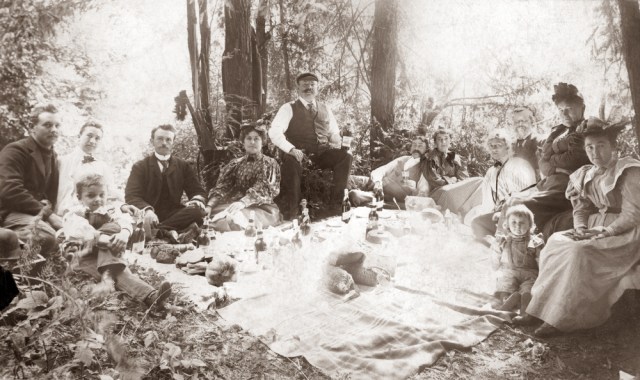
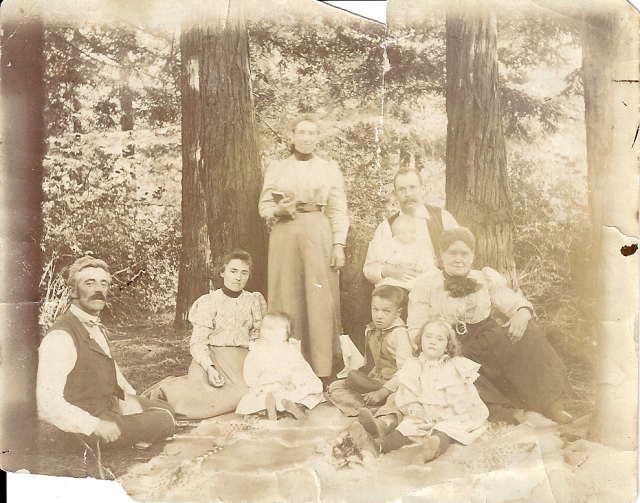
William Oltman Stuttmeister went to the University of California and practiced dentistry in San Francisco. He bought two vacation properties in San Geronimo where he retired and died. The Maillard, Count Cipriani, Napoleon, and Prince Victor Napoleon connection is interesting. Is this the continuation of the Belmont Colony? Was this land purchased with a recovered treasure? Many have searched for the lost treasure of Sir Francis Drake near this valley overlooked by the ‘Sleeping Maiden’ mountain.
Below is a video showing Cipriani’s home inside Ralston’s additions. It was a portable house. An expert needs to compare this with the Tanforan cottages. Samples of the wood and screws need to taken and compared to the houses Janke brought around the Cape. William married Augusta Janke.
Generation No. 1
1. Dorthia Matilda5 Oltman (Jurgen4 Oltmann, Jacob3, Jurgen2, Peter1) was born September 13, 1829 in New York, NY, and died March 17, 1875 in San Francisco, CA. She married Frederick William R. Stuttmeister. He was born 1812 in Germany, and died January 29, 1877 in San Francisco, CA.
Children of Dorthia Oltman and Frederick Stuttmeister are:
2 i. Victor Rudolf6 Stuttmeister, born May 29, 1846 in New York; died January 19, 1893 in German hospital in San Francisco.
3 ii. Bertha Matilda Stuttmeister, born January 02, 1860 in Califonia; died May 07, 1931 in Merritt Hospital in Oakland, California. She married Wilham E. C. Beyer; born in Germany.
4 iii. William Oltman Stuttmeister, born 1862. He married Augusta Janke June 1888.
+ 5 iv. Alice L. Stuttmeister, born October 13, 1868 in San Francisco, CA; died February 13, 1953 in Roseville Community Hospital in Oakland, CA.
Jon Presco
http://www.historicunioncemetery.com/Person.php?person=Janke%2C+Dorette+Catherine
http://www.historicunioncemetery.com/Marker.php?markername=JANKE
| From the 1950 headstone survey — (and the current stone) JANKE ANNA D Died Feb 16, 1877 CARL A. Died Oct. 31, 1881 CATHERINE HENDRICKSON — From the 1937 headstone survey — (apparently there was a different stone) Carl August Janke, born in Dresden, Germany Oct. 1806, died Belmont, Calif. Sept. 2, 1881 Dorette Catherine, wife of Carl August Janke, born in Hamburg, Germany, July 21, 1813, died in Belmont, California, Feb 16, 1877 Mutter Heinrich, mother of Dorette Catherine Janke, born in Island of Heligoland, Germany, 1781 died in Belmont, California 1876 |
https://www.findagrave.com/memorial/186938257/carl-augustus-janke
Carl Augustus Janke
BIRTH Oct 1806 Dresden, Stadtkreis Dresden, Saxony (Sachsen), Germany DEATH31 Oct 1881 (aged 74–75) Belmont, San Mateo County, California, USA BURIALUnion Cemetery Redwood City, San Mateo County, California, USA Show Map
Carl Augustus Janke
BIRTH Oct 1806 Dresden, Stadtkreis Dresden, Saxony (Sachsen), Germany DEATH31 Oct 1881 (aged 74–75) Belmont, San Mateo County, California, USA BURIALUnion Cemetery Redwood City, San Mateo County, California, USA Show MapMEMORIAL ID186938257 · View Source
SHARE
SAVE TO
TOGGLE DROPDOWN
Carl Augustus Janke was a local merchant in the city of Belmont, California he founded Belmont Park in 1865 which was modeled after a German beer garden. Janke subsequently he founded a local soft drink bottling plant, the first industry for the town of Belmont.
— From the 1937 headstone survey — (apparently there was a different stone)
Carl August Janke, born in Dresden, Germany Oct. 1806,
died Belmont, Calif. Sept. 2, 1881
Dorette Catherine, wife of Carl August Janke,
born in Hamburg, Germany, July 21, 1813,
died in Belmont, California, Feb 16, 1877
Mutter Heinrich (spelled Catherine Hendrickson on the gravestone), mother of Dorette Catherine Janke,
born in Island of Heligoland, Germany, 1781 died
in Belmont, California 1876
https://www.findagrave.com/memorial/87743831/william-august-janke
William August Janke
BIRTH Dec 1841 Hamburg, Germany DEATH22 Nov 1902 (aged 60) San Francisco, San Francisco County, California, USA BURIALCypress Lawn Memorial Park Colma, San Mateo County, California, USA PLOTGarden / Section: PRIMROSE GARDEN 2 HILLSIDE
Cornelia Turk Janke
BIRTH 24 Dec 1846 Frankfurt am Main, Stadtkreis Frankfurt, Hessen, Germany DEATH27 Jul 1938 (aged 91) San Francisco, San Francisco County, California, USA BURIALCypress Lawn Memorial Park Colma, San Mateo County, California, USA
https://www.findagrave.com/memorial/87743828/cornelia-janke
Minnie Janke
BIRTH Feb 1869 California, USA DEATH4 Mar 1902 (aged 33) San Francisco, San Francisco County, California, USA BURIALCypress Lawn Memorial Park Colma, San Mateo County, California, USA PLOTGarden / Section: BIRCH Lot: LOT 189 Division: DIV 5
https://www.findagrave.com/memorial/87628501/augusta-d-stuttmeister
Added by E. Sweeney
Advertisement
Augusta D. Janke Stuttmeister
BIRTH Sep 1866 California, USA DEATH25 Dec 1938 (aged 72) San Francisco, San Francisco County, California, USA BURIALCypress Lawn Memorial Park Colma, San Mateo County, California, USA PLOTWS-Unit 3 Tomb Rooms Lot/Section/Panel: U2 MEMORIAL ID87628501 · View Source
SHARE
SAVE TO
TOGGLE DROPDOWN
Gravesite Details
Family Members


https://www.waymarking.com/waymarks/WMKRNP
Twin Pines Park is the hub of Blemont Parks & Recreation. From Geocache GC1JB51, titled Sarsaparilla Park:
In the 1870s, Belmont was a whistle stop on the Southern Pacific railroad, an aspiring suburb to San Francisco and a base for tycoons like William Ralston who had built country mansions in the canyons and hills to the west. In 1876, two German immigrants brought some industry to town. Carl Augustus Janke and his son Carl Ferdinand founded the Belmont Soda Works just north of The Corners (now Ralston and El Camino). The Jankes manufactured a variety of fizzy drinks, most notably sarsaparilla, and delivered them to San Francisco and points south along the railroad.
The Jankes turned out to be entertainment entrepreneurs as well. They bought up a dozen acres on the south side of Belmont Creek and established Belmont Park and picnic grounds. Patterned after the beer gardens of their German heritage, it offered a 300 person dance pavilion, a carousel, a running track and walking trails, an ice cream parlor, plenty of picnicking space and of course drinks – beer and plenty of sarsaparilla (which might have been spiked with cocaine in that era). The Jankes made a mutually profitable deal with the Southern Pacific to run weekend picnic special trains from the city to Belmont Park. The place often hosted large crowds, with one notable affair being 8,000 people for an Odd Fellows fraternal gathering.
With drink and crowds came trouble. Drunken brawls were not uncommon, and on one occasion a shoot-out between gangs left a man dead (some modern problems are not new.) A private jail was installed at the park, beneath the dance hall floor, and the Southern Pacific put special police on its excursion trains. But as Belmont and other Peninsula settlements grew, the weekly influx of rowdies was seen as a problem that outweighed their commercial benefits. Under pressure from the locals, the railroad cancelled its party train specials by 1900. Belmont Park went into a quick decline, and was mostly subdivided for other uses. The present park and the civic center are part of its remains, with little to show of its checkered past.
Some features of Twin Pines Park are a children’s playground and the Buckeye, Redwood, or the Meadow picnic areas. Facility rentals include the Lodge, Cottage, Manor, or Twin Pines Senior & Community Center.
https://www.findagrave.com/memorial/186938297/anna-dorette_catherine-janke
https://www.findagrave.com/memorial/186938297/anna-dorette_catherine-janke
I posted this in 2011
From the Daily Journal archives
Belmont’s party place got too wild
- By Joan Levy Daily Journal correspondent
- Apr 5, 2004 Updated Jun 28, 2019
- 0
Belmont Park was started to be a German biergarten, but it turned out to be a picnic ground in a more American style. Carl Janke bought ex-governor McDougal’s place in Belmont. He envisioned a bucolic spot where gentlemen could take their leisure, sip beer and talk. The 12-acre wooded strip along Belmont Creek seemed perfectly suited for this. Janke was born in Hamburg, Germany about 1814, came to California in 1850 and to the Peninsula in 1859. He wanted a home in Belmont.
The park opened around 1866 and soon was popular with people from San Francisco. It was not to be the typical biergarten that Janke envisioned. It attracted small American-style family picnics and huge organizational celebrations. Janke juggled his diverse clientele on the three days a week the park was open. Wednesday was the day for quiet Sunday School picnics. Sunday was for the bigger and more boisterous crowds. That was when they hired the bands and tapped the kegs.
The main entrance to Belmont Park was on Ralston Avenue near 6th Avenue. At the large white gate a fee was collected for the use of the grounds. Up Ralston Avenue was the carriage entrance and stables. To the South was Janke’s home.
Along the creek there was an amusement park with a merry-go-round. A dance pavilion that could accommodate 300 was built around a tree trunk. There was a bar at one end and an ice cream parlor at the other.
There was also a dining hall and some refreshment stands. Janke had a track built for foot racing and pony cart racing. There was a shooting gallery for sharpshooters.
Other early German immigrants to the Peninsula had started breweries to produce their favorite beverage, but Janke and his partner Henry Carstans manufactured soda. Their plant was located on Old County Road near Ralston Avenue in Belmont. They started the operation in 1875 and had a ready market at Janke’s place. They produced sarsaparilla of several different varieties.
Steamers brought people by way of Ralston’s pier at Belmont. At night they could return to the city by special train. One Sunday in 1876, a party of 8,000 members of the Odd Fellows Lodge made the trek in 75 railroad cars. Over time, the crowds became more unruly. It was the scene of a kidnapping, when little Annie Mooney disappeared and was never found. Then in 1880, there was a shoot-out between rival San Francisco gangs during which Dave Condon killed Jerry Stanton. Janke installed a private jail under the dance pavilion, and the Southern Pacific hired special police to monitor the excursion trains. Still, violence and vandalism plagued the peaceful picnickers.
Janke retired, and the management of the park fell to his sons.
Finally, the railroad refused to carry the picnic groups to or from Belmont due to their uncontrollable behavior. This contributed to the demise of the enterprise in the late 1890s.
The park closed and the land was converted to other purposes. In 1906, George L. Center built a sturdy home on the grounds. Later it became the site of a sanitarium for treating nervous disorders and alcoholism.
Now, Twin Pines Park marks the location of Janke’s dream for a biergarten.
Rediscovering the Peninsula appears in the Monday edition of the Daily Journal. For more information on this or related topics, visit the San Mateo County History Museum, 777 Hamilton St., Redwood City.
John
Royal Wedding at Belmont
Posted on September 10, 2011 by Royal Rosamond Press

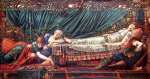


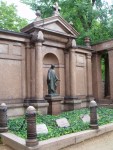
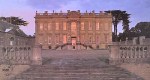
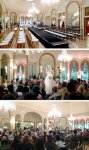

Belmont means ‘Beautiful Mountain’. Many folks who aspire to being California Royalty, get married at Ralston Hall in Belmont. To envision oneself as a banking heiress whose Daddy owned gold and silver mines, and then be whisked off your feet by a Knight of the Realm who takes you to his stately home in Merry Ol England, is the Acme of good breeding!
“A REGAL WEDDING FEAST; MARRIAGE OF MISS SHARON AND SIR THOMAS HESKETH.
SAN FRANCISCO, Dec. 24.–The most brilliant wedding ever celebrated in California took place last evening at Belmont, the princely country seat of Senator William Sharon. Mr. Sharon’s daughter Flora, a petite brunette of 19 years, was united, in the presence of about 150 invited guests, to Sir Thomas Henry Fermor Hesketh, Baronet, of Rufford Hall, Lancashire, England.”
Louis Tevis was the daughter of Lloyd Tevis the President of Wells Fargo Bank. She married into the Breckenridge family who were not only Kentucky Bluebloods, they are kin to the Royal Stewarts as I discovered! Louis did not know this when she got a divorce, and then marries William Sharon, a partner of William Ralston President of the Bank of California! How many banks is that?
Now, all over the internet are claims there is a divine bloodline that descends from Jesus and Mary Magdalene that begat the Stewarts and the Freemasons, who in turn owned banks. Why not gold and silver mines? Surely folks kin to King Solomon would want to have a gold collection as big as this Davidic King who collected 666 talons of gold a year in taxes! Wow! How much silver was taken out of the Comstock mine that Sharon owned?
Last month I tried to communicate some doubt to a bunch of nasty Sinclair folk, that they are all what they make themselves out to be. Surely if they own God’s blood, then His Divine Will would have bid the Sinclairs to do truly wonderous things on His Green Earth – like find plenty of gold in the new world! Actually, they do make the claim the Money Pit is their doing, their Templar line finding all this gold in the ground – then putting it back where no one can spend it – not even the Sinclairs! The check is in the mail!
What was perfectly clear when Sir Thomas sailed into San Francisco Bay, he was looking for a rich heiress to marry – like so many other landed Brits before him – so he would have the monies to remodel his decaying estates. Thomas struck pay dirt when he married Louis Tevis Breckenridge at Ralston Hall, where my great grandparents were married in what may have been seen as the Oddfellow marriage of the century. Surely the Knight Templars in this Masonic-like fraternity, compared the Stuttmeister-Janke union as ordained.
Louis took no chances, and moved the Hand of Fater back into the Breckenridge-Stewart lineage, when her son married Florence Witherspoon Breckenridge, thus tying another knot that links this titled family to the Bentons and Prescos, via the marriage of the world famous artist, Christine Rosamond Benton!
My parents died without this knowlege, and the father of my niece, Garth Benton knew nothing about it. Since Christine died, I have sent letters to the Court that are filed in Rosamond’s Probate, that speak of the Grail, Knight Templars – did mention the Stewarts?
What is curious, is that the Oddfellows, and the Orange Lodge which Bennett Rosamond was the Grand Master of, beleived they were the remnants of the Royal Kings of Judea. Did I tell you that my niece, Drew Benton, descends from Colonel Thomas Hart Benton the Grand Master of the Iowa Freemasons, who saved Albert Pike’s Masonic Library, and thus the Scotish Rite? Add it all up, folks!
Gold and Silver Mines
Big Banks
Knight Templars
Freemasons
Royal Lineages
Senators
Congressmen
Signer of Constitution
Diasporic Lineages
Looks like God’s Work to me!
“The child plays
The toy boat sails across the pond
The work now has just begun
Oh child
Lokk what you have done ”
Jon Presco
Copyright 2011
Furthering the cause was the marriage of Flora’s son Thomas to another American heiress, Florence Louise Witherspoon Breckinridge. The union kept the Fermor-Heskeths in silver, at least until next week.
Flora’s branch of the Sharons does not appear to have any heirs left in the Bay Area, at least according to an online family history, and an official said there seems to be no interest in the goods at Ralston Hall — still a fine place for a wedding. Going once…….
Louise married John Witherspoon Breckenridge, son of Congressman, Senator, Vice President, Presidential Candidate and Confederate General John C. Breckenridge, c. 1878 and lived in San Rafael, CA. Their marriage ended in divorce and she married secondly Frederick W. Sharon.
 Rosamond Press
Leave a comment