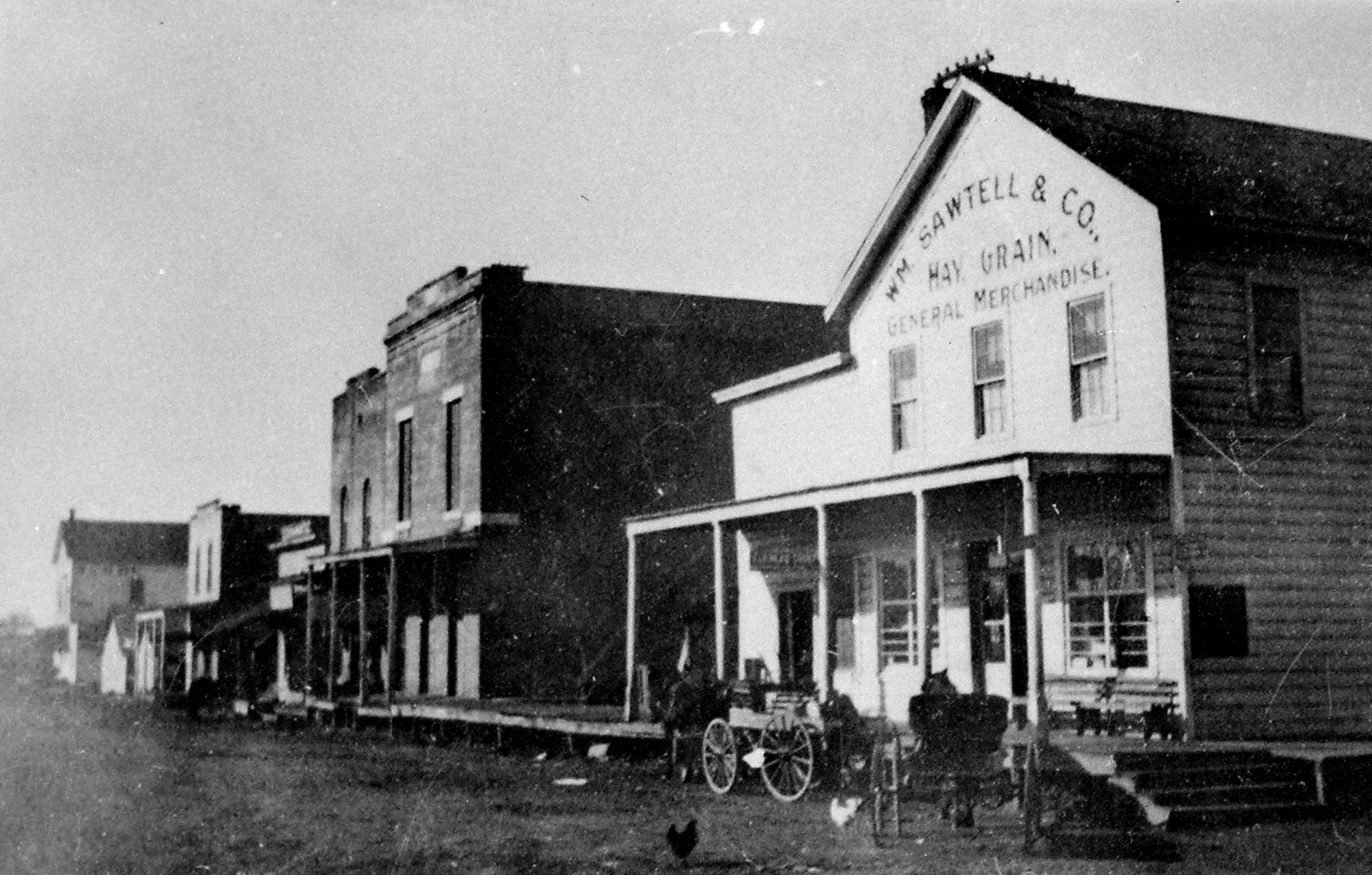
CORNER OF PACIFIC AND LINCOLN STREETS FACING THE RAILROAD TRACKS WITH THE BRICK ODD FELLOWS BUILDING NEXT DOOR IN 1905.
Proposal For New Name
Dear Mayor Newson:
May I suggest there be a new name for the Tanforan mall. How about….West Roseville? Here is where the great granddaughter of Augustus Janke and William Stuttmeister, came to live. Melba Wilkins Nee’ Broderick lived the quintessential County Life…..In Roseville!. Her second husband, Joseph Wilkins, was an engineer in the SP yards for many years. He wore overalls with an engineer cap. Here the four Presco Children spent their summers. These are the great, great, great grandchildren of Carl and Dorothea Janke, the founders of Belmont. I would like to paint murals of us children inside the mega-complex that one of the world’s largest real estate companies in the world is building. Their ambience is too cold and overwhelming. Americans are becoming more interested in their heritage. The inclusion of West has a ring to it. Everyone loves roses! Grandpa Joe built his home from the ground up………In Roseville!
John Presco
President: The Bohemian Democratic Register
https://www.roseville.ca.us/how_do_i___/get_information_about/history_of_roseville
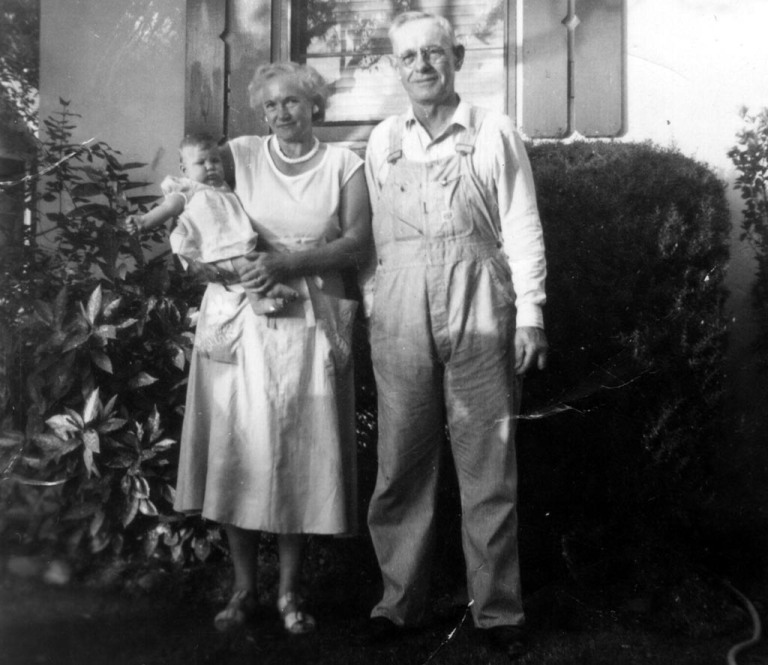
Melba and Joe
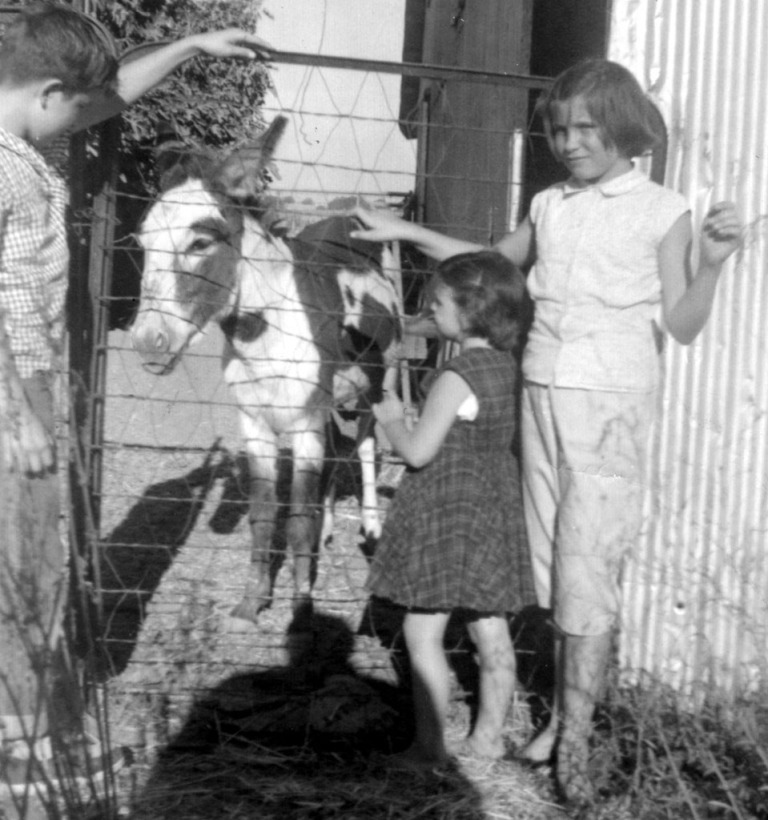
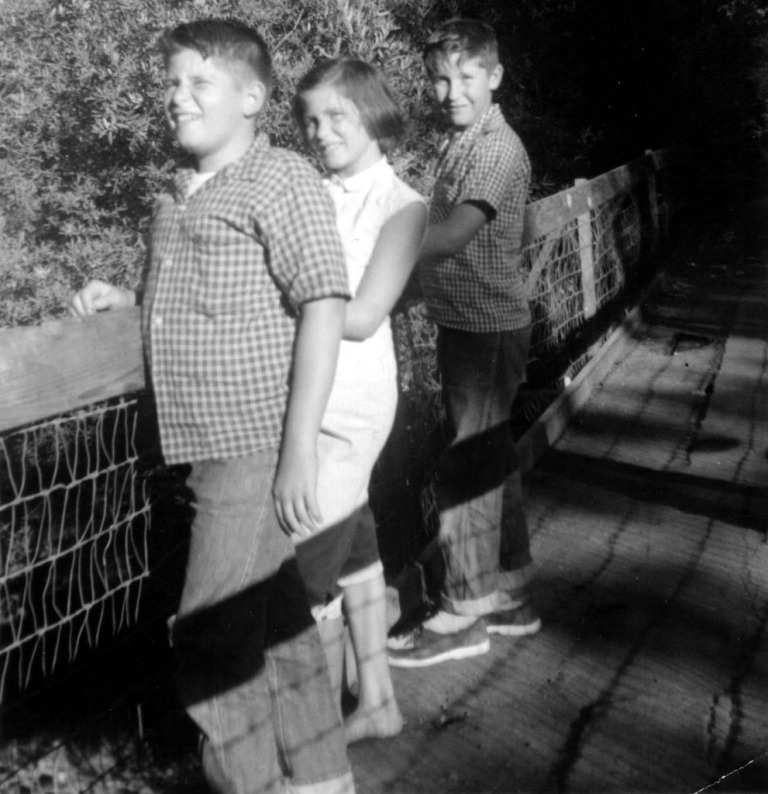
Mark, Christine, and Greg Presco (John Gregory)
https://www.findagrave.com/memorial/1092361/victor-william-presco
Melba Charlotte Broderick
Posted on August 31, 2011 by Royal Rosamond Press
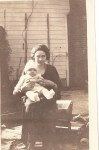
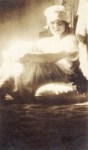

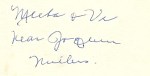
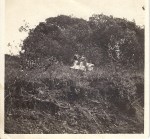


Above is a photo of my father’s mother, Melba, and her childhood friend, Violet (Vie), near Joaquin Miller’s house. I heard they were into Isadora Duncan. Did they meet Miller and his daughter at this age?
Joaquin Miller lived in the Oakland Hills above the Stuttmeister farm and orchard located in the city of Fruitvale that would later be incorporated into the city of Oakland. Miller was titled the `Poet of
the Sierras’. His farm was called `The Hights’ and was a Mecca for California artists and poets. This eccentric Bohemian was friends of William Broderick and would accompany Melba Charlotte Broderick, the mother of Victor Presco, to San Francisco where Melba met her husband, Hugo Presco, a professional gambler in the Barbary Coast.
Miller carried the infant father of Rosamond on these adventures that proved too much for Melba who divorced Hugo when Victor, Melba’s only child, was three years of age. Joaquin Miller was invited to England by the Pre-Raphaelite poet and artist, Dante Gabriel Rossetti, and had dinner at his house with most of the Brotherhood present. The four Presco children would converse with Miller’s daughter on the phone, she calling herself `The White Witch’..
The boy in the two photos is Melba’s brother, Frederick Broderick, with his cow, Daisy. This had to be taken on the farm in Fruit Vale.
Jon Presco
Copyright
2011
Angela Isadora Duncan was born in San Francisco, California on May 27, 1877. She was the youngest of four siblings: Augustin Duncan, Raymond Duncan, and Elizabeth Duncan. Their parents were Joseph Charles Duncan (1819–1898), a banker, mining engineer and connoisseur of the arts, and Mary Isadora Gray (1849–1922). Soon after Isadora’s birth, her father lost the bank and he was publicly disgraced. Her parents were divorced by 1880 (the papers were lost in the San Francisco earthquake), and her mother Dora moved with her family to Oakland. She worked there as a pianist and music teacher. In her early years, Duncan did attend school but, finding it to be constricting to her individuality, she dropped out. As her family was very poor, both she and her sister gave dance classes to local children to earn extra money.[citation needed]
A thoughtful approach
On October 5, 2022 Alexandria submitted a preliminary project application to the City of San Bruno for the 44-acre Tanforan site.
Following this initial application, the City embarked on a comprehensive staff review for conformance of the project to the City’s General Plan and Zoning Code development regulations. In March 2023, the project analysis required by the State California Environmental Quality Act (CEQA) was initiated, in addition to other technical studies and economic assessments.
Community priorities
Given the significance of this project and the importance of this opportunity to San Bruno’s future, the City expanded its review to include a series of community input sessions and virtual engagement tools at the beginning of the process and throughout the review period.
The City presented an introduction of the community engagement approach and preliminary project application to the City Council on October 25, 2022. This engagement started with the first community open houses at the Public Engagement Center in November 2022, followed by a robust outreach program through February 2023 to solicit initial public priorities for San Bruno and the future of Tanforan. A Community Priorities Progress Report based on this feedback was presented to Council on March 28, 2023. Please click here to view the report in its entirety. The review process ahead will include multiple public meetings with the City’s Planning Commission and City Council, as well as other review bodies, before the project is considered for final action.
PRELIMINARY PROJECT APPLICATION


Alexandria Real Estate Equities (Alexandria), and its development partner, Strada Investment Group (Strada) in conjunction with a future Bay Area non-profit affordable housing developer, were excited to present a Preliminary Project Application for the redevelopment of the 44-acre Tanforan site in San Bruno on October 5, 2022. Click here to view the original application file.
In November 2023, Alexandria submitted a Revised Preliminary Project Application. The application proposes to replace the existing mall with a transit- oriented mixed-use village. The project seeks to retain and upgrade Target and keep and modernize the Century at Tanforan movie theater to accommodate the modern movie-going experience. The future uses for the site are proposed to include a 2 million square foot innovative life science campus, 1,014 housing units, private and publicly-accessible, privately-owned open space, as well as 86,250 square feet of new modernized retail space. The proposed land use program has not changed substantially from the version submitted in October 2022.
The revised site plan includes minor modifications to the layout of the private street network on the site to improve the site access and circulation to and across the project site. The revisions also allow for the creation of a “town square” in the center of the site with more expansive publicly-accessible open spaces and better interfaces between these open spaces and the new retail. Additionally, the revised application includes a Flex-Use Strategy with two “flex zones” which remain designated primarily for commercial/life science uses in the base case and would alternatively allow a broader range of potential uses including up to 500 additional housing units and a 170-room hotel. The purpose of these flex zones is to allow flexibility in a multi-year project to respond to changing market conditions while remaining committed to the core imperatives of creating a mixed-use transit village. The exact amount and configuration of future development in the flex zones would depend on a number of market factors, and cannot be forecast with precision. These two land use scenarios will be analyzed in the project Environmental Impact Report (EIR), as described in more detail in the project Notice of Preparation.

California Barrel Company & Bohemian Grove
Posted on August 31, 2011 by Royal Rosamond Press
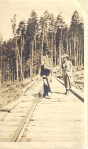


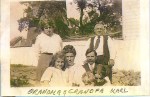


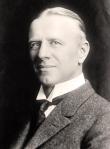


William Broderick, the husband of Alice Stuttmeister, was the Vice President of the California Barrel Company that was located in the Dogpatch, south of San Francisco, and Arcate in Humbolt County where the photograph of Melba and her grandfather is taken. The photo says it is her father, but, it is her grandfather, William Oltman Stuttmeister. I know this because according the Daryl Bulkley, William was very tall, and William Broderick, was short. That is how I remember him.
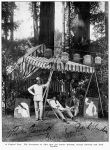
The President of Cal-Barrel, was Frederick Jacob Koster, who was a member of the Bohemian Club, as was Joaquin Miller, and George Stirling, seen in a traditional tent at the Grove Gathering. When Rosemary would show us the family photos, she would say this about our kin gathered in the redwoods of the Oakland Hills.
“Those are you Bohunk kin.”
Why Rosemary would say this, knowing the Prescos came from Bohemia in 1882, is puzzling. Was she once told they were Bohemian Bohos?
My father and I own the same facial features Will Stuttmeister does, who has a long face.
Jon Presco
Copyright 2011
http://www.espritpark.com/Community/dogpatchHistory.aspx
http://foundsf.org/index.php?title=Staking_Out_Potrero_Hill
http://pier70sf.org/dogpatch/DogHistSig.htm
Bohemian Grove is a 2,700-acre (1,100 ha) campground located at 20601 Bohemian Avenue, in Monte Rio, California, belonging to a private San Francisco-based men’s art club known as the Bohemian Club. In mid-July each year, Bohemian Grove hosts a two-week, three-weekend encampment of some of the most powerful men in the world.[1][2
http://freepages.genealogy.rootsweb.ancestry.com/~npmelton/sfbkost.htm
Socially he has connection with the Pacific Union, Bohemian, Olympic, San Francisco Commercial Commonwealth and Woodside Country Clubs and the Meadow Club of Tamalpais. Through his own exertions Mr. Koster has risen to the top, winning gratifying success as well as the high esteem and good-will of his fellowmen. Prompted by humanitarian instincts, he has steadily broadened his field of usefulness and his far-reaching labors have been productive of much good.
LOCAL HISTORIAN JERRY ROHDE IS planning to use a dozen or so of Shuster’s old aerials in the geographical history he’s writing of Humboldt County, including one of California Barrel Company’s operations. Cal-Barrel, cutting mostly spruce, was the biggest employer in Arcata back in the 1940s
Bohemian GroveFrom Wikipedia
Bohemian Grove is a 2,700-acre (1,100 ha) campground located at 20601 Bohemian Avenue, in Monte Rio, California, belonging to a private San Francisco-based men’s art club known as the Bohemian Club. In mid-July each year, Bohemian Grove hosts a two-week, three-weekend encampment of some of the most powerful men in the world.[1][2]
Summer, 1967 at Owls Nest Camp with two future U.S. presidents. Around the table, left to right: Preston Hotchkis, Ronald Reagan, Harvey Hancock (standing), Richard M. Nixon, Glenn Seaborg, Jack Sparks, (unidentified individual), (unidentified individual), and Edwin W. Pauley. Retrieved July 15, 2009.Contents [hide]
The Bohemian Club’s all-male membership includes artists, particularly musicians, as well as many prominent business leaders, government officials (including many former U.S. presidents), senior media executives, and people of power.[3][4] Members may invite guests to the Grove although those guests are subject to a screening procedure. A guest’s first glimpse of the Grove typically is during the “Spring Jinks” in June, preceding the main July encampment. Bohemian club members can schedule private day-use events at the Grove any time it is not being used for Club-wide purposes, and are allowed at these times to bring spouses, family and friends, though female and minor guests must be off the property by 9 or 10 p.m.[5]
After 40 years of membership the men earn “Old Guard” status, giving them reserved seating at the Grove’s daily talks, as well as other perquisites.
The Club motto is “Weaving Spiders Come Not Here,” which implies that outside concerns and business deals are to be left outside. When gathered in groups, Bohemians usually adhere to the injunction, though discussion of business often occurs between pairs of members.[2] Important political and business deals have been developed at the Grove.[5] The Grove is particularly famous for a Manhattan Project planning meeting that took place there in September 1942, which subsequently led to the atomic bomb. Those attending this meeting, apart from Ernest Lawrence and military officials, included the president of Harvard and representatives of Standard Oil and General Electric. Grove members take particular pride in this event and often relate the story to new attendees.[2]
[edit] History
In the 1870s, Henry “Harry” Edwards was an actor with the California Theatre Stock Company, a founding Bohemian and the head entomologist at the California Academy of Sciences.The tradition of a summer encampment was established six years after the Bohemian Club was formed in 1872.[2] Henry “Harry” Edwards, a well-loved founding member, announced that he was relocating to New York City to further his career. On June 29, 1878, somewhat fewer than 100 Bohemians gathered in the Redwoods in Marin County near Taylorville (present-day Samuel P. Taylor State Park) for an evening sendoff party in Edwards’ honor.[6] Freely flowing liquor and some Japanese lanterns put a glow on the festivities, and club members retired at a late hour to the modest comfort of blankets laid on the dense mat of Redwood needles. This festive gathering was repeated the next year without Edwards, and became the club’s yearly encampment.[7] By 1882 the members of the Club camped together at various locations in both Marin and Sonoma County, including the present-day Muir Woods and a redwood grove that once stood near Duncans Mills, several miles down the Russian River from the current location. From 1893 Bohemians rented the current location, and in 1899 purchased it from Melvin Cyrus Meeker who had developed a successful logging operation in the area.[2] Gradually over the next decades, members of the Club purchased land surrounding the original location to the perimeter of the basin in which it resides.[2]
Writer and journalist William Henry Irwin said of the Grove,
You come upon it suddenly. One step and its glory is over you. There is no perspective; you cannot get far enough away from one of the trees to see it as a whole. There they stand, a world of height above you, their pinnacles hidden by their topmost fringes of branches or lost in the sky.[8]
Not long after the Club’s establishment by newspaper journalists, it was commandeered by prominent San Francisco-based businessmen, who provided the financial resources necessary to acquire further land and facilities at the Grove. However, they still retained the “bohemians”—the artists and musicians—who continued to entertain international members and guests.[2]
[edit] Membership and operationThe Bohemian Club is a private club; only active members of the Club (known as “Bohos” or “Grovers”[9]) and their guests may visit the Grove. These guests have been known to include politicians and notable figures from countries outside the U.S.[2] Particularly during the midsummer encampment, the number of guests is strictly limited due to the small size of the facilities. Nevertheless, up to 2,900 members and guests have been reported as attending some of the annual encampments.[citation needed]
The membership list has included every Republican and some Democratic U.S. presidents since 1923, many cabinet officials, directors and CEOs of large corporations including major financial institutions. Major military contractors, oil companies, banks (including the Federal Reserve), utilities (including nuclear power) and national media (broadcast and print) have high-ranking officials as club members or guests.[10]
[edit] Camp valetsCamp valets are responsible for the operation of the individual camps. The “head” valets are akin to a general manager’s position at a resort, club, restaurant, or hotel. Service staff include female workers whose presence at the Grove is limited to daylight hours and to central areas close to the main gate. Male workers may be housed at the Grove within the boundaries of the camp to which they are assigned or in peripheral service areas. High-status workers stay in small private quarters but most workers are housed in rustic bunkhouses.[2]
[edit] FacilitiesThe main encampment area consists of 160 acres (0.65 km2) of old-growth redwood trees over 1,000 years old, with some trees exceeding 300 feet (90 m) in height.[11]
The primary activities taking place at the Grove are varied and expansive entertainment, such as a grand main stage and a smaller, more intimate stage. Thus, the majority of common facilities are entertainment venues, interspersed among the giant redwoods.
A Bohemian tent in the 1900s, sheltering Porter Garnett, George Sterling and Jack LondonThere are also sleeping quarters, or “camps” scattered throughout the grove, of which it is reported there were a total of 118 as of 2007. These camps, which are frequently patrilineal, are the principal means through which high-level business and political contacts and friendships are formed.[2]
The pre-eminent camps are:[2][12]
Hill Billies (Big Business/Banking/Politics/Universities/Media/Texas Business);
Mandalay (Big Business/Defense Contractors/Politics/U.S. Presidents);
Cave Man (Think Tanks/Oil Companies/Banking/Defense Contractors/Universities/Media);
Stowaway (Rockefeller Family Members/Oil Companies/Banking/Think Tanks);
Uplifters (Corporate Executives/Big Business);
Owls Nest (U.S. Presidents/Military/Defense Contractors);
Hideaway (Foundations/Military/Defense Contractors);
Isle of Aves (Military/Defense Contractors);
Lost Angels (Banking/Defense Contractors/Media);
Silverado squatters (Big Business/Defense Contractors);
Sempervirens (California-based Corporations);
Hillside (Military—Joint Chiefs of Staff);
Members of the Bohemian Club were titled ‘Bohos’ and ‘Grovers’.
 |
| William Haman |
Fruit shipping became an important factor in the economy of Roseville at the beginning of the twentieth century. Figures compiled by the Roseville Board of Trade for 1901 revealed that during the year alone, more than 781,000 pounds of fresh deciduous fruits had been shipped from Roseville, along with 3,000 boxes of oranges, 22,380 pounds of picked olives and 8,000 pounds of olive oil.
Hand in hand with the increased activity of shipping fruit was a great upsurge in viticulture with local crops estimated at $570,000. Carefully compiled statistics show that a total of 1,195,436 boxes of grapes were shipped from the Roseville depot in 1901.
Plans for the establishment of a winery in Roseville were announced in 1905. By October of the next year, over $75,000 had been expended in buildings and equipment for the Placer County Winery. William Haman, earlier employed at Leland Stanford’s vast wine producing estate at Vina, was hired as superintendent, and it was not long before the winery made its first run and soon rated second in importance, only behind the railroad.
Fire destroyed the winery in 1908, but it was rebuilt that same year. A second fire occurred in 1909, destroying all but the brick portion of the plant. Rebuilt once more, the winery operated successfully until the advent of prohibition. Later M.J. Royer operated the Roseville Ice and Beverage Company in the old brick building formerly housing the winery.
With the decline of the Winery, Haman became manager of the Southern Pacific stock corrals in Roseville and invested in several parcels of property in and around town. Active in politics, Haman was elected to Roseville’s first City Council in 1909 and did not retire from politics until 1931. The Haman residence – a two-story home located at the corner of Oak and Taylor Streets – was later used for the Roseville Arts Center.
By 1905, Roseville had changed from a mere railroad junction to a growing town which held high hopes for the future. But, the ambitious community was still largely a community of homes – small frame houses, spaced rather unevenly along narrow streets which transformed into dusty trails in summer and impassible quagmires of mud in winter. This is how Roseville appeared on the eve of the announcement that the Southern Pacific Company was contemplating moving its extensive railroad facilities from Rocklin.
Roseville does owe its birth and early development to its position as shipping and trading center for a rich farming and grazing section of southwestern Placer County. But not until the railroad switching yards moved to Roseville in 1906 did the town really grow, marking the beginning of a new era, an era which would almost overnight change Roseville from a little shipping station to the most important freight handling terminal on the Pacific Coast – the “St. Louis of the West”.
Throughout 1905 rumors persisted in Rocklin that the Southern Pacific intended to enlarge their freight yards. Railroad plans called for a yard 7,000 feet long and 800 feet wide. The Rocklin trustees hurriedly called a special election to levy a special tax for the purpose of raising the necessary money to buy the land needed by the railroad. Their plans were to no avail, for in December it was announced that the freight yards were to be moved and that Rocklin, because of insufficient room to permit enlarging the terminal to handle increasing business, was to be eliminated from any further consideration. Several places were mentioned for the site of the new railroad yards including Ben Ali, Loomis, and a place between Loomis and Rocklin.
Roseville was finally selected in the early part of 1906, partly because of the more favorable grade conditions, and partly because of its position at the junction of the north-bound and east-bound lines of the Southern Pacific Railroad.
 |
| Train Depot (1907) |
The formal announcement that Roseville had been selected for the site of the Southern Pacific yards brought a startling transformation for the little village. Instantly the town began to boom. The railroad company bought large blocks of land, with A.B. McRae, local realtor, handling most of the transactions. The unloading of rails, ties, lumber, construction machinery and tools commenced immediately.
Atlantic Street had to be moved back a hundred feet to accommodate miles of new track. Clouds of yellow choking dust hovered continually over the town as teams of mules and work horses worked from sunup to sundown seven days a week preparing the ground for the construction workers waiting patiently nearby in their temporary tent cities.
The first building was moved off that thoroughfare during the summer of 1906. While the tracks were laid, the new round house was reported to be rapidly taking shape. The first switch engine for the local yards arrived on Tuesday, Sept., 18, 1906.
Additional railroad construction in December necessitated the moving of the Western Hotel north about fifty feet. Preliminary work also began at that time on a new depot located below the railroad “Y” opposite Pacific Street. The new deport was completed in 1907 and the old deport of 1874 was dismantled. Part of it was moved by its owner, Henry Barrett, to 319 Atlantic Street, where after a bit of remodeling, he reopened it as “The Old Depot Saloon”.
However, by 1910 the new depot was moved back to the railroad “Y” where its predecessors, the depots of 1864 and 1874 had been located.
The great influx of railroad men to Roseville necessitated much new construction. One person who benefited from the increase was Elizabeth “Grandma” Morgan. Morgan moved to Roseville in 1894 after the death of her second husband. When the railroad craze commenced, she turned her home into a railroad boarding house – Morgan’s Boarding House – which became popular for many years.
In addition to running the boarding house, “Grandma” Morgan was extremely active in the Minerva Rebekah Lodge of Roseville up to the time of her death on Dec. 21, 1927. By the end of 1907 all vacant lots on Pacific Street had been filled with new business establishments and the old street was busy day and night. The building boom which enhanced Pacific Street’s already healthy business climate spread outward to nearby Church, Main and, most importantly, Lincoln Streets which as early as 1906 showed signs of one day effectively challenging Pacific Street’s economic dominance.
 |
| Lincoln Street c. 1908 |
Between 1906 and 1908, hurriedly constructed frame buildings sprang up on both sides of Lincoln Street north of the railroad tracks. Typical of this “hurry up” construction was the business block put up in 1906 which extended north from the old Pratt store building on the west side to the alley, followed by a similar block of buildings erected the following year by J.H. Herring. For several years Herring engaged in farming pursuits after he arrived in Roseville in 1895.
By 1906 Herring became associated with Sawtelle in the general merchandising business but retired in 1908 to engage in real estate development. For a time, commencing in 1909, Herring was associated with J.E. Munster in the firm of Munster and Herring but later operated a prosperous real estate business alone where he laid claim to holding the record for being in business continuously longer than any other local businessman.
Similar construction lined the east side of Lincoln Street, including Fred Forlow’s Mint Saloon building and the Linnell Brothers’ Hardware Store. When the railroad transferred from Rocklin to Roseville in 1906, Forlow was in the van guard of newcomers to accompany that move where he opened the Mint Saloon on Lincoln Street. By 1908, the entire block on both sides of the street had been filled in with new construction. J.H. Herring and C.H. Barker were the dominant forces in the development of the west and east sides of Lincoln Street during this period.
 |
| The McRae Building |
While Lincoln Street rapidly emerged as an important business block in Roseville’s economic life, new construction was also taking place on Main and Church streets. Perhaps the most important figure in the development of Roseville’s north side in the period after 1906 was A.B. McRae. The McRae Building, one of Roseville’s first multi-storied buildings, was completed in October 1908. It contained a fine hall above and modern store and office space below.
It opened with great pomp and ceremony by some of the new lodge orders and was considered a triumphant step forward in the development of the community. For many years, the “McRae Opera House” was the cultural center of the town holding plays, pageants, concerts, traveling troupes and other activities. Between 1914 and 1924, the post office was housed in the ground floor of the McRae Building. McRae’s long and productive life came to an end on Friday, June 2, 1932 – two weeks shy of his 80th birthday.
Construction completed in 1908 on two additional business houses on Main Street west of the McRae Building. One was the small building opened by Harvey Richardson. Harvey A. Richardson arrived in Roseville in 1907 and for the next 41 years was proprietor of one of Roseville’s longest established and most popular men’s furnishings stores – “Richardson’s.” The original location for Richardson’s was on Main Street next to the McRae Building and in 1909, Richardson’s moved into the McRae Building.
Richardson’s moved to another location on Lincoln Street before reaching the Forlow Building on Vernon Street in 1930. Here Richardson’s would stay until 1978, but Richardson would not see that day due to his death in 1948. After the death of Richardson, his widow and daughter continued to operate the business with Paul Wagner serving as manager; later Wagner purchased the long-established firm.
In 1978, after 48 years at the Vernon Street location, the business was moved to the former Safeway building in Roseville Square. The original Richardson store building was later occupied by the U.S. Market, which was removed in 1909 to make way for a new two-story building erected by McRae and John A. Hill. For many years, Zeller’s Confectionary was housed in this building.
 |
| A.B. Broyer furniture store |
Adjacent to the Richardson building was the A.B. Broyer & Son Furniture Store, also completed in 1908 after Broyer moved to Roseville with his father. In 1914, Broyer was elected County Assessor and Tax Collector of Placer County and subsequently sold his furniture and hardware business to M.B. Johnson. He was admitted to the bar in 1919 and worked with a couple of different partners before practicing law alone in 1924.
During the summer of 1924, Broyer partnered with C.P. Magner in the undertaking business and on July 1 of that year they bought out the Guy P. West Funeral Home in Roseville and worked there till Broyer’s death in September 1925. His son Elliot was elected to the position of County Coroner in 1930 and in 1936 he opened his own mortuary business on Lincoln Street, which he operated in conjunction with his brother Al. The Broyer Mortuary building now houses Cochrane’s Chapel of the Roses.
Johnson, who bought Broyer’s hardware store, continued to operate it for the next 24 years. In 1933, failing health compelled him to turn over the reins to his son; Johnson died only two years later.
New commercial activity was also turning Church Street into a minor business block. As early as 1906, B.N. Scribner of Rocklin opened a store in the recently completed Decater building at the corner of Church and Main streets. Later, the Grouches Brothers located there followed by Andrews Market. Below Scribner’s, John Herring had put up a small frame building which housed various businesses before it burned down in 1924 and was replaced with the present brick edifice. A short distance down the street from the Herring building was the old two-story brick Doyle home which later for many years served as a private hospital under the direction of Dr. Fanning.
 |
| F. A. Lewis Drug store |
Numerous real estate firms came into existence; subdivisions were laid out and miles of sidewalks and streets were put down. Up to October 1906, local realtors reported the sale of some five hundred lots in Roseville at an average price of $250 per lot. A serious water shortage was created by the tremendous influx of newcomers. The water demand could not be met by the back yard pumps that had provided Roseville’s citizenry with its water supply. Consequently, a water franchise was granted to Hemphill & Leahy, who earlier had been granted an electric light franchise. Starting operations in the fall of 1906, the Roseville Water Company, with two reservoirs – one of which held eight million gallons – commenced building mains and pipes in every direction.
Business growth kept pace with the ever increasing population. Among new businesses to be established in the latter half of 1906 was Frank Lewis’ drug store. Lewis had operated a successful drug store in Rocklin but moved along with the railroad to Roseville in 1906 where his drug store took up residence on Lincoln Street. As one of the original members of the Roseville Telephone Company (organized in 1910 as the Home Telephone Company), he served as its Vice President for many years. He operated his drug store until June 1932, when after 25 years of continual service, he sold out to the Allen Brothers and moved to a new location on Vernon Street where he continued until his retirement. Lewis died at his home on March 21, 1957.
 |
Charles Decater was part of the mass exodus out of Rocklin to Roseville when the railroad transferred. During this move, Decater relocated six of his 14 homes. He was a major force in moving buildings on old Atlantic Street so that new miles of railroad tracks could be constructed. Many of the early post-1906 homes and business buildings owe their construction to Decater.
Besides his building, contracting and house-moving business, Decater operated one of Roseville’s many railroad workers’ boarding houses, operated a hog ranch at Rocklin and served as a member of the Roseville Volunteer Fire Department since its inception in 1907 with a turn as chief. According to family estimates, by 1929, Decater had built, traded for or purchased approximately 150 rental units at Roseville. Unfortunately the Depression took its toll on Decater who lost all of his extensive holdings and was $10,000 in debt by 1932. Even still, Decater continued the house-moving business until his death in 1940.
In October, Roseville’s first bank, the Roseville Banking Company, was organized with William Sawtell as its president. The location of this pioneer bank was on the first floor of the former Branstetter’s Hall building on Pacific Street. In 1907, Roseville’s pioneer financial institution purchased the corner of Lincoln and Church Streets (Bank Corner) and commenced construction of a fine, two-story building, making it the first substantial building to be erected on the block. The Roseville Banking Company provided financing for much of the new construction which took place after 1906. Before the year ended, a weekly newspaper, the Roseville Register, had been added to the rapidly growing community.
Of the large numbers of newcomers who flocked to the small community to take advantage of job opportunities, many were Greek and Italian immigrants newly arrived in America. Limited knowledge of the English language led to an informal appointment of a leader or “boss” who could speak, read and write some English – one who would handle relations between labor and management.
 |
| New Frisco House |
A Greek immigrant, John Leles arrived in Roseville after fleeing the devastation of the 1906 San Francisco fire and earthquake. He bought the Harry Clark blacksmith shop property on Pacific Street and constructed on its site an impressive three-storied hotel which he named the New Frisco House. Business prospered until a fire in 1911 destroyed the hotel and the rest of the block.
Leles was able to rebuild, with the financial help of Gottlieb Hanisch, a small one-story brick building on the old site and opened the New Frisco Bar which he operated until 1916. At that time, Leles leased out the saloon and commenced operating a butcher shop in the back portion of the building which faced the alley between Pacific and Church streets.
In 1920, Leles removed the butcher shop to the Cassie Hill building on Lincoln Street where the Roseville Meat Market operated continually for the next thirty years. Leles eventually retired in 1953 while management of the Roseville Meat Market continued under his children until it closed out in 1960.
From 1906 to the present, Roseville’s considerable Greek and Immigrant populations have played important roles in the economic, political and social development of Roseville.
Nevada Carson Busby also moved to Roseville to become part of the booming business industry. After moving about the country, Busby eventually located in Roseville in 1907. There he purchased three Royer lots on Vernon Street and built the Busby Hotel, Superior Garage and all the real estate between the City Hall and the corner of Grant Street. Busby did not stay in Roseville long, however, before leaving for other ventures in 1924. His nephew, Nevada Carson Jr. was the only family member to stay behind in Roseville.
While Roseville’s business district was growing by leaps and bounds and its population increasing daily, the community still found time for entertainment. A baseball team was organized and games were held at the depot ball park in the railroad “Y,” and later, up in the Forest Oaks subdivision .
The town band was reorganized by the Schellhous brothers and concerts were held regularly at the bandstand in Depot Park. Summer picnics along the rose-bedecked banks of Dry Creek or out at Sylvan Grove continued to be popular, along with Sunday drives up the old country road to Rocklin. Dances at Branstetter Hall continued to provide entertainment for residents. Sometimes, when weather permitted, these social dances moved onto the outdoor platform in front of the Western Hotel.
Another popular business with residents was the famous “Roserie”, owned and operated by Henry L. Schmitt. Schmitt moved to Roseville with his wife Lucy in 1908 where they opened their own business on the corner of Vernon and Taylor streets. The Roserie combined a candy confectionary, a soda fountain and a tamale parlor all under one roof. Due to its overwhelming popularity, the Roserie had to move twice before settling in the Gordon Hall (now Eagles Hall) in 1913.
From the beginning, the Roserie was noted for its tempting array of home-made candies, ice cream and other soda delights, and became popular with young and old alike. Particularly tempting were Schmitt’s famed husk tamales, a huge caldron of which was always steaming in the back room kitchen. Schmitt continued supervising the Roserie until his death in 1938, with his eldest son Carlos assuming management. Shortages of sugar and other ingredients brought about by the advent of World War II forced the Roserie to close in 1942. It was never reopened.
 |
| Telephone line workers at Sawtell’s store |
The Roseville Chamber of Commerce was organized on Oct. 17, 1906 to serve as town council and to consider still more improvements for the rapidly progressing town. A pressing need for adequate drainage for Roseville’s streets, an electric light system, and a local telephone exchange prompted the Chamber of Commerce to immediate action. A communication was sent at once to the Southern Pacific authorities regarding a drainage system, and shortly thereafter, work was started by the railroad at Grant Street on a ditch which was to cut through to the creek.
Mr. Leahy, who had been given the electric light franchise, was contacted by the Committee on Public Improvements concerning the installation of electric lights. By the end of November a carload of poles had arrived and another was expected shortly. The Capital Telephone Company was contacted in December regarding the installation of a local exchange and informed the committee that if 12 or more subscribers could be obtained such an exchange would be possible. Mr. Linnell obtained 14 subscribers, and a 50-phone switchboard was soon installed.
Rapid and continued growth throughout 1906 and 1907 brought up the problem of adequate fire protection. At the instigation of the Chamber of Commerce, fire hose and hose carts were purchased and fire hydrants installed throughout the community.
By January 1908, Roseville was the proud possessor of two hose carts and two hundred feet of hose; two additional hose carts were added a year later. That same year, the Chamber of Commerce pointed out the need for the creation of a hose company for each cart. It was not until March, 1910 however, that a “Municipal Volunteer Fire Department” was organized. Twenty-one members attended the initial meeting at the city hall where G.M. Hanisch was named Fire Chief.
 |
| Roseville Volunteer Fire Department with hose cart |
Other improvements to be considered by the chamber in 1907 and 1908 included improved mail service, better streets and roads, street sprinkling and law enforcement. Possibly the most serious problem to confront the hard working Chamber of Commerce during this period, though, was the one created by the lack of any kind of municipal sewage system and garbage disposal service.
A sanitation committee was appointed in February 1907 to investigate the matter, but not until 1910, when the city trustees passed a sewer bond election for approval of voters, was this problem effectively met.
Meanwhile, the problem of health and sanitation brought about by a lack of sewage and garbage disposal system resulted in a diphtheria epidemic in March of 1908. Complaints multiplied by the score, and Dr. Ashby, the health officer, tiring of criticism, resigned.
 |
| West House |
Saloons accounted for the majority of business growth in 1907. At the time there were no fewer than 12 drinking emporiums listed in the advertising columns of the Register. By November 1909, this already imposing list peaked at 20 – three of which were so situated that railroad workers could reach them while going to and from work.
Because of the numerous saloons which sprang up along Pacific Street, that thoroughfare received the nickname “Whiskey Row.” The problem of alcoholism finally reached the point where Southern Pacific officials said that it could not trust its trains to men who appeared for duty intoxicated and demanded removal of objectionable saloons near the railroad yards.
By March, 1908, Roseville had increased in population from 400 to 2,000. Two million dollars had been spent on the railroad and “unprecedented activity in real estate transaction” was reported by the town’s six realty firms. Stores reported going up on all sides. Plans for a new hotel were drawn up by C.H. Barker of the Western Hotel in April.
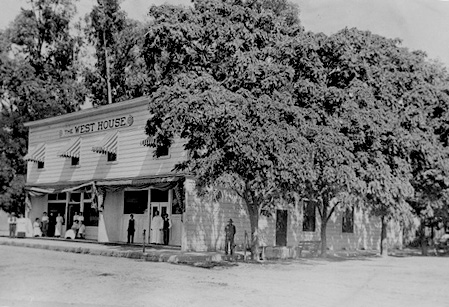
Shortly thereafter, the West House, a popular eatery, was established on the corner of Atlantic and Washington streets. Another such local eatery was the Porter House. Between the years of 1907 and 1910, St. Rose – Roseville’s first Catholic Church – was constructed near Vernon and Grant streets.
 |
| Porter House |
By July, Roseville’s second newspaper, the Roseville Tribune, published by Crome & Beecroft, put out its first issue. R.F. Brill & Son purchased the Tribune on March 1, 1920 and three years later (1923) acquired the Register from A.J. Hardin.
Shortly thereafter (May 28, 1923), the first issue of the Roseville Tribune and Register rolled off the presses. Brill sold out to Fred Green and Frank Bartholomew of the Roseville Press in 1942, and the old Tribune and Register was merged into a new publication name the Roseville Press Tribune, which still operates to this day.
The school census of 1908 showed 313 children attending class compared to 154 for the preceding year. By 1910, enrollment had increased to 695, of which 491 were between the ages of 6 and 17. The existing school facilities proved to be hopelessly inadequate and a bond issue was voted on April 20, 1910 for two new school houses – one in Roseville Heights (Main Street School), and another on Vernon Street (Oak Street School). The election carried 90 to 10 and by fall the two new school houses were completed.
These twin buildings served the educational needs of Roseville until 1925, when the Vernon Street School was completed. The Oak Street School gradually retired from use and it was eventually torn down. The Main Street School continued to be utilized by the school population on the north side of town until 1934, when the Woodbridge School was completed.
 |
While Roseville was expanding outwardly in every direction, railroad construction continued at an accelerated pace. In January 1908 contracts were let for the newly organized Pacific Fruit Express Company’s refrigerator plants at Roseville, Colton and Las Vegas. The Roseville plant alone was to have an estimated storage capacity of some 11,000 tons of ice and a daily ice-making potential of 200 tons.
Work began in March, 1908 under the direction of Mr. Hyatt. By February 1909, the almost completed $250,000 ice-making and fruit cooling plant was in operation with an ice-making capacity of 300 tons per day, and a storage capacity of 17,000 tons. Officials of the Southern Pacific Company inspected the new facilities and shortly thereafter (March) announced that henceforth all fruit cars would be iced at Roseville rather than at Sacramento.
Work on a large pre-cooling building commenced in April, 1909, along with excavations for a number of PFE car shops plus the installation of additional miles of track necessary for the expanded operations. It was announced that all the PFE shops would be moved from Sacramento as soon as the shops and 15,000 feet of repair tracks were completed.
By July, 1909, stock yards had been completed and put into operation on the west side of the main line. For a distance of over a mile between Vernon Street and the main track, land was being leveled for six more lines of track. The first test of the new plant ran in October 1909.
 |
| PFE Ice Plant |
Meanwhile, removal of the Rocklin roundhouse, force and machinery to Roseville was completed on Saturday, April 25, 1908, and Rocklin’s position as a railroad center came to an end. Amidst the transfer of the freight crews from Rocklin to Roseville, not one man lost his run. With the removal of the railroad facilities from Rocklin completed, much of that town’s population and many of its buildings moved to Roseville. The big move took more than two years (1906-1908) to complete. According to the Roseville Register of Oct. 28, 1909, some 43 residences had been moved to Roseville from Rocklin.
In the space of two years Roseville had developed into a bustling railroad center. Two of the largest round houses in the state had been constructed there, along with 45 miles of sidetracks to handle increased business. By January 1909, an additional 40 miles of tracks were added to the yard, which in addition to the round houses and machine shops also included a store, warehouse and office buildings, a hospital and railroad men’s clubhouse. The year 1909 also saw the arrival of the first two articulated Mallet compounds (Numbers 4000 and 4001).
Tremendous growth, coupled with its many problems, resulted in an increasingly strong sentiment for incorporation. Accordingly, the Chamber of Commerce met on Jan. 6, 1908, to take up the matter.
Strong opposition to such a move was voiced by the Southern Pacific, fearing it would lose control of its yards if the city incorporated. F.C. Hill of the Chamber of Commerce traveled to San Francisco to discuss the matter with J.H. Young, general superintendent of the Southern Pacific. After some discussion, it was suggested by Hill that any plan for incorporation exclude railroad property.
This was agreeable to Young, and plans went forward for the proposed incorporation. On Jan. 21, 1909, a “Petition to Incorporate the Town of Roseville” appeared in the Register. Three months later, on April 2, 1909, the people of Roseville went to the polls and of the 300 votes cast, 241 voted for incorporation while 59 voted in opposition. William Sawtelle, R.F. Theile, William Haman, Dr. Bradford Woodbridge and R.H. Wells were elected as the city’s first trustees.
The organizational meeting of the Board of Trustees, as the City Council was called then, was held on April 10 at the bank building. At that time, William Sawtelle was elected chairman of the Board of Trustees, which in effect gave him the distinction of being Roseville’s first mayor. Lack of space prompted the board at a subsequent meeting to change its meeting place from the bank building to McRae Hall. Still later (August), the hall over Johnson & Musson’s store (the old J.D. Pratt store), which until recently had housed the offices of the Roseville Register, was rented as a temporary meeting place for a monthly stipend of $12 including utilities.
Formation of a Board of Trustees and the selection of a mayor signified the end of Roseville, the peaceful little town and the beginning of Roseville, the modern city.
 |
| Original Board of Trustees |
 Rosamond Press
Leave a comment