Christian TV evangelicals fire up Trump support with messianic message
By Helen Coster
March 22, 20246:41 AM PDTUpdated 3 months ago
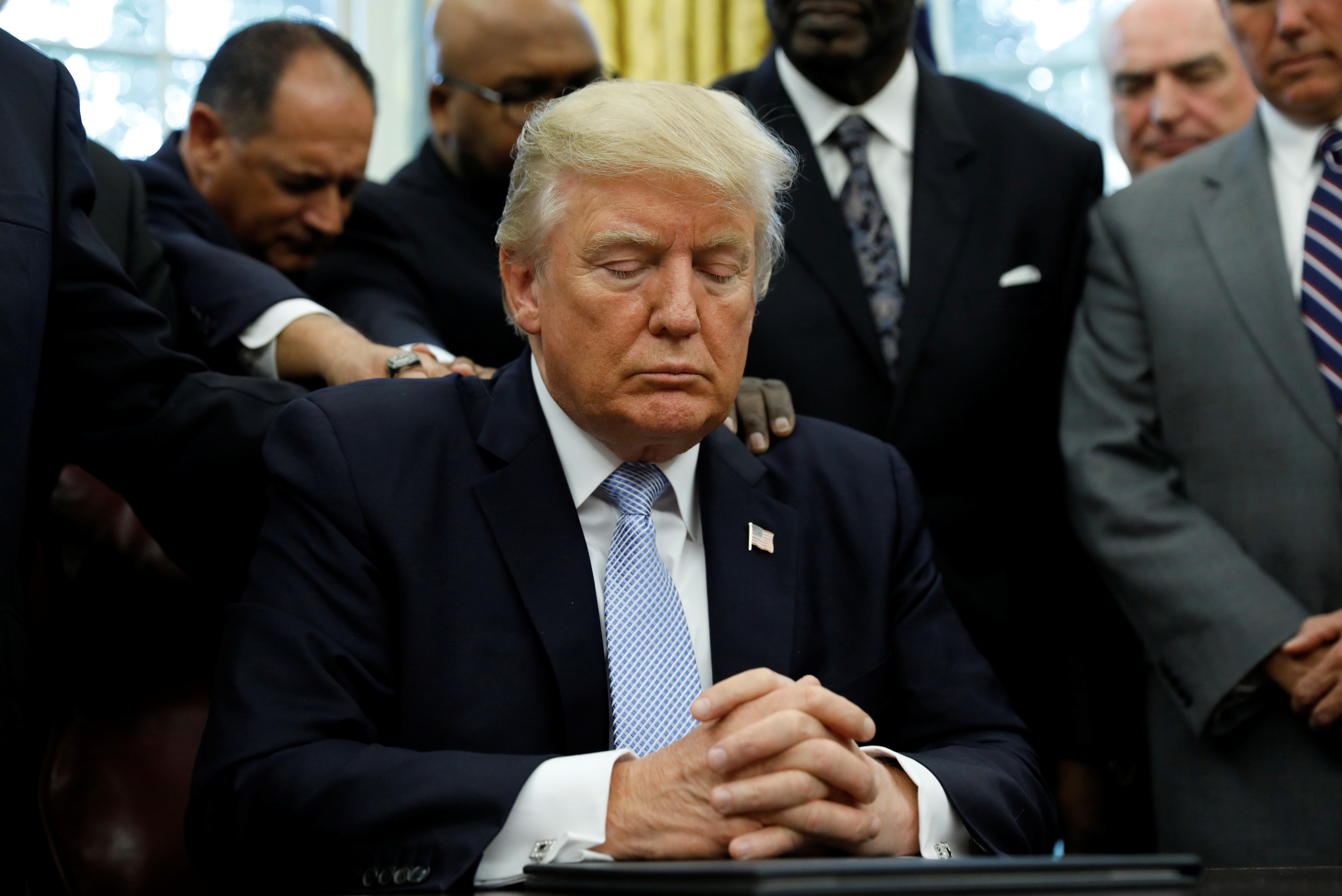
Item 1 of 7 Faith leaders place their hands on the shoulders of U.S. President Donald Trump as he takes part in a prayer for those affected by Hurricane Harvey in the Oval Office of the White House in Washington, U.S., September 1, 2017. REUTERS/Kevin Lamarque
[1/7]Faith leaders place their hands on the shoulders of U.S. President Donald Trump as he takes part in a prayer for those affected by Hurricane Harvey in the Oval Office of the White House in Washington, U.S., September 1, 2017. REUTERS/Kevin Lamarque Purchase Licensing Rights, opens new tab
NEW YORK, March 22 (Reuters) – “This is really a battle between good and evil,” evangelical TV preacher Hank Kunneman says of the slew of criminal charges facing Donald Trump. “There’s something on President Trump that the enemy fears: It’s called the anointing.”
Mark and Joy Gall are jealous of my connection the the Plymouth Brethren. They have Christian friends, and friends in Israel. They ignored all my posts and warnings. They may have read ONE and looked for THEIR easy answer as to where I was at. These educators reasoned SANE Christians – would prevail. They got it wrong – and so did Joe Biden – the Catholic! He may have the Catholic vote – but has lost the other followers of Jesus – who want the world to end! They’re in love with this idea! They got SOLD on it by ten thousand Preachers of Doom!
I see Black People!
John THE MAN
Bellett proceeded to Trinity College, Dublin, now making the acquaintance – ripening into life-long friendship – of John Nelson Darby.
The second volume, Exporting the Rapture, tells how Darby intentionally shaped (by tireless preaching, writing and publishing, repeated church splits, shunning, and excommunication, personal relationships and communication) the Exclusive Brethren, a small movement in one province in Ireland, splitting it off from the Open Brethren as his own ecclesiastical fiefdom. He ruled it with an iron fist, believing that no doctrine or practice other than his own, was correct. Though he often had no or only disputed biblical support for his ideas, he was certain he was being led by the Holy Spirit and that was, in his mind, sufficient. The historical irony is that the Brethren movement was small and intentionally isolated, yet Darby’s doctrines shaped the beliefs of American fundamentalism and evangelicalism even though few on this side of the Atlantic had ever heard of Darby.
THE LAST TRUMP: The Endtime Trumpets and The Rapture of The Church Paperback – October 24, 2020
by VICTOR MIKE-OMOLE (Author)
The Last Trump brings clarity and understanding to Endtime Bible Prophecy in its simplest form. Thus, removing every barrier to understanding, and quashing controversies over the Mystery of the Last Trump as Scripturally revealed.In this book, you will come to understand the significance of the Eight Jewish Feasts, and how some of them were and are symbolic of some major Endtime events, amongst which are: The Rapture of the Church The Tribulation, and The Millennial Reign of Jesus Christ.There are basic principles of interpreting Endtime Bible Prophecies, ten of which are scripted in this book. Furthermore, Victor Mike-Omole states that President Donald J. Trump has nothing to do with the Rapture of the Church, as some Bible Prophecy teachers have predicted. Beyond all reasonable doubts, I assure you, you are going to find this book useful, enlightening, edifying, and interesting to read. I consider it a great piece amongst my several other books on Endtime Bible Prophecies.
Donald Trump: The End-Times President
How fundamentalist Christians who believe in the apocalyptic myth of “the rapture” could be shaping Trump’s agenda — and American life
BY ALEX MORRIS
OCTOBER 30, 2020

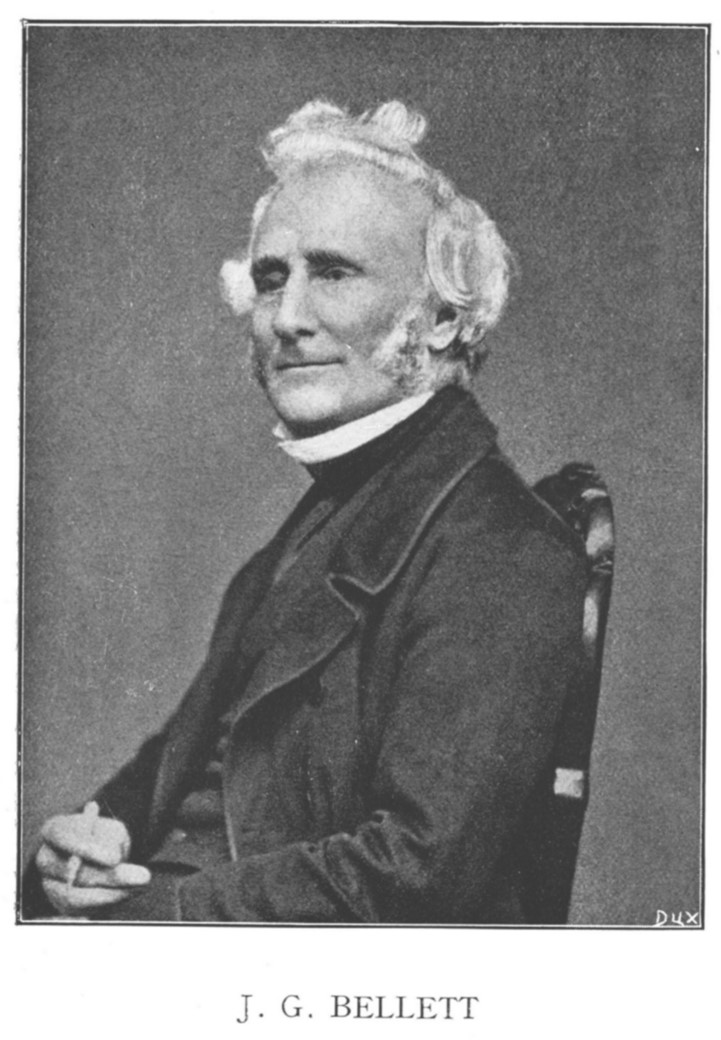
John Gifford Bellett
Born: 19th July 1795
Died: 10th October 1864
Intro, Biographical Information, Notes etc:
- BOOKS & PAMPHLETS:
- 3 – The Little Child (16 pp)
- The Unction from the Holy One (1850, 28 pp)
- On Christian Experience (10 pp)
- A Short Meditation on the Moral Glory of the Lord Jesus Christ (1865, 95 pp)
- The Son of God (1869, 161 pp) 10
- On the Gospel by St. Luke (1848, 177 pp)
- God Entering His Temples (18 pp)
- On the Gospel by St. John (1865, 187 pp)
- Short Meditations on the Psalms, Chiefly in their Prophetic Character (1876, 209 pp)
- 8 – The Nearness of the Glory (28 pp)
- Belshazzar’s Feast in its Application to the Great Exhibition (1851, 26 pp)
- An Introduction to the Canticles (1848, 59 pp)
- Heaven and Earth (1848, 47 pp) 0
- The Apostleship of St. Paul (30 pp) 5
- A Letter on the Person and Deity of the Holy Ghost (15 pp)
- The Heir of All Things (10 pp)
- 14 – Extracts from the Letters of the Late J.G. Bellett (60 pp)
- Miscellaneous Papers (103 pp)
- Short Meditations On Elisha (American Edition) (1907, 84 pp)
- The Evangelists: Being Meditations Upon The Four Gospels (496 pp) 2
- The Minor Prophets (1870, 122 pp)
- Thoughts on the Lord’s Supper (10 pp)
- Notes from Meditations on Luke (1866, 131 pp)
- The Opened Heavens, Musings on the Epistle to the Hebrews (Christian Book Room) (96 pp) 0
- Brief Notes on the Epistle to the Ephesians | The Church at Thessalonica (96 pp)
- On the Return of the Lord Jesus Christ… (88 – Manchester Series of Cheap Tracts) (96 pp)
- The Patriarchs: Being Meditations upon Enoch, Noah, Abraham, Isaac, Jacob, Joseph, Job; The Canticles, Heaven and Earth (436 pp)
- Short Meditations Etc. (1866, 302 pp)
- PLACE PICTURE:
- Waterloo Road – Homes of C.H. Mackintosh. and J.G.Bellett
- 2 Upper Pembroke Street – Home of J.G.Bellett
- Picture of Grave 1
- ARTICLES:
- OTHER LINKS:
- Recollections of the late J. G. Bellett by his Daughter (External Link)
Chief Men Among the Brethren Biography
THE name of JOHN GIFFORD BELLETT will always be reverenced and his memory ever cherished by those knowing the unction of his ministry from the products of his pen.
Born in Dublin, in the year 1795, he was of an Anglo-Irish family connected with the Irish Established Church, which lost its status in 1869. He was educated at the Grammar School, Exeter, where he had as a school-fellow William Follett, who afterwards as an eloquent advocate distinguished himself at the English Bar; and from there Bellett proceeded to Trinity College, Dublin, now making the acquaintance – ripening into life-long friendship – of John Nelson Darby. Both were strong in classical scholarship, both read for the Bar – Bellett in London, and Darby in Dublin. Each was “called” in Dublin, and practised but for a short time, Darby relinquishing that profession when he “took Orders,” whilst Bellett, who had become a decided Christian during his teens, devoted himself as a layman not only to increased spiritual self-culture but to participation in whatever religious service in those days presented itself to him as a “layman.”
By the year 1827 each of these two earnest souls was attending the meetings for the study of prophecy at Powerscourt House, in Co. Wicklow, and becoming detached from the conventional religion of Protestants around them as they advanced in knowledge of spiritual truth. In 1828 we find Bellett “breaking bread” with some friends like-minded – Francis Hutchinson and Edward Cronin, besides J. N. Darby, and, it would seem, Anthony Norris Groves, who had brought with him from England similar, yet independent, convictions. To the end of 1829 their meeting-place was a private house in Fitzwilliam Square, Dublin, but in the year following a public meeting-room was engaged in Aungier Street of that city. John Vesey Parnell (afterwards Lord Congleton) is now found in their company. As between the various names mentioned, the actual priority in giving effect to their common belief is difficult to determine.
When others were called away for active promulgation of their views elsewhere, Bellett remained in Ireland, and Dublin in particular, where his residence was fixed for some fifteen years longer.
In 1846-1848 we find him residing at Bath, and he was not again settled at Dublin until about the year 1854, but thenceforth retained his home there to the time of his passing away in 1864. In 1859 he interested himself in the Great Revival which took place in the North of Ireland. During all these years he exhibited a notable example of lovable Christian tenderness, oft times assuaging the bitterness of conflict in ecclesiastical matters by his counsel and attitude.
Bellett’ s public ministry, as described by one who had the privilege of enjoying it during his residence at Bath, was that of one who “talked poetry, ” so sweet and chaste were the sentiment and expression. The late R. Govett, of Norwich, a very good judge, who had read all the published writings of the leaders of the movement, gave as his opinion that Bellett was the most spiritual. His best known books are those on the “Patriarchs,” the “Evangelists,” the “Son of God,” and the “Moral Glory of the Lord Jesus.”
His name is dear to those who now experience exercise over the continuance of strained relations between brethren confessing common truth. J. G. Bellett’s influence was all exerted in the direction of minimising alienation, and fulfilling the injunction, “be at peace among yourselves.” Happy is the memory of any with such a reputation as his, of whom it can be said that, so far as is known, nothing said or left behind has been productive of or has aided dissension, but that all has tended towards removal of man-made barriers and the restoration of fellowship of heart in the fear of the Lord.
J.G.B.
September 1, 1864
Dearest Bellett,
I was so for some days back, waiting of the moment to write to you – moving about from meeting to meeting in the Jura – moved by the same motive which brought me yours, for which I heartily thank you, and am so far glad that mine was delayed, as I had yours without even one from me.
- If your strength be spared a little, I hope to see you. I purpose on my way to Canada, instead of sailing from Liverpool, to go and see you in Dublin, and get on board at Cork.
- I trust Lord may still order it, but His way I am sure is best. Oh, how truly I feel that! You can hardly think how I feel that, and myself a stranger here.
- I have ever found in you, dear brother, everything that was kind; nor be assured was it lost upon me, though I am not demonstrative.
Besides the value I had for you, it was not a small thing to me that you, with dear Cronin and Hutchinson, were one of the first four, who with me, through God’s grace the fourth, began to break bread in Dublin, but I believe was God’s own work:
- much weakness I owned in carrying it out, little faith to make good the power which was and is in the testimony, but God’s own testimony I’m assured – in every respect, even as to the gospel to sinners, what He was doing.
- I knew, for one, in no wise, the bearing and importance of what I was about, though I felt in lowliness we were doing God’s work.
- The more I go long, the more I have seen of the world, the more of Christians, the more I am assured that it was God using us for His testimony at this time.
- I never felt it as I do; but it is not my purpose to dwell on it now, and I fully own our weakness.
It is to you, here brother, my heart turns now, to say how much I own and value your love, and return it;
- I rejoice that while I have been the object of many kindnesses on your part down here, it is one which will never cease, which has had Jesus our Master for its bond, though with many human kindnesses.
- But oh, what joy to know oneself united to Him! It adds a joy untold to every sweetness: it is the source of it too. Surely He is all.
For me, I work on till He call me, and though it would be a strange Dublin without you, yet I go on my way, serve others, say little and pass on.
- Not that I do not to deeply love others, but this will all come out in its truth in heaven, perhaps on one’s death-bed; but I have committed my all to Him till that day.
My hope is still to see you, my beloved brother; should I not, be assured there is none who has loved you more truly and thankfully than myself; it can hardly be unknown to you, though with me it is more within than without.
- Peace be with you. May you find the blessed One ever near you; that is everything. Faithful is He withal and true.
- In His eternal presence, how shall we feel that all our little sorrows and separations were but little drops by the way, to make us feel that we were not with Him, and when with Him, what it is to be there. Oh, how well ordered all is!
- I ever long more to be in heaven with Him before the Father, though I desire to finish whatever He has for me to do; and if it keeps me awhile out, it keeps me out for Him, and then it is worth while, and grace …
I have thought too of little fruit. I find that while specially happy in evangelizing, my heart ever turns to the church’s being fit for Christ. My heart turns there.
- God knew, I suppose, that I was too weak and too cowardly for the other; but I reproach myself sometimes with want of love for souls, and above all, with want of courage, and love, would give that – it always does;
- but in the consciousness of my shortcoming I leave all with Christ. He does after all what He pleases with us, though I do not seek to escape blaming myself through this; and if He is glorified I am heartily content with anything, save not to love Him.
May His joy and peace be with you, dearest Bellett, and again thanks you for your letter, which was a true delight to me.
Yours affectionately in our blessed Master, whom no words can rightly praise.
J.N.D.
September, 1864, Letters of JND 1: 383-85.
Mr. Darby wrote of JGB’s departure thus:
- … Dear Bellett is gone, I cannot quite account for the peaceful feeling I have as to it. But it is well, and he is well. There was truthfulness of heart, as well as joy in the blessed One, at the close …
October 1864, Letters of JND 1: 393.
Miss L. M. Bellett – JGB’s daughter – records that:
- the meeting of the two friends was very touching. Dear John held him in his arms, and expressed in ardent terms his great affection for him.
The legacy of John Nelson Darby & the birth of the Rapture
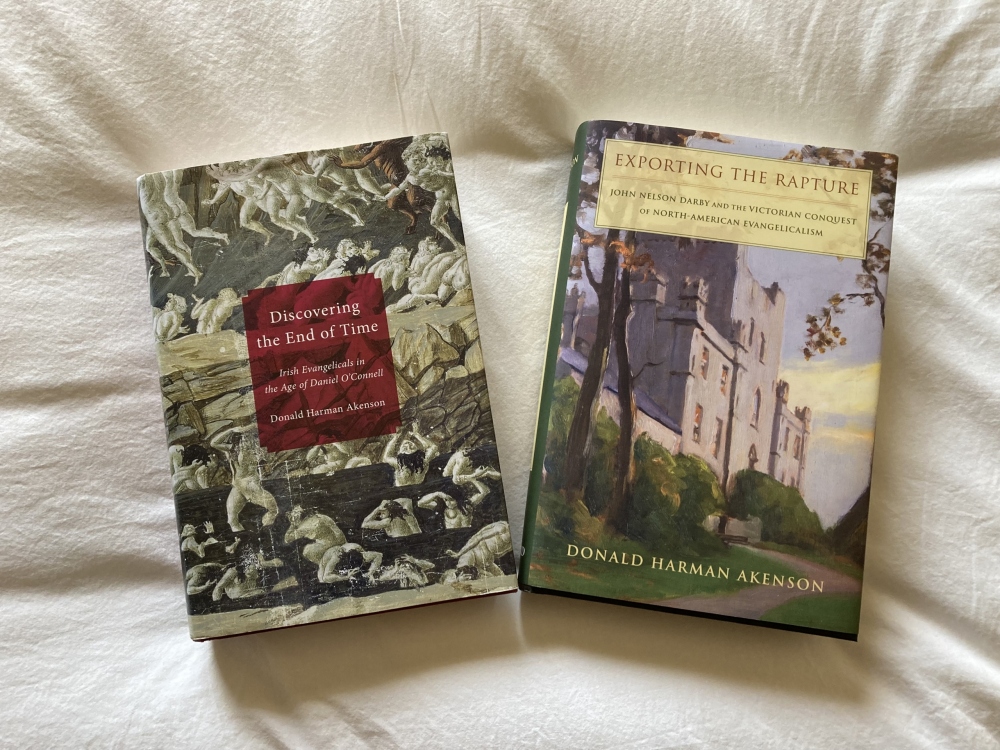
The two books I am mentioning here fit together to tell one continuous story. They should be read in the order they were published. But not by everybody. They will not be of interest to every reader, nor should they. Both are dense and scholarly, written by a professional historian who takes his craft seriously, are meticulously footnoted (some footnotes are a page or more in length), and are detailed in a way that academics and non-academics like me love but general readers find simply too much to bear—my wife’s term is “insufferable.” I understand if you choose not to read them. So will Margie.
The first volume, Discovering the End of Time, provides background on evangelical belief in the Church of Ireland (it was vibrant and alive) in the 19th century; on John Nelson Darby’s life and ministry as an ordained clergyman in the Church of Ireland (he was in a diocese under a solidly evangelical bishop and in close fellowship with wealthy evangelical supporters); and the early development of Darby’s novel doctrines (beliefs that had been lost, in his reckoning, after the apostles died).
The second volume, Exporting the Rapture, tells how Darby intentionally shaped (by tireless preaching, writing and publishing, repeated church splits, shunning, and excommunication, personal relationships and communication) the Exclusive Brethren, a small movement in one province in Ireland, splitting it off from the Open Brethren as his own ecclesiastical fiefdom. He ruled it with an iron fist, believing that no doctrine or practice other than his own, was correct. Though he often had no or only disputed biblical support for his ideas, he was certain he was being led by the Holy Spirit and that was, in his mind, sufficient. The historical irony is that the Brethren movement was small and intentionally isolated, yet Darby’s doctrines shaped the beliefs of American fundamentalism and evangelicalism even though few on this side of the Atlantic had ever heard of Darby.
I was drawn to Akenson’s two books for two reasons. First, I am interested in learning the history of White American evangelicalism in order to try to gain a better understanding of it, including why it is in such tatters today. And I am interested in learning the early history of the “Christian Brethren” or “Plymouth Brethren”—the movement Darby helped launch—because I was raised in those circles.
The author is Donald Harman Akenson, a prolific historian and the Douglas Professor of Canadian and Colonial History, Queens University, Ontario. He wrote these two books, Akenson says…
…to contribute to our understanding of a big, holy mystery: How was it that a set of ideas and practices that were virtually unknown in the early nineteenth century become by the mid-twentieth century so dominant among North-American evangelicals that they are taken as having been embraced forever, part of the primordial truth of Christianity? These consisted of a radically democratic view of acceptable ecclesiastic structure (an ecclesiology that was not entirely novel, being Protestantism at its European extreme); a brand-new way of reading the Jewish and Christian scriptures (a novel hermeneutic); and a previously unknown interpretation of prophecy and of the end of human time (a shimmeringly new eschatology). [Exporting, p. 290]
Well researched and clearly written, Discovering and Exporting are scholarly without being inaccessible to the serious, ordinary reader. Though Akenson lost me repeatedly while tracing the family links of the various aristocratic people who supported Darby, the main trajectory of the story is clearly communicated.
Central to the difficulty of comprehending and writing this early history of Darby, his novel doctrines, and the Brethren movement is the Brethren’s refusal to keep accurate written records. Since the Rapture is expected at any moment since the world is going from bad to worse and the church since the apostolic age has been in ruins and beyond repair, what is the point? This reluctance included and followed the example of Darby himself. So, the historical record is both very sparce and at times, evidently incorrect.
It is clear that in his late maturity Darby settled on an interpretation of his own life that used apocalyptic thinking as its template. In his sixties and seventies, he rewrote the hesitations and anxieties and bothersome medievalisms of a young cleric who had tried to fight against his archbishop by printing an anonymous pamphlet, and he turned those haverings into a near-apocalyptic story. Archbishop William Magee became a powerful demon whose actions lost for all eternity thousands and thousands of souls, and John Nelson Darby heroically stood against evil; though he lost the immediate battle, he had begun the “Church of God” and that Church was bound for eventual eternal victory. In the long view, Darby’s ability to create facts, ignore reality, and to establish a coherent narrative that transcends mere accuracy was a prerequisite for his performance in his maturity in the role of a full-fledged religious genius, a prophet who broke free of the present world and established an alternative universe. [Discovering, p. 253]
Sadly, those who need Discovering and Exporting most will probably not read them. Members of the movement who read them will not necessarily walk away (nor need they do so), but it will help them identify where the biblical underpinnings of Brethren distinctiveness need to be fortified. At its best, the Plymouth Brethren produced the biblical scholar F. F. Bruce; C. Stacy Woods and Paul Little of InterVarsity Christian Fellowship; and theologian James Houston who was instrumental in beginning Regent College (Vancouver). Because the Assemblies have no clergy, it has also encouraged serious Bible reading and study among it’s laypeople.
Though the split between Exclusive and Open remains to this day, the beliefs and patterns of behavior tend to be on a spectrum that occasionally bleeds across the divide. At it’s worse, the movement results in numerous autonomous Assemblies that are proudly exclusive, inward-looking groups that hold firmly to a sacred / secular dichotomy; use shunning, schism, and excommunication to maintain purity; insist on separatism from the “world” including friendships with non-Christians and art and culture; provide constant reminders that it is the true church and all others are in ruins and beyond hope; as well as a belief in a secret Rapture that undermines caring for the earth that belongs to the Lord. In my personal experience, the most damaging aspect of my Brethren experience was the insistence that my honest questions about what we believed and why were actually the product of a rebellious heart full of unconfessed sin.
I am deeply grateful for aspects of my Brethren background: a firm belief in Scripture, the model of faith missions, and a knowledge of the Bible, for example. And Akenson granted me new insight into why and how the structure and practice of Brethren Assemblies makes it so difficult and profoundly painful to leave the movement. As my father reminded me repeatedly, I did not leave for another church, rather I was putting myself “out of fellowship,” a dreaded spiritual condition that clearly implied not just out of fellowship with the true church, but out of fellowship with God. Even when I stopped believing such sectarian nonsense, his comments hurt, and that belief, repeated so often, represented emotional shackles that were difficult to break. Over the years I’ve seen examples of shunning in action even in Open Assemblies. It is a terrible fate. It can range from relatively mild to severe, and can fracture families, sending some away from faith and the church with great bitterness.
On the other hand, Akenson argues that given the historical record, the story of John Nelson Darby is very amazing. He is correct. Darby was a difficult and hard man, certain that whatever he taught was the final word on the matter superintended by the Holy Spirit. But he was also an original thinker and effective leader. Consider: how could a young curate of the Church of Ireland in a remote corner of rural Ireland develop new theological ideas that beginning in his lifetime not only launched a new church movement but went on the influence the doctrinal underpinnings of the fundamentalist and evangelical movements in North America? Akenson puts it this way:
It is possible to trace in a very tight causal ladder the Darbyite mode of reading the Bible through the seminal figures of some of the major strands of nineteenth- through twenty-first-century evangelicalism: those represented by Dwight L. Moody, William Bell Riley, and Billy Graham, however quietly each of these figures recognized his debt… One of the main points of this study is that in a brief and singular period historical events in Ireland and the personalities of keen biblical students met in a fashion that should be recognized as one of the formative causal intersections in the evolution of modern Christianity as a world religion. [Discovering, p. 6-7, 8]
Few religious leaders leading sectarian movements have such influence. It’s a story worth reading.
Books recommended:
Discovering the End of Time: Irish Evangelicals in the Age of Daniel O’Connell by Donald Harman Akenson (McGill-Queen’s University Press; 2016) 486 pages + bibliography + index.
Exporting the Rapture: John Nelson Darby and the Victorian Conquest of North-American Evangelicalism by Donald Harman Akenson (Oxford University Press; 2018) 438 pages + appendix + bibliography + index.
 Rosamond Press
Leave a comment