I began this post two days ago. Today, the Israeli Security Council just met about what to do next with Iran. Netanyahu want to “go crazy on Iran”. He knows if her destroys much of Iran’s power, he will be hailed a Messiah. Secular Judaism will be at a end. This may be a trap, and is exactly what radical Islam wants. This why I declared Secular Zelensky the Diaspora Messiah. I see a mass Exodus of Jews out of Israel. How about Baja?
But for adding the article about Wolves, I publish this post as is. Trump has blue eyes – and blonde hair!
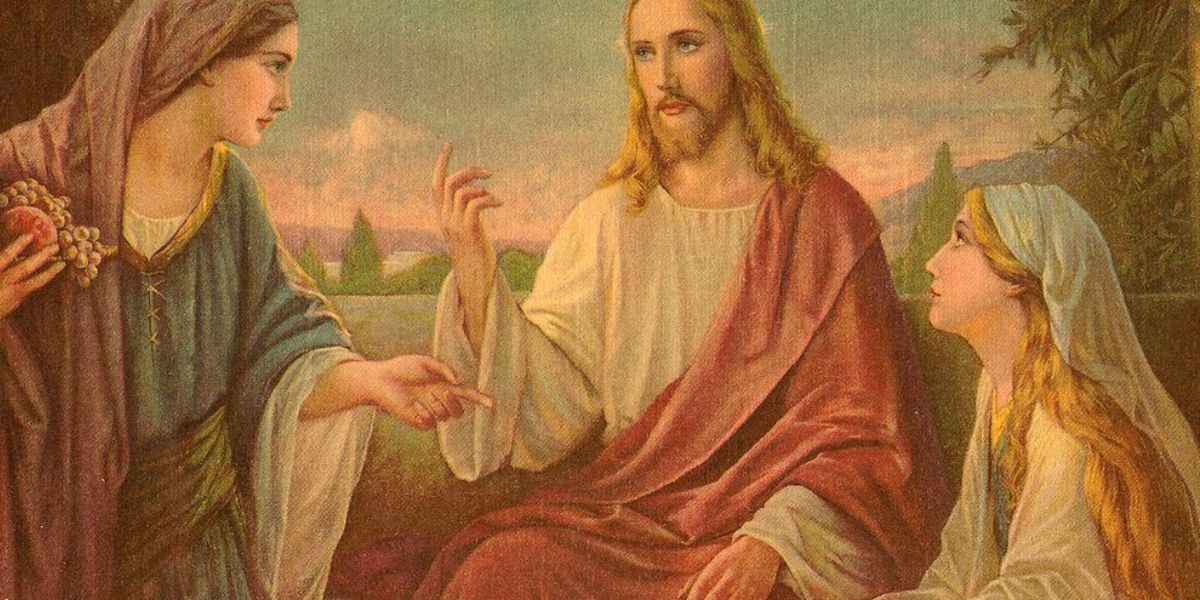

A Prophetic Broadcast from The New Radio Church of God
by
John Presco
Let me begin by saying every world leaders should step down (but Zelenzky) for not being able to STOP the runaway train that that came at us, that is a ZIONIST TRAIN that is being driven by War Rabbid Rabbis who force Jewish Women to the back of the bus, and squeal with delight when Zionist Christians threaten women in Arizona with five year prison terms – for being immoral – not in sep with the Ten Commandments.
What we saw in the might sies last night, was a trial run for the really big holy war. The War Rabbis stripped down, girded their loins, and did the NAKED DANCE of King David before the ark. Alas, they got to relgiously shame the United States for not letting more Jewish refugees in as Hitler rose to power. Godly Payback – IS THE WAY OF YAHEW! As long as it takes. To render the U.S. impotent, and no longer able to chatize and Jew in the world, are tell really holy men what to do, was ure joy, a total voctity for Zionism. The sparks rose in the air about the ancient Tribal Bonfire, as it did when the Jewish Tribes got behind the Tribe of Judah – and slaughter all the men of tribe of Benhamin.Then – the virginal maidens that escpaded the gerocide art put in a filed – and raped by all tribal members so the Seed of Saul the Benjamite will be dispersed amnost all the tribes. What in the hell is going on here, many thealogians have longed wondered
In 1988 I declared myself a Nazarite after Samson and John the Baptist two biblcal character that are not quite Jewish. Why? Several theslogian suggested King Saul was Samuel the Nazarite Prophet. I concur. Saul was a Benahaminite. After years of study, I concur the Tribe of Benhami were Galatians. and the real Jesus – was a galatian. Yes! The blonde Jesus with blue eyes – is the real Jesus! I hate to say this, because I hate racist Neo-Nazi and Neo-Cnfederates. The Jews hated the Galatians amongst them, and were able to wipe them out, because it was easy to identitzy them. This is how Pal was ablte to findthem, imprison them, and torted them to get them to denhce THEIR LORD! Who was their lord?
Here he is! Let me instofude you to Ogmios…The Lord of The Way!
Herbert Hannay’s book, European and Other Race Origins, included ancient records that “representatives of Benjaminites spread over the whole length and breadth of Asia Minor.”(1) The Bible indicates that Israelites were living in Asia Minor during the Apostolic era. The book of I Peter begins by addressing “God’s People [marginal reading in the KJV] scattered throughout Pontus, Galatia, Cappadocia, Asia and Bithynia.” The term “Galatia” indicated the same people as the “Gauls” of Europe. The New Testament records that one famous Benjaminite, Saul of Tarsus, was born in Asia Minor, so there is biblical evidence that Benjaminites lived in Asia Minor in ancient times. Saul of Tarsus was the Benjaminite who became the Apostle Paul (Acts 9:11

, 13:9
and Romans 11:1
).
Groups educating haredi women on ‘Mehadrin’ bus lines
Female activists: Gender segregation on buses part of radicalization trend in the haredi community.
By JONAH MANDELJULY 14, 2011 03:55


https://trinitymedia.ai/player/trinity-player.php?language=en&pageURL=https%3A%2F%2Fwww.jpost.com%2FJewish-World%2FJewish-News%2FGroups-educating-haredi-women-on-Mehadrin-bus-lines&unitId=2900003088&userId=1de4a86e-892b-4349-b6ae-a0eefd17f031&isLegacyBrowser=false&isPartitioningSupport=1&version=20240410_0a92857ffd73440af17af1d927bd3c6d17cd12a6&useBunnyCDN=0&themeId=140&unitType=tts-playerThe most excitement on Egged’s line 56 in Ramat Shlomo was without a doubt emanating from its amiable bus driver.“What, am I going to be on TV tonight?” he grinned as the last of the reporters, camera men, photographers, Knesset members and activists boarded his vehicle in the Jerusalem haredi neighborhood on a hot, quiet Wednesday morning.RELATED:Court scraps ‘mehadrin’ buses Supreme Court allows voluntary ‘mehadrin’ bus linesTop ArticlesRead More
Iran’s attack on Israel stirs admiration among Gaza Palestinians
[Photos] Tyrus: You’ll Never Guess Who He Is In A RelationshipSponsored by https://reportercenter.com/
Child Tax Credit BenefitsSponsored by TurboTax
1957Nackardbaker Fiat 500 Topolino Micro Car Devin Kellison LaDawri Cheetah KitSponsored by eBay US
What is OutbrainThe group – which was the bulk of the passengers for most of the ride – was marking the launch of the “Grab A Spot” initiative, in which female students at the Hebrew University ride public buses in haredi areas to ensure that gender segregation is not being forced upon female passengers, who are allowed by law to sit in any part of the bus, and not be restricted to the rear, as is the norm on these lines.Six months ago, the High Court of Justice ruled “public transportation operators may not tell, request or order women to sit in a specific place on the bus just because they are women – or to tell them how to dress; and they are entitled to sit anywhere they wish,” thus effectively abolishing the so-called Mehadrin public buses. At the same time, women were permitted to board the bus from the middle door, and even punch their own tickets with a perforator tied nearby that exit point.The January ruling came in the wake of a petition originally filed five years ago by the Israel Religious Action Center (IRAC), and five women – including Israeli English-language author Naomi Ragen, who charged that there were no formal arrangements or conditions for the operation of these special bus lines and that, as passengers on these buses, they had been harassed by haredim for insisting on sitting in the front section.

Ogmios (also known as Ogmius; Ancient Greek: Ὄγμιος; Latin: Ogmius, Ogimius) was the Celtic deity of eloquence.[1] He is described as resembling a more elderly version of Heracles,[2] and uses his powers of persuasion to bind men to himself,[1][3] with stories describing thin, long chains connecting his tongue to the ears of his followers.
Most of the knowledge about Ogmios comes from comparisons between him and powerful deities and heroes in other ancient cultures.[1][3]
About the deity[edit]
Even though there is not much on the history of Ogmios, one can tell that he was a powerful deity worshipped by the Gauls, the Celtic people of present day France. He is attested not only in Lucian’s account, but also in archaeological remains, such as coins and statuary, from the time of the Roman conquest of the Gauls.[1][3]
Etymology[edit]
French specialists give two different explications of the Gaulish name: Philippe Jouët proposed to connect Ogme to the Indo-European root word *Hek- ‘sharp’, ‘stone’, ‘vault’, and to the Greek akmon (meteorite).[4]
According to Xavier Delamarre, the root word would be ‘path’, ‘guide’, confirming in this his role as a psychopomp.[5]
Description[edit]
Ogmios was recorded by Lucian, a satirical writer in 2nd-century Samosata in his Hercules. He is described as resembling an older, more tanned version of Heracles, the Greek hero of strength. Ogmios and Heracles both wear lion skins and carry a bow and club in their hands. However Ogmios is depicted with long chains through his smiling mouth that pierce his tongue and attached to the ears of a group of men that willingly and happily follow him.[1][2][3] Anne Ross describes dark complexion as “a not uncommon feature of powerful or malevolent supernatural beings”.[6]
The most striking aspects of Lucian’s image of Ogmios are the thin, long chains running from his tongue to the ears of his followers. The chains, made out of amber and gold, represent Ogmios using his powers of persuasion and eloquence to bind his listeners to his every word.[1][7] From the description it appears that Ogmios’ followers willingly follow him with cheerful faces and try to get as close to Ogmios as they can. This shows that he has the power to change and influence men’s minds so that they want to follow him to the ends of the earth.[1][3]
Roles[edit]
Ogmios is considered to be a binding god and a psychopomp, both very powerful positions.[1][3] As a binding god he has the ability to bind people onto himself and control their actions. He can also create defixiones, which are tablets that have curses which he can bind on to other people. There are two known defixiones, recovered from Bregenz, Austria, that Ogmios is said to have created.[1][3] Not much is known about the story behind the defixiones, but it is known that one such tablet invokes Ogmios to curse a barren woman so that she can never marry a man.[3]
Ogmios is also a psychopomp, binding the souls of the dead onto himself and leading them to the afterlife.[8][9]
Comparisons to other cultures[edit]
Almost all of the knowledge about Ogmios comes from the comparisons of him to other deities or divine heroes of different ancient cultures. By about 51 B.C. the Roman Empire had conquered Gaul. When the Gauls disappeared so did Ogmios. However, the existence of Ogmios can still be seen in Irish mythology. Their deity, Ogma, has many similarities to Ogmios, which could mean that they were once the same deity.
Greek/Roman[edit]
Long after the Romans conquered the Gauls, the Roman satirist Lucian wrote a satirical story about Celtic beliefs. It describes Lucian and a Celtic man looking at a painting of Ogmios. Lucian’s description of the painting is the main source of visual representation of Ogmios.[2]
Initially, Lucian looks at the painting with horror because the painting says that the Celts liken Ogmios to Heracles. Ogmios appears to be an older version of Heracles since both Ogmios and Heracles wear lion skins and carry a bow and club. Lucian is shocked to see that “the (bound) men (following Ogmios) do not think of escaping… In fact, they follow cheerfully and joyously, applauding their leader and all pressing him close and keeping the leashes slack in their desire to overtake him; apparently, they would be offended if they were let loose!”[2]: p.65
In the story, a Celtic man explains that the painting shows how the Celts believe Ogmios is similar to Heracles,[2] the Greek hero who defeated many things with his strength. Heracles has the power of strength and Ogmios has the power of eloquence. The Celts believe that eloquence is the ultimate power because it can enthral men and control them more so than strength can.
Ogmios is also sometimes compared to Hermes, a Greek deity.[3] To the Greeks Hermes was also a symbol of eloquence as well as a psychopomp.
Irish[edit]
The Irish deity closest related to Ogmios is Oghma,[3][8] a warrior of the Túatha Dé Danann who is also credited with inventing the Ogham alphabet.[10] Both Ogmios and Ogma are known as smiling deities of eloquence.[1][3] Ogma is attested from Old and Middle Irish literature, which dates to significantly later periods than the material for Ogmios.[3][8]
Groups educating haredi women on ‘Mehadrin’ bus lines
Female activists: Gender segregation on buses part of radicalization trend in the haredi community.
By JONAH MANDELJULY 14, 2011 03:55
Iran’s attack on Israel stirs admiration among Gaza Palestinians
Stop The Slaughter!
Posted on December 14, 2023 by Royal Rosamond Press

Abortion is not murder! There is no Mosaic Law against having an abortion, or, taking a morning after pill. One of the Ten Commandments says; “Thou shall not kill-murder.” The chosen children of God are murdering’ and slaughtering Palestinian women and children with “Dumb Bombs”. This post is the beginning of the end of all Biblical-like laws in America. Consider the Slaughtering of the Benjamites. This act of Genocide negates the influence of the Jewish Religion that Jesus turned his back on, as did Saint Paul. I am a Nazarite after John the Baptist. I bid all those who oppose the Slaughter of Palestinian Civilians, to take The Vow of the Nazarite in order to escape the Israeli Witch-hunt that labels Lovers of Peace and Life, antiemetic. As a Nazarite, you will have more Democratic Freedoms – and clout! You will be a member of a New Peace Movement. You will not be a Jew, a Christian, a Muslim. You will be a Child of the Peaceful Way. You will be fruitful – and multiply!
John ‘The Nazarite’
In Numbers 6, God gives the rules for being a Nazirite. This person is set apart for service to God. There are rules they must follow and actions they must take or refrain from.
- They must not eat or drink anything that comes from grapes. This includes wine, vinegar, raisins, or even grapes themselves.
- Avoid ritual impurity associated with corpses and graves. They may not even defile themselves for close family members.
- Avoid cutting their hair. They must let it grow as long as the vow lasts.
How was the Nazirite viewed in Israelite society and how did this status change over time (if at all)?
Slaughtering the Benjamites II: merciless anarchy—Judges 20:29—21:25
September 21, 2014
(Continued from Part I, http://craigkeener.com/slaughtering-the-benjamites-i-benjamins-depravity-judges-191-2028/)
Judges goes on to narrate the Israelites’ unbridled vengeance against the Benjamites and the continuing, sinful consequences of their overkill. Because Benjamin refused to hand over those who gang-raped a woman to death, the other tribes of Israel make war on the Benjamites. Up till this point, the Benjamites, equipped with long-distance weapons, have been winning the battles. They have consistently repelled the larger forces arrayed against them. Now, however, Israel has a divine promise of victory from the Lord (Judg 20:28).
Total war against Benjamin
In Judges 20:29, 33, 36-38, the Israelite allies set an ambush against the Benjamites. They borrow this strategy most clearly from Joshua’s earlier destruction of the nearby hostile Canaanite town of Ai (Josh 8:2-21), applying this strategy against Benjamin. This time they succeed, putting the Benjamites to flight. Throughout history, cutting down retreating warriors from behind proves much easier than having to face their weapons. Thus in 20:45 the Israelite warriors “caught” and killed five thousand fleeing Benjamite warriors on the road; the verb for violent catching here appears only one other time in the Book of Judges, where the Benjamite rapists forced themselves on the Levite’s concubine (19:25).
To forestall future conflicts, the law earlier prescribed herem—the utter destruction of total war—against enemy Canaanites (Deut 7:2). Israel carried out little of this in the Book of Judges, yet the vengeful Israelites now get so carried away with their victory that they practice herem against Benjamites! The law did prescribe this fate for apostate cities that followed other gods (Deut 13:12-18). But what about for an entire tribe that simply came to the aid of such a city because of clan allegiances? Common as it was in antiquity to kill all males who might grow up to avenge their fathers, the law prohibited killing children for their fathers’ crimes (Deut 24:16). Further, wiping out women and children was herem, not normal punishment.
In the heat of the moment, many hardened warriors, some of whose compatriots have been killed, now slaughter everyone in sight. Only six hundred Benjamite men escape, taking refuge for the next four months (20:47). After these months pass, however, Israelite tempers cool (cf. 20:47). Now many of the Israelites, whose warriors had earlier slaughtered the Benjamites, lament that God has destroyed one of the tribes of Israel (21:3, 15)! (Blaming God for human acts of depravity is not a new invention.) Granted, God is sovereign, but again his involvement here is at a more distant remove, not a direct action. In this narrative, God has ultimately delivered the Benjamite warriors into the other Israelites’ hands (Judg 20:28, 35); but the narrator never says that he commands or approves of this mass slaughter.
Much of Israel, in fact, themselves regretted their actions, as the narrator twice mentions (21:6, 15, two of the only three uses of this term in Judges). Israel’s leaders now need a way to replenish the tribe of Benjamin, but the six hundred surviving Benjamite men cannot reproduce without women. Israel has slaughtered all the Benjamite women, as well as taken an impulsive oath before God not to let Benjamites intermarry with them (21:1).
Seizing more innocent women
The leaders, however, reach a solution that prevents them from breaking their oaths. Now they will execute herem against another Israelite town, Jabesh Gilead! Judges 21:11 is in fact one of only two uses of the Hebrew verb related to herem in the Book of Judges. (Later Saul, who fails to execute herem against Amalekites in 1 Sam 15:3-23, essentially executes it against God’s priests in 22:19!)
Again Israel keeps their word: they had promised to kill anyone who did not come to help them with the battle (21:5). These oaths were may not have been a good idea; they certainly cannot justify the wholesale action that now follows. The virgin daughters of Jabesh Gilead are now seized, just as the Levite’s concubine was seized. Meanwhile, wives and concubines are slaughtered—just as the Levite’s concubine was killed. (Probably Benjamites later repopulated their maternal ancestor’s town. Later Saul as a Benjamite has natural ties with Jabesh Gilead, evident in 1 Sam 11:5-9 and 31:11-12.)
Thus Israelites again slaughter their own people. The intensity of lethal and sexual violence here readily reminds us of the sorts of atrocities that some Islamic extremists have committed in the Middle East or northern Nigeria, or genocidal actions elsewhere. The spirit of violence in the world is not new, even if modern technologies have provided increasingly efficient means of killing.
The decimation of Jabesh Gilead, however, did not supply enough young women for the Benjamites: just four hundred young wives for six hundred men. (Given the average likely age of marriage, most of these women were probably sixteen or younger—perhaps many in their early teens.) So what did the Israelites do? They went and kidnapped some other Israelite girls. They chose a convenient location that did not require much travel—their host town, Shiloh, just a day’s march from devastated Gibeah (21:12). (They had earlier gathered at another centrally located site, Mizpah, fewer than five miles from Gibeah; Judg 20:1, 3; 21:1, 5, 8.) At some point (perhaps later) Shiloh became the place of the tabernacle (18:31).
So—at a feast for the Lord (Judg 21:19)—the Israelites invited the two hundred Benjamites who were still single to capture two hundred single young women from Shiloh. The Hebrew text of 21:20 suggests that they “ambushed” them, the same terminology used for the recent attack against the Benjamites (20:29, 33, 36-38). (An attentive reader of Judges in Hebrew might recall that, in this book, apart from that recent attack only the wicked “ambush” or “lie in wait”; Judg 9:25, 32, 34, 43; 16:2, 9, 12.)
Although the strategy of ambush made sense against the opposing army, here it is carried out against unarmed, young teenage girls; the law prohibited ambushing or lying in wait (the same Hebrew term) for a neighbor to harm them (Deut 19:11). Each one “catches” a wife for himself (Judg 21:21), a Hebrew term elsewhere applied to violence (Ps 10:9). The other Israelites explain to the girls’ fathers in Shiloh that since they did not give their daughters in marriage to the Benjamites, they have not violated Israel’s oath. How much would this consolation have reduced the horror for the families now rent apart?
The Israelite actions began as a quest for justice, a call for vengeance on behalf of an unnamed women who was mercilessly gang-raped to death. Yet the quest ended up as the slaughter of men, women and boys, along with the seizure of preadolescent girls and unmarried teenage women.
Everyone did what was right in their own eyes
Recounting the acts without inserting moral comment so far, the narrator lets the horror of the story strike with its own graphic force. Only the book’s concluding comment sheds light on its perspective: there was no king in Israel, and everyone did what they personally viewed as right (21:25). This horrible story is a story of moral anarchy, the kind of violent lawlessness we sometimes might associate with the old frontier in the western United States, war-torn Somalia, or other unstable regions. It could well be the story of unbridled human hearts anywhere that lacks means of civil restraint, where the strong are free to prey on those socially or physically weaker than themselves.
Why do the final chapters of Judges begin and end with a refrain about moral anarchy associated with lack of kingship (17:6; 19:1; 21:25)? Although in this book God periodically raises up judges, Israel as a whole has no stable government here, no provision for continuing moral leadership.
As the subsequent story of Israel in Samuel through Kings illustrates, however, a continuing government without obedience to God was ultimately no less liable to fail. The first part of that story elaborates Saul’s failure and David’s success, quickly followed by David’s failure and its consequences for his kingdom. Within a generation, we witness the fraying of the delicate tribal unity often achieved under David and particularly achieved in the early part of Solomon’s reign. When there was a king in Israel who did only what was right in his own eyes (or in the eyes of others not obeying God), the nation was also led astray.
It fell to prophets to repeatedly call God’s people back to his Word. True prophets (as opposed to the corrupted ones) provided a conscience for Israel, some moral leadership. But prophets can influence only those willing to heed them.
Ultimately neither judges nor kings could provide more than stopgap measures (though stopgaps are safer than anarchy). Through the prophets, God ultimate promised Israel a more permanent solution: the coming of his own kingdom, when he would reign through his appointed vizier, the promised descendant of David. Yet what would a kingdom of righteousness mean for a sinful people, the sort of people we encounter in Judges? Fortunately for us, the promised kingdom has already made its first entrance into more gently our world; the king came first not to avenge, but to offer justice and righteousness a different way. Jesus’ way was not to kill sinners but to transform them. As followers of Jesus, we must work for the peace and justice that our king requires, even in this world of incredible tragedy and pain, until he returns to consummate his promise of that new era.
Judges 20New International Version
The Israelites Punish the Benjamites
20 Then all Israel from Dan to Beersheba and from the land of Gilead came together as one and assembled before the Lord in Mizpah. 2 The leaders of all the people of the tribes of Israel took their places in the assembly of God’s people, four hundred thousand men armed with swords. 3 (The Benjamites heard that the Israelites had gone up to Mizpah.) Then the Israelites said, “Tell us how this awful thing happened.”
4 So the Levite, the husband of the murdered woman, said, “I and my concubine came to Gibeah in Benjamin to spend the night. 5 During the night the men of Gibeah came after me and surrounded the house, intending to kill me. They raped my concubine, and she died. 6 I took my concubine, cut her into pieces and sent one piece to each region of Israel’s inheritance, because they committed this lewd and outrageous act in Israel. 7 Now, all you Israelites, speak up and tell me what you have decided to do.”
8 All the men rose up together as one, saying, “None of us will go home. No, not one of us will return to his house. 9 But now this is what we’ll do to Gibeah: We’ll go up against it in the order decided by casting lots. 10 We’ll take ten men out of every hundred from all the tribes of Israel, and a hundred from a thousand, and a thousand from ten thousand, to get provisions for the army. Then, when the army arrives at Gibeah[a] in Benjamin, it can give them what they deserve for this outrageous act done in Israel.” 11 So all the Israelites got together and united as one against the city.
12 The tribes of Israel sent messengers throughout the tribe of Benjamin, saying, “What about this awful crime that was committed among you? 13 Now turn those wicked men of Gibeah over to us so that we may put them to death and purge the evil from Israel.”
But the Benjamites would not listen to their fellow Israelites. 14 From their towns they came together at Gibeah to fight against the Israelites. 15 At once the Benjamites mobilized twenty-six thousand swordsmen from their towns, in addition to seven hundred able young men from those living in Gibeah. 16 Among all these soldiers there were seven hundred select troops who were left-handed, each of whom could sling a stone at a hair and not miss.
17 Israel, apart from Benjamin, mustered four hundred thousand swordsmen, all of them fit for battle.
18 The Israelites went up to Bethel[b] and inquired of God. They said, “Who of us is to go up first to fight against the Benjamites?”
The Lord replied, “Judah shall go first.”
19 The next morning the Israelites got up and pitched camp near Gibeah. 20 The Israelites went out to fight the Benjamites and took up battle positions against them at Gibeah. 21 The Benjamites came out of Gibeah and cut down twenty-two thousand Israelites on the battlefield that day. 22 But the Israelites encouraged one another and again took up their positions where they had stationed themselves the first day. 23 The Israelites went up and wept before the Lord until evening, and they inquired of the Lord. They said, “Shall we go up again to fight against the Benjamites, our fellow Israelites?”
The Lord answered, “Go up against them.”
24 Then the Israelites drew near to Benjamin the second day. 25 This time, when the Benjamites came out from Gibeah to oppose them, they cut down another eighteen thousand Israelites, all of them armed with swords.
26 Then all the Israelites, the whole army, went up to Bethel, and there they sat weeping before the Lord. They fasted that day until evening and presented burnt offerings and fellowship offerings to the Lord. 27 And the Israelites inquired of the Lord. (In those days the ark of the covenant of God was there, 28 with Phinehas son of Eleazar, the son of Aaron, ministering before it.) They asked, “Shall we go up again to fight against the Benjamites, our fellow Israelites, or not?”
The Lord responded, “Go, for tomorrow I will give them into your hands.”
29 Then Israel set an ambush around Gibeah. 30 They went up against the Benjamites on the third day and took up positions against Gibeah as they had done before. 31 The Benjamites came out to meet them and were drawn away from the city. They began to inflict casualties on the Israelites as before, so that about thirty men fell in the open field and on the roads—the one leading to Bethel and the other to Gibeah. 32 While the Benjamites were saying, “We are defeating them as before,” the Israelites were saying, “Let’s retreat and draw them away from the city to the roads.”
33 All the men of Israel moved from their places and took up positions at Baal Tamar, and the Israelite ambush charged out of its place on the west[c] of Gibeah.[d] 34 Then ten thousand of Israel’s able young men made a frontal attack on Gibeah. The fighting was so heavy that the Benjamites did not realize how near disaster was. 35 The Lord defeated Benjamin before Israel, and on that day the Israelites struck down 25,100 Benjamites, all armed with swords. 36 Then the Benjamites saw that they were beaten.
Now the men of Israel had given way before Benjamin, because they relied on the ambush they had set near Gibeah. 37 Those who had been in ambush made a sudden dash into Gibeah, spread out and put the whole city to the sword. 38 The Israelites had arranged with the ambush that they should send up a great cloud of smoke from the city, 39 and then the Israelites would counterattack.
The Benjamites had begun to inflict casualties on the Israelites (about thirty), and they said, “We are defeating them as in the first battle.” 40 But when the column of smoke began to rise from the city, the Benjamites turned and saw the whole city going up in smoke. 41 Then the Israelites counterattacked, and the Benjamites were terrified, because they realized that disaster had come on them. 42 So they fled before the Israelites in the direction of the wilderness, but they could not escape the battle. And the Israelites who came out of the towns cut them down there. 43 They surrounded the Benjamites, chased them and easily[e] overran them in the vicinity of Gibeah on the east. 44 Eighteen thousand Benjamites fell, all of them valiant fighters. 45 As they turned and fled toward the wilderness to the rock of Rimmon, the Israelites cut down five thousand men along the roads. They kept pressing after the Benjamites as far as Gidom and struck down two thousand more.
46 On that day twenty-five thousand Benjamite swordsmen fell, all of them valiant fighters. 47 But six hundred of them turned and fled into the wilderness to the rock of Rimmon, where they stayed four months. 48 The men of Israel went back to Benjamin and put all the towns to the sword, including the animals and everything else they found. All the towns they came across they set on fire.
 Rosamond Press
Leave a comment