
Whose money is this? Are American Taxpayers being DRUG into this EVIL? This is – JUDAS! Write your elected officials and demand they not give Israel anymore money – and give it to a real brave Jew – fighting for all the people of the world – and not just Jews!! Loyal Leftist-Bohemian Jews should demand an end to the war, and demand U.S. money be given to Zelenskyy, who just landed!
On December 6, 3023, after seeing the AI portrait above, I created the Colonel Christling a Benedict Arnold – and Judas! I was going to have CC be a bad dream in a real Bond-like book, and a Futurian. She became a Prophet on her own in the world of Artificial Intelligence – that is a threat to take over real reality. With this Dark Evil – I believe AI is going to win!
John Presco
https://www.timesofisrael.com/for-years-netanyahu-propped-up-hamas-now-its-blown-up-in-our-faces/
https://www.cnn.com/2023/12/11/middleeast/qatar-hamas-funds-israel-backing-intl/index.html
https://www.cnn.com/2023/12/11/middleeast/qatar-hamas-funds-israel-backing-intl/index.html
Shlomo Brom, a former deputy to Israel’s national security adviser, told the New York Times that an empowered Hamas helped Netanyahu avoid negotiating over a Palestinian state, saying the division of the Palestinians helped him make the case that he had no partner for peace in the Palestinians, thus avoiding pressure for peace talks that could lead to the establishment of an independent Palestinian state.
Naftali Bennett, a former Israeli prime minister, told CNN Sunday that after years of flagging his concerns to the Netanyahu government when he was minister of education, he stopped the suitcase cash transfers when he became prime minister in 2021.
“I stopped the cash suitcases because I believe that horrendous mistake – to allow Hamas to have all these suitcases full of cash, that goes directly to reordering themselves against Israelis. Why would we feed them cash to kill us?” Bennett asked.
Qatar sent millions to Gaza for years – with Israel’s backing. Here’s what we know about the controversial deal


By Nima Elbagir, Barbara Arvanitidis, Alex Platt, Raja Razek, Nadeen Ebrahim, CNN and Uri Blau, Shomrim
6 minute read
Published 12:41 PM EST, Mon December 11, 2023

Qatari minister of state for foreign affairs Mohammed bin Abdulaziz Al-Khulaifi, and Israeli Prime Minister Benjamin Netanyahu.CNN/Getty ImagesCNN —
Since the October 7 Hamas attack on Israel, the Gulf state of Qatar has come under fire by Israeli officials, American politicians and media outlets for sending hundreds of millions of dollars in aid to Gaza, which is governed by the Palestinian militant group.
But all that happened with Israel’s blessing.

How the tiny Arab state of Qatar became indispensable in talks with Hamas
In a series of interviews with key Israeli players conducted in collaboration with Israeli investigative journalism organization Shomrim, CNN was told Prime Minister Benjamin Netanyahu continued the cash flow to Hamas, despite concerns raised from within his own government.
Qatar has vowed not to stop those payments. Qatari minister of state for foreign affairs Mohammed bin Abdulaziz Al-Khulaifi told CNN’s Becky Anderson on Monday that his government will continue to make payments to Gaza to support the enclave, as it has been doing for years.
“We’re not going to change our mandate. Our mandate is our continuous help and support for our brothers and sisters of Palestine. We will continue to do it systematically as we did it before,” Al-Khulaifi said.
Israeli sources responded by pointing out that successive governments had facilitated the transfer of money to Gaza for humanitarian reasons and that Netanyahu had acted decisively against Hamas after the October 7 attacks.
Here’s what we know about those payments and Israel’s role in facilitating them.
When did the Qatari payments start?
In 2018, Qatar began making monthly payments to the Gaza Strip. Some $15 million were sent into Gaza in cash-filled suitcases – delivered by the Qataris through Israeli territory after months of negotiation with Israel.
The payments started after the Palestinian Authority (PA), the Palestinian government in the Israeli occupied West Bank that is a rival of Hamas, decided to cut salaries of government employees in Gaza in 2017, an Israeli government source with knowledge of the matter told CNN at the time.

What did Israel know about Hamas’ October 7 attack?
The PA opposed the Qatari funding at the time, which Hamas said was meant for the payment of public salaries as well as medical purposes.
Israel approved the deal in a security cabinet meeting in August 2018, when Netanyahu was serving his previous tenure as premier.
Even then, Netanyahu was criticized by his coalition partners for the deal and for being too soft on Hamas.
The prime minister defended the initiative at the time, saying the deal was made “in coordination with security experts to return calm to (Israeli) villages of the south, but also to prevent a humanitarian disaster (in Gaza).”
Enter your email to subscribe to the CNN Five Things Newsletter.

You give us five minutes, we’ll give you five things you must know for the day.Sign Me Up
By subscribing you agree to our
Ahmad Majdalani, an Executive Committee member at the Palestine Liberation Organization in the West Bank, accused the United States of orchestrating the payment.
Why did Israel back the payments?
Israeli and international media have reported that Netanyahu’s plan to continue allowing aid to reach Gaza through Qatar was in the hope that it might make Hamas an effective counterweight to the PA and prevent the establishment of a Palestinian state.
PA officials said at the time the cash transfers encouraged division between Palestinian factions.
Major General Amos Gilad, a former senior Israeli Defense Ministry official, told CNN the plan was backed by the prime minister, but not by the Israeli intelligence community. There was also some belief that it would “weaken Palestinian sovereignty,” he said. There was also an illusion, he added, that “if you fed them (Hamas) with money, they would be tamed.”
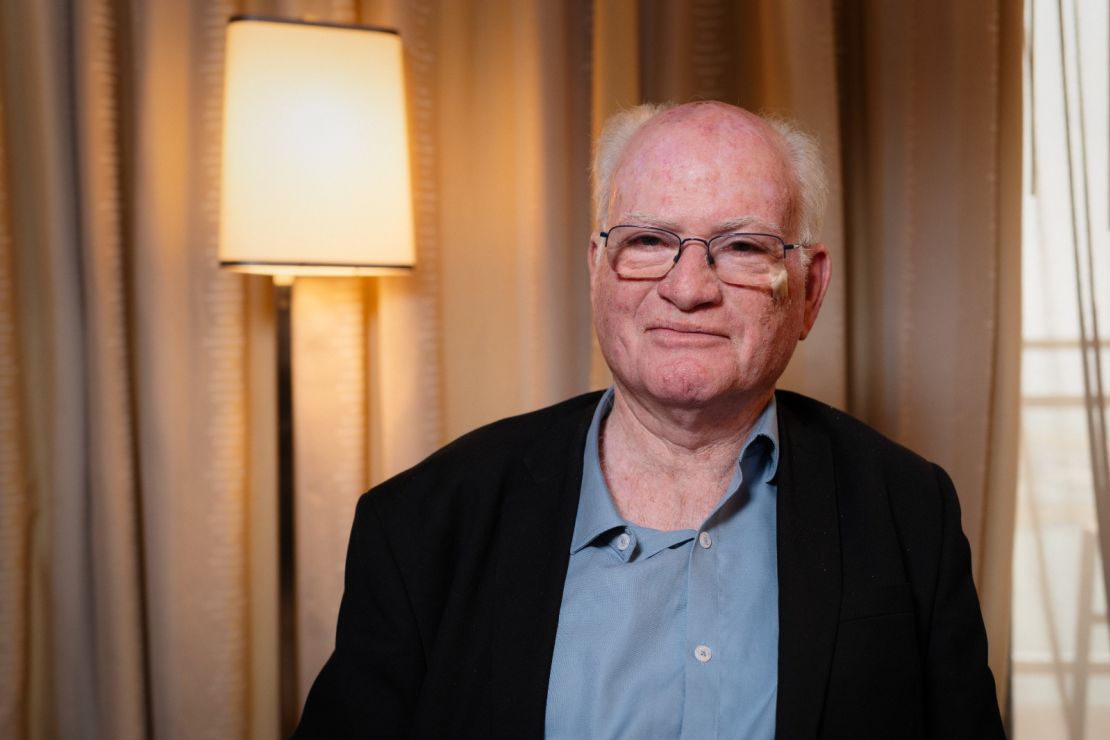
Major General Amos Gilad, a former senior Israeli Defense Ministry official, speaks to CNN in Tel Aviv on December 5.Alex Platt/CNN
Shlomo Brom, a former deputy to Israel’s national security adviser, told the New York Times that an empowered Hamas helped Netanyahu avoid negotiating over a Palestinian state, saying the division of the Palestinians helped him make the case that he had no partner for peace in the Palestinians, thus avoiding pressure for peace talks that could lead to the establishment of an independent Palestinian state.
Naftali Bennett, a former Israeli prime minister, told CNN Sunday that after years of flagging his concerns to the Netanyahu government when he was minister of education, he stopped the suitcase cash transfers when he became prime minister in 2021.
“I stopped the cash suitcases because I believe that horrendous mistake – to allow Hamas to have all these suitcases full of cash, that goes directly to reordering themselves against Israelis. Why would we feed them cash to kill us?” Bennett asked.
The cash payments stopped, but the transfer of funds to Gaza continued under Bennett’s leadership, according to the New York Times.
An Israeli official told CNN that any suggestion that Netanyahu wanted to maintain a “moderately weakened” Hamas was “utterly false” and that he had acted to weaken Hamas “significantly.”
“He led three powerful military operations against Hamas which killed thousands of terrorists and senior Hamas commanders,” the official said. “Successive Israeli governments before, during and after Netanyahu’s governments enabled money to go to Gaza. Not in order to strengthen Hamas but to prevent a humanitarian crisis by supporting critical infrastructure, including water and sewage systems to prevent the spread of disease and enable daily life.”
Has Netanyahu faced a backlash?
Netanyahu has come under increasing criticism as the depth of his government’s involvement in the move, as well as the motivations for it, come to light again.
The funding deal is one reason why many Israelis today place part of the blame for the October 7 Hamas terror attack on Netanyahu personally. Numerous people told CNN they believed that allowing the payments made Hamas stronger and, ultimately, made the brutal attacks worse.
“The premier’s policy of treating the terror group as a partner, at the expense of (Palestinian Authority President Mahmoud) Abbas and Palestinian statehood, has resulted in wounds that will take Israel years to heal from,” wrote Tal Schneider in an opinion piece in the Times of Israel on October 8, a day after Hamas’ devastating attack.
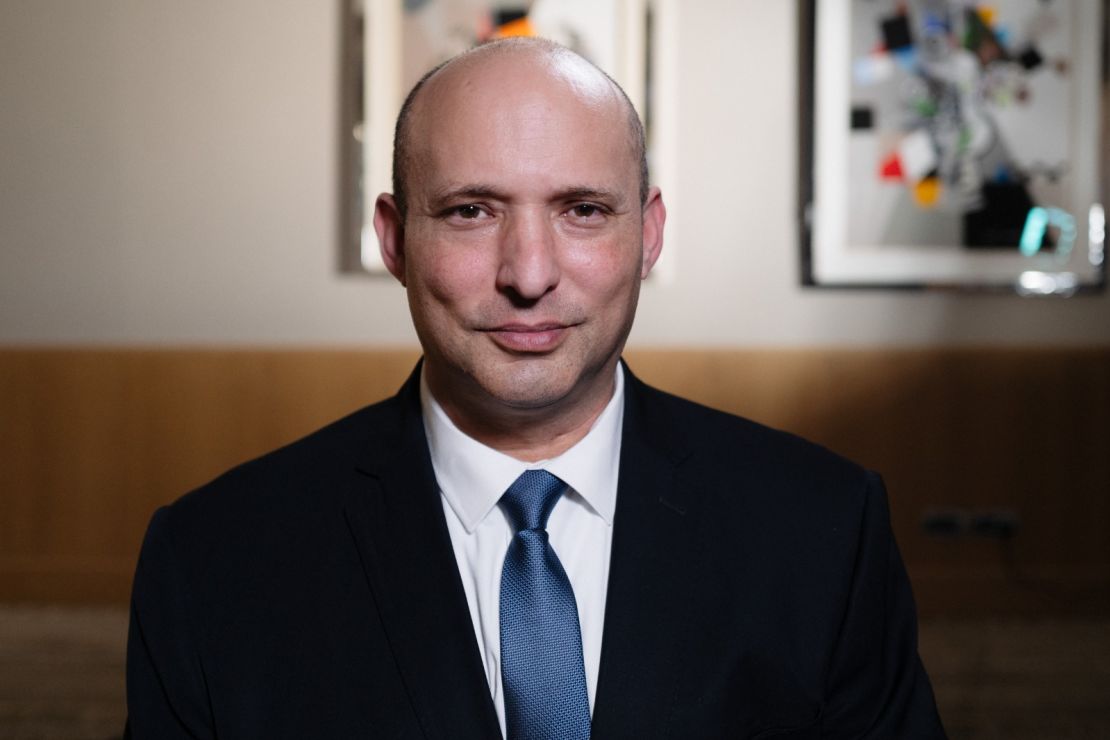
Former Israeli Prime Minister Naftali Bennett poses for a photograph during an interview with CNN, in Tel Aviv on November 10.Alex Platt/CNN
Gilad, the former Israeli defense official, said he was among those to argue against allowing money to reach Hamas, saying the permitted cash flow over the years was a “dramatic, tragic mistake.”
With the funds, “they could take care of the population. They could take care of the military enhancement, and build up their capabilities,” Gilad said last week.
Criticism of Netanyahu among Israelis soared after the attack, with many blaming the prime minister for failing to prevent it.
What backlash has Qatar faced?
Qatar maintains close ties with both Hamas and Western states, including the United States. It has come under harsh criticism for allowing the Iran-backed group to establish a political office in Doha, which has been operative since 2012.
But it has also proven useful to Israel, having played a leading role in the release of hostages kidnapped on October 7 and held by Hamas in Gaza.
But some Israeli officials have pointed to Qatar as among those responsible for the attack, saying the Gulf Arab state is supporting Hamas.
Israeli Foreign Minister Eli Cohen accused Qatar of financing Hamas and harboring its leaders in October.
“Qatar, which finance and harbor of Hamas’ leaders, could influence and enable the immediate and unconditional release of all, of all hostages held by the terrorists. You, members of the international community should demand Qatar to do just that,” Cohen said at a high-level UN meeting.
Who is Yahya Sinwar, the Hamas leader Israel has called a ‘dead man walking’
Qatar has rejected accusations made by Israeli officials, warning that “these provocative statements” could undermine mediation efforts and even “endanger lives.”
Gilad also blamed Qatar, saying the Gulf state “gave Hamas 1 billion shekels per year ($30 million per month)… and they have used it to enhance, to cement their grip on Gaza “For them (Hamas), it was like a relief. It was like oxygen,” he told CNN.
Qatar denies that those funds were intended for Hamas, saying they are meant as aid to pay salaries of workers in the besieged enclave.
The Gulf nation, which hosts a major US airbase, has also come under pressure in Congress. A bipartisan group of 113 US lawmakers sent a letter to President Joe Biden on October 16 asking him to put pressure on countries who support Hamas, including Qatar.
Al-Khulaifi, the Qatari minister who leads his country’s mediation in the Israel-Hamas war, said that his country “will continue to engage with regional and international partners to make sure that those funds reach out could have the most vulnerable and to the important and vital infrastructure.”
CNN’s Adam Pourahmadi, Tamar Michaelis, Pallabi Munsi and Ivana Kottasova contributed to this report.
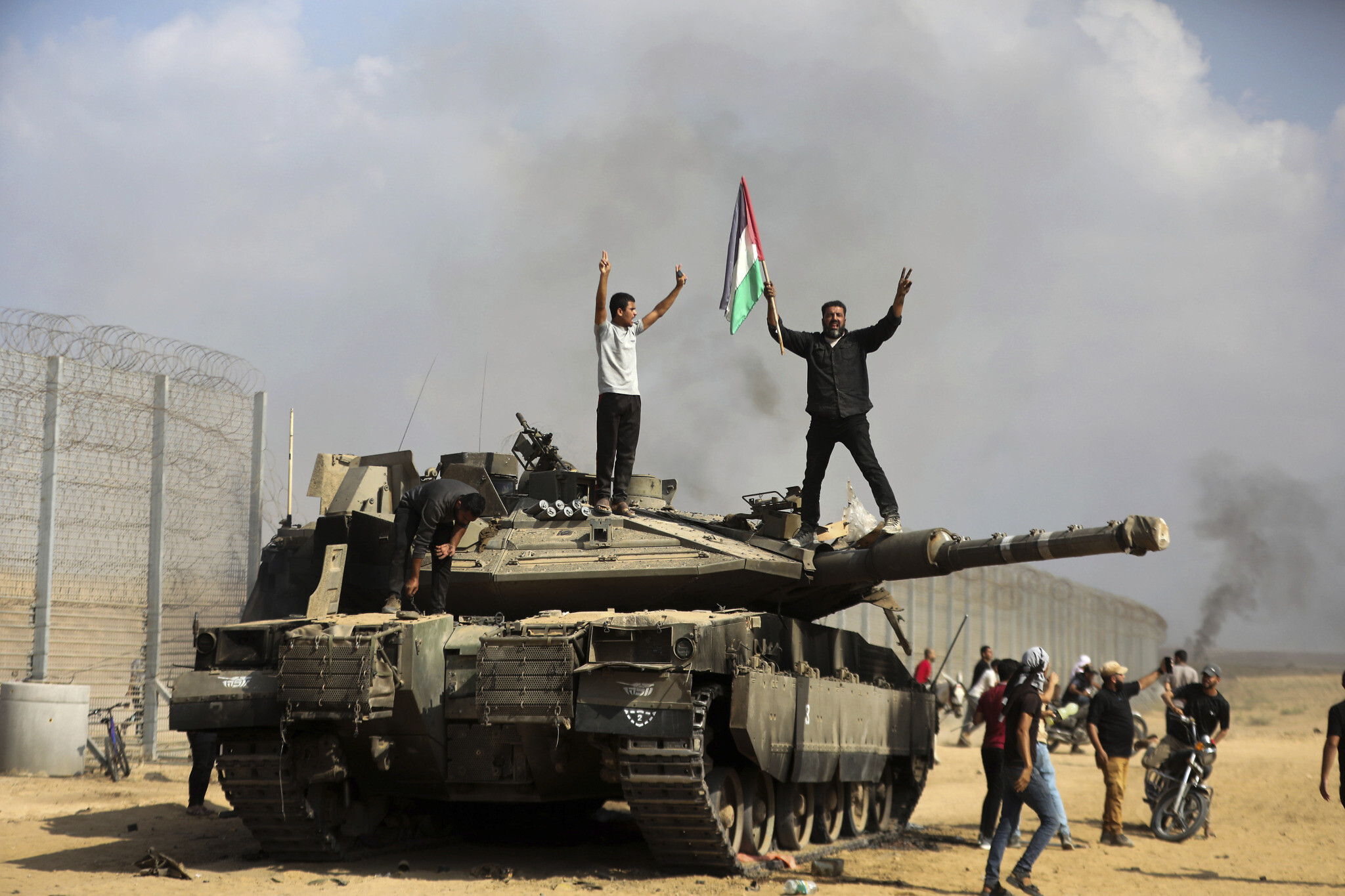
Gazans celebrate by a destroyed Israeli tank at the broken Israel-Gaza border fence, east of Khan Younis, October 7, 2023. (AP Photo/Yousef Masoud)
For years, the various governments led by Benjamin Netanyahu took an approach that divided power between the Gaza Strip and the West Bank — bringing Palestinian Authority President Mahmoud Abbas to his knees while making moves that propped up the Hamas terror group.
The idea was to prevent Abbas — or anyone else in the Palestinian Authority’s West Bank government — from advancing toward the establishment of a Palestinian state.
Thus, amid this bid to impair Abbas, Hamas was upgraded from a mere terror group to an organization with which Israel held indirect negotiations via Egypt, and one that was allowed to receive infusions of cash from abroad.
Hamas was also included in discussions about increasing the number of work permits Israel granted to Gazan laborers, which kept money flowing into Gaza, meaning food for families and the ability to purchase basic products.
Israeli officials said these permits, which allow Gazan laborers to earn higher salaries than they would in the enclave, were a powerful tool to help preserve calm.
Get The Times of Israel’s Daily Editionby email and never miss our top storiesNewsletter email addressGET IT
By signing up, you agree to the terms
Toward the end of Netanyahu’s fifth government in 2021, approximately 2,000-3,000 work permits were issued to Gazans. This number climbed to 5,000 and, during the Bennett-Lapid government, rose sharply to 10,000.
Prime Minister Benjamin Netanyahu leads a government conference at the Prime Minister’s Office in Jerusalem on September 27, 2023. (Chaim Goldberg/Flash90)
Since Netanyahu returned to power in January 2023, the number of work permits has soared to nearly 20,000.
Additionally, since 2014, Netanyahu-led governments have practically turned a blind eye to the incendiary balloons and rocket fire from Gaza.
ADVERTISEMENT
Meanwhile, Israel has allowed suitcases holding millions in Qatari cash to enter Gaza through its crossings since 2018, in order to maintain its fragile ceasefire with the Hamas rulers of the Strip.
A Palestinian man receives financial aid at a supermarket in Gaza City, on September 15, 2021, as part of the UN’s Humanitarian Cash Assistance program, supported by the state of Qatar. (Mahmud Hams/AFP)
Most of the time, Israeli policy was to treat the Palestinian Authority as a burden and Hamas as an asset. Far-right MK Bezalel Smotrich, now the finance minister in the hardline government and leader of the Religious Zionism party, said so himself in 2015.
According to various reports, Netanyahu made a similar point at a Likud faction meeting in early 2019, when he was quoted as saying that those who oppose a Palestinian state should support the transfer of funds to Gaza, because maintaining the separation between the Palestinian Authority in the West Bank and Hamas in Gaza would prevent the establishment of a Palestinian state.
While Netanyahu does not make these kind of statements publicly or officially, his words are in line with the policy that he implemented.
Palestinian Authority President Mahmoud Abbas looking on as he receives Palestinian athletes in Ramallah in the West Bank on August 4, 2023. (Wissam KHALIFA/PPO/AFP)
The same messaging was repeated by right-wing commentators, who may have received briefings on the matter or talked to Likud higher-ups and understood the message.
Bolstered by this policy, Hamas grew stronger and stronger until Saturday, Israel’s “Pearl Harbor,” the bloodiest day in its history — when terrorists crossed the border, slaughtered hundreds of Israelis and kidnapped an unknown number under the cover of thousands of rockets fired at towns throughout the country’s south and center.
ADVERTISEMENT
The country has known attacks and wars, but never on such a scale in a single morning.
One thing is clear: The concept of indirectly strengthening Hamas — while tolerating sporadic attacks and minor military operations every few years — went up in smoke Saturday.
Just a few days ago, Assaf Pozilov, a reporter for the Kan public broadcaster, tweeted the following: “The Islamic Jihad organization has started a noisy exercise very close to the border, in which they practiced launching missiles, breaking into Israel and kidnapping soldiers.”
The body of a person killed by Hamas terrorists lies covered inside a bullet-riddled car in the southern city of Sderot on October 7, 2023 (Oren ZIV / AFP)
The difference between Islamic Jihad and Hamas doesn’t matter much at this point. As far as the State of Israel is concerned, the territory is under the control of Hamas, and it is responsible for all the training and activities there.
Hamas became stronger and used the auspices of peace that Israelis so longed for as cover for its training, and hundreds of Israelis have paid with their lives for this massive omission.
The terror inflicted on the civilian population in Israel is so enormous that the wounds from it will not heal for years, a challenge compounded by the dozens abducted into Gaza.
Judging by the way Netanyahu has managed Gaza in the last 13 years, it is not certain that there will be a clear policy going forward.
 Rosamond Press
Leave a comment