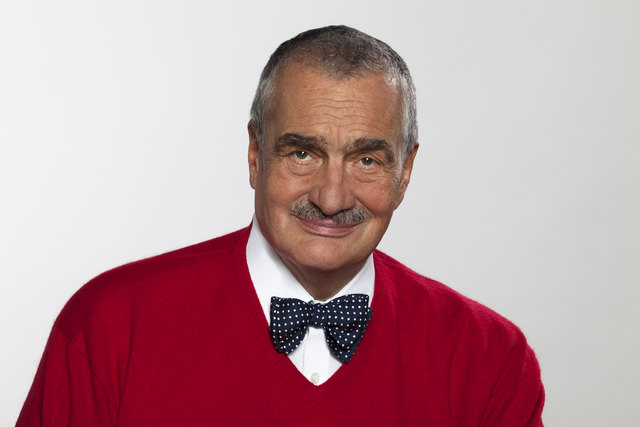
At 9:34 P.M. I discovered my alleged kin, Karel Schwarzenberg, died on November 11, 2023. I was researching our illustrious kin, Karl Schwarzenberg, who defeated Napoleon. I am the Family Historian. I care about about our ancestors, our history, and the fate of the Czech Republic from where my Presco ancestors, hail. I just posted on him.
John Presco
https://www.facebook.com/profile.php?id=100063478955084
Karl Philipp, Fürst zu Schwarzenberg (or Charles Philip, Prince of Schwarzenberg; 18/19 April 1771 – 15 October 1820) was an Austrian Generalissimo and former Field Marshal.[1] He first entered military service in 1788 and fought against the Turks. During the French Revolutionary War, he fought on the allied side against France and in that period rose through the ranks of the Imperial Army. During the Napoleonic Wars, he fought in the Battle of Wagram (1809), which the Austrians lost decisively against Napoleon. He had to fight for Napoleon in the Battle of Gorodechno (1812) against the Russians and won. During the War of the Sixth Coalition, he was in command of the allied army that decisively defeated Napoleon in the Battle of Leipzig (1813). He participated in the Battle of Paris (1814), which forced Napoleon to abdicate.
Karel Schwarzenberg, Renegade Czech Prince and Politician, Dies at 85
Popular with the Czech public for quietly subverting the aristocracy, he served twice as foreign minister and ran for president in 2013.


Published Nov. 19, 2023Updated Nov. 20, 2023
Karel Schwarzenberg, a Czech prince who twice served as his country’s foreign minister, played a key role in the Velvet Revolution and quietly subverted aristocratic expectations, died shortly after midnight on Nov. 12 in Vienna. He was 85.
His death, in a hospital, was confirmed by the Czech Foreign Ministry and by his daughter, Lila.
As foreign minister from 2007 to 2009 and from 2010 to 2013, Mr. Schwarzenberg was a committed Atlanticist and European who opposed Russian imperial ambitions. Before his posts in government, as a supporter of his country’s dissidents against the Communist regime then in power, he dedicated an ancestral castle in Germany and his own money to the cause. He later became chancellor under his friend Vaclav Havel when the latter was elected president.
But it was the pipe-smoking, mustachioed Mr. Schwarzenberg’s understated revolt against his aristocratic heritage, one of the grandest in Europe, that captivated and endeared him to the Czech public, leading him to run for the presidency in 2013. His official campaign poster was punk-inspired and showed him sporting a pink mohawk.

His full name and title was Karel Johannes Nepomuk Joseph Norbert Friedrich Antonius Wratislaw Mena Fürst zu Schwarzenberg, and his lineage, going back to the 15th century and even before, included barons, counts, princes and field marshals, and at least one cardinal and bishop.
For centuries their holdings included resplendent castles all over Bohemia, Austria and Germany, including the Palais Schwarzenberg in Vienna. Some are still in the family.
“Metternich’s gift in the 18th century,” he said to his daughter, Lila Schwarzenberg, gesturing toward rifles displayed in a long hall of them at the ancestral castle of Orlik, in a poignant 2022 film she made about him. “And that, that was a gift from Napoleon,” he said casually.
At the age of 75 though, when the Czech artist David Cerny suggested using a Sex Pistols album cover as a model in Mr. Schwarzenberg’s presidential campaign, the prince turned politician jumped. “Yes, it’s fantastic,” he said. “Sex Pistols, I love it,” Mr. Cerny recalled in a phone interview from Prague. “He was super aristocratic, but he was pretty, pretty punk.”
Mr. Schwarzenberg spoke the archaic Czech of his ancestors and wore a T-shirt paying tribute to the modern underground poet Ivan “Magor” Jirous. Czech critics called him a dilettante, but polls showed that he had high public trust and was considered above pervasive political corruption. He turned his habit of dozing off during politicians’ speeches to his advantage; a campaign billboard read: “I fall asleep when others talk nonsense.”
The punk gambit almost worked. Mr. Schwarzenberg made it to the runoff, but he lost to the populist, Russia-friendly Milos Zeman, who had strong rural support. Mr. Schwarzenberg remained in public life as a member of the Czech Chamber of Deputies and leader of the conservative TOP 09 party, which he had helped found.

It was as foreign minister that he made his greatest mark.
“He was like a character out of a history book, or a storybook,” Norman L. Eisen, who was the U.S. ambassador to Prague from 2011 to 2014, said in a telephone interview. “He had an utter disregard for convention, despite being the scion of the European noble families that invented so many of those conventions,” Mr. Eisen added. “Courtly, like a gentleman, but also earthy.”
Mr. Eisen once invited Mr. Schwarzenberg to a Shabbat at the embassy residence, and he recalled that the princely minister responded with glee. “Oh, goody, I haven’t had a Shabbat dinner in years,” he said.
Mr. Eisen recalled shopping at Brooks Brothers with Mr. Schwarzenberg for his ubiquitous bow ties on a trip to the United States.
“He had a clear and realistic picture of what international relations were about,” his deputy at the foreign ministry, Jiri Schneider, said in an interview. “It was a mix of recognizing realities and a clear vocation to fulfill some values.”
Mr. Schwarzenberg’s extensive connections across Europe proved to be particularly valuable to Czech governments, especially Mr. Havel’s. “He was our visiting card to courts and governments,” said Michael Zantovsky, Mr. Havel’s former press secretary.

Mr. Schwarzenberg was born on Dec. 10, 1937, in Prague to Karl VI, Prince of Schwarzenberg, and Antonia Princess zu Fürstenberg. After the full German invasion in 1939, the family, which opposed the Nazis, retreated to the countryside. They fled again after the Communist takeover in 1948, to exile in Austria, and their vast estates were expropriated. Mr. Schwarzenberg studied forestry in Munich and law in Vienna, before taking over the family holdings in Austria and Germany in the 1960s.
His heart was elsewhere though, as he makes clear to his daughter in her film. Through political friendships in Vienna, in the 1980s he became chairman of the International Helsinki Federation for Human Rights, which battled Soviet domination in Eastern Europe. He was part of the resistance to the Communist government in his homeland, donating his castle in Scheinfeld, Bavaria, for use as a center for smuggling computers and copy machines into Czechoslovakia, and smuggling dissident writings out, including Mr. Havel’s.
https://www.facebook.com/profile.php?id=100063478955084
 Rosamond Press

Leave a comment