
“And the holes in the border remained open for long enough to allow hostages to be taken into Gaza before tanks were eventually used to close them up.”
Hamas asked Israel to call off their drones – before they talk about releasing hostages. Where were these drones when Hamas “savages” were coming through the 80 breaches in the best fence money can buy. Being an American, I grew up on Calvary vs. Indian movies. Why didn’t the Israeli Calvary come to the rescue – and stop terrorists from taking captives into Gaza City? We know citizens were making calls on their phones.
Falk, the adviser to Netanyahu, said that questions of the proportionality of harm to civilians were “tactical and operational” matters that he would not discuss, but that Israel was bombing military targets, and always warned civilians that attacks were imminent. However, on Tuesday, Lt. Col. Richard Hecht, an Israeli military spokesman, said that the Israeli Air Force was too stretched to fire the warning strikes — known as “roof knocks” — that it has fired in previous Gaza conflicts to encourage Palestinian civilians to leave an area before it is hit with larger missiles. Gazans say that few warnings have been given.
It is well established that the Iroquois, allied to the British during the American Revolution, practiced scalping. The most famous case was that of Jane McCrea, whose fiancé was a Loyalist officer. She was abducted by Iroquois, loyal to the British and under the command of John Burgoyne, and ultimately scalped and shot. Her death inspired many colonists to join the fight against the British invasion from Canada, an effort which ended in defeat at the Battle of Saratoga.[47]
On a day that will go down in infamy, Omir Falk INVENTED modern day scalping on CNN in order t o justify the hideous bombing of civilians and hospitals. Falk gave a HEAD COOUNT and carte blanche to TERRORIZE all Gazans, because the Hamas Terrorists – ARE SAVAGES – while the Jews, are highly civilized VICTIMS who win medals for having BIG BRAINS!
There is something very PREMEDITATED to leadership’s REACTION to Hamas coming through that fence. Read Falk’s blogs that show the hideous political infighting that was going on in Israel. Did the hawks reason a Good War was needed – TO UNITE THE PEOPLE?
My father-in-law collected Vietcong ears while on patrol. He booby-trapped the dead. There was real savagery by Native Americans,- and there were a lot of false reports aimed and grabbing MORE LAND! Israeli Propaganda has reached the level of – MENTAL SAVAGRY – like what we saw in the 1960s. The Democrats are divided. There is a political Body Count taking place.
We peace protestors surmised the manufacturers of war goods, had a motive for keeping the Vietnam War going. Israel EXPORTS ARMED DRONES and other DEFENSIVE HARDWARE….THAT FAILED TO WORK! You better believe Hawkish Israeli Capitalists are pulling their hair out!
John Presco
“Israel’s foes are quick to sense weakness. Hamas rockets and balloons are being launched from Gaza and Egypt is scheduled to scale up their forces in the Sinai Peninsula in order to help confront Hamas.
https://www.bbc.com/news/world-middle-east-67056987
Thousands of rockets were launched as cover. But there were also drone strikes on the monitoring equipment that Israel uses on the border fence to watch what is happening. Heavy explosives and vehicles then created as many as 80 breaches in the security fence.
Some of the Hamas fighters targeted civilian communities while others targeted military outposts. There has been shock that these outposts were so lightly-defended that they could be overrun, with images posted of Israeli tanks in Hamas hands.
And the holes in the border remained open for long enough to allow hostages to be taken into Gaza before tanks were eventually used to close them up.
https://blogs.timesofisrael.com/the-end-of-democracy-in-israel-as-we-know-it/
https://en.wikipedia.org/wiki/Scalping
https://en.wikipedia.org/wiki/American_Indian_Wars
Survivors were regarded as something less than heroes, more than victims: perhaps because they were an uncomfortable reminder that settler colonialism remained contested, that indigenous societies refused to vanish, to cede lands without a fight. Perhaps for that reason accounts often contained storytelling sessions, embedded narratives which permitted (or forced) scalping survivors, whether real or fictional, to narrate their own marked bodies. “To gratify the curiosity of inquirers” within the text meant explaining their scars to its readers, as well.
The American Indian Wars, also known as the American Frontier Wars, and the Indian Wars,[note 1] were initially fought by European governments and also by the colonists in North America, and then later on by the United States government and American settlers, against various American Indian tribes. These conflicts occurred in the United States from the time of the earliest colonial settlements in the 17th century until the end of the 19th century. The various wars resulted from a wide variety of factors, the most common being the desire of settlers and governments for Indian tribes’ lands. The European powers and their colonies also enlisted allied Indian tribes to help them conduct warfare against each other’s colonial settlements. After the American Revolution, many conflicts were local to specific states or regions and frequently involved disputes over land use; some entailed cycles of violent reprisal.
As settlers spread westward across the United States after 1780, armed conflicts increased in size, duration, and intensity between settlers and various Indian tribes. The climax came in the War of 1812, when major Indian coalitions in the U.S. Midwest and the U.S. South fought against the United States and lost. Conflict with settlers became less common and was usually resolved by treaties between the federal government and specific tribes, which often required the tribes to sell or surrender land to the United States. These treaties were frequently broken by the U.S. government. The Indian Removal Act of 1830 authorized the U.S. government to force Indian tribes to move from east of the Mississippi River to the west on the American frontier, especially to Indian Territory which became Oklahoma. As settlers expanded onto the Great Plains and the Western United States, the nomadic and semi-nomadic Indian tribes of those regions were forced to relocate to reservations.
Indian tribes and coalitions often won battles with the encroaching settlers and soldiers, but their numbers were too few and their resources too limited to win more than temporary victories and concessions from the U.S. and other countries that colonized areas that had composed the modern-day borders of the U.S.
History
Intertribal conflict[edit]

There is substantial archaeological evidence of scalping in North America in the pre-Columbian era.[23][24] Carbon dating of skulls show evidence of scalping as early as 600 AD; some skulls show evidence of healing from scalping injuries, suggesting at least some victims occasionally survived at least several months.[24] Among Plains Indians, it seems to have been practiced primarily as part of intertribal warfare, with scalps only taken of enemies killed in battle.[24] However, author and historian Mark van de Logt wrote, “Although military historians tend to reserve the concept of ‘total war’”, in which civilians are targeted, “for conflicts between modern industrial nations,” the term “closely approaches the state of affairs between the Pawnees, the Sioux, and the Cheyennes. Noncombatants were legitimate targets. Indeed, the taking of a scalp of a woman or child was considered honorable because it signified that the scalp taker had dared to enter the very heart of the enemy’s territory.”[25]

Many tribes of Native Americans practiced scalping, in some instances up until the end of the 19th century. Of the approximately 500 bodies at the Crow Creek massacre site, 90 percent of the skulls show evidence of scalping. The event took place circa 1325 AD.[26] European colonisation of the Americas increased the incidence of intertribal conflict, and consequently an increase in the prevalence of scalping.[23]
Colonial wars[edit]

The Connecticut and Massachusetts colonies offered bounties for the heads of killed Indians, and later for just their scalps, during the Pequot War in the 1630s;[27][28] Connecticut specifically reimbursed Mohegans for slaying the Pequot in 1637.[29] Four years later, the Dutch in New Amsterdam offered bounties for the heads of Raritans.[29] In 1643, the Iroquois attacked a group of Huron pelters and French carpenters near Montreal, killing and scalping three of the French.[30]
Bounties for Indian captives or their scalps appeared in the legislation of the American colonies during the Susquehannock War (1675–77).[31] New England offered bounties to white settlers and Narragansett people in 1675 during King Philip’s War.[29] By 1692, New France also paid their native allies for scalps of their enemies.[29] In 1697, on the northern frontier of Massachusetts colony, settler Hannah Duston killed ten of her Abenaki captors during her nighttime escape, presented their ten scalps to the Massachusetts General Assembly, and was rewarded with bounties for two men, two women, and six children, even though Massachusetts had rescinded the law authorizing scalp bounties six months earlier.[27] There were six colonial wars with New England and the Iroquois Confederacy fighting New France and the Wabanaki Confederacy over a 75-year period, starting with King William’s War in 1688. All sides scalped victims, including noncombatants, during this frontier warfare.[32] Bounty policies originally intended only for Native American scalps were extended to enemy colonists.[29]
Massachusetts created a scalp bounty during King William’s War in July 1689, and continued doing so during Queen Anne’s War in 1703.[33][34] During Father Rale’s War (1722–1725), on August 8, 1722, Massachusetts put a bounty on native families, paying 100 pounds sterling for the scalps of male Indians aged 12 and over, and 50 pounds sterling for women and children.[28][35] Ranger John Lovewell is known to have conducted scalp-hunting expeditions, the most famous being the Battle of Pequawket in New Hampshire.[citation needed]
In the 1710s and 1720s, New France engaged in frontier warfare with the Natchez people and the Meskwaki people, during which both sides employed the practice.[citation needed] In response to repeated massacres of British families by the French and their native allies during King George’s War, Massachusetts governor William Shirley issued a bounty in 1746 to be paid to British-allied Indians for the scalps of French-allied Indian men, women, and children.[36] New York passed a scalp act in 1747.[37]
During Father Le Loutre’s War and the Seven Years’ War in Nova Scotia and Acadia, French colonists offered payments to Indians for British scalps.[38] In 1749, British governor Edward Cornwallis created an extirpation proclamation, which included a bounty for male scalps or prisoners. Also during the Seven Years’ War, Governor of Nova Scotia Charles Lawrence offered a reward for male Mi’kmaq scalps in 1756.[39] (In 2000, some Mi’kmaq argued that this proclamation was still legal in Nova Scotia. Government officials argued that it was no longer legal because the bounty was superseded by later treaties – see the Halifax Treaties).[40]
During the French and Indian War, as of June 12, 1755, Massachusetts governor William Shirley was offering a bounty of £40 for a male Indian scalp, and £20 for scalps of females or of children under 12 years old.[33][41] In 1756, Pennsylvania Lieutenant Governor Robert Morris, in his declaration of war against the Lenni Lenape (Delaware) people, offered “130 Pieces of Eight, for the Scalp of Every Male Indian Enemy, above the Age of Twelve Years,” and “50 Pieces of Eight for the Scalp of Every Indian Woman, produced as evidence of their being killed.”[33][42]
Although much has been made of the existence of scalp bounties, generally because they have been easily accessible as statutes, little research exists on the numbers of bounties actually paid. Early frontier warfare in forested areas in the era of flintlock muzzle-loading rifles favored tomahawks and knives over firearms because of the long loading time after a shot was fired. Advantage was clearly held by bow, knife, and hatchet. Some states had a history of escalating the payout of bounties offered per scalp, presumably because lower bounties were ineffective and were not worth risking one’s life in exchange for the payoff. Rising bounties were a measure of bounty system failure.[citation needed]
American Revolution[edit]
In the American Revolutionary War, Henry Hamilton, the British lieutenant governor and superintendent of Indian Affairs at Fort Detroit, was known by American Patriots as the “hair-buyer general” because they believed he encouraged and paid his Native American allies to scalp American settlers. As a result, when Hamilton was captured, he was treated as a war criminal instead of a prisoner of war. However, American historians have noted that there was no proof that he had ever offered rewards for scalps,[43] and it is now believed that no British officer paid for scalps during the American Revolution.[44]
Moses Younglove, a surgeon for General Herkimer’s Brigade during the Battle of Oriskany (1777),[45] was taken prisoner by the Tories during the battle and suffered torture at the hands of both the Tories and Iroquois. Younglove recorded at least two incidents of American prisoners being cannibalized during the Sullivan Expedition.[citation needed]
The September 13, 1779, journal entry of Lieutenant William Barton tells of patriots participating in scalping.[46]

It is well established that the Iroquois, allied to the British during the American Revolution, practiced scalping. The most famous case was that of Jane McCrea, whose fiancé was a Loyalist officer. She was abducted by Iroquois, loyal to the British and under the command of John Burgoyne, and ultimately scalped and shot. Her death inspired many colonists to join the fight against the British invasion from Canada, an effort which ended in defeat at the Battle of Saratoga.[47]
Anglo-Cherokee War

Among the conflicts between Native Americans and South Carolina settlers, perhaps the most notable is the Anglo-Cherokee war. The Anglo-Cherokee war was fought by the Cherokee tribes of North and South Carolina and the British forces in those colonies between 1758 and 1761. The war drew its origins from Cherokee warriors passing through Virginia who fought for the English against the French. The warriors stole horses from the local settlers. Conflict ensued resulting in casualties on both sides. Historian John Oilphant argues that act of aggression may have resulted from the Cherokee’s feeling disgruntled with the lack of compensation they received from the British government.
The governor of South Carolina at the time, William Henry Lyttelton embargoed imports of gun powder that would have been sold to the Cherokee. Several Cherokee chiefs then visited the Governor to negotiate terms. When the chiefs declined Lyttelton’s request to surrender the warriors who attacked the settlers, Lyttelton took the Chiefs hostage. With this the tension increased and Cherokee warriors began attacking settlements and forts throughout South Carolina. In 1761 James Grant, later to be a British General in the American Revolution, suppressed the Cherokee war efforts by leading a campaign throughout the Carolinas. His sortie suffered 12 fatalities and 52 injuries. The Cherokees suffered 30 casualties and most of their main encampment was reduced to ash. The two following documents highlight the tensions of the era. One is a letter from James Francis, a soldier at fort Ninety-Six, writing to Lyttelton directly from the forefront of the war. The second is from Christopher Gadsden a scholar of South Carolina who criticizes the means by which James Grant conducted his campaign.
Israel’s standing has steadily slipped with friends, foes and most importantly from within.
The US administration has lost respect for Israel. The US demanded and received an unprecedented promise from Israel to notify it before taking crucial military action. The US demanded and received a guarantee that Israel will not publicly criticize a nuclear agreement that threatens to pave a path for a nuclear Iran. The lack of respect is bipartisan. Republicans refrained from meeting Bennett in his previous visit to Washington and progressive Democrats recently voted to prevent Iron Dome support. David Friedman was described by The New York Times “as one of America’s most influential envoys” upon completing his tenure as US Ambassador to Israel in January. A permanent US Ambassador has yet been placed.
Israel’s foes are quick to sense weakness. Hamas rockets and balloons are being launched from Gaza and Egypt is scheduled to scale up their forces in the Sinai Peninsula in order to help confront Hamas. Syria has shot anti-aircraft missiles that landed in Tel Aviv and Iran is reported to be a month away from a nuclear bomb. The Palestinian Authority President Abu Mazen, who refrained from terrorism for 12 years, has now threatened Israel with an ultimatum – “return to 1967 borders within one year – or else…”. All the while, Israel’s Defense Minister muttered that he “can live with” a renewed Iranian Nuclear Deal.
https://blogs.timesofisrael.com/the-end-of-democracy-in-israel-as-we-know-it/
Why did it take Israel so long to deal with Hamas’s attack from Gaza?
- Published9 October
Share
Related Topics
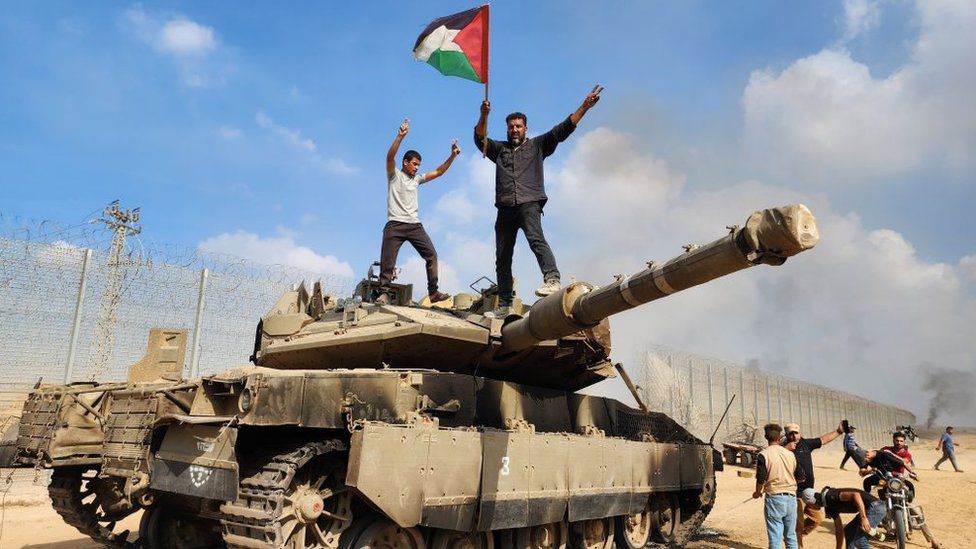
By Gordon Corera
BBC Security correspondent
Where were the Israel Defense Forces, in those long hours as Hamas militants roamed at will around communities near Gaza, some are asking.
“The army completely failed as a quick-reaction force,” one Israeli said, pointing to how some of the communities that came under attack had to rely on their own civilian protection forces while they waited for the military to arrive.
The full answer of why this happened will take some time to emerge. But it seems as if surprise, scale and speed overwhelmed defences which were patchy and unprepared for what they faced.
Surprise was crucial in Hamas’s assault.
Israeli intelligence failed to get inside the planning by Hamas for the attack. The group seems to have undertaken a long-term programme of deception to give the impression it was incapable or unwilling to launch an ambitious attack.
It also practised good operational security, probably keeping off electronic communications.
Hamas then relied on the unprecedented scale and speed of what came next.
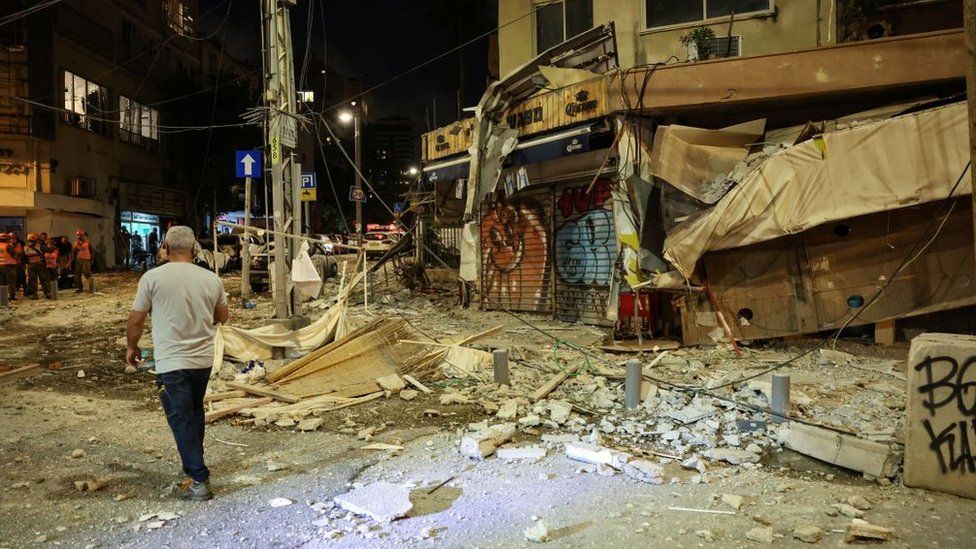
Thousands of rockets were launched as cover. But there were also drone strikes on the monitoring equipment that Israel uses on the border fence to watch what is happening. Heavy explosives and vehicles then created as many as 80 breaches in the security fence.
Motorised hang-gliders and motorbikes were also involved, as between 800 and 1,000 armed men flooded out of Gaza to attack multiple sites.
These swarming tactics seem to have succeeded in overwhelming Israel’s defences – at least for a while.
Such a range of activity would have led to chaos within Israel’s command and control centres, already quiet on a Saturday morning which was also a religious holiday.
Some of the Hamas fighters targeted civilian communities while others targeted military outposts. There has been shock that these outposts were so lightly-defended that they could be overrun, with images posted of Israeli tanks in Hamas hands.
And the holes in the border remained open for long enough to allow hostages to be taken into Gaza before tanks were eventually used to close them up.
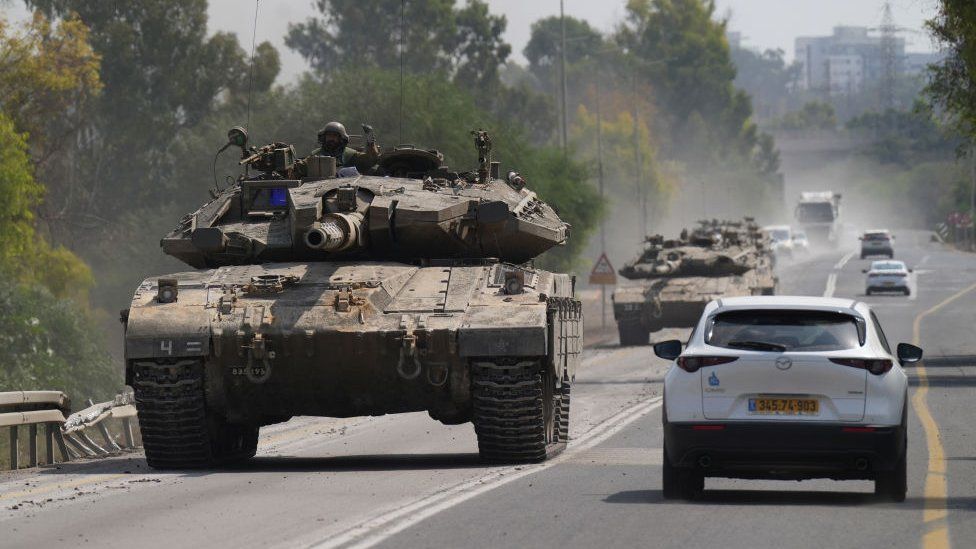
Defences seem to have been patchy – Israeli security and defence forces had in recent months been more focused on the West Bank rather than Gaza, potentially leaving gaps. And Hamas may have counted on the divisions in Israeli society over Prime Minister Benjamin Netanyahu’s policies to further distract the security establishment.
Israel’s military and intelligence capability has long been rated as the best in the Middle East and one of the best in the world. But they may also have underestimated the abilities of their opponents.
The attacks have been compared to those of 9/11 in the US, when no-one had predicted that planes could be used as weapons. That was often called a “failure of imagination”.
And a similar failure of imagination may also be one of the issues for Israel, leaving it unprepared for something so ambitious from its enemy.
Those concerns will certainly be part of the long-term inquiries that will likely take place. In the short term though, the focus will be on working out what to do next rather than looking back.
 Rosamond Press
Leave a comment