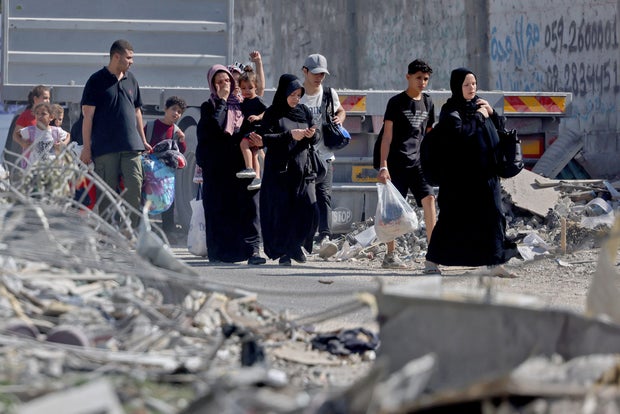
The U.N. “considers it impossible for such a movement to take place without devastating humanitarian consequences,” Dujarric said, and it “strongly appeals for any such order, if confirmed, to be rescinded avoiding what could transform what is already a tragedy into a calamitous situation.”
The following is a lesson from my church ‘The New Radio Church of God’
Here is Paul;
Paul says “time is short”.
“For this world in its present form is passing away.”
It appears some Pharisees believed THE END OF THE WORLD WAS NEAR. So did Paul ‘The Pharisee of Pharisees’. and they have come to John – TO BE SAVED! Not only does John HAND HIS SAVING POWERS – over to Jesus – he promises the Pharisees he will create a UNKNOWN genetic branch of Abraham – who will follow the Son of THE NEW GOD, that is not the SAME as the God of the Jews. Since 1988 I have been devoted to solving the riddle of this – TRANSFERENCE – that is the biggest TOPIC today. I watched Morning Joe do his End Time dance around THE BIG LIE, suggesting Joe Biden is SAVING the world from World War Three via astute diplomacy. Then there was a bit on the BAD ANTISEMETIC UNIVERSITES – and Hamas denying Israel’s right to exist – as if they owned two atomic bombs! One Israeli leader suggest a atomic bomb on Gaza.
What has me very troubled, is, how much trouble will I be in, for posting on the cruelties of Zionist Stern Gang inflicted on the un-armed Palestinians who are being protected from the Zionist Terrorists. I sent y last post to Mark Gall, a graduate of Harvard. Let’s see if he has the guts to obey the rules of Empiric Truth, and inform the President of Harvard – that was founded by my ancestor, John Wilson.
What I have been looking at for thirty-five years, is the transference of John’s End Time Ministry over to the fictional Jesus – after John was beheaded! Who did this – and why? Are the Jews and Christians trapped in JOHN’S PROPHECT THAT NEVER DIED? Was a new race of people – born of stones?
John Presco ‘The Nazarite’
November 12, 20234:46 AM PSTUpdated 2 days ago
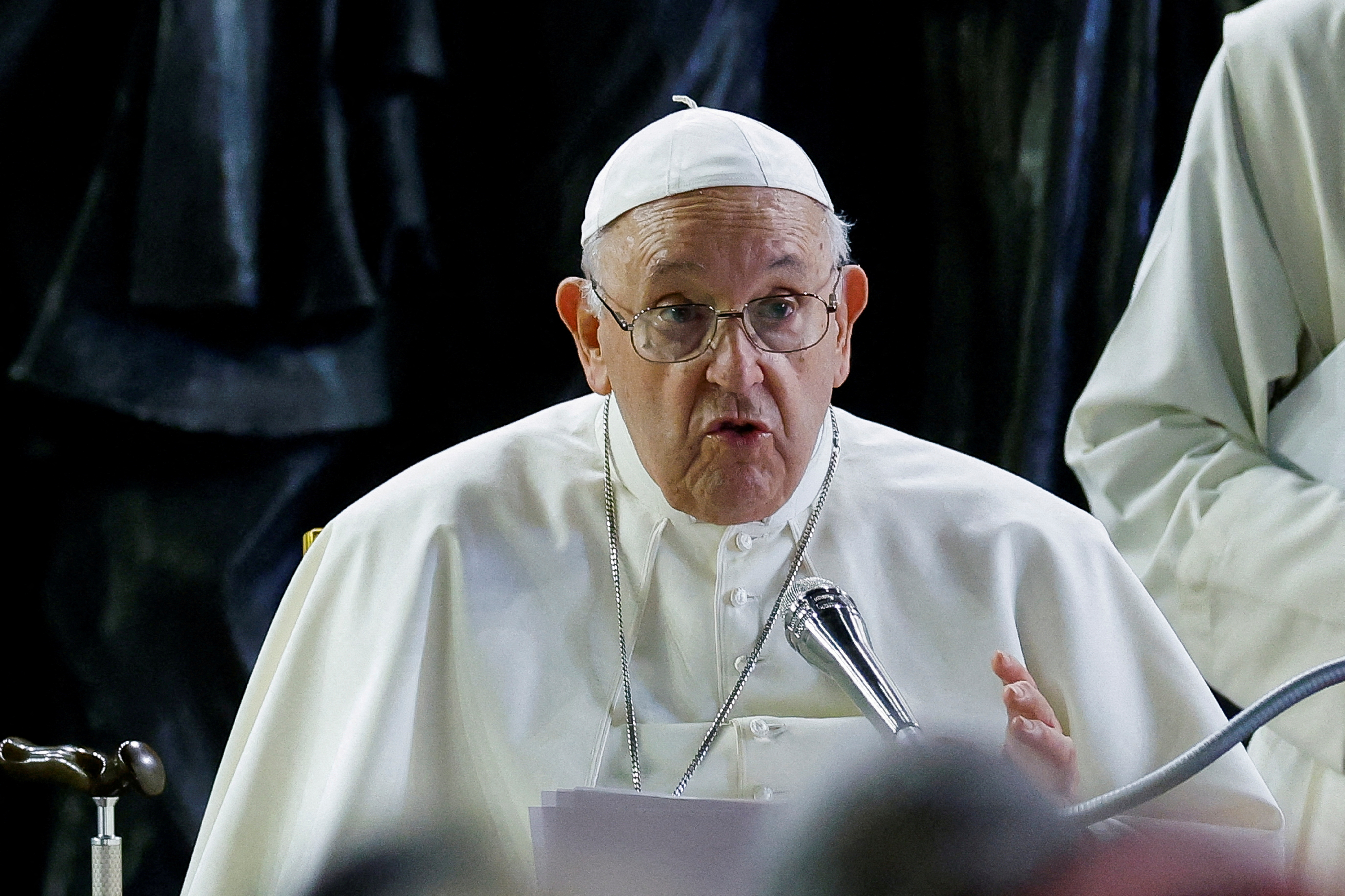
VATICAN CITY, Nov 12 (Reuters) – Pope Francis on Sunday reiterated his plea for an end to hostilities between Israelis and Palestinians, and called for “much more” humanitarian aid for Gaza.
“Enough, enough brothers, enough”, Francis said, adding the wounded in the Gaza Strip needed to be taken care of immediately and the protection of civilians assured. He also said hostages held by Hamas must be freed.
Addressing the crowds in St Peter’s Square after his weekly Angelus prayers, Francis said arms would never bring peace and that the conflict must not widen.
I tell you that out of these stones God can raise up children for Abraham. 10 The ax is already at the root of the trees, and every tree that does not produce good fruit will be cut down and thrown into the fire.
26 Because of the PRESENT CRISIS, I think that it is good for a man to remain as he is.
John the Baptist Prepares the Way
3 In those days John the Baptist came, preaching in the wilderness of Judea 2 and saying, “Repent, for the kingdom of heaven has come near.” 3 This is he who was spoken of through the prophet Isaiah:
“A voice of one calling in the wilderness,
‘Prepare the way for the Lord,
make straight paths for him.’”[a]
4 John’s clothes were made of camel’s hair, and he had a leather belt around his waist. His food was locusts and wild honey. 5 People went out to him from Jerusalem and all Judea and the whole region of the Jordan. 6 Confessing their sins, they were baptized by him in the Jordan River.
7 But when he saw many of the Pharisees and Sadducees coming to where he was baptizing, he said to them: “You brood of vipers! Who warned you to flee from the coming wrath? 8 Produce fruit in keeping with repentance. 9 And do not think you can say to yourselves, ‘We have Abraham as our father.’ I tell you that out of these stones God can raise up children for Abraham. 10 The ax is already at the root of the trees, and every tree that does not produce good fruit will be cut down and thrown into the fire.
11 “I baptize you with[b] water for repentance. But after me comes one who is more powerful than I, whose sandals I am not worthy to carry. He will baptize you with[c] the Holy Spirit and fire. 12 His winnowing fork is in his hand, and he will clear his threshing floor, gathering his wheat into the barn and burning up the chaff with unquenchable fire.”
The Baptism of Jesus
13 Then Jesus came from Galilee to the Jordan to be baptized by John. 14 But John tried to deter him, saying, “I need to be baptized by you, and do you come to me?”
15 Jesus replied, “Let it be so now; it is proper for us to do this to fulfill all righteousness.” Then John consented.
16 As soon as Jesus was baptized, he went up out of the water. At that moment heaven was opened, and he saw the Spirit of God descending like a dove and alighting on him. 17 And a voice from heaven said, “This is my Son, whom I love; with him I am well pleased.”
25 Now about virgins: I have no command from the Lord, but I give a judgment as one who by the Lord’s mercy is trustworthy. 26 Because of the PRESENT CRISIS, I think that it is good for a man to remain as he is.
Paul says “time is short”.
“For this world in its present form is passing away.”
According to a 1948 report filed by the British delegation to the United Nations, the killing of “some 250 Arabs, men, women and children, took place in circumstances of great savagery”.
“Women and children were stripped, lined up, photographed, and then slaughtered by automatic firing and survivors have told of even more incredible bestialities,” the report said. “Those who were taken prisoners were treated with degrading brutality.”
“Depopulating Palestine was not a consequential war event, but a carefully planned strategy, otherwise known as Plan Dalet, which was authorised by [Israeli leader David] Ben-Gurion in March 1948,” Pappé wrote. “Operation Nachshon was, in fact, the first step in the plan.”
The massacre unleashed a cycle of violence and counterviolence that has been the pattern since. Jewish forces have regarded any Palestinian village as an enemy military base, which has paved way for the blurred distinction between massacring civilians and killing combatants, according to the historian.
For those more familiar with the evangelical world, the vehemence of the support has not been a surprise, given the importance to evangelicals of an Israel inhabited by Jewish people. One main strand of evangelical theology holds that the return of Jews to the region starts the clock ticking on a seven-year armageddon, after which Jesus Christ will return.
To that end, the issue of Israel and Palestine has dominated sermons at evangelical churches over the past two Sundays, said Daniel Hummel, a historian of American religion, and the author of Covenant Brothers: Evangelicals, Jews, and US-Israeli Relations.
“The overwhelming theme has been: this war is prophetically significant, but no one is willing to really claim exactly how,” Hummel said.
“And that’s been a long tradition of sort of hedging your bets and getting whatever you can in terms of sort of interest and eyeballs, by declaring that there’s something significant here, but once you start saying specific things and you’re sort of on the hook, it doesn’t turn out that way.”
Israeli military aircraft dropped thousands of leaflets on the northern Gaza Strip Friday warning residents in that part of the Palestinian territory to evacuate to its southern half. The Israeli military informed the United Nations late Thursday night that the entire population in northern Gaza should evacuate south almost immediately.
‘This war is prophetically significant’: why US evangelical Christians support Israel
One strand of evangelical theology holds that the return of Jews to the region starts the clock ticking on a seven-year armageddon, after which Jesus Christ will return

@adamgabbattMon 30 Oct 2023 06.00 EDT
It didn’t take long for many evangelical Christian groups in America to show their support for Israel.
Hours after Hamas attacked the country on 7 October, killing more than 1,400 people, Christians United for Israel, an evangelical lobbying group which claims to have more than 10 million members, posted a message to on X, formerly known as Twitter.
“To the terrorists who have chosen this fight, hear this, what you do to Israel, god will do to you. Despite today’s weeping, joy will come because he [god] who watches over Israel neither slumbers nor sleeps,” CUFI, whose founder believes the presence of Jews in Israel is a precursor to Jesus Christ returning to Earth, wrote.
https://imasdk.googleapis.com/js/core/bridge3.603.0_en.html#goog_523656281
https://imasdk.googleapis.com/js/core/bridge3.603.0_en.html#goog_523656282
https://imasdk.googleapis.com/js/core/bridge3.603.0_en.html#goog_523656283
Soon an “Evangelical statement in support of Israel” was issued by the ethics and religion liberty commission – an arm of the Southern Baptist Convention, a denomination which has 45,000 churches in the US.
In the statement, 2,000 evangelical leaders – not all were named – said they “fully support Israel’s right and duty to defend itself against further attack”. Little credence was given to the Palestinians who would soon find themselves under attack: more than 8,000 people in Gaza have now been killed by Israeli bombardments, according to Gaza’s health ministry .
“While our theological perspectives on Israel and the Church may vary, we are unified in calling attacks against Jewish people especially troubling as they have been often targeted by their neighbors since God called them as His people in the days of Abraham (Gen. 12:1-3),” the evangelical statement said.
“In keeping with Christian Just War tradition, we also affirm the legitimacy of Israel’s right to respond against those who have initiated these attacks as Romans 13 grants governments the power to bear the sword against those who commit such evil acts against innocent life.”
The more than 90 named signatories – four were women, the rest men – included the current president, and eight former presidents, of the Southern Baptist Convention, among other influential evangelicals.
For people not immersed in evangelicalism – a conservative strand of Christianity which emphasises adherence to the Bible – the overt biblical references may have seemed unusual to hear in a geopolitical context.
Romans 13 – the 13th chapter of the Epistle to the Romans in the New Testament – is essentially a lengthy treatise on the importance of submitting to bureaucracy, which states:
“Do you want to be free from fear of the one in authority? Then do what is right and you will be commended. For the one in authority is God’s servant for your good. But if you do wrong, be afraid, for rulers do not bear the sword for no reason.”
For those more familiar with the evangelical world, the vehemence of the support has not been a surprise, given the importance to evangelicals of an Israel inhabited by Jewish people. One main strand of evangelical theology holds that the return of Jews to the region starts the clock ticking on a seven-year armageddon, after which Jesus Christ will return.
To that end, the issue of Israel and Palestine has dominated sermons at evangelical churches over the past two Sundays, said Daniel Hummel, a historian of American religion, and the author of Covenant Brothers: Evangelicals, Jews, and US-Israeli Relations.
“The overwhelming theme has been: this war is prophetically significant, but no one is willing to really claim exactly how,” Hummel said.
“And that’s been a long tradition of sort of hedging your bets and getting whatever you can in terms of sort of interest and eyeballs, by declaring that there’s something significant here, but once you start saying specific things and you’re sort of on the hook, it doesn’t turn out that way.”
The rush to respond, and the statements in support of Israel, were not surprising to those aware of the deep feeling evangelicals have for Israel.
Broadly speaking, some evangelicals believe that Jewish people returning to Israel following the 1917 Balfour Declaration, a British statement which called for “the establishment in Palestine of a national home for the Jewish people”, was key to end times, when God will purge sinners and Jesus Christ will return.
John Hagee, an evangelical pastor and influential founder of Christians United for Israel, explained the prophecy to TBN Networks in December 2022.
“God is getting ready to defend Israel in such a supernatural way it’s going to take the breath out of the lungs of the dictators on planet Earth but we are living on the cusp of the greatest most supernatural series of events the world has ever seen ready or not.”
Hagee said when Jewish people are present in Israel “the clock starts ticking” on the rapture.
“What will come soon [is] the antichrist and his seven year empire that will be destroyed in the battle of armageddon. Then Jesus Christ will set up his throne in the city of Jerusalem. He will establish a kingdom that will never end,” Hagee said.
Hagee, despite having a long history of antisemitism – he has suggested Jews brought persecution upon themselves by upsetting God and called Hitler a “half-breed Jew” – founded Christians United for Israel in 2006.
Among other things, the group lobbied for the US embassy in Israel to be moved from Tel Aviv to Jerusalem, which Donald Trump did in 2018, and is “committed to Israel’s strength, security and sovereignty”.
The support of evangelical Christians – in 2015 the Pew Research Center estimated there were about 62 million in the US – for Israel can be split into different groups, Hummel said.
While there are plenty of evangelicals who, like Hagee, adhere to the Israel-is-key-to-Jesus’-return theology, there are also those who believe in “blessings theology”, a less outlandish, more transactional approach to support for Israel.
The blessings theology is based on a literal reading of the book of Genesis, where God told Abraham – who Hummel described as “the patriarch of the Jewish people” – that he would “bless those who bless you” and “curse those who curse you”.
“For the last couple of centuries this has been interpreted on individual terms. So you can accrue personal blessings by being good to the Jewish people, or by giving money, or touring Israel or things like that,” Hummel said.
That also works on a national level, he said.
“And so the crude way of doing this is a pastor will say something like: ‘Look at the Roman Empire and how they persecuted the Jews and Rome fell. Look at the British Empire and how the British didn’t treat the Jews well, and how they fell. Look at the Nazis and how they persecuted the Jews, and they fell.
“And we, the Americans, don’t want to be the next Empire or the next great power to fall because we didn’t sufficiently bless the Jewish people.’”
There are also those whose support is “more broadly American”, Hummel said: “There’s a deep cultural affinity that’s been built over decades and decades between the US and Israel all across the board.”
Evangelicals make up an influential part of the Republican party base, and have a strong number in Congress. More than 100 members of the current Congress can be broadly identified as evangelical, and that was on display in recent days.
Lee Fang, a journalist, recently asked congressmen and women whether their religion was important to their support for Israel, for the documentary “Praying for Armageddon”.
“This entire matter is based upon the faith of our maker, our creator, but it’s also faith of a chosen people,” Pete Sessions, a Republican congressman from Texas and a Methodist, said.
Fang asked Tim Burchett, a Republican congressman from Tennessee, about evangelical support.
“They’re following the scripture, and what the scripture says about Israel: ‘Those who bless Israel will be blessed,’ they take it literal, and I’m one of those people,” Burchett said.
In terms of the influence evangelicals might wield as the Israel-Hamas conflict continues, Hummel said there had been a “mixed record” on evangelicals’ political sway.
Still, Trump has specifically said he moved the US embassy to Jerusalem “for the evangelicals”, while Hagee served as an adviser to the twice-impeached president.
In the 2020 election, evangelical or born-again Christians made up 28% of the overall electorate, CNN reported, and three-quarters voted for Trump. Given that support for the Republican party, under GOP leadership evangelicals would have plenty of influence.
“When there’s a Republican president they have a seat at the table it doesn’t mean the president’s going to do exactly what they want, but they’re the ones that the president’s listening to more than other interested parties on Israel,” Hummel said.
With a presidential election looming, and with few signs that the Israeli conflict will ebb away any time soon, evangelicals could find themselves in a position of significant power in the near future.
Israel at 75: how inept British intelligence failed to contain Jewish independence groups
By Dr Steven Wagner
11 May 2023
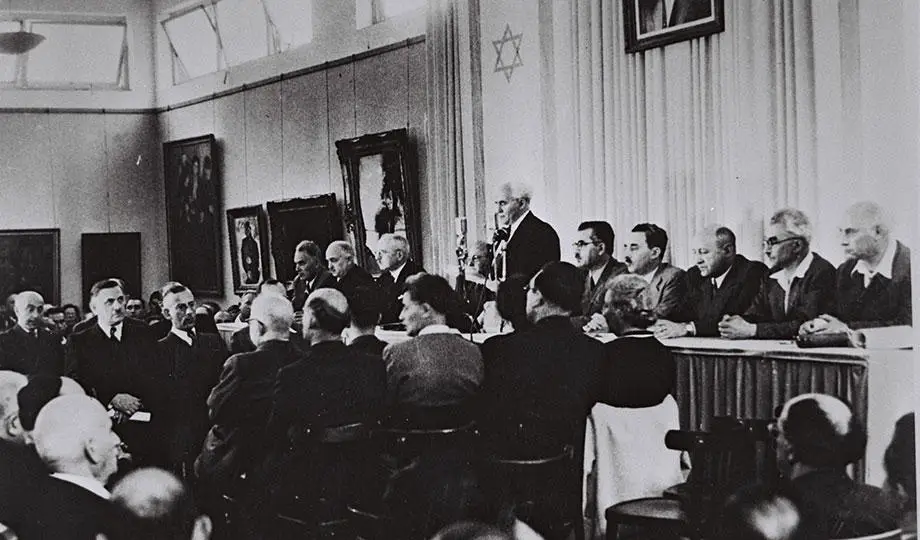
Before they were Israeli, the Jewish community of Palestine – the Yishuv – had been Britain’s close junior partner. A dispute over Britain’s restrictions on Jewish immigration to Palestine began in 1939, but was set aside during the struggle to defeat Hitler.
In a white paper that year, the British government declared the “Jewish National Home”, as promised in its 1917 Balfour Declaration, as a settled policy. It planned to replace direct rule with a democratic government for all. These plans never matured, because of the war and because of both Palestinian and Zionist resistance to them.
Zionist institutions supported Britain’s war effort against a common existential enemy but their frustration boiled over once it was finished. The monthly quota of 1,500 Jewish immigrants was seen by the Yishuv as complicit with Hitler’s near-complete genocide. There would be no further compromise on this issue.
After decades of close security and counter-terrorism cooperation – and wartime cooperation in covert action, propaganda, economic warfare, signalling, and other elements of intelligence work – the Zionist leader and future prime minister of Israel, David Ben-Gurion, launched a secret war on Britain.
Previously, the large Jewish militia in Palestine, known as Haganah or “defence”, had served as an auxiliary to the British police and army. Its intelligence service, called Sherut Hayediot or Shay, had supported Britain in the war effort and cooperated in the suppression of anti-British Zionist terrorism led by two other future prime ministers: Menachem Begin and Yitzhak Shamir.
When Ben-Gurion learned from a source in the cabinet that Britain would prevent European Jewish survivors from entering Palestine, he authorised secret cooperation between Haganah and the two terrorist groups: Begin’s Irgun and Shamir’s Lehi, also known as the “Stern Gang”.
Britain knew about these orders to cooperate thanks to its signals intelligence service (today’s GCHQ). But intelligence officers struggled to interpret these messages.
Even when intelligence was accurately understood, it was difficult to act upon without alerting Haganah that its codes were insecure. GCHQ relied on a small cell, including future historian Bernard Lewis and another British Jew, Samuel Stalbow, to handle intelligence. They never leaked Britain’s top secret intelligence, unlike – as we shall see – the British government itself.
British missteps
After months of bombings, kidnappings, and murder, the high commissioner for Palestine, Alan Cunningham, was finally authorised to act. So the British army planned to arrest the leadership of the Jewish Agency (the main representative body of the Yishuv, led by Ben-Gurion).
Often described by British authorities as an imperium in imperio, or a “state within a state”, the Jewish Agency’s relationship with armed groups was more complicated than the British had realised.
On June 29 1946, the army and police launched Operation Agatha, arresting most of the Jewish Agency and some of Haganah’s strike force. Its chain of command remained intact thanks to warnings from its own intelligence, allowing some to hide or escape.
Ben-Gurion had been in Paris. This moment was the climax of his five-year strategy to sever Zionism’s dependence on Britain, thus far a pillar of the movement’s approach to colonisation.
Operation Agatha forced the Jewish Agency and the Zionist movement to consider next steps: what did they want from this struggle? Ben-Gurion’s drive for independence was the only viable answer available.
King David Hotel bombing
Then, in what GCHQ historian John Ferris called an act which “finalised the Anglo-Zionist divorce”, on July 22 Irgun terrorists bombed the British headquarters at the King David Hotel in Jerusalem, killing more than 90 people, including GCHQ and other intelligence personnel.
Deceptive intelligence, disseminated by none other than Kim Philby – later unmasked as a senior Soviet mole – sent Palestine’s top security and police officers to Beirut. Britain’s poor security at its headquarters was thus compounded by the absence of those meant to interpret warning intelligence. Terrorism destroyed part of Britain’s top secret intelligence unit and its grip on the intelligence picture weakened.
The arrests in June had created a constitutional complication. By closing the Jewish Agency, British opposition MPs and some government backbenchers argued, the army had threatened the legitimacy of British rule at least as much as Jewish terrorism.
Having confiscated Jewish Agency records, Britain hoped to present such evidence without blowing GCHQ’s sources. Although the material illuminated Jewish Agency complicity in terrorism, and a wider pattern of theft of arms and intelligence, it was not enough to prove that Ben-Gurion ordered Haganah’s resort to terrorism.
In response to parliamentary pressure, and against the advice of military and intelligence authorities, the prime minister pressured the security service MI5 to prepare a paper for parliament that included decrypted communications of Ben-Gurion, the head of Haganah and other officials. The aim was to embarrass those leaders, spurring their cooperation, but also to settle parliamentary outrage.
After these intelligence leaks, the Jewish Agency and Haganah updated and professionalised their cryptography, meaning Britain lost access to vital intelligence.
During 1947 – a critical year – Britain struggled to regain this access within the Jewish resistance. The British government also tried to bring Jews and Arabs back to negotiations, but failed to get official Jewish Agency participation.
End of the Mandate
In January, Britain referred the Palestine question to the newly formed United Nations, and was surprised when the UN recommended ending British rule and the creation of an independent Jewish state. The leaders of this new Jewish state had learned from Britain’s intelligence mistakes, as well as its own.
More significantly, by late 1947, Haganah began to attack the encyrption used by surrounding Arab states and their armies, especially the volunteer Arab Liberation Army. Israel’s ability to locate its enemies and understand their intentions and capabilities contributed to its many tactical advantages during its 1948 war for independence.
The Israeli experience in signals intelligence – drawn from wartime cooperation with Britain and the post-war anti-British struggle – proved vital to the emergence of Israel, and its enduring legacy as an intelligence powerhouse.
This article which is republished from The Conversation under a Creative Commons license. Read the original.
The Nakba: Five Palestinian towns massacred 75 years ago
Thousands of Palestinians were killed and tens of thousands expelled during and after the creation of the Israeli state in 1948.

Video Duration 02 minutes 59 seconds02:59
By Dalia Hatuqa
Published On 15 May 202315 May 2023
Every year on May 15, Palestinians mark a sombre occasion: the Nakba (“catastrophe” in Arabic) that befell Palestinians in the lead-up to and during 1948, when they were expelled from their historic and ancestral land by Zionist militias.
During the Nakba, a mass expulsion ensued where hundreds of villages were depopulated, homes were destroyed, and thousands were killed.
KEEP READING
list of 4 itemslist 1 of 4
US Congress must understand ‘trauma’ of Nakba, Rashida Tlaib says
list 2 of 4
Israel denies the Nakba while perpetuating it
list 3 of 4
Rashida Tlaib pushes for Palestinian Nakba recognition in US
list 4 of 4
Nakba film streams on Netflix despite Israeli threats
end of list
Jewish Irgun, Haganah and Stern Gang militias committed a series of mass atrocities, including dozens of massacres.
Here are five of the massacres that took place:
Balad al-Sheikh
On December 31, 1947, the first large attack by the Haganah Zionist militia took place against the village of Balad al-Sheikh, east of the port city of Haifa, in which 60 to 70 Palestinians were killed, according to Walid Khalidi’s book, All That Remains.
The raiding militia’s orders were to kill as many adult males as possible. A force of 170 men from the Palmach (an elite force of the Haganah) fired their weapons and blew up houses, then pulled out adult males and shot them. According to the Haganah General Staff, two women and five children were also killed, with an additional 40 people injured. Several dozen houses were also destroyed during the attack.
After the massacre, on January 7, 1948, many families fled the village. By late April of that year, Zionist forces had occupied it.
Before the massacre, in 1945, the village was the second-largest in historical Palestine in terms of population. It was famous for the tomb of Izz al-Din al-Qassam, a preacher whose death in action against British forces sparked a revolt against the British occupation in 1936. Today the cemetery, which lies in what was renamed the Nesher township, is in a state of neglect.
The Deir Yassin massacre: Why it still matters 75 years later
The brutality of the Deir Yassin prompted thousands of Palestinians to flee, just weeks before Israel was created.

Published On 9 Apr 20239 Apr 2023
Seventy-five years ago, Zionist militias tore through Palestinian villages, massacring the villagers and expelling those who remained alive, to clear the way for the creation of the state of Israel.
An estimated 15,000 Palestinians were killed and hundreds of thousands fled their homes to live as refugees in other parts of Palestine or neighbouring countries, an event known by Palestinians as the Nakba – “the catastrophe”.
KEEP READING
list of 3 itemslist 1 of 3
Nakba Day: What happened in Palestine in 1948?
list 2 of 3
Nakba film streams on Netflix despite Israeli threats
list 3 of 3
Israel was built on burned Palestinian villages
end of list
This year, the United Nations will host its first-ever high-level event to commemorate this forced displacement that resulted in the establishment of the state of Israel on May 15, 1948.
But Palestinians have never ceased to commemorate the loss of each village that was once part of their homeland.
Among them was Deir Yassin, a village perched on a hill west of Jerusalem, which has become emblematic of the suffering Israel would inflict on the Palestinians.
What is the Deir Yassin massacre?
On April 9, 1948, just weeks before the creation of the State of Israel, members of the Irgun and Stern Gang Zionist militias attacked the village of Deir Yassin, killing at least 107 Palestinians.
According to testimonies from the perpetrators and surviving victims, many of the people slaughtered – from those who were tied to trees and burned to death to those lined up against a wall and shot by submachine guns – were women, children and the elderly.
As news of the atrocities spread, thousands fled their villages in fear. Eventually, some 700,000 Palestinians would flee or be forcibly displaced at the outset of Israel’s creation, making the massacre a decisive moment in Palestinian history.
What happened in Deir Yassin?
It was a Friday afternoon when the militia struck Deir Yassin, where about 700 Palestinians lived. Most were quarry workers and stone cutters.
According to the Israeli narrative, Operation Nachshon aimed to break through the blockaded road to Jerusalem and the fighters encountered stiff resistance from the villagers that forced them to advance slowly from house to house.
But Palestinians and some Israeli historians say the villagers had signed a non-aggression agreement with the Haganah, the pre-Israeli-state Zionist army. They were nevertheless murdered in cold blood and buried in mass graves.
According to a 1948 report filed by the British delegation to the United Nations, the killing of “some 250 Arabs, men, women and children, took place in circumstances of great savagery”.
“Women and children were stripped, lined up, photographed, and then slaughtered by automatic firing and survivors have told of even more incredible bestialities,” the report said. “Those who were taken prisoners were treated with degrading brutality.”
Israeli historian Benny Morris said the militias “ransacked unscrupulously, stole money and jewels from the survivors and burned the bodies. Even dismemberment and rape occurred.”
The number of dead is disputed but ranges from 100 to 250. A representative of the Red Cross who entered Deir Yassin on April 11 reported seeing the bodies of some 150 people heaped haphazardly in a cave, while around 50 were amassed in a separate location.
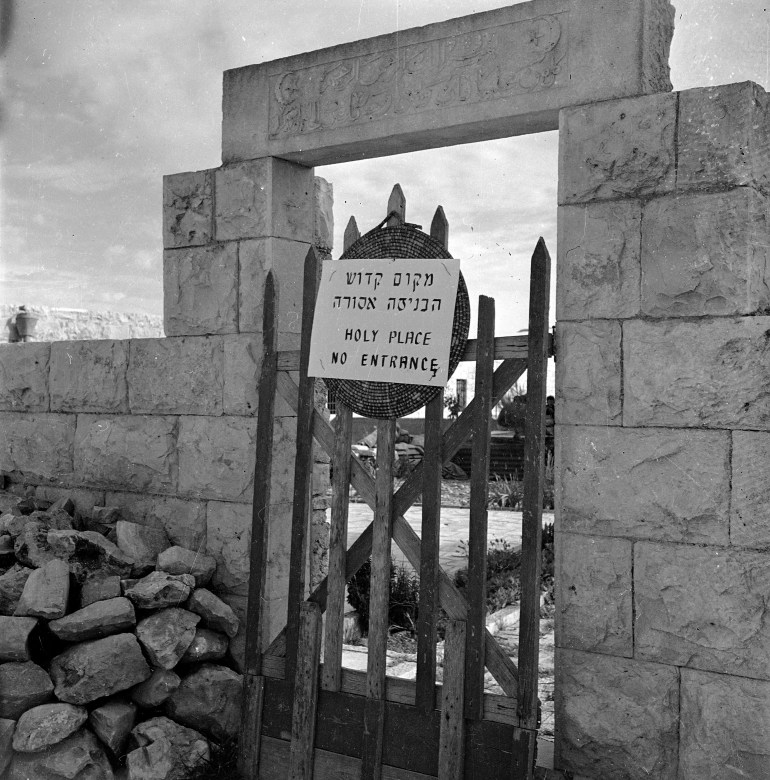
Prominent Jewish intellectual Martin Buber wrote at the time that such events had been “infamous”.
“In Deir Yassin hundreds of innocent men, women and children were massacred,” he said. “Let the village remain uninhabited for the time being, and let its desolation be a terrible and tragic symbol of war, and a warning to our people that no practical military needs may ever justify such acts of murder.”
Why does it matter to this day?
Morris noted that “Deir Yassin had a profound demographic and political effect: It was followed by mass flight of Arabs from their locales.”
News of the massacre spread panic among the Palestinians, prompting hundreds of thousands to flee.
Four nearby villages were next: Qalunya, Saris, Beit Surik and Biddu.
Deir Yassin was no mistake, according to Israeli historian Ilan Pappé.
“Depopulating Palestine was not a consequential war event, but a carefully planned strategy, otherwise known as Plan Dalet, which was authorised by [Israeli leader David] Ben-Gurion in March 1948,” Pappé wrote. “Operation Nachshon was, in fact, the first step in the plan.”
The massacre unleashed a cycle of violence and counterviolence that has been the pattern since. Jewish forces have regarded any Palestinian village as an enemy military base, which has paved way for the blurred distinction between massacring civilians and killing combatants, according to the historian.
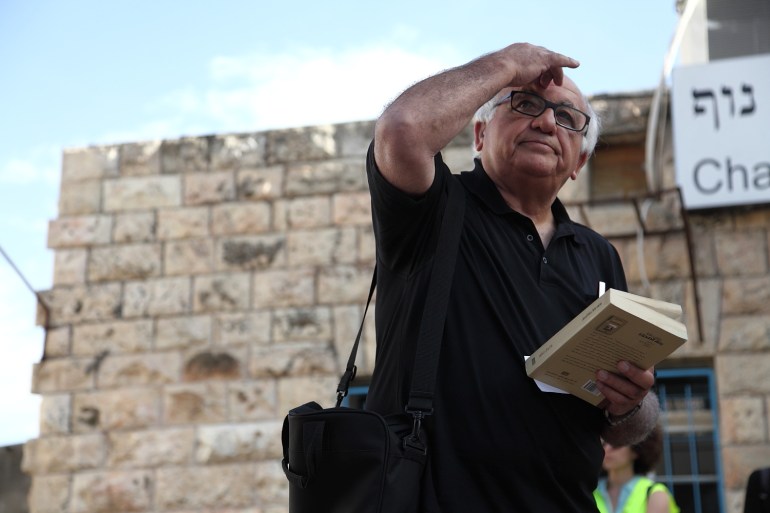
What does it say about Israel’s vision today?
Deir Yassin has become a powerful symbol of Palestinian dispossession, as well as a historical fact Israel must confront when retelling its national narrative.
According to Pappé, given that “terrorism” is a mode of behaviour that Israelis attribute solely to the Palestinian resistance movement, “it could not be part of an analysis or description of chapters in Israel’s past”.
 Rosamond Press
Leave a comment