Has the Real Hippie Messiah come to Jerusalem – in his mind?
It’s November 6, 2023 at 3:24 A.M. I awoke early. I feel all this evil trouble in the air. Peter Shapiro texted me a half hour ago, expressing concern for Christine Wandel, who had an affair with Bill Graham – the Jew! Peter talks about the Harkin’s Brothers all them time. I told him that Bruce Perlowin lived down in the Harkin’s basement for half a year, and Jerry Rubin would go down in the basement to do Jewelry business.
“Michael called them ‘The Basement Jews’. He was married to Bruce’s ex-wife. There’s now way to delay that trouble coming every day. The Basement Jews are bombing the shit out of – The Tunnel Terrorists!”
I was looking at my daughter’s Facebook last night.. She’s into Heavy Branding. Why she did not allow me to BRAND her is a story. Oliver Stone’s people wanted Michael to contribute to his move . He was close with Jim and Pam – and Michael McClure. Peter knew all the Fillmore musicians, and played in several Hippie bands. The Loading Zone played at the Fantasy Fair and Magic Mountain Music Festival that was held atop Mount Tamalpais in 1967. This is the precursor to Woodstock. I just noticed Jim Kweskin’s Jug Band played. I am kin to Jessie Benton, who married Mel Lyman, a member of Jim’s band. When I met my sixteen year old daughter for the first time in 2001, she sang and payed a song for me on her guitar. I was now a father-promoter who did a lousy job! She was supposed to be a Super Country Western Star already. How old was Taylor Swift in 2001?
I will now compare this Magic Mountain Fair to the Supernova Dance and Music Festival. Erdogan is accusing Israel of War Crimes. I will ask this..
WHAT BECAMED OF THE FANTASTIC MAGIC WE MADE?
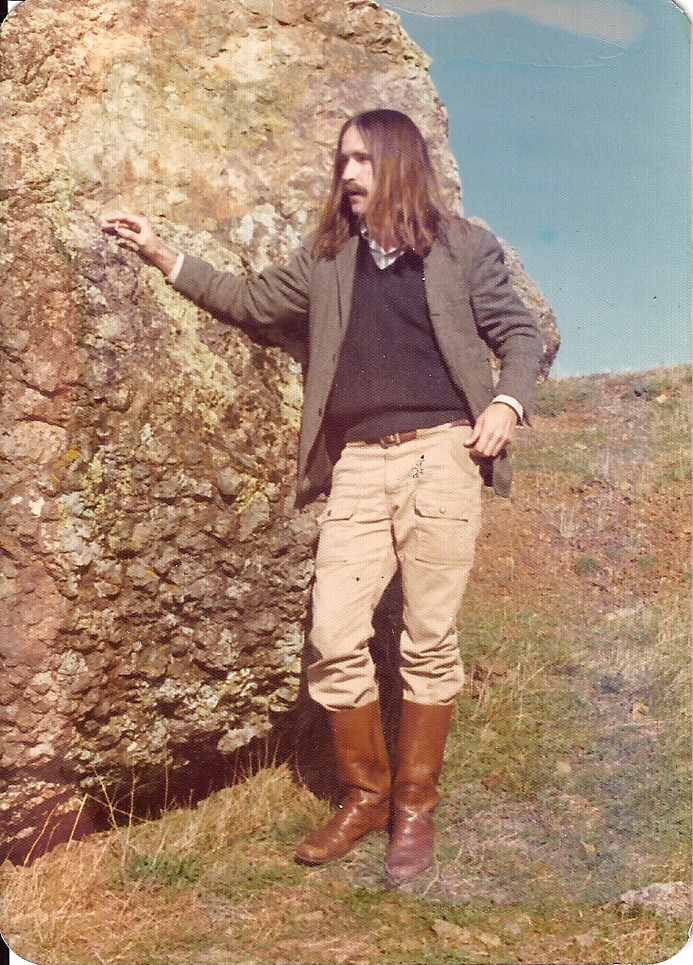
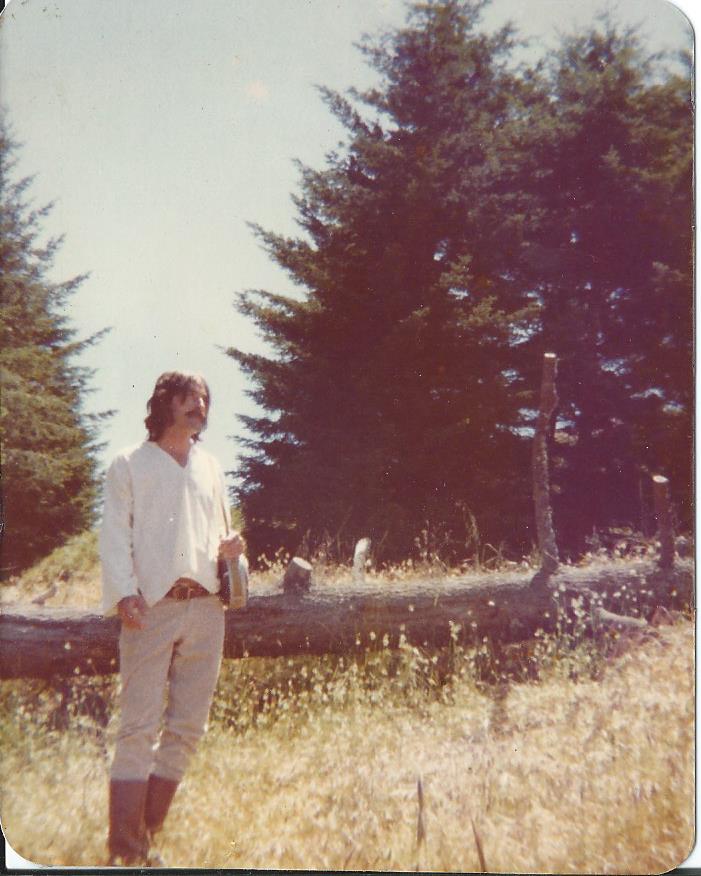
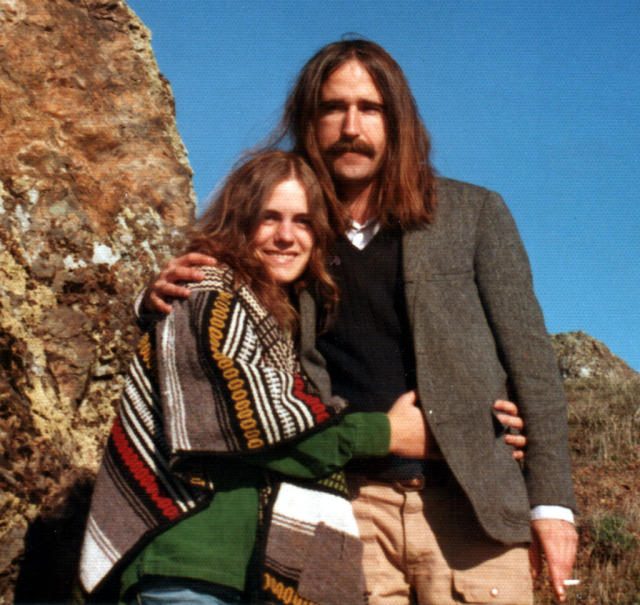
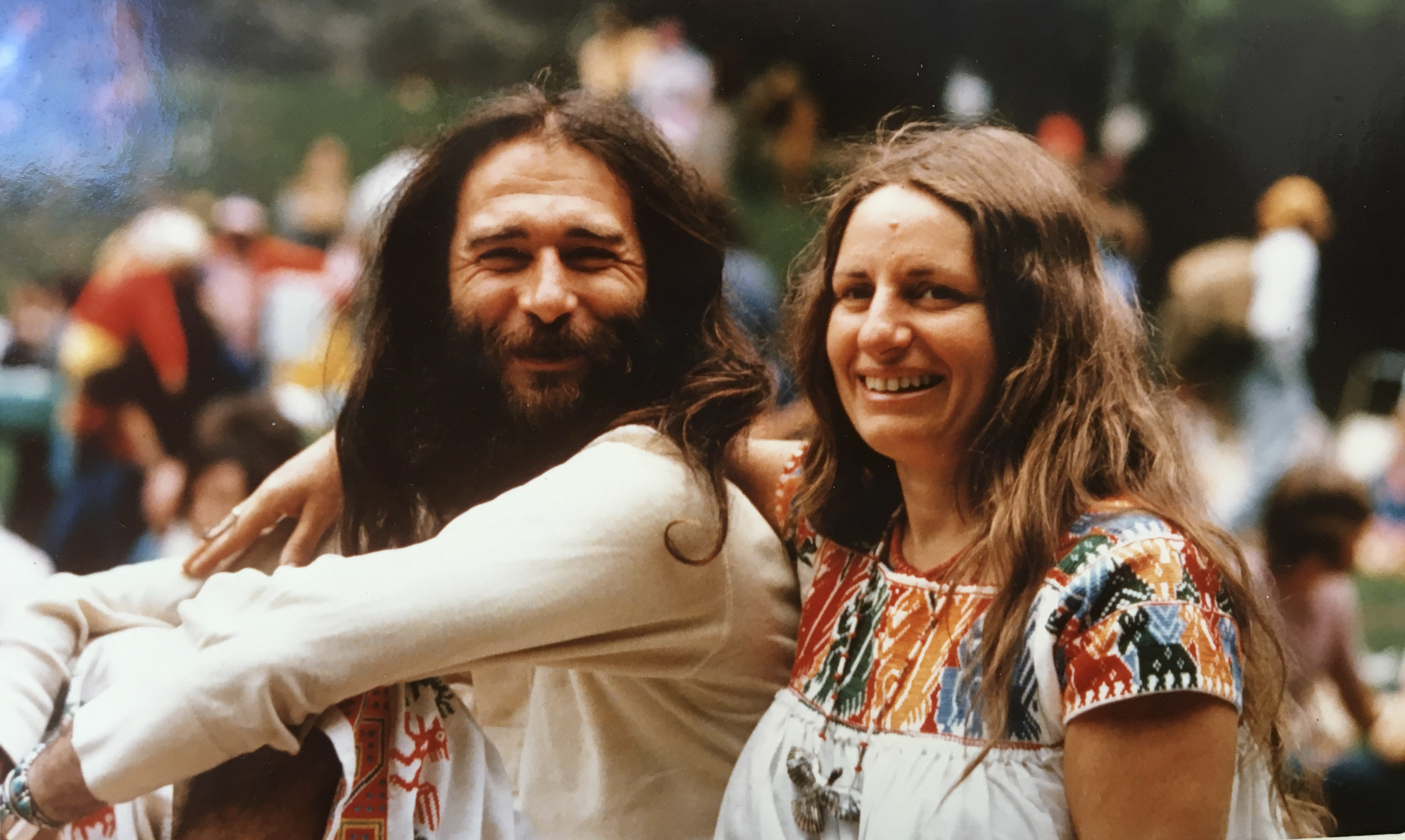
Above are pics of me and Glory on Magic Mountain taken in 1976. I wasn’t supposed to have a child. Three Seers said I died in 1967 on these rocks – by the sea. Heather is seventeen in the pic above. Imagine if she was taken hostage at the Magic Mountain Festival. Netanyahu has rejected Biden’s call for a pause in the making of war – and not love!
John ‘The Hippie Messiah’
https://en.wikipedia.org/wiki/Re%27im_music_festival_massacre
On 7 October 2023, Hamas militants initiated a surprise invasion of Israel from the Gaza Strip and massacred 270 civilians, wounded many more, and took an unknown number of hostages at the “Supernova Sukkot Gathering”, an open-air psychedelic trance music festival celebrating the Jewish holiday of Sukkot near kibbutz Re’im.[4][5][6] This was the largest terror attack in Israel’s history,[1][7][8] and the worst Israeli civilian massacre ever.[9] It was part of Hamas attack on Israel, which included massacres of hundreds of civilians in the nearby communities of Netiv HaAsara, Be’eri, Kfar Aza, Nir Oz, Holit at the start of the 2023 Israel–Hamas war.[10]
At 6:30 am around sunrise, rockets were noticed in the sky.[1] Around 7 am, a siren warned of an incoming rocket attack, prompting festivalgoers to flee.[11] Subsequently, armed militants, dressed in military attire and using motorcycles, trucks and powered paragliders, surrounded the festival grounds and indiscriminately fired on individuals attempting to escape. Attendees seeking refuge in nearby locations, such as bomb shelters, bushes, and orchards, were killed while in hiding. Those who reached the road and parking were trapped in a traffic jam as militants fired at vehicles. The militants executed some wounded individuals at point-blank range as they crouched on the ground.[12][8]
The details of the whereabouts and condition of the hostages are not publicly known.[4][5][13]
Turkish President Recep Tayyip Erdogan delivered an hour-long speech at a pro-Palestinian rally in Istanbul on Saturday. He condemned Israel’s actions in Gaza and criticized Western powers for their stance on the conflict. In his address, the Turkish leader accused Israel of “committing war crimes for 22 days” and expressed concern over the ongoing crisis. He also called for Western leaders to take action and address the escalating situation in Gaza in order to prevent further loss of life in the region.
How the Summer of Love changed American Judaism
BY ROB GLOSTER | JUNE 29, 2017
The Summer of Love swept through San Francisco in a tie-dyed haze of sex, drugs and rock ’n’ roll in 1967, turning the Haight-Ashbury neighborhood into a hippie haven of acid trips and musical awakenings.
But for many of the Jewish kids who flocked to the Haight a half-century ago, there was something else — a search for spirituality and meaning they felt was absent in the synagogues of their parents.
Jews were a disproportionate part of the scene, with contemporaneous and current accounts suggesting they made up a quarter to a third of the thousands of hippies who lived in — or flocked to — the Haight that summer.
Many of the spiritual, literary and musical gurus in what former Haight-Ashbury community leader Tsvi Strauch calls the “Magical Mystery Vortex” were Jewish, from poet Allen Ginsberg to Richard Alpert, a Harvard professor who was one of the early proponents of using LSD to explore human consciousness (and who in 1967 changed his name to Ram Dass).
American Judaism itself changed as a result of that hippie culture, with the Jewish Renewal movement and the growth of Chabad considered legacies of that time. (The picture on Ram Dass’ Wikipedia page is a photo of him with Rabbi Zalman Schachter-Shalomi, a former Chabad emissary and one of the founders of Jewish Renewal.)
Aryae Coopersmith, whose book “Holy Beggars: A Journey from Haight Street to Jerusalem” details his spiritual journey that began in the hippie culture of San Francisco, argues that Jews seeking a higher sense of purpose provided much of the impetus for the hippie happenings of the late 1960s.
Coopersmith, a resident of El Granada on the San Mateo County coast and the founder of a company that seeks to create bonds among Silicon Valley executives, grew up in New Jersey in the 1950s and said he became an atheist after his bar mitzvah.
“There was something in me that deeply craved a spiritual life but that did not find it in the synagogue at that time,” he said. “When we were at Haight Street and there was LSD and there were other young people of Jewish background and some of the spiritual leaders were there, we were fuel for that [hippie] fire.
“Although the Summer of Love was not identified as a Jewish cultural happening, so much of it was Jewish people who were seeking community.”
Oren Kroll-Zeldin, a social and cultural anthropologist who is an adjunct professor in the Swig Program in Jewish Studies and Social Justice at the University of San Francisco, researched the House of Love and Prayer as part of a project that is mapping sites of Jewish significance in the city. He said it would be “a stretch to make the argument that the Summer of Love was fueled by Jews.”
“But you can say that postwar and post-Holocaust Jews were searching for something different and needed a new outlet, and that was one of the things that attracted them to the Summer of Love,” he said. “California is this new horizon, and for Jews it’s always been this American Jerusalem. It’s a vision of hope. It’s a vision of possibility.”
Rabbi Yosef Langer, the longtime executive director of Chabad of San Francisco, said that in the summer of 1967 he was a “wannabe hippie” who as a San Jose State student happily visited the Haight to party. He wore tie-dye shirts and had an Afro hairdo. But the rabbi, who grew up in Oakland as Gary Langer and largely ignored Judaism after his bar mitzvah, said he soon found he was seeking something more fulfilling. He turned back to Judaism and soon became a devotee of the Lubavitcher rebbe, Rabbi Menachem Mendel Schneerson.
“Being a hippie is more of a philosophy,” he said. “A hippie is a world community of people seeing that the superficiality of wine, women and song just wasn’t doing it anymore. That’s what the hippie was: the search, the yearning, coming together in music and expression and poetry and song and dance and free love.”
Marc Dollinger, a professor in the Department of Jewish Studies at San Francisco State University, said the House of Love and Prayer grew out of the search for spirituality by many young Jews who grew up in secular, assimilated households.
“A generation of youth raised in the complacency of the 1950s was searching for meaning,” he said. “Some found it in the civil rights movement. Some sought it in spirituality.”
Of course, there were plenty of Jews in the Haight that summer of 1967 who weren’t seeking a spiritual awakening. Many indulged, or perhaps overindulged, in the psychedelic experience. Others danced with joy. And still others came to observe.
As Scott McKenzie sang in 1967: “If you’re going to San Francisco, be sure to wear some flowers in your hair.”
“I wore flowers in my hair, yeah,” said Susan Duhan Felix, a ceramic artist in Berkeley who had moved to the Bay Area with her husband in early 1967. “I just liked the joy of the people, and the clothes. I was making my own clothes, doing the embroidery. I wasn’t involved with the sex and drugs. It was the spiritual things and also the music.”
Linda Yelnick saw Jimi Hendrix and the Doors at the Fillmore in San Francisco. She was having a post-concert snack there another night when Janis Joplin sat down at her table.
For Yelnick, a Burlingame-based band manager who is helping plan a Summer of Love event in San Francisco in August, being in the Haight in 1967 was all about observing the scene.
The product of a Conservative Jewish upbringing, she was just about to enter San Francisco State — where she later became president of the school’s first Jewish sorority, Delta Theta Pi — and would come to the Haight with her Jewish girlfriends to stand on the street corners and watch.
“I was a goody-goody. I was definitely not in that drug scene. I didn’t want the germs from people,” she said. “When I was in the Haight or at the Fillmore, we felt we didn’t have restrictions. It was different from homework and our home existence and our knishes.”
Ginsberg, a Beat Generation poet, was among the featured speakers at the Human Be-In on Jan. 14, 1967 at Golden Gate Park that many consider the spark for the Summer of Love. Strauch, a Haight merchant at the time, may have given the event its name when he co-founded the Council for a Summer of Love, a clearinghouse for events in the neighborhood.
As runaways and other young people came to San Francisco by the thousands in 1967, local groups such as the Diggers provided free food, medical care and housing. Peter Berg and Peter Coyote, the actor whose birth name was Robert Peter Cohon, were among the founders of the group that shared many of its members with the San Francisco Mime Troupe, a guerrilla theater organization.
Strauch, who estimated a third of the hippies in the Haight were Jewish, was running a store called In Gear — selling water pipes and hippie clothing — when Berg and Coyote were seeking contributions for their soup kitchen. Strauch, who was also teaching Jewish philosophy and Hebrew at the now-defunct College of Jewish Studies of San Francisco, and was Hillel director at two San Francisco colleges, said he was happy to help.
“We were making money but we wanted to give back. I guess that was an expression of our Jewishness,” he said, adding that the hippies’ significant Jewish percentage “had to do with the fact that part of Jewish culture has always been to question authority.”
In July of that year, Carlebach arrived, and was soon hugging people on the street and asking if they were Jewish. If so, he’d invite them to Shabbat dinners. By the following spring, he had such a big following that he and Coopersmith opened the House of Love and Prayer at 347 Arguello Blvd., about three blocks from Congregation Emanu-El.
“They wanted to take these wayward souls, and instead of getting high on free love and pot and LSD, let’s get high on traditional Jewish practice,” USF’s Kroll-Zeldin said. “That’s what’s so interesting about the House of Love and Prayer — you had these Hasidic hippies where they meshed the ideals, the dress of the hippy lifestyle with deeply spiritual experiences.”
Rabbi Aubrey Glazer of Congregation Beth Sholom in San Francisco said “this was their way of bringing the wandering Jews back to Judaism.”
“It really showed us the genius of American Judaism being able to incorporate elements of American culture,” he said. “Shlomo asked what’s going on in secular culture that’s attracting the Jews, and let’s make it our own.”
Ram Dass sometimes spoke at the House of Love and Prayer, where nuns, Buddhists and Hindus also were frequent guests. Coopersmith said the singing and dancing at Friday night services often stretched into the early morning.
“The doors were always open. The challenge with that was we never said no to anyone, so all kinds of people could be wandering in and asking to sleep there. There were huge pots of rice and veggies and soup. On a typical Shabbos when Shlomo wasn’t there, there would be 150 to 200 people,” Coopersmith said. “When Shlomo was there, you put all that on steroids.”
The House of Love and Prayer dissolved by 1977, though an offshoot with the same name still exists in Tsfat, Israel. But its legacy lives on in certain American Jewish circles, with its focus on community building, joyous prayer and havurah groups.
“I think that the whole Jewish Renewal thing came out of it and the services I go to now, Urban Adamah, Wilderness Torah, they definitely have hippie influence,” Felix said. “That was the dream people had. They kind of organized it into institutions for the next generations.”
Langer said the House of Love and Prayer showed that “people want passion, to be passionate about Judaism. And they want song and something that touches their heart.”
Glazer pointed to Bay Area groups such as The Kitchen as outgrowths of the communal spirit of the House of Love and Prayer.
“At the end of the day, it contributed immensely to the revival of American Judaism,” he said. “We’re still learning and absorbing the lessons that were being taught at the House of Love and Prayer, that’s it’s important to connect people on more than just an intellectual and a liturgical way.
“That’s what the House of Love and Prayer was able to absorb from the larger hippie movement — the need to let go of some of the walls that keep us apart and to actually be real and to be human and wear your soul on your sleeve.”
Bruce Perlowin and the Gentle Giant
Posted on April 11, 2012 by Royal Rosamond Press


The following is being published by Rosamond Press Co. a newspaper I founded in Lane County Oregon in 1997. Thanks to the Vincent Rice Family Trust, I have been able to upgrade my computer and purchase a scanner which allows me to publish family photographs such as the one above of Wanda Harkins home in the Oakland Hills were Bruce Perlowin lived for five months.
Fantasy Fair and Magic Mountain Music Festival
4 languages
Tools
Coordinates:  37.91258°N 122.60844°W
From Wikipedia, the free encyclopedia
| Fantasy Fair and Magic Mountain Music Festival | |
|---|---|
| Festival ad with scheduled performers | |
| Genre | Pop music, Rock music |
| Dates | June 10–11, 1967 |
| Location(s) | Cushing Memorial Amphitheatre in Marin County, California |
| Years active | 1967 |
| Founded by | KFRC 610 / Tom Rounds[1] |
The KFRC Fantasy Fair and Magic Mountain Music Festival was an event held June 10 and 11, 1967, at the 4,000-seat Sidney B. Cushing Memorial Amphitheatre high on the south face of Mount Tamalpais in Marin County, California. Although 20,000 tickets were reported to have been sold for the event, as many as 40,000 people may have actually attended the two-day concert, which was the first of a series of San Francisco–area cultural events known as the Summer of Love.[1] The Fantasy Fair was influenced by the popular Renaissance Pleasure Faire and became a prototype for large scale multi-act outdoor rock music events now known as rock festivals.[2][3][4]
Description[edit]


The organizers chartered school buses to shuttle attendees and musicians up the mountain from Mill Valley, as Panoramic Highway had been closed to traffic. Those who missed the bus could catch a ride on the back of one of the Hells Angels’ Harleys.[5] Admission to the festival was $2.00 and all proceeds were donated to the nearby Hunters Point Child Care Center in San Francisco. The Fantasy Fair was originally scheduled for June 3 and 4 as a benefit for the center, but was delayed one week by inclement weather. Several acts booked for the original dates were unable to perform.[6]
KFRC 610, the RKO Bill Drake “Boss Radio” Top 40 AM station in San Francisco, had significant influence in the music industry among both counterculture and commercial acts. This enabled festival organizer Tom Rounds, KFRC’s program director, to present a colorful and eclectic line-up of popular musicians from both in and outside the region. Canned Heat, Dionne Warwick, Every Mother’s Son, The Merry-Go-Round, The Mojo Men, P. F. Sloan, The Seeds, Country Joe and the Fish, Captain Beefheart, The Byrds with Hugh Masekela on trumpet, Tim Buckley, The Sparrows, The Grass Roots, The Loading Zone, The 5th Dimension and Jefferson Airplane were among the performers who appeared.[6] The Fantasy Fair was also The Doors‘ first large show and happened during the rise of the group’s first major hit, “Light My Fire“, to the top of the charts.[7]
Among posters created for the event was one designed by artist Stanley Mouse, then gaining acclaim for poster-art created for Bill Graham, the Fillmore Auditorium and Grateful Dead.
“we did this bus thing where we parked everybody down in Marin County in various parking lots and bussed them up the mountain.”
– Mel Lawrence (Fantasy Fair co-producer, later, Woodstock’s operations manager)[8]
“There were school buses going up and down the mountainside. There’s nothing like driving down the center line on a motorcycle with a bus going one way and a bus going the other way and a foot of clearance on either side.”
– Barry “The Fish” Melton (Country Joe and the Fish)[8]
“I had my guitar in my hand and there was no way to drive up to the stage. So I’m walking and walking and going, “If I planned on going on a hike, I probably would’ve worn different shoes.” I walked all the way up.”
– Jorma Kaukonen (Jefferson Airplane)[8][9]
After waiting hours[9] for a ride up the mountain from embarkation points at the Marin County Civic Center, Mill Valley and other locations, attendees were greeted by a giant Buddha balloon when they arrived at the amphitheater. Transportation was provided by the tongue-in-cheek-named “Trans-Love Bus Lines”, a variation of the line “Fly Trans Love Airways, get you there on time” from the lyrics to Donovan‘s song “Fat Angel”. Performances were on a main stage and a smaller second stage. Various art-fair type vendors sold posters, crafts and refreshments from booths scattered in the woods around the amphitheater. The festival included a large geodesic dome of pipes and fittings covered with black plastic that contained a light and sound show.[10][11][12]


The Magic Mountain Music Festival was favorably reviewed for safety in contemporary press accounts.[13][14][15][16][17] Fights or disturbances were not an issue, and at the end of the day, trash was placed in or next to the garbage cans provided, and the crowd left Mount Tamalpais as they had found it.[18][19][20]
Significance[edit]
Reminiscent of their role at the Human Be-In the previous January in Golden Gate Park, members of the Hells Angels motorcycle club pitched in peacefully to help find lost children and to ferry musicians and others up and down the mountain’s winding road. While they were not officially hired by organizers, the group also acted as de facto security for the event.[8]
To some commentators, the festival represented a sea change in musical preferences among young Bay Area radio listeners as the hippie culture fully arose in mid-1967. Alec Palao and Jud Cost chronicled the San Francisco mid-sixties era music scene in 1991 in their magazine Cream Puff War #1. Writing about the weeks surrounding the Fantasy Fair, Cost noted that “the dichotomy in Bay Area music was never so evident, as the self-proclaimed “adult” scene separated itself from the “teen/pop” scenes.”[21] Scram Magazine juxtaposed that view with pioneer rock magazine editor Greg Shaw’s recollection that the rift between the tastes of teens and adults didn’t form until later, after the freeform radio style then being established by Tom Donahue fully emerged in the fall of 1967.[22] A review of the bands that played indicates that most were groups that played the Fillmore and Avalon ballrooms and were part of the psychedelic rock scene at the time.
While the highly documented Monterey International Pop Festival continues to be remembered as the seminal event of the 1967 Summer of Love, the KFRC Festival took place one week before Monterey and is considered to have been America’s – if not the world’s – first rock festival.[2][18][23][24][25][26][27]
Performances[edit]
Saturday, June 10[edit]
- The Charlatans[28][29][30]
- Mount Rushmore
- Rodger Collins
- Dionne Warwick
- The Doors[31][32][33][34][35][36][37][38]
- The Lamp of Childhood
- Canned Heat
- Jim Kweskin Jug Band
- Spanky and Our Gang
- Blackburn & Snow[39][40]
- The Sparrows
- Every Mother’s Son
- Kaleidoscope
- The Chocolate Watchband
- The Mojo Men
- The Merry-Go-Round[41]
Sunday, June 11[edit]
- Jefferson Airplane
- The Byrds w/ Hugh Masekela[42][43]
- P. F. Sloan
- Captain Beefheart & the Magic Band
- The Seeds
- The Grass Roots
- The Loading Zone
- Tim Buckley
- Every Mother’s Son
- Steve Miller Blues Band
- Country Joe and the Fish
- Sons of Champlin
- The 5th Dimension
- The Lamp of Childhood
- The Mystery Trend
- Penny Nichols
- The Merry-Go-Round
- New Salvation Army Band
 Rosamond Press

Leave a comment