:max_bytes(150000):strip_icc():format(webp)/the-end-is-near-182438788-5c539ff6c9e77c000102bacf.jpg)
“Jesus had just revealed to His disciples for the first time the plan: He was to go to Jerusalem to suffer, die, and be raised to life (Matthew 16:21; Mark 8:31). Contrary to their expectations of Him, Jesus explained that He had not come to establish an earthly Messianic kingdom at that time. The disciples were not prepared for this new revelation of the Messiah’s purpose.”
Several days before October 7th. O was wrestling with Jesus telling Peter;
“Get behind me -Satan!”
Until I read this, I believed Jesus credentials as the Messiah was being questioned by leaned Jews and Men of The Law – which I could not buy – because it was not against The Law to be a candidate for Messiah. Christian Scholars claim Jesus had to die because he said he was The Son of God. Well, there is Law against this either. This Apologist claims Peter unwittingly was going against “God’s Plan’ by subscribing to some Jewish Laws – that were God-given! Huh? Millions of Christians believe Jesus – is God! Millions of Evangelical claim Jesus – did not come for the Jews – who will perish n the Tribulation because they did not subscribe to – GOD’S PLAN, which was kept a secret at the beginning of Jesus’ ministry. Why? Why didn’t Jesus let his adversaries know God wanted him dead, so they can ask, why, then argue about it. What I suspect is the Follower of Saul-Paul altered the original teaching of Jesus to suit their belief in….The Resuscitation!
With the Jewish War against Gaza, there should be many questions from learned Christian scholars about the involvement of Christian Nations. I am – The First Argument! This statement is the crux of my argument, that Saul-Paul, and members of his cult,, stole the God and Religion of the Jews – and transferred it over to Gentiles, who today want the Tribulation to happen. They are filled with joy at seeing the bombing and slaughter of the innocents!
“He had not come to establish an earthly Messianic kingdom – at that time.
John Presco
What Is the Tribulation?
The word “tribulation” means severe trial or suffering, and the Great Tribulation is a time of God’s judgment for man’s rebellion. This period, which lasts seven years, begins with the rapture of the church (more on this later) and during this time God will complete his discipline of Israel and final judgment upon the unbelieving citizens of the world. This will be a period of great trial and great suffering unmatched in human history. Here are two portions of Scripture that give you some insight into this period of tribulation.
“For there will be greater anguish than at any time since the world began. And it will never be so great again. In fact, unless that time of calamity is shortened, not a single person will survive. But it will be shortened for the sake of God’s chosen ones” (Matthew 24:21-22).
https://www.learnreligions.com/what-is-the-tribulation-700653
Why did Jesus say to Peter, “Get behind me, Satan”?
ANSWER
The command “Get behind me, Satan,” spoken to Peter by Jesus, is recorded in Matthew 16:23 and Mark 8:33. “Get behind me, Satan” seems harsh and out of character for Jesus, especially when addressing Peter, one of His most devout disciples. Why did Jesus say this? What was it Peter did to deserve such a rebuke? Without knowing it, Peter was speaking for Satan.
Jesus had just revealed to His disciples for the first time the plan: He was to go to Jerusalem to suffer, die, and be raised to life (Matthew 16:21; Mark 8:31). Contrary to their expectations of Him, Jesus explained that He had not come to establish an earthly Messianic kingdom at that time. The disciples were not prepared for this new revelation of the Messiah’s purpose. Though Peter understood His words, he simply could not reconcile his view of the conquering Messiah with the suffering and death Jesus spoke of. So Peter “began to rebuke Him” for having such a fatalistic mindset.
Unwittingly, Peter was speaking for Satan. Like Jesus’ adversary, Peter was not setting his mind on the things of God—His ways, His plans, and His purposes (Colossians 3:2; Isaiah 55:8-9). Instead, his mind was set on the things of man, the things of the world and its earthly values. Jesus was saying that the way of the cross was God’s will, the plan of redemption for all mankind. Peter’s reaction was most likely shared by the other disciples although, as always, it was Peter who spoke first. Peter was inadvertently being used of Satan in thinking he was protecting Jesus. Satan had purposely tempted Jesus in the wilderness to divert Him from the cross, from fulfilling the grand design of the Father and the Son (Mark 1:12-13). Innocently, Peter was doing the same thing. He had not yet grasped Jesus’ true Messianic purpose.
Although Peter had just moments before declared Jesus as the Christ, he turned from God’s perspective and viewed the situation from man’s perspective, which brought about the stern rebuke: “Get behind me, Satan!” Jesus went on to explain: “You do not have in mind the things of God, but the things of men” (Mark 8:33).
At the time, Jesus’ stern reprimand did not make sense to Peter. However, Jesus’ indictment presents a profound message for us. We can easily see that Peter had the wrong perspective of God’s plan for Christ’s suffering and death. But we must also see how easily we can become an unwitting spokesperson for Satan. This is especially true when we lose sight of God’s plan for us. This comes about when our focus is on our careers, our possessions, our security, and the things of the world rather than upon sacrifice and service and the proclaiming of God’s message. When Peter’s focus shifted to his own desires and plans, Jesus rebuked him in order to get him back on track. May our focus always be on God and His plans, that we may never experience a similar rebuke from our Lord.
Resurrection of the dead — t’chiyat hameitim in Hebrew — is a core doctrine of traditional Jewish theology. Traditional Jews believe that during the Messianic Age, the temple will be rebuilt in Jerusalem, the Jewish people ingathered from the far corners of the earth and the bodies of the dead will be brought back to life and reunited with their souls. It is not entirely clear whether only Jews, or all people, are expected to be resurrected at this time.
This belief — distinct from, though connected to, the belief in the immortality of the soul — is mentioned explicitly only twice in the Hebrew Bible, in the books of Isaiah and Daniel, though hints of it are extrapolated from other biblical sources. The medieval philosopher Maimonides includes it as one of his 13 principles of the Jewish faith, and the Mishnah states that those who don’t believe in resurrection “have no share in the world to come.” (Mishnah Sanhedrin 10:1) The Amidah prayer recited thrice daily by traditional Jews includes a blessing praising God as the resurrector of the dead.
The resurrection doctrine is fleshed out in a variety of rabbinic sources. Among the ideas associated with it is the belief that during the messianic age the dead will be brought back to life in Israel. According to the Talmud , all bodies not already in Israel will be rolled through underground tunnels to the holy land. Avoiding this process, which is said to be spiritually painful, is one reason some Jews choose to be buried in Israel.
At least two talmudic sources note that the righteous will be brought back from the dead wearing the clothing in which they were buried. .
According to the Jewish mystical tradition, souls can be reincarnated in different bodies if those souls have not completed their missions on earth. At the time of the resurrection, the individual soul will be split among the various bodies it once inhabited, and the portion of the soul whose mission was completed in a particular body will return to that body.
The doctrine of resurrection has proved controversial throughout Jewish history. Maimonides wrote in his Mishneh Torah that the idea that the Messiah will revive dead bodies is something that “fools” say. However, when critics charged that he denied resurrection, he penned a scathing essay in which he emphatically argued that he did in fact believe in resurrection.
Rabbi Neil Gillman, author of The Death of Death, has suggested it that the reason the Amidah includes a reference to resurrection — and mentions it multiple times just in that one blessing — may be in response to those who contested this belief in the first century BCE when the prayer was being formulated
Centuries later, the Reform movement, in its Pittsburgh Platform of 1885, rejected entirely the idea of resurrection, saying it was “not rooted in Judaism.” (The platform did assert a belief in the immortality of the soul.) The movement removed the Amidah resurrection blessing from their liturgy until 2007 when, with the release of its new prayer book Mishkan T’filah, it reinstated the blessing — a move some attributed to Reform’s larger turn toward traditionalism and a growing comfort with liturgical metaphor.
Among Orthodox Jews, belief in the resurrection is still generally understood as a literal prophecy that will come to fruition when the messiah comes.
I Am The Resuscitation of John the Baptist
Posted on October 9, 2019 by Royal Rosamond Press
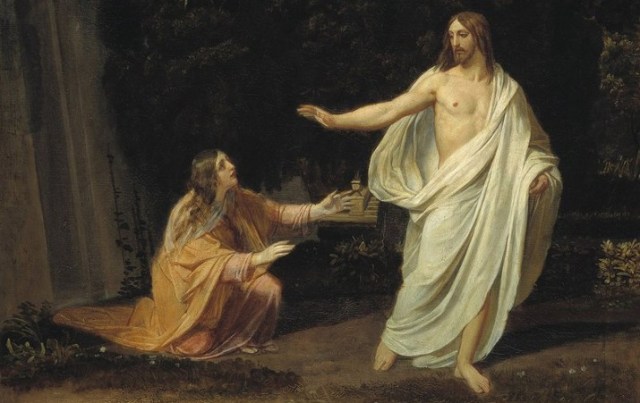
 John the Baptist was older than his disciple, Jesus. When John died, he went to his tomb, and John resuscitated into the body of Jesus. This truth has been altered and hidden, but, because I AM John the Baptist, I can see The Truth.
Follow The Lies. Why would Jesus send a disciple to give John a message while he is alive – in jail – where no one had access to him. He is under arrest.
“I have come to see John. Jesus has a message for him!”
“So! Would you like to be under arrest – too?”
When John is beheaded, he is released to a relative. Jesus is John’s relative. They go to John’s tomb and John resuscitates into Jesus – who will later do this with the gardener. We see the transference of the Holy Spirit, not from the womb of Elizabeth, but from the Dove when Jesus is baptized by John – who prepared The Way for Jesus. He made his resuscitation heir. She will do the same on the cross. Who is at the cross? Mary Magdalene! She is the heir. She is going to be The Holy Wife of the Line of the Resuscitate! She will line up more women to receive a resuscitation. This is why Paul was hire to assassinated members of The Way. There were women walking about – with halos!
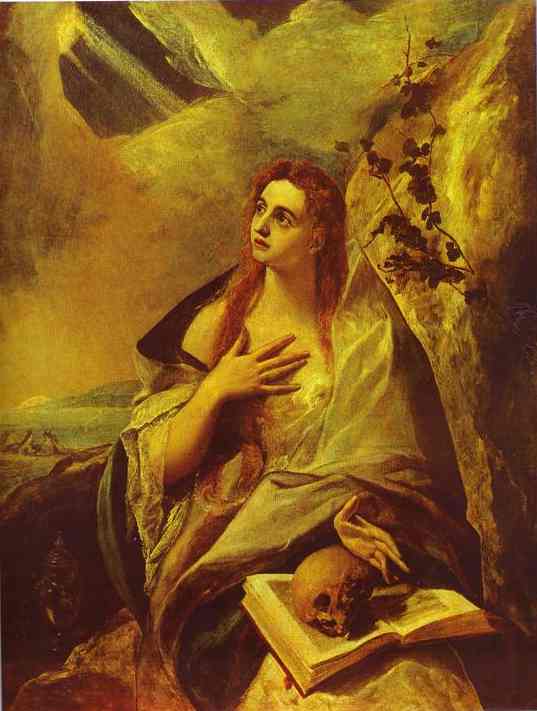
This is why we see so many paintings of Mary Magdalene looking at a skull. It is her skull! I could have written a book years ago. God bid me to wait for the Terrible Day of Betrayal. John came into my body when I died February 11, 1967. The rise of the Evil Christian-right was begging. These devils too over our Democracy, with Treason in their hearts. Satan-Trump is the embodiment of Saul-Paul who claimed he was a Apostle. He lied ten times a day. He went to foreign nations, to lie! He never stopped hunting down…….
The Women of The Way
Now you are awake!
Repent!
John Presco ‘John the Baptist’
Copyright 2019



Summoning the Nazarite Judges
Posted on September 17, 2014by Royal Rosamond Press


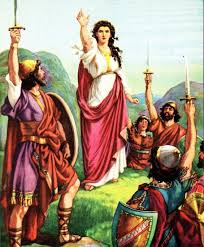


“Let the number of my Nazariteships be as the hairs of my head, or as the dust-particles of the earth, or as the sands of the sea”
Twenty-seven years ago I had a reading at the Berkeley Psychic Institute. The first thing I was told, was
“You died!”
I was also told this;
“People come into your being and take, take, take! You are powerless to stop them. I can’t see why.”
I was told I had two children. This is when I looked at my attempt to save Patrice and her children. Patrice and her family have been coming into my being via my daughter in order to take my Healing Energy – without having to do any work to save themselves. I was their Slave-Redeemer.
It is said King David was with the Philistines, and was their vassal. Did they adopt his Lord and His religion, for a little while – and corrupt it? Did they alter the Message in order that God sere them – as their slave?
When John the Baptist was born he was whisked away to a foreign land. Why? All thru the Diaspora Jews were taking the Vow of the Nazarite before they made a pilgrimage to the Temple. John was preparing their way, cleansing them of sins they picked up in heathen lands. John wanted them to behold THE LORD, not the son of the lord, but THE FATHER.
Satan-Paul confronts twelve disciples of John in Ephesus, who he claims were not baptized in the Nazarite Holy Spirit, and proceeds to do the job. James, the brother of Jesus, bid Paul to take the Vow of the Nazarite to prove he was not spreading a false teaching. Paul failed the test and was arrested and taken to Rome where he was beheaded. Jesus was a Nazarite after John, and was a mortal.
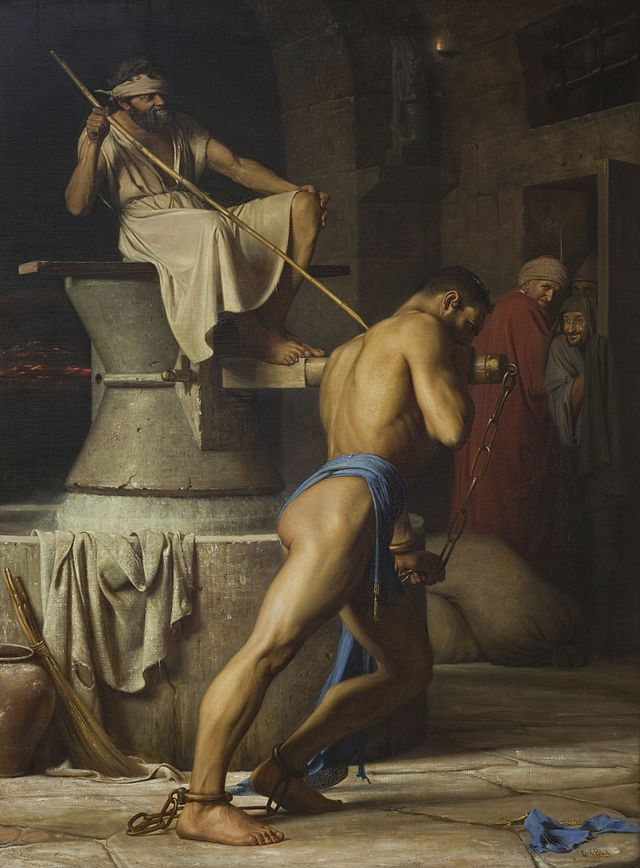
I have seen the coming of ‘The Terrible Day of our Lord’. For weeks our President has been trying to gather a collective force to fight ISIS. The remains of John the Baptist are in the great mosque in Damascus where the Nazarite Church was chased by Satan-Paul. This church had restored the Rule of Judges and summoned God’s Champion. Here is ‘The Rebirth of Samson.
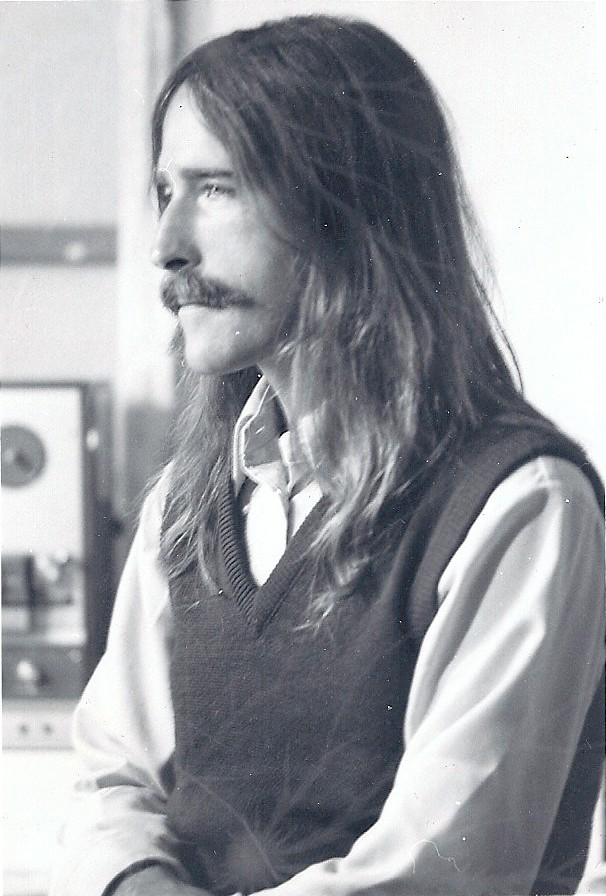
Above we see two photos of me taken by my late sister. She wanted me to be her first male portrait. When she developed them, she was startled to see these strands of energy that surrounded me. These are the Strands of Angel Hair that have protected me, kept me from harm. My sister’s saw this angel standing at the foot of the bed, as did the old crone up the street. This angel came into my life when I was dying of whopping cough. I saw a bright blue light come from the womb of my Aunt June when she kissed me good night. June Rosamond married Vincent Rice. They saw me as their child.
I am a anti-Zionist for the reason the State of Israel was not founded by Divine Redeemers, but by secular terrorists. I subscribe to Reform Judaism that is a Divine Diaspora. In the name of John and Samson, I bid Jews int eh Diaspora to take the Vow of the Nazarite, and in Spirit join forces against ISIS! Women could take the Vow of the Nazarite. There were women Judges and Redeemers, such as Deborah.
In our Presidents call for a coalition, why does not Israel answer this call, and come fight alongside Arabs and Muslim against the enemy of God? Consider the story of Gideon. This Jewish force can come from ‘The United States of America’. I will clarify this possibility in coming posts.
Jon the Nazarite
http://www.blueletterbible.org/Bible.cfm?b=Act&c=19
Rabbinical literature identifies Samson with Bedan;[6] Bedan was a Judge mentioned by Samuel in his farewell address (1 Samuel 12:11) among the Judges that delivered Israel from their enemies.[19] However, the name “Bedan” is not found in the Book of Judges.[19] The name “Samson” is derived from the Hebrew word “shemesh”, which means the sun, so that Samson bore the name of God, who is called “a sun and shield” in Psalms 84:11; and as God protected Israel, so did Samson watch over it in his generation, judging the people even as did God.[6] Samson’s strength was divinely derived (Talmud, Tractate Sotah 10a).[6][20]
Bedan is named as the deliverer of Israelites in 1 Samuel 12:11. He is not mentioned elsewhere as a judge of Israel. Bp. Patrick and others hypothesis the name to be a contraction of ben Dan (“the son of Dan”) by which they suppose Samson is meant, as the Targum reads. The LXX, Syriac, and Arabic, however, refer to the name as Barak, instead of Bedan; and the two latter versions refer to Samson, instead of Samuel. These readings are adopted by Houbigant, and appear to be genuine, for it is not probable that Samuel would enumerate himself.
Academics have interpreted Samson as a demigod (such as Hercules or Enkidu) enfolded into Jewish religious lore, or as an archetypical folklore hero, among others. These views sometimes interpreted him as a solar deity, popularized by “solar hero” theorists and Biblical scholars alike.[30][31][32] The name Delilah may also involve a wordplay with the Hebrew word for night, ‘layla’, which “consumes” the day.[33] Samson bears many similar traits to the Greek Herakles (and the Roman Hercules adaptation), inspired himself partially from the mesopotamian Enkidu tale: Herakles and Samson both battled a Lion bare handed (Lion of Nemea feat), Herakles and Samson both had a favorite primitive blunt weapon (a club for the first, an ass’s jaw for the latter), they were both betrayed by a woman which led them to their ultimate fate (Herakles by Dejanira, while Samson by Delilah). Both heroes, champion of their respective people, die by their own hand: Herakles ends his life on a pyre while Samson makes the Philistine temple collapse upon himself and his enemies.
These views are disputed by traditional and conservative biblical scholars who consider Samson to be a literal historical figure and thus reject any connections to mythological heroes.[34] That Samson was a “solar hero” has been described as “an artificial ingenuity”.[35] Some biblical scholars suggest that Samson’s home tribe of Dan might have been related to the Philistines themselves. “Dan” might be another name for the tribe of Sea Peoples otherwise known as the Denyen, Danuna, or Danaans. If so, then Samson’s origin might be entirely Aegean.[36] These speculations are in stark contrast to the historical depictions expressed in the Bible and are therefore mutually exclusive.
http://en.wikipedia.org/wiki/Samson
The secrecy around the powerful medieval Order of the Knights Templar, and the speed with which they disappeared over the space of a few years, has led to Knights Templar legends. These range from rumors about their association with the Holy Grail and the Ark of the Covenant, to questions about their association with the Freemasons, to searches for a lost treasure. Speculation about the Templars has increased because of references to them in bestselling books such as The Da Vinci Code and films such as Indiana Jones and the Last Crusade and National Treasure.
http://en.wikipedia.org/wiki/Knights_Templar_legends
Some historians and authors have tried to draw a link from Freemasonry and its many branches to the Templars. This alleged link remains a point of debate. Degrees in the Ancient and Accepted Scottish Rite such as the Knight of Saint Andrew, the Knight of Rose-Croix, and the 32nd Degree in Consistory make reference to a “Masonic Knights Templar” connection, but this is usually dismissed as being ceremonial and not historical fact.
http://en.wikipedia.org/wiki/The_Templar_Revelation
John the Baptist
Saint John the Baptist, who was beheaded, is said also to be the source of Templar idolatry. As ludicrous as this may at first seem, it is commonly known that several bogus John the Baptist heads were around during this time. Could the Templars have possessed one of these heads? It is possible, as the Templars were said to possess many of the religious relics of the time. As supposed Poor Knights of Christ it is quite possible that the head of St. John the Baptist would be an object of devotion and guidance since his feast was to be celebrated by the command of the Templar Rule of Order.
The Head of Jesus Christ
In his book, “The Head of God,” Dr. Keith Laidler put forth the theory that the Templars were practitioners of a cult of the head, which dated back to ancient times. Laidler’s theory claims that Jesus Christ’s head was severed after His crucifixion and latterly fell into the hands of the Templars who venerated it as part of their cult. This head, Laidler claims is buried in the apprentice Pillar at Rosslyn Chapel in Scotland.
http://blog.templarhistory.com/2010/04/the-bearded-head-of-the-templars/
Following the conquest of Canaan by Joshua until the formation of the first Kingdom of Israel (ca. 1150–1025 BC), the Israelite Tribes formed a loose confederation. No central government existed in this confederation and in times of crisis, the people were led by ad hoc chieftains known as judges.[2]
In the Book of Judges, a cyclical pattern is given to show the need for the various judges: apostasy of the Israelite people, hardship brought on as punishment from God, crying out to the Lord for rescue.[3] The judges were the successive individuals, each from a different tribe of Israel, chosen by God to rescue the people from their enemies and establish justice and the practice of the Torah amongst the Hebrews.
Most judges acted primarily as military leaders in times of war. These leaders were thought of as being sent by God to deliver the people from a threat. After the threat had passed, the judge was generally expected to give up their position as military leaders. They were most likely tribal or local leaders, contrary to the Deuteronomistic historians portrayal of them as leaders of all of Israel,[7] however their authority was recognized by local groups or tribes beyond their own.[8] In accordance with the needs of the time, their functions were primarily martial and judicial, but not comparable to a king. All Biblical Judges performed judicial duities and the institute of Judges was separated from the institute of King (First Book of Samuel 10:25).
The stories follow a consistent pattern: the people are unfaithful to Yahweh and he therefore delivers them into the hands of their enemies; the people repent and entreat Yahweh for mercy, which he sends in the form of a leader or champion (a “judge”); the judge delivers the Israelites from oppression and they prosper, but soon they fall again into unfaithfulness and the cycle is repeated.[4]
- Israel “does evil in the eyes of Yahweh”,
- the people are given into the hands of their enemies and cry out to Yahweh,
- Yahweh raises up a leader,
- the “spirit of Yahweh” comes upon the leader,
- the leader manages to defeat the enemy, and
- peace is regained.
Judges chapter 5 gives the same story in poetic form. This passage, often called The Song of Deborah, may date to as early as the 12th century BC[1] and is perhaps the earliest sample of Hebrew poetry. It is also significant because it is one of the oldest passages that portrays fighting women, the account being that of Jael, the wife of Heber, a Kenite tent maker
http://en.wikipedia.org/wiki/Biblical_poetry
http://www.hebrew4christians.com/Holidays/Fall_Holidays/Yom_Kippur/yom_kippur.html
It is used first by Amos and subsequently incorporated into prophetic and apocalyptic literature texts of the Bible. It relies on military images to describe the Lord as a “divine warrior” who will conquer his enemies. In certain prophetic texts of the Old Testament, the enemies of the Lord are Israel’s enemies and in these visions the day of the Lord brings victory for the people of ancient Israel. Other prophets use the imagery as a warning to Israel or its leaders and for them, the day of the Lord will mean destruction for the biblical nation of Israel. This concept develops throughout Jewish and Christian Scripture into a day of divine, apocalyptic judgment at the end of the world.[3]
The Day of the Lord is a biblical term and theme used in both the Hebrew Bible (Old Testament) and the New Testament. A related expression is the Great Day as in “The sun shall be turned into darkness, and the moon into blood, before the great and the terrible day of the LORD come.” which appears in both Old and New Testaments.
In the Hebrew Bible, a nazirite or nazarite, (in Hebrew: נזיר, nazir), refers to one who voluntarily took a vow described in Numbers 6:1–21. “Nazarite” comes from the Hebrew word nazir meaning “consecrated” or “separated”.[1] This vow required the man or woman to:
- Abstain from wine, wine vinegar, grapes, raisins, intoxicating liquors,[2] vinegar distilled from such substances,[3] and eating or drinking any substance that contains any trace of grapes.[4]
- Refrain from cutting the hair on one’s head; but to allow the locks of the head’s hair to grow.[5]
- Not to become ritually impure by contact with corpses or graves, even those of family members.[6]
http://www.jewishencyclopedia.com/articles/11395-nazarite
If one said, “May I be a Nazarite,” he became a Nazarite at once (Naz. i. 1). As a consequence of the universal custom, peculiar words and phrases, some of which are now unintelligible, were formulated for the taking of the vow (Naz. i. 1, ii. 1; p. 10a; Ned. 10a, b, et passim). “‘Let my hand, my foot be nazir,’ is not valid; ‘Let my liver [or some other vital part] be nazir,’ is valid” (Naz. 21b; Tos. to Naz. iii. 3). When the sanctuary was defiled at the time of the wars of the Maccabees the people assembled all the Nazarites before God as persons who could not be released from their vows (I Macc. iii. 49); yet when Nazarites returned from the Diaspora and found the sanctuary destroyed they were absolved from their vows (Naz. v. 4), although at the same time others took it (ib. v., end).
Queen Helena was a Nazarite for fourteen (or twenty-one) years (Naz. iii. 6; see Jew. Encyc. vi. 334, s.v. Helena), and Agrippa’s sister Berenice was at Jerusalem on account of a Nazarite vow taken before the outbreak of the great war against the Romans (Josephus,
The vow was taken also for the fulfilment of a wish, such as for the birth of a child
Women and slaves, who did not have full rights before the religious law, could take the Nazarite vow, but only with the consent of their husbands or owners, while the vow was not valid among the heathen (Naz. iv. 1-5, ix. 1, et passim). Fathers were allowed to dedicate minors, but mothers were forbidden to do so (ib. iv. 29b). The proper name “Nazira” may be connected with some such custom (Gen. R. lxxxii. end, et passim). Jesus is said to have been dedicated while still in the womb (Luke i. 15). Tradition regards not only Samson and Samuel, but also Absalom, as Nazarites, the last on account of his long hair (Naz. 4b). The duration of Nazariteship was voluntary, and ranged from one hour to a lifetime. In the former case, however, it really lasted for thirty days, which was also the period when no definite time was set (ib. i. 3; Sifre, Deut. 357). While the usual time was thirty days, two or more additional vows were generally taken, in which case each period was regarded as a separate Nazariteship, to be immediately followed, when duly completed, by the succeeding one (Maimonides, “Yad,” Nezirut, iii. 6). The period was at times measured by the number of days of the solar or the lunar year (Naz. i., end; Yer. Naz. 54b); or one might say: “Let the number of my Nazariteships be as the hairs of my head, or as the dust-particles of the earth, or as the sands of the sea” (Naz. i. 4). A Nazarite for life might cut his too abundant hair once a year, but a Samson Nazarite might not cut his hair under any circumstances, although he might defile himself by touching a corpse (ib. 4a). While no comb was allowed to touch the hair, it might be cleansed and arranged by other means (ib. vi., end). A proverb says, “Let the Nazarite go around the vineyard, but let him not approach it” (Shab. 13a and parallels; Num. R. x.).
Outside of Palestine and in the Middle Ages.
Nazarite vows were taken also outside of Palestine (Naz. v. 4; iii. 6). Besides Helena, Queen of Adiabene, Miriam of Palmyra is mentioned as a Nazarite (Tos. to Naz. iv. 10). While the Law stated that Nazariteship was equally valid in the country and outside it, in the time of the Temple and after its destruction there was a difference of opinion between the followers of Shammai and of Hillel: the former held that one who entered Palestine after the fulfilment of a prolonged period of Nazariteship must live there thirty days longer as a Nazarite, while the latter maintained that he must begin his vow anew (Naz. iii. 6; comp. Maimonides, “Yad,” Nezirut, ii. 20-21). The earlier and more universal custom agreed with the view of the school of Shammai, Josephus referring to the thirty days demanded, as above, in the passage already quoted—”B. J.” ii. 15, § 1. The observance of the Nazarite vow probably continued for many centuries, but was finally lost in asceticism and mysticism. No Nazarites are known in the Middle Ages.
 Rosamond Press
Leave a comment