“Crucially, Moscow allowed the Israeli air force to carry out air strikes against Iranian proxies that operated in Syria, where the IDF would routinely request that Russian missile and air defence systems in Syria be temporarily powered down.”

Israel began targeting Hamas’ drone program before it even produced results, striking a production facility in 2012. But the program continued.”
Here is a draft and working post for my live Youtube broadcast. Hamas was seen launching drones. Why didn’t Israel launch their attack drones and come to rescue of Jews and Americans? Sixteen of my countrymen were taken hostage.
Israel had an agreement with Putin to shut off the defense system when the IDF bombed Syria, that Russia bombed in the same manner Gaza is being bombed – to rubble! The IDF saw how affectively Ukraine was using drones to defeat Putin’s army. Of course – the IDF was prepared!
John Presco
Crucially, Moscow allowed the Israeli air force to carry out air strikes against Iranian proxies that operated in Syria, where the IDF would routinely request that Russian missile and air defence systems in Syria be temporarily powered down. The arrangement allowed Israel to stay out of a war in which saw Tehran’s proxies rampaged across Arab lands, but that augmented the power of the ring of Iranian-backed enemies that surrounds Israel. That encirclement further cemented Jerusalem’s military alliance with the Sunni Arab-bloc.
Netanyahu’s arrangement with the Russians allowed the Israeli leader to portray himself as a masterful geopolitical strategist over multiple election cycles. He had always considered his close personal relationship to Russian president Vladimir Putin to be both a political and national asset, grounded in a symbiosis of mutual respect and transactional necessity.
https://www.wired.com/story/hamas-drones-israel-war/
https://www.tabletmag.com/sections/israel-middle-east/articles/netanyahus-deal-with-putin-goes-wrong
When Russian President Vladimir Putin described what was happening in Israel, he told an energy forum in Moscow that the level of violence was “very high on both sides” and failed to single out Hamas for the surprise attack that left hundreds of Israeli citizens dead.
Instead, the Russian leader spoke Wednesday about the importance of creating a Palestinian state with its capital city located in occupied East Jerusalem.
Ariel Gomez, a systems engineer at Israel Aerospace Industries, works on the Popstar system at Israel Aerospace Industries, in the town of Yehud, September 9, 2019. (AP Photo/Tsafrir Abayov)
AP — Israel, one of the pioneers of drone warfare, is now on the front lines of an arms race to protect against attacks by the unmanned aircraft.
A host of Israeli companies have developed defense systems they say can detect or destroy incoming drones. But obstacles remain, particularly when operating in crowded urban airspaces.
“Fighting these systems is really hard … not just because you need to detect them, but you also need to detect them everywhere and all the time,” said Ulrike Franke, a policy fellow at the European Council of Foreign Relations.
https://nymag.com/intelligencer/article/israel-at-war-after-stunning-hamas-attack-live-updates.html
But on Saturday, a surprise series of coordinated efforts enabled Hamas to get past the wall. The fence was breached at 29 points, according to the Israel Defense Forces. Though there were Israeli guard towers positioned every 500 feet along the perimeter of the wall at some points, the fighters appeared to encounter little resistance.
Were there unheeded warnings?
As Israeli officials try to understand the country’s greatest security failure in decades, there is already reporting suggesting that intelligence on the attack was ignored. “The IDF has been warning for months about a reduction in readiness, a decrease in deterrence capability, and the possibility of a multifront flare-up,” wrote reporter Yuval Sade of the business publication Calcalist. One such warning came on September 20 when opposition leader Yair Lapid claimed Prime Minister Benjamin Netanyahu was ignoring intelligence from defense officials about a “violent, multifront confrontation.” “What is even more dangerous is that the government is not coordinated with the security establishment,” he said.
Others, like Globes correspondent Tal Schneider, have pointed out how Netanyahu empowered Hamas in an effort to ensure infighting between Palestinian factions:
For years, the various governments led by Benjamin Netanyahu took an approach that divided power between the Gaza Strip and the West Bank — bringing Palestinian Authority President Mahmoud Abbas to his knees while making moves that propped up the Hamas terror group.
The idea was to prevent Abbas — or anyone else in the Palestinian Authority’s West Bank government — from advancing toward the establishment of a Palestinian state.
Thus, amid this bid to impair Abbas, Hamas was upgraded from a mere terror group to an organization with which Israel held indirect negotiations via Egypt, and one that was allowed to receive infusions of cash from abroad.
https://www.cnn.com/2023/10/07/middleeast/israel-gaza-border-security-intl/index.html
WHEN HAMAS LAUNCHED its attacks against Israel on October 7, it unleashed a flood of rockets as cover, while militants streamed through holes in the fence surrounding the Gaza strip. One particular clip released by Hamas, played on news stations the world over, provoked a particular bit of paranoia: video of balaclava-clad Hamas fighters standing in a desert landscape, launching a line of suicide drones.
Amid the terror and chaos, the video seems to underscore a long-held fear that Hamas—with the help of Iranian technology—had developed the ability to conduct air strikes on Israel. What’s more, these drones may prove more adept than Hamas’ supply of rockets at thwarting Israel’s sophisticated Iron Dome air defense system.
Hamas had been building this capacity for some time. In 2022, it touted its drone program with an ominous warning: Israel no longer had a monopoly on its skies. According to Hamas Telegram channels, roughly 40 suicide drones have been fired toward Israel since the war began earlier this month. Yet, besides some undated propaganda videos, there is scant evidence that these drones have actually been deployed against Israel—and, if they have, they don’t appear to have done much damage.
Drone warfare has dramatically altered the dynamics in a number of recent conflicts—from Ukraine to Nagorno-Karabakh to Yemen—but not in the war between Hamas and Israel.
Why? The answer could have significant implications for people on both sides of the Israel-Gaza border.
SINCE THE EARLY 2000s, Hamas, which was elected to lead Gaza’s government in 2006 and has held power ever since, has drastically scaled up its ability to hit targets inside Israel.
ADVERTISEMENT
The earliest versions of its Qassam rocket were rudimentary: lightweight and capable of traveling just a few miles. In each successive generation of the missile, however, they became bigger, capable of flying farther, and equipped with larger warheads.
Over the past two decades, Hamas and Israel have engaged in a race—Hamas, to develop its offensive capabilities and extend its reach; and Israel, to frustrate those efforts as much as possible.
Like more than 20 non-state actors in conflict zones around the world, Hamas recognized that the drones could substantially upgrade its ability to wage war. Unlike its unguided missiles, which are designed to beat Israel’s air defenses simply by overwhelming them, drones are considerably harder to intercept. They fly low and don’t travel in a predictable, parabolic arch. As a number of countries have recently learned, thwarting an advancing drone—much less a number of them—is a tricky problem to solve.
FEATURED VIDEOHacker Answers Penetration Test Questions From Twitter
MOST POPULAR
- SECURITYThey Cracked the Code to a Locked USB Drive Worth $235 Million in Bitcoin. Then It Got WeirdANDY GREENBERG
- SCIENCEHistory Says the 1918 Flu Killed the Young and Healthy. These Bones Say OtherwiseMARYN MCKENNA
- BUSINESSAmazon Let Its Drivers’ Urine Be Sold as an Energy DrinkAMIT KATWALA
- CULTUREEveryone Is a Luddite NowGREGORY BARBER
ADVERTISEMENT
Unlike Russia or Ukraine, Hamas couldn’t source military drones through an open tender. So it tapped Tunisian-born aerospace engineer Mohamed Zouari to, in the early 2010s, design Hamas’ first fleet of operational drones and stand up an industry to produce them. They called the first model Ababeel1, which was very similar to an Iranian drone and had three different models. One version was designed to conduct surveillance, one to deliver small munitions, and the third was a suicide drone.
Israel began targeting Hamas’ drone program before it even produced results, striking a production facility in 2012. But the program continued.
Around that time, there were ample signs that Hamas’ domestic production capacity had not grown as it had hoped. Small—probably commercial—drones were dispatched into Israel from Gaza in 2012 and 2013, according to reports of a talk by an Israeli air defense official. Israeli jets and anti-air systems soon began to intercept the drones over Israeli airspace. Around 2014, Hamas made headlines after claiming it had penetrated deep into Israeli airspace, flying over Tel Aviv. But analysts say, despite Hamas’ insistence, the drones were not locally made in the Gaza strip: They were likely the Ababil-1, a product of the Iranian drone program.
In 2016, Zouari was assassinated in his hometown of Sfax, Tunisia, in what has been described by Tunisian investigators as a multiyear operation. While Israel did not admit responsibility for the killing, then-defense minister Avigdor Lieberman said only that Israel “will continue to do in the best possible way what we know how to do—that is to protect our interests.” Fadi al-Batsh, who had written papers on drone technology and who Israeli media alleged was part of Hamas’ drone program, was assassinated in 2018. Lieberman suggested that al-Batsh was killed as part of a “settling of scores among terrorist organizations.” In January 2022, the Hamas-led Gaza Interior Ministry arrested a Gaza resident for al-Batsh’s death and alleged the man worked for Mossad, Israel’s intelligence agency.
As Hamas seemed to struggle to establish its own domestic drone industry, other non-state actors began showing just how devastating these unmanned aerial vehicles (UAVs) could be. The Islamic State leveraged a huge number of commercial and hobbyist drones to conduct reconnaissance and drop grenades on advancing forces. Houthi rebels in Yemen began deploying sophisticated attack drones in its fight against the state military—analysts noted that, despite claims that these drones were locally made, they bore striking similarities to Iranian attack drones.
MOST POPULAR
- SECURITYThey Cracked the Code to a Locked USB Drive Worth $235 Million in Bitcoin. Then It Got WeirdANDY GREENBERG
- SCIENCEHistory Says the 1918 Flu Killed the Young and Healthy. These Bones Say OtherwiseMARYN MCKENNA
- BUSINESSAmazon Let Its Drivers’ Urine Be Sold as an Energy DrinkAMIT KATWALA
- CULTUREEveryone Is a Luddite NowGREGORY BARBER
ADVERTISEMENT
Faced with the looming possibility that Hamas could leverage some of the same techniques, Israel began running drills, practicing with fighter jets to intercept UAVs. In February 2014, it announced a prototype of a new air defense system: The “Iron Beam”—a directed energy weapon which, it hoped, will be able to track and destroy incoming drones.
In 2021, Hamas again sounded the trumpets over its supposedly game-changing drone program. This time it unveiled a whole new model: the Shehab. The suicide drones starred in slickly made propaganda videos and have been lionized for years in Hamas communiques. Yet they proved woefully ineffective in the field. Some were intercepted by the Iron Dome (as was one Israeli reconnaissance UAV) while others were shot down by F-16 jets. Video footage and unverified claims from Hamas suggest that one drone may have exploded near an Israeli chemical plant in May 2014—but appeared to do little to no damage.
Despite the program’s Iranian influence, Hamas claimed some of its drones were “locally made.” It said in a May 2022 press release that its drone program had made major progress, and it touted these new drones as a “turning point” for its fight against Israel. In September 2022, Hamas inaugurated “Shehab Square,” a public square featuring a model of the suicide drone on a pillar.
Despite all this fanfare, a December 2022 report from the International Center for Counter-Terrorism (ICCT) took a dim view of Hamas’ drone program. “Hamas has not demonstrated any ability to regularly use drones successfully,” the researchers wrote. As to why Hamas would continue investing in a capability that has such a poor record, the ICCT surmised that “the association of drone technology with military status may explain the group’s continued employment of drones.”
What’s more, the ICCT noted that Hamas’ technical failures seemed to be compounded by a lack of strategy or plan for what to do with these drones. The paper suggested that Hamas may lack the technical know-how to use these drones effectively, that it may be ineffective against Israel’s defenses, or possibly that “the group is more concerned about being seen using drones than using them effectively.”
MOST POPULAR
- SECURITYThey Cracked the Code to a Locked USB Drive Worth $235 Million in Bitcoin. Then It Got WeirdANDY GREENBERG
- SCIENCEHistory Says the 1918 Flu Killed the Young and Healthy. These Bones Say OtherwiseMARYN MCKENNA
- BUSINESSAmazon Let Its Drivers’ Urine Be Sold as an Energy DrinkAMIT KATWALA
- CULTUREEveryone Is a Luddite NowGREGORY BARBER
ADVERTISEMENT
“I THINK IT’S surprising that Hamas didn’t use more commercial and tactical drones in its invasion,” Paul Lushenko wrote on Twitter in the hours after Hamas’ October 7 assault on Israel. “For all the concern of an Israeli intelligence failure, I think the lack of Hamas’ use of drones suggests poor organizational learning.”
Lushenko is a faculty professor at the United States Army War College and an expert in the emerging field of drone warfare. Speaking with WIRED, Lushenko says there’s little sign that Hamas, despite their usual bragging, actually managed to put its drone program into action. “We haven’t seen the evidence.”
Certainly, Hamas made some targeted use of several over-the-counter drones and quadcopters—similar to how the Islamic State deployed the UAVs during its brief control of a proclaimed caliphate. Videos reportedly released by Hamas purportedly showed drones dropping explosive devices on Israeli communications towers and machine gun positions near the Gaza border. These UAVs pose a particular challenge because they are often too small and too nimble to be successfully intercepted. Instead, Israel says it is stepping up jamming efforts to break the link between those drones and their controllers within Gaza.
Beyond those short-range and lightweight UAVs, however, Hamas’ use of its homemade, Iranian-inspired suicide drones seems to be not much more than bluster.
The much-broadcast Hamas propaganda video of its fixed-wing UAVs being fired does not, in fact, show part of the assault on Israel. It was filmed before the attack—the full video shows the suicide drones crashing into a fake Israeli outpost—the explosion knocking over cardboard cutouts, as a blue-and-white Israeli flag flaps nearby.
Hamas Telegram channels have claimed repeatedly in recent weeks that their drones struck positions in Israel but offered little in the way of visual evidence or specifics. One supposed strike was conducted on “a parking lot for vehicles and personnel east of Gaza.” There has been no confirmation of any of these strikes or claims of any damage inflicted.
The Israel Defense Forces declined WIRED’s request to comment on whether it had intercepted any of these drones, writing that “the IDF is currently focused on eliminating the threat from the terrorist organization Hamas.”
There may be two possible explanations for this apparent lack of impact. One is that Hamas has opted to stockpile these drones, saving them for an anticipated Israeli ground operation. The other is that, like past attempts, Hamas’ drone program has simply failed to launch.
MOST POPULAR
- SECURITYThey Cracked the Code to a Locked USB Drive Worth $235 Million in Bitcoin. Then It Got WeirdANDY GREENBERG
- SCIENCEHistory Says the 1918 Flu Killed the Young and Healthy. These Bones Say OtherwiseMARYN MCKENNA
- BUSINESSAmazon Let Its Drivers’ Urine Be Sold as an Energy DrinkAMIT KATWALA
- CULTUREEveryone Is a Luddite NowGREGORY BARBER
ADVERTISEMENT
The first possibility could pose an enormous challenge for Israel. As we’ve seen on both sides of the Ukraine-Russia war, drones have substantially changed the reality on the ground. While analysts say Russia has used Iranian-made kamikaze drones to attack Ukrainian critical infrastructure, Ukraine has responded with Turkish-made Bayraktar TB2 drones to hammer Russian convoys and defensive positions. Smaller quadcopters have given both sides unparalleled visibility behind enemy lines and have proved remarkably deadly in urban warfare. If Hamas is sitting on a reserve of these drones, to be used if Israeli forces cross into Gaza—where they will not have the protection of the Iron Dome—it could be highly effective at frustrating a possible ground assault.
“It’s not uncommon for non-states [actors] and states to not use all of their decisive weapons all at once,” James Patton Rogers, executive director of the Cornell Brooks Tech Policy Institute, tells WIRED. “Will this be something that happens in the coming days and weeks? Is this something that was deliberately held back en masse from being launched against Israel?”
The fact that Hamas has, on dozens of occasions over the past two years, fired these drones toward Israel with little to no effect suggests that its reach may have extended its grasp. “We don’t know the full impact of those yet, if there wasn’t much impact,” Rogers says. “Did they do anything more than the rockets or the mortars would do? Were they able to penetrate the Iron Dome more than a mortar or a rocket?”
Normally, these loitering munitions are more effective at beating missile defense systems, as they tend to fly low and slow, hugging the ground. But given that Israel has one of the most advanced air-defense systems in the world, Hamas may simply not have had the time, capacity, or skill to adequately learn how to overcome the Iron Dome.
“I do think it’s a bit too early to tell in this one,” Rogers says.
Lushenko adds that, even if these drones do very little physical damage, the threat they pose will still loom large. “They really have a psychological effect.”
Video Ad Feedback

Ex-Middle East negotiator on Israel’s calculations for a possible incursion
01:31

Volunteer Israeli medic recounts horror of Hamas attack
02:49

Why this Gaza resident says he used the last of his phone’s battery to speak with CNN
02:36

Video shows harrowing images from Nir Oz kibbutz after Hamas attack
05:36

Why Clapper says Hamas attacks are an ‘apt comparison’ to 9/11
01:31

Hear from Hamas founding leader’s son, who became a spy for Israel
03:18

Hear woman’s account of her capture by Hamas and escape
04:45

Video shows release of women abducted by Hamas
01:24

CNN producer tried to flee Gaza with his family. Hear why he had to turn back
02:15
See the new weapon Israel is using to fight Hamas
02:14

Israeli families fleeing the border find refuge in a unique Jerusalem hotel
03:07

Reporter: We are witnessed the most heavy and sustained airstrikes on Gaza
01:14

Here’s what it would take to destroy Hamas
01:18
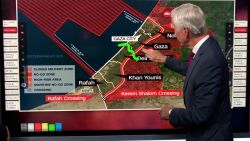
Ret. US general predicts what Israel’s military strategy would be in Gaza
01:49

CNN forensic analysis suggests what may have caused Gaza hospital blast
02:53

Reporter explains what we know about IDF strike on West Bank mosque
03:47
Ex-Middle East negotiator on Israel’s calculations for a possible incursion
01:31
Volunteer Israeli medic recounts horror of Hamas attack
02:49
Why this Gaza resident says he used the last of his phone’s battery to speak with CNN
02:36
Video shows harrowing images from Nir Oz kibbutz after Hamas attack
05:36
Why Clapper says Hamas attacks are an ‘apt comparison’ to 9/11
01:31
Hear from Hamas founding leader’s son, who became a spy for Israel
03:18
Hear woman’s account of her capture by Hamas and escape
04:45
Video shows release of women abducted by Hamas
01:24CNN —
The gunmen came from air, sea and land. They shot at civilians, took hostages and forced families to barricade themselves indoors, fearing for their lives.
A day that began with air raid sirens blaring out in the early morning had by lunchtime turned into one of the most terrifying attacks Israel has known in the 75 years of its existence. Assailants from Hamas, the Islamist militant group that controls the impoverished and densely populated Gaza Strip, had by nightfall killed hundreds of people and wounded hundreds more.
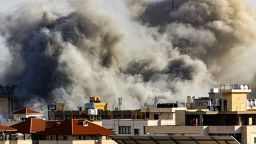
Netanyahu says Israel is ‘at war’ as Hamas launches surprise air and ground attack from Gaza
Though Israel is no stranger to terrorist attacks, Saturday’s assault was unprecedented – not least because of the lack of warning. Israel’s military on Saturday found itself caught off-guard, despite decades in which the country became a technology powerhouse that boasts one of the world’s most impressive armed forces and a premier intelligence agency.
ADVERTISING
The questions for Israeli authorities are legion. It has been more than 17 years since an Israeli soldier was taken as a prisoner of war in an assault on Israeli territory. And Israel has not seen this kind of infiltration of military bases, towns and kibbutzim since town-by-town fighting in the 1948 war of independence. How could a terror group from one of the world’s poorest enclaves manage to launch such a devastating attack?
“The entire system failed. It’s not just one component. It’s the entire defense architecture that evidently failed to provide the necessary defense for Israeli civilians,” said Jonathan Conricus, a former international spokesman for the Israel Defense Forces.
“This is a Pearl Harbor-type of moment for Israel, where there was reality up until today, and then there will be reality after today.”
The IDF has repeatedly dodged questions about whether Saturday’s events constitute an intelligence failure. Military spokesman Lt. Col. Richard Hecht told CNN that Israel was focused on the current fight and protecting civilian lives.
“We’ll talk about what happened intelligence-wise after,” Hecht said.
‘Obviously not adequately protected’
Whether by coincidence or design, the attacks came the day after the 50-year anniversary of another unforeseen conflict, when a coalition of Arab states launched a surprise attack against Israel on Yom Kippur, the holiest day of the Jewish calendar, in 1973.
Yet the attacks still came as a surprise to Israel, former Prime Minister Naftali Bennett told CNN’s Fareed Zakaria on Sunday.
“In military history there are always big surprises, Pearl Harbor, Barbarossa, (the) Yom Kippur war. At the end of the day intelligence can only go so far,” Bennett said.
Enter your email to sign up for CNN’s “Meanwhile in the Middle East” Newsletter.

Want to understand the Middle East?
Sign up for CNN’s Meanwhile in the Middle East newsletter.Sign Me Up
By subscribing you agree to our
Since Israel withdrew from Gaza in 2005, it has spent billions of dollars securing the border from attacks. That has striking at any weapons fired from inside Gaza into Israel and stopping terrorists from trying to cross the border from air or underground using tunnels. To stop rocket attacks, Israel has used the Iron Dome, an effective rocket defense system developed with help from the United States.
Israel also spent hundreds of millions of dollars building a smart border system with sensors and subterranean walls that was, according to Reuters, completed at the end of 2021.
Israeli officials will almost certainly look at where those systems failed on Saturday. As of Saturday morning, Israel said Hamas had fired 2,200 rockets, though it did not release figures on how many of those were intercepted. Officials have not commented on if the border fence did its job.
Aaron David Miller, a former State Department negotiator on Middle East issues, told CNN’s Wolf Blitzer that Israeli communities near Gaza were “obviously not adequately protected.”
“I just don’t think the Israelis saw this coming,” Miller said.
How Israel responds will likely involve more than just border reinforcements. The Israel Defense Forces have already begun airstrikes in Gaza targeting Hamas infrastructure, resulting in hundreds of dead and injured.
Israeli Prime Minister Benjamin Netanyahu said that the country will “return fire of a magnitude that the enemy has not known,” while the top official in charge of activities in the Palestinian territories, Maj. Gen. Ghassan Alian, said that Hamas had “opened the gates of hell.”
Conricus, the former IDF spokesman, said Saturday’s events will force Israel to back up that rhetoric and respond “in a way that it has never responded before.”
 Rosamond Press

Leave a comment