There are three ships named Rosamond.
Jon
https://archive.org/stream/fisherchapbook303/fisherchapbook303_djvu.txt
H.M. Schooner Fair Rosamond, c.1829

The Model
This model is based around the solid hull from a kit called “The Slaver” (Dos Amigos) from the old Marine Model Company with nothing else used from the kit. The hull was reshaped to improve the accuracy of the transom and to allow for planking of the upper hull. The hull is sheathed with individual copper plates below the waterline. Above the waterline, it is planking using scale width strips of American Cherry.
The model deck and deck house roof are planked with strips of degame, or lemonwood. The planking is properly nibbed at the ends and trunneled using bamboo treenails. The deck house and other deck structures are made from cherry. Masting is made from birch and the rigging is linen line with many of the larger lines hand-laid on my ropewalk.
Commercial fittings used include blocks, deadeyes, carronade and hatch cover gratings. Nearly all else is built from scratch. The anchors for example are cast in britannia pewter from a wooden master and the ensign is hand painted cloth.
Deck and Rigging plans are based on drawings by the late Howard I. Chapelle, which were obtained from the National Museum of Amercan History (Smithsonian). The use of the British Navy’s Blue Ensign is based on information provided by the Royal Naval Museum. It is based on the year 1833 when the vessel was under the command of Lieutenant Commander George Rose, and the West Africa Station was commanded by Rear Admiral of the Blue Sir Frederick Warren.
This model is a “Class C” model (Modified Kit) based on Mystic Seaport Museum’s model rating system.
Ship Background
The Spanish owned brig-schooner Dos Amigos was an American built “Baltimore Clipper” used to traffic slaves from Africa to Cuba. She was captured off the coast of Africa by the Royal Navy brig H.M.S. Black Joke, herself a former slaver. Because of her excellent sailing qualities, she was taken into service in 1830 and renamed the Fair Rosamond and served thereafter as part of the Royal Navy’s West Africa Squadron.
She is typical of the extreme Baltimore Clippers built in the early 1800s. Extremely fast, but unable to carry a great deal of cargo, these ships were the perfect design for the privateers employed by the American’s during the War of 1812. After the war, the beautiful and fast vessels were not economical for anything but military use and commercial use carrying “high value” cargos – primarily illegal, such as opium and slaves. Their speed and maneuverability made them difficult to catch, which is why the British turned to the use of captured slavers in their naval campaign to suppress the slave trade.
Brig H.M.S. Black Joke capturing the slaver El Almirante
There is now a permanent exhibit at the Royal Navy Museum called Chasing Freedom, which details the British efforts to suppress the slave trade in the early 1800s.
‘The Rosamond’ An American Privateer



Famous American Privateers.
Several days ago I discovered there was a ship named Rosamond that was a Privateer. I wonder if she was owned by Captain Samuel Rosamond of Charleston. She was sunk with all hands lost. She was carrying $100,000 in plunder. I have been looking as to why the Rosamonds got up and left South Carolina and moved to Mississippi. Did Samuel mortgage everything in order to purchase this ship, including his two homes on Bay? Was this ship deliberately grounded so the fortune would not have to be shared with other investors? The Rosamond family bought several tracts of land in Mississippi and built plantations on them.
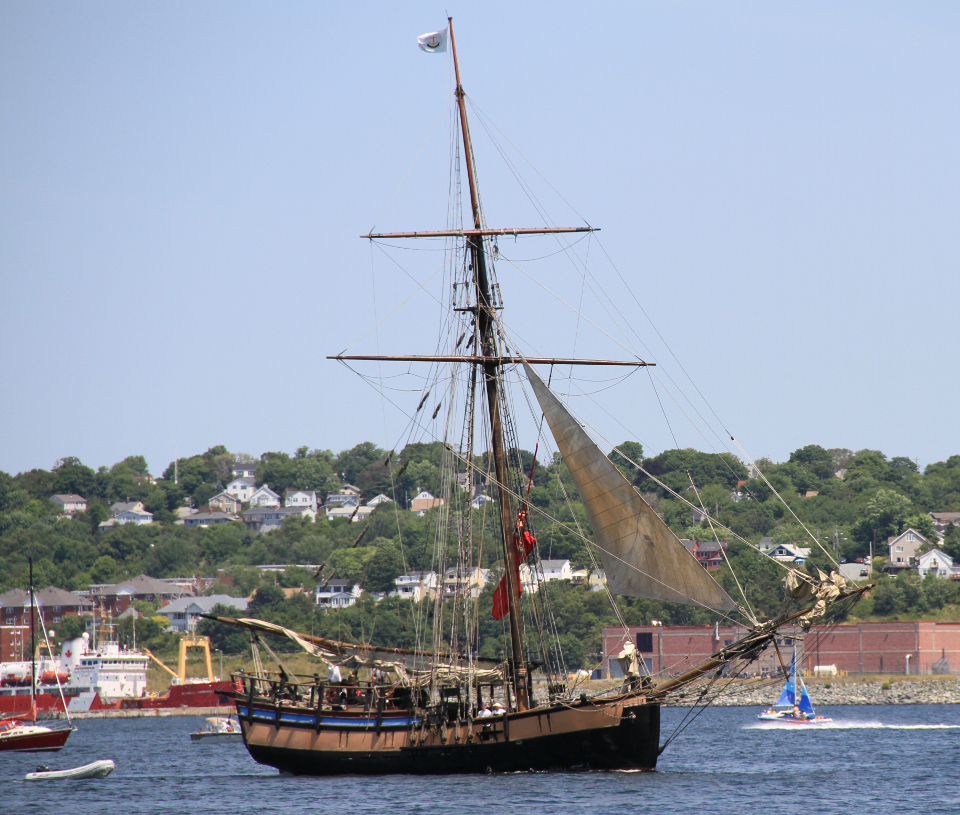
The ship above in the USS Providence carrying eight guns. The Rosamond would be of this size.
Every American Grandson would love to hear stories of family Pirates. Tyler Hunt will not be hearing any stories from his grandfather for he was kidnapped by the pirate imposter, Barnacle Bill, the drunken fake sailor man who never served his nation in time of war.
Jon Presco
Copyright 2014
Early in. the War of 1812 most of the ‘[ American privateers were small pilot boats, but it was soon found that they were too weak to capture many vessels, as most of the English merchantmen were too heavily armed for them. This led to the construction of powerful i swift-sailing craft, mounting twelve, j eighteen, twenty-four and even thirtyi three pounders, and manned by 120 and j 100 men—veritable corvettes —which ‘ were sent to sea at private expense. Of j this class were the privateers Paul Jones, Rosamond, Saratoga, General Armstrong and Tb’rktown. Perhaps the most formidable of all was the frigatebuilt ship America, a privateer which was purchased in France in 1793 byGeorge Crowninshield. Many of our merchant vessels, transformed into privateers, proved to be formidable craft. In fact, a large proportion of our merchantmen were built with a view to speed; for, thanks to British interference in our mercantile affairs, the American shipowner had found it preferable to sacrifice a little carrying space in his ships to additional speed, as It would enable him to outsail the British cruiser and thus avoid disastrous delays and degrading impressments.—
On 9 January 1813 while cruising between Curacao and the Spanish Main FELLOWES retook a brig and learnt that she had been taken by one of three American privateers in the area.
He went in pursuit and discovered her the next morning off Porto Cabello and after a long chase he got within range at 2 o’clock on the morning of the 11th. and drove the privateer ashore on Point Hicacos.
Her commander and 24 men were drowned trying to reach the shore. She proved to be the ROSAMOND of 8 heavy guns and 105 men and she had on board 100,000 dollars in specie beside other plunder.
https://rosamondpress.wordpress.com/2011/07/04/patriot-samuel-rosamond/
http://sarsat.org/images/templates/SARheadertemplate.htm

 Rosamond Press
Leave a comment