

I found this:
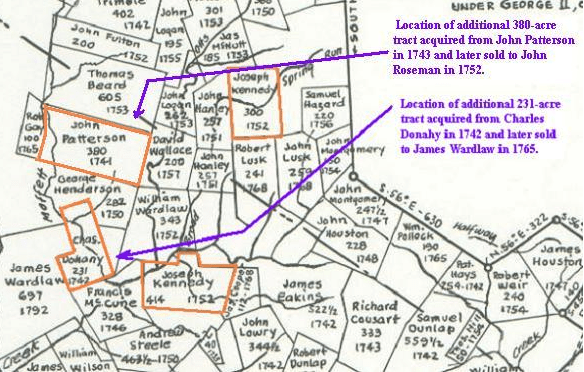
August, 1752. Joseph Kennedy to John ROSEMAN, 380 acres, 20 poles.
The most famous GUN in American history belonged to Daniel Boone. Walt Disney gave birth to the NRA the way I see it.
Hart, Benton, Boone Brothers


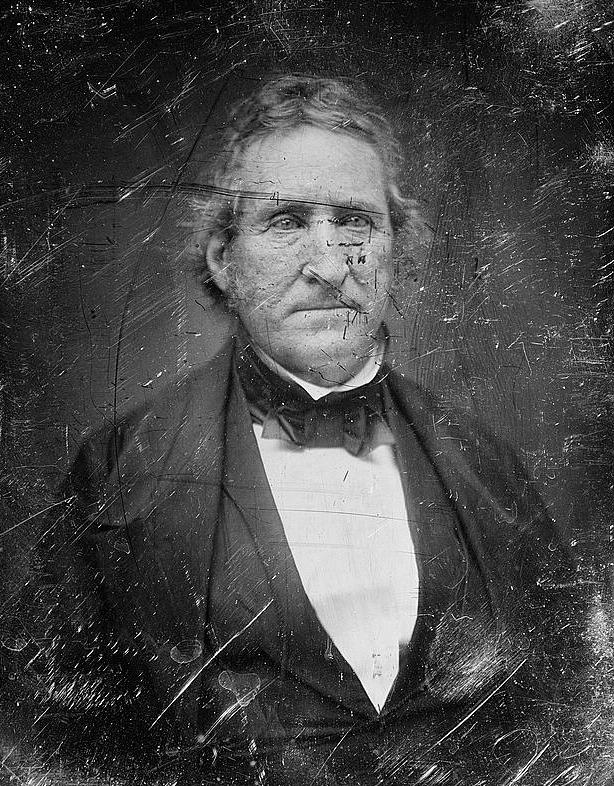

When I was a boy, Daniel Boone was a Brand Name. American Youth thought he was all about being free in this Democracy. He came here to be himself, and do what he wants. No one could stop him. He is above the law. The truth is, he was in constant litigation after the failure of Boonsborough and Transylvania Company that he co-founded with Colonel Thomas Hart, and his brother, Nathaniel Hart, who are kin to Senator Thomas Hart Benton, and the famous artist of the same name who was father-figure to artist, Jackson Pollack. The artists, Garth Benton, his daughter, Drew Benton, and my late sister, the world famous artist, Christine Rosamond Benton are in the Hart family tree, along with thousands of other history making folks, that made America great!
History has proven that founding and ruling families produced much of the world’s art. The artist, Philip Boileau, was the grandson of Senator Benton, who secured the Oregon Territory with the help of his daughter, who was married to ‘The Path Finder’ John Fremont. Oregon Historians exclude the truth the Hart-Benton partnership employed the best attorneys in America who happened to be their kindred, to purchase seventy million acres from the Cherokee. To read the history of this family, is to know why we are a Nation of Laws. a fact President Trump is about to find out. British Parliament is meeting in order to restrict our President’s visit.
https://www.scotweb.co.uk/info/kennedy/
While absent on one occasion in 1781, Thomas Kennedy’s fort at Paint Lick Creek was attacked and set on fire by marauding Indians. But his wife courageously put out the fires and, with others, she defended the fort successfully.
Early in the 19th century the Kennedy land of 10,000 acres stood out as one of largest estates in Kentucky. Thomas helped draw up the first constitution of the state in 1792 and he served in the Kentucky legislature for 25 years. He was one of the first to introduce the race horse industry in Kentucky and was acknowledged as one of sport’s finest trainers.
John Kennedy Jun., a grandson of Captain Joseph Kennedy, was one of Daniel Boone’s “30 guns” who cut the road through the wilderness from Long Island in the upper Holston country, just south of the present line between Virginia and Tennessee, across the Cumberland Gap to Boonesborough in Kentucky. He assisted in the erection of the fort there and during the Revolutionary War captained a militia company
Daniel Boone Kennedy |
|
|
Birthdate: |
October 10, 1823 (79) |
|
Hardin, Kentucky, United States |
|
|
Death: |
|
|
Immediate Family: |
Son of Thomas Kennedy and Phebe Kennedy |
|---|---|
http://bourboncoky.info/KennedyFamily.html
https://rosamondpress.com/2017/02/07/hart-benton-boone-brothers/
https://www.werelate.org/wiki/Person:Joseph_Kennedy_%2817%29
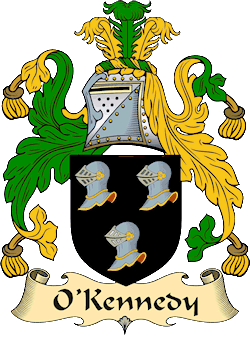
Basically, there are two origins of the Kennedy surname: one Scottish and the other Irish. The most commonly known Kennedy family is the Irish one made famous by the late U.S. President John F. Kennedy, whose ancestors came from Waterford.
Irish Kennedy: The Irish clan Kennedy takes its name from Kennedy, the nephew of High-King Brian Boru (1002-1014). The name Kennedy was also that of the father of Brian macKennedy Boru. This Kennedy was the King of Thomond (north Munster Province) and was killed by the Norsemen of Limerick in 951 A.D.
This Irish clan were the left hand of the powerful Dál gCais Tribe of Thomond, headed by Clan O’Brien. They resided in far eastern Clare, northern Limerick, and northern Tipperary in an area called Ormond.
Scottish Kennedy: Their home territory is in southwestern Scotland, in Ayrshire, where they were a power house. Originally they came from the western isles and are of Celtic-Norse stock. In the fifteenth century, one Ulric Kennedy fled Ayrshire to the highlands for refuge where he was granted protection under the Chief of Clan Cameron. From this Highland branch, Kennedys settled on the Isle of Skye. A branch also was established in northeast Scotland, at Aberdeen.
To add to the confusion, there are the Kennedys of Northern Ireland. Many Scottish Kennedys were planters in Ulster (the province of Northern Ireland), and many Scots went to Dublin and mingled with the Irish clan. Because of this confusion, the Scottish Chief of Kennedy is willing to recognize all Kennedys as part of the clan/family.
So you can see that doing critical research is needed to determine which branch of the Scottish Kennedys, or between Scot and Irish, you descend from.
http://www.kennedysociety.org/genealogy.htm
https://www.scotweb.co.uk/info/ken
I found these citations about Kennedys of South Carolina and Tennessee in a series of books written by Billy Kennedy of Northern Ireland.
THE KENNEDYS
Seven Kennedys, of Scots-Irish Presbyterian stock, are listed as patriots at the Battle of Kings Mountain, the foremost being Captain Robert Kennedy and Captain Thomas Kennedy. The others were William, William Jun., John, Daniel and Moses.
The Ulster—born father of William Sen. came through the valley of Virginia from Augusta County to Union County, South Carolina and his sons and grandsons fought with distinction in the Revolutionary War. These Kennedys were cousins of the Campbells, 11 of whom were listed at Kings Mountain. Many of the family settled in the Holston area of East Tennessee.
Daniel Kennedy fought with Colonel Isaac Shelby in Lord Dunmore’s War of 1774 and in 1776 he helped defend Fort Watauga from 500 Cherokee Indians during a siege which lasted 14 days. He settled on4 000 acres at Little Limestone Creek, near where Davy Crockett was born. At Kings Mountain, Daniel Kennedy was in the frontal assault on Ferguson’s troops and at the surrender he received the sword of one ofthe British officers. He later became clerk of Greene County Court; was involved in the establishment of the ill-fated state of Franklin and served in the North Carolina Assembly. He helped form Greene County and the Mount Zion Presbyterian Church there, and was a trustee of Greeneville and Washington Colleges.
The Rev. Samuel Kennedy was an Ulster-born Presbyterian minister who had a church at Williamsburg in South Carolina from 1782 and later moved to Mecklenburg, North Carolina. There was also a Presbyterian family of Kennedys who settled in Clarksville, Montgomery County, Tennessee, one of the earliest members being John F. Kennedy. (no relation of the later American President).
Source: “The Scots-Irish in the Hills of Tennessee” by Billy Kennedy Causeway Press, Belfast, Northern Ireland 1995. pg 159.
THE KENNEDYS
The Rev James Kennedy came to America with his mother Rebeckah Meak Kennedy after his father Samuel, a military medical officer, died in Ireland in 1788. Their home, a log cabin on the site of a creek bank orchard, was close to White’s fort in an area that was to emerge as Knoxville. About 1790, the Rev Kennedy settled on the north side of the French Broad River. He was educated for the ministry in Edinburgh and was a Presbyterian in the Seceder tradition.
Source: “Faith & Freedom: The Scots-Irish in America” by Billy Kennedy Causeway Press, Belfast, Northern Ireland 1999. pg 96.
The first Williamsburg settlers faced horrendous physical, spiritual and environmental difficulties and in the great influenza epidemic of 1749, 80 of the immigrant community died. There had also been famine resulting in many deaths and in desperation some of the men from Williamsburg trekked to North Carolina for food.
The Scots-Irish families at Williamsburg were among the most enthusiastic for the revolutionary cause during the War of Independence and four companies were recruited to fight the British. William Frierson had five sons who served as soldiers, with one Major John Frierson, recorded for gallantry in the War Department at Washington. Few Williamsburg residents held public office before the Revolution. This was the preserve of those giving allegiance to the Anglican Church. The Presbyterian Covenanters from Ulster made few bows to the Episcopacy.
The first Williamsburg Presbyterians were a conservative people, who tightly maintained the constitution and discipline of their Calvinist church. The Sabbath was strictly kept and sinners stood trial and were censured if found guilty. The church was the religious, judicial and social centre of the community.
When a fresh influx of Scots-Irish settlers arrived in the region about 1770, schisms developed in the church as more liberal theological doctrines were propagated. In 1782, the Rev. Samuel Kennedy arrived from Ireland to occupy the Williamsburg pulpit and his liberal theology, which, it is claimed, included the “denial” of the Divinity of Christ, deepened the split. The conservatives withdrew to form a separate congregation, known as Bethel, but the bitterness continued to the point that on an August night in 1786, the old church was raised to the ground. The split was now irrevocable and friction continued for several decades. In March, 1805, four families from the original settlements headed on a 600-mile trek westwards in covered wagons to lush new lands in the Franklin/ Columbia region of Maury County in middle Tennessee. Within a year the Armstrong, Friersons, Blakeleys and Fultons were joined in Tennessee by 10 additional families — the Dickeys, Flemings, Witherspoons, Stephensons and more Friersons, and by their beloved pastor, the Rev. James White Stephenson and doctor Samuel Mayes.
Source: “Faith & Freedom: The Scots-Irish in America” by Billy Kennedy Causeway Press, Belfast, Northern Ireland 1999. pg 74.
THE KENNEDYS
The founding father of this notable Mecklenburg County, North Carolina family was Captain Joseph Kennedy, who left his native north of Ireland for America in 1733. The Kennedys, originally from the Galloway and Ayrshire region of Scotland and thence Co. Antrim, settled in Lancaster County, Pennsylvania, before moving to Moffett’s Creek in old Augusta County, Virginia, now Rockingham County, in the early l740s.
Joseph Kennedy built a large stone mill at Moffett’s Creek and this was run by his son Andrew when he and other sons moved to Mecklenburg County, North Carolina about 1766. Dr. Joseph Kennedy Jun., Joseph’s son, was the first resident physician in Mecklenburg County and he served on the committee which drew up the Mecklenburg Declaration of May 20, 1775 against British Rule. Dr. Kennedy died in 1777 during service in the Revolutionary War and his son Samuel became a Presbyterian minister.
John Kennedy Jun., a grandson of Captain Joseph Kennedy, was one of Daniel Boone’s “30 guns” who cut the road through the wilderness from Long Island in the upper Holston country, just south of the present line between Virginia and Tennessee, across the Cumberland Gap to Boonesborough in Kentucky. He assisted in the erection of the fort there and during the Revolutionary War captained a militia company. John Kennedy Sen., was one of the earliest settlers in Rowan County, North Carolina and moved to Kentucky about 1775. One of his sons Andrew was active in the Kentucky militia and rose to the position of major. He represented Madison County in the Kentucky legislature.
The Boonesborough settlement in Kentucky endured frequent Indian raids and in one of these in 1777 John Kennedy Jun. was injured. He married Mary Anderson, the grand-daughter of Colonel John Anderson, a distinguished Scots-Irish patriot of Augusta County, Virginia. John Kennedy Jun. was killed with a James Leeper at the Cumberland Gap on December 26, 1780 during an attack by Indian tribesmen. Joseph Kennedy was taken prisoner along with a brother of James Leeper.
General Thomas Kennedy was probably the most distinguished member of the 18th century family. He joined the patriot anny at Burke County, North Carolina in 1775 and was appointed captain of the mounted artillery. He served at the battles of Wilmington, Ramour’s Mill, Cane Creek and Kings Mountain. He was wounded and captured by the British, being held for six months.
Between tours in the army Thomas Kennedy came to Kentucky, bought land from the Henderson Company in 1776, and in 1779 was appointed and served as one of the first trustees of the town of Boonesborough. He entered large tracts of land on Silver Creek and the branches of Paint Lick Creek and built his station on Paint Lick Creek in 1780, after he had led his company at Kings Mountain. In 1781, while Thomas Kennedy was away, his fort was attacked and set on fire. The courage of his wife, Agnes Ross, in tackling the flames and successfully defending the fort besieged by Indians is part of frontier folklore.
It was said: “The Boonesborough settlements were planted by men of peculiar vigour and were supported by a very resolute people acting under a corporation which was in a position to exercise some choice in the character of their colonists. Only men of character and courage were permitted in the district.” The district boasted a large group of men of fine character and great agility. Thomas Kennedy, energetic, resolute, and daring, a man of force and high ability, played a prominent part in the establishment of the state of Kentucky.
Kennedy was one of the first to be sent from Madison County in 1788, and again in 1791, to the Virginia legislature; Madison County sent him with Joseph Kennedy, Thomas Clay, Higgason Grubbs, and Charles Kavanagh on April 3, 1792 to the Convention called to frame a constitution for the state of Kentucky. The Governor and member of the first House of Representatives were elected by a committee of 40 chosen by the district. Thomas Kennedy was elected as the first state senator for Madison County; General Isaac Shelby was chosen as the first Governor and on June 1, 1792 Kentucky entered the Union. Thomas Kennedy died in 1836, aged 79.
Source: “The Scots-Irish in the Carolinas” by Billy Kennedy Causeway Press, Belfast, Northern Ireland 1997. pg 167-169.
THE KENNEDYS
This prominent Kentucky family is descended from General Thomas Kennedy, who helped build Stove’s Fort in 1779 and whose grandparents Captain Joseph and Elizabeth Kennedy emigrated from Ulster in 1733 to settle in Lancaster County, Pennsylvania and thence in Augusta county, Virginia. The two sons of the emigrant forebears John Kennedy Sen. and Dr Joseph Kennedy are recalled in historical annals as “the noteworthy set of pioneer Kennedy brothers.”
John Kennedy Sen. was listed in 1770 as one of the earliest settlers of Rowan county, North Carolina, while his brother Joseph was the first trained doctor to practice in Meckienburg county. He died in 1777 from wounds obtained in the Revolutionary War.
Joseph Kennedy, son of John Sen., also served in the War. General Thomas Kennedy captained the North Carolina Dragoons in the War and fought at the Battle of Kings Mountain. He was captured by the British and held for several years.
The Kennedys first came to Kentucky early in 1775, purchasing land from the Henderson company. General Thomas Kennedy was one of the first trustees of Boonesborough and, frequently, he had to use his considerable military experience to good effect to ward off Indian attacks. It is recorded that “the power of the Kennedy brothers” had much to do with the gaining of these valuable Kentucky lands from the native American tribes.
While absent on one occasion in 1781, Thomas Kennedy’s fort at Paint Lick Creek was attacked and set on fire by marauding Indians. But his wife courageously put out the fires and, with others, she defended the fort successfully.
Early in the 19th century the Kennedy land of 10,000 acres stood out as one of largest estates in Kentucky. Thomas helped draw up the first constitution of the state in 1792 and he served in the Kentucky legislature for 25 years. He was one of the first to introduce the race horse industry in Kentucky and was acknowledged as one of sport’s finest trainers.
Source: “The Scots-Irish in Pennsylvania and Kentucky” by Billy Kennedy Causeway Press, Belfast, Northern Ireland 1997. pg 137-138.
Sincerely,
Glen C. Beckwith
7465 Roper Tunnel Road
Trussville, Alabama 35173-3163
Early Land Acquisition in Augusta County, VA

Joseph Kennedy’s land (Borden Tract NE, 231 acres acquired from Charles Doheny in 1743, 380 acres acquired from John Patterson in 1743 and 300 & 414 acre tracts acquired by Patent from Borden in 1752) as shown on the map meticulously drawn by J.R. Hildebrand, cartographer. This map is copyrighted©, used by permission of John Hildebrand, son of J.R. Hildebrand, April, 2009.

Joseph Kennedy’s land (Beverley Manor NW, 300 acres, acquired from Alexander Ritchey on 24 February 1760) as shown on the map meticulously drawn by J.R. Hildebrand, cartographer. This map is copyrighted©, used by permission of John Hildebrand, son of J.R. Hildebrand, April, 2009. (Note: this tract was sold to John Handley, Jr. on 20 May 1760).
Acquisition of Land from Orange County, Virginia Records:
- Pages 180-81. 24 Feb. 1742/3. Charles Doheny of Orange County, yeoman, to Joseph Kenedy, farmer. Lease; for 5 shillings [release not recorded]. 231 acres 1 rood 32 poles on Morphets (s/b Moffett’s) Creek… corner to James Cook’s land… crossing the creek… in the barrens… (signed) Charles (C.D.) Donehy, Eliza (X) Donehy. Wit: Buchanan [sic], John (X) Pattison, Joseph Colton, Robt. Culton. 24 March 1742 [1743]. [Orange County Virginia Deed Book 7, pg. 50]. (Note: even though a release was not recorded for this tract, it appears that Joseph Kennedy actually did acquire it, since he later sold it to James Wardlaw in 1765).
- Pages 260-63. 13-14 May 1743. John [Thomas in release] Pattison of Orange County, yeoman, to Joseph Kennedy of same, yeoman. Lease and release; for ₤25 current money. 380 acres 20 pole on the east side of the branch of James River called Morffit’s Creek… part of 92,100 acres obtained by Benjamin Borden by grant… in a dry valley… down the creek… (signed) John (X) Pattison. Wit: Joseph Cotton (prob. Culton), Robt. Coulton, John Berkenhead. 26 May 1743. Acknowledged by John Pattison. [Orange County Virginia Deed Book 7, pg. 55].
Acquisition of Land from Chalkley’s:
- Page 315.–17th June, 1752. Andrew Lewis and Robt. McClenachan to Joseph Kennedy. By order of County Court, 28th November, 1751, grantors ordered to convey to purchasers of lots in the 25 acres conveyed to Augusta County by Beverley. Livery by handful of earth. Lot No. 5 in Staunton. Teste: Elijah McClenachan, John Melcomb, Ro. McCorkell.
- Page 348.–17th June, 1752. Borden, &c., to Joseph Kennedy. 1. Mill Creek, 414 acres. 2. Broad Spring, 300 acres.
- Page 335.– 24th February, 1760. Alexander Ritchey and Mary M. to Joseph Kenaday, £66, 300 acres in Beverley Manor; corner tract surveyed for Samuel Templeton; Wm. McClintock’s line; Adam Thompson’s line. Teste: Hugh ( ) Young, Robt. ( ) Allen, Wm. Stewart.
Disposition of Land from Chalkley’s:
- Page 456.–19th August, 1752. Joseph Kennedy to John Roseman, 380 acres, 20 poles. Moffett’s Creek. Teste: Wm. Wilson, James Walker, Fr. Beatey.
- Page 335.–21st August, 1754. Joseph Kenedy, Gent., and Elizabeth, to Edward McColgan, cordwinder, £60, 300 acres at Broad Spring in Borden’s tract crossing Broad Spring Run with John Handly’s line. Signed without mark (see Deed Book No. 6, page 331). Delivered to Samuel Buchanan, 21st June, 1758.
- Page 331.–21st August, 1754. Joseph Kennedy (his mark), Gent., and Elizabeth, to Samuel Buchanan, James Walker, Robert Reagh, John Logan, Alexander Miller and William Kennedy, trustees appointed and chosen by the Presbyterian Congregation of New Providence in Augusta County for and on behalf of themselves and the rest of the said Congregation and their successors adherents to the Squad of New York of the other part. Consideration: The sincere regard, good will and affectionate love which he beareth unto the said Congregation, and with an eye to encourage the worshipers of the most Blessed and Glorious Trinity, the Father, Son and Holy Spirit, who is God over all, and Blessed forever, Amen; and for and in consideration of the sum of six pence sterling; for public use and benefit of the said Congregation for a Presbyterian Meeting House to worship Almighty God in and for a burying place and graveyard to them and such as shall hereafter joyn with them the said Congregation of New Providence a certain moiety piece or parcel of land whereon the said Congregation hath already began to prepare and build a meeting house containing 3 A., 1 R., 27 P., on west side Moffet’s Creek in Borden’s tract; said Kennedy’s and Francis McCown’s line being a line of land now in possession of Andrew Duncan. Delivered to Samuel Buchanan, 21st June, 1758.
- Page 9.–18th March, 1755. Joseph Kennedy and Elizabeth, to Mathew Buchanan, of the Province of Pennsylvania, £80; 711 acres in Borden’s tract; Saml. Huston’s line; Greenlee’s line. Delivered: Saml. Buchanan, June, 1758. Tests: Alexander Patton, Elizabeth Kennedy.
- Page 549.–18th March, 1755. Joseph Kennedy to his son Wm. Kennedy, 402 acres purchased by Joseph from James Trimble, farmer, and by James from Borden on Moffett’s Creek in Borden’s tract; corner John Fulton; corner Alexander Logan; corner Wm. Berry.
- Page 98.–20th March 1760. Joseph Kennedy to Sampson and Geo. Mathews, £30, lot 5 in Staunton, conveyed to Joseph by the County. Delivered: Samuel Mathews, January, 1770.
- Page 339.–20th May, 1760. Joseph ( ) Kennedy to John Handley, Jr., £80, 300 acres in Beverley Manor, above. Delivered: Jno. Handly, 1766.
- Page 422.–4th July, 1760. Joseph ( ) Kennedey to Wm. Kennedey, £100, 414 acres in Borden’s tract; cor. Andrew Steel, crossing the Mill Creek; cor. Andrew Duncan. Delivered: Jno. Handley by your order.
- Page 143.–17th November, 1761. Joseph ( ) Kennedy to James Wardlaw, £100, 236 acres in Borden’s tract, crossing Andrew Duncan’s mill dam. George Henderson’s land. Teste. Wm., James, Andrew Kennedy, Hugh Wardlaw. Delivered to Andrew Wardlaw, son of James, 2d February, 1791.
- Page 475.–15th October, 1765. Joseph ( ) Cannady (Kennedy) to James Wardlaw, £100, 231 acres in Borden’s tract; corner Hugh Wardlaw. Teste: David Moore, John Parks, William ( ) McCandls, William Kennedy. Delivered: James Wardlaw, November, 1793.
▼ Processioning List of 1760
- “Processioning” was the periodic review and agreement of property lines between settler’s lands. Processioning Lists are useful in determining the general area of a settlers lands and their neighbors at specific time periods:
- Page 276.–1760: Processioned in Capt. Moore’s Company by John Stephson, Nathaniel Evins: For Nathaniel Evins, for Wm. McCreerey, for Thos. Willson, for John Stevenson, for John McClung, for Wm. McClung, for Alex. Moore, for Adam Reed, for Wm. Hays, for Wm. Paris, for Thomas Bard, for John Cunningham, for Mathew Huston, for John Mountgumery, for Wm. Moore, for Wm. Lockridge, for Thomas Boyd, for John Boyd, for Thomas Hill, for Robert Ware (Wire), for Wm. Hays, for Wm. Beard, for Wm. Wardlaw, for Andrew Steel, for James Steel, for Joseph Kennedy, for John Lowry, for Samuel Huston, for James Eakins, for John Hanly, for John Logan, for Alex. Logan, for Alex. McNutt, for James McNutt, for John Rosman, for Andrew Dunkin, for John Wardlaw, for Wm. McCanless, for James Cowdan, for John Moore.
▼ Records in Augusta County, VA
From Chalkley’s:
- Page 20.–19th June, 1746. Zeruiah Borden, widow, of Frederick County and Benj. Borden, of Augusta, executors of Benj. Borden, late of Orange, to Francis McCune, £3 current money Virginia; 328 acres, part of 92,100 acres patented to Benjamin, Sr. 6th November, 1739, the Barrens on the south side of the creek; corner to Joseph Kennedy. Witnesses, Jno. Smith, Samson Archee, Repentance Townsend. Acknowledged by Benjamin in person and for Zeruiah, 19th June, 1746.
- Page 121.–16th February, 1748. Executors qualify as above, with sureties John Moore, Joseph Kennady.
- Page 204.–17th May, 1749. William Smith to Samuel Huston, 283 acres in Borden’s tract. Corner Joseph Kennedy’s corner, Greenlee’s line. Teste: Alexander Moore, James Trimble, James McKown.
- Page 177.–22d August, 1749. Wm. Cowden’s appraisement by John Huston, Robert Dunlapp, Joseph Kennedy.
- Page 320.–28th February, 1750. Robert Edmiston’s appraisement by John Moore, John Edmiston, Joseph Kennedy.
- Page 50.–28th November, 1750. Same to Andrew Steel, 463-1/2 acres on Joseph Kennady’s Mill Creek, adjoining Francis McCune.
- Vol. 1 – 1750 – Petition for road from Joseph Kennedy’s mill by Francis Beaty’s, thence to join the Landing Road and Court House Road above James Cowan’s.
- Vol. 1 – 1750 – Petition for road from Joseph Kennedy’s Mill to John Huston’s, and from John Huston’s to the great road from Timber Grove to Woods Gap: James Hill, Joseph Kenedy, John Wilson, James Eakin, John Handly, William Wardlaw, William Lockridge, John Edenston, William McConnell, Walter Eakin, Robert Stewart, Robert Dunlap, Andrew Duncan, John Huston, Samuel Huston, Robert Alexander, Patrick Hays, John Mountgomery, Andrew Steel, John Stewart.
- Vol. 1 – JUNE 11, 1751–AUGUST 27, 1751. Page (176) This book begins August 1749, but there are no orders but those of suits and actions until August 27, 1751, when a new Court was organized under a commission from the Hon. Lewis Burwell, President of Virginia, dated 11th June, 1751, directed to James Patton, Peter Scholl,* Robert Cunningham, Wm. Jameson, David Stuart,* John Lynn,* Erwin Patterson,* Thos. English, Benj. Borden,* Joseph Kenady, John Denton, Wm. Christian, Robert Breckinridge, John Lewis,* Silas Hart, Andw. Lewis,* James Rutledge, Alexr. Wright, Ro. McClenahan,* Robert Campbell, John Wilson, Richd. Burton, Patr. Martin, James Lockhart, John Mills, Ro. Ramsey, Richd. Woods, John Anderson, John Ruddle, Thos. Stuart, John Lyle, John Buchanan, Thomas Lewis, Archd. Alexander, John Mathews, Adam Dickenson, Mathias Seltzer, Wm. Harbeson. (Those marked (*) qualified.)
- Page 48.–26th November, 1751. Borden, etc., to John Stephenson, 290 acres of 92100, Mill Creek; corner Moses McClure, Warm Run; corner Alexander McClure; corner Robert Allison; corner James Thompson. Teste: John Lyle, Joseph Kenedey, Baptist McNabb.
- Page 226.–20th May, 1752. Borden & Co. to Charles Berry, 326 acres of 92,100. Joseph Kennedy’s Mill Creek; James Roseboro’s line being Beverley Manor line.
- Vol. 1 – MAY 20, 1752. – (249) Joseph Kenaday fined for abusing the Court.
- Page 169.–12th January, 1753. Borden, etc., to Alexander McNutt, eldest son and heir-at-law of Alexander McNutt, deceased; Kennedy’s Mill Creek of James River, 301 acres. Teste: Saml. Dunlop, John Brownlee, Ro. Ramsey, Wm. Lusk.
- Page 178.–15th February, 1753. Borden, etc., to John Logan, 262 acres of 92100, 1753. Joseph Kennedy’s Mill Creek of James; corner Joseph Kennedy and John Hanley; McNut’s land, his old survey; Thomas Beard’s line.
- Page 167.–21st March, 1753. David Kerr and Kathrine, to Robert Gray, 200 acres of 92100, in Borden’s tract; Joseph Kennedy’s Mill Creek; McNut’s line; John Kerr’s line.
- Page 484.–23d March, 1753. James Connerley’s appraisement by Joseph Kennedy, John Maxwell, James Campbell. Vendue by George Breckinridge, administrator.
- Page 4.–22d November, 1753. Tohn Patterson’s account of estate by Joseph Kennedy. Charles Berry. To Joseph Kennedy for 18-1/2 gallons liquor. To Dr. Flood. To John Moore for making coffin.
- Page 523.–12th March, 1755. Borden’s executors to John Logan, £5.15.0. 195 acres part of 92,100; Thos. Baird’s line; John Logan’sold survey; McNut’s line; Wm. Berry’s line; corner to land Joseph Kendy purchased of James Trimble; John Fulton’s line.
- Page 271.–15th March, 1755. Samuel Huston to John Huston, £30, 283 acres (woodland), part of Borden’s tract, cor. Joseph Kennedy, Greenlee’s line. Teste: James Wardlaw. Delivered: Wm. Bowyer, May, 1758.
- Page 526.–19th March, 1755. John Logan, farmer, to Alexander Logan, his son paternal love, &c., and £10, 237 acres in Borden’s tract on Capt. Joseph Kennedy’s Mill Creek of James River; corner McNutt s land; Wm. Berry’s line; corner Capt. Joseph Kennedy; Thomas Baird’s corner. Livery, &c. Delivered: Alexander McNut, September, 1765.
- Page 87.–3d May, 1755. Arthur Kennedy and Jane, taylor, to Thomas Berry, plantationer, £56.12.6, 168 acres purchased by Arthur from David Kerr on Capt. Joseph Kennedy’s Mill Creek, part of Borden’s tract; corner Robert Gray’s line; McNut’s new line; corner Francis Beatey. Jeane (mark) Kennedy. Livery by a rail in the fence.
- Page 39.–24th April, 1748-9. John Huston’s will–Wife (to act with advice of John Moore); sons, Samuel and Mathew (infant); rest of children; Mary Blair to have a share with the rest (of the children). Executors, wife and John Moore. Teste: James Eakin, Joseph Kennedy, Walter Eakin. Proved, 15th May, 1755, by the witnesses; wife Margaret and John Moore qualify, with sureties Mathew Lyle and Wm. Lockridge.
- Vol. 2 – (abt. 1755) – Page 160.–Robert Young and James Davis, on north east side of Buffelow Creek and up the North River to the Mountain. Abraham Brown and William Holdman, on north east side Buffelow Creek below Wagon Road, thence down the North River to mouth of South River, thence, crossing North River, and down the same to mouth of Buffelow. David Dryden and River William Hall, in Cap. Joseph Kennedy’s Company. Andrew Hays and Jacob Anderson, in Captain Joseph Culton’s Company.
- Vol. 1 – APRIL 29, 1756. – (108) Claims, propositions and grievances: James Beard, claim for ranging; John McClenachan, claim for going express; Robert Bratton, claim for ranging; George Wilson, claim for ranging and provisions for his Company; Abraham Smith, claim for ranging and provisions for his Company; Israel Christian, claim for ranging and provisions; Joseph Kenaday, claim for ranging; Patrick Lowrey, claim for ranging; George Campbell, claim for ranging; John Dickinson, claim for ranging and provisions for his Company; James Dunlop, claim for ranging and provisions for his Company; Archd. Stuart, claim for ranging; John Campbell, claim for ranging.
- Vol. 1 – NOVEMBER 19, 1756. – (248) John Burns, servant of James Greenlee; John Woster, servant of Danl. Smith; Thomas Garland, servant of Joseph Kenaday.
- Page 496.–12th November, 1757. Andrew Steel to his son, Samuel Steel, £60, 240 acres, part of the tract where Andrew now lives, containing 463 acres, conveyed to Andrew by Borden; cor. Ro. Henry and Andrew Steel, Wilsons line; cor. Andrew Duncan; cor. Joseph Kennedy. Teste: Jno. Tat. Delivered: Samuel Steel, August, 1770,
- Vol. 1 – MAY, 1761 (A.) – Kennedy vs. Robinson.– Joseph Kennedy and John Madison against Elizabeth Robinson, an infant, as only daughter and heir-at-law of John Robinson, deceased, by Mary Montgomery, her mother and guardian, 1761. John Robinson lived in South Branch of Waters of Roanoke, and was surprised and murdered by the Indians about September, 1755.
- Vol. 1 – MAY, 1762 (A). – Wm. Kennedy vs. Joseph Kennedy and Borden’s Executors.–In 1741 Ro. Galloway bought land of Borden, but Borden died before making deed–430 acres, Moffett’s Creek. Galloway lived upon and improved the land until 12 or 13 years ago, when he sold to orator’s father, Joseph Kennedy. Joseph lived on the land until 1760, when Joseph sold to William in consideration that William will pay so much, and also educate and bring up his four infant sisters. William entered, took care of his sisters, repaired the fulling mill, to do which he had to sell his own place. Writ: Feb. 25, 1759 (8?). Bill for deed from Borden.
- Vol. 1 – MAY, 1762 (A). – Kennedy vs. Kennedy.–In 1740 Robert Galloway, of Augusta, bought land from Borden, which Galloway sold to Joseph Kennedy in 1748-9, but Galloway had received no deed. In 1760 William Kennedy, son of Joseph, had four infant sisters, the oldest being 12 years old.
- Vol. 1 – AUGUST 19, 1762. – (293) Joseph Kenaday abused the Court while sitting and is fined.
- Page 206.–26th March, 1763. Alexander Logan and Rachel ( ) to James Kenedy, £35, 237 acres in Borden’s tract, Capt. Kenedy’s Mill Creek; corner McNuts land; William Berry’s line; William Kennedy’s corner; John Fulton’s line; to Thos. Baird, to Thomas Loggan, John Logan’s line. Teste: Wm. Alexander, Hugh Wardlaw, Arthur Graham, William Kenedy. Proved by Archibald Grymes.
- Page 242.–21st June, 1763 . Thomas Berry and Esther to James Berry, son of Thomas, £25, 168 acres purchased by Thomas from Arthur Kenedy on Capt. Joseph Kennedy’s Mill Creek, in Burden’s tract; corner Robert Gray; McNutt’s new line; corner Francis Beaty. Teste: Alexander McNutt, Jas. McNutt, Thomas Berry, Jr. Delivered: James Berry, April, 1765.
- SEPTEMBER 24, 1763. – (255) Joseph Kenaday returned no inhabitant. (Note: apparently Joseph Kennedy had left Augusta County prior to this date).
- Vol. 1 – NOVEMBER, 1763 (C). – Madison vs. Robinson.–William Robinson was brother of John Robinson, who was murdered by the Indians. John Robinson sold land to Joseph Kennedy, who sold to McGavock, who sold to Madison. Land on Roanoke.
- Page 352.– October, 1765. John ( ) Roseman and Gabriel Jones to George Patterson, £150. Bond conditioned, whereas John Patterson, late of Augusta, deceased, father of George Patterson, was seised of 380 acres which he sold to Joseph Kenedy, but never made title, and Joseph sold to John Roseman for £45.10, and either mistake or design the said Kennedy conveyed to John Roseman, 19th August, 1752. though the title was in Patterson and devolved upon the above named Geo. Patterson as eldest son of John, and George has conveyed to John Roseman; if John and Gabriel keep said George safe of law suits, troubles, &c., then to be void.
- Page 2.–29th October, 1765. Joseph Wardlaw and Agness to William Wardlaw, £45, 171-1/2 acres in Borden’s 92100; corner Joseph Kenady; corner Hugh Martain. Teste: James Kennedy, John Taylor, John and James Wardlaw.
- Page 204.–2d November, 1768. Same (Borden’s executors) to James Cooper, 5, 112 acres, part of 92100, corner Cap. Joseph Kenady, Andrew Steel’s line; John Lowry’s old corner; James Akin’s corner; corner John Lusk. Delivered: James Cooper, April, 1773.
- Page 22.–19th November, 1771. William Reah (Reaoh) and Elizabeth ( ) to Mathew Moorehead, £85, 257 acres in Borden’s land conveyed to William by John Handly and Grizel, 22d May, 1764, corner 300 acres surveyed for Joseph Kennedy on Broad Spring Run, otherwise called Back Creek. Delivered, September, 1778. Teste: John Rusk, Daniel Kidd, Archibald Reaugh.
- Vol. 1 – MARCH, 1774 (C). – Wm. Edmonson, heir-at-law of John Edmonson, deceased, and Wm. Kennedy, heir-at-law of Joseph Kennedy, deceased, vs. Silas Hart, heir-at-law of John Hart and executor of Benjamin Borden.–Chancery writ, 24th August, 1772. John Hart was agent of Benjamin, Jr., and Benjamin sold land to John Hart, who sold to John E. and Joseph K. Bill for title. (Note: this record establishes that Joseph Kennedy had died prior to March, 1774).
▼ Information on Joseph Kennedy
THE KENNEDYS The founding father of this notable Mecklenburg County, North Carolina family was Captain Joseph Kennedy, who left his native north of Ireland for America in 1733. The Kennedys, originally from the Galloway and Ayrshire region of Scotland and thence Co. Antrim, settled in Lancaster County, Pennsylvania, before moving to Moffett’s Creek in old Augusta County, Virginia, now Rockingham County, in the early l740s.
Joseph Kennedy built a large stone mill at Moffett’s Creek and this was run by his son Andrew when he and other sons moved to Mecklenburg County, North Carolina about 1766. Dr. Joseph Kennedy Jun., Joseph’s son, was the first resident physician in Mecklenburg County and he served on the committee which drew up the Mecklenburg Declaration of May 20, 1775 against British Rule. Dr. Kennedy died in 1777 during service in the Revolutionary War and his son Samuel became a Presbyterian minister.
John Kennedy Jun., a grandson of Captain Joseph Kennedy, was one of Daniel Boone’s “30 guns” who cut the road through the wilderness from Long Island in the upper Holston country, just south of the present line between Virginia and Tennessee, across the Cumberland Gap to Boonesborough in Kentucky. He assisted in the erection of the fort there and during the Revolutionary War captained a militia company. John Kennedy Sen., was one of the earliest settlers in Rowan County, North Carolina and moved to Kentucky about 1775. One of his sons Andrew was active in the Kentucky militia and rose to the position of major. He represented Madison County in the Kentucky legislature.
The Boonesborough settlement in Kentucky endured frequent Indian raids and in one of these in 1777 John Kennedy Jun. was injured. He married Mary Anderson, the grand-daughter of Colonel John Anderson, a distinguished Scots-Irish patriot of Augusta County, Virginia. John Kennedy Jun. was killed with a James Leeper at the Cumberland Gap on December 26, 1780 during an attack by Indian tribesmen. Joseph Kennedy was taken prisoner along with a brother of James Leeper.
General Thomas Kennedy was probably the most distinguished member of the 18th century family. He joined the patriot anny at Burke County, North Carolina in 1775 and was appointed captain of the mounted artillery. He served at the battles of Wilmington, Ramour’s Mill, Cane Creek and Kings Mountain. He was wounded and captured by the British, being held for six months.
Between tours in the army Thomas Kennedy came to Kentucky, bought land from the Henderson Company in 1776, and in 1779 was appointed and served as one of the first trustees of the town of Boonesborough. He entered large tracts of land on Silver Creek and the branches of Paint Lick Creek and built his station on Paint Lick Creek in 1780, after he had led his company at Kings Mountain. In 1781, while Thomas Kennedy was away, his fort was attacked and set on fire. The courage of his wife, Agnes Ross, in tackling the flames and successfully defending the fort besieged by Indians is part of frontier folklore.
It was said: “The Boonesborough settlements were planted by men of peculiar vigour and were supported by a very resolute people acting under a corporation which was in a position to exercise some choice in the character of their colonists. Only men of character and courage were permitted in the district.” The district boasted a large group of men of fine character and great agility. Thomas Kennedy, energetic, resolute, and daring, a man of force and high ability, played a prominent part in the establishment of the state of Kentucky.
Kennedy was one of the first to be sent from Madison County in 1788, and again in 1791, to the Virginia legislature; Madison County sent him with Joseph Kennedy, Thomas Clay, Higgason Grubbs, and Charles Kavanagh on April 3, 1792 to the Convention called to frame a constitution for the state of Kentucky. The Governor and member of the first House of Representatives were elected by a committee of 40 chosen by the district. Thomas Kennedy was elected as the first state senator for Madison County; General Isaac Shelby was chosen as the first Governor and on June 1, 1792 Kentucky entered the Union. Thomas Kennedy died in 1836, aged 79.
Source: “The Scots-Irish in the Carolinas” by Billy Kennedy Causeway Press, Belfast, Northern Ireland 1997. pg 167-169.
From Genforum.com post:
Posted by Lynn Hawkins on September 11, 1997 at 21:53:01: My first KENNEDY ancestor I can trace to is, Capt. Joseph KENNEDY (b. 1700 Northern Ireland or Scotland-d. 1777 Mecklenburg Co., NC). His wife was Elizabeth________.
They came to America in 1733. They ended up on Moffitt’s Creek, on the present Rockingham and Augusta Cos., VA. He built a mill on KENNEDY Creek in 1750, near Raphine, VA.
Joseph KENNEDY, Sr. and wife Elizabeth gave land on Moffitt’s Creek in 1743 to build the first New Providence Presbyterian Church. New Providence Presbyterian Church still has services. Joseph, Sr. was a Captain in the local militia. About 1762, Joseph, Sr. and Elizabeth moved to Mecklenburg Co., NC with their son Dr. Joseph KENNEDY, the first medical school graduate to practice in Mecklenburg Co., NC. Joseph, Sr. sold the mill in VA to one of his son’s.
He paid his son William, b. 1733 in N. Ireland, to keep and educate his 3 or 4 young daughters, Williams sisters. William moved down to the upper Holston valley. It is said his sisters were the most educated females in southwest VA. He owned a mill in Washington Co., VA.
Gen. Thomas KENNEDY of Garrand Co., Ky. descends from Capt. Joseph KENNEDY, Sr. as did the KENNEDY’s were with Daniel Boone and help build Fort Boonesbourgh, Ky.
Dr. Joseph KENNEDY married Esther Curran, their son Rev. Samuel KENNEDY descendants settled in Monroe Co., TN.
Capt. Joseph KENNEDY, Sr. is said to be the son of a John KENNEDY who was born in Scotland, near Aye. Not far from Joseph’s mill, was a very old Scotsman, John KENNEDY, Will dated 1740, on file in Orange Co., VA. Was this his father??? What was Capt. KENNEDY’s wife, Elizabeth, maiden name??? Any history concerning this family welcomed. Thanks, Lynn Hawkins

 Rosamond Press
Leave a comment