

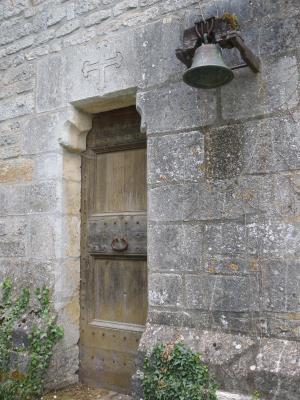

I have traced the Knight Templars who worshipped in this chapel at Fontennotte to Marcomir and Princess Royaume which means ‘The Kingdom of Heaven’. It is here the new order of the Knight Templars will gather in spirit, and ride to Jerusalem to protect the Holy Mount from the Antichrist, Donald Trump!
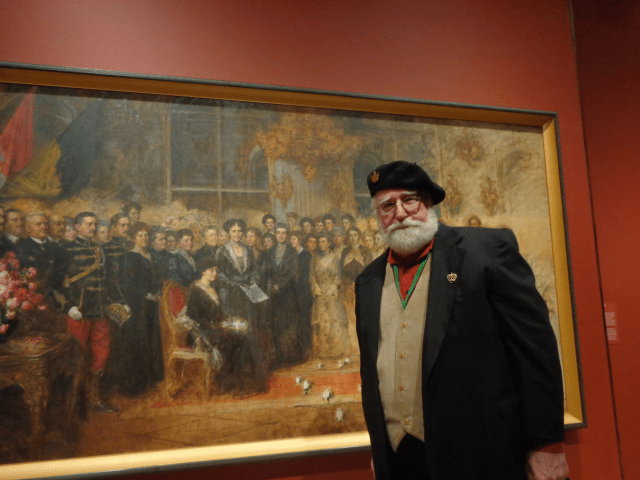
The Hapsburgs are related to this lineage of knights. For the reason Empress Zita fled to America, bringing the great portrait of her royal family – that I tried to return to Austria – I hereby declare the Royal House of Habsburg has a home in the United States, and, will go with, in spirit, in order to save the Free World from the Dual Devils, Trump and Putin.
The emboldened BEAST has come out its lair, dripping with blood from the fresh taxes he put on the poor. His camo-dressed dark priest calls good men, cowards, and invited the Little Beast with short eyes to lead the Evil Trumpire to Jerusalem on his pony. The Beast, has left his lair. Does the snow still fall on the lilies of the valley, that have seen them come and go, the true prophets, and the false, who do not know The Son of Man.
Sound the alarm! To arms!
John The Nazarite de Rougemont, Grand Master of the Knight Templars!
Werner (I; II; Count) of HABSBURG + ====> [ 255 ,gc,tm,&]
| / — Otto (Othon) II HAPSBURG (1057? – 1111)
http://theshroudofturin.blogspot.com/2017/11/chronology-of-turin-shroud-thirteenth.html
https://www.geni.com/people/Marcomir-De-Toxandrie-Frankish-chief/6000000001529617615
https://www.genealogieonline.nl/en/stamboom-tolsma/I45645.php
https://en.wikipedia.org/wiki/Kingdom_of_France
The Kingdom of France (French: Royaume de France) was a medieval and early modern monarchy in Western Europe. It was one of the most powerful states in Europe and a great power since the Late Middle Ages and the Hundred Years’ War. It was also an early colonial power, with possessions around the world.Thibaud II de Traves
(Renaud de Traves)
(Thibaud de Traves)
Seigneur de Traves
- Born about 1070
- Deceased after 1157
Parents
- Thibaud de Traves, Seigneur de Traves
Married to - ? ?
Spouses, children, grandchildren and great-grandchildren
- Married to Alix ., born about 1075, Deceased with
 Alix de Traves, Dame de Traves ca 1090-1156/ married to Thibaud II de Rougemont, Seigneur de Rougemont ca 1105-1173/ with
 Humbert II de Rougemont, Seigneur de Rougemont married to ? ? with :
- Albéric de Rougemont †
- Hugues de Rougemont, Sire de Rougemont †1227
- Thibaud III * de Rougemont, Vicomte de Besançon †1259/
- Thibaud de Rougemont ca 1135 married to Alais de Vaudémont, Dame de Magny-Fouchard † with :
- Humbert de Rougemont, Seigneur de Rougemont ca 1160-/1227
- Thibaud de Belvoir, Seigneur de Belvoir †ca 1222
- Alix de Rougemont †1218/
- . de Rougemont †
- Pontia de Rougemont
- Gérard de Rougemont, Archevêque de Besançon †1225
- Ponce de Traves, Dame de Traves †1156/ married to Guillaume I° de Bourgogne-Comté, Comte de Mâcon 1090..1095-1155 with
- . de Traves ca 1120- married about 1135 to Gaucher III de Salins, Seigneur de Salins ca 1115-1175 with :
- Maurette de Salins, Dame de Salins 1137-1184
- . d’ Auxonne de Bourgogne-Comté ca 1125- married to Fouques II de Réon, Seigneur de Gergy ca 1120- with :
- Girard de Réon, Croisé ca 1150-1187
- Gérard I° de Vienne, Comte de Vienne ca 1125-1184 married about 1160 to Maurette de Salins, Dame de Salins 1137-1184 with :
- Gaucher IV de Salins, Seigneur de Salins 1153-1219
- Etienne de Vienne, Archevêque de Besançon 1157-1193
- Guillaume IV de Vienne, Comte de Vienne 1159-1224
- Béatrice de Vienne 1160-1230
- Ide de Vienne 1162-1224
- Alexandrine de Vienne 1164-1242
- Gérard II de Vienne, Comte de Vienne ca 1165-
- Etienne II de Bourgogne-Comté, Seigneur de Traves ca 1130-1197/ married about 1170 to Judith de Lorraine ca 1150-1173 with :
- Etienne III de Bourgogne-Comté, Comte d’ Auxonne ca 1170-1240
- Béatrix de Bourgogne-Comté, Dame de Montréal †
- Guy de Traves, Seigneur de Traves
- Agnès de Bourgogne-Comté ca 1170-ca 1223
- Renaud de Traves, Connétable de Bourgogne married to Elisabeth de Salins with :
- Pierre de Traves, Chanoine de Saint-Etienne de Besançon
https://rosamondpress.com/2013/03/30/templar-holy-shroud-and-fountain/
https://rosamondpress.com/2012/11/30/the-buriel-place-of-the-lords-of-rougemont/
Pons de la ROCHE-SUR-OGNON (1080? – ?)
/ — Eudes (Othon) de la ROCHE-SUR-OGNON (1110? – 1161?)
/ \ — Sibylle de SCEY
– Pons I de la ROCHE-SUR-OGNON
\ / — Richwin (Richuris) (Count) de SCARPONE + ====> [ 255 ,c,ptm,&]
| / — Louis II (Sn.) de MONTBELIARD (1020? – 1073?)
| / \ — Hildegarde (de NORDGAU) von EGISHEIM + ====> [ 255 ,gc,tm,&]
| / — Thierry II (Dietrich I) of BAR
| / \ — Sophia of BAR (de l’ HAUTE LORRAINE) + ==&=> [ 255 ,GC,tm,&]
| / — Thierry III (II) de MONTBELLIARD (1085? – 1154?)
| | \ / — William II (I) `the Great’ of BURGUNDY + ==&=> [ 255 ,gC,tmD,&]
| | \ — Ermentrude of BURGUNDY (1057? – 1105+)
| | \ — Stephanie de LONGWY of BARCELONA [alt ped] + ====> [ 255 ,gc,tm,&]
| / | OR: prob. Stephanie of BARCELONA + ==&=> [ 255 ,AC,ptmQY,&]
\ — Ermentrude de MONTBELLIARD (1120? – 1171?)
\ | or: Gertrude
| / — Werner (I; II; Count) of HABSBURG + ====> [ 255 ,gc,tm,&]
| / — Otto (Othon) II HAPSBURG (1057? – 1111)
| / \ — Regulinde (Reginlint) von NELLENBURG + ====> [ 255 ,c,ptm,&]
\ — Gertrude HAPSBURG
\ / — Rudolf von PFIRT
\ — Hilla (Hila) von PFIRT (? – by 1076)
https://www.genealogieonline.nl/en/west-europese-adel/I32427.php
https://www.genealogieonline.nl/en/west-europese-adel/I9494.php
https://www.genealogieonline.nl/en/west-europese-adel/I9656.php
https://www.genealogieonline.nl/en/west-europese-adel/I8272.php
https://www.genealogieonline.nl/en/west-europese-adel/I38885.php
Royaume van Toxandrië Prinses der Franken
She is married to Marcomir van Thoxandrië Heer der Franken
Child(ren):

Notes by Royaume van Toxandrië Prinses der Franken
Bron: http://gw0.geneanet.org/index.php3?b=danyburn&lang=nl;p=royaume+de+toxandrie;n=francs+saliens
From Old French reaume, realme, a derivative of real, or from an alteration (with influence from royal) of Old French reiame, from Latin regimen, regimine. Compare régime.
http://dictionary.reverso.net/french-english/royaume
https://www.genealogieonline.nl/stamboom-familie-holman/I1091655800.php

The Germans who harassed the Roman Empire from the third century CE did not belong to the tribes that had been familiar to the Romans for many centuries. More powerful and aggressive enemies appeared on the other side of the Rhine: the Alamanni in the south of what is now called Germany, the Saxons along the German shore of the North Sea, and the Franks in Westphalia and the north of the Netherlands. As the name Alamanni (“all men”) suggests, these were groups of warlords from old tribes who had banded together.
The Franks, which means either “war hungry” or “the free ones”, were a federation of Chamavi, Amsivarii, Chattuarii, Bructerii, and Chatti. The Tubantes and Salians may have been part of the Frankish federation as well. Another tribe may have been the Frisians, who lived in the Dutch coastal area, which was abandoned at precisely this moment. The inhabitants may have migrated to the interior, may have merged with the original population, and may thus have been at the beginning of a new ethnic unit. From an archaeological point of view, villages like Wijster (Netherlands) offer something quite new.

If the sources are reliable – something that we will never know for certain – the emerging tribe had a warlike character. There were several warlords, who had followers who would stand by him through thick and thin. In return, they were provided for and, very importantly, were given many presents. Gold, in particular, was a valued gift, and it was considered a great act of valor to seize this precious metal as booty during raids into enemy territory. The thirst for gold accounts significantly for German incursions into Germania Inferior.
Successes like these are easy to explain: the Germans had learned their military skills from the Romans by doing service in special auxiliary units for foreigners. The squadrons of Tubantes and Frisians are examples of these units. After their demobilization, the returning veterans obtained leading positions in their tribes, on account of their extensive military experience, and, of course, the wealth they had accumulated. In this way, differences in status and wealth began to arise in the once so egalitarian tribal societies.
It now became customary for wealthy leaders to arrange marriages for their children with other equally rich leading families, and, in this way, family ties were formed between the different members of what was gradually becoming a tribal elite. Intermarriage of the Germanic elites was crucial. Organizing trade with the Roman army along the Rhine must have been another factor that stimulated cooperation.

The new elite was proud of its Germanic origins. They had a “national weapon”, which came to be associated with the Franks, even though other people used it as well: the throwing axe or francisca. Here is a very stereotypical description from c.460 CE:
These monsters have red hair which falls over the forehead from their high crown, while the back of their head is bald and shines nakedly. Their watery eyes are white and have a blue shine. Because their faces are almost completely clean-shaven, they run their comb through their modest moustaches instead of through their beards. They wear tight clothes that are stretched high across their big male parts, so that their sturdy knees are exposed. A wide belt girds their slender loins. It is a sport for them to throw their fast axes through the air from a great distance and to know in advance where they will land; to turn their shields so fast and to leap so quickly ahead that they will get to their enemies before the spear they have hurled. In childhood, their warlike behaviour is already that of an adult.note[Sidonius Apollinaris, Panegyric on Majorian 238-250.]
Stereotypical, certainly, and probably even a joke, because it is not very likely that the Franks tried to reach their enemies before the impact of their own missiles. However, the author, Sidonius Apollinaris, knows correctly mentions throwing axes as a weapon employed by the Franks. Franciscas have indeed been found in many tombs in Belgium, France, and Germany.
Enemies, mercenaries, pirates

The first big Frankish invasion took part in the 250s. Benefiting from the war between Rome and the Sasanian Persians, they attacked. Archaeology shows the consequences: the forts on the Lower Rhine were temporarily abandoned; the population of Krefeld did not have time to cremate their dead and instead threw the corpses into an underground temple; Trier was sacked. One band of Franks even crossed the Pyrenees and reached Tarraco in Spain.note[Aurelius Victor, Caesares 33.3.]

The emperor Gallienus managed to restore order but had to leave this theater of operations when he learned that his father Valerian had been taken captive by the Persians (260 CE). He left the war to Postumus, who decisively defeated the Franks, and declared himself independent. The Gallic Empire, as it was called, managed to contain the Frankish threat. One instrument was to hire Frankish warlords and employ them in the Roman army.note[Historia Augusta, Gallienus 7.1.]
After the emperor Aurelian (r.270-275) had subdued the Gallic Empire, he took the new Rhine army with him to fight the Palmyrene Empire in the east, and again, Frankish warlords invaded Gaul. The Alamanni did the same. The emperor Probus (r.276-282) however, expelled them and restored the Roman frontier along the Middle Rhine.note[Historia Augusta, Probus 12.3; Historia Augusta, Proculus 13.4;] He may have received the honorific title Francicus.note[Historia Augusta, Probus 11.9.] One group of captives managed to do the nearly impossible, as an anonymous orator recalled several years later, mentioning
the incredible audacity and undeserved good fortune of a few Frankish captives in the time of the deified Probus, who, seizing some ships, plundered their way from the Black Sea right to Greece and Asia and, driven not without causing damage from very many parts of the Libyan shore, finally took Syracuse itself, once renowned for its naval victories, and, after traveling on an immense journey, entered the Ocean.note[Panegyrici Latini 8(4).18.3; cf. Zosimus, New History 1.71.2.]

Two groups of Franks
When we take a closer look at our sources, it seems as if there were two groups of Franks: an eastern group from the area opposite Cologne that was often hostile, and a more peaceful northern group in the eastern part of what is now called Netherlands. Both groups could be sedentary and mobile, but while the first group’s mobility had a lot to do with warfare, the second group’s mobility appears to have consisted or bringing cattle from winter to summer pastures. The fact that the area directly north of the Rhine benefited from Roman demand,note[Henk van der Velde, Wonen in een grensgebied. Een langetermijngeschiedenis van het Oost-Nederlandse cultuurlandschap (500 v. Chr.-1300 na Chr.) (2011).] seems to confirm that the northern group was integrated into the Roman economy, which points at generally peaceful relations between the Roman and Frankish neighbors in the Lower Rhine area.
It is tempting to connect these two groups to a later distinction between the Salian Franks, who in the mid-fourth century arrived from the north and settled in what is now called Belgium, and the Ripuarian Franks, who would settle in what is now called North Rhine-Westphalia, the Palatinate, Saarland, and the northeastern part of France. In the Merovingian age, there was indeed a distinction between Salian and Ripuarian law, but there is no evidence that the Ripuarian Franks existed as a unit before then, so we should probably resist the temptation to identify these two Merovingian groups with the two third-century groups.
The Panegyrici Latini

The collection of speeches known as the Panegyrici Latini offers more information about the events between, say, 285 and 315 CE. We learn that in c.288, the emperor Maximian (r.285-305) spared a Frankish leader named Gennobaudes.note[Panegyrici Latini X(2).3.5; cf. XI(3).5.4.] Imperial recognition may have helped this man become a real king with a real kingdom. We read about Franks who served the rebels Carausius and Allectus, who ruled in Britain from 286 until 296. The island was subject to Rome again by Constantius I Chlorus (r.293-305).note[Panegyrici Latini XI(3).7.2 and VIII(4).17.2.]

We also learn that Constantius defeated Franks on the continentnote[Panegyrici Latini VII (6).4.2 and VIII(4).8.1.] and resettled them as farmers on empty land.note[Panegyrici Latini VIII(4).21.1 and VI(7).5.2-3.] When he was again in Britain (where he would die in 306), the Franks became restless again, but Constantius’ son Constantine the Great punished two of their leaders, Ascaricus and Merogaisus,note[Panegyrici Latini VII(6).4.2, VI(7).10, IV(10).16.] and proceeded to attach the Bructeri on the right bank of the Rhinenote[Panegyrici Latini VI(7).12.1-3.] and build a bridge across the river near Cologne.note[Panegyrici Latini VI(7).13.1-5.] The bridgehead has been excavated at Deutz.
It seems that Rome, which had acted defensively in the third century, had started a more offensive strategy: after Constantius had recovered what had been lost, Constantius started to attack the Germans in their homeland. Hiring Franks as mercenaries, as Postumus and Carausius had done, and creating vassal kings like Gennobaudes, as Maximian had done, must have been supplementary instruments.

It is also clear that the Frankish leaders attacked when Roman troops were employed somewhere else. (Nothing had changed since the Batavian Revolt.) When Constantine was occupied with Maximian in the south, in 310, there was a minor Frankish crisis,note[Panegyrici Latini VI(7).21.2-3; cf. Lactantius. Death of the persecutors 29.3.] which was solved when Constantine was already on his way back to the north (and saw the celestial sign that made him famousnote[Panegyrici Latini VI(7).21.3-6.]).
In 312, when Constantine was in Italy, fighting against Maximian’s son Maxentius (culminating in the battle of the Milvian Bridge), another group of Franks attacked, but Constantine restored order and executed the POWs in the amphitheater of Trier. After this, the Rhine frontier appears to have stabilized, although we learn about a campaign conducted by Constantine’s son Crispus in c.319.note[ Panegyrici Latini IV(10).17.2.]
 Rosamond Press
Leave a comment