


The painting above is the oldest surviving Dutch painting, and depicts my kindred, the Roovers, who married into the Rosemondt family, who were Swan Brethren, and, may be seen in Bosch’s painting ‘The Marriage Feast at Cana’. According to Oregon Author, Damon Knight, two figures were painted over and replaced with two dogs. I identify one as Pope Adrien, and the other, my possible kin Gottschalk Rosemondt, the Master of Leuven and the Falcon Art College, and, founder of the Papal College.
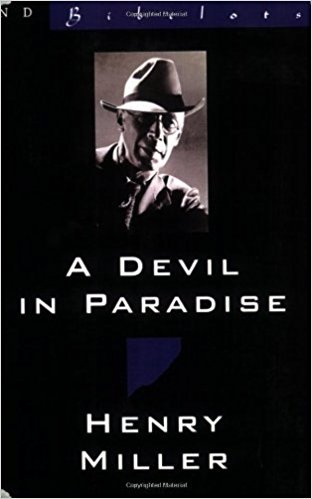
The devil in Henry Miller’s Big Sur paradise is Conrad Moricand: “A friend of his Paris days, who, having been financed and brought over from Europe as an act of mercy by Mr. Miller, turns out as exacting, sponging, evil, cunning and ungrateful a guest as can be found in contemporary literature. Mr. Miller has always been a remarkable creator of character. Conrad Moricand is probably his masterpiece. . . .A Devil in Paradise is the work of a great novelist manqué, a novelist who has no stricter sense of form than the divine creator. . . .Fresh and intoxicating, funny and moving. . .”
Big Sur and the Oranges of Hieronymus Bosch by Henry Miller
Tuesday, August 16, 2011 § 0
David Detrich
Big Sur and the Oranges of Hieronymus Bosch (1957) by Henry Miller is a monumental work that describes the local history of Big Sur with the friends and artists that arrived on the mountainous coast to form a small artist’s community, and includes passages of innovative poetic writing inspired by the natural beauty of the California coast. Henry Miller could meditate on the oceanic views which inspire a poetic style of writing, an esthetic trend of nature inspired writing which I call the Big Sur esthetic, while creating allusions to other writers of relevance: with the original expository style of writing that he developed since his reading of the modern philosophers in his early years as a writer. Big Sur and the Oranges of Hieronymus Bosch is an autobiographical memoir of Henry Miller’s arrival at Big Sur after having written some of the most well known books of the early 20th Century, including The Tropic of Cancer (1934) and Black Spring (1936).
form: constructing the self,
rejecting modernity
David Detrich lives in the Upper Peninsula of Michigan where he has just completed The Convergence of Two Narrative Lines Ascending, an ultramodern Surrealist novel written in minimal squares. He is working on Dream the Presence of the Circular Breast Starfish Topography, a monumental Surrealist novel written with innovative typographical design. His first novel Big Sur Marvels & Wondrous Delights (2001) is available from Amazon. He is the editor of Innovative Fiction Magazine and Surrealist Star Clustered Illuminations.
Come to Maurick Castle


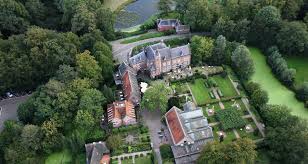
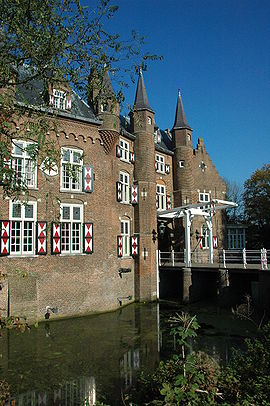
This is a calling. I bid all my enemies and members of my family to end their fight with me and come to Maurick Castle – figuratively speaking! Here is the history associated with this castle.
http://www.inyourpocket.com/s-Hertogenbosch/History
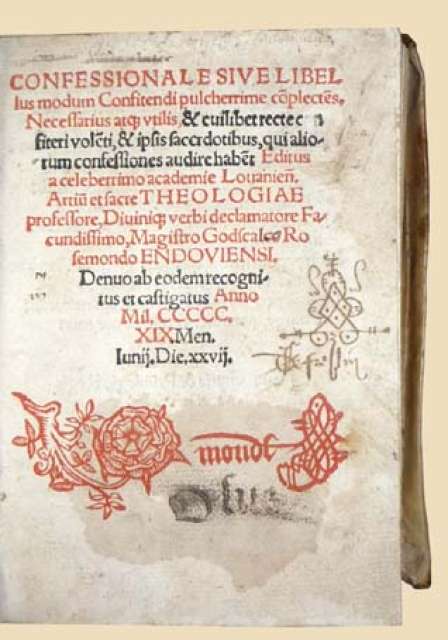
Here is the Rosemondt cote of arms. The Duke of the Woods is the Dukes of Brabant who are close kin of Godfrey de Bouillon a Grand Master of the Knight Templars.
In 1430 my ancestor, Godschalk Roesmond, came to live in Maurick Castle. The
most prominent citizens of ‘s-Hertogenbosch lived here. How and why they came to
own this castle has caused confussion amongst historians.. I suspect only the
mayors of ‘s-Hertogenbosch lived here, and thus this castle was a Mayor’s
Palace. The other requirement was that they were members of Swan Brethen. I
suspect Godschalk Rosemondt was the mayor of ‘s-Hertogenbosch and a high-ranking
member of the Lieve-Vrouwe-broederschap. Mairick Castle would have been an ideal
place for raising swans that were served up to the brethren who worshiped `Our
Sweet Lady’ that we see being carried in procession to Saint Janskerk church.
Ghisburt Roesmont was the Church Master of Janskerk that was designed by Jan
Heyns, who appears to have been a Master Mason. Jan Heyns also remodeled Maurick
castle that was owned by members of the Heym family who were Zwanenbroeders.
Another Godeschalc Roesmont was a weaver who worked in Louvain’s Guildhall in
1392, that later became Louvain University. Rosemondt was the executor of Pope
Adriaan VI’s will. Roesmont founded the Pope’s College in Adrian’s home and
opened it to the sons of poor families so that the humble may produce leaders of
the Catholic church that was prone to sell its offices to wealthy and powerful
men. For this reason I suspect Adrian may have been the true father of the
Reformation, he later authoring a Anti-Reformation to counter Luther’s radical
ideas.
Members of my Rosamond family in England own correspondence between Erasmus and
Godeschalc Rosamond.who was sympathetic to this Humanist and Renesiance Man.
Both men may have known Hieronymus Bosch who was also a member of the the
`Illustrious Brotherhood of Our Blessed Lady’ (Illustre Lieve Vrouwe
Broederschap). I am looking at the possibility Adrian and Rosemont are the two
figures that used to be in the foreground of Bosch’s `The Wedding Feast at
Cana’. They survive in a Bosch drawing at the Louvre. The work we see is a copy.
I suspect the origianl painting was destroyed by Catholics who may have seen
Adrian as a member of the Reformation. The Rosemonts fought allongside William
of Orange a Zwanebroeder, and fled to England as Huguenots.
In the procession of Our Lady to Janskerk, and in Maurick Castle, we see members
of the Saint George Guild who were founded in 1359 as a miltita of crossbow
archers. Here again is a Rouge Knight on horseback guarding our Sweet Crimson
Lady who some believe is Mary Magdalene.
Jon Presco
Copyright 2008
http://www.sint-joris-berlicum.nl/
History
In 1380 work is begun on St. John’s transforming it from a Romanesque church to a Gothic edifice. It’s finally completed in 1530. When the pope declares ’s-Hertogenbosch an official diocese, St. John’s officially becomes a cathedral.
1318: The Illustrious Brotherhood of Our Blessed Lady is founded. It’s also known as Zwanenbroederschap (Swan’s Fraternity) due to the extravagant birds it served at its banquets.
The society that was initially founded in honour of the Virgin Mary had its own chapel in St. John’s Cathedral. Over the centuries, the brotherhood had a large number of influential members, including William of Orange, the painter Jeroen Bosch and Queen Beatrice.
2010: ’s-Hertogenbosch is declared the City of the Palate and organises several events relating to food and drink.
Rosemondt: A Humanist Renaissance Family
In 145o the Roesmonts came to own Wolfhouse, an ancient estate in Holland. Is
this the source of the wolf coat of arms seen in the Rebleuten guild, and in the
captain seals in Bosch? Did members of the Roesmont family found a guild at
Wolfhouse? The wolf name is found in two generation of Roesmonts. Rudolph
Godsclack Roesmont Son of : Godscalck Roesmont, Children ;1: Godschalck Roelofs
Roesmont. 2: Hadewich Rodolphus RoesmontErhart de Rougemont bought in 1495 “the
house called Rebleuten-Zunft in Basle in the Freistrasse. This is is the house
of guild in Switzerland whose symbol is the wolf holding a special knife to
harvest grapes. Weavers were once co-members of this guild.
http://www.rebleutenzunft.ch/content/portrait/zunfthaus.html
The Miracle Statue of the brotherhood
The brotherhood was founded in 1318, by one Gerardus van Uden, though it is
possible that it existed before and that its existence was only formalised in
1318. Originally, membership was reserved for priests and monks, but it soon
opened its doors and allowed women and laymen. The sacred home of the
brotherhood was its side chapel on the north side of the St John’s Cathedral and
Bosch had various commissions for this chapel. It was also the location of the
so-called “Mirakelbeeld”, the Miracle Statue, a statue of the Virgin Mary that
was found in 1380, allegedly in a corner of the cathedral. Art historians
believe the figure was carved between 1280 and 1320, roughly contemporary with
the foundation of the order that would embrace and promote the statue’s worship.
Some have argued the statue was not found, but “made public” by the order, so
that what was once private worship, would attract interest from the general
public. If so, they succeeded.
When Bosch was buried in August 1516, the ceremony was carried out with the
usual regards due to members of the order. What made him become a member of the
order? Some might argue it was his marriage, but his grandfather, Jan Van Aken,
had also entered the order in 1430. He is not only listed as a member, but it
also employed him as a restorer and painter. Jeroen’s first entry on the
membership list is in 1486, as a “buitenlid”, an “outer member”, to become a
sworn brother in 1488.
Shortly afterwards, he was the guest of honour on the so-called swan meal, in
which a swan was offered – and apparently eaten. Custom required members to be
tonsured, which Bosch did, and he took to wearing the curious homespun garments,
a derivative of the costume worn by ecclesiastics. The brotherhood was also
known to perform mystery plays and other theatrical productions and it is known
that Bosch played an active role in stage performances and religious ceremonies.
Hence, the grotesque faces that are so prominent in some of his paintings, are
sometimes said to be inspired by the masks the actors used in these stage
productions.

 Rosamond Press
Leave a comment