
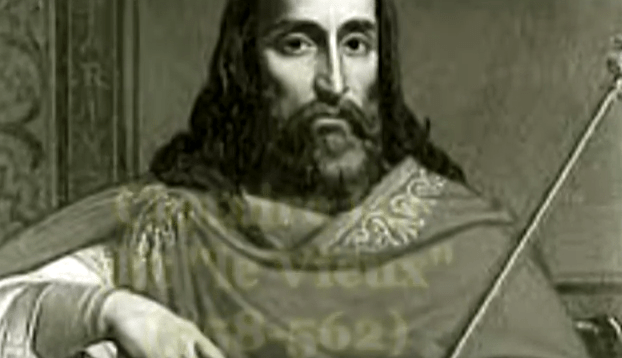


I asked Murray Oltman, as well as Daryl and Kimberly Bulkley, if they were writing a book with my offspring in it. They refused to answer, even though Murray, Kimberly, and I are/were facebook friends. I suspect both are facebook friends of my daughter. You do not get to pretend to be my troll friend and collect photos of my grandson, Tyler Hunt, a minor. Tyler is my Heir. Tyler will get my pocket watch engraved with ‘Royal Rosamond Press’, and my Savage over/and under shotgun.
My father considered himself a Broderick because his father, Victor Hugo Presco, was a gambler and a Bohemian. This mentally ill Broderick worked out his abandonment by his father, on me, because I was creative, and not military material. He told his relatives I was not his son, but the product of my mother’s betrayal. He told his friends I was Rosemary’s Baby, in front of me. He humiliated me all my life, just like his cousins who hated my mother. They never helped her raise her four children, and undermined us. Melba Broderick walked into a seventh grade art class and told the teacher I was mentally ill because of the surreal painting I did. Daryl should be banned from Art World.
The Rosemont/Rosemond family were rulers in Toxandria. The Presco came from Bohemia. I believe they are from the Cimbri and the Boii. The Stuttmeisters were Teutonic Knights. By chance, or fate, the right combo of genetics came together. The Broderick gene is the inferior usurper. I suspect Rena and I are of the Beautiful Merovingian bloodline. The Brodericks hate Beauty, because they are a ugly race.
Jon Presco
Copyright 2017
|
Cimbri & Teutones (Germans?/Celts?) A large-scale incursion of the sea into Jutland around the period between 120-114 BC is known as the Cimbrian Flood. It permanently altered the shape of the coastline and drastically affected the way people live in the region. It was probably this event (which is ascribed by some scholars to 307-306 BC) which affected the Germanic Teutones (Teutons) in the centre of the peninsula and their northern neighbours, the Cimbri, enough to force them to migrate southwards in large numbers.
The Cimbri tribal name is wholly Celtic, and means ‘compatriots’ or ‘companions’ in the sense that they were people with a common background and heritage. So was the tribe itself really Celtic, or perhaps Germanic with a Celtic elite ruling it? The ruler of the Cimbri, Boiorix, had a name which meant literally ‘king of the Boii‘. The Boii were a tribe of Celts that occupied a wide swathe of central Europe at this time, which raises the possibility that the driving force behind this migration was the Boii themselves, which is backed up by Julius Caesar’s own thoughts on the matter. Even ‘Teutobod’, leader of the Teutones, is partially Celtic. The second part of his name, ‘-bod’, is a Celtic word and the first part, whilst accepted by mainstream opinion as being a Germanic word, can be argued as being Celtic with a Germanic equivalent of ‘folc’ or ‘folk’. The Cimbri also included a Lugius amongst their sub-kings, another Celtic name. The answer to this mystery may be even more strange than a ‘simple’ Celto-Germanic crossover. One particular theory also explains many influences in the Celtic La Tène culture which the Cimbri seem to share. This is the so-called ‘Thraco-Cimmerian Hypothesis’, a rather controversial subject to say the least. It concerns an Eastern Celtic 38 group, part of the Cimmerian-Scythian people, who blasted their way into the historical record in the eighth and seventh centuries BC, and eventually settled to a large extent amongst the Thracian tribes. Some modern writers believe that a Thraco-Cimmerian migration westwards out of Thrace (following the Cimmerian settlement there) triggered cultural changes that contributed to the transformation of the Celtic Hallstatt C culture into the La Tène. Among the Celts, their original name (which is proposed by Edward Dawson as being Galat – an argument that is fully supported here) appears to survive best along the fringes of their expansion, where a group would become isolated sufficiently that they had no competitors who were using the same name, and therefore had no reason to change that name (see, for instance, Galatians, Caledonians, and Galicia). If the Cimmerian name followed this pattern then the Cimbri of Jutland may indeed be a Cimmerian/Celtic mix, retaining their old name (which, given the close Indo-European relationship between all these groups could still have an original meaning of ‘compatriots’ or ‘companions’), but being designated by many modern scholars as a Germanic tribe with Celtic influences. Skipping back to the Cimbric/Teutones migration event of the late second century BC, it may have been this which began or was part of a population shift in southern Sweden. It was this latter migration that triggered the movement of the Goths into Central Europe, where they settled between the Oder and the Vistula in what is now Poland. It was also almost certainly the Cimbri and Teutones migration that triggered a large-scale influx of Belgic tribes into Britain which was only increased by the campaigns of Julius Caesar. (Additional information by Edward Dawson, and from Who were the Cimmerians, and where did they come from? Anne Katrine Gade Kristensen (Royal Danish Academy of Sciences and Letters, Hist-fil. Medd 57), and Celts and the Classical World, David Rankin (1996). Other major sources listed in the ‘Barbarian Europe’ section of the Sources page.) |
|||||
|
? – 102 BC |
Teutobod / Theudobod |
King of the Teutons. Also known in legend as King Teutenbuecher. |
|||
|
? – 101 BC |
Boiorix |
King of the Cimbri (and Boii?). Also known in legend as King Boiger. |
|||
|
113 – 109 BC |
Teutobod and Boiorix lead a large-scale migration of Teutones and Cimbri from their homeland in what later becomes central and northern Denmark. Along the way they pick up Celto–Germanic Helvetii peoples (in territory that later becomes Franconia), but also drop off fragments such as the Atuatuci. Their passage sparks a partial tribal movement by elements of the Boii who invade the Norican region south of the Danube, and it is either the Cimbri or the Boii who attack the Scordisci Celts in the Balkans. Could this migration involve a far larger number of Germanic tribes than has previously been suspected? Certainly the general Germanic migration towards the lands of the Celts picks up pace in the first century BC, but tribal names such as the Tubantes, the ‘mound people’, suggest similar origins to those of the Cimbri and Teutones.
|
||||
|
109 – 105 BC |
The wandering tribes enter Gaul from Germany in 109 BC, causing chaos amongst the Celtic tribes there and rendering critical the situation in the region. It is almost certainly this invasion that sparks the migration of Belgic peoples from the Netherlands and northern Gaul into south-eastern Britain, although such a migration may already have started on a smaller scale. In 107 BC, a Roman defence against the Cimbri’s allies, the Helvetii, at the Battle of Burdigala ends in defeat, further exacerbating the confused situation. |
||||
|
105 – 101 BC |
The Cimbri and Teutones have ventured so far south into Gaul by this time that they break into Italy, coming up against the Roman republic. The resultant Cimbrian War sees initial Teuton and Cimbri success against tribes which are allied to Rome, and a huge Roman army is destroyed at the Battle of Arausio in 105 BC. Consul Gaius Marius rebuilds the Roman forces, while the Cimbri raid Iberia. In 102 BC the weakened Teutones are defeated and enslaved. The Cimbri are similarly destroyed at the Battle of Vercellae in 101 BC. Remnants of the two tribes (probably a substantial number) remain in their homeland in the the Cimbric Peninsula, possibly as part of a general band of ‘northern Celts’ or Belgae. They are able to send ambassadors to Rome in AD 5 (as reported by Pliny), but are later absorbed by the incoming Angles and Jutes. |
||||


 Rosamond Press
Leave a comment