


I spent the last three hours working on my campaign to create ‘The Order of the White Rose’ that will be given to members of the Press who show gallantry in the line of duty. The motto on this medal will read;
“God Can Stand The Questioning”
Ben Jacobs was to be the first to receive this reward. Twenty minutes ago, I found the headstone of Kathleen Easton, the daughter of Rena and Ian Easton. This stone is a black horse with Robert Burn’s most famous poem written on it.
BREAKING NEWS!
I made this post about 10:00 AM. Three hours later I am hearing about David Kurshner’s attempt to set up a private channel to Putin so information can not be intercepted by any Intelligence Agency. Sir Ian Easton was the Admiral in charge of a Cold War agency co-founded by Winston Churchill to create a everlasting bond with the two surviving Nations that had pulled their resources tighter in or order to defeat Hitler’s Axis of Evil that got its start in oppressing the Free Press. Ben Jacob was in the employ of the The Guardian, a British newspaper.
https://www.theguardian.com/profile/ben-jacobs
Donald Trump has called the Press the enemy of the people, along with our Intelligence Agencies. Ian’s daughter was born on the Isle of Wight, and may have died a Citizen of the British Empire. She may had had dual citizenship as a symbol of Hands Across the Water. But more importantly, Kathleen was a champion debater. Our Democratic Elections are based on Fair Elections. There is evidence that the Son-in-Law of the Commander in Chief, attacked Open Debates, and conspired with an enemy of the United States – that oppresses it news people – in order to put people in office trrough, trickery, and treason. It appears members of an intelligence agency, not trusting the Trump government, leaked this information to reporters for the Washington Post.
Yesterday I looked at taking the Greyhound bus to Bozeman and Helena to visit the graves of my Rosamond and Rose kindred. I want to cover Greg’s arraignment for assaulting Ben Jacobs. It was a newspaper account that helped me find my muse, who knew of the rosy theme in my blog Royal Rosamond Press. My poem ‘The Dark Horse’ goes with this headstone that bid me to change the white rose into a red one.
Kate’s father, Sir Ian Easton, fought for the Liberty and Freedom of the Press for many nations. Here are two of the medals he was given.


On this day, May 25, 2017, I title Kathleen Ann Easton ‘The Muse of Freedom of the Press’ and honor her with my grandfather’s poem. Royal sold newspapers on a corner, and tutored young poets.
Jon Presco

Your Name
by Royal Rosamond
The tide was low today, my love
A cadence of the sea was wrought
In melancholy strain, and low and fraught
With whisperings of your name above
The deep sea song!
A shell that lured along the shore
Whispered; “I love you evermore!”
I wrote your name upon the sands –
Would that I traced with gentle hands –
The minor chords were wont to spell
Each syllable!
The tide is high tonight, my dear.
The rock-bound shore loves the wave
But sends it dying to its grave.
The low base notes vie with the fear
The wind send on
The all-encircling gloom
Descended o’er old ocean’s tomb!
Your name is gone tonight, my love:
The angry surge rushed in above.
It cries aloud, with sea gull’s shrill
“I love you still!”
Easton joined the Royal Navy in 1931 and qualified as a pilot at the start of World War II in which he saw active service on aircraft carriers.[1] On 4 January 1941, flying a Fairey Fulmar of 803 Squadron from HMS Formidable during a raid on Dakar he force landed, with his aircrewman Naval Airman James Burkey and was taken prisoner and held by the Vichy French at a camp near Timbuktu until released in November 1942.[2] He was appointed Assistant Director of the Tactical and Weapons Policy Division at the Admiralty in 1960 and was seconded to the Royal Australian Navy as Captain of HMAS Watson in 1962.[1] He went on to be Naval Assistant to the Naval Member of the Templer Committee on Rationalisation of Air Power in 1965, Director of Naval Tactical and Weapons Policy Division at the Admiralty in 1966 and Captain of the aircraft carrier HMS Triumph in 1968.[1] After that he was made Assistant Chief of Naval Staff (Policy) in 1969, Flag Officer for the Admiralty Interview Board in 1971 and Head of British Defence Staff and Senior Defence Attaché in Washington, D.C. in 1973.[1] He last posting was as Commandant of the Royal College of Defence Studies in 1976: he commissioned armourial bearings for the College which were presented during a visit by the Queen in November 1977.[3] He retired in 1978.[1]
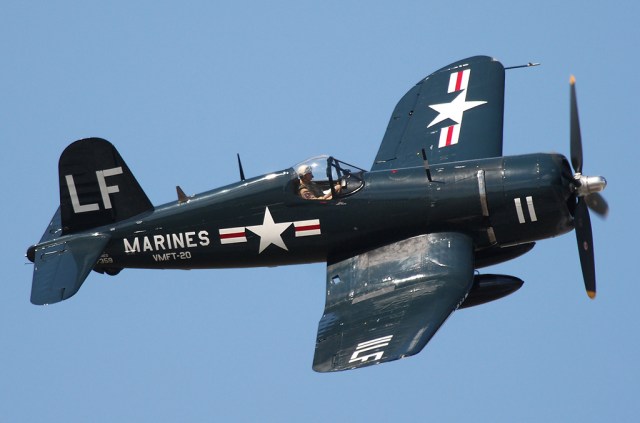



https://www.findagrave.com/cgi-bin/fg.cgi?page=gr&GSln=Easton&GSiman=1&GSst=28&GRid=51338053&
https://www.findagrave.com/cgi-bin/fg.cgi?page=pv&GRid=51338053&PIpi=44516872
https://rosamondpress.com/2013/07/21/irene-rena-victoria-easton/
Sea Horse
The dark horse
is in the ocean
Grey-silver manes
around the sun.
The hollow horn of the eye
plays chords out to sea
which sets adrift my father’s boat
of wood and colored scales
to catch the blue fish of the mind
The setting sun
like a golden ring
he places upon one hand
and brings home his days catch
crystal colors upon the sand
KATHLEEN A. “KATIE” EASTON
Former Bozeman High School state debate champion Kathleen Anne
“Katie” Easton, passed away as a result of an automobile accident early
Sunday, Jan. 10, 1999. She was born April 20, 1979, to Irene (Rena) and
Admiral Sir Ian Easton, K.C.B. D.S.C. on the Isle of Wight, England.
She attended grade school on the Isle of Wight and transferred to Chief
Joseph Middle School when she and her family moved to Bozeman in 1991.
She graduated from Bozeman High School in 1997.
During high school, she completed a stellar career in forensics. As
a policy debater in her sophomore and junior years, she compiled a 72.54
percent win/loss record. In her senior year, she switched to
parliamentary debate and became a dominant force in the event, winning
the 1997 Montana state championship and the District NFL qualifying
tournaments. At the 1997 Nationals Katie reached the semifinal round of
competition, a result that placed her in among the top 16 parliamentary
debaters in the country.
After graduation, Katie attended The University of Montana for three
semesters as a student in the College of Arts and Sciences with an
emphasis in environmental science. She achieved a 3.9 grade point
average, and had taken up skydiving. She planned to spend this summer
participating in Outward Bound in the North Woods of Maine and the
Florida Everglades. She recently was accepted by AmeriCorps as a
National Service volunteer, beginning in September 1999.
Katie loved the outdoors. She was an avid sailor who attended the
Medina Valley Sailing Centre on the Isle of Wight and achieved a Grade 5
with the Royal Yachting Association on the International Competitive
Exam. She enjoyed reading literature and was a Celtic and rock music
buff, a hobby that she shared with many friends and teammates who will
miss her unpretentious, humble manner and dry wit. Katie was a true
humanitarian, a loyal, caring person who enriched the lives of all she
met.
She was preceded in death by her father, Admiral Sir Ian Easton
K.C.B. D.S.C.; Her maternal grandmother, Ann Last Christensen, her
maternal grandfather, Thomas Ernest Christensen; and her paternal
grandparents Walter and Janet Easton.
She is survived by her mother Irene Easton of Bozeman, brother James
Easton, who is serving on the U.S.S. John F. Kennedy; and brother Hamish
Easton who resides in London, England.
Funeral services will be held at 2:30 p.m. Wednesday Jan. 13 at The
Salvation Army Church, corner of Church and Lamme Street. Interment
will follow in Sunset Hills Cemetery.
Memorials may be made to the Worthy Student Scholarship Fund for
Speech and Debate Scholarship, c/o Jan Wenderoth, Bozeman High School,
A Red, Red Rose
By Robert Burns
O my Luve is like a red, red rose
That’s newly sprung in June;
O my Luve is like the melody
That’s sweetly played in tune.
So fair art thou, my bonnie lass,
So deep in luve am I;
And I will luve thee still, my dear,
Till a’ the seas gang dry.
Till a’ the seas gang dry, my dear,
And the rocks melt wi’ the sun;
I will love thee still, my dear,
While the sands o’ life shall run.
And fare thee weel, my only luve!
And fare thee weel awhile!
And I will come again, my luve,
Though it were ten thousand mile.
Texas Gov. Greg Abbott joked about shooting reporters while visiting a gun range and carrying a target sheet with bullet holes in it.
As he was holding the bullet-ridden target, Abbott allegedly said, “I’m gonna carry this around in case I see any reporters,” according to the Texas Tribune.
The incident happened Friday as Abbott was at the range signing a bill into law lowering the cost of a handgun license in Texas the Tribune reported.
Abbott’s office did not immediately respond to TIME’s request for comment.
The comment comes shortly after another incident of violence against a reporter. A Guardian reporter said that Montana Republican Greg Gianforte “body slammed” him and broke his glasses Wednesday night. Gianforte, who won a special election for Montana’s congressional seat on Thursday night, was charged with misdemeanor assault
BRUSSELS — President Trump on Thursday once again refused to explicitly endorse NATO’s mutual defense pledge, instead lecturing European leaders on what he called their “chronic underpayments” to the military alliance.
Speaking at the opening of a new NATO headquarters, Mr. Trump offered a vague promise to “never forsake the friends that stood by our side” in the aftermath of the Sept. 11 attacks — a pledge that White House officials later said amounted to an affirmation of mutual defense.
But European allies are likely to see Mr. Trump’s words as falling far short of the robust endorsement of NATO’s Article 5 clause, the “one-for-all, all-for-one” principle that has been the foundation of the alliance since it was established 68 years ago after World War II.
Mr. Trump’s repeated refusal to endorse that principle as a candidate, and now as president, has raised fears among allies in NATO about whether the United States would automatically come to their defense in the event of an attack.
http://www.rollingstone.com/politics/features/the-democrats-battle-for-montana-w482375
Quist is no stranger to cheering crowds or life on the road. A professional musician who has played for audiences as diverse as Hee Haw and CBGB, Quist is most famous for picking guitar and banjo in the Mission Mountain Wood Band, Montana’s iconic “electric bluegrass” act that shared 1970s stages with the likes of Merle Haggard, Jerry Garcia and Bo Diddley. Quist continues a solo career in a folksier vein – recent songs include “A Lady Called Montana” and “.45 Caliber Man” – and he tends to a small ranch in the Flathead Valley, south of Glacier National Park. The campaign’s endless five-event days, crisscrossing a state the size of Japan, seem to energize rather than exhaust Quist.
https://www.youtube.com/watch?v=xJBj8PpI8SA
https://www.youtube.com/watch?v=3nkD39Ww9zg coke
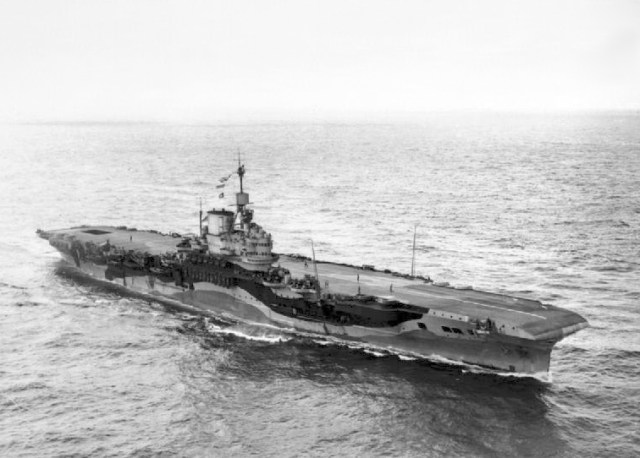
HMS Formidable was an Illustrious-class aircraft carrier ordered for the Royal Navy before the Second World War. After being completed in late 1940, she was briefly assigned to the Home Fleet before being transferred to the Mediterranean Fleet as a replacement for her crippled sister ship Illustrious. Formidable‘s aircraft played a key role in the Battle of Cape Matapan in early 1941, and they subsequently provided cover for Allied ships and attacked Axis forces until their carrier was badly damaged by German dive bombers in May.
Assigned to the Eastern Fleet in the Indian Ocean in early 1942, Formidable covered the invasion of Diego Suarez in Vichy Madagascar in mid-1942 against the possibility of a sortie by the Japanese into the Indian Ocean. Formidable returned home for a brief refit before participating in Operation Torch, the invasion of French North Africa in November. She remained in the Mediterranean and covered the invasions of Sicily and mainland Italy in 1943 before beginning a lengthy refit.
Formidable made several attacks on the German battleship Tirpitz in Norway in mid-1944 as part of the Home Fleet. She was subsequently assigned to the British Pacific Fleet (BPF) in 1945 where she played a supporting role during the Battle of Okinawa and later attacked targets in the Japanese Home Islands. The ship was used to repatriate liberated Allied prisoners of war and soldiers after the Japanese surrender and then ferried British personnel across the globe through 1946. She was placed in reserve the following year and sold for scrap in 1953.
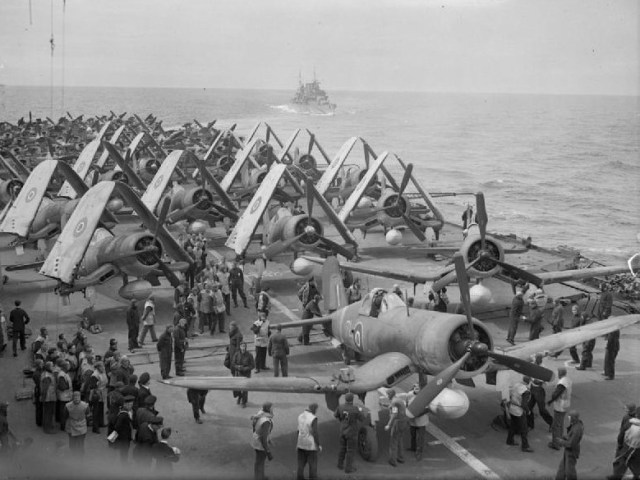
On 18 April the Mediterranean Fleet sortied to bombard the primary Axis supply port of Tripoli and was attacked by a pair of torpedo-carrying SM.79s from Rhodes. They were intercepted by a pair of Fulmars that damaged one bomber badly enough that it crash-landed back at its base, although one Fulmar was also forced to crash-land aboard Formidable. The next day Fulmars from 806 Squadron shot down one CANT Z.1007 bomber flying from Cyrenica to Sicily and a pair of Junkers Ju 52 transports flying fuel to North Africa. On the morning of 21 April, the carrier’s aircraft dropped flares to illuminate the port so it could be shelled by three battleships and a light cruiser. On the way home, a pair of Fulmars shot down a Dornier Do 24 flying boat.[27]
The Most Honourable Order of the Bath (formerly the Most Honourable Military Order of the Bath)[1] is a British order of chivalry founded by George I on 18 May 1725.[2] The name derives from the elaborate medieval ceremony for appointing a knight, which involved bathing (as a symbol of purification) as one of its elements. The knights so created were known as “Knights of the Bath”.[3] George I “erected the Knights of the Bath into a regular Military Order”.[4] He did not (as is commonly believed) revive the Order of the Bath,[5] since it had never previously existed as an Order, in the sense of a body of knights who were governed by a set of statutes and whose numbers were replenished when vacancies occurred.[6][7]
Flag of Hampshire. Hampshire is notable for housing the birthplaces of the Royal Navy, British Army, and Royal Air Force

The award was originally created in 1901 as the Conspicuous Service Cross, for award to warrant and junior officers ineligible for the DSO. It was renamed the Distinguished Service Cross in October 1914, eligibility being extended to all naval officers (commissioned and warrant) below the rank of lieutenant commander. In 1931, the award was made available to members of the Merchant Navy and in 1940 eligibility was further extended to non-naval personnel (British Army and Royal Air Force) serving aboard a British vessel. Since the 1993 review of the honours system, as part of the drive to remove distinctions of rank in awards for bravery, the Distinguished Service Medal, formerly the third level decoration for ratings, has been discontinued. The DSC now serves as the third level award for gallantry at sea for all ranks.

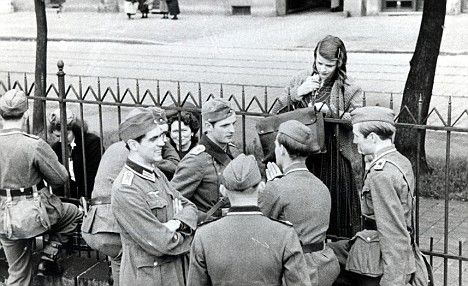

The White Rose (German: die Weiße Rose) was a non-violent, intellectual resistance group in Nazi Germany led by a group of students and a professor at the University of Munich. The group conducted an anonymous leaflet and graffiti campaign which called for active opposition against the Nazi regime. Their activities started in Munich on June 27th, 1942, and ended with the arrest of the core group by the Gestapo on February 18th, 1943.[1] They, as well as other members and supporters of the group who carried on distributing the pamphlets, faced show trials by the Nazi People’s Court (Volksgerichtshof), and many were sentenced to death or imprisonment.
The group wrote, printed and initially distributed their pamphlets in the greater Munich region. Later on, secret carriers brought copies to other cities, mostly in the southern parts of Germany. In total, the White Rose authored six leaflets, which were multiplied and spread, in a total of about 15,000 copies. They branded the Nazi regime’s crimes and oppression, and called for resistance. In their second leaflet, they openly denounced the persecution and mass murder of the Jews. By the time of their arrest, members of the White Rose were just about to establish contacts with other German resistance groups like the Kreisau Circle or the Schulze-Boysen/Harnack group of the Red Orchestra. Today, the White Rose is well-known within Germany and worldwide.
https://en.wikipedia.org/wiki/White_Rose
https://www.ushmm.org/wlc/en/article.php?ModuleId=10007188
https://www.youtube.com/watch?v=c-oY7ijbf5E sheriiff
https://www.youtube.com/watch?v=ksg8cMFxT4Y
https://en.wikipedia.org/wiki/The_Guardian
https://www.theguardian.com/profile/ben-jacobs
 Rosamond Press
Leave a comment