

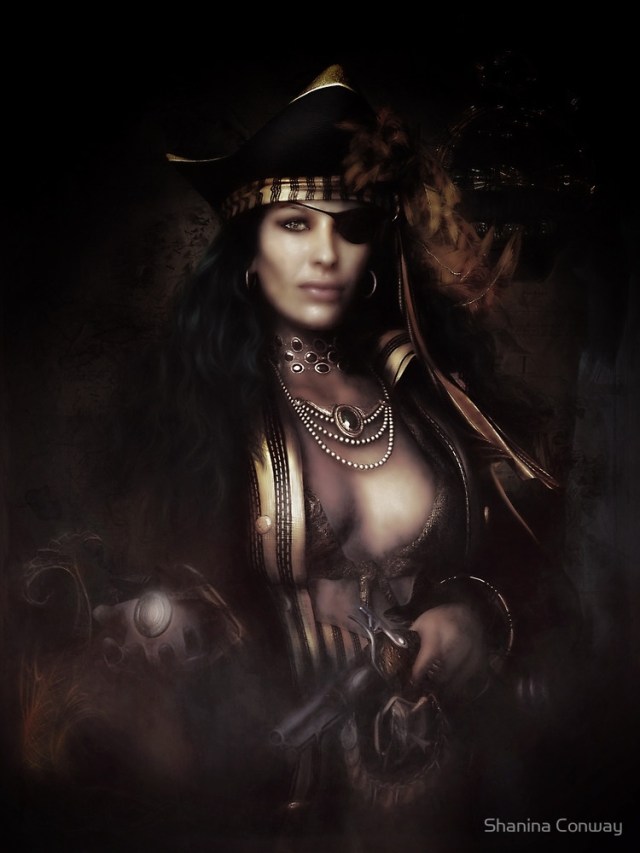
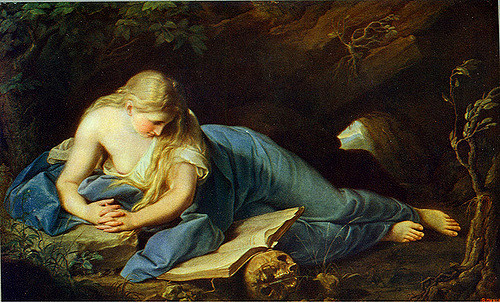
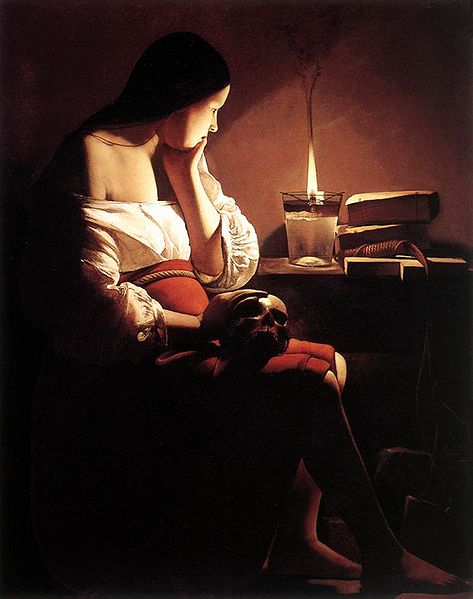
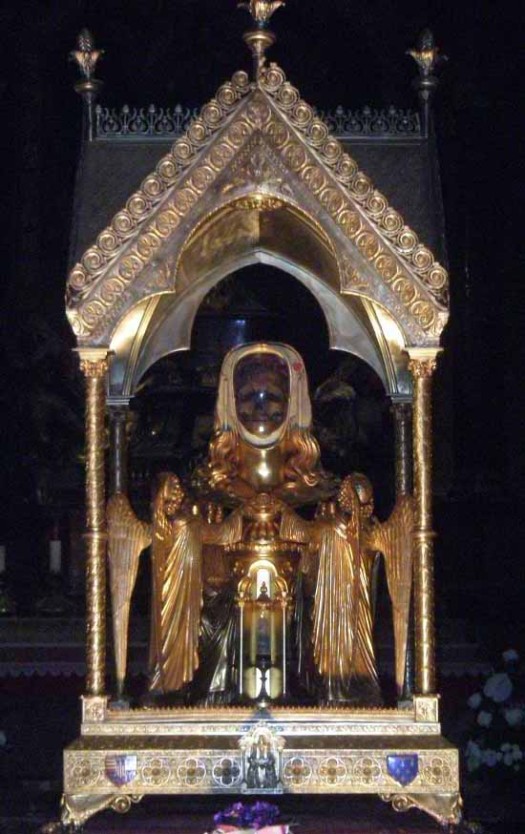
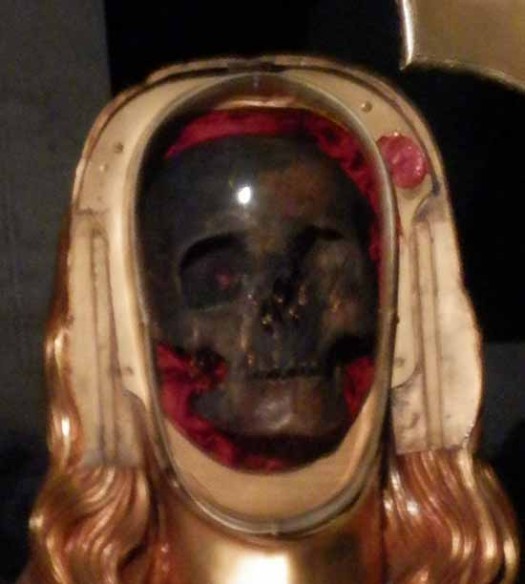
There is no mention of Mary Magdalene being the Muse of Jesus – or a pirate! What an oversight. My version of Jesus ‘The Human Revolutionary’ would have no problem depicting Mary as an inspiration to Jesus, she a famous Woman Pirate from a long line of Carthaginian royals, who is praying upon Roman shipping, especially slave ships, she boarding them under her infamous flag, the skull and crossed bones of her ancestor, Hannibal ‘The Great’ who lost one eye righting the Roman legion in Italy.
Mary’s lineage is traced to Tyre and the Temple builders. She was ‘Mary of the Tower’. Has anybody bothered to look at the lineage of Melania of the Tower?
I was Rosamond’s Mentor. She became rich and famous – following in my footsteps. On our mountain, Rena followed in my footsteps. She took in every word I had to say. My grandmother, Mary Magdalene Rosamond, was Royal’s Muse. She forsake him. Now, from beyond death, she seers her, and sends her to see the sea. She sends her on a mission, to meet me, and be………..The Last Muse of Mary Magdalene!
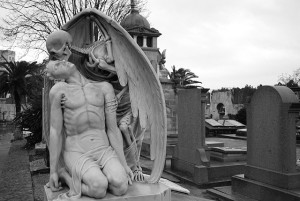
This is why Rena delivers the Kiss of Death – as she wrapped her legs around my legs, around my shin bones. She had me pinned. Her beautiful hands had a tight hold of my wrists. Just this…………..and I was hers, forever!
I can not work without a muse? How about Jesus? There are a hundred books on the Divine Feminine that declare Mary taught Jesus all he know. I felt the heat of her V press against my manhood as her tongue found the core of my soul! Then, she was a electric blue skeleton alive with the vibrations of the cosmos. Her electrical download, seareed the base of my skull. She took my head in her hands, and held it as if it belonged to her.
From afar, in spite of the warnings of the Conservative Aryans of Bozeman, alas, Rena imparted ‘The Great Secret’. I now know who it belonged to, and, where it is buried. It is time for My Great Book!
Jon Presco
Copyright 2017
In Hebrew, ‘Migdol’ or ‘Migdal mean ‘tower’. The English word ‘tower’ is derived from the name for the Phoenician city of Tyre which controlled twenty cities in northern Israel since the days of Solomon (950 BC). The inter-relationship between Tyre and Israel in ancient times was much more complex than hitherto recognised. For example, two Phoenician women received their sons back from the dead in the Old Testament. The prophets Elijah and Elisha sent by God to resurrect these Phoenicians’ dead sons were the subject of a dispute between Jesus and his own synagogue in Galilee when they threw him out.
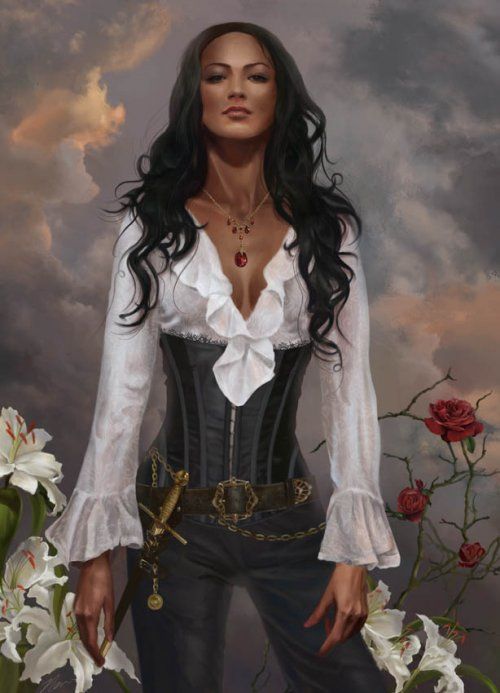

Did the Knights Templar become the Pirates of the Caribbean?
8/10/2013
In doing some research, I came across a decade-old book by Ancient Aliens pundit David Childress that I hadn’t heard of: Pirates and the Lost Templar Fleet (2003), in which the irrepressible author tells us that the “lost” fleet of the Knights Templar became a roving band of pirates menacing the American coast for several centuries! I guess this is a little better than imagining that they claimed the entire Mississippi watershed for the imaginary children of Jesus, but not by much. The book appears to have been designed to tie in to two then-popular products, The Da Vinci Code and Pirates of the Caribbean, both released in 2003.
Things don’t start off well, with Childress stating that “most people have heard speculation that the Vikings sailed their long ships to Greenland and Labrador about a thousand years ago” (p. 13). Of all the things Childress has ever proposed as potentially true—from aliens to time travel to ancient atom bombs—the one thing that is actually true he calls “speculation.” Apparently he isn’t aware of the archaeology done in Canada since the 1960s, or any of the known facts about Greenland from the medieval period onward. But based on this dismissal of history, Childress next claims that “modern historians persist in teaching that Columbus was the first to cross the Atlantic.” That hasn’t been the case for most historians since the 1800s, when the Viking voyages were first taken seriously, and certainly not since the 1960s, when the first archaeological evidence proving the Viking voyages came to light. Childress is either purposely lying, ignorant of modern historiography, or he thinks that his half-remembered high school textbooks represent the sum of “official” human knowledge.
In his usual buildup of irrelevancies, Childress next presents the recycled greatest hits of trans-Atlantic diffusionism, including this howler: “The Phoenicians were also known as the Carthaginians” (p. 15). Um, no. Carthaginians were an offshoot of the Phoenicians, but they are not interchangeable. “There is an ancient passage detailing their forays into the Atlantic after the end of the Trojan War, circa 1200 BC.” Oh, so close! He’s referring to the famous Periplus of Hanno, composed by the Carthaginian navigator and hung in the temple of Baal Hammon in the sixth century BCE. It commemorates Hanno’s voyage down the coast of Africa, where he met chimpanzees. Childress was only off by 600 years, and attributed it to the wrong people.
This leads him to the “Jewish” voyage to America. Childress, we should note, differs from Scott Wolter in that he believes that Calulus, the imaginary colony of Arizona, to have been Jewish, not a Templar creation. He keeps blathering on about diffusionist topics, citing Man Out of Asia, Harold Gladwin’s cranky book about academic conspiracies to cover up the real history of America, which is so over-the-top (it’s illustrated with cartoons) that archaeologist Stephen Williams became convinced that Gladwin meant it as a joke.
All of this is a very longwinded way of Childress trying to make it plausible that the Templars came to America. He provides a potted history of the Templars (including—in 2003!—the obsolete spelling of Moslem), but in so doing Childress engages in his usual practice, self-plagiarism. Take a look at this “coincidence” of language. The text on the left is Childress writing in 2003, and the text on the right is Childress’s own introduction to Charles G. Addison’s classic The History of the Knights Templars, the Church, and the Temple (1842), published by Childress six years earlier:
|
When a nobleman would join their ranks, he would surrender his castle and property to the Knights, who would use revenues generated from the property to purchase weapons, war-horses, armor, and other military supplies. The ranks of the Knights Templar grew rapidly. Other noblemen and Kings who were not members often gave them gifts of money and land. King Steven of England contributed his valuable English manor of Cressing in Essex. He also made arrangements for high ranking members of the Knights to visit nobles of England and Scotland. (etc. etc.)
|
When a nobleman would join their ranks, he would surrender his castle and property to the Knights who would use revenues generated from the property to purchase weapons, war-horses, armor and other military supplies. The ranks of the Knights Templar grew rapidly. Other noblemen and Kings who were not members often gave them gifts of money and land. King Steven of England contributed his valuable English manor of Cressing in Essex. He also made arrangements for high ranking members of the Knights to visit nobles of England and Scotland. (etc. etc.)
|
Two commas are different. Weirdly, this same text circulates quite a bit. It also appears verbatim as the work of Ed Shroeder in Treasure Quest magazine, and Childress recycled it again for an article in the edited volume Forbidden Religion by J. Douglas Kenyon.
Moving on, Childress accuses the Catholic Church of existing to “establish hegemony, collect as much money as possible and put fear into the hearts of people” (p. 39); therefore, the Knights Templar secretly opposed the Church to protect the Holy Grail, though he is uncertain whether it is a chalice or the descendants of Jesus. When alternative historians disagree, Childress refuses to pick and choose among them.
So Childress goes on to discuss the “Lost Templar Fleet,” which he does not know from primary sources but rather from Michael Baigent and Richard Leigh, authors of The Temple and the Lodge and really terrible researchers. As I discovered last month, this is the entirety of the evidence for the “lost fleet,” the testimony of Jean de Châlons, a Templar and proven liar, making up stories under torture during the suppression of the order:
Then he said that, learning beforehand about this trouble, the leaders of the Order have fled, and he himself met Brother Gerard de Villiers leading fifty horses, and he heard it said that he had set out to sea with eighteen galleys, and Brother Hugues de Châlons fled with the whole treasury of Brother Hugues de Pairaud. When asked how he was able to keep this fact secret for so long, he responded that no one would have dared reveal it for anything, unless the Pope and the King had opened the way, for if it were known in the Order that anyone had spoken, he would at once be killed. (my translation)
Childress follows Michael Bradley—an alternative author who believes many strange things, including that modern Jews are sexually frustrated Neanderthal hybrids—in asserting that the Templar fleet (these imaginary eighteen boats) carried the descendants of Jesus and/or the Ark of the Covenant to Scotland to avoid the Pope, where they adopted the Jolly Roger as their symbol and fell into the service of the Sinclair family! The logic here is that gravestones in northern Scotland were marked with a skull and crossbones; therefore, they must be Templar symbols and the origin of the pirate flag. Sadly, this explanation has infiltrated Wikipedia, but the earliest skull-and-crossbones flag cannot be dated before 1687, while pirate flags used a wide range of symbols, not just the skull and crossbones. Although the Templar-Jolly Roger claim is a widespread trope of conspiracy literature (literally hundreds of books discuss it), allegedly as a symbol of resurrection, in truth there is not a shred of evidence that any Templar ever used it. It’s apparently a modern myth, created as a Freemason legend during the period when the Masons tried to ties themselves back to the Templars. The fake story holds that three Templars exhumed fallen leader Jacques de Molay’s grave but found only his skull and femurs. However, this is an ex post facto story concocted to explain why the Masonic Knights Templar of the United States (not directly descended from the originals) used a skull and crossbones on their insignia, which originated in the adopting of a typical colonial gravestone decoration as a “memory” of the original Templars’ martyrdom. Notably, this symbol was not historically used outside the United States in Masonic devices, and at any rate it came centuries too late to have had anything to do with the original Knights Templar.
Childress follows Bradley in assigning the Jolly Roger to what he calls “Jolly” King Roger of Palermo, a Templar who first flew the flag while raiding and pillaging and fighting the evil forces for Catholicism. So far as I can tell, Bradley simply made this up. The Norman ruler Roger II of Sicily (1095-1154), whom Bradley unlike Childress correctly calls by name, was not called “the jolly,” nor did he fly a Jolly Roger. He did fight against the Vatican, but not because he hated the Church but because (a) the patriarch of Jerusalem voided his mother’s marriage (her husband, King Baldwin I, was committing bigamy) and (b) the pope wanted to break Norman power and declared a crusade against Roger. It failed, and the next pope not only reconciled with Roger; he made him king. The popes and Roger fought off and on for a long time thereafter, but while Roger commanded the best fleet in all the Mediterranean, it was a navy, not a pirate fleet. He fought “Vatican vessels,” yes, but in a war, not for piracy.
Far from being a Templar himself, Roger was against the Templars because they were allied to his enemy, Pope Innocent II, while Roger supported Antipope Anacletus II. Until 1150, the Templars received no royal support and had very limited activities in Roger’s lands. It was only in 1187—after Roger’s death—that the Norman nobility of Sicily started to back the Templars. In 1194, the new sovereign, Holy Roman Emperor Henry VI, crowned king of Sicily, finally began to offer royal and imperial recognition to the Order on the island. It was only after 1208 that the Templars began operating in Sicily and Southern Italy in earnest.
Therefore, history tells us that Roger could not have been a Templar pirate. Why would anyone think he was? It appears it’s because Roger employed al-Idrisi, the Islamic geographer whose globe recorded a fabulous island in the Azores with “three cities of equal size, much peopled, the inhabitants of which were now all slain by civil wars.” This reference, intended to refer to the Azores, got roped into the Spanish myth of the Seven Cities where in 734 seven Christian bishops were alleged to have sailed with men and women to escape the Islamic invasion of Spain. Because Holy Bloodline authors think this records a Cistercian or Proto-Templar voyage to America, al-Idrisi and through him Roger II thus become part of the Templar conspiracy, despite the obvious evidence that Roger opposed the Templars. Childress is thus completely wrong to call Roger’s lands a “Templar kingdom” (p. 59), and he’s even more wrong to somehow think that “Jolly Roger” of Sicily was taking the Templar ships for a spin after the order dissolved, nearly two centuries after his death (p. 62), a claim not even his source, Michael Bradley, had made. Childress even misunderstands the alternative history he copies.
With that, I think we can call it a day on David Childress’s pirate fantasy.
 Rosamond Press
Leave a comment