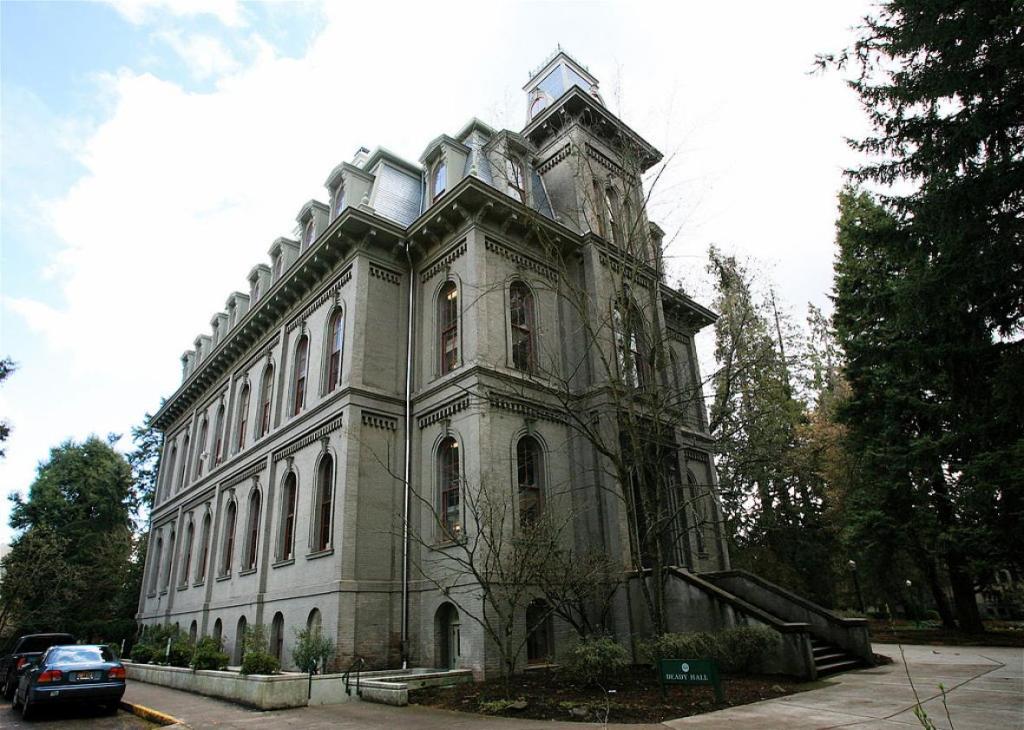

“In December 2015, an alumnus told the Register-Guard that renaming Deady Hall would disrespect Deady’s more honorable legacy. After the Civil War, Deady left the Democratic Party, supported the 14th and 15th Amendments, and served as a pallbearer at President Abraham Lincoln’s funeral.”
It appears there was an effort by the Confederacy to make Oregon a Slave State – after they won the war – and before. The history of the Mim’s families struggles is deeper than we know. There is no need for more rhetoric from me. There is enough in this blog to get several men killed! Deadly and Done – works!
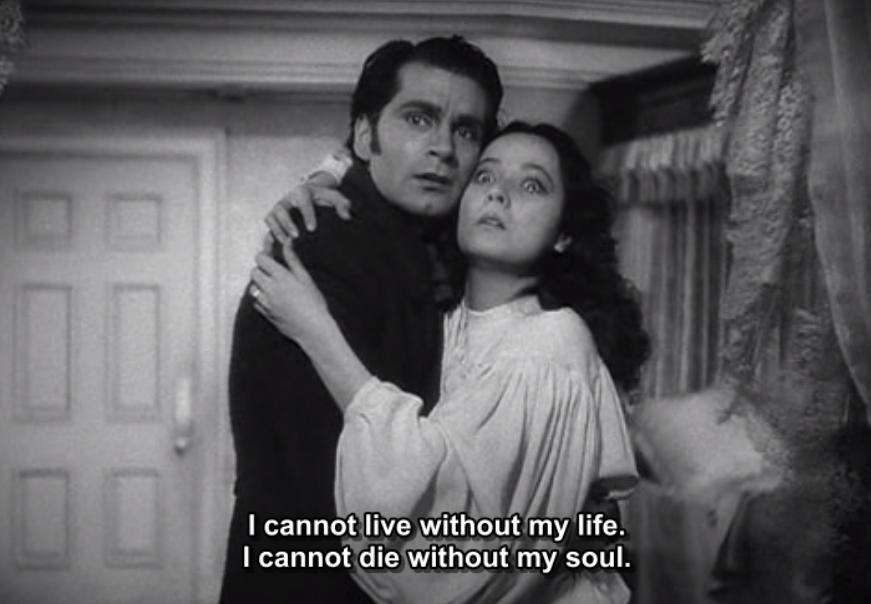
I am inspired to author more historic-fiction along the lines of William Ainsworth. Perhaps, there is a Confederate Vampire in the attic of Deady Hall?
“The Exalted Cyclops of the KKK – awakens! ‘Mary Belle! Mary Belle’ he cries for his lost love, for love forsaken! Will the South rise again, in Lane County?”
This blog is writing itself. The Twinkle Toes Trio thought it was a done deal, and they got their movie in the can. It is never over………..til the fat lady sings!
Here come the embodiment of the Exalted Cyclops of the KKK. His work, is never done! The African Choir will not go on tour. They have to stay home and deal with the plague of Neo-Confederate Zombies in their midst, just like the rest of us sane folk.
Then, there is this guy……………….The True Prophet of Lane County!
Copyright 2016
“Does anyone know of any monuments to the Bentons and John Fremont in Oregon? I suspect Joe Lane made it a point to make sure my kindred’s history drew a blank. Consider the Mim’s House. I am now going to see if Eugene and Springfield will put up some plaques. I will render a few bronze statues. I am good with clay. I will see if I can get a grant from Lane Arts Council – that should change their name to denote Joe’s son. How about ‘Harry Lane Arts Council’
“The University of Oregon’s board of trustees has voted unanimously to rename a campus dormitory after it was confirmed that its eponym, Frederick Dunn, had led a unit of the Ku Klux Klan.
Dunn was an Oregon native and alumnus of UO and Harvard who served as the head of UO’s Latin Department in the early 20th century. He also led a youth organization at the Methodist Episcopal Church, was a member of the Masons … and served as “exalted cyclops” of the Ku Klux Klan.
The decision marks a victory for UO’s Black Student Task Force, comprised of UO Black Women of Achievement and Black Student Union, which proposed the renaming last November, the Eugene, Oregon, newspaper the Register-Guardreported. In accordance with the task force’s list of demands, the university also plans to construct a Black Cultural Center and expand its offering of courses on gender studies and African-American culture. The task force had requested the addition of a required Ethnic Studies 101 course, which would teach a history of social inequality in the U.S., focusing on African-Americans and other historically marginalized groups, but UO President Michael Schill said this requirement would beimpossible for a school of its size. The task force also demanded that the university rename all buildings whose names are “KKK related,” including Deady Hall, named for Matthew Deady, a UO founder and pro-slavery federal judge who supported the U.S. Supreme Court’s Dred Scott decision.
The university asked historians to conduct investigations of Deady and Dunn, and their reports concluded that both had embraced racist views. Deady, for example,reportedly declared, “If we are compelled to have the colored race among us, they should be slaves.”
In an open letter to the community President Schill explained that the university’s goal is to create an inclusive space on campus while not “obscur[ing] history and hid[ing] the ugliness of our past.” He added that the decision whether to “dename” Deady Hall will be postponed until later in the fall semester when students return to campus.
In December 2015, an alumnus told the Register-Guard that renaming Deady Hall would disrespect Deady’s more honorable legacy. After the Civil War, Deady left the Democratic Party, supported the 14th and 15th Amendments, and served as a pallbearer at President Abraham Lincoln’s funeral.
The push to rename buildings whose eponyms harbor less than honorable pasts has emerged on college campuses nationwide over the last year. Just last week,Georgetown University drew national headlines for its decision to rename—for the second time—two dorms that originally honored the men responsible for the 1838 sale of 272 slaves, which funded the university. Georgetown President John J. DeGioia issued a public apology Sept. 1 and pledged to give all descendants of the 272 slaves an edge in the university admissions process. A group of descendants of the 272 has since formed an investment fund to raise money for scholarships for the descendants.
In a similar vein, in May 2015, the University of North Carolina at Chapel Hill renamed a dorm that had honored KKK leader William Saunders. The board voted to change Saunders Hall to Carolina Hall and then placed a moratorium on renaming buildings for the next 16 years. In April, Yale University rejected calls to rename residential college Calhoun College, named for 19th century white supremacist John C. Calhoun, but it did eliminate the term master for the head of each residential college.
The question of how current institutions should address and atone for past wrongdoings—practically an inevitability for centuries-old universities—may be a difficult one, but not naming buildings after documented racists and human-rights abusers is a good place to start.
University of Oregon alumnus Scott Bartlett pleaded the case of 19th-century judge and UO founder Matthew Deady at a UO Board of Trustees quarterly meeting on Thursday.
“We’ve been stagnant at 2 percent for far too long, over 60 years,” Colas said. “It’s time for us to really focus on how do we increase those levels.”
https://rosamondpress.com/2014/08/06/the-pynchon-code-and-society/
https://ebooks.adelaide.edu.au/a/ainsworth/william_harrison/auriol/
https://archive.org/stream/auriolorelixirof00ains#page/22/mode/2up
https://rosamondpress.com/2013/08/04/jehan-de-rougemont-vs-vampires/
With this, he hastily quitted the room, but returned almost immediately with a mallet, a lever, and a pitchfork; armed with which and the lantern, he crept through the aperture. This done, he found himself at the head of a stone staircase, which he descended, and came to the arched entrance of a vault. The door, which was of stout oak, was locked, but holding up the light towards it, he read the following inscription:
POST C.C.L. ANNOS PATEBO, 1550.
“In two hundred and fifty years I shall open!” cried Rougemont, “and the date 1550 — why, the exact time is arrived. Old Cyprian must have foreseen what would happen, and evidently intended to make me his heir. There was no occasion for the devil’s interference. And see, the key is in the lock. So!” And he turned it, and pushing against the door with some force, the rusty hinges gave way, and it fell inwards.
From the aperture left by the fallen door, a soft and silvery light, streamed forth, and, stepping forward, Rougemont found himself in a spacious vault, from the ceiling of which hung a
large globe of crystal, containing in its heart a little flame, which diffused a radiance gentle as that of the moon, around, This, then, was the ever-burning lamp of the Rosicrucians, and Rougemont gazed at if with astonishment. Two hundred and fifty years had elapsed since that wondrous flame had been lighted, and yet it burnt on brightly as ever. Hooped round the globe was a serpent with its tail in its mouth — an emblem of eternity — wrought in purest gold; while above it were a pair of silver wings, in allusion to the soul. Massive chains of the more costly metal, fashioned like twisted snakes, served as suspenders to the lamp.
 Rosamond Press
Leave a comment