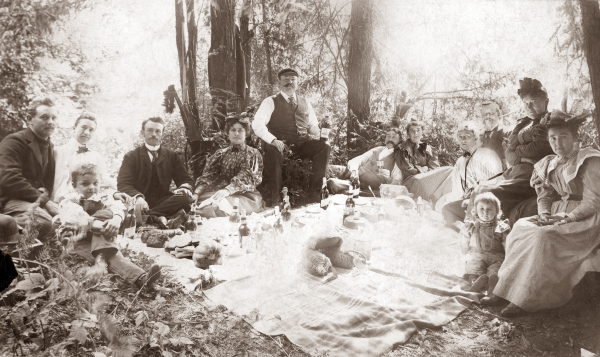

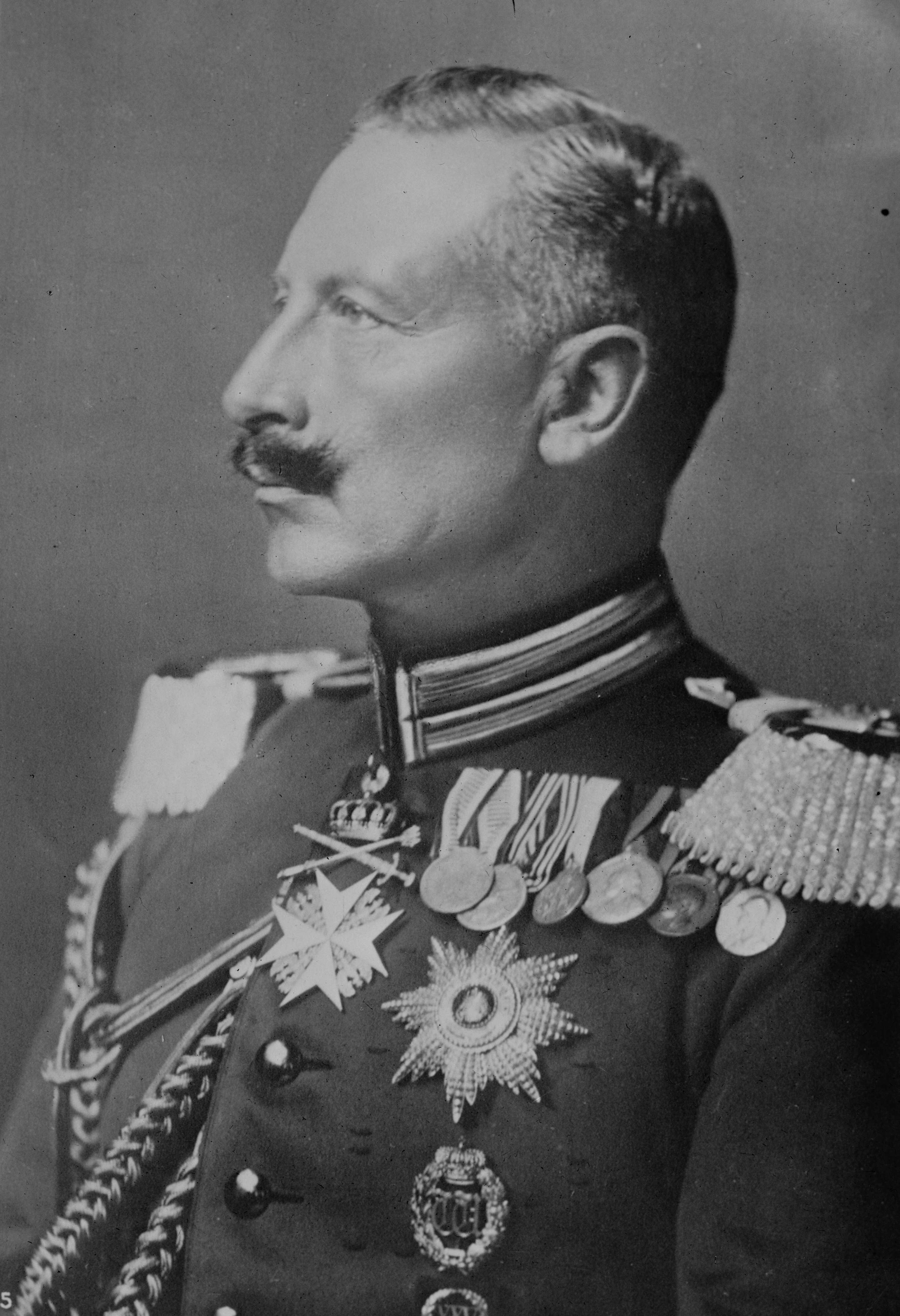
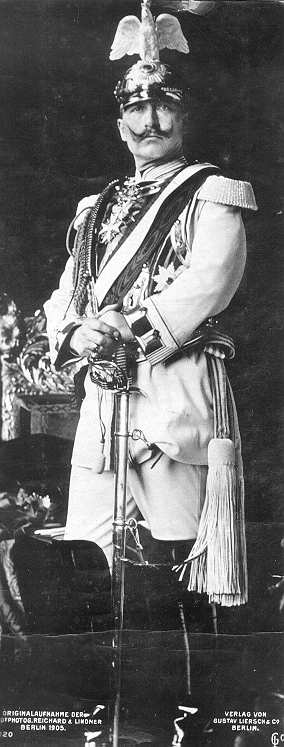
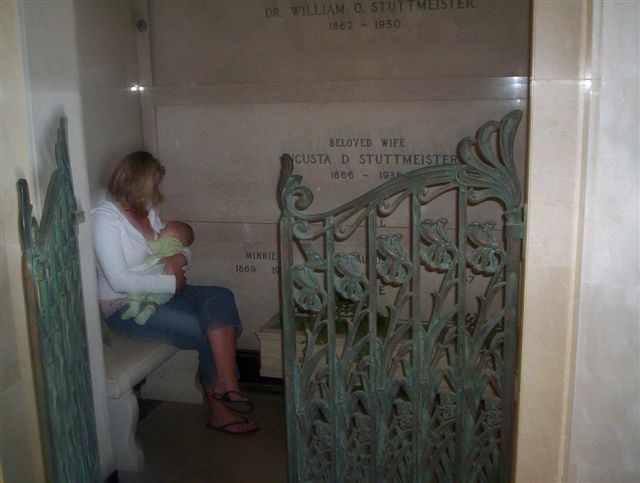
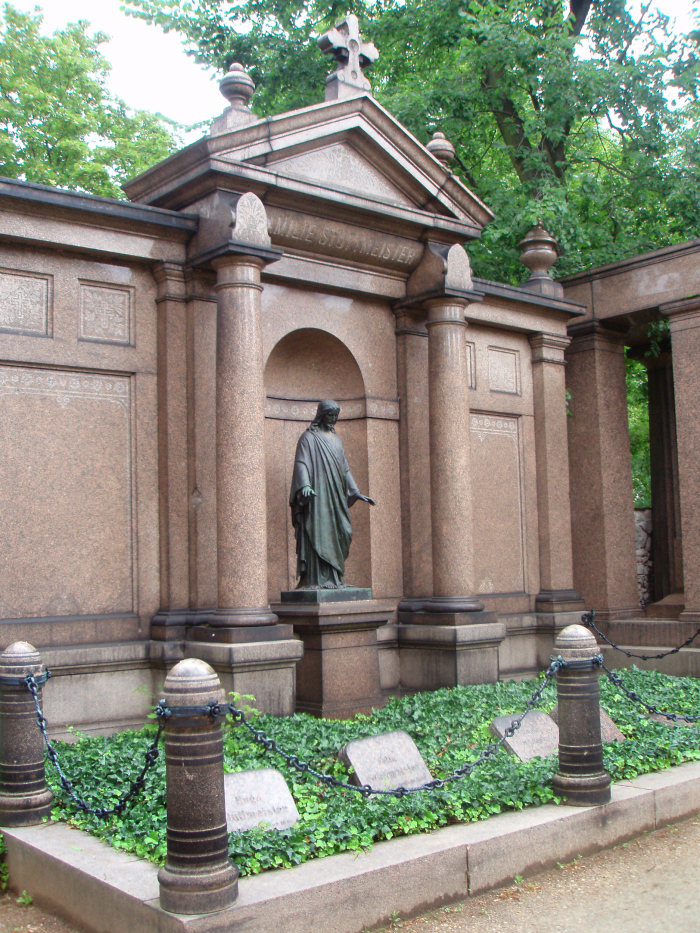

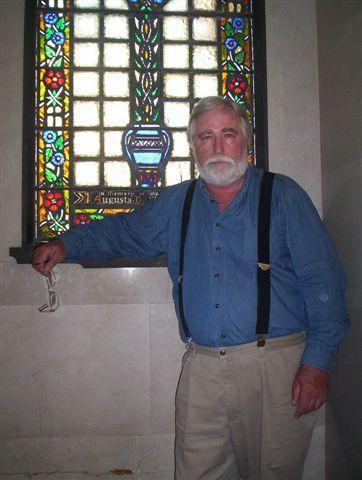
I forgave my daughter, Heather Hanson, because her and my grandson’s genetics comes from Prussia and the Teutonic Knights. I suspect the original name of the Stuttmeisters, was Hohenzollern. During the Reformation there was a split. We became Evangelical Protestants of some standing. We may be kin to the Windsors who changed their name from Saxe-Coburg Gotha, who descend from the Welfs, whose motto is
: “Not safe from the tireless Devil”
Around 1985, my father Victor William Presco, wore a Stuttmeister cote of arms on his dinner jacket. He had done some research, or so he said. But, I suspect he knew of his background that he rejected because his mother Melba Charlotte Broderick, married beneath her. The Stuttmeisters lived in Charlottenburg on Berlin Way, the road made for Prussian Royalty. We took the name Freidrich, too. We can not find the lineage for Broderick, thus I suspect they may have been Stuttmeisters, close cousins, and Bradenburg-Prussians. Victor Stuttmeister returned to Germany to fight for the Kaiser. When my father was sixteen, he went on military maneuvers with his uncle, Major Frederick Broderick. He told me this was part of family tradition.
Jon Presco

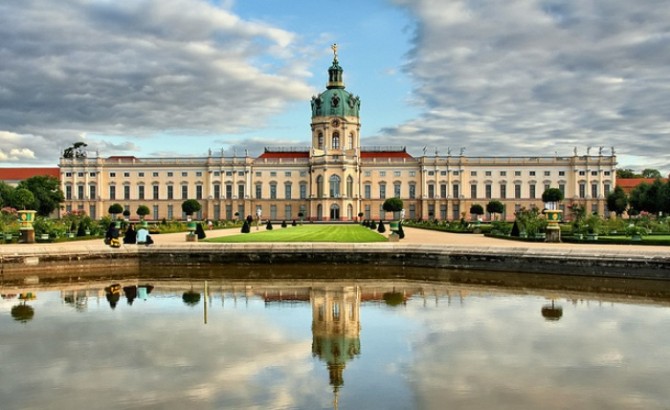
https://en.wikipedia.org/wiki/Charlottenburg_Palace
: Friedrich Wilhelm Viktor Albrecht von Preußen;
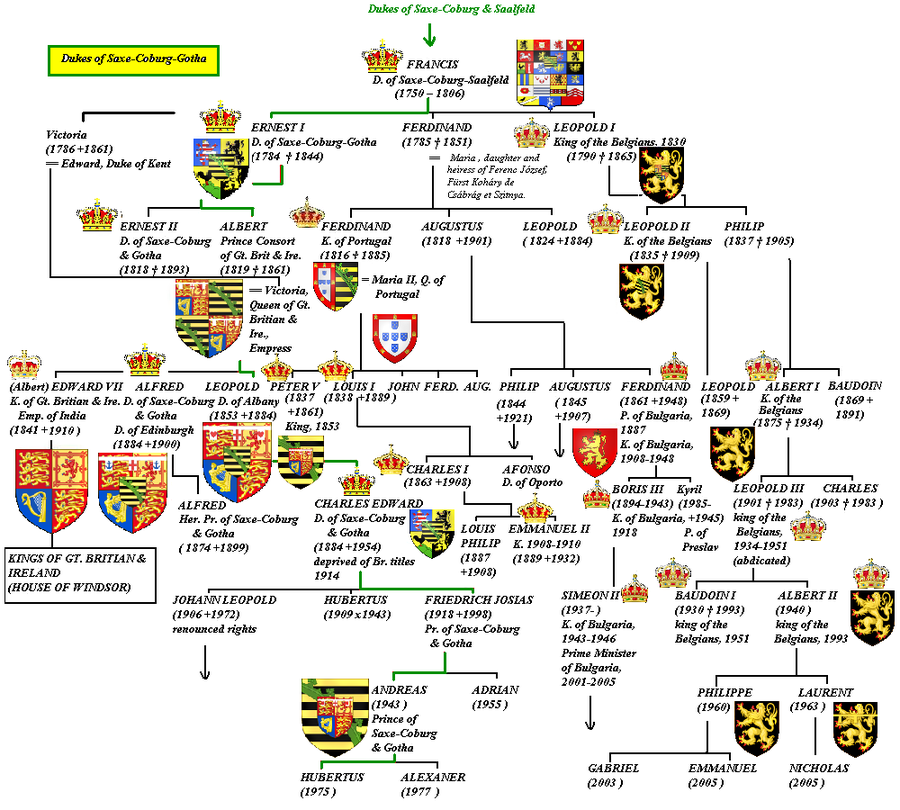
Founded by Ernest Anton, the sixth duke of Saxe-Coburg-Saalfeld, it is the royal house of several European monarchies, and branches currently reign in Belgium through the descendants of Leopold I, and in the United Kingdom and the otherCommonwealth realms through the descendants of Prince Albert. Due to anti-German sentiment in the United Kingdom during World War I, George V changed the name of his branch from Saxe-Coburg and Gotha to Windsor in 1917. The same happened in 1920 in Belgium, where it was changed to “van België” (Dutch) or “de Belgique” (French).
https://en.wikipedia.org/wiki/State_of_the_Teutonic_Order
In 1525 during the Protestant Reformation, the Grand Master of the Teutonic Knights, Albert, secularized the order’s Prussian territory, becoming Albert, Duke of Prussia. His duchy, which had its capital in Königsberg (Polish: Królewiec,Lithuanian: Karaliaučius; modern Kaliningrad), was established as fief of the Crown of Poland. It was inherited by theHohenzollern prince-electors of Brandenburg in 1618; this personal union is referred to as Brandenburg-Prussia.Frederick William, the “Great Elector” of Brandenburg, achieved full sovereignty over the territory in the 1657 Treaty of Wehlau, which was confirmed in the 1660 Treaty of Oliva. The Duchy of Prussia was elevated to the Kingdom of Prussia in 1701.
Brandenburg-Prussia (German: Brandenburg-Preußen) is the historiographic denomination for the Early Modernrealm of the Brandenburgian Hohenzollerns between 1618 and 1701. Based in the Electorate of Brandenburg, the main branch of the Hohenzollern intermarried with the branch ruling the Duchy of Prussia, and secured succession upon the latter’s extinction in the male line in 1618. Another consequence of the intermarriage was the incorporation of the lower Rhenish principalities of Cleves, Mark and Ravensberg after the Treaty of Xanten in 1614. The Thirty Years’ War (1618–48) was especially devastating. The Elector changed sides three times, and as a result Protestant and Catholic armies swept the land back and forth, killing, burning, seizing men and taking the food supplies. Upwards of half the population was killed or dislocated. Berlin and the other major cities were in ruins, and recovery took decades
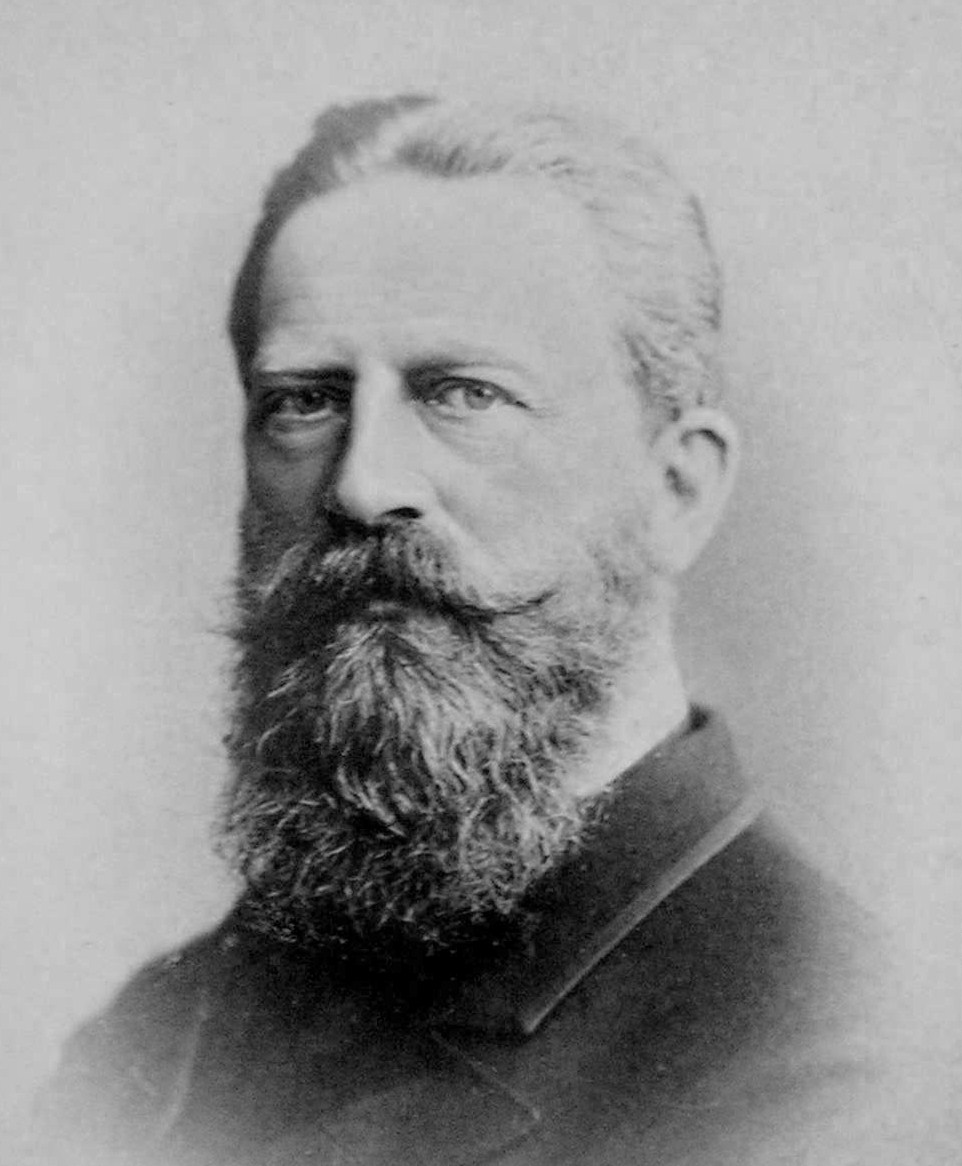
Frederick III (German: Friedrich III., Deutscher Kaiser und König von Preußen; 18 October 1831 – 15 June 1888) wasGerman Emperor and King of Prussia for ninety-nine days in 1888, the Year of the Three Emperors. Friedrich Wilhelm Nikolaus Karl, known informally as “Fritz”,[1] was the only son of Emperor Wilhelm I and was raised in his family’s tradition of military service. Although celebrated as a young man for his leadership and successes during the Second Schleswig, Austro-Prussian and Franco-Prussian wars,[2][3] he nevertheless professed a hatred of warfare and was praised by friends and enemies alike for his humane conduct. Following the unification of Germany in 1871 his father, then King of Prussia, became the German Emperor. Upon Wilhelm’s death at the age of ninety on 9 March 1888, the throne passed to Frederick, who had by then been Crown Prince for seventeen years. Frederick was suffering fromcancer of the larynx when he died on 15 June 1888, aged fifty-six, following unsuccessful medical treatments for his condition.
Frederick married Princess Victoria, eldest daughter of Queen Victoria of the United Kingdom. The couple were well-matched; their shared liberal ideology led them to seek greater representation for commoners in the government. Frederick, in spite of his conservative militaristic family background, had developed liberal tendencies as a result of his ties with Britain and his studies at the University of Bonn.
Hanover, Germany (dpa) – President Barack Obama’s visit to Hanover on Sunday is ostensibly to open the northern German city’s industrial trade fair, where the US will be partner nation for the first time.
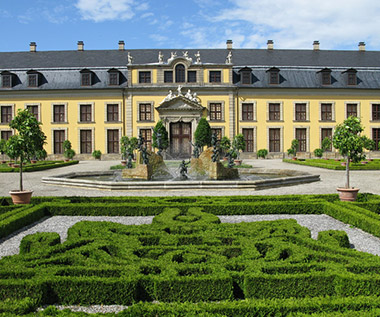
But the other key venue on the president’s two-day visit will be Hanover’s 17th century Herrenhausen castle, where Obama will meet Angela Merkel for talks on Sunday and where the chancellor will host a dinner for the US leader.
Hanover media report that the nearby upmarket Garbsener Landhaus am See hotel will be handling the catering for the dinner, with events for the president focused on the Herrenhausen’s historic wing.
The castle’s famous baroque gardens each year attract about half a million visitors, making Herrenhausen the city’s number one tourist attraction.
The castle and the gardens, destroyed during allied raids during the Second World War, were reopened in 2013 after years of renovations and rebuilding.
On Monday, Obama will join Merkel and the leaders of Britain, France and Itay for a mini-summit on the state of the world at the castle.
Like the rest of Hanover, Herrenhausen and its surroundings is in a security lockdown for the visit by the leaders.
https://en.wikipedia.org/wiki/Herrenhausen_Gardens
Herrenhausen is an area of the German city Hanover which is most notable for the baroque Herrenhausen Gardens.
Ernest Augustus, Elector of Brunswick-Lüneburg died in Herrenhausen Palace, and his grandson King George II of Great Britain was born there. During the Second World War the palace was completely destroyed in a British bombing on October 18, 1943. The decision to rebuild the palace was not made until 2007, and reconstruction was completed in 2013.
Sophia Charlotte of Hanover (30 October 1668 – 1 February 1705) was the first Queen consort in Prussia as wife of King Frederick I. She was the only daughter of Elector Ernest Augustus of Brunswick-Lüneburg and his wife Sophia of the Palatinate. Her eldest brother George Louis succeeded to the British throne in 1714 as King George I.
he House of Este ([ˈɛste] Italian: Casa d’Este, originally House of Welf-Este) is a European princely dynasty. It is one of the most ancient noble dynasties in Europe.
The elder branch of the House of Este included the dukes of Brunswick and Lüneburg (1208–1918) and produced Britain’s Hanoverian monarchs and one Emperor of Russia (Ivan VI).
The younger branch of the House of Este included rulers of Ferrara (1240–1597), and Modena and Reggio (1288–1796).
: “Not safe from the tireless Devil
The elder branch of the House of Este, the House of Welf, historically rendered “Guelf” or “Guelph” in English, produced dukes of Bavaria (1070–1139, 1156–1180), dukes of Saxony (1138–1139, 1142–1180), a German King (1198–1218), and the dukes of Brunswick and Lüneburg (1208–1918), later styled the “Electors of Hanover” when two branches of the family recombined in 1705.
After the peace ending the Napoleonic wars reshaped Europe ushering in the Modern era, the Electorate of Hanover(duchy of Brunswick and Lüneburg held in personal union by the king of Great Britain, George III) was dissolved by treaty, its lands were enlarged, and the state promoted to a kingdom. The new kingdom existed from 1815 to 1866, but upon accession of Queen Victoria (who could not inherit Hanover under the Salic law) in 1837, it passed to her uncle and thus ceased to be in personal union with the British Crown.
The House of Este hence gave Great Britain and the United Kingdom the “Hanoverian monarchs” (1714–1901).
Under Ercole (1431–1505), one of the most significant patrons of the arts in late 15th and early 16th century Italy, Ferrara grew into a cultural center, renowned especially for music; Josquin des Prez worked for Duke Ercole, Jacob Obrecht came to Ferrara twice, and Antoine Brumel served as principal musician from 1505. Ercole’s daughterBeatrice (1475–1497) married Ludovico Sforza, Duke of Milan, while his daughterIsabella (1474–1539) married Francesco Gonzaga, Marquess of Mantua.
Ercole I’s successor was his son Alfonso I (1476–1534), third husband of Lucrezia Borgia, daughter of Pope Alexander VI, sister to Cesare Borgia and the patron ofAriosto.

Isabella d’Este, portrait by Titian.
Alfonso and Lucrezia Borgia’s son Ercole d’Este II (1508–1559) married Renée of France, daughter of Louis XII of France. His son Alfonso II first married Lucrezia, daughter of grand-duke Cosimo I of Tuscany. Later, after becoming a widower, he married Barbara, the sister of Maximilian II, Holy Roman Emperor (1527–1576). His third wife, Margherita Gonzaga, was daughter of the duke of Mantua.
The family of Austria-Este became extinct in the male line with the death of Francis V in 1875. His blood-heiress was his niece, Archduchess Maria Theresia of Austria-Este (d. 1919); she and her husband, Prince Louis of Bavaria, later became Queen and King of Bavaria. The present head of this branch of the family is Franz, Duke of Bavaria.
However, Francis V had decided to retain the Este name in the Habsburg family and willed his inheritance to the line of Archduke Charles Louis, younger brother of Emperor Francis Joseph, on condition that the heir use the name Austria-Este. The first “adoptee” was Archduke Franz Ferdinand of Austria (b. 1863, not descended from Maria Beatrice Ricciarda d’Este), who took the name Austria-Este and in 1896 became the heir presumptive of the Habsburg Empire, but was murdered on 28 June 1914 in Sarajevo.
Since his own children were born in morganatic marriage (Sophie, Duchess of Hohenberg), the Habsburgs designated his soon-to-be born great-nephew Robert (b. 8 February 1915), second son of the future emperor Charles, as the next “adopted Austria-Este.” Through his mother Zita of Bourbon-Parma (a great-granddaughter of Maria Teresa of Savoy, Duchess of Lucca and Parma, who was a daughter of Maria Teresa of Austria-Este, Queen of Sardinia, who in turn was a daughter of Maria Beatrice Ricciarda d’Este and Archduke Ferdinand of Austria-Este, Duchess and Duke of Breisgau and Modena), Robert was a descendant of Ercole III d’Este, and the blood of last Este dukes thus joined again with the name Austria-Este.
Today, the bearer of this tradition is the eldest son of Archduke Robert of Austria-Este (1915–1996), Lorenz Otto Charles of Austria-Este (b. 1955), who is married to Princess Astrid of Belgium, the only daughter of King Albert II. In 1995, Lorenz received the additional title of Prince of Belgium.
Since 1991 the couple’s children are titled :
- International format : Princes(ss) of Belgium, Archduke (Archduchess) of Austria-Este, Prince(ss) Imperial of Austria, Prince(ss) Royal of Hungary and Bohemia .
- Belgian format : Princes(ss) of Belgium, Archduke (Archduchess) of Austria-Este (Habsburg-L
https://en.wikipedia.org/wiki/House_of_Este
The Elder House of Welf was a Frankish noble dynasty of European rulers documented since the 9th century. Closely related to the Carolingian dynasty, it consisted of a Burgundian and a Swabian group. It has not been definitively clarified, however, whether the two groups formed one dynasty or whether they shared the same name by coincidence only. While the Elder House became extinct in the male line with the death of Duke Welf of Carinthia in 1055, his sister Kunigunde married into the Italian House of Este and became the ancestor of the (Younger) House of Welf.
https://en.wikipedia.org/wiki/House_of_Hanover
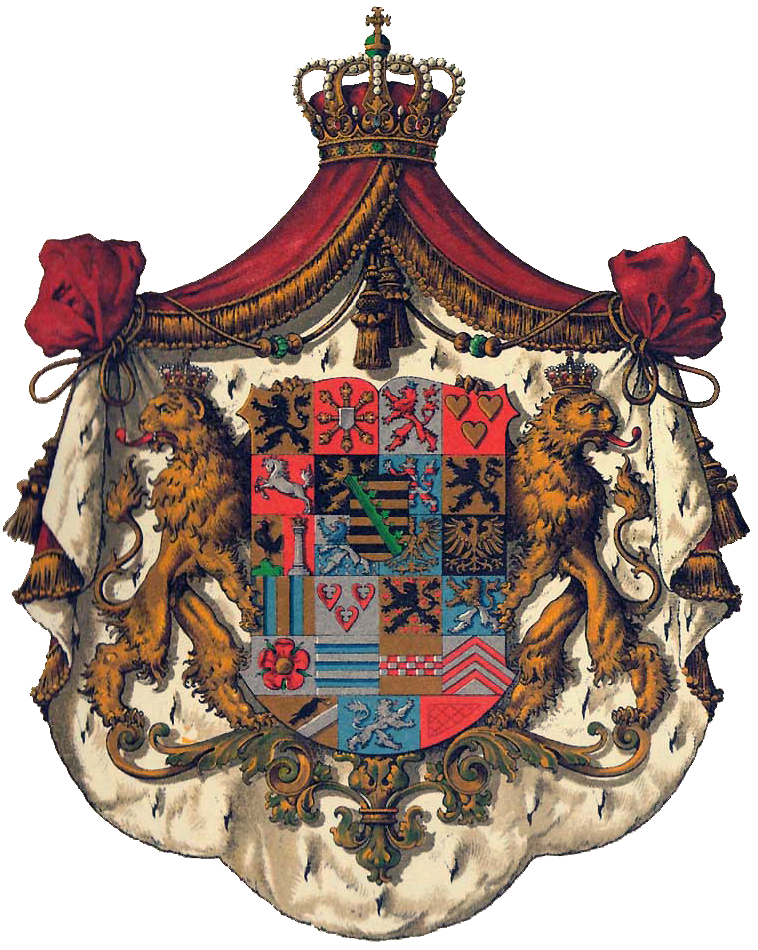
House of Saxe-Coburg and Gotha (/ˌsæksˌkoʊbɜːrɡəndˈɡoʊθə, -tə/;[1] German: Haus Sachsen-Coburg und Gotha) is a German dynasty, the line of the Saxon House of Wettin that ruled the Ernestine duchies including the duchy of Saxe-Coburg and Gotha.
Founded by Ernest Anton, the sixth duke of Saxe-Coburg-Saalfeld, it is the royal house of several European monarchies, and branches currently reign in Belgium through the descendants of Leopold I, and in the United Kingdom and the otherCommonwealth realms through the descendants of Prince Albert. Due to anti-German sentiment in the United Kingdom during World War I, George V changed the name of his branch from Saxe-Coburg and Gotha to Windsor in 1917. The same happened in 1920 in Belgium, where it was changed to “van België” (Dutch) or “de Belgique” (French).
United Kingdom[edit]
See also: British Royal Family and British monarchs’ family tree
- Edward VII (1901–1910)
- George V (1910–1936; in 1917, the name was changed and the royal house and family became known as Windsor)
- Edward VIII (1936)
- George VI (1936–1952)
- Elizabeth II (1952–present)
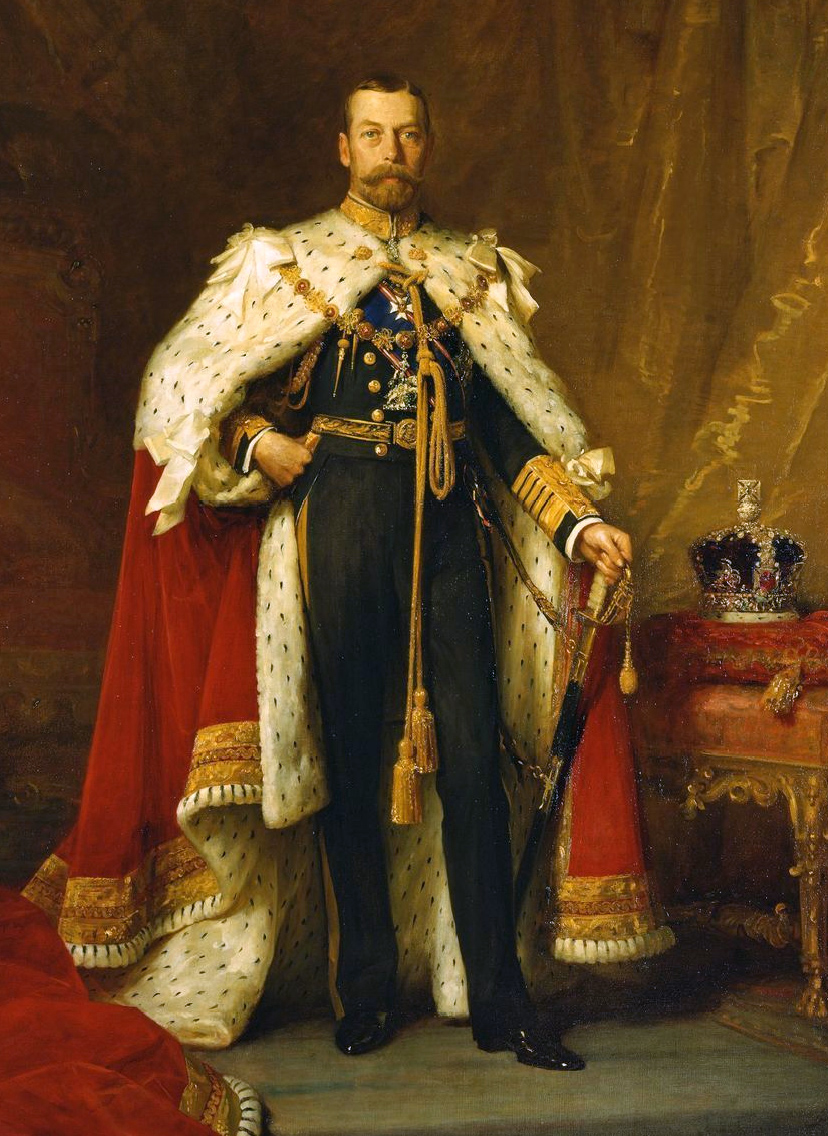
George V (George Frederick Ernest Albert; 3 June 1865 – 20 January 1936) was King of the United Kingdom and theBritish Dominions, and Emperor of India, from 6 May 1910 until his death in 1936.
He was the second son of Albert Edward, Prince of Wales (later King Edward VII), and the grandson of the reigning British monarch, Queen Victoria. From the time of his birth, he was third in the line of succession behind his father and his elder brother, Prince Albert Victor, Duke of Clarence and Avondale. From 1877 to 1891, George served in the Royal Navy, until the unexpected death of his elder brother in early 1892 put him directly in line for the throne. On the death of his grandmother in 1901, George’s father became King-Emperor of the British Empire, and George was created Prince of Wales. He succeeded his father in 1910. He was the only Emperor of India to be present at his own Delhi Durbar.
Edward VII (Albert Edward; 9 November 1841 – 6 May 1910) was King of the United Kingdom and the British Dominions and Emperor of India from 22 January 1901 until his death in 1910.
The eldest son of Queen Victoria and Prince Albert of Saxe-Coburg and Gotha, Edward was related to royalty throughout Europe. Before his accession to the throne, he served as heir apparent and held the title of Prince of Walesfor longer than any of his predecessors. During the long reign of his mother, he was largely excluded from political power, and came to personify the fashionable, leisured elite. He travelled throughout Britain performing ceremonial public duties, and represented Britain on visits abroad. His tours of North America in 1860 and the Indian subcontinent in 1875 were popular successes, but despite public approval his reputation as a playboy prince soured his relationship with his mother.
As king, Edward played a role in the modernisation of the British Home Fleet and the reorganisation of the British Armyafter the Second Boer War. He re-instituted traditional ceremonies as public displays and broadened the range of people with whom royalty socialised. He fostered good relations between Britain and other European countries, especially France, for which he was popularly called “Peacemaker”, but his relationship with his nephew, Kaiser Wilhelm II, was poor. The Edwardian era, which covered Edward’s reign and was named after him, coincided with the start of a new century and heralded significant changes in technology and society, including steam turbine propulsion and the rise of socialism. He died in 1910 in the midst of a constitutional crisis that was resolved the following year by the Parliament Act 1911, which restricted the power of the unelected House of Lords.
Wilhelm II or William II (German: Friedrich Wilhelm Viktor Albrecht von Preußen; English: Frederick William Victor Albert of Prussia; 27 January 1859 – 4 June 1941) was the last German Emperor (Kaiser) and King of Prussia, ruling theGerman Empire and the Kingdom of Prussia from 15 June 1888 to 9 November 1918. He was the eldest grandchild of the British Queen Victoria and related to many monarchs and princes of Europe.
Crowned in 1888, he dismissed the Chancellor, Otto von Bismarck, in 1890 and launched Germany on a bellicose “New Course” in foreign affairs that culminated in his support for Austria-Hungary in the crisis of July 1914 that led in a matter of days to the First World War. Bombastic and impetuous, he sometimes made tactless pronouncements on sensitive topics without consulting his ministers, culminating in a disastrous Daily Telegraph interview in 1908 that cost him most of his influence.[citation needed] His top generals, Paul von Hindenburg and Erich Ludendorff, dictated policy during the First World War with little regard for the civilian government. An ineffective war-time leader, he lost the support of the army, abdicated in November 1918, and fled to exile in the Netherlands.
Wilhelm was born on 27 January 1859 at the Crown Prince’s Palace, Berlin to Prince Frederick William of Prussia (the future Frederick III) and his wife, Victoria, Princess Royal, the eldest daughter of Britain’s Queen Victoria. At the time of his birth, his great-uncle Frederick William IVwas king of Prussia, and his grandfather and namesake Wilhelm was acting as Regent. He was the first grandchild of Queen Victoria and Prince Albert, but more importantly, as the first son of the Crown Prince of Prussia, Wilhelm was from 1861 second in the line of succession to Prussia, and also, after 1871, to the newly created German Empire, which, according to the constitution of the German Empire, was ruled by the Prussian King.
: Friedrich Wilhelm Viktor Albrecht von Preußen;
The House of Hohenzollern is a dynasty of former princes, electors, kings, and emperors of Hohenzollern, Brandenburg,Prussia, the German Empire, and Romania. The family arose in the area around the town of Hechingen in Swabia during the 11th century and took their name from Hohenzollern Castle.[1] The first ancestor of the Hohenzollerns was mentioned in 1061.
The Hohenzollern family split into two branches, the Catholic Swabian branch and the Protestant Franconian branch,[2]which later became the Brandenburg-Prussian branch. The Swabian branch ruled the principalities of Hohenzollern-Hechingen and Hohenzollern-Sigmaringen until 1849, and also ruled Romania from 1866 to 1947. Members of the Franconian branch became Margrave of Brandenburg in 1415 and Duke of Prussia in 1525.
The Margraviate of Brandenburg and the Duchy of Prussia were ruled in personal union after 1618 and were called Brandenburg-Prussia. The Kingdom of Prussia was created in 1701, eventually leading to the unification of Germany and the creation of the German Empire in 1871, with the Hohenzollerns as hereditary German Emperors and Kings of Prussia.
Germany’s defeat in World War I in 1918 led to the German Revolution. The Hohenzollerns were overthrown and theWeimar Republic was established, thus bringing an end to the German monarchy. Georg Friedrich, Prince of Prussia is the current head of the royal Prussian line, while Karl Friedrich, Prince of Hohenzollern is the head of the princely Swabian line.[2]
Brandenburg-Prussia (German: Brandenburg-Preußen) is the historiographic denomination for the Early Modernrealm of the Brandenburgian Hohenzollerns between 1618 and 1701. Based in the Electorate of Brandenburg, the main branch of the Hohenzollern intermarried with the branch ruling the Duchy of Prussia, and secured succession upon the latter’s extinction in the male line in 1618. Another consequence of the intermarriage was the incorporation of the lower Rhenish principalities of Cleves, Mark and Ravensberg after the Treaty of Xanten in 1614. The Thirty Years’ War (1618–48) was especially devastating. The Elector changed sides three times, and as a result Protestant and Catholic armies swept the land back and forth, killing, burning, seizing men and taking the food supplies. Upwards of half the population was killed or dislocated. Berlin and the other major cities were in ruins, and recovery took decades
The State of the Teutonic Order (German: Staat des Deutschen Ordens; Latin: Civitas Ordinis Theutonici), also called Deutschordensstaat (pronounced [ˈdɔʏtʃ ɔɐdənsˌʃtaːt]) or Ordensstaat[2] (pronounced [ˈɔɐdənsˌʃtaːt]) in German, was a crusader state formed by the Teutonic Knights or Teutonic Order during the 13th century Northern Crusadesalong the Baltic Sea. The state was based in Prussia after the Order’s conquest of the Pagan Old Prussians which began in 1230, but also expanded to include the historic regions of Courland, Gotland, Livonia, Neumark, Pomereliaand Samogitia. Its territory was in the modern countries of Estonia, Latvia, Lithuania, Poland, and Russia. Most of the territory was conquered by military orders, after which German colonization occurred to varying effect.
The Livonian Brothers of the Sword controlling Terra Mariana were incorporated into the Teutonic Order as its autonomous branch Livonian Order in 1237.[3] In 1346, the Duchy of Estonia was sold by the King of Denmark for 19,000 Köln marks to the Teutonic Order. The shift of sovereignty from Denmark to the Teutonic Order took place on 1 November 1346.[4
 Rosamond Press
Leave a comment